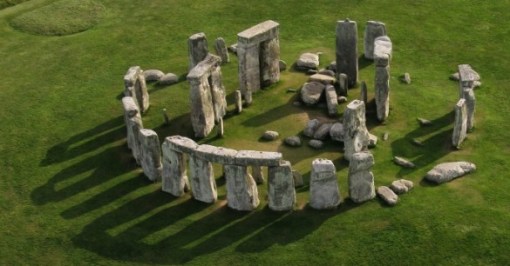
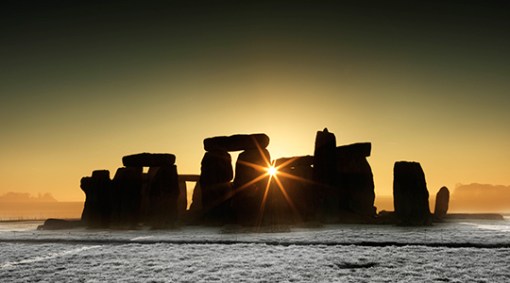
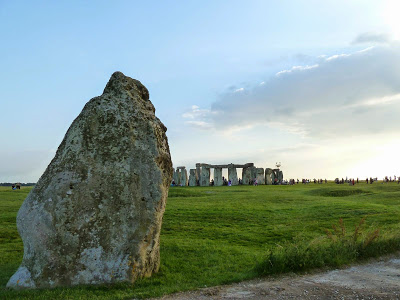
18th April is the @ICOMOSUK International Day of Monuments and Sites #WHS30 @UNESCO @WorldHeritageUK #WorldHeritageDay

18 04 2016

8th April is ICOMOS International Day for Monuments and Sites but unofficially known as World Heritage Day.

This year Stonehenge and Avebury are celebrating 30 years of being a World Heritage SiteICOMOS along with six other sites, the first sites to be designated World Heritage Sites in the UK.

UNESCO established 18 April as the International Day for Monuments and Sites in 1983. It aims to raise public awareness about the diversity and vulnerability of the world’s built monuments and heritage sites and the efforts required to protect and conserve them.

The Stonehenge News Blog


Stonehenge Spring (Vernal) Equinox Open Access: 20th March 2016

8 03 2016

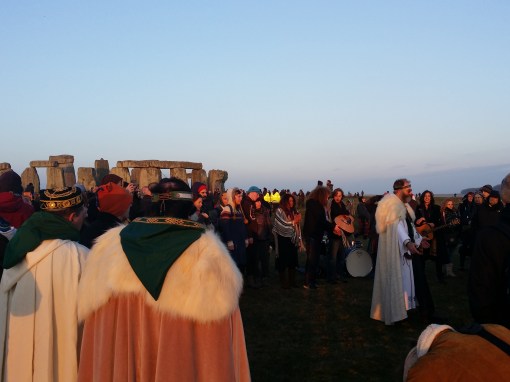
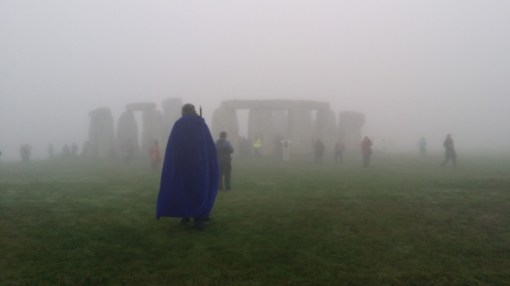
The ‘Managed Open Access’ at Stonehenge for the Vernal (Spring) Equinox, will be from approximately 05.45 am until 08.30 on 20th March 2016

• Access to Stonehenge for the Spring Equinox will take place on the morning of 20th March 2016 (source: http://www.sarsen.org/)

The Vernal Equinox is at 04:30GMT
Sunrise will be 6.07am

Stonehenge-Spring-Equinox-2015 (60)

• Entrance to the monument will commence as soon as ‘light-levels’ are deemed safe enough to permit. For the past couple of years this has occurred around 0545h however EH would ask that people are patient should the morning prove ‘overcast’ and a slight delay occurs.

• Access to Stonehenge will cease at 0830h and the cooperation of all of visitors in ensuring the monument is vacated at this time would be most appreciated.

• Temporary toilets (Porta-Loos) will be available at the monument once the site is open for public access. This includes a provision for those with disabilities.

•The Cafe and Shop at the new Visitor Centre at Airmans Cross should be opening for visitors from approximately 0800h on the morning of 20 March. Please note that the toilets at this location will also become available for use at this time. Although the Cafe will be opening only hot and cold drinks will be available for the first hour. Pasties etc will become available after 0900h.

Final confirmation from English Heritage as to these arrangements has not been forthcoming so please check before relying on this notice.

Follow us on Twitter for the lastest news and Equinox Sunrise pics

The Stonehenge News Blog


Bronze Age burial near Stonehenge discovered by badger

9 02 2016

A Bronze Age cremation burial has been discovered near Stonehenge after being accidentally dug up by a badger.

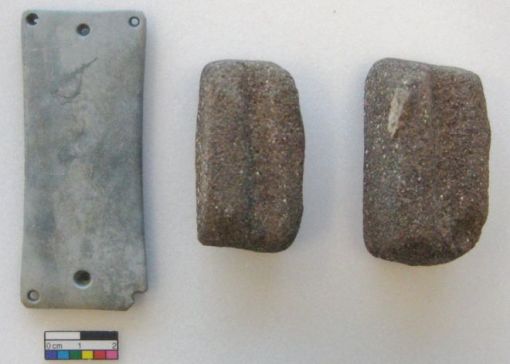
bronze-age-find

An archer’s wrist guard and shaft straighteners were among the objects discovered

Objects found in a burial mound at Netheravon, Wiltshire, include a bronze saw, an archer’s wrist guard, a copper chisel and cremated human remains.

Experts believe the burial may have been that of an archer or a person who made archery equipment.

The artefacts date back to 2,200-2,000BC, senior archaeologist Richard Osgood, of the MOD, said.

The burial mound, about five miles north of Stonehenge, lies on MOD land.

Mr Osgood, from the MOD’s Defence Infrastructure Organisation, said it was “an exciting find”.

“It was utterly unexpected. These are wonderful artefacts from the early Bronze Age, about 2,200-2,000 BC,” he said.

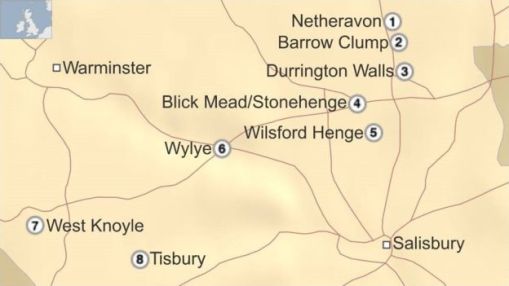
wilts-map

Other archaeological finds in Wiltshire:

1. Bronze Age burial discovered by a badger

2. Soldiers uncover 27 ancient bodies at Barrow Clump on Salisbury Plain

3. Researchers find large Neolithic site at Durrington Walls

4. Stonehenge dig finds 6,000-year-old encampment at Blick Mead

5. Bronze Age child’s skeleton discovered at Wilsford henge

6. Bronze Age jewellery discovered in a Wiltshire field

7. Iron Age woman’s footless body found near West Knoyle

8. Bronze Age hoard found near Tisbury


Also among the finds were shaft straighteners for straightening arrows, and pieces of pottery.

Mr Osgood said the badger had dug out the cremation urn and sherds of pottery were lying on the surface when they were spotted.

A full archaeological dig was then carried out on the site.

Mr Osgood said: “There are badger setts in quite a few scheduled monuments – the actions of burrowing animals is one of the biggest risks to archaeology in Britain – but to bring out items of this quality from one hole is unusual.

“We would never have known these objects were in there, so there’s a small part of me that is quite pleased the badger did this… but it probably would have been better that these things had stayed within the monument where they’d resided for 4,000 years.”

Injured military personnel and veterans helped to excavate the site.

The items are due to be put on display at Wiltshire Museum in Devizes later this year.

Read the full story (source) on the BBC website

The Stonehenge News Blog


Stonehenge burials show ‘surprising degree’ of gender equality

3 02 2016

A new study of prehistoric bones discovered at Stonehenge has found around half belonged to women.

In 2008 archaeologists first explored the site in Wiltshire examining the cremated remains of some 200 adults.

Researchers said their findings showed a “surprising degree of gender equality” despite artists portraying prehistoric man as in charge of the site “with barely a woman in sight”.

The findings are reported in the magazine British Archaeology.

Stonehenge digImage copyrightAdam Stanford
Most of the material dug up in the 1920s from the periphery of the stones was reburied in Aubrey Hole seven (seen excavated in 2008)

The study showed the finding are important because burial at Stonehenge was likely to have been reserved for selected people of higher status.

It also contrasts with the evidence from older Neolithic tombs in southern Britain, with their higher ratios of adult males to females.

Stonehenge digImage copyright Mike Pitts
Some 45kg (99lbs) of bone fragments were recovered

Christie Willis, a PhD student at University College London and an expert on human remains, sorted through some 45kg (99lbs)of bone fragments.

Her task was to identify which part of the skeleton each fragment came from and to then establish the age and sex of the remains.

Ms Willis said the samples had originally been place in a series of Aubrey Holes around the periphery of the site – which were originally excavated in the 1920s by William Hawley.

“These were dug up and reburied in Aubrey Hole seven with the hope that one day there would be a breakthrough to allow them to be analysed.

Stonehenge digImage copyright Adam Stanford
The archaeologists said their work had taken four years in total

“Because of this the fragments have become co-mingled – or mixed up – which is why the work has taken so long.”

The fragments were also sent to universities in Oxford and Glasgow to be radiocarbon-dated.

Researchers at Teeside University also looked at how hot the cremation fires were, and how long the bones were in there for.

Article Source: BBC NEWS

The Stonehenge News Blog


Moon Phases for Stonehenge, Wiltshire 2016

23 01 2016

moon-phase

Lunation New Moon First Quarter Full Moon Third Quarter Duration
1150 2 Jan 05:30 29d 15h 01m
1151 10 Jan 01:30 16 Jan 23:26 24 Jan 01:45 1 Feb 03:27 29d 13h 08m
1152 8 Feb 14:38 15 Feb 07:46 22 Feb 18:19 1 Mar 23:10 29d 11h 16m
1153 9 Mar 01:54 15 Mar 17:02 23 Mar 12:00 31 Mar 16:16 29d 9h 29m
1154 7 Apr 12:23 14 Apr 04:59 22 Apr 06:23 30 Apr 04:28 29d 8h 06m
1155 6 May 20:29 13 May 18:02 21 May 22:14 29 May 13:11 29d 7h 30m
1156 5 Jun 03:59 12 Jun 09:09 20 Jun 12:02 27 Jun 19:18 29d 8h 01m
1157 4 Jul 12:00 12 Jul 01:51 19 Jul 23:56 26 Jul 23:59 29d 9h 44m
1158 2 Aug 21:44 10 Aug 19:20 18 Aug 10:26 25 Aug 04:40 29d 12h 19m
1159 1 Sep 10:03 9 Sep 12:48 16 Sep 20:05 23 Sep 10:56 29d 15h 08m
1160 1 Oct 01:11 9 Oct 05:32 16 Oct 05:23 22 Oct 20:13 29d 17h 27m
1161 30 Oct 17:38 7 Nov 19:51 14 Nov 13:52 21 Nov 08:33 29d 18h 40m
1162 29 Nov 12:18 7 Dec 09:02 14 Dec 00:05 21 Dec 01:55 29d 18h 35m
1163 29 Dec 06:53 29d 17h 14m
* All times are local time Stonehenge. Time is adjusted for DST when applicable. Dates are based on the Gregorian calendar.

Links:
http://www.timeanddate.com/moon/phases/uk/london
http://www.calendar-uk.co.uk/lunar-calendar/
http://www.history.com/news/ask-history/why-was-stonehenge-built

The Stonehenge News Blog
Follow us on Twitter and Facebook for daily Sunrise and Moon phase times


Archaeologists Feud Over Second-Hand Stonehenge Theory

15 12 2015

The ink wasn’t even dry (or the bits weren’t even embedded in the Cloud) yet on the 2 Comments about a new theory that Stonehenge once stood in Wales before being moved to Wiltshire when a cry rose up from other archaeologists who claim that it was glaciers, not humans, that pushed the monoliths to their current resting place in Wiltshire. Who’s right, who’s wrong and what’s the betting line on the fight?

Stonehenge-585x306

The feud started with a report last week in the journal Antiquity that archaeologists from University College London (UCL) identified two quarries in Wales that matched some of the bluestones at Stonehenge. The more controversial part of the report was their belief that the stones were made into a monument in Wales which stood for a few hundred years before being toppled and moved to England, making Stonehenge what some were sacrilegiously calling a “second-hand monument.”

Just a week later, Dr. Brian John, Dr. Dyfed Elis-Gruffydd and John Downes thumbed their noses at their peers in a paper published in the journal Archaeology in Wales where they stated that there are “no traces of human intervention in any of the features that have made the archaeologists so excited.”

Path and distance the bluestones would have had to travel from Wales to Wiltshire

The stone of contention in this argument is foliated rhyolite debris – fragments of thinly-layered volcanic rock that were found at both sites, prompting the UCL team to declare that they came to Glastonbury with the bluestones from Wales. Dr. John’s team says the Irish Sea Glacier brought the foliated rhyolite debris (a great name for a heavy metal band) 500,000 years ago.

While Dr. John’s team agrees that the Welsh outcrops of Carn Goedog and Craig Rhos-y-felin show signs of human campgrounds, there’s no evidence the Neolithic humans were quarrying monoliths and building a miniature Welsh Stonehenge. In fact, he suggests that the features the UCL team thought were evidence of quarry activity were actually made by the archaeologists themselves. As Dr. John eloquently puts it:

An expectation or conviction that ‘engineering features’ would be found has perhaps led to the unconscious fashioning of archaeological artifices.

Archaeologists at the site in Wales - are they finding evidence or creating their own?

Ouch! But Dr. John doesn’t stop there.

On the contrary, there is substantial evidence in favour of glacial transport and zero evidence in support of the human transport theory … We think the archaeologists have been so keen on telling a good story here that they have ignored or misinterpreted the evidence in front of them. That’s very careless. They now need to undertake a complete reassessment of the material they have collected.

Dr. John has taken the lead. Back to you, team from University College London.

Article by Paul Seaburn | Mysterious Universe

The Stonehenge News Blog


Stonehenge may have been first erected in Wales, ‘amazing’ finds suggest

7 12 2015

‘Evidence that bluestones were quarried in Wales 500 years before they were put up in Wiltshire prompts theory that Stonehenge is ‘second-hand monument’
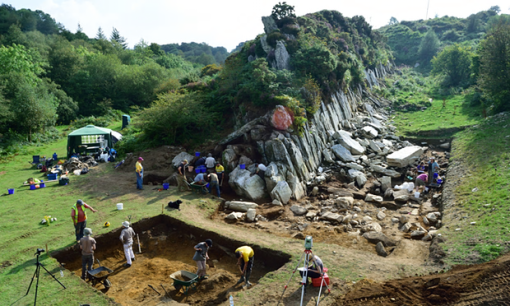
Archaeologists at one of the Stonehenge quarry sites in Wales. Photograph: UCL

Archaeologists at one of the Stonehenge quarry sites in Wales. Photograph: UCL

Evidence of quarrying for Stonehenge’s bluestones is among the dramatic discoveries leading archaeologists to theorise that England’s greatest prehistoric monument may have first been erected in Wales.

It has long been known that the bluestones that form Stonehenge’s inner horseshoe came from the Preseli hills in Pembrokeshire, around 140 miles from Salisbury Plain.

Now archaeologists have discovered a series of recesses in the rocky outcrops of Carn Goedog and Craig Rhos-y-felin, to the north of those hills, that match Stonehenge’s bluestones in size and shape. They have also found similar stones that the prehistoric builders extracted but left behind, and “a loading bay” from where the huge stones could be dragged away.

Carbonised hazelnut shells and charcoal from the quarry workers’ campfires have been radiocarbon-dated to reveal when the stones would have been extracted.

Prof Mike Parker Pearson, director of the project and professor of British later prehistory at University College London (UCL), said the finds were “amazing”.

“We have dates of around 3400 BC for Craig Rhos-y-felin and 3200 BC for Carn Goedog, which is intriguing because the bluestones didn’t get put up at Stonehenge until around 2900 BC,” he said. “It could have taken those Neolithic stone-draggers nearly 500 years to get them to Stonehenge, but that’s pretty improbable in my view. It’s more likely that the stones were first used in a local monument, somewhere near the quarries, that was then dismantled and dragged off to Wiltshire.”

The dating evidence suggests that Stonehenge could be older than previously thought, Parker Pearson said. “But we think it’s more likely that they were building their own monument [in Wales], that somewhere near the quarries there is the first Stonehenge and that what we’re seeing at Stonehenge is a second-hand monument.”

There is also the possibility that the stones were taken to Salisbury Plain around 3200 BC and that the giant sarsens – silicified sandstone found within 20 miles of the site – were added much later. “Normally we don’t get to make that many fantastic discoveries in our lives,” Parker Pearson said. “But this is one.”

Parker Pearson heads a project involving specialists from UCL and the universities of Manchester, Bournemouth and Southampton, among others. Their findings are published on Monday in the journal Antiquity alongside a new book by the Council for British Archaeology titled Stonehenge: Making Sense of a Prehistoric Mystery.

Prof Kate Welham, of Bournemouth University, said the ruins of a dismantled monument were likely to lie between the two megalith quarries. “We’ve been conducting geophysical surveys, trial excavations and aerial photographic analysis throughout the area and we think we have the most likely spot. The results are very promising. We may find something big in 2016,” she said.

The long-distance transport of the bluestones from Wales to Stonehenge is one of the most remarkable achievements of Neolithic societies. The archaeologists estimate that each of the 80 monoliths weighed less than two tons and that people or oxen could have dragged them on wooden sledges sliding on rail-like timbers.

Parker Pearson said people in Madagascar and other societies were known to have moved such standing stones long distances and that doing so created a spectacle that brought together communities from afar.

“One of the latest theories is that Stonehenge is a monument of unification, bringing together people from across the many parts of Britain,” he said.

He recalled the moment he looked up the near-vertical rock-face and realised that this was one of the quarries. “Three metres above us were the bases of these monoliths that were actually sitting there ready simply to be lowered out of their recesses,” he said.
“It’s the Ikea of Neolithic monument building. The nice thing about these particular outcrops is that the rock has formed 480 million years ago as pillars. So prehistoric people don’t have to go in there and bash away … All they have to do is get wedges into the cracks. You wet the wedge, it swells and the stone pops off the rock.”
 Article source:  (Guardian News)
The Stonehenge News Blog


WINTER SOLSTICE AT STONEHENGE 2015

29 11 2015

English Heritage will once again welcome people to Stonehenge to celebrate the Winter Solstice. Sunrise is just after 8am on Tuesday 22nd December and visitors will be able to access the monument as soon as it is light enough to do so safely.

frosty-sunrise

Why 22nd December? 

Many people – not least diary manufacturers – believe that the Winter Solstice always falls on 21st December. But the celebration of Winter Solstice at Stonehenge is not fixed to a specifiic date – this is because of a mismatch between the calendar year and the solar year.

MANAGED OPEN ACCESS PRACTICAL INFORMATION

Please read and respect the Conditions of Entry for Winter Solstice 2015 and the English Heritage website.

Public Transport is being provided by Salisbury Reds buses and will be running from 06:00 from Salisbury.  Stonehenge Guided Tours are offering their usual transport with expert guide service from London and Bath. Booking essential (click here to book direct)

Please be aware that parking is very limited. There is a thirty minute walk, depending on where you are parked, in low light or darkness, from the parking areas to the monument. You are therefore strongly advised to bring a torch with you for personal use.

Accessibility – parking provision for people with disabilities

A limited number of permits will be avaialable for blue badge disabled parking and there will be dedicated accessible transport to the stone circle – which will begin just prior to the opening of the monument field. Please apply to Sandra.Ross@english-heritage.org.uk

Please note that there are no other amenities or facilities available to visitors until such time as  commences.

Conditions of Entry

Please read and respect the Conditions of Entry.

Stonehenge Audio Tour: Free Download from English Heritage

Follow Stonehenge and English Heritage on Twitter for Stonehenge Solstice news and updates

The Stonehenge News Blog


The Stones of Stonehenge. A new web site with a page devoted to each stone at Stonehenge.

11 02 2015

Strange as it may seem, there isn’t a useful reference work that shows photographs of every stone at Stonehenge from all (easily) available angles, until now.  The website is a work in progress toward that end. Not all stones currently have pages, but eventually they will have.

Stone Numbering System

The numbering system for the stones is that devised by W.M. Flinders Petrie in the late 19th century and which is still in use

Heel Stone

The HeelStone (or HeleStone or HealStone) is a natural stone that has not been worked or tooled.

by researchers and archaeologists to this day.

Petrie carried out one of the first highly (and dependably) accurate surveys of Stonehenge and decided that all previous systems of numbering the stones were inadequate in one way or another.
He resolved to number the stones in ascending order clockwise from the main axis of the monument and beginning with the sarsen immediately to the east of the axis in the outer circle as seen from the centre. This is Stone 1. All the actual and supposed positions of sarsen stones are numbered, whether or not there is a stone (or fragment of stone) at or near the position.
The horizontal lintels of the outer sarsen circle are numbered by adding 100 to the number for the higher of the two uprights that support each one. So the lintel supported by Stones 4 and 5 is numbered 105, and that supported by Stones 21 and 22 is numbered 122.
There is a single exception to this rule for the lintel spanning Stones 30 and 1 across the main entrance into the monument which is numbered 101 rather than 130. This is because the number 130 is already in use for the neighbouring lintel that is supported by Stones 29 and 30.
The bluestones of the circle within the sarsen circle are similarly numbered clockwise from the main axis beginning with Stone 31. In the case of the bluestones, Petrie did not assign numbers to the supposed positions of any that are missing.
The sarsens in the horseshoe of massive trilithons are numbered clockwise starting from Stone 51 round to Stone 60. Their respective five lintels (or “imposts” as Petrie called these huge lintels) are numbered 152, 154, 156, 158 and 160.
The bluestones of the innermost horseshoe arrangement are numbered clockwise from Stone 61.
The Altar Stone is Stone 80. The two remaining Station Stones outside the circle are numbered 91 (eastern stone) and 93 (western stone). Station Stones 92 and 94 are missing. The Slaughter Stone is Stone 95 and the Heel Stone is Stone 96.
Fragments of stones which are clearly associated with each other are given alphabetical indices, for example Stones 55a and 55b are the two parts of the broken fallen sarsen upright of the Great Trilithon.

Image credit:

Merlin @ Stonehenge
The Stonehenge News Blog


Stonehenge new theory: music to their ears.

30 10 2014

A new theory has been put forward for why Stonehenge was created. Steven Waller, an American researcher, believes that its primary purposes was not visual, but aural: along with Neolithic cave paintings, it was designed for its acoustic properties, in this case the interference the stones would cause to the volume of the music.

Steven Waller, an American researcher, believes that Stonehenge's primary purpose was not visual, but aural: that it was designed for its acoustic properties Photo: Alamy

Steven Waller, an American researcher, believes that Stonehenge’s primary purpose was not visual, but aural: that it was designed for its acoustic properties Photo: Alamy

We have another theory, however. It is that Stonehenge was in fact built by ancient practical jokers, for no better reason than to drive future experts to distraction. One can picture them giggling to themselves as they laid false trails, safe in the knowledge that they would provide fodder for endless wild hypotheses about their true motives. Granted, it seems like a lot of bother to go to. But the fact that we are still trying to solve their riddles, thousands of years later, suggests it was worth the effort.

By : Link Source

The Stonehenge News Blog
All the lastest Stonehenge news on Twitter: https://twitter.com/ST0NEHENGE