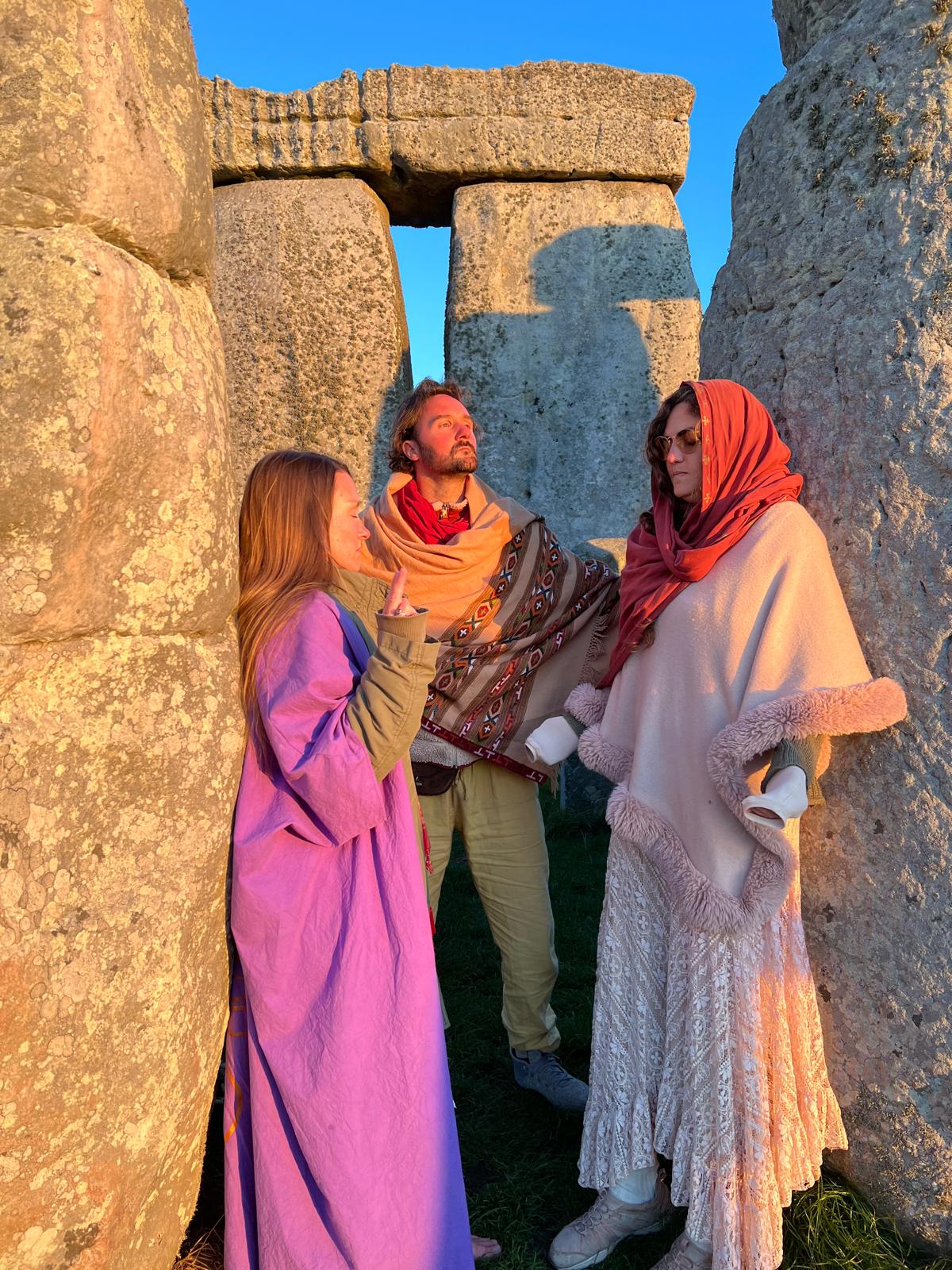
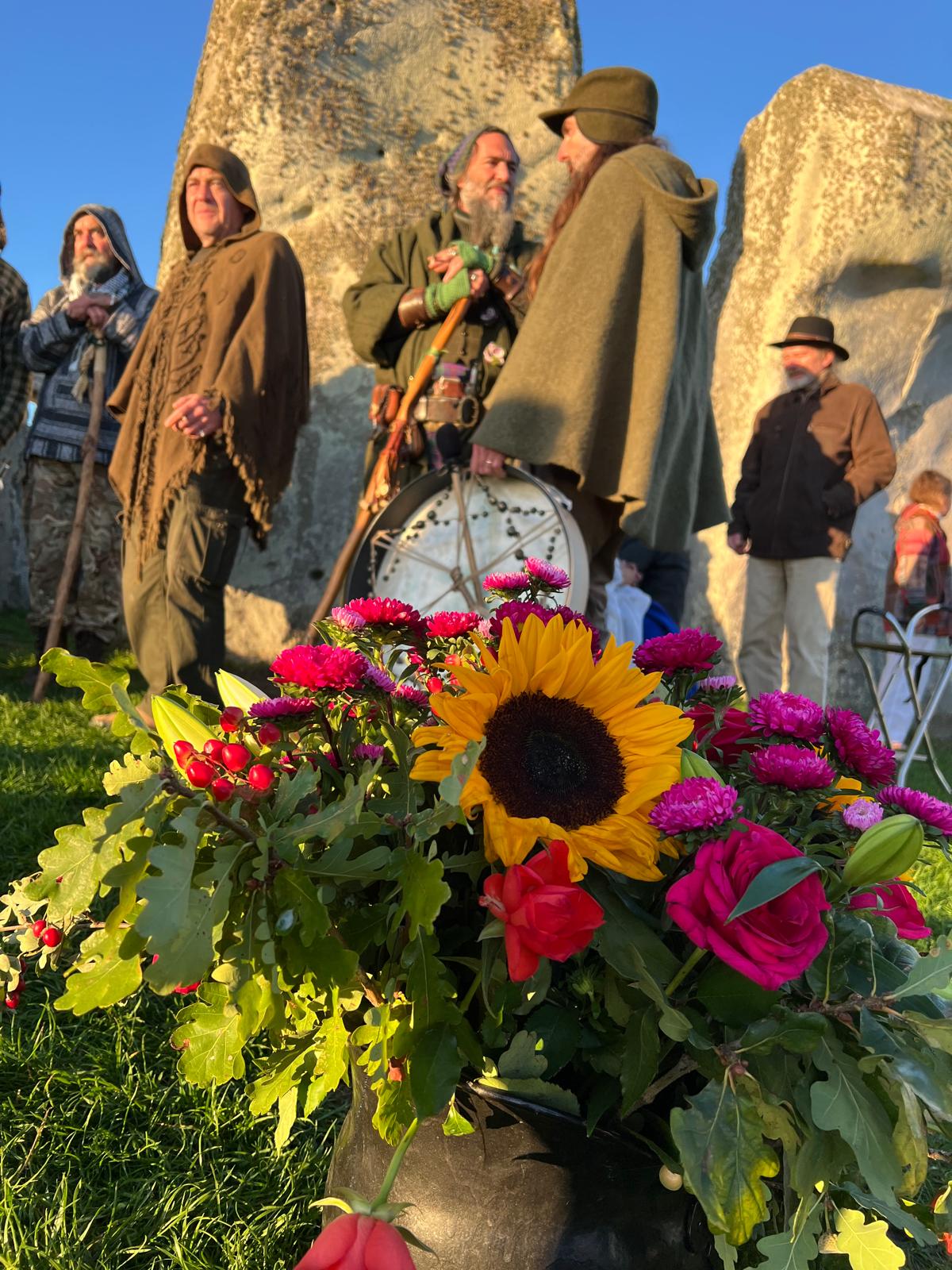
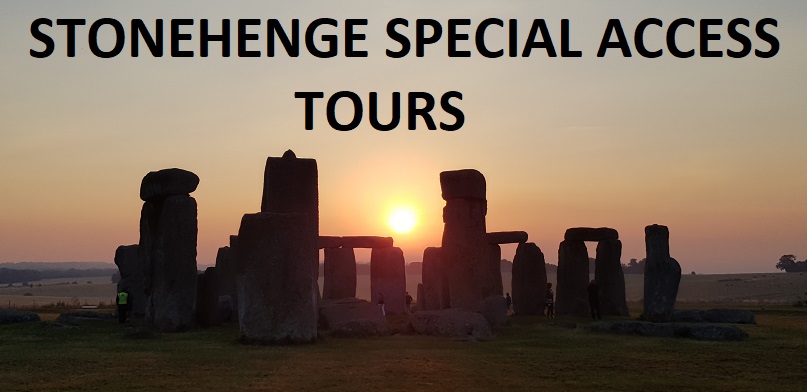
Stonehenge Autumn Equinox (Mabon) Managed Open Access Arrangements: 23rd September 2026

28 08 2026

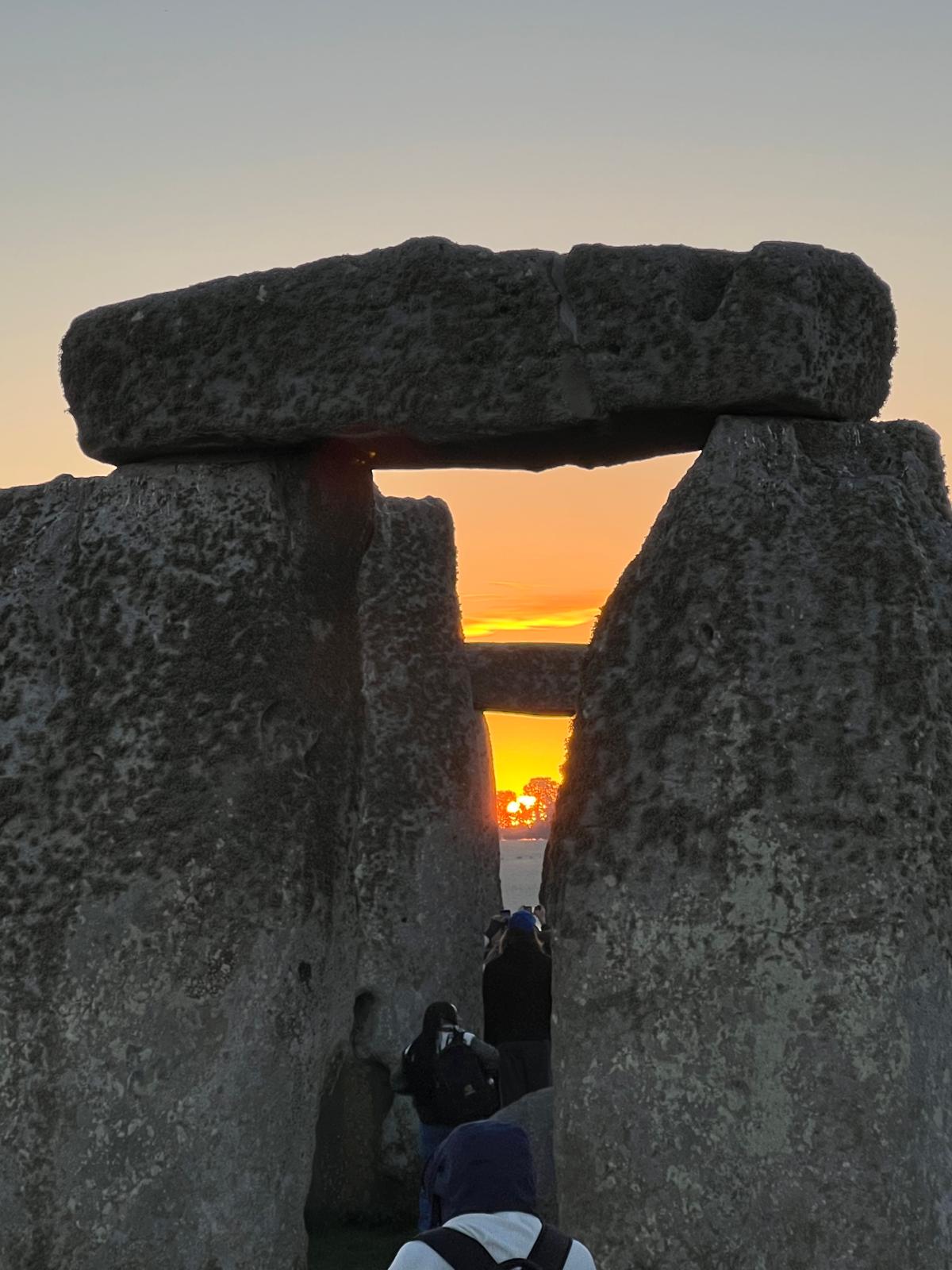
The Autumn Equinox (Mabon) is rapidly approaching as the last days of summer slowly come to an end. English Heritage are expected to offer a short period of access, from first light or safe enough to enter the monument field (approximately 06.15am until 08:30am) on the 23rd September.
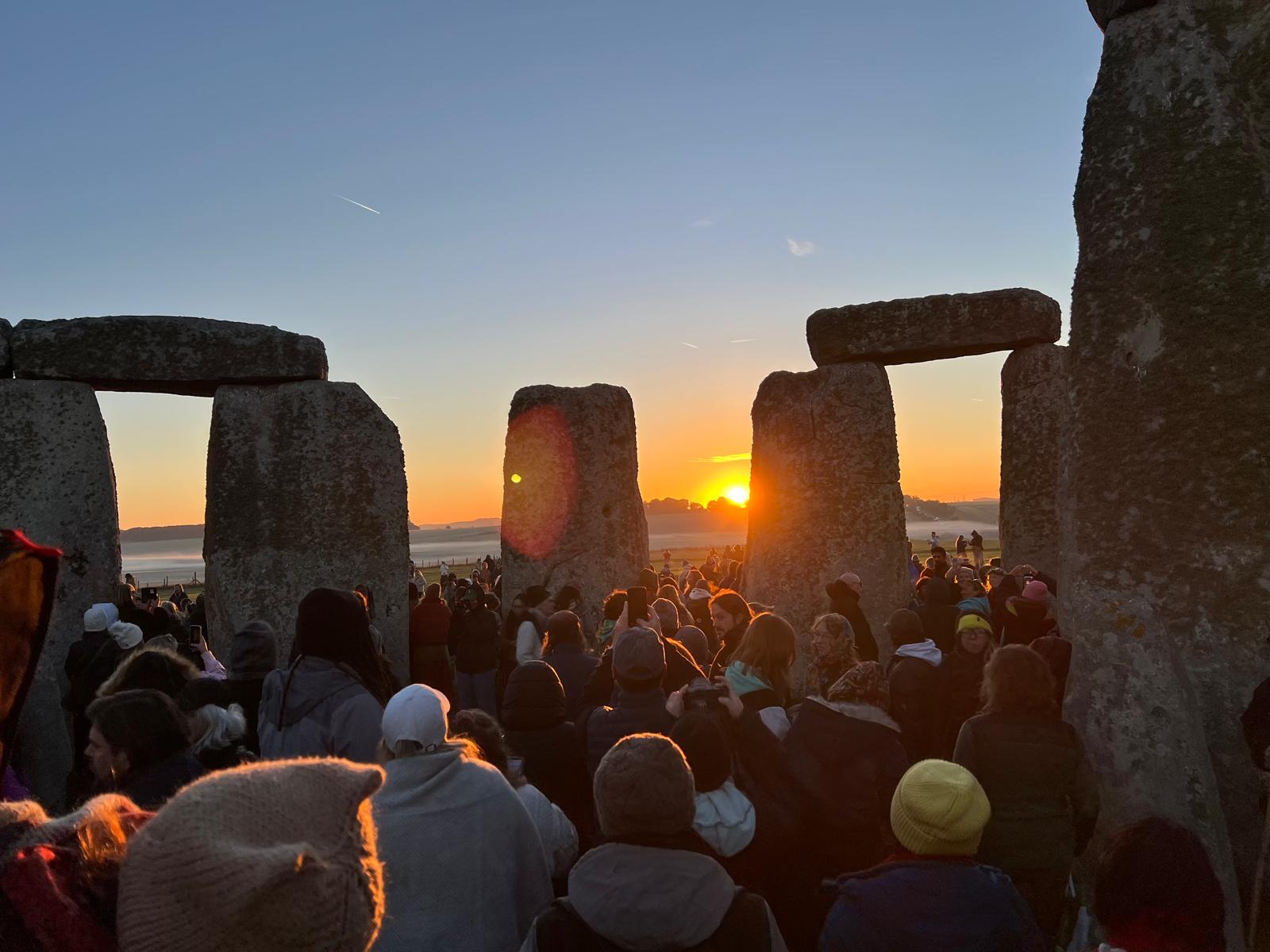
Entry to the monument will begin between 05:45 – 06.15 hours (or when it is light enough to safely enter) on Tuesday 23rd September.

The Stonehenge car park will open at 05:15am. All vehicles must vacate the car parks by 11am.
Please note: there is a 25-30 minute walk (approximately 1½ miles or 2km) from the Stonehenge Visitor Centre to Stonehenge. This walk is across National Trust downland which is uneven: sensible footwear and a torch are advisable.

There will be a shuttle bus to the stones operating once the monument field has been opened (see times above).

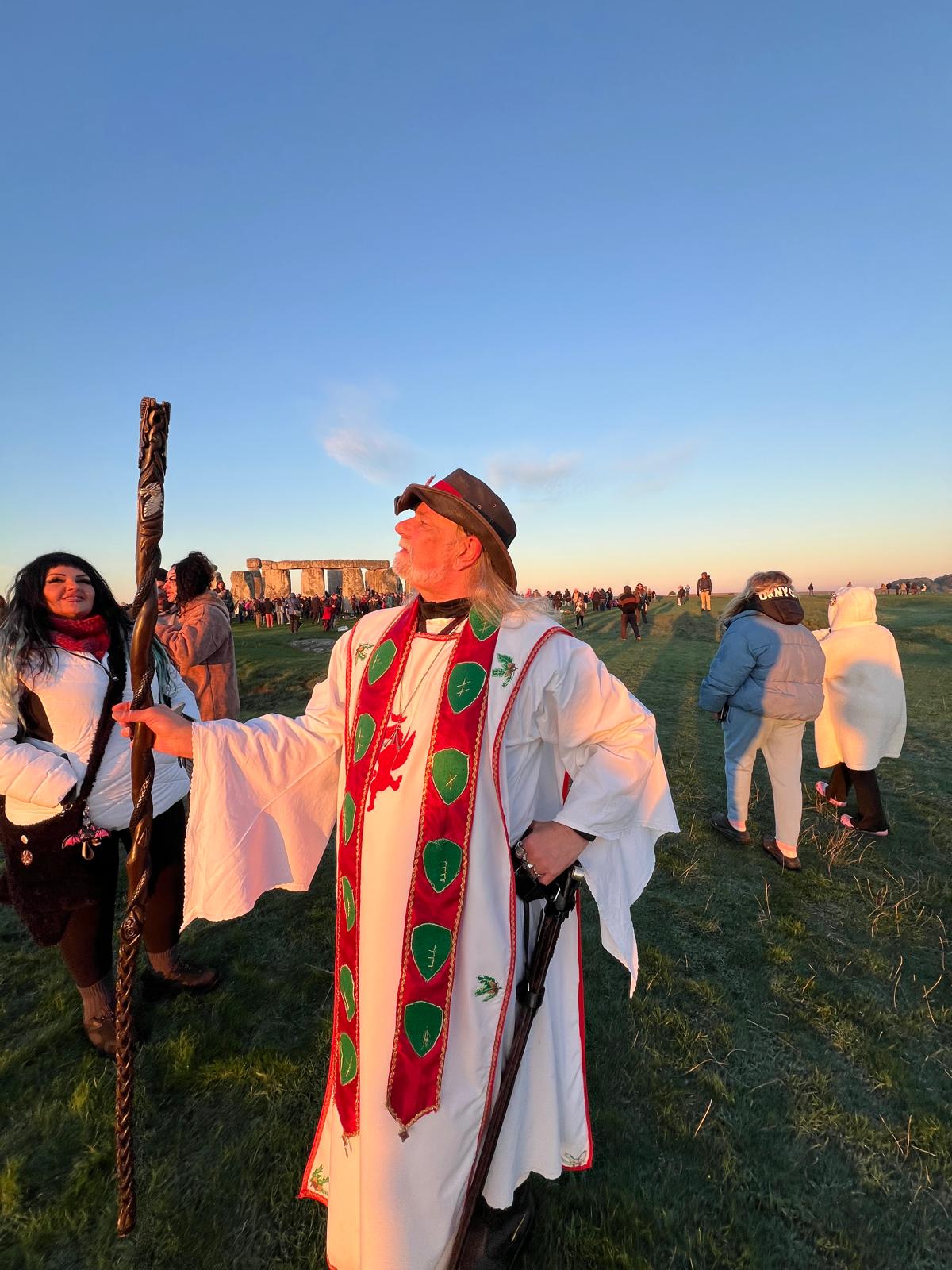
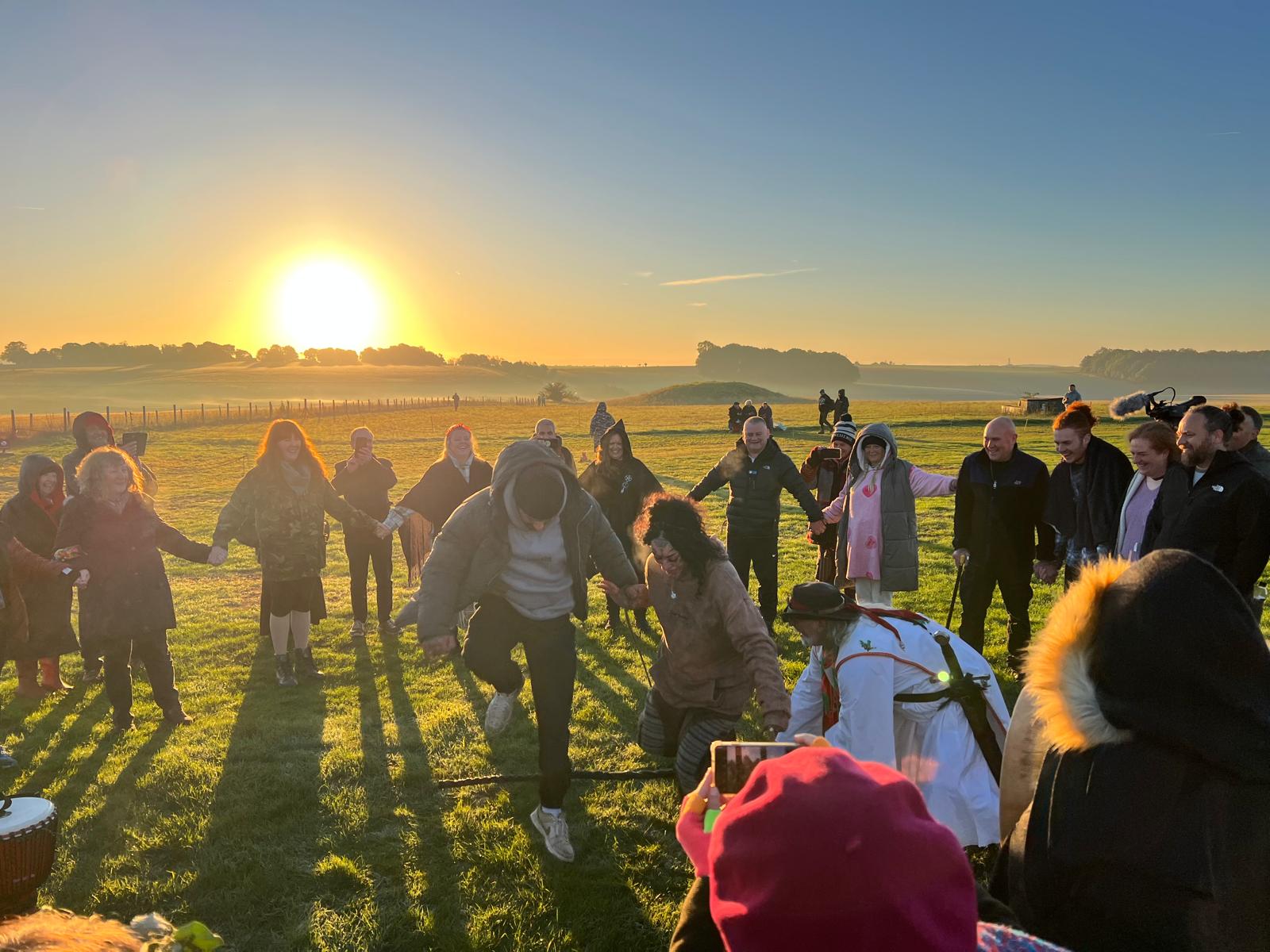
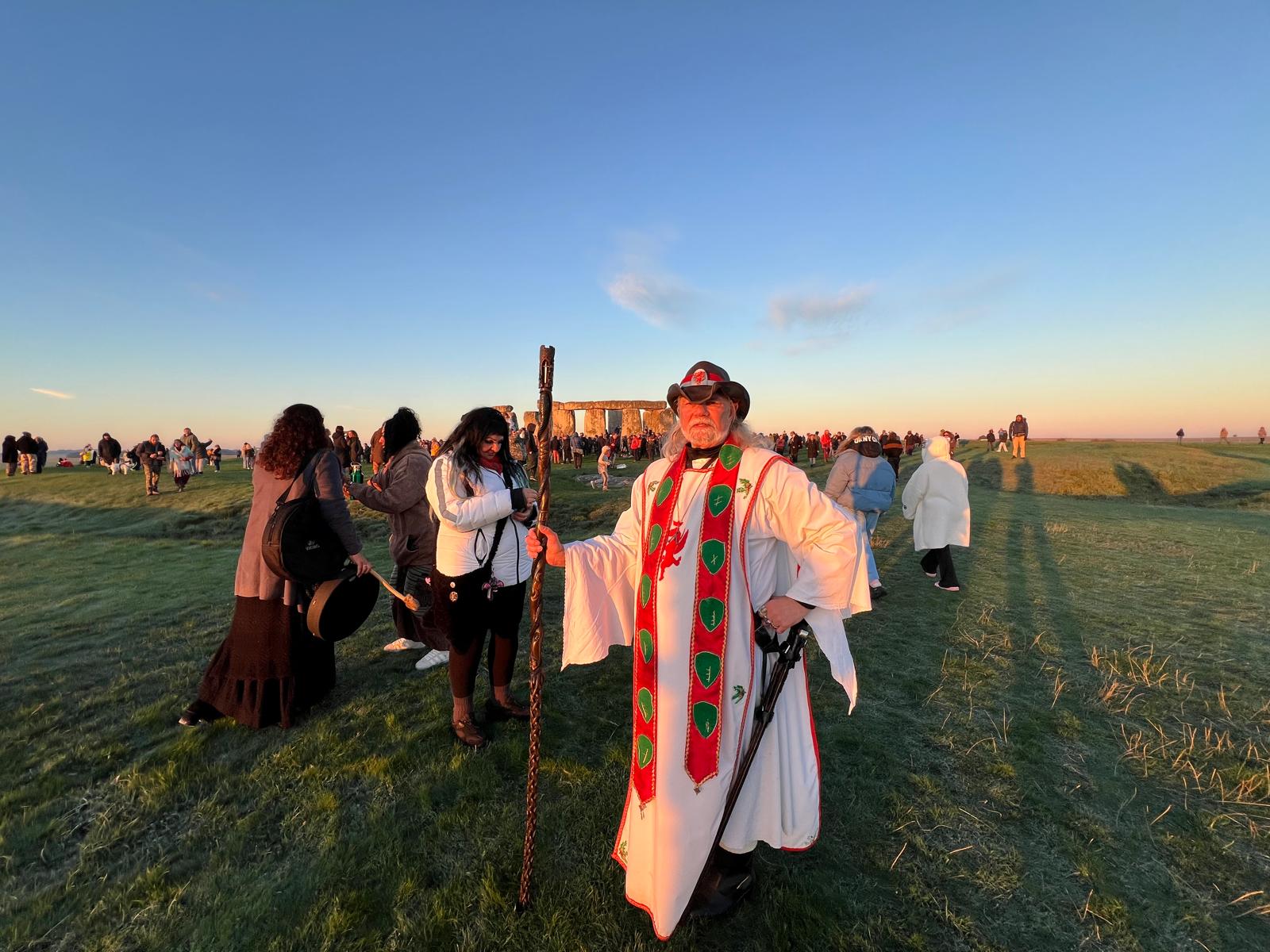
he Autumn Equinox is one of the rare occasions that English Heritage opens up the stones for public access. Equinox open access attracts fewer people than the Solstices – in the several hundreds rather than tens of thousands – and there are modern Druid ceremonies which are held in the circle around dawn, so if you prefer a quieter experience then attending the Autumn Equinox is a good choice.

English Heritage has facilitated Managed Open Access (MOA) to Stonehenge for the celebration of the summer solstice, winter solstice, spring and autumn equinox (spring and autumn equinox fall outside of this contract). English Heritage provides access to the stone circle and the monument field, free of charge to anyone who wishes to attend, but asks all those attending to comply with conditions of entry to ensure the safety of all visitors and to protect the monument. To safely provide MOA across the year, English Heritage works in partnership with Wiltshire Police and Wiltshire Council and engages experienced event managers and health and safety experts.

Please note: there is a 25-30 minute walk (approximately 1½ miles or 2km) from the Stonehenge Visitor Centre to Stonehenge. This walk is across National Trust downland which is uneven: sensible footwear and a torch are advisable.

Mabon is a harvest festival, the second of three, that encourages pagans to “reap what they sow,” both literally and figuratively. It is the time when night and day stand equal in duration; thus is it a time to express gratitude, complete projects and honor a moment of balance.

What is the Equinox?
The equinox is when day and night are actually the same length. It happens several days before the spring equinox, and a few days after the autumn one.

The reason day and night are only almost equal on the equinox is because the sun looks like a disk in the sky, so the top half rises above the horizon before the centre

The Earth’s atmosphere also refracts the sunlight, so it seems to rise before its centre reaches the horizon. This causes the sun to provide more daylight than many people might expect, offering 12 hours and 10 minutes on the equinox.

The word ‘equinox’ itself actually mean ‘equal’ (equi) and ‘night’ (nox).

Respecting the Stones
Stonehenge is protected under the Ancient Monuments and Archaeological Areas Act and you must adhere to the regulations outlined in the act or face criminal prosecution. No person may touch, lean against, stand on or climb the stones, or disturb the ground in any wayView the conditions of entry and respect the Stones

MORE INFORMATION

You can find out more about attending Solstice and Equinox by clicking on the links below.

Travelling to Stonehenge

What (and what not) to bring

Respect the stones

Safety, facilities and welfare

Accessibility

Accommodation

Equinox Links:
Stonehenge Autumn Equinox Conditions – English Heritage
Stonehenge Autumn Equinox Tours departing from Bath – Solstice Tours UK
What is the autumnal equinox? Royal Museums Greenwich
Autumn Equinox Tours and Transfers from London Stonehenge Guided Rock Tours
What is the Autumn equinox? Here’s what you need to know. National Geographic
Stonehenge and the Druids – Who are the Druids? Stonehenge News Blog
The Stonehenge Pilgrims – Stonehenge News Blog

Follow us on Twitter / Facebook / Instagram / Stonehenge News Blog for 2026 Equinox updates and are usual live feeds on the morning
The Stonehenge News Blog


There’s a story about an incident at Stonehenge that occurred while it was being built.

24 08 2026

The Friar’s Heel and the Heelstone

The Devil (it’s always the Devil) was arranging the stones – presumably after bringing them back from Ireland in his apron, having swindled the owner out of them for a paltry sum, but that’s another story – and chortled to himself that no-one would ever know how they came to be there.

“That’s more than thee canst tell!” came a voice from behind a nearby bush.

The Devil whipped round and spotted a Friar who’d been hiding and watching him all this time. The Friar realised that giving himself away to Old Nick like this wasn’t perhaps the best idea, and took to his heels.

As he was running away, the Devil – furious that his plan had been thwarted – flung the rock he was holding at the retreating figure. And it hit him on the foot.

But the Friar, being a pious man, wasn’t damaged by the impact. Instead the imprint of his heel was left in the rock for all time.

The stone that the Devil threw is often said to be the Heelstone, and people point to the fact that it bears the imprint of a heel on its face (the smooth curve just inside the red dotted line in this photo).

Trouble is, this is a HUGE feature, so unless the Friar’s also a giant (and that’s yet another story), then something’s not right.

John Aubrey wrote in his famous Monumenta Britannica in the mid 17th century:

“One of the great Stones that lies downe, on the west side, hath a cavity something resembling the

print of a mans foot; concerning which, the Shepherds and countrey people have a Tradition (which many of them doe stedfastly believe) that when Merlin conveyed these Stones from Ireland by Art Magick, the Devill hitt him in the heele with that stone, and so left the print there.”

Hang on – the Heelstone is on the northeast side of Stonehenge not the west. And the Heelstone is upright not lying down. Clearly Aubrey’s talking about an entirely different stone.

Aubrey is repeating the story of Merlin’s involvement, which was originally set down by Geoffrey of Monmouth in the 12th Century and subsequently embellished to include the Devil by later medieval re-tellers.

By the 18th Century, John Wood (of Bath architecture renown) had further reinforced the Merlin + Devil + thrown stone tale in his 1747 book, which included the first accurate plan of the monument, but he didn’t associate the Friar’s Heel imprint or name with the Heelstone.

The guilty party is one Dr John Smith in his 1771 book “Choir Gaur: the Grand Orrery of the Ancient Druids, Commonly Called Stonehenge” where he confidently, and completely wrongly writes:

“As the spectator advances, from the valley, up the grand avenue to the temple, the first stone, that offers to his view, is called the Friar’s Heel, and stands two hundred and ten feet from the body of the structure”

Incidentally, Smith also gave us the incorrect information that the Heelstone was designed to mark the position of the rising summer solstice Sun. It wasn’t and doesn’t, but that’s still yet another story.

Smith had got himself confused, having plagiarised William Stukeley’s earlier work – but his misidentification of the Heelstone as the Friar’s Heel stuck, to the extent that even the Ordnance Survey fell for it in their mapping of the site.

So which stone, I can almost hear you ask, is really the Friar’s Heel? It’s this one – Stone 14.

Lying down on the southwest side of the circle it’s got a wide, thick, end that tapers away to a thin base.

And on the upper surface is a very human-foot-sized, and human-foot-shaped, hollow.

Poor old Lucifer – he’s forever chucking rocks at things and people and he’s usually a rotten shot – he’s as bad as a Star Wars Stormtrooper in that regard.

The one time he does actually manage to hit his target, it does no damage to the intended victim but scars the missile instead.

If this was a musical medium, I’d want to end with Sympathy for the Devil, by the Rolling Stones – seems appropriate, somehow.

Article by guest blogger and local Stonehenge historian Simon Banton


Want to visit Stonehenge with an expert tour guide and hear all about the latest discoveries? THE STONEHENGE TOUR COMPANY
Ticking Stonehenge off your bucket list. Stonehenge News Blog
Stonehenge Special Access Experience. Stonehenge News Blog
The Stonehenge Travel Company can meet you in Salisbury or the railway station and conduct small group private guided tours at very reasonable prices. They also include Durrington Walls and Woodhenge.
Stonehenge Guided Tours offer small group and private guided tours, including the Stonehenge VIP access experience with departures from London, Bath, Salisbury and Southampton.

The Stonehenge News Blog
Follow us on Twitter and Facebook for all the latest Stonehenge news and stories


On August 12th 2026, the Moon will be almost exactly between the Earth and the Sun as seen from Stonehenge.

11 08 2026

Living near a Powder Keg and handing out Sparks.

At 18:18 BST, the limb of the Moon will begin to encroach upon the right hand side of the Sun’s disc, covering more and more of it until at 19:13 around 93% will be obscured. And by 20:07 it’ll all be over as the Moon leaves the left hand side of the Sun.

Britain won’t see more of the Sun eclipsed than this until the total eclipse in 2090.

In case you happen to be going to Stonehenge for the evening on the 12th, perhaps you’ve been lucky enough to get a spot on one of the Stone Circle Access tours that day, then this diagram shows you where you probably want to be standing. Surprisingly, it’s not inside the circle, it’s off to the east of it.

From this position the start of the eclipse happens about 20° above the horizon, well above the monument and just to the left of the Great Trilithon (Stones 53, 54 and 154). Over the next hour, the Sun sinks to an altitude of 11° at maximum eclipse directly above the western trilithon (Stones 57, 58 and 158) and the descends further over the subsequent 50 minutes until it disappears into the lintel ring at the moment the eclipse ends.

It’d be a cool place to put a camera with a very dark neutral density filter fitted to take a timelapse as the eclipse progresses and then montage the images together over an unfiltered shot of the monument in the foreground.

I won’t be there this time around. I’ll be watching the eclipse from my front garden through a solar telescope and a hydrogen alpha filter so I can directly observe the event close up – something I’ve wanted to do since I was 7 years old (my local camera shop – Fair’s Cameras in Bebington – didn’t quite know what to make of a 7 year old asking if they sold H. alpha filters!).

Back in 2015 at the vernal equinox there was a partial eclipse of the Sun over Stonehenge in the morning.

Not quite as much of the Sun was covered then as will be on Wednesday (roughly 80% versus 93%), but in 2015 I stood outside the monument field with a camera and a dark neutral density filter to take a timelapse to montage with an unfiltered shot of Stonehenge in the foreground. It was partly cloudy, but I was still satisfied with the result.

Somehow, the world’s press didn’t get the memo about where to stand, and they were all very close to the monument just out of shot above, to the right hand side. As a result, they largely failed to get the images they hoped for because the Sun was too high in the sky to be framed by the stones. I wish them better luck this time

Article by guest blogger and local Stonehenge historian Simon Banton

ECLIPSE LINKS
Mapped: The best places in the UK to watch Wednesday’s solar eclipse – The Independent
When is the solar eclipse in the UK and how to watch – Salisbury Journal
UK’s most magical solar eclipse viewing spot is just one hour from Somerset – not Stone Henge – Somerset Live
Exact timings for solar eclipse as South West to have best view of phenomenon – Somerset Live
What is a solar eclipse and why do they happen? – BBC
Where to watch the August 2026 solar eclipse in London: best places & timings – Time Out
Europe’s total solar eclipse: the best place to see it and how to view it safely – The Guardian
Stonehenge – Eclipse Predictor? – The Stonehenge News Blog
Local Tour Company with expert Stonehenge Guides –Stonehenge Tour Company
Operator specialising in Stonehenge Private Access Inner Circle Tours – Stonehenge Guided Rock Tours
Company offering Stonehenge Solstice and Equinox Tours – Solstice Events U.K

The Stonehenge News Blog
Follow us on Twitter and Facebook for all the latest Stonehenge news including the Moon phase’s and astronomical events