Living near a Powder Keg and handing out Sparks.
At 18:18 BST, the limb of the Moon will begin to encroach upon the right hand side of the Sun’s disc, covering more and more of it until at 19:13 around 93% will be obscured. And by 20:07 it’ll all be over as the Moon leaves the left hand side of the Sun.
Britain won’t see more of the Sun eclipsed than this until the total eclipse in 2090.
In case you happen to be going to Stonehenge for the evening on the 12th, perhaps you’ve been lucky enough to get a spot on one of the Stone Circle Access tours that day, then this diagram shows you where you probably want to be standing. Surprisingly, it’s not inside the circle, it’s off to the east of it.

From this position the start of the eclipse happens about 20° above the horizon, well above the monument and just to the left of the Great Trilithon (Stones 53, 54 and 154). Over the next hour, the Sun sinks to an altitude of 11° at maximum eclipse directly above the western trilithon (Stones 57, 58 and 158) and the descends further over the subsequent 50 minutes until it disappears into the lintel ring at the moment the eclipse ends.
It’d be a cool place to put a camera with a very dark neutral density filter fitted to take a timelapse as the eclipse progresses and then montage the images together over an unfiltered shot of the monument in the foreground.
I won’t be there this time around. I’ll be watching the eclipse from my front garden through a solar telescope and a hydrogen alpha filter so I can directly observe the event close up – something I’ve wanted to do since I was 7 years old (my local camera shop – Fair’s Cameras in Bebington – didn’t quite know what to make of a 7 year old asking if they sold H. alpha filters!).
Back in 2015 at the vernal equinox there was a partial eclipse of the Sun over Stonehenge in the morning.
Not quite as much of the Sun was covered then as will be on Wednesday (roughly 80% versus 93%), but in 2015 I stood outside the monument field with a camera and a dark neutral density filter to take a timelapse to montage with an unfiltered shot of Stonehenge in the foreground. It was partly cloudy, but I was still satisfied with the result.

Somehow, the world’s press didn’t get the memo about where to stand, and they were all very close to the monument just out of shot above, to the right hand side. As a result, they largely failed to get the images they hoped for because the Sun was too high in the sky to be framed by the stones. I wish them better luck this time
Article by guest blogger and local Stonehenge historian Simon Banton
ECLIPSE LINKS
Mapped: The best places in the UK to watch Wednesday’s solar eclipse – The Independent
When is the solar eclipse in the UK and how to watch – Salisbury Journal
UK’s most magical solar eclipse viewing spot is just one hour from Somerset – not Stone Henge – Somerset Live
Exact timings for solar eclipse as South West to have best view of phenomenon – Somerset Live
What is a solar eclipse and why do they happen? – BBC
Where to watch the August 2026 solar eclipse in London: best places & timings – Time Out
Europe’s total solar eclipse: the best place to see it and how to view it safely – The Guardian
Stonehenge – Eclipse Predictor? – The Stonehenge News Blog
Local Tour Company with expert Stonehenge Guides –Stonehenge Tour Company
Operator specialising in Stonehenge Private Access Inner Circle Tours – Stonehenge Guided Rock Tours
Company offering Stonehenge Solstice and Equinox Tours – Solstice Events U.K
The Stonehenge News Blog
Follow us on Twitter and Facebook for all the latest Stonehenge news including the Moon phase’s and astronomical events
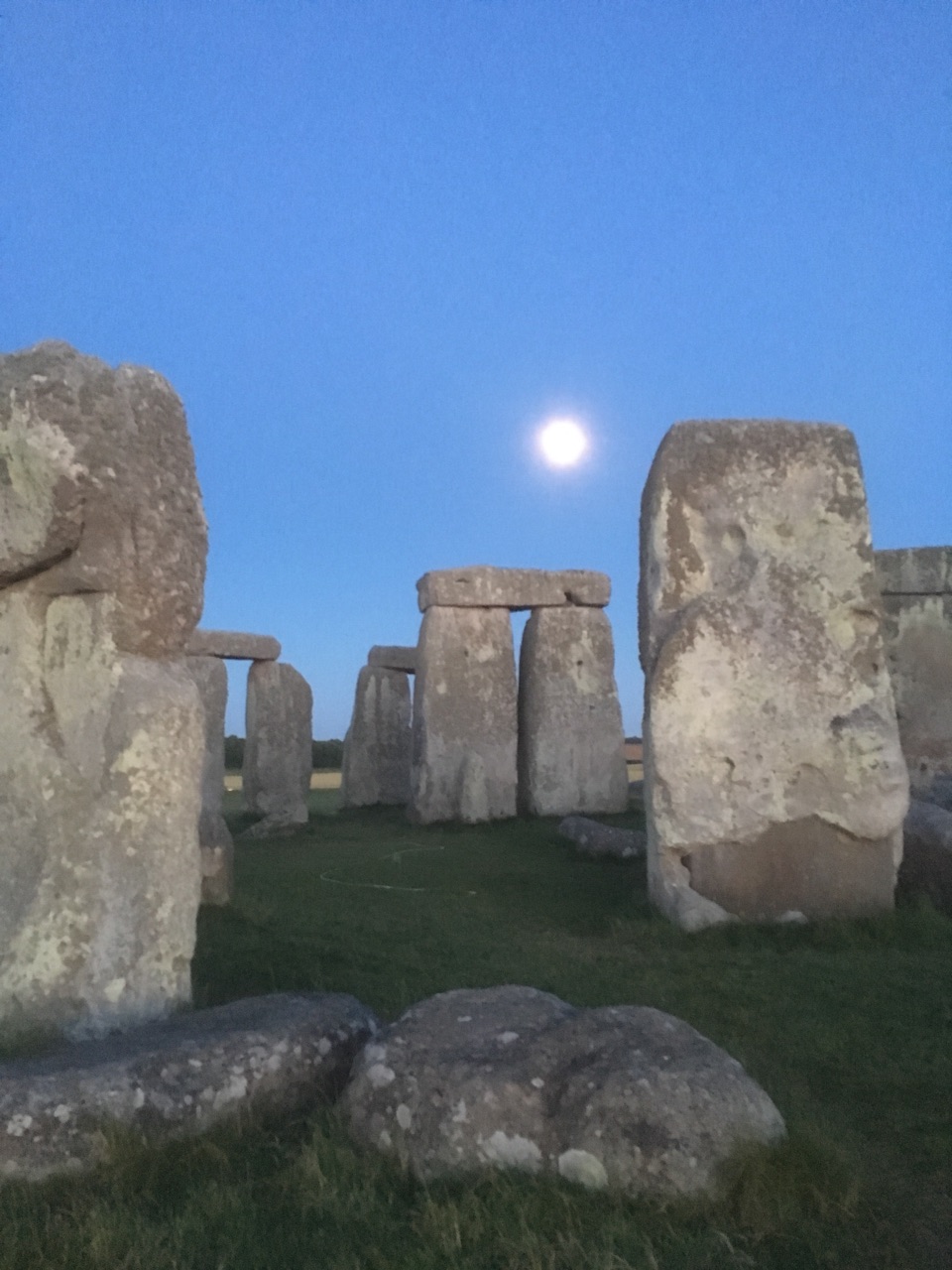 moon has come this close to Earth since 1948.




 StonehengeNews
 travelstonehenge