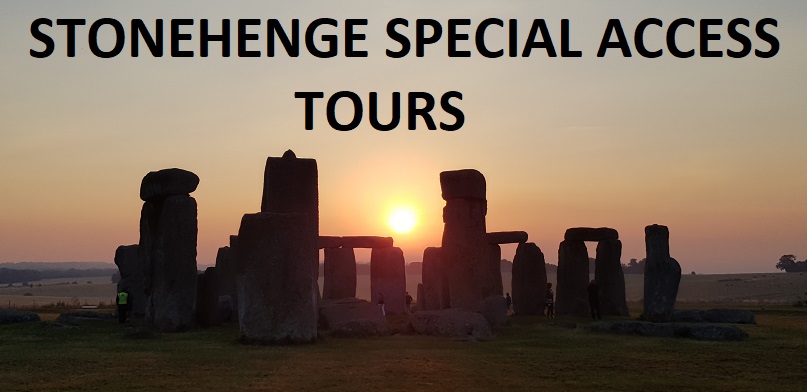
On August 12th 2026, the Moon will be almost exactly between the Earth and the Sun as seen from Stonehenge.

11 08 2026

Living near a Powder Keg and handing out Sparks.

At 18:18 BST, the limb of the Moon will begin to encroach upon the right hand side of the Sun’s disc, covering more and more of it until at 19:13 around 93% will be obscured. And by 20:07 it’ll all be over as the Moon leaves the left hand side of the Sun.

Britain won’t see more of the Sun eclipsed than this until the total eclipse in 2090.

In case you happen to be going to Stonehenge for the evening on the 12th, perhaps you’ve been lucky enough to get a spot on one of the Stone Circle Access tours that day, then this diagram shows you where you probably want to be standing. Surprisingly, it’s not inside the circle, it’s off to the east of it.

From this position the start of the eclipse happens about 20° above the horizon, well above the monument and just to the left of the Great Trilithon (Stones 53, 54 and 154). Over the next hour, the Sun sinks to an altitude of 11° at maximum eclipse directly above the western trilithon (Stones 57, 58 and 158) and the descends further over the subsequent 50 minutes until it disappears into the lintel ring at the moment the eclipse ends.

It’d be a cool place to put a camera with a very dark neutral density filter fitted to take a timelapse as the eclipse progresses and then montage the images together over an unfiltered shot of the monument in the foreground.

I won’t be there this time around. I’ll be watching the eclipse from my front garden through a solar telescope and a hydrogen alpha filter so I can directly observe the event close up – something I’ve wanted to do since I was 7 years old (my local camera shop – Fair’s Cameras in Bebington – didn’t quite know what to make of a 7 year old asking if they sold H. alpha filters!).

Back in 2015 at the vernal equinox there was a partial eclipse of the Sun over Stonehenge in the morning.

Not quite as much of the Sun was covered then as will be on Wednesday (roughly 80% versus 93%), but in 2015 I stood outside the monument field with a camera and a dark neutral density filter to take a timelapse to montage with an unfiltered shot of Stonehenge in the foreground. It was partly cloudy, but I was still satisfied with the result.

Somehow, the world’s press didn’t get the memo about where to stand, and they were all very close to the monument just out of shot above, to the right hand side. As a result, they largely failed to get the images they hoped for because the Sun was too high in the sky to be framed by the stones. I wish them better luck this time

Article by guest blogger and local Stonehenge historian Simon Banton

ECLIPSE LINKS
Mapped: The best places in the UK to watch Wednesday’s solar eclipse – The Independent
When is the solar eclipse in the UK and how to watch – Salisbury Journal
UK’s most magical solar eclipse viewing spot is just one hour from Somerset – not Stone Henge – Somerset Live
Exact timings for solar eclipse as South West to have best view of phenomenon – Somerset Live
What is a solar eclipse and why do they happen? – BBC
Where to watch the August 2026 solar eclipse in London: best places & timings – Time Out
Europe’s total solar eclipse: the best place to see it and how to view it safely – The Guardian
Stonehenge – Eclipse Predictor? – The Stonehenge News Blog
Local Tour Company with expert Stonehenge Guides –Stonehenge Tour Company
Operator specialising in Stonehenge Private Access Inner Circle Tours – Stonehenge Guided Rock Tours
Company offering Stonehenge Solstice and Equinox Tours – Solstice Events U.K

The Stonehenge News Blog
Follow us on Twitter and Facebook for all the latest Stonehenge news including the Moon phase’s and astronomical events
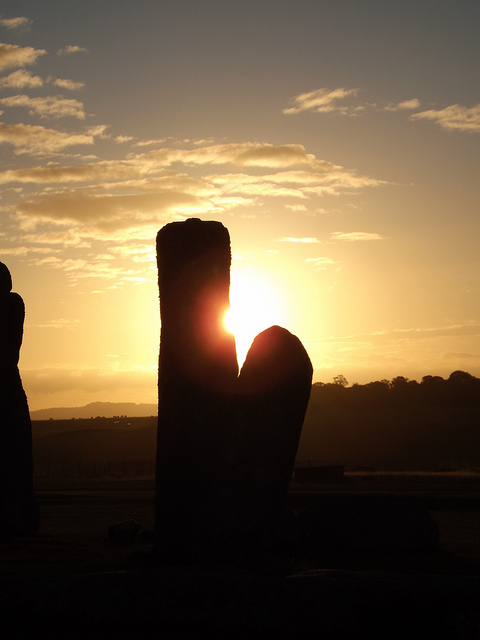


Friday will see a rare cosmic coincidence. Was Stonehenge used to predict eclipses?

19 03 2015

As the eclipse plunges Wiltshire and other places into darkness this Friday (March 20th), two other rare if less spectacular celestial events will be taking place, too: the Spring equinox and a Supermoon. Friday will see three rare celestial events and this will be the first time in living memory that the Spring equinox, a solar eclipse, and a supermoon are all taking place on the same day in the UK.

One of the most intriguing mysteries in the world is the Stonehenge. Nobody knows who built the mysterious Stone Circle in Wiltshire, or what its purpose was exactly. There are many theories associated with Stonehenge and archaeologists have been debating for ages to determine why it was built. Most experts believe that Stonehenge is actually an ancient astronomical calculator.

Eclipses have long been feared as bad omens, but the equinox is celebrated as a time of renewal

Eclipses have long been feared as bad omens, but the equinox is celebrated as a time of renewal

Eclipse Cycles

Now, it’s widely accepted that Stonehenge was used to predict eclipses. The inner “horseshoe” of 19 stones at the very heart of Stonehenge actually acted as a long-term calculator that could predict lunar eclipses. By moving one of Stonehenge’s markers along the 30 markers of the outer circle, it’s discovered that the cycle of the moon can be predicted. Moving this marker one lunar month at a time – as opposed to one lunar day the others were moved – made it possible for them to mark when a lunar eclipse was going to occur in the typical 47-month lunar eclipse cycle. The marker would go around the circle 38 times and halfway through its next circle, on the 47th full moon, a lunar eclipse would occur.

Aubrey Holes
Stonehenge has a ring of 56 pits that are now known as Aubrey holes, after antiquarian John Aubrey. They date back to the late fourth and early fifth millennium. These holes were not really noticed until the 1920s. It’s believed that the only standing feature at Stonehenge at the time these holes were dug was the Heel Stone – the marker of the midsummer sunrise – but this is now proven false. Some experts believe they were meant to hold timbers or more stones, but the astronomical interpretations of these holes are very interesting. It’s also believed that the holes helped to predict astronomical events. Complicated math theories back this up to some degree, as some lunar eclipses can be predicted by using numbers associated with Stonehenge. It’s even believed that Stonehenge was used to keep track of lunar cycles by moving marker stones two holes per day, ending with 56 holes.

Hawkins
Meanwhile, Gerald Hawkins studied Stonehenge much later, in 1965, using computer programs. He found multiple solar and lunar alignments that correlated with the location

of Stonehenge. He set his data so that the positions of the stars and planets would match where they were in 1500 B.C., when he believed it was built, and found that 13 solar correlations and 11 lunar correlations matched up with the megalithic stages. In other words, he believed Stonehenge was used to predict astronomical events. He also believed that it was built to align with the position of the summer and winter solstices.

What is a solar eclipse?
A solar eclipse happens when the moon passes between the sun and the earth, hiding the sun from view and blocking out the sunlight that usually reaches us.

The eclipse, which will be partial, not total, will begin here at around 8.45am on Friday and peak at around 9.30am before ending at 10.30am. It will be the biggest eclipse since August 1999.

Spring equinox

The equinox will also happen on March 20th. While it won’t have any discernable, direct impact on how the solar eclipse looks, it will contribute to a rare collision of three unusual celestial events.

On March 20th, the Earth’s axis will be perpindecular to the sun’s rays — which only happens twice a year, at the two equinoxes. After that, it will start tipping over, making the days longer in the northern hemisphere.

As such, the equinox has long been celebrated as a time of beginning and renewal, by a number of historic cultures, and is linked to Easter and Passover.

The equinox will happen at the same time as a solar eclipse in 2053 and 2072, though it doesn’t always appear as close together as that.

English Heritage will welcome people to Stonehenge to celebrate the Spring (Vernal) Equinox on Saturday 21st March. Expect a short period of access, from first light (approximately 05:45am) until 08:30am. Click here for more info

Supermoon

A very rare supermoon eclipse of the sun is happening this week that won’t take place again until 2034.  A supermoon is when a full, or new moon coincides with the night when the earth and moon’s orbits move them slightly closer together, making the moon look about 14% bigger, and 30% brighter than normal. This generally happens roughly once every 14 months, but can happen more often; in January 2014, there were actually two supermoons in a single month.

In the past, groups have argued that the supermoon could cause natural disasters, madness, or even throw the earth off its axis. Experts agree that the worst thing that might happen is the tide comes in another inch that night.  As well as a supermoon, there is also an event when a full moon is as far away from earth as possible; this is called a micromoon, for obvious reasons.

Some useful Links:

Solar eclipse, Supermoon, Spring equinox:

Solar Eclipse, Supermoon, Spring Equinox: 3 Rare Celestial Events Align March 20th

Solar Eclipse 2015: How to watch a solar eclipse safely

Stonehenge: An Astronomical Calculator

Astro-Archaeology at Stonehenge

Remember that no one should look directly at the sun during a partial eclipse without proper equipment, as it can damage the eyes.

Merlin at Stonehenge
The Stonehenge News Blog
Follow us on Twitter for Stonehenge updates