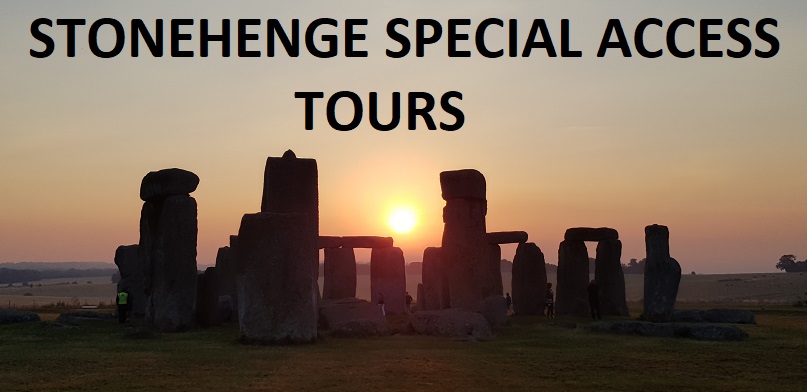
On August 12th 2026, the Moon will be almost exactly between the Earth and the Sun as seen from Stonehenge.

11 08 2026

Living near a Powder Keg and handing out Sparks.

At 18:18 BST, the limb of the Moon will begin to encroach upon the right hand side of the Sun’s disc, covering more and more of it until at 19:13 around 93% will be obscured. And by 20:07 it’ll all be over as the Moon leaves the left hand side of the Sun.

Britain won’t see more of the Sun eclipsed than this until the total eclipse in 2090.

In case you happen to be going to Stonehenge for the evening on the 12th, perhaps you’ve been lucky enough to get a spot on one of the Stone Circle Access tours that day, then this diagram shows you where you probably want to be standing. Surprisingly, it’s not inside the circle, it’s off to the east of it.

From this position the start of the eclipse happens about 20° above the horizon, well above the monument and just to the left of the Great Trilithon (Stones 53, 54 and 154). Over the next hour, the Sun sinks to an altitude of 11° at maximum eclipse directly above the western trilithon (Stones 57, 58 and 158) and the descends further over the subsequent 50 minutes until it disappears into the lintel ring at the moment the eclipse ends.

It’d be a cool place to put a camera with a very dark neutral density filter fitted to take a timelapse as the eclipse progresses and then montage the images together over an unfiltered shot of the monument in the foreground.

I won’t be there this time around. I’ll be watching the eclipse from my front garden through a solar telescope and a hydrogen alpha filter so I can directly observe the event close up – something I’ve wanted to do since I was 7 years old (my local camera shop – Fair’s Cameras in Bebington – didn’t quite know what to make of a 7 year old asking if they sold H. alpha filters!).

Back in 2015 at the vernal equinox there was a partial eclipse of the Sun over Stonehenge in the morning.

Not quite as much of the Sun was covered then as will be on Wednesday (roughly 80% versus 93%), but in 2015 I stood outside the monument field with a camera and a dark neutral density filter to take a timelapse to montage with an unfiltered shot of Stonehenge in the foreground. It was partly cloudy, but I was still satisfied with the result.

Somehow, the world’s press didn’t get the memo about where to stand, and they were all very close to the monument just out of shot above, to the right hand side. As a result, they largely failed to get the images they hoped for because the Sun was too high in the sky to be framed by the stones. I wish them better luck this time

Article by guest blogger and local Stonehenge historian Simon Banton

ECLIPSE LINKS
Mapped: The best places in the UK to watch Wednesday’s solar eclipse – The Independent
When is the solar eclipse in the UK and how to watch – Salisbury Journal
UK’s most magical solar eclipse viewing spot is just one hour from Somerset – not Stone Henge – Somerset Live
Exact timings for solar eclipse as South West to have best view of phenomenon – Somerset Live
What is a solar eclipse and why do they happen? – BBC
Where to watch the August 2026 solar eclipse in London: best places & timings – Time Out
Europe’s total solar eclipse: the best place to see it and how to view it safely – The Guardian
Stonehenge – Eclipse Predictor? – The Stonehenge News Blog
Local Tour Company with expert Stonehenge Guides –Stonehenge Tour Company
Operator specialising in Stonehenge Private Access Inner Circle Tours – Stonehenge Guided Rock Tours
Company offering Stonehenge Solstice and Equinox Tours – Solstice Events U.K

The Stonehenge News Blog
Follow us on Twitter and Facebook for all the latest Stonehenge news including the Moon phase’s and astronomical events


Stonehenge – Eclipse Predictor?

4 01 2017

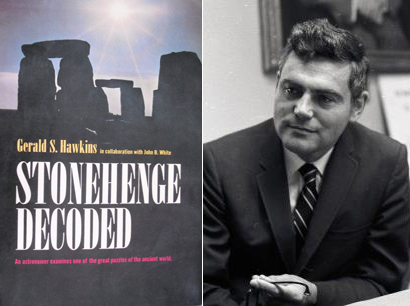
Astronomer Prof. Gerald Hawkins wrote two articles for “Nature” in 1963 and 1964 in which he pointed out several new Stonehenge alignments to the Sun and Moon and proposed that the 56 Aubrey Holes could be used to predict eclipses. His subsequent popular book “Stonehenge Decoded” gave the world the idea that the monument was a Neolithic computer.

stonehenge-decoded-and-gh

Archaeologists were horrified at the thought and the leading authority on Stonehenge at the time, one Richard Atkinson, wrote a rebuttal paper in 1966 called “Moonshine on Stonehenge” which heavily criticised Hawkins conclusions. Atkinson considered the builders of Stonehenge to be “howling barbarians” – a statement he later came to regret.

on-stonehenge-and-fhProf. Fred Hoyle followed up Hawkins’ work on the eclipse predictor idea and came up with a relatively simple recipe for moving markers around the 56 Aubrey Holes to keep track of the Sun, Moon and the two points in the sky where their paths cross (the “nodes”). He published this work in two journal articles in 1966 and then in his 1977 popular book “On Stonehenge”.
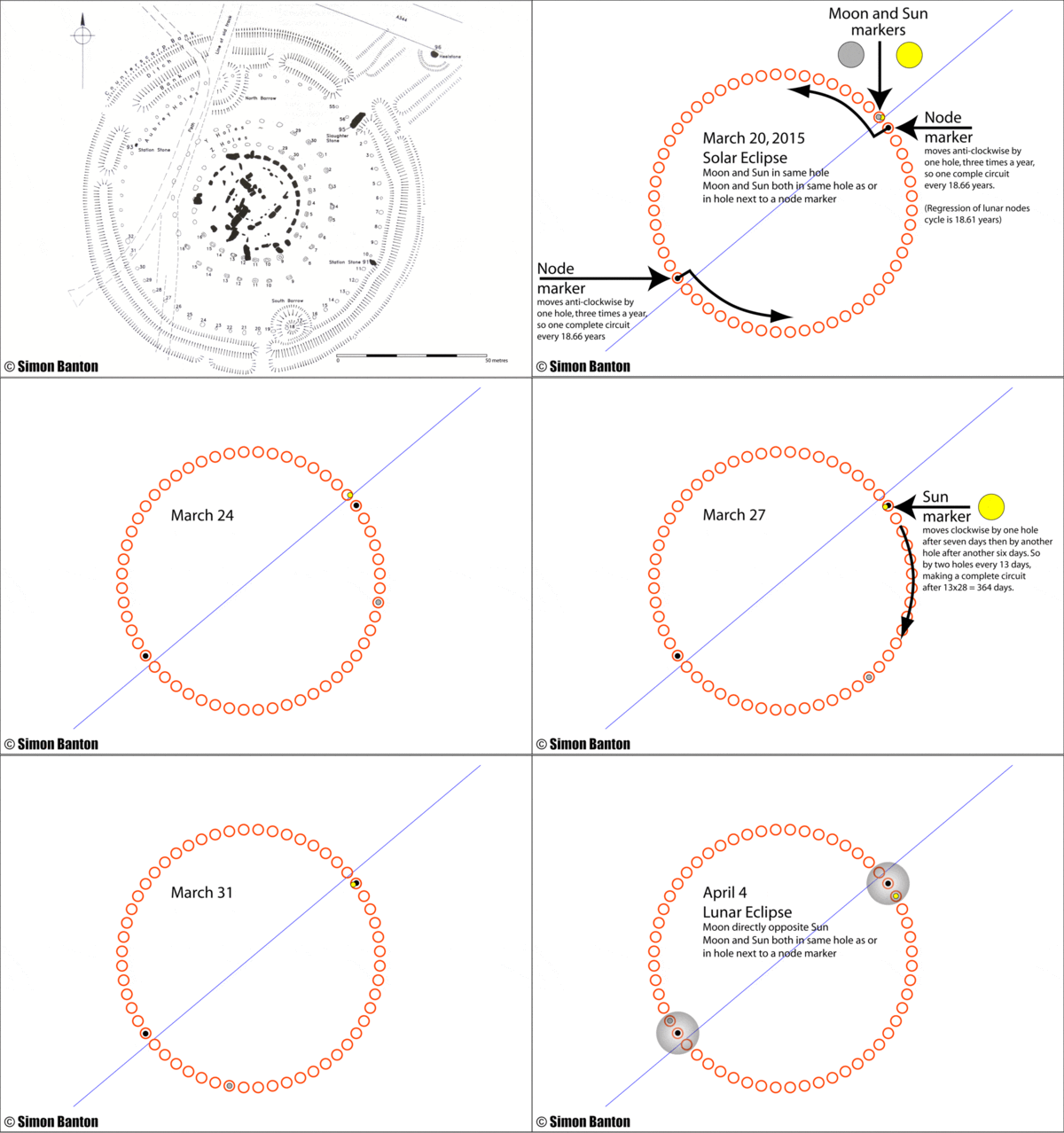
 

So how does this eclipse predictor theory work and is it possible that the Aubrey Holes were in fact used like this? We’re going to have to get slightly technical, but it’s not too hard to follow.

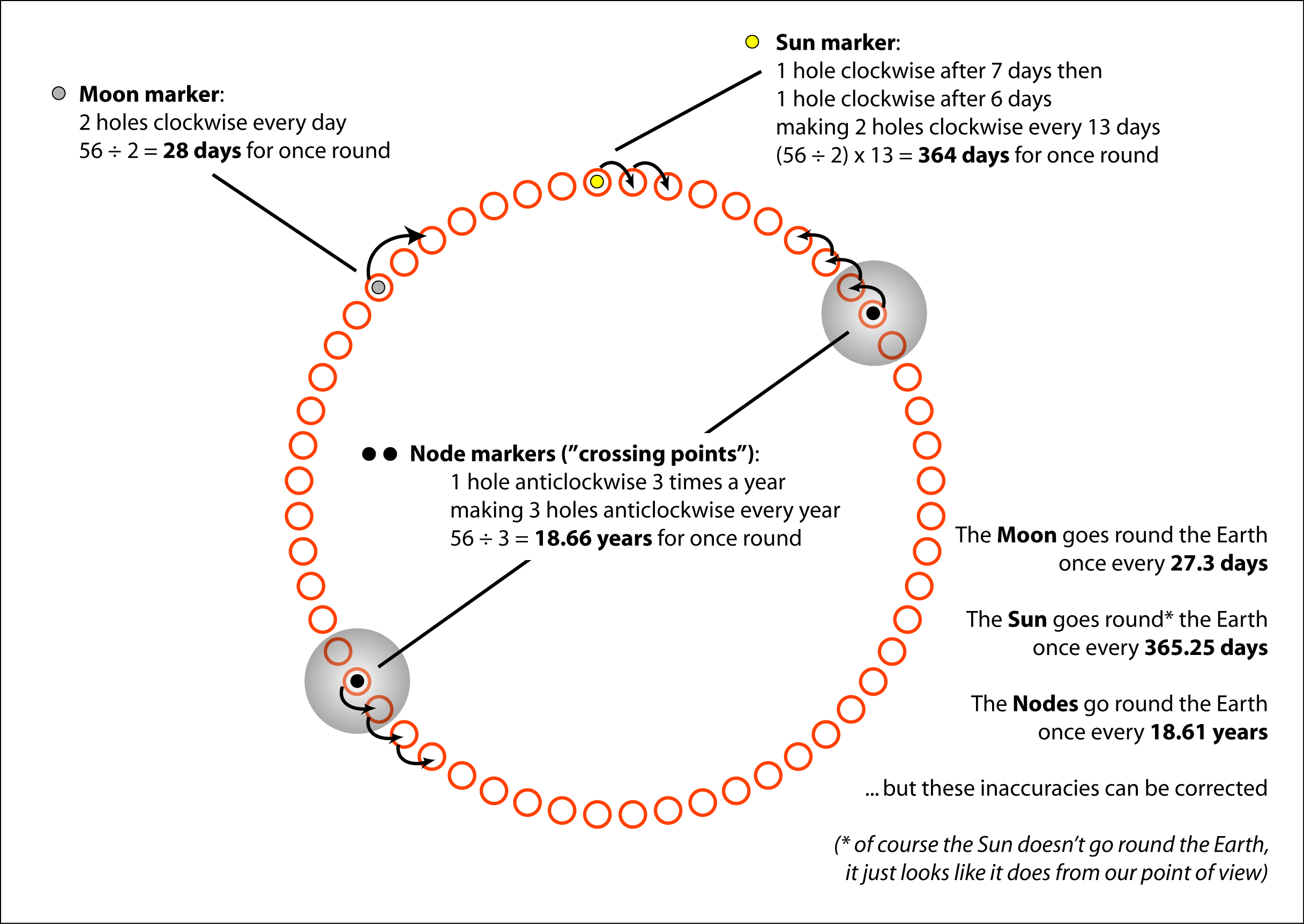
Hoyle said that you need a marker for the Sun, one for the Moon and two more for the “nodes”, and that these markers are moved around the 56 holes of the Aubrey Hole circle in a particular way.

The Moon goes around the Earth once in about 27.3 days (the “sidereal month”) so if you move your Moon marker two Aubrey Holes per day it’ll go once round the circle in 28 days.

The Sun goes around the entire sky once in about 365.25 days (the “tropical year”), so if you move your Sun marker two holes every 13 days it’ll go once round the circle in 364 days.

The points where the paths of the Sun and Moon appear to cross (the “nodes”) also gradually move around the sky, taking 18.61 years to make one revolution. This period is called “the regression of the lunar nodes” and occurs because the Moon’s orbital ellipse actually rotates slowly around the Earth.

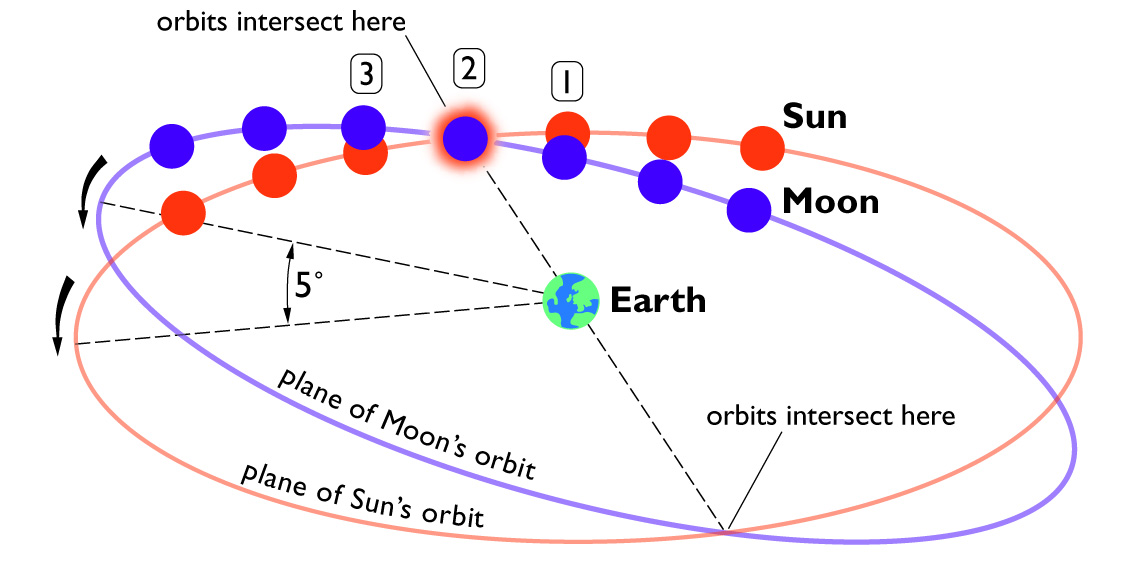
The Moon’s orbit is also tilted by about 5° to the path of the Sun in the sky, which is why we don’t get eclipses every New and Full Moon – we only get eclipses when both the Sun and Moon are at or very near the “nodes”.

Print

The node markers are always kept opposite each other – there’s the “ascending node” and the “descending node” – one for each of the two crossing points on opposite sides of the sky.

To keep track of the nodes, you move their markers 3 holes each year – in the other direction to the movement of the Sun and Moon markers. This means the node markers go backwards round the circle once in 18.66 years.

To summarise:

Arbitrary Position and Explanation.png

Now, 28 isn’t 27.3, 364 isn’t 365.25 and 18.66 isn’t 18.61 but the inaccuracies can be corrected.

Every month you can fix the Moon marker by making sure it’s in the Aubrey Hole directly opposite the Sun at Full Moon.

Twice a year, at the solstices, you can make sure that the Sun marker is in the Aubrey Hole closest to Stonehenge’s main axis – either the Aubrey Hole towards the Heel Stone at summer solstice or the one directly opposite it across the circle at winter solstice. The error between 18.66 and 18.61 is actually small enough not to matter.

Suppose you see a lunar eclipse one night, this allows you to set up the markers in the first place. The Sun and Moon markers are placed directly opposite each other (because lunar eclipses are only possible at Full Moon) and the node markers are placed one each in the same holes as the Sun and Moon markers.

Now you follow the recipe for moving the markers, day by day.

If you ever end up with the Sun and Moon markers in the same hole together, and they’re in the same hole as (or in the hole next to) a node marker then this predicts a solar eclipse. Sun and Moon markers in the same hole means New Moon, and solar eclipses are only possible then.

The following animation shows how this works, starting with the solar eclipse of March 20th 2015 and predicting the subsequent lunar eclipse of 4th April 2015.

ah-animation

If all this seems very unlikely and complicated to manage, then you may be right. Hawkins’ and Hoyle’s theories simply show how a 56 hole machine with four markers could be used to track the things that allow you to know when to expect an eclipse to occur.

One of Atkinson’s objections was that if 56 was a useful number for eclipse prediction in the ancient world then it’d be found all over the place – not just at Stonehenge. What’s more, up until the 1960s the number 56 wasn’t associated with eclipse cycles by astronomers.

Curiously, it was discovered later that perhaps the ancients did link 56 with eclipses. There is a passage in Plutarch’s “Of Isis and Osiris”, dating to the 2nd Century AD, which says:

“The Pythagoreans also clearly believe Typhon to be a daemonic power… the 56-sided polygon is said to belong to Typhon, as Eudoxus [Greek astronomer c.370 BC] has reported…

There are some who give the name Typhon to the shadow of the earth, into which they believe the moon falls and so suffers eclipse…”

The argument continues even 50 years on – the builders of Stonehenge clearly weren’t “howling barbarians” and the builders of that monument and others definitely paid attention to the sky and how things moved around it.

Humans have been curious for as long as we’ve been humans and the earliest artifact that has a record of the phases of the Moon on it is a carved bone from the central European Aurignacian culture which is about 32,000 years old (https://sservi.nasa.gov/articles/oldest-lunar-calendars/)

Perhaps we’re still underestimating our ancestors’ abilities, despite the evidence they’ve left behind.

Article by guest blogger and local Stonehenge historian Simon Banton

Stonehenge guided tours are considered the leading Stonehenge experts and offer a range of guided tours including Full Moon and Eclipse Tours, many taking you into the inner circle at sunrise or sunset. Private Stonehenge tours with a Stonehenge expert and astronomer can easily be arranged.

If you want to here more about Stonehenge and the astronomical calendar you could join a Stonehenge walking tour with a local Archaeoastronomer who offers amongst guided walks, talks and even full moon tours.

The Stonehenge News Blog
Follow us on Twitter and Facebook for all the latest Stonehenge news including the Moon phase’s and astronomical events