Stonehenge NEWS and updates from the World’s most famous ancient monument.

20 01 2017

Featuring independent, unbiased, alternative news and commentary on Stonehenge Stone Circle. We have 10’000’s of followers on Twitter and our Stonehenge News Facebook page.  Our media channels have a vast local / international audience and our daily Stonehenge News blogs are shared globally – frequently having a readership reaching 100,000’s

STONEHENGE NEWS

We are keen to hear your Stonehenge news and stories.  If you are a guest blogger, local or international newsgroup, an archaeologist, local reporter, historian, travel reviewer,  tour guide or a member of the general public we want to hear your Stonehenge news.
Please email your Stonehenge news, review or story  for inclusion on our blog / social media to latest@Stonehenge.News

Subjects covered:

Archaeological News
Stonehenge updates

Stonehenge Book Reviews
Recent Stonehenge Discoveries
Stonehenge Research
‘On this Day’ Historical News
The Stonehenge Tunnel
A303 Traffic Conditions
Wiltshire Museum News
Solstice Open Access News
Equinox Open Access News
Pendragon and the Druid Protests
English Heritage Visitor Centre News
Walks, Talks and Tour News
Seasonal News
Stonehenge Photos, past and present

Please remember: We are not reporters, we are repeaters!

In addition to our popular Stonehenge Twitter news feed we are also launching a new dedicated Stonehenge News twitter account: @Stonehenge_News

The Stonehenge News Blog
Sharing Stonehenge News since 2001


The lost sounds of Stonehenge. Hidden sounds of prehistoric site revealed on new app

6 01 2017

There are many questions surrounding the ancient stone circle of Stonehenge but might sound help in the search for answers?

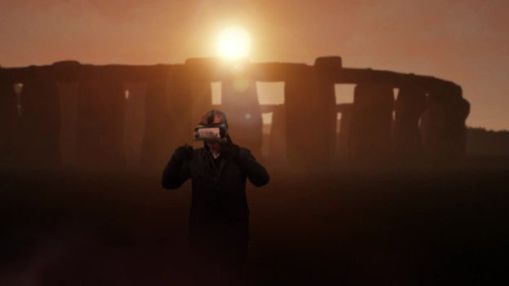
Virtual reality allows new ways to examine Stonehenge's history

Virtual reality allows new ways to examine Stonehenge’s history

Thomas Hardy said it had a strange “musical hum”. Tess of the d’Urvbervilles ends at Stonehenge and features the “sound”. Modern-day druids also say they experience something special when they gather at Stonehenge and play instruments within the stone circle.


However, Stonehenge is a ruin. Whatever sound it originally had 3,000 years ago has been lost but now, using technology created for video games and architects, Dr Rupert Till of the University of Huddersfield has – with the help of some ancient instruments – created a virtual sound tour of Stonehenge as it would have sounded with all the stones in place.

Arriving at 07:00 on a decidedly chilly January morning, I was sceptical. Dr Till had arrived with a horn, a drum and some sticks to try to show me that, even in its partially deconstructed state, there was still a distinctive echo.

Perhaps it’s the mystique of the stones but it’s easy to hear something. However, sound is always going to bounce off huge standing stones: how can we say that was in any way meaningful for people 3,000 years ago?

Dr Till says there’s a great deal of evidence that ancient people were intrigued and drawn to places that had a distinctive sound and Stonehenge had a “strange acoustic”. Even today, the wind or drumming can, he says, help generate a 47hz bass note.

He first got a taste of what the circle might do to sound when he visited a concrete replica of the original intact Stonehenge in Maryhill in the US state of Washington.

He has now developed an app which will help people blot out the sounds – including those made by tourists, and cars on the nearby A303 – and go back to the soundscape of 3,000 years ago.

He’s used instruments that were used at the time, such as bone flutes and animal horns, to give people a sense of what music would have sounded like within the reverberation of the intact stone circle and says the site has some of the characteristics you might expect of a rock concert venue.

Dr Till explains that there’s there’s strong evidence that people several thousand years ago had an interest in acoustic environments. He’s worked on caves in Spain in which instruments have been found deep underground.

The echoes of the tunnels and cave systems may have had a special meaning for people. There are also, what appears to be, human markings on certain “musical” stalactites. Strike the stalactites in the right way and they give off a deep resonant note and can be played like a huge vertical xylophone.

Stonehenge is a magnet for strange theories but this reflects a wider movement within archaeology to try to recreate the past with the rapidly growing technology of virtual reality (VR). Dr Aaron Watson is a research archaeologist and specialises in visualising the past.

VR, he says, opens up a new way of researching history.

“The material record can’t give us all the answers,” he explains.

“The moment we start creating a virtual reality world it begins to ask questions, especially about people. What were they wearing, what were their postures, were they highly coloured, tattooed? As soon as we create the immersive experience it demands those answers.

“It gives a new sensory experience to looking at the past that might take us beyond what we describe in books.”

By David Sillito BBC NEWS

The Stonehenge News Blog
Follow us on Twitter and Facebook for all the latest Stonehenge news


Massive 25 ton stones of Stonehenge may have come from further afield

29 10 2016

The builders of Stonehenge are known to have sourced the smaller bluestones used in the 5000-year-old monument from Wales.

But a new theory suggests that the entire monument might have come from elsewhere, even the huge 25 ton Sarsen stones which make up the large circle of the Wiltshire megalith.

unesco-stonehenge_3293166a-large-large_trans2oueflmhzzhjcyuvn_gr-bvmxc2g6irfbtwdjolshwg

The huge sarsens at Stonehenge could have come from elsewhere

Katy Whitaker, of the University of Reading, will present a new paper at symposium at University College London next month suggesting that the sarsens could have come from sites as far away as Ken.

“Most people are aware that some of Stonehenge’s stones came all the way from south-west Wales,” she said.

“The really huge sarsen stones at Stonehenge are assumed to have come from sources on the Marlborough Downs in Wiltshire, about 30km to the north of Stonehenge. Sarsen stone, however, is found in other locations across southern England.

“There are sarsens in Dorset, spread about dry chalk valleys similar to the locations on the Marlborough Downs in Wiltshire, and as well as locations in Berkshire, Oxfordshire, Hampshire and Sussex, there are even sarsens in Kent.

“The distribution is quite broad, there are sarsens in Buckinghamshire and even across to Norfolk.”

People in the Neolithic are known for trading stone across large areas, including from the Lake District to the East of England.

Huge Sarsen boulders from outside of Wiltshire are known to have been used in other prehistoric monuments including Kits Coty House in Kent, and Wayland’s Smithy, a burial mound, in Oxfordshire.

“People were clearly aware of, and using, these stones in prehistory.” said Miss Whitaker. “Why not think about the possibility that sarsens came from further-afield too?”

The idea could also challenge that Stonehenge represents a peak of monument construction which could only have been achieved through organisation by a hierarchical leadership.

Instead, it may show that smaller groups had banded together to bring meaningful stones to a central area.

“Maybe it wasn’t a large group of people under the control of a tribal leader ‘cracking the whip’ to move all the rocks from one location down to Stonehenge as has been suggested before,” added Miss Whitaker.

“What about groups of people related in different ways, working collaboratively to move a special stone from one area to another? “

The source of the Stonehenge stones was first determined in the early 1920s by H.H. Thomas, an officer with the Geological Survey of England and Wales.

He determined that the so-called ‘spotted dolerites’ matched a small number of outcrops in the Mynydd Preseli district in south-west Wales

Latest theories about Stonehenge also suggest it was once an impressive Welsh tomb which was dismantled and shipped to Wiltshire.

An experiment this summer by University College London found that mounting huge stones on a sycamore sleigh and dragging it along timbers required far less effort than was expected.

They discovered that a  one tonne stone could be pulled on a raft by just 10 people at around one mile per hour, far faster than experts believed.

MS Whitaker is presenting her work at the Neolithic and Early Bronze Age Research Student Symposium at University College London from 18th to 19th of November.

Full article (source) The Telegraph:

The Stonehenge News Blog


Orionid meteor shower 2016 to light up Wiltshire skies this October

9 10 2016

The Orionid meteor shower will be at its peak — 20 showers per hour — in the morning of  21st October 2016.

Sky gazers in the United Kingdom can brace themselves for a visual feast, thanks to the meteor shower that will light up the sky this October.

meteor-shower

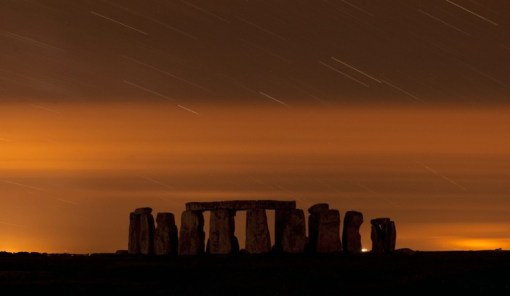
A general view of Stonehenge during the annual Perseid meteor shower in the night sky in Salisbury Plain, southern England August 13, 2013. The Perseid meteor shower is sparked every August when the Earth passes through a stream of space debris left by comet Swift-Tuttle. Picture taken using a long exposure. [Representational image] Reuters

The meteor shower is called Orionid and originates from the remains of the Halley’s Comet. The shower is likely to take place from October 2 to November 7, a Science Alert report said.

The Earth passes through the Halley’s Comet trail twice annually. The last time the planet passed through the trail of Halley’s Comet was in May and Eta Aquarids meteor shower was observed.

The meteor shower will be at its peak — 20 showers per hour — in the morning of October 21 2016. However, scientists have said that the shower will be seen at pre-dawn from today up to October 15, as the moon is likely to hinder the visibility later on.

Various planets, stars and constellations can be observed this month along with the meteor shower. Uranus will be visible opposite the Sun in the east post sunset on October 15 and the full moon will aid the visibility.

Jupiter will be spotted along with its moon with naked eyes during dawn in the east on October 28. Saturn and Venus too will be seen too in the low south-west skies on October 30 and Venus will be more luminous than Saturn.

Aldebaran, the orange star which is known as the bull’s red eye of the constellation Taurus, might be seen in the dark skies on October 18. Also, radiant stars Alpha Leonis and Eta Leonis from constellation Leo can be seen before sunrise on October 25, National Geographic reported.

Article Source and more stories: International Business Times

The Stonehenge News Blog

""


A303 Stonehenge expressway. Contractors called to tunnel meeting: 12th October

5 10 2016

Highways England is holding a market engagement day next week for contractors interested in bidding to build the A303 improvement project by Stonehenge.

Stonehenge Tunnel Project

The ambitious project is expected to cost anywhere between £300m and £1.3bn depending on the final route selected.

A joint venture of WS Atkins and Ove Arup is designing a scheme to improve the A303 between Amesbury and Berwick Down in Wiltshire. The project includes a tunnel near Stonehenge and a bypass of the village of Winterbourne Stoke.

The A303 at Stonehenge currently severs the Stonehenge and Avebury World Heritage Site (WHS) and is one of the last remaining single-carriageway bottlenecks between London and Cornwall.  The proposed scheme would create an expressway standard dual carriageway route.

The scheme is currently in the Options phase, with a preferred route announcement planned for summer 2017 and a DCO application planned for summer 2018. Subject to statutory procedures, construction work should start by April 2020.

Highways England intends to appoint a contractor on an early contractor involvement (ECI) basis, initially to assist with the DCO application and then to design, build and maintain the scheme.

On the project page on the Highways England website, the value of the scheme is somewhat vaguely put at between £275m and £1,321m.

The market engagement day takes place in Bristol on 12th October 2016 to provide more information on the scheme and the procurement strategy. Those wishing to attend should email simon.chohan@highwaysengland.co.uk for the time and location of the event.

Links:
Race starts for £1.3bn Stonehenge expressway
Contractors called to Stonehenge tunnel meeting

The Stonehenge News Blog


Exploring Prehistoric Wessex

1 10 2016

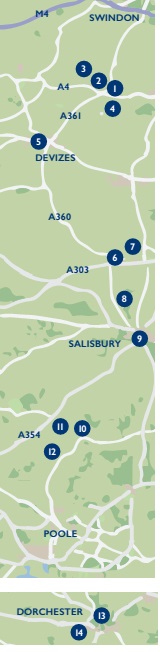
Visit atmospheric and inspirational sites and museums and follow a trail from Avebury and Stonehenge to Dorchester and Maiden Castle.

1. SILBURY HILL prehwsxmap
The largest man-made mound in Europe, mysterious Silbury Hill compares in height and volume to the roughly contemporary Egyptian pyramids.
Satnav SN8 1QH
Details on English Heritage website

2. AVEBURY
With its huge circular bank and ditch and circles of standing stones, Avebury is at the centre of a remarkable ritual landscape. Visit the Alexander Keiller Museum and Avebury Manor.
Satnav SN8 1RF
Details on National Trust website

3. WINDMILL HILL
Causewayed camp, set on a commanding hilltop above Avebury. Used for rituals, feasting and trading.
Details on English Heritage website

4. WEST KENNET LONG BARROW
The most impressive and accessible Neolithic
chambered tomb in Britain.
Satnav SN8 1QH
Details on English Heritage website

5. WILTSHIRE MUSEUM
See Gold from the Time of Stonehenge in our award-winning new Prehistoric Wiltshire displays. See the spectacular treasures of the people who held their ceremonies at Stonehenge.
Open 7 days a week. Satnav: SN10 1NS
www.wiltshiremuseum.org.uk

6. STONEHENGE
The most sophisticated stone circle in the world, at the centre of a remarkable sacred landscape. Includes the cursus, a 3km long earthwork and the Avenue – a processional way lined with the Winter solstice.
Satnav SP4 7DE
Details on English Heritage website

7. DURRINGTON WALLS
A massive henge, the site of the recent discovery of Neolithic houses, where the people who gathered from across Britain to build Stonehenge may have lived.
Satnav SP4 8LY
Details on National Trust website

8. OLD SARUM
The original site of Salisbury – a Norman castle and cathedral, set within the impressive ramparts of an Iron Age hillfort.
Satnav SP1 3SD
Details on English Heritage website

9. SALISBURY MUSEUM
Stunning new Wessex Gallery of Archaeology
featuring the famous ‘Amesbury Archer’
and unique finds from Stonehenge,
Old Sarum and Durrington Walls.
Open Mon – Sat & Sun (in summer). Satnav: SN1 2EN
www.salisburymuseum.org.uk

10. ANCIENT TECHNOLOGY CENTRE
Visit for special Open Weekends and Ancient Days. Experience the realities of daily life in the past and learn ancient skills and crafts in an authentic landscape
Satnav Dorset BH21 5RP
Ancient Technology Centre website

11. DORSET CURSUS
The banks and ditches of a Neolithic cursus runs for six miles, surrounded by barrow cemeteries. Contact in advance to arrange a tour and to visit the private museum at Down Farm.
Satnav SP5 5NU
Dorset Cursus

12. KNOWLTON HENGE
An impressive Neolithic henge, with a Norman church built inside the bank and ditch.
Satnav BH21 5AE
Details on English Heritage website

13. DORSET COUNTY MUSEUM
Discover the story of Dorset’s rich landscape
unfolding in a range of fascinating displays.
Find out about Maiden Castle and the stunning
Bronze Age finds from nearby Clandon barrow.
Open Mon – Sat & Sun (in summer). Satnav: DT1 1XA
www.dorsetcountymuseum.org

14. MAIDEN CASTLE
The largest and most complex Iron Age hillfort
in Europe. Multiple ramparts once protected
an important settlement, but the site has 4,000
years of history, from a Neolithic causewayed
enclosure to a small Roman temple.
Satnav DT2 9EY
Details on English Heritage website

HOW TO GET HERE BY PUBLIC TRANSPORT
You can use coaches, trains & buses to visit many of these sites & museums.
Swindon – train connections & the
No.49 bus to Avebury & Devizes
Devizes – coach from London &
the No.2 bus to Salisbury
Salisbury – train connections, the Stonehenge Tour
bus service & the No.183 to Blandford Forum
Dorchester – train connections & the
No.184 from Blandford Forum

WHERE TO STAY
Details of quality assured accommodation:
http://www.visitwiltshire.co.uk
http://www.visitdorset.com

SPECIALIST TOUR OPERATORS
Stonehenge Guided Tours (London)
Stonehenge and Salisbury Guided Tours (Salisbury)
Wessex Guided Tours (Bath)

The Stonehenge News Blog


King Arthur takes council to court in Stonhenge parking row

30 09 2016

Even kings have problems with councils, it seems.

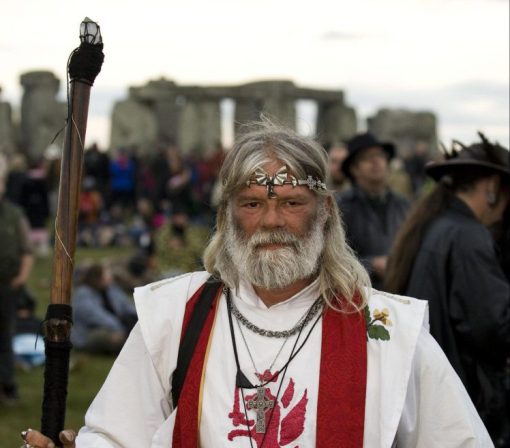
King Arthur in all his glory (Picture: SWNS)

King Arthur in all his glory (Picture: SWNS)

Arthur Pendragon, the self-titled druid king of Britain and who says he’s the reincarnation of King Arthur, is suing over a parking charge at Stonehenge.

He’s also taking action against a police force and English Heritage over the £15 fee.

King Arthur believes the charge is ‘illegal’ for worshippers to the stones for the summer solstice, dubbing ‘pay to pray’.

The charge was introduced for this year’s event on June 21, which saw 12,000 people flock to Stonehenge, in Salisbury, Wiltshire, to mark the longest day of the year.

When Mr Pendragon refused to fork out – saying the £15 fee is ‘grossly unfair’ as it is three times what tourists pay on any other day of the year – he was barred from the UNESCO World Heritage site.

The 62-year-old, who rides a motorbike, decided to take action against the ‘money-grabbing’ authorities because it breaches his human rights.

Mr Pendragon – an ex-soldier and biker gang leader who was born John Timothy Rothwell to parents May and Wilfred – said he will do ‘whatever it takes’ to win.

Who is the modern-day King Arthur?

Mr Pendragon is an English eco-campaigner and Neo-Druid leader of the Loyal Arthurian Warband, who believes he is the reincarnation of King Arthur.

He rose to fame in the 90s when he won a case at the European Court of Human Rights to allow open access to Stonehenge for religious festivals.

He said: ‘If you go to Stonehenge as a tourist today you will pay £5, but if you go there on the solstice as a pilgrim they make you pay ££15.

‘As soon as they bring in a parking charge, it means it is virtually impossible to attend unless you pay. They are stopping me from praying.’

English Heritage has previously stated that it needs to charge the fee as £60,000 is spent on parking facilities during summer solstice.

He said: ‘It is all about money. Stonehenge is getting 1.3 million tourists a year – it is English Heritage’s biggest cash cow.

Read the full story on the Metro website

More relevant links:

Arthur Pendragon Facebook Page: (Arthur is a Warrior, Druid, Witch and Pagan High Priest defending environmental and libertarian causes) https://www.facebook.com/arthur.rex.984

Arthur Pendragon at Stonehenge: Live Periscope video footage from the Autumn Equinox 2016 celebrations: https://www.periscope.tv/w/1vOxwRaaZMdJB

King Arthur launches Stonehenge parking legal action | Plymouth Herald

NEWS: Senior druid launches legal challenge over £15 parking charge at for solstice: http://www.spirefm.co.uk/news/local-news/2106390/king-arthurs-stonehenge-parking-wars-to-be-shown-on-tv/

King Arthur sues council, police and English Heritage over ‘pay to pray’ scheme: 

The Stonehenge News blog
Follow us us on Twitter for all the latest Stonehenge News


Hundreds of druids and pagans descend on Stonehenge to celebrate the Equinox which marks the official start of autumn

23 09 2016
  • Visitors headed to famous 5,000-year-old site in Wiltshire to see the sun rise this morning
  • Autumn equinox is one of four public annual events when people can get so close to stones
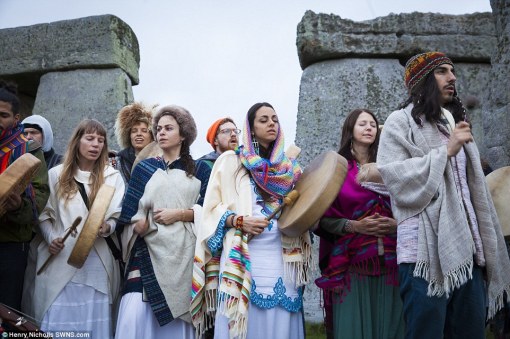
  • Hundreds of attendees sang and wore variety of extravagant outfits as onlookers watched on
  • Temperatures stayed high as Britain entered astronomical autumn after we had 23.6C yesterday

Hundreds of druids and pagans descended on Stonehenge today to celebrate the equinox as autumn began.

Visitors headed to the famous 5,000-year-old site in Wiltshire in the dark to ensure they got to see the sun rise.

And they made the most of one of only four public annual events that allows people to get so close to the stones.

Photographs showed attendees singing and wearing a variety of extravagant outfits as onlookers watched on.

Autumn Equinox Celebrations

Big event: The equinox happens twice a year around March 20 and September 22, between the summer and winter solstices

Read the full story in the Daily Mail
By MARK DUELL FOR MAILONLINE

The Stonehenge News Blog


Fundraising Event: A talk by Mike Parker Pearson ‘Stonehenge and Durrington Walls: new research’

18 09 2016

Archaeological excavations are being carried out in 2016 at Durrington Walls and in Preseli, to shed yet more light on the mystery of Stonehenge and its stones. Was there a ‘superhenge‘ of standing sarsen stones at Durrington Walls that dwarfed Stonehenge?

mppWas Stonehenge itself actually a ‘secondhand monument’, built from bluestones brought from an earlier monument in west Wales? New advances in scientific methods, both in the field and in the laboratory, are also helping archaeologists find out more about the people who built Stonehenge, how they lived and why they went to such effort to build this remarkable structure.

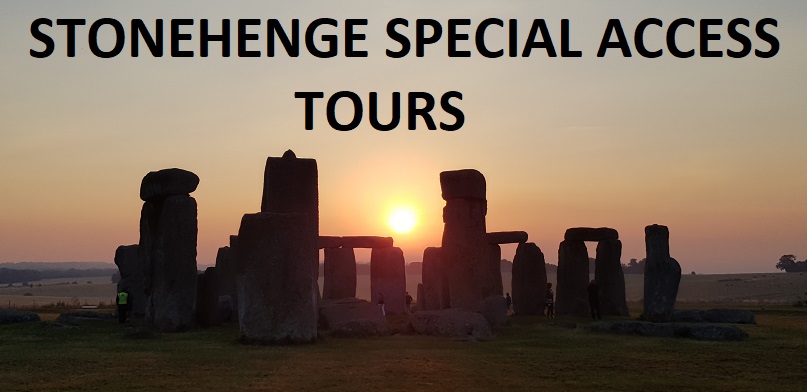
Join Mike Parker Pearson for an evening lecture to hear about the latest exciting developments in Stonehenge’s story.

Salisbury Museum: Thursday, October 13th, 2016 – 18:30 to 20:00
Booking required. Please contact the museum.~

The Stonehenge News Blog


Stonehenge Autumn Equinox Open Access Arrangements: 22nd September 2016

4 09 2016

The 2016 Autumn Equonox is September 22nd at 14:21 GMT

English Heritage are expected to offer short period of access, from  first light or safe enough to enter the monument field (approximately 06.30am) until 08:30am.
More details as we get them.(source)

Autumn-Equinox-Mabon_Stonehenge-2014 (11)The Autumn Equinox (Mabon)
It is the time of the autumn equinox, and the harvest is winding down. The fields are nearly empty, because the crops have been plucked and stored for the coming winter. Mabon is the mid-harvest festival, and it is when we take a few moments to honor the changing seasons, and celebrate the second harvest. On or around September 21st, for many Pagan and Wiccan traditions it is a time of giving thanks for the things we have, whether it is abundant crops or other blessings. It’s a time of plenty, of gratitude, and of sharing our abundance with those less fortunate.

Mabon is a harvest festival, the second of three, that encourages pagans to “reap what they sow,” both literally and figuratively. It is the time when night and day stand equal in duration; thus is it a time to express gratitude, complete projects and honor a moment of balance.

The word ‘equinox’ itself actually mean ‘equal’ (equi) and ‘night’ (nox).

Follow us on Twitter for updates and Stonehenge news
The Stonehenge News Blog