Stonehenge and the Druids – who are the Druids?

23 02 2020

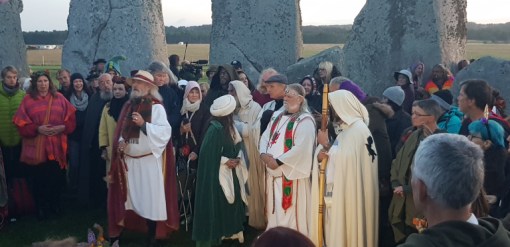
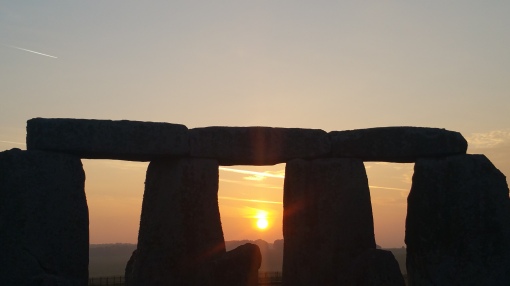
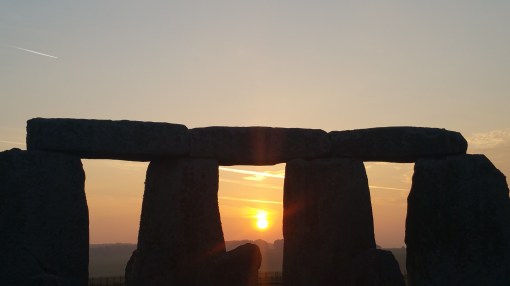
Stonehenge’s mysterious beauty affects us all in different ways, but for many it is a sight of genuine religious importance.

Stonehenge Solstice Celebrations

Stonehenge Solstice Celebrations

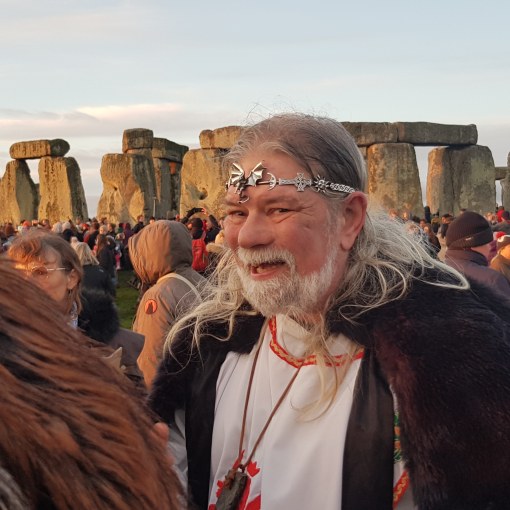
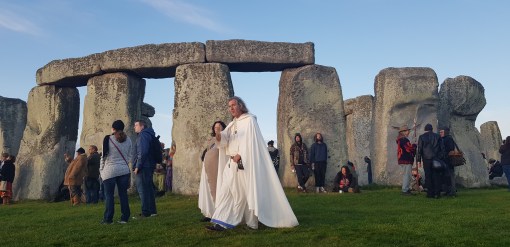
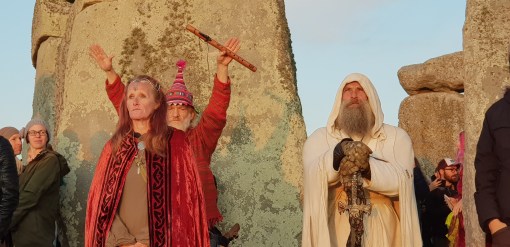
‘Druids’ is the general term used to refer to this multitudinous group who see Wiltshire’s world heritage site as a place of worship. In reality, Druidic beliefs vary, with different groups including neo-pagans and wiccans. Nonetheless, a whole host of Druidic worshippers converge on Stonehenge for the solstices, equinoxes and beyond. Today, there are over 7,000 members of the British druid order and I wanted to take a look at the history of druidism and its ties with Stonehenge’s arcane monoliths.

History of Druidism

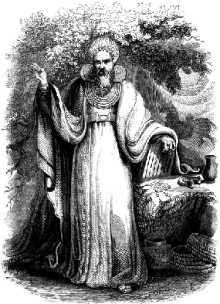
DruidDruids pre-dated the Roman invasion of Britain and in ancient Celtic cultures they were members of highly respected shamanic class. They were typically religious leaders, but also law keepers, chroniclers, doctors, and even political advisors. They were first mentioned in the 2nd century BC in roman sources and were even reported by Julius Caesar in 59 B.C. Druid’s were the arbiters of spirituality in pre-roman Britain and had a deep connection with the lore of the isles.

With first the Roman invasion (Roman religion tended towards assimilation, absorbing deities of other faiths in the hope of conversion) and then the rise of Christianity, Druidism faded into near non-existence. However, something of Druidic traditions remained and was eventually revived.

Two figures of huge importance to the Druidic revival were John Aubrey (1626-1692) and William Stukely (1687-1765). Aubrey was the first to suggest that Stonehenge had been built by Celtic Druids, the most prominent theory on the formation of Stonehenge until the 20th Century. Stukely (also famous for discovering the Cursus and Avenue at Stonehenge), proliferated the theory that Druid’s built Stonehenge and also worked hard to revive the culture, eventually proclaiming himself a Druid. Stukley worked hard to popularise Druidism, reviving pagan lore and dress whilst throwing parties in accordance with ancient beliefs. For Stukley, Stonehenge was a temple of worship – eventually publishing Stonehenge: A Temple Restor’d to the British Druids.

The origin of the word ‘Druid’’ is unclear, but the most popular view is that it comes from ‘doire’, an Irish-Gaelic word for oak tree (often a symbol of knowledge), also meaning ‘wisdom’. Druids were concerned with the natural world and its powers, and considered trees sacred, particularly the oak.

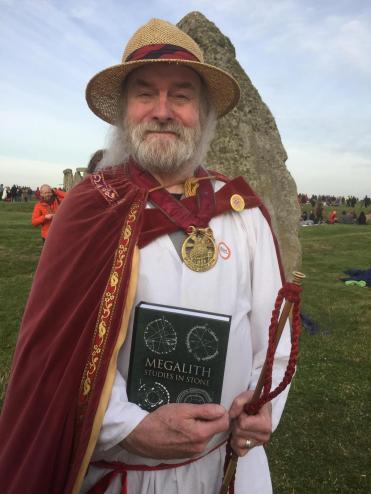
Today, the most prominent druid could be said to be a Salisbury Druid by the name of Arthur Uthur Pendragon – who has spent 33 years a Druid. A religious enthusiast, he can be found at every Stonehenge celebration and he also leads campaigns to reduce parking fees and has even run for MP.

IMG_20200111_201224_277

Arthur Pendragon

Druidic Beliefs

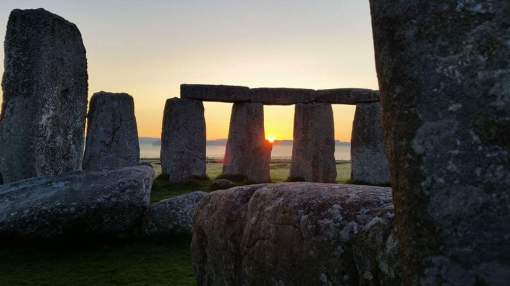
From the time of the Celtic Druids, Druidism has had a strong bond with the natural world as well as the cosmos. Although Stukley determinedly linked his version of Druidism with Christianity – dubbing it ‘Patriarchal Christianity’ – Druidism since ancient times has been polytheistic, with different deities existing in the elements around us. The community largely believes that Stonehenge was built by ancient Druids as a place of worship – it being aligned with the midsummer sunrise so perfectly. Stonehenge thus represents the spiritual connection of man and the elements which is intrinsic to the beliefs of the Druid community.

Druids at Stonehenge

Although the 21st century has seen a decline in Druidism, (In the 2001 census 30,569 people described themselves as Druids), the numbers are once again on the rise. Perhaps in a digital age, more and more people are seeking a deeper connection with the elements. A connection that Druidism certainly offers. Who knows? Maybe you too will feel this spiritual connection on your visit to the stones.

Stonehenge and the Druids links:

The Quarter Festivals and the Druidsm – The Stonehenge News Blog
Who were the Druids? History UK
Who Were the Druids? Live Science
A Brief History of Druidry | Order of Bards, Ovates and Druids – The Druid Way
Stonehenge and the Druids – Stonehnege News Blog
Druid Leader King Arthur Uther Pendragon, Head of the Loyal Arthurian Warband. The Stonehenge News Blog

Here are links to some of the Druid Orders:

The Ancient Order of Druids – http://www.aod-uk.org.uk
The Druid Order – http://thedruidorder.org
Order of Bards, Ovates and Druids – http://druidry.org/
The Dolmen Grove – http://www.dolmengrove.co.uk/
The Dorset Grove – http://www.dorsetgrove.co.uk/
The Cotswold Order – http://www.twistedtree.org.uk/
The Loyal Arthurian Warband – http://www.warband.org.uk/
The Stonehenge and Amesbury Druids – http://www.stonehenge-druids.org/
The Gorsedd of Cor Gawr – http://bards.org.uk/
The Glastonbury Order of Druids – http://www.glastonburyorderofdruids.com/

Our sponsors at Stonehenge Guided Tours offer an exclusive opportunity to join the Druids at Stonehenge for the Equinox and Solstice celebrations

The Stonehenge News Blog
Follow us on Twitter and Facebook for all the latest Stonehenge news and stories
www.Stonehenge.News


Stones from Pembrokeshire used in the construction of Stonehenge may have been transported by land rather than sea, archaeologists have found.

24 02 2019

Quarrying of Stonehenge ‘bluestones’ dated to 3000 BC

Excavations at two quarries in Wales, known to be the source of the Stonehenge ‘bluestones’, provide new evidence of megalith quarrying 5,000 years ago, according to a new UCL-led study.  The findings were published in the journal Antiquity.

Stonehenge (pictured) is made of natural pillars from Pembrokeshire, 180 miles (290 km) away from its current location in Wiltshire. Experts claim the obelisks were dragged there over land and not taken there by sea, as some theories have suggested

Stonehenge (pictured) is made of natural pillars from Pembrokeshire, 180 miles (290 km) away from its current location in Wiltshire. Experts claim the obelisks were dragged there over land and not taken there by sea, as some theories have suggested

The discovery confirms a prediction made a century ago

It was Herbert Henry Thomas, a British geologist, who first declared that the “foreign stones” of Stonehenge—those that did not come from the vicinity of the prehistoric monument and whose raison d’être was therefore most shrouded in mystery—had been hewed from rocky outcrops in west Wales. In 1923 he pointed to the Preseli Hills of Pembrokeshire. Nearly a century later he has been found to be nearly, but not quite, right.

The new discoveries also cast doubt on a popular theory that the bluestones were transported by sea to Stonehenge.

Radiocarbon dates
Joshua Pollard, a professor of archaeology at the University of Southampton, said the findings were key as they were “further confirmation that the Stonehenge bluestones were moved by people (and not geological forces such as ice-sheets) in prehistory, in what stands out as one of the most remarkable instances of long-distance movement of large stones in the ancient world.”

He said that radiocarbon dates indicate there may have been a gap in time between the quarrying of the stones from Carn Goedog and Craig Rhos-y-felin, which may suggest they were “originally set up as one or more stone circles in Preseli.”

Prof Pollard went on to explain the research revealed the “far-flung importance of the Preseli region during the Neolithic.”

He added: “Ultimately, it’s a story about people – about early farmers – with a strong connection to ancestral lands, and their need to reinforce those connections through the movement and building of great megalithic monuments.”

  • Relevant Stonehege news links:
    Solving the mystery of Stonehenge – The Economist
  • Stonehenge: Preseli stone ‘transported over land’ – BBC NEWS
  • The Where, When and How of Quarrying Stonehenge ‘Bluestones’ Is Revealed in New Report – Ancient Origins
  • Quarrying of Stonehenge ‘bluestones’ dated to 3000 BC – Archaeology and Arts
  • How Stonehenge’s ‘bluestones’ were quarried 5,000 years ago: Ready-made pillars were pried away from rocky outcrops before being transported over land NOT sea – Daily Mail

The Stonehenge News Blog
Follow us on Twitter and Facebook for all the latest Stonehenge News
http://www.Stonehenge.News


Was Stonehenge built by seafarers? Prehistoric sailors may have been responsible for many of the megalithic monuments.

16 02 2019

Stonehenge is one of many megalithic monuments from prehistory dotted around Europe and scientists have now discovered the art form of giant rocks was a popular trend that started 6,500 years ago in France.

20170511_054301

  • The first monument was erected in northwest France in 4,500 BC, study finds 
  • Then the tradition, practice and popularity for similar monuments spread 
  • Monuments appeared at coastal regions on Mediterranean and Atlantic coasts
  • Sailors are thought to have taken the trend around Europe over 2,000 years as they used their budding sea routes  

The knowledge and expertise to create these monuments was then spread around Europe by sailors over the following millennia.

Similar monuments to the original appeared in coastal regions around the Mediterranean and Atlantic coasts via sailors on large ships using emerging sea routes.

The study, published in the journal Proceedings of the National Academy of Sciences, theorizes that these megalith structures have been around for nearly 7,000 years and may have originated in northwestern France.

Relevant Stonehenge News links:
Was Stonehenge built by seafarers? Daily Mail
Stonehenge, other ancient rock structures may trace their origins to monuments like this.  Science Mag
Prehistoric sailors may be responsible for Stonehenge.  New York Post 
Stonehenge mystery solved? Fox News

The Stonehenge News Blog
Follow us on Twitter and Facebook for all the latest Stonehenge News


Megalith tells stones’ secrets. New book focusses on the Wiltshire stone circles.

29 06 2018

SOLSTICE morning marked both the longest day of the year and the release of new book Megalith: Studies in Stone that claims to reveal secret behind the mystery of the cosmology surrounding stone circle constructions like Avebury.

Megalith is the first global study into the stones at both Avebury and Stonehenge and megalthhas been penned by stone circle experts including Robin Heath, that focusses on the Wiltshire circles.

Among the insights in Megalith, the book argues that there were probably once 99 stones in the outer circle at Avebury.

Contributing author Robin Heath, author of 11 books on prehistoric and ancient sciences, said: “The eight contributing authors to Megalith have undertaken original research on the nature and purpose of megalithic monuments outside the boundaries of the present day archaeological model of prehistory. This pioneering collection of their work celebrates megalithic society’s abilities and achievements in a new light, revealing an intellectual facet of prehistory, one that was employing an integrated and coherent cosmology, a megalithic science, more than 6,000 years ago.”

Mr Heath was joined by publisher and editor John Martineau giving talks about at both sites about the monuments. John Martineau, founder of the Megalithomania conference said: “The megalithic culture of western Europe left behind some vast and enigmatic temples, and yet there is little understanding of the cosmology driving their construction.” On solstice morning 9500 people flooded Stonehenge and 600 attended Avebury. No arrests were made at Stonehenge and two in Avebury.

Eight co-authors and experts in their fields have contributed to the book to shed light on the original purposes of Avebury and other sites where stone circles dominate the landscape.

Article (source) by Alison Grover: The Wiltshire Gazette and Herald

The Stonehenge News Blog
Follow us on Twitter and Facebook for all the latest Stonehenge News


Did you know April 18th is World Heritage Day?

18 04 2018

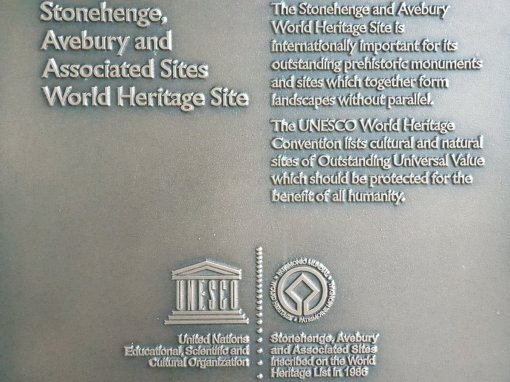
World Heritage is the shared wealth of humankind. Protecting and preserving this valuable asset demands the collective efforts of the international community. This special day offers an opportunity to raise the public’s awareness about the diversity of cultural heritage and the efforts that are required to protect and conserve it, as well as draw attention to its vulnerability.  Stonehenge and Avebury was inscribed onto the World Heritage List by UNESCO in 1986, along with 6 other sites in the UK. 

Stonehege World Heritage Site

Over the past 3 decades there have been a number of achievements by the many partners who share in the protection and enhancement of the Stonehenge and Avebury World Heritage Site.

These include:

  • Around 750 ha of agricultural land in WHS have been reverted to pasture with a great deal of support from Defra/Natural England. Not only does this help to protect fragile archaeological remains but has also had the benefit of enhancing biodiversity.
  • A huge amount of archaeological research has revealed more about the landscapes of the WHS and expanded our knowledge and understanding of the Site
  • Silbury Hill was stabilised and conserved in 2007, making good the work undertaken by antiquarians of the 18th and 19th centuries and archaeologists of the mid 20th century alike.
  • In 2012 the Site was able to fulfil the UK Government’s commitment made at the time of inscription to close the A344 right next to the Stones at Stonehenge
  • A new award winning Visitor Centre opened at Stonehenge in 2013 and now receives over 1.3million visitors per year.Stonehenge and Avebury UNESCO
  • The governance of the WHS was strengthened with the creation of a Stonehenge and Avebury WHS Coordination Unit in March 2014 and the creation of a WHS Partnership Panel to oversee the work of the two parts of the WHS in February 2014.
  • In May 2015, Stonehenge and Avebury WHS produced their first joint Stonehenge and Avebury WHS Management Plan

More information can be found about the Stonehenge and Avebury World Heritage Site on the website www.stonehengeandaveburywhs.org/

What are World Heritage Sites?

World Heritage Sites are cultural and natural sites of international importance described by UNESCO as being of Outstanding Universal Value. They represent the common heritage of the international community. On signing the World Heritage Convention, governments pledge to protect and present their Sites for this and future generations.

UNESCO grants the prestigious World Heritage Site status to sites that meet its strict international criteria. Today there are over 1,000 World Heritage Sites including the Pyramids, Machu Picchu, the Great Wall of China and the Amazon River Basin.

The UNESCO website provides more information on World Heritage Sites across the globe. You can find out more about Britain’s World Heritage Sites on the UNESCO  website.

Some historians and campaign groups are warning Stonehenge could have its famous World Heritage status taken away if the Government builds a tunnel underneath it – click here

Visit the English heritage website to find out more and book tickets. The best way to experience Stonehenge, understand its construction and hear about all the theories is to have a Tourist Guide explain it all on a Stonehenge Guided Tour

The Stonehenge News Blog
Follow us on Twitter and Facebook for all the latest Stonehenge News
http://www.Stonehenge.News


Was Stonehenge constructed as part of a fertility cult?

10 12 2017

Professor Terance Meade of said Wiltshire-based Stonehenge’s ancient builders create a ‘play without words’ in which one stone in particular cast a growing phallic-shaped shadow.

Stonehenge was built to cast phallic-shaped shadows during Midsummer and was part of a fertility cult, a new study claims.

Professor Terance Meade said Stonehege’s ancient builders create a ‘play without words’ in which one stone in particular cast a growing phallic-shaped shadow.

The shadow would penetrate the egg-shaped monument before hitting a central ‘female’ stone — symbolising fertility.

20170511_054301

Professor Terance Meade of said the Stonehege’s ancient builders create a ‘play without words’ in which one stone in particular cast a growing phallic-shaped shadow

Professor Meaden examined nearly 20 stone circle across Britain – including one at Avebury – and filmed their changing silhouettes at sunrise on ritually important days throughout the year.

He said the shape of the monuments at Stonehenge allow the same ‘play without words’ to reoccur at significant dates in the Neolithic farming calendar.

‘My basic discovery is that many stone circles were built at a time of a fertility religion, and that stones were positioned such that at sunrise on auspicious dates of the year phallic shadows would be cast from a male-symbolic stone to a waiting female-symbolic stone,’ Prof Meaden told The Daily Telegraph.

The archaeologist added that on certain days of clear sunrise, the shadow of the ‘externally sited’ phallic Heel Stone penetrates the great monument during the summer solstice before finally arriving at the recumbent Altar Stone — which is symbolically female.

Read more (Source): http://www.dailymail.co.uk/news/article-5163629/Was-Stonehenge-constructed-fertility-cult.html#ixzz50qUY8Jqx

The Stonehenge News Blog
Follow us on Twitter and Facebook for all the latest Stonehenge news


Hundreds of druids and pagans descend on Stonehenge to celebrate the Autumn Equinox

24 09 2017

Hundreds of pagans and druids descended on Stonehenge on the 23rd September to celebrate the equinox as autumn began.

Visitors headed to the famous 5,000-year-old site in Wiltshire in the dark to ensure they got to see the sun rise.

And they made the most of one of only four public annual events that allows people to get so close to the stones.

Photographs showed attendees singing and wearing a variety of extravagant outfits as onlookers watched on.


This slideshow requires JavaScript.

Follow us on Twitter and like our Facebook page for updates and Stonehenge news
The Stonehenge News Blog


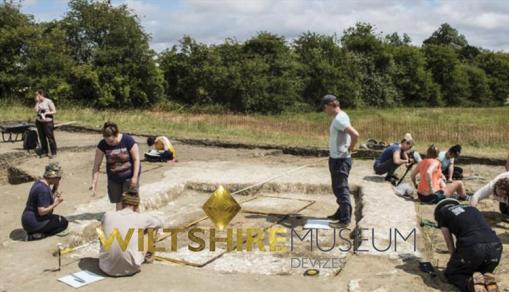
Take a Guided Tour of Marden Henge Excavations and Wiltshire Museum: July 2017

7 07 2017

Marden Henge is the third ‘super-henge’ in Wiltshire, alongside Stonehenge and Avebury. In July 2017 there is a fantastic opportunity to find out more about prehistory and these enigmatic henges before a visit to see the site being excavated by archaeologists from the University of Reading.

mar

TOURS ON SATURDAY 8th JULY, TUESDAY 18th JULY & THURSDAY 20th JULY 2017
£30 (£20 WANHS members) – booking essential

A specialist Archaeology tour which starts by exploring the award-winning galleries of the Wiltshire Museum. The Museum will also have a special exhibition about the excavations at Marden Henge featuring some of the finds from previous seasons.

After lunch there will be a guided tour of the excavations (student guides) – with a chance to see archaeologists in action and to find out about the latest discoveries.

Tour Itinerary:

10.30 – Visit Wiltshire Museum, tea/coffee served on arrival. Museum specialist tour.
12pm – Lunch at the Museum
1.30pm – Depart for the archaeological site at Marden Henge (own transport/car share – if you have any questions please contact us)

Booking:

Book your place for “Excavating a Neolithic Henge” using our Yapsody event booking service.

Stonehenge Guided Tours also offer weekly Stonehenge and Avebury archaeology Tours, and as a result offer an excellent up-to-date specialist service; giving you the opportunity to learn in great detail about these amazing prehistoric sites, but also leaving you time to explore your surroundings by yourself.

The Stonehenge News Blog
Follow us on Twitter and Facebook for all the latest Stonehenge New


Lunar eclipse, comet and snow moon to fall on the same day.

8 02 2017

Now might be a good time to invest in a telescope because come Friday you’re going to want one. 

On February 10th, we are not going to be treated to not just one celestial event on the same day but three.

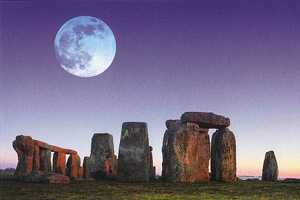
stonehengemoon

The lunar eclipse will take place in the early hours of Saturday morning

A lunar eclipse, snow moon and New Year comet should all be visible this Friday night into Saturday morning.

But unless you’re clued up on your astronomical happenings, it’s unlikely you’ll be familiar with them all, so here is a brief guide on how to spot them.

LUNAR ECLIPSE
The rare penumbral lunar eclipse occurs when the sun, earth and moon almost align behind one another.

The earth blocks the sun’s light from reaching the surface of the moon

It will first be visible at 10.30pm on February 10 as a subtle shadow and will be most visible at 12.43am and will end at 2.52pm.

It will be visible from Europe, most of Asia and North America, and Africa.

SNOW MOON
February’s full moon is traditionally known as a Snow Moon because this month usually sees the heaviest snowfall.

You might have also heard it referred to as the Hunger Moon – due to the struggle of some tribes to find food this month.

As it’s the moon it should be very easy to see and you’ll have a decent amount of time to see it too.

The moon rises at 4.44 pm on Friday and then sets at 7.30 am.

NEW YEAR COMET
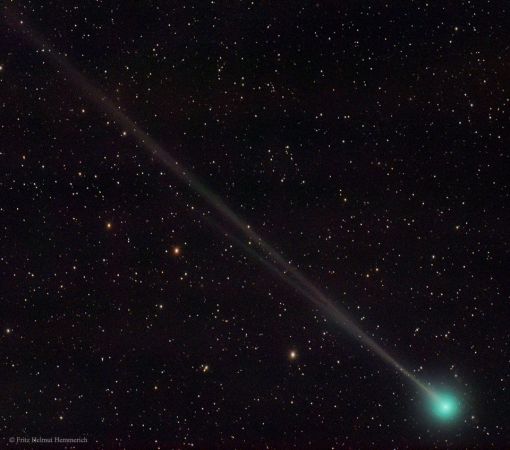
So we are not that near New Year –  or Chinese New Year for that matter – but the New Year comet gets its name as it began its journey across the northern hemisphere at the end of last year.

comet45p_hemmerich_960

The New Year comet returns once every five and a quarter years (Picture: Fritz Helmut Hemmerich)

It will be visible to the naked eye on February 11 so you might have to stay up late to catch it.

First spotted in 1948, it’s a periodic comet and visible from earth every five and a quarter years.

It is likely to appear as a faint object moving across the sky.
Article source: 

Moving on from Stonehenge: Researchers make the case for archaeoastronomy
The field of archaeoastronomy is evolving say researchers seeking a closer relationship between astronomy and merging of astronomical techniques and archaeology. Full story

Learn about the connection between the stones and the sky and see the night sky from Stonehenge with a leading archaeologists and astronomer on a guided walking tour. Stonehenge and Guided Tours and Stonehenge Walks organise these exclusive  tours.

The Stonehenge News Blog
Follow us on Twitter and Facebook for all the latest Stonehenge News
http://www.Stonehenge.News


Other Sarsen Stones near Stonehenge and Woodhenge

5 02 2017

Sarsen boulders lie scattered in substantial “drifts” across the landscape of the Marlborough Downs near Avebury.

By contrast, close to Stonehenge there are almost none. This is one of the reasons why most archaeologists believe that the large sarsens for the monument were not locally sourced.

There are, however, a few examples of substantial sarsens dotted about Salisbury Plain within a couple of miles of Stonehenge. And there are tantalising hints that others used to exist.

The most obvious, and easily accessible, is the Cuckoo Stone. This stone is about 2m long by 1.5m wide by 1.5m thick and lies in the field immediately west of Woodhenge.

Cuckoo Stone

The Stonehenge Riverside Project excavated around the Cuckoo Stone in 2007 and discovered that the stone once had been set upright right next to the hollow in which it had originally formed.

Close by were two neolithic pits containing pottery worked flint, deer antlers and animal bones, dating to between 4000BC and 2000BC. A series of three burials were also found close by, dating to around 2000BC.

The stone remained a focus of activity right down to Romano-British times, and a small square wooden building – most likely a shrine – was built immediately to its southwest. Coins and pottery found in the ploughsoil date this to between 200AD and 400AD.

The other readily accessible sarsen is the Bulford Stone which lies in an arable field east of Bulford Village. It’s rather larger than the Cuckoo Stone at 2.8m long and again the excavation evidence shows that it too was once stood upright next to the hollow in which it formed.

It’s also closely associated with burials from the neolithic, the pottery found here dates to between 2300BC and 1900BC. The grave goods found were remarkable, including a flake of transparent rock crystal from either South Wales or the Alps and a “mini megalith” carved from a piece of limestone.

Bulford Stone.jpg

Lying in the northern ditch of a badly degraded long barrow within the Salisbury Plain military training area (and therefore not accessible to the public) are three more sarsen boulders.

They vary in size and – being half buried in the turf – are difficult to see, but the largest seems to be almost 2m long.

This long barrow was excavated by John Thurnam in 1864 who found an early neolithic burial on the original ground surface and an later Beaker burial just below the top of the mound.

Subsequent digging by the military in the early 20th century has almost obliterated the barrow but its outline can still be made out.

There is some debate about whether the sarsens lying in the ditch were originally part of the structure of the long barrow or if they were dragged there by farmers clearing fields at some later date. The stronger possibility is that they were part of the structure.

long-barrow-sarsens

John Britton in his “Beauties of Wiltshire (1801)” says:

“About two miles north of Amesbury, on the banks of the Avon, is Bulford. Near this village are two large stones of the same kind as those at Stonehenge. One of them is situated in the middle of the river, and, as I am informed, has an iron ring fixed in it; but the waters being very high I could not see it.”

Old OS maps of the area show where this stone in the river once lay, but sadly it has now been removed and its present location is unknown to this author (please get in touch if you have any information about or pictures of it):
location-of-sarsen-in-river-os
“…
an interment which was lately discovered above Durrington Walls, by a shepherd, who in pitching the fold, found his iron bar impeded in the ground : curiosity led him to explore the cause, which proved to be a large sarsen stone, covering the interment of a skeleton”

There are other references to large local sarsens from antiquarian reports – one is mentioned by Sir Richard Colt Hoare in the early 1800s:

… and another by the Rev. Allan Hutchins from about the same time:

“In a field, not far from the road which leads from the Amesbury Turnpike into Bulford, is a Barrow of chalk facing the parish and standing by itself… When I came nearly to the virgin earth in this Barrow, my progress was impeded by an immense oval sand stone, underneath which was a skeleton, a beautiful lance head, and a handsome drinking cup”

Perhaps there are still more to be found. Certainly it seems that sarsen boulders of “large” or even “immense” size are not unknown in this part of Wiltshire so maybe the idea that the sarsens of Stonehenge were brought from the Marlborough Downs shouldn’t be accepted at face value.

Here’s a view from Beacon Hill on the east side of Amesbury:

labelled-view-from-beacon-hill

… and here’s an overhead view from Google Earth:

locations-of-sarsens-around-stonehenge

Curiously the Cuckoo Stone, the Avon Sarsen and the Bulford Stone all lie precisely on a straight line, with the Avon Stone being 1500 yards from the Cuckoo Stone and 1450 yards from the Bulford Stone.

But that’s another story……….

Want to learn more and here more Stonehenge stories? Hire a local expert tour guide or join a scheduled group tour
The Stonehenge Travel Company based in nearby Salisbury are considered the local experts and conduct guided tours of the Stonehenge landscape. Stonehenge Guided Tours include photo stops of Durrington Walls and Woodhenge and their private group tours service offer trips from London, Salisbury and Bath.  Stonehenge Walks offer archaeological guided walking tours

Article by guest blogger and local Stonehenge historian Simon Banton

The Stonehenge News Blog
Follow us on Twitter and Facebook for all the latest Stonehenge News
http://www.Stonehenge.News