King Arthur takes council to court in Stonhenge parking row

30 09 2016

Even kings have problems with councils, it seems.

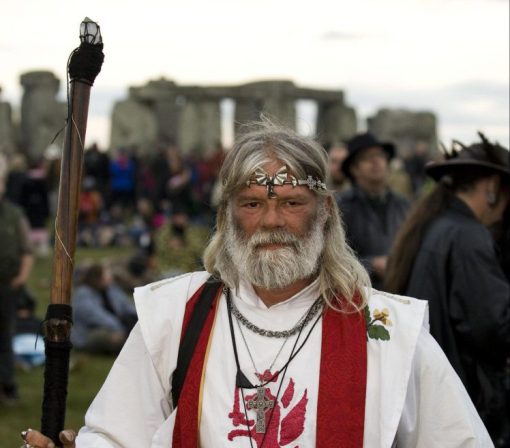
King Arthur in all his glory (Picture: SWNS)

King Arthur in all his glory (Picture: SWNS)

Arthur Pendragon, the self-titled druid king of Britain and who says he’s the reincarnation of King Arthur, is suing over a parking charge at Stonehenge.

He’s also taking action against a police force and English Heritage over the £15 fee.

King Arthur believes the charge is ‘illegal’ for worshippers to the stones for the summer solstice, dubbing ‘pay to pray’.

The charge was introduced for this year’s event on June 21, which saw 12,000 people flock to Stonehenge, in Salisbury, Wiltshire, to mark the longest day of the year.

When Mr Pendragon refused to fork out – saying the £15 fee is ‘grossly unfair’ as it is three times what tourists pay on any other day of the year – he was barred from the UNESCO World Heritage site.

The 62-year-old, who rides a motorbike, decided to take action against the ‘money-grabbing’ authorities because it breaches his human rights.

Mr Pendragon – an ex-soldier and biker gang leader who was born John Timothy Rothwell to parents May and Wilfred – said he will do ‘whatever it takes’ to win.

Who is the modern-day King Arthur?

Mr Pendragon is an English eco-campaigner and Neo-Druid leader of the Loyal Arthurian Warband, who believes he is the reincarnation of King Arthur.

He rose to fame in the 90s when he won a case at the European Court of Human Rights to allow open access to Stonehenge for religious festivals.

He said: ‘If you go to Stonehenge as a tourist today you will pay £5, but if you go there on the solstice as a pilgrim they make you pay ££15.

‘As soon as they bring in a parking charge, it means it is virtually impossible to attend unless you pay. They are stopping me from praying.’

English Heritage has previously stated that it needs to charge the fee as £60,000 is spent on parking facilities during summer solstice.

He said: ‘It is all about money. Stonehenge is getting 1.3 million tourists a year – it is English Heritage’s biggest cash cow.

Read the full story on the Metro website

More relevant links:

Arthur Pendragon Facebook Page: (Arthur is a Warrior, Druid, Witch and Pagan High Priest defending environmental and libertarian causes) https://www.facebook.com/arthur.rex.984

Arthur Pendragon at Stonehenge: Live Periscope video footage from the Autumn Equinox 2016 celebrations: https://www.periscope.tv/w/1vOxwRaaZMdJB

King Arthur launches Stonehenge parking legal action | Plymouth Herald

NEWS: Senior druid launches legal challenge over £15 parking charge at for solstice: http://www.spirefm.co.uk/news/local-news/2106390/king-arthurs-stonehenge-parking-wars-to-be-shown-on-tv/

King Arthur sues council, police and English Heritage over ‘pay to pray’ scheme: 

The Stonehenge News blog
Follow us us on Twitter for all the latest Stonehenge News


Hundreds of druids and pagans descend on Stonehenge to celebrate the Equinox which marks the official start of autumn

23 09 2016
  • Visitors headed to famous 5,000-year-old site in Wiltshire to see the sun rise this morning
  • Autumn equinox is one of four public annual events when people can get so close to stones
  • Hundreds of attendees sang and wore variety of extravagant outfits as onlookers watched on
  • Temperatures stayed high as Britain entered astronomical autumn after we had 23.6C yesterday

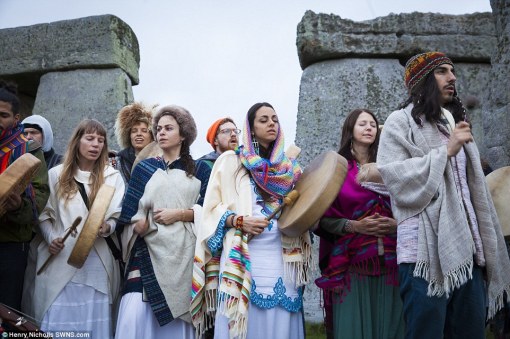
Hundreds of druids and pagans descended on Stonehenge today to celebrate the equinox as autumn began.

Visitors headed to the famous 5,000-year-old site in Wiltshire in the dark to ensure they got to see the sun rise.

And they made the most of one of only four public annual events that allows people to get so close to the stones.

Photographs showed attendees singing and wearing a variety of extravagant outfits as onlookers watched on.

Autumn Equinox Celebrations

Big event: The equinox happens twice a year around March 20 and September 22, between the summer and winter solstices

Read the full story in the Daily Mail
By MARK DUELL FOR MAILONLINE

The Stonehenge News Blog


Fundraising Event: A talk by Mike Parker Pearson ‘Stonehenge and Durrington Walls: new research’

18 09 2016

Archaeological excavations are being carried out in 2016 at Durrington Walls and in Preseli, to shed yet more light on the mystery of Stonehenge and its stones. Was there a ‘superhenge‘ of standing sarsen stones at Durrington Walls that dwarfed Stonehenge?

mppWas Stonehenge itself actually a ‘secondhand monument’, built from bluestones brought from an earlier monument in west Wales? New advances in scientific methods, both in the field and in the laboratory, are also helping archaeologists find out more about the people who built Stonehenge, how they lived and why they went to such effort to build this remarkable structure.
Join Mike Parker Pearson for an evening lecture to hear about the latest exciting developments in Stonehenge’s story.

Salisbury Museum: Thursday, October 13th, 2016 – 18:30 to 20:00
Booking required. Please contact the museum.~

The Stonehenge News Blog


Stonehenge Autumn Equinox Open Access Arrangements: 22nd September 2016

4 09 2016

The 2016 Autumn Equonox is September 22nd at 14:21 GMT

English Heritage are expected to offer short period of access, from  first light or safe enough to enter the monument field (approximately 06.30am) until 08:30am.
More details as we get them.(source)

Autumn-Equinox-Mabon_Stonehenge-2014 (11)The Autumn Equinox (Mabon)
It is the time of the autumn equinox, and the harvest is winding down. The fields are nearly empty, because the crops have been plucked and stored for the coming winter. Mabon is the mid-harvest festival, and it is when we take a few moments to honor the changing seasons, and celebrate the second harvest. On or around September 21st, for many Pagan and Wiccan traditions it is a time of giving thanks for the things we have, whether it is abundant crops or other blessings. It’s a time of plenty, of gratitude, and of sharing our abundance with those less fortunate.

Mabon is a harvest festival, the second of three, that encourages pagans to “reap what they sow,” both literally and figuratively. It is the time when night and day stand equal in duration; thus is it a time to express gratitude, complete projects and honor a moment of balance.

The word ‘equinox’ itself actually mean ‘equal’ (equi) and ‘night’ (nox).

Follow us on Twitter for updates and Stonehenge news
The Stonehenge News Blog


18th April is the @ICOMOSUK International Day of Monuments and Sites #WHS30 @UNESCO @WorldHeritageUK #WorldHeritageDay

18 04 2016

8th April is ICOMOS International Day for Monuments and Sites but unofficially known as World Heritage Day.

This year Stonehenge and Avebury are celebrating 30 years of being a World Heritage SiteICOMOS along with six other sites, the first sites to be designated World Heritage Sites in the UK.
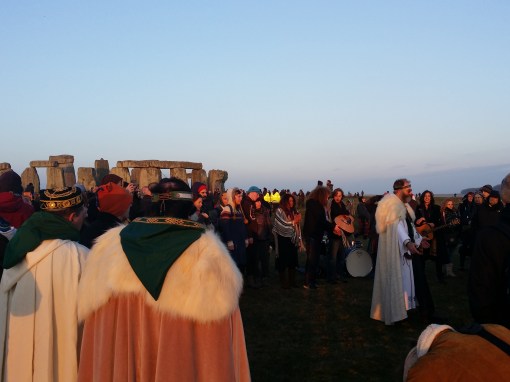
UNESCO established 18 April as the International Day for Monuments and Sites in 1983. It aims to raise public awareness about the diversity and vulnerability of the world’s built monuments and heritage sites and the efforts required to protect and conserve them.

The Stonehenge News Blog


Stonehenge Spring (Vernal) Equinox Open Access: 20th March 2016

8 03 2016

The ‘Managed Open Access’ at Stonehenge for the Vernal (Spring) Equinox, will be from approximately 05.45 am until 08.30 on 20th March 2016

• Access to Stonehenge for the Spring Equinox will take place on the morning of 20th March 2016 (source: http://www.sarsen.org/)

The Vernal Equinox is at 04:30GMT
Sunrise will be 6.07am

Stonehenge-Spring-Equinox-2015 (60)

• Entrance to the monument will commence as soon as ‘light-levels’ are deemed safe enough to permit. For the past couple of years this has occurred around 0545h however EH would ask that people are patient should the morning prove ‘overcast’ and a slight delay occurs.

• Access to Stonehenge will cease at 0830h and the cooperation of all of visitors in ensuring the monument is vacated at this time would be most appreciated.

• Temporary toilets (Porta-Loos) will be available at the monument once the site is open for public access. This includes a provision for those with disabilities.

•The Cafe and Shop at the new Visitor Centre at Airmans Cross should be opening for visitors from approximately 0800h on the morning of 20 March. Please note that the toilets at this location will also become available for use at this time. Although the Cafe will be opening only hot and cold drinks will be available for the first hour. Pasties etc will become available after 0900h.

Final confirmation from English Heritage as to these arrangements has not been forthcoming so please check before relying on this notice.

Follow us on Twitter for the lastest news and Equinox Sunrise pics

The Stonehenge News Blog


Bronze Age burial near Stonehenge discovered by badger

9 02 2016

A Bronze Age cremation burial has been discovered near Stonehenge after being accidentally dug up by a badger.

bronze-age-find

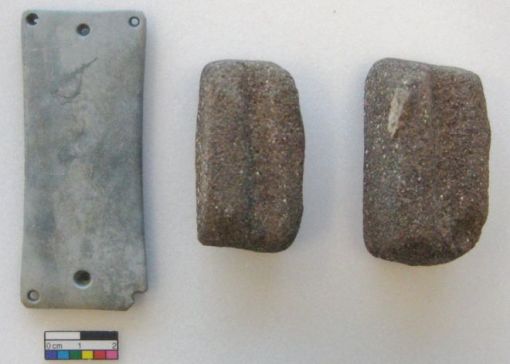
An archer’s wrist guard and shaft straighteners were among the objects discovered

Objects found in a burial mound at Netheravon, Wiltshire, include a bronze saw, an archer’s wrist guard, a copper chisel and cremated human remains.

Experts believe the burial may have been that of an archer or a person who made archery equipment.

The artefacts date back to 2,200-2,000BC, senior archaeologist Richard Osgood, of the MOD, said.

The burial mound, about five miles north of Stonehenge, lies on MOD land.

Mr Osgood, from the MOD’s Defence Infrastructure Organisation, said it was “an exciting find”.

“It was utterly unexpected. These are wonderful artefacts from the early Bronze Age, about 2,200-2,000 BC,” he said.

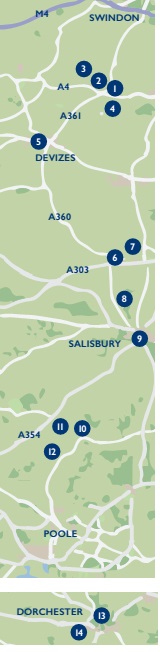
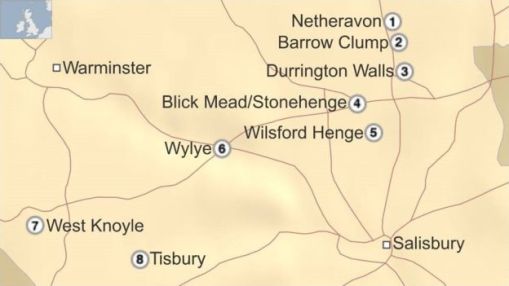
wilts-map

Other archaeological finds in Wiltshire:

1. Bronze Age burial discovered by a badger

2. Soldiers uncover 27 ancient bodies at Barrow Clump on Salisbury Plain

3. Researchers find large Neolithic site at Durrington Walls

4. Stonehenge dig finds 6,000-year-old encampment at Blick Mead

5. Bronze Age child’s skeleton discovered at Wilsford henge

6. Bronze Age jewellery discovered in a Wiltshire field

7. Iron Age woman’s footless body found near West Knoyle

8. Bronze Age hoard found near Tisbury


Also among the finds were shaft straighteners for straightening arrows, and pieces of pottery.

Mr Osgood said the badger had dug out the cremation urn and sherds of pottery were lying on the surface when they were spotted.

A full archaeological dig was then carried out on the site.

Mr Osgood said: “There are badger setts in quite a few scheduled monuments – the actions of burrowing animals is one of the biggest risks to archaeology in Britain – but to bring out items of this quality from one hole is unusual.

“We would never have known these objects were in there, so there’s a small part of me that is quite pleased the badger did this… but it probably would have been better that these things had stayed within the monument where they’d resided for 4,000 years.”

Injured military personnel and veterans helped to excavate the site.

The items are due to be put on display at Wiltshire Museum in Devizes later this year.

Read the full story (source) on the BBC website

The Stonehenge News Blog


Stonehenge burials show ‘surprising degree’ of gender equality

3 02 2016

A new study of prehistoric bones discovered at Stonehenge has found around half belonged to women.

In 2008 archaeologists first explored the site in Wiltshire examining the cremated remains of some 200 adults.

Researchers said their findings showed a “surprising degree of gender equality” despite artists portraying prehistoric man as in charge of the site “with barely a woman in sight”.

The findings are reported in the magazine British Archaeology.

Stonehenge digImage copyrightAdam Stanford
Most of the material dug up in the 1920s from the periphery of the stones was reburied in Aubrey Hole seven (seen excavated in 2008)

The study showed the finding are important because burial at Stonehenge was likely to have been reserved for selected people of higher status.

It also contrasts with the evidence from older Neolithic tombs in southern Britain, with their higher ratios of adult males to females.

Stonehenge digImage copyright Mike Pitts
Some 45kg (99lbs) of bone fragments were recovered

Christie Willis, a PhD student at University College London and an expert on human remains, sorted through some 45kg (99lbs)of bone fragments.

Her task was to identify which part of the skeleton each fragment came from and to then establish the age and sex of the remains.

Ms Willis said the samples had originally been place in a series of Aubrey Holes around the periphery of the site – which were originally excavated in the 1920s by William Hawley.

“These were dug up and reburied in Aubrey Hole seven with the hope that one day there would be a breakthrough to allow them to be analysed.

Stonehenge digImage copyright Adam Stanford
The archaeologists said their work had taken four years in total

“Because of this the fragments have become co-mingled – or mixed up – which is why the work has taken so long.”

The fragments were also sent to universities in Oxford and Glasgow to be radiocarbon-dated.

Researchers at Teeside University also looked at how hot the cremation fires were, and how long the bones were in there for.

Article Source: BBC NEWS

The Stonehenge News Blog


Moon Phases for Stonehenge, Wiltshire 2016

23 01 2016

moon-phase

Lunation New Moon First Quarter Full Moon Third Quarter Duration
1150 2 Jan 05:30 29d 15h 01m
1151 10 Jan 01:30 16 Jan 23:26 24 Jan 01:45 1 Feb 03:27 29d 13h 08m
1152 8 Feb 14:38 15 Feb 07:46 22 Feb 18:19 1 Mar 23:10 29d 11h 16m
1153 9 Mar 01:54 15 Mar 17:02 23 Mar 12:00 31 Mar 16:16 29d 9h 29m
1154 7 Apr 12:23 14 Apr 04:59 22 Apr 06:23 30 Apr 04:28 29d 8h 06m
1155 6 May 20:29 13 May 18:02 21 May 22:14 29 May 13:11 29d 7h 30m
1156 5 Jun 03:59 12 Jun 09:09 20 Jun 12:02 27 Jun 19:18 29d 8h 01m
1157 4 Jul 12:00 12 Jul 01:51 19 Jul 23:56 26 Jul 23:59 29d 9h 44m
1158 2 Aug 21:44 10 Aug 19:20 18 Aug 10:26 25 Aug 04:40 29d 12h 19m
1159 1 Sep 10:03 9 Sep 12:48 16 Sep 20:05 23 Sep 10:56 29d 15h 08m
1160 1 Oct 01:11 9 Oct 05:32 16 Oct 05:23 22 Oct 20:13 29d 17h 27m
1161 30 Oct 17:38 7 Nov 19:51 14 Nov 13:52 21 Nov 08:33 29d 18h 40m
1162 29 Nov 12:18 7 Dec 09:02 14 Dec 00:05 21 Dec 01:55 29d 18h 35m
1163 29 Dec 06:53 29d 17h 14m
* All times are local time Stonehenge. Time is adjusted for DST when applicable. Dates are based on the Gregorian calendar.

Links:
http://www.timeanddate.com/moon/phases/uk/london
http://www.calendar-uk.co.uk/lunar-calendar/
http://www.history.com/news/ask-history/why-was-stonehenge-built

The Stonehenge News Blog
Follow us on Twitter and Facebook for daily Sunrise and Moon phase times


Archaeologists Feud Over Second-Hand Stonehenge Theory

15 12 2015

The ink wasn’t even dry (or the bits weren’t even embedded in the Cloud) yet on the 2 Comments about a new theory that Stonehenge once stood in Wales before being moved to Wiltshire when a cry rose up from other archaeologists who claim that it was glaciers, not humans, that pushed the monoliths to their current resting place in Wiltshire. Who’s right, who’s wrong and what’s the betting line on the fight?

Stonehenge-585x306

The feud started with a report last week in the journal Antiquity that archaeologists from University College London (UCL) identified two quarries in Wales that matched some of the bluestones at Stonehenge. The more controversial part of the report was their belief that the stones were made into a monument in Wales which stood for a few hundred years before being toppled and moved to England, making Stonehenge what some were sacrilegiously calling a “second-hand monument.”

Just a week later, Dr. Brian John, Dr. Dyfed Elis-Gruffydd and John Downes thumbed their noses at their peers in a paper published in the journal Archaeology in Wales where they stated that there are “no traces of human intervention in any of the features that have made the archaeologists so excited.”

Path and distance the bluestones would have had to travel from Wales to Wiltshire

The stone of contention in this argument is foliated rhyolite debris – fragments of thinly-layered volcanic rock that were found at both sites, prompting the UCL team to declare that they came to Glastonbury with the bluestones from Wales. Dr. John’s team says the Irish Sea Glacier brought the foliated rhyolite debris (a great name for a heavy metal band) 500,000 years ago.

While Dr. John’s team agrees that the Welsh outcrops of Carn Goedog and Craig Rhos-y-felin show signs of human campgrounds, there’s no evidence the Neolithic humans were quarrying monoliths and building a miniature Welsh Stonehenge. In fact, he suggests that the features the UCL team thought were evidence of quarry activity were actually made by the archaeologists themselves. As Dr. John eloquently puts it:

An expectation or conviction that ‘engineering features’ would be found has perhaps led to the unconscious fashioning of archaeological artifices.

Archaeologists at the site in Wales - are they finding evidence or creating their own?

Ouch! But Dr. John doesn’t stop there.

On the contrary, there is substantial evidence in favour of glacial transport and zero evidence in support of the human transport theory … We think the archaeologists have been so keen on telling a good story here that they have ignored or misinterpreted the evidence in front of them. That’s very careless. They now need to undertake a complete reassessment of the material they have collected.

Dr. John has taken the lead. Back to you, team from University College London.

Article by Paul Seaburn | Mysterious Universe

The Stonehenge News Blog