Another chip at the bluestone problem

20 10 2016

Mike Pitts's avatarMike Pitts Digging Deeper

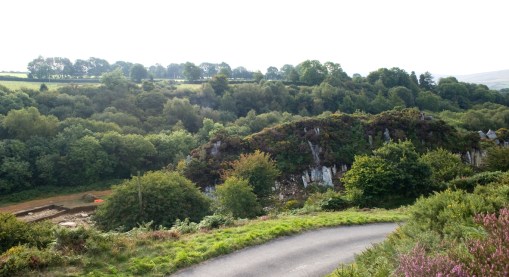
mp23836The Craig Rhos-y-felin outcrop, with excavation in 2015 at left; rhyolite chips found near Stonehenge precisely match part of this outcrop, now confirmed by uranium-lead dating (photo M Pitts)

A new study of Stonehenge bluestone is out. It’s short and densely written, and not dramatic. But it confirms the direction of current work which suggests that many of the Welsh bluestones came from north of the Preseli hills, rather than the top or to the south as traditionally believed (HH Thomas identified Carn Alw as a source for these particular stones, see map). The significance of this, as argued earlier by Richard Bevins and Rob Ixer, is that while Carn Alw might allow for ice transport of stones at least part of the way to Wiltshire, the nearer the sources move downslope towards the coast, the less supportable that becomes. And Mike Parker Pearson may have another quarry to look for.

Bevins…

View original post 301 more words


Stonehenge and the Druids

20 10 2016

Back in the mid 1600s one man came to the realisation that Stonehenge was far older than previously thought. Based on his studies, John Aubrey attributed the monument to the British pre-Roman priesthood called the Druids.

This began an association that has persisted for over 350 years despite all attempts by archaeologists to shake it. In the minds of most people, the Druids built Stonehenge.

The popularisation of the idea really took off in the 1700s when William Stukeley wrote a book called “Stonehenge – A Temple Restor’d to the British Druids”. So convinced was Stukeley that he styled himself as the Druid “Chyndonax” in the frontispiece of his book.
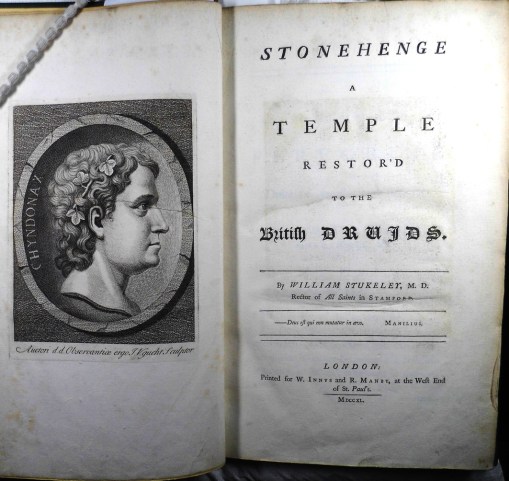
Stukeley as Chyndonax.jpg

Inspired, perhaps, by this vision of an ancient British tradition one of the first of a number of modern Druid groups was founded in 1781 by Henry Hurle. Called the “Ancient Order of Druids” (AOD), it was created as a fraternal organisation and quickly established a quasi-Masonic lodge structure that eventually spread to the USA and Australia.

What followed over the next century was the creation of a plethora of groups, orders and groves whose history is intertwined and overlapping. Making sense of this Druidic family tree is an almost impossible task but in broad outline it is as follows.

In 1792, a Welshman named Edward Williams (aka Iolo Morganwg), who claimed that the rites and customs of the ancient Druids had survived the Roman invasion, founded the Gorsedd of Welsh Bards at Primrose Hill in London. His literary works were to have a profound effect on the early neo-Druid movement and his influence persists to this day.

In 1833 the AOD split over a disagreement about lodge independence from the central Grand Lodge and a group of more than 100 lodges set up a new group called the “United Ancient Order of Druids”. Such arguments and secessions have been a hallmark of neo-Druidism ever since.

The Ancient and Archaeological Order of Druids (AAOD) was founded in 1874 by Wentworth Little, a Rosicrucian and Freemason, with the intent of studying the links between freemasonry and ancient Druidic tradition.

By 1905, the AOD were holding ceremonies at Stonehenge to initiate new members into their order, up to 250 at a time. Some of the press ridiculed the use of cardboard sickles and fake beards, but many of their members were respected members of society – lawyers, doctors and clergy – who wanted to remain anonymous.

Sir Winston Churchill and Sir Edmund Antrobus (then owner of Stonehenge) were members of the AOD, although Churchill has also been associated with the AAOD.
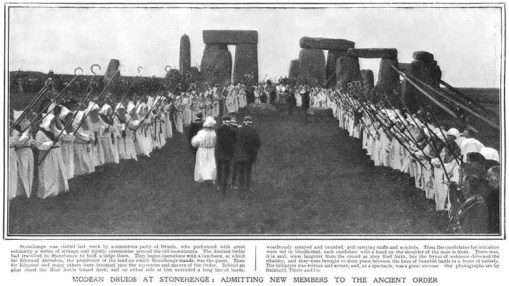
ancient-order-of-druids-stonehenge-1905

In 1909 another new group – “The Druid Order” was founded by George MacGregor-Reid. Somewhat confusingly they were also known variously as “The Ancient Druid Order”, “The British Circle of the Universal Bond” and “An Druidh Uileach Braithreachas” (ie “The Universal Druid Brotherhood”). This group claims to have been founded in 1717 by John Toland, though this is disputed.

Ultimately this group also split – in 1964 – to form the “Order of Bards, Ovates and Druids” under its leader Ross Nichols. The group offers correspondence courses to those interested in Druidry.

Of all the Druids that celebrate Summer Solstice at Stonehenge, it’s The Druid Order that arguably has the longest tradition. They begin at midnight at the barrows southwest of Stonehenge, continue with a dawn observance and ultimately hold a noon ceremony within the monument itself.
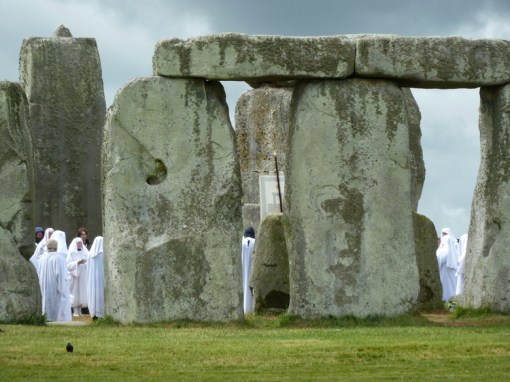
The Druid Order at Stonehenge.jpg

More recently founded neo-Druid and pagan groups also hold ceremonies at Stonehenge at various times of the year. These include – in no particular order – the Dolmen Grove, the Dorset Grove, the Cotswold Order, the Loyal Arthurian Warband (LAW), the Stonehenge and Amesbury Druids and the Gorsedd of Cor Gawr.
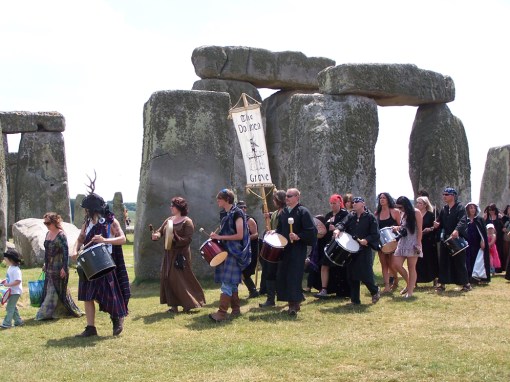
the-dolmen-grove

Although the details of the ceremonies are varied, one theme is the re-enactment of a ritual battle between the Oak King and the Holly King which occurs twice a year, at Summer Solstice (when the Holly King wins) and the Winter Solstice (when the Oak King wins). Usually this is carried out using swords or wooden staves, but it has been seen done with rubber chickens and water pistols!

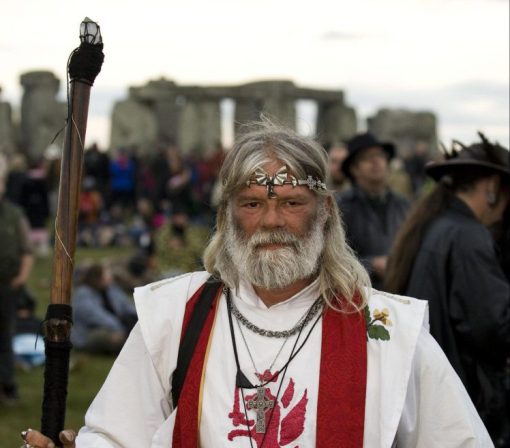
For the Open Access events at the Solstices and Equinoxes, at which everyone is allowed in to the centre of the monument to witness the sunrise, a pre-Dawn ceremony is usually led by some of the most recognisable of the modern Druids – notably King Arthur Uther Pendragon of the LAW and Rollo Maughling of the Glastonbury Order.

These are inclusive ceremonies that allow the general public an insight into the beliefs and traditions while serving to highlight the continuing modern use of Stonehenge as a Druidic Temple.
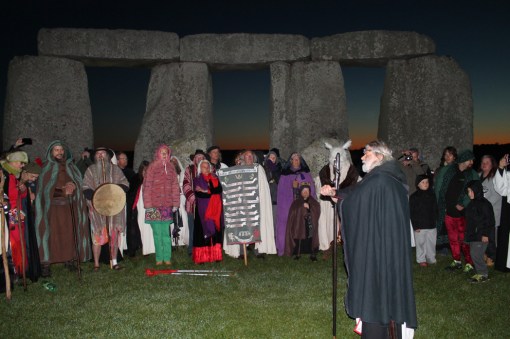
loyal-arthurian-warband

Here are links to some of the Druid Orders.

The Ancient Order of Druids – http://www.aod-uk.org.uk

The Druid Order – http://thedruidorder.org

Order of Bards, Ovates and Druids – http://druidry.org/

The Dolmen Grove – http://www.dolmengrove.co.uk/

The Dorset Grove – http://www.dorsetgrove.co.uk/

The Cotswold Order – http://www.twistedtree.org.uk/

The Loyal Arthurian Warband – http://www.warband.org.uk/

The Stonehenge and Amesbury Druids – http://www.stonehenge-druids.org/

The Gorsedd of Cor Gawr – http://bards.org.uk/

The Glastonbury Order of Druids – http://www.glastonburyorderofdruids.com/

Article written by guest blogger Simon Banton. Local historian and Stonehenge expert.

The Stonehenge News Blog
Follow us on Twitter and Facebook for all the latest Stonehenge news


Orionid meteor shower 2016 to light up Wiltshire skies this October

9 10 2016

The Orionid meteor shower will be at its peak — 20 showers per hour — in the morning of  21st October 2016.

Sky gazers in the United Kingdom can brace themselves for a visual feast, thanks to the meteor shower that will light up the sky this October.

meteor-shower

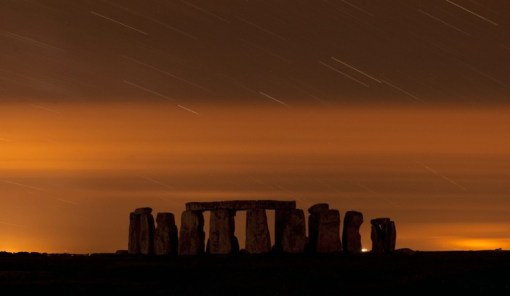
A general view of Stonehenge during the annual Perseid meteor shower in the night sky in Salisbury Plain, southern England August 13, 2013. The Perseid meteor shower is sparked every August when the Earth passes through a stream of space debris left by comet Swift-Tuttle. Picture taken using a long exposure. [Representational image] Reuters

The meteor shower is called Orionid and originates from the remains of the Halley’s Comet. The shower is likely to take place from October 2 to November 7, a Science Alert report said.

The Earth passes through the Halley’s Comet trail twice annually. The last time the planet passed through the trail of Halley’s Comet was in May and Eta Aquarids meteor shower was observed.

The meteor shower will be at its peak — 20 showers per hour — in the morning of October 21 2016. However, scientists have said that the shower will be seen at pre-dawn from today up to October 15, as the moon is likely to hinder the visibility later on.

Various planets, stars and constellations can be observed this month along with the meteor shower. Uranus will be visible opposite the Sun in the east post sunset on October 15 and the full moon will aid the visibility.

Jupiter will be spotted along with its moon with naked eyes during dawn in the east on October 28. Saturn and Venus too will be seen too in the low south-west skies on October 30 and Venus will be more luminous than Saturn.

Aldebaran, the orange star which is known as the bull’s red eye of the constellation Taurus, might be seen in the dark skies on October 18. Also, radiant stars Alpha Leonis and Eta Leonis from constellation Leo can be seen before sunrise on October 25, National Geographic reported.

Article Source and more stories: International Business Times

The Stonehenge News Blog

""


Ancient dog tooth found near Stonehenge shows 7,000 year old journeys

8 10 2016

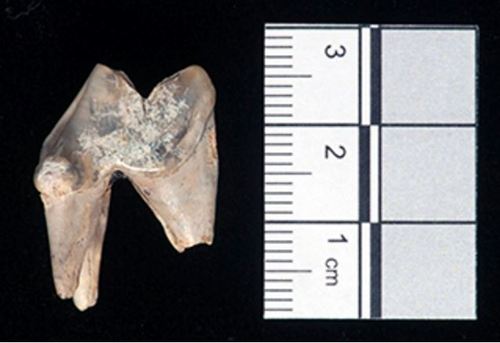
We know that man’s best friend is a dog, but archaeologists near Stonehenge have found that dates back 7,000 years!

A dig at Blickmead, a mile from the stone circle, has uncovered a dog’s tooth.

dog-tooth

That particular breed would have been seen as a ‘prized prestige pet’

Scientists from the University of Buckingham and the University of Durham think the dog came from the York area, making it one of the longest known journeys to South Wiltshire ever recorded, at 250 miles.

The finding could also show that people visited the sacred area two millennia before the stone circle’s believed to have been built.

The dog is thought to be an Alsatian, at a time when prehistoric man was only just starting to tame animals and keep them as pets.

Archaeologist David Jacques said:

“The fact that a dog and a group of people were coming to the area from such a long distance away further underlines just how important the place was four millennia before the circle was built.

“Discoveries like this give us a completely new understanding of the establishment of the ritual landscape and make Stonehenge even more special than we thought we knew it was. It would be devastating if the tunnel obliterated our chance of piecing together the jigsaw to explain why Stonehenge was built.”

The site that’s being dug at the moment is under threat as it’s along the route of the proposed A303 tunnel.

There’s more on this story on our national news page at www.spirefm.co.uk/news

The Stonehenge News Blog


Barrows or Burial Mounds Near Stonehenge.

5 10 2016

The area within a 2 mile radius around Stonehenge contains more than 300 Bronze Age burial mounds or “barrows”. Often these are clustered into what are termed “cemeteries” – groups of barrows that often occur along the ridgelines within sight of the stone circle. Almost all have been opened by investigators and treasure hunters prior to the 20th century and have had their grave goods removed.

The nearest ones to Stonehenge are within easy walking distance – 10 to 20 minutes away – and the views across the landscape are well worth the journey. Please don’t climb the barrows, tempting though it is, as they are easily eroded.

Less than a mile to the east lie the King Barrows under the beech trees on the horizon to the north of the A303 main road. These are amongst the very few barrows that have not been opened by antiquaries in the 18th or 19th centuries and are some of the largest and oldest.

Northwest of Stonehenge are the Cursus Barrows, a group that is easily accessible – being less than a quarter of a mile from the entrance to the monument field. These were all excavated by William Cunnington and Richard Colt Hoare in the early 19th century.

The double bell barrow in this group had previously been opened by Lord Pembroke in 1722 and it contained some very fine grave goods including a dagger; amber, shale and faience beads as well as a gold mounted amber disc which all accompanied the cremated remains of a young teenage girl.

Within the monument field itself, 100m east of the stone circle, sits a wonderful example tweezersof a bell barrow. It was excavated twice by Cunnington and on his second attempt he discovered a cremation burial within an urn along with a beautiful set of bone tweezers which are now in Wiltshire Museum in Devizes.
Visible from Stonehenge on the ridge south of the main A303 road are the Normanton Down Barrows, a huge linear cemetery of burial mounds. This group is on private farmland and so cannot be visited.

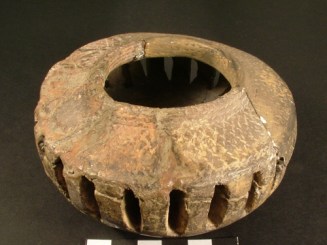
stonehenge-cupWithin the group is a bell barrow catalogued as Wilsford G8 that contained some extraordinary items of gold and amber jewellery along with a ceramic incense vessel that is known as the “Stonehenge Cup” because of a perceived resemblance to the monument.
At the time of writing (October 2016), the items from Wilsford G8 are on display in the
Stonehenge Visitor Centre Exhibition, on loan from Wiltshire Museum.

Also in this group is the famous Bush Barrow – so called because it has a large bush growing out of the top of it.

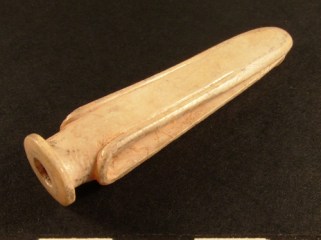
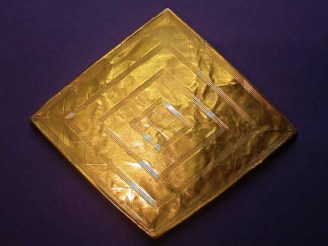
The excavation of this barrow in 1808, again by Cunnington and Colt Hoare, found the body bush-barrow-lozengeof an adult male laid north-south accompanied by one of the most spectacular grave assemblages ever found in Britain, including two lozenges of sheet gold, a polished macehead and 5 cylindrical bone mounts, bronze and copper daggers, and thousands of tiny gold pins used to decorate the hilt. All of the Bush Barrow finds are on display in Wiltshire Museum.

There is an interactive map showing all of the barrows which were investigated by Cunnington and Colt Hoare in the Stonehenge landscape at http://web.org.uk/barrowmap/

The Ordnance Survey 1:25000 Explorer Map 130 “Salisbury and Stonehenge” is an excellent reference for exploring the area, showing public footpaths and National Trust open access land.

This weeks article was submitted by guest blogger and local Stonehenge expert Simon Banton

Stonehenge Landscape walking Tours:
National Trust: Walk with an archaeologist: Durrington Revealed
Local Tour Operator: Stonehenge and Salisbury Guided Tours
Foot Trails:  Full Day Stonehenge Guided Walking Tours
Tours from London:  The Stonehenge Experts
Durrington Walls, Wiltshire walk of the week: The Daily Telegraph

The Stonehenge News Blog


A303 Stonehenge expressway. Contractors called to tunnel meeting: 12th October

5 10 2016

Highways England is holding a market engagement day next week for contractors interested in bidding to build the A303 improvement project by Stonehenge.

Stonehenge Tunnel Project

The ambitious project is expected to cost anywhere between £300m and £1.3bn depending on the final route selected.

A joint venture of WS Atkins and Ove Arup is designing a scheme to improve the A303 between Amesbury and Berwick Down in Wiltshire. The project includes a tunnel near Stonehenge and a bypass of the village of Winterbourne Stoke.

The A303 at Stonehenge currently severs the Stonehenge and Avebury World Heritage Site (WHS) and is one of the last remaining single-carriageway bottlenecks between London and Cornwall.  The proposed scheme would create an expressway standard dual carriageway route.

The scheme is currently in the Options phase, with a preferred route announcement planned for summer 2017 and a DCO application planned for summer 2018. Subject to statutory procedures, construction work should start by April 2020.

Highways England intends to appoint a contractor on an early contractor involvement (ECI) basis, initially to assist with the DCO application and then to design, build and maintain the scheme.

On the project page on the Highways England website, the value of the scheme is somewhat vaguely put at between £275m and £1,321m.

The market engagement day takes place in Bristol on 12th October 2016 to provide more information on the scheme and the procurement strategy. Those wishing to attend should email simon.chohan@highwaysengland.co.uk for the time and location of the event.

Links:
Race starts for £1.3bn Stonehenge expressway
Contractors called to Stonehenge tunnel meeting

The Stonehenge News Blog


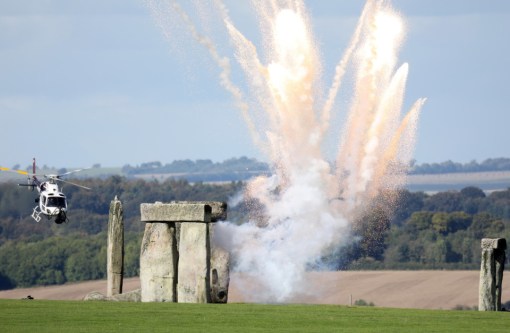
Blown Henge! Stonehenge turned into an intergalactic battlefield during filming for latest Transformers movie

2 10 2016

STONEHENGE was turned into an intergalactic war field as the Neolithic burial mound became part of the Transformers film set.

A rare exception has been made to the Transformers: The Last Knight filmmakers who’ve been allowed access to the ancient landmark, which is only made available to the public four times a year.

Stonehenge was turned into an intergalactic war field

Hollywood actor Mark Wahlberg, 45, was spotted running across the explosive set that also featured a helicopter flying overhead.

Filmmakers were given rare access to the ancient landmark for latest instalment of the action flick

The film is the fifth in the Transformers franchise and is set for release in June 2017.


Exploring Prehistoric Wessex

1 10 2016

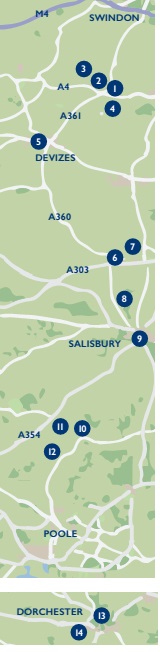
Visit atmospheric and inspirational sites and museums and follow a trail from Avebury and Stonehenge to Dorchester and Maiden Castle.

1. SILBURY HILL prehwsxmap
The largest man-made mound in Europe, mysterious Silbury Hill compares in height and volume to the roughly contemporary Egyptian pyramids.
Satnav SN8 1QH
Details on English Heritage website

2. AVEBURY
With its huge circular bank and ditch and circles of standing stones, Avebury is at the centre of a remarkable ritual landscape. Visit the Alexander Keiller Museum and Avebury Manor.
Satnav SN8 1RF
Details on National Trust website

3. WINDMILL HILL
Causewayed camp, set on a commanding hilltop above Avebury. Used for rituals, feasting and trading.
Details on English Heritage website

4. WEST KENNET LONG BARROW
The most impressive and accessible Neolithic
chambered tomb in Britain.
Satnav SN8 1QH
Details on English Heritage website

5. WILTSHIRE MUSEUM
See Gold from the Time of Stonehenge in our award-winning new Prehistoric Wiltshire displays. See the spectacular treasures of the people who held their ceremonies at Stonehenge.
Open 7 days a week. Satnav: SN10 1NS
www.wiltshiremuseum.org.uk

6. STONEHENGE
The most sophisticated stone circle in the world, at the centre of a remarkable sacred landscape. Includes the cursus, a 3km long earthwork and the Avenue – a processional way lined with the Winter solstice.
Satnav SP4 7DE
Details on English Heritage website

7. DURRINGTON WALLS
A massive henge, the site of the recent discovery of Neolithic houses, where the people who gathered from across Britain to build Stonehenge may have lived.
Satnav SP4 8LY
Details on National Trust website

8. OLD SARUM
The original site of Salisbury – a Norman castle and cathedral, set within the impressive ramparts of an Iron Age hillfort.
Satnav SP1 3SD
Details on English Heritage website

9. SALISBURY MUSEUM
Stunning new Wessex Gallery of Archaeology
featuring the famous ‘Amesbury Archer’
and unique finds from Stonehenge,
Old Sarum and Durrington Walls.
Open Mon – Sat & Sun (in summer). Satnav: SN1 2EN
www.salisburymuseum.org.uk

10. ANCIENT TECHNOLOGY CENTRE
Visit for special Open Weekends and Ancient Days. Experience the realities of daily life in the past and learn ancient skills and crafts in an authentic landscape
Satnav Dorset BH21 5RP
Ancient Technology Centre website

11. DORSET CURSUS
The banks and ditches of a Neolithic cursus runs for six miles, surrounded by barrow cemeteries. Contact in advance to arrange a tour and to visit the private museum at Down Farm.
Satnav SP5 5NU
Dorset Cursus

12. KNOWLTON HENGE
An impressive Neolithic henge, with a Norman church built inside the bank and ditch.
Satnav BH21 5AE
Details on English Heritage website

13. DORSET COUNTY MUSEUM
Discover the story of Dorset’s rich landscape
unfolding in a range of fascinating displays.
Find out about Maiden Castle and the stunning
Bronze Age finds from nearby Clandon barrow.
Open Mon – Sat & Sun (in summer). Satnav: DT1 1XA
www.dorsetcountymuseum.org

14. MAIDEN CASTLE
The largest and most complex Iron Age hillfort
in Europe. Multiple ramparts once protected
an important settlement, but the site has 4,000
years of history, from a Neolithic causewayed
enclosure to a small Roman temple.
Satnav DT2 9EY
Details on English Heritage website

HOW TO GET HERE BY PUBLIC TRANSPORT
You can use coaches, trains & buses to visit many of these sites & museums.
Swindon – train connections & the
No.49 bus to Avebury & Devizes
Devizes – coach from London &
the No.2 bus to Salisbury
Salisbury – train connections, the Stonehenge Tour
bus service & the No.183 to Blandford Forum
Dorchester – train connections & the
No.184 from Blandford Forum

WHERE TO STAY
Details of quality assured accommodation:
http://www.visitwiltshire.co.uk
http://www.visitdorset.com

SPECIALIST TOUR OPERATORS
Stonehenge Guided Tours (London)
Stonehenge and Salisbury Guided Tours (Salisbury)
Wessex Guided Tours (Bath)

The Stonehenge News Blog


King Arthur takes council to court in Stonhenge parking row

30 09 2016

Even kings have problems with councils, it seems.

King Arthur in all his glory (Picture: SWNS)

King Arthur in all his glory (Picture: SWNS)

Arthur Pendragon, the self-titled druid king of Britain and who says he’s the reincarnation of King Arthur, is suing over a parking charge at Stonehenge.

He’s also taking action against a police force and English Heritage over the £15 fee.

King Arthur believes the charge is ‘illegal’ for worshippers to the stones for the summer solstice, dubbing ‘pay to pray’.

The charge was introduced for this year’s event on June 21, which saw 12,000 people flock to Stonehenge, in Salisbury, Wiltshire, to mark the longest day of the year.

When Mr Pendragon refused to fork out – saying the £15 fee is ‘grossly unfair’ as it is three times what tourists pay on any other day of the year – he was barred from the UNESCO World Heritage site.

The 62-year-old, who rides a motorbike, decided to take action against the ‘money-grabbing’ authorities because it breaches his human rights.

Mr Pendragon – an ex-soldier and biker gang leader who was born John Timothy Rothwell to parents May and Wilfred – said he will do ‘whatever it takes’ to win.

Who is the modern-day King Arthur?

Mr Pendragon is an English eco-campaigner and Neo-Druid leader of the Loyal Arthurian Warband, who believes he is the reincarnation of King Arthur.

He rose to fame in the 90s when he won a case at the European Court of Human Rights to allow open access to Stonehenge for religious festivals.

He said: ‘If you go to Stonehenge as a tourist today you will pay £5, but if you go there on the solstice as a pilgrim they make you pay ££15.

‘As soon as they bring in a parking charge, it means it is virtually impossible to attend unless you pay. They are stopping me from praying.’

English Heritage has previously stated that it needs to charge the fee as £60,000 is spent on parking facilities during summer solstice.

He said: ‘It is all about money. Stonehenge is getting 1.3 million tourists a year – it is English Heritage’s biggest cash cow.

Read the full story on the Metro website

More relevant links:

Arthur Pendragon Facebook Page: (Arthur is a Warrior, Druid, Witch and Pagan High Priest defending environmental and libertarian causes) https://www.facebook.com/arthur.rex.984

Arthur Pendragon at Stonehenge: Live Periscope video footage from the Autumn Equinox 2016 celebrations: https://www.periscope.tv/w/1vOxwRaaZMdJB

King Arthur launches Stonehenge parking legal action | Plymouth Herald

NEWS: Senior druid launches legal challenge over £15 parking charge at for solstice: http://www.spirefm.co.uk/news/local-news/2106390/king-arthurs-stonehenge-parking-wars-to-be-shown-on-tv/

King Arthur sues council, police and English Heritage over ‘pay to pray’ scheme: 

The Stonehenge News blog
Follow us us on Twitter for all the latest Stonehenge News


Latest Transformers film shot in Wiltshire.

24 09 2016

StonehengeNews's avatarStonehenge and Salisbury Guided Tours

Hollywood film crews have descended on Wiltshire to film the latest blockbuster from the Transformers franchise.

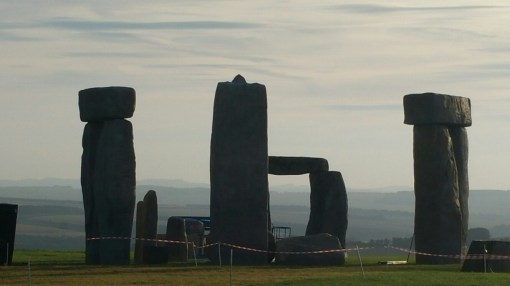
20160924_075231_1474701176012_resized Stonehenge film setting

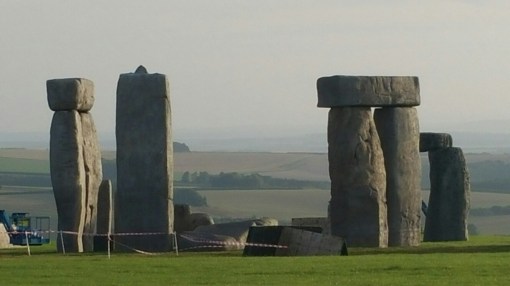
Scenes from the sci-fi epic – Transformers: The Last Knight are being filmed in Wiltshire using the famous Stonehenge monument.

20160924_075342_1474701172713_resized Scale model of Stonehenge built near the real Stonehenge

There is no doubt that the spin-offs of such a big budget movie could be enormous and will be felt throughout the local tourism industry and economy. History proved this much when Harry Potter was filmed in Alnwick. At present there are an estimated 200 crew members staying in accommodation in the area and spending money in local shops and restaurants. In the longer run, the film will bring the type of international publicity for the area that no amount of advertising could buy. It is fantastic that they have chosen our beautiful county as a film location.

Stonehenge and Salisbury…

View original post 7 more words