2017 Stonehenge Summer Solstice Open Access Arrangements.

30 04 2017

Stonehenge is an ancient prehistoric site which has been a place of worship and celebration at the time of Summer Solstice for thousands of years.

27200920884_85ee146a1f_z

This important site is seen by many as a sacred site – if you are planning to visit for summer solstice we ask that you please respect the stones and each other.

English Heritage is pleased to provide free Managed Open Access to Stonehenge for Summer Solstice 2017 and ask that if you are planning to join us for this peaceful and special occasion that you follow these Conditions of Entry. These are written to ensure enjoyment and safety for everyone attending summer solstice at Stonehenge.

Please note to reduce risk to those attending and to the monument itself, alcohol is not allowed in the monument field during summer solstice.

DATES AND TIMES

TUESDAY 20th JUNE 2017
ACCESS TO MONUMENT FIELD 19:00hrs
SUNSET 21:26hrs

WEDNESDAY 21th JUNE 2017
SUNRISE 04.52hrs
MONUMENT FIELD CLOSES 08:00hrs

The Solstice Car Park opens at 19:00hrs on 20th June with last admissions at 06:00hrs (or when full if earlier) on 21st June. The car park will close at 12.00 noon on 21st June.

ADMISSION, PLANNING YOUR JOURNEY AND PARKING
Admission to the Summer Solstice at Stonehenge is free of charge.

We strongly recommend travelling by public transport or arranging to car share with friends. You can also request or offer a lift to Stonehenge by following this link.

Please note parking charges apply.

Further details, and information to help you plan your journey, including details of local accommodation providers, will be published on these pages shortly, along with other helpful advice for summer solstice.

Stonehenge Guided Tours are offering their usual small group tour from London and Solstice Events are offering their annual pilgrimage from Bath.

Visiting Stonehenge this year for the Solstice Celebrations?

Please read this blog:
Respecting the Stones

Follow @St0nehenge @EH_Stonehenge @VisitStonehenge @HighwaysEngland and @Wiltshirepolice for #summersolstice updates on the night.

If you are unable to visit Stonehenge on the Solstice you can watch our LIVE PERISCOPE STONEHENGE BROADCAST

The Stonehenge News Blog
Follow us on Twitter and Facebook for all the latest Stonehenge New


Visiting Stonehenge this year for the Equinox or Solstice Celebrations? #ManagedOpenAccess

28 01 2017

Respecting the Stones
The conditions of entry for the Managed Open Access events at the Solstices and Equinoxes contain the following statements:

Stonehenge is a world renowned historic Monument and part of a World Heritage Site. It is seen by many who attend as a sacred place.  Please respect it and please respect each other.

Do not climb or stand on any of the stones – this includes the stones that have fallen.  This is in the interest of personal safety, the protection of this special site and respect for those attending.  As well as putting the stones themselves at risk, climbing on them can damage the delicate lichens.

… but some people seem happy to ignore these requests. I’m going to take a little time to explain that, strange as it may seem, the monument is actually quite delicate and damage to it does occur.
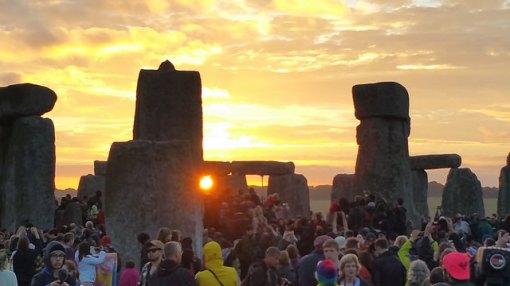
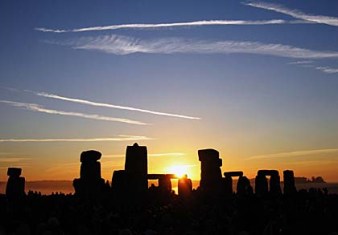
Sunrise at Stonehenge on the summer solstice

The popularity of the summer solstice has grown over the years

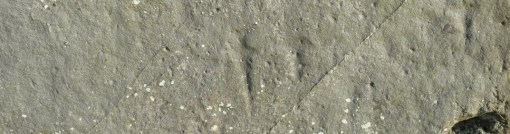
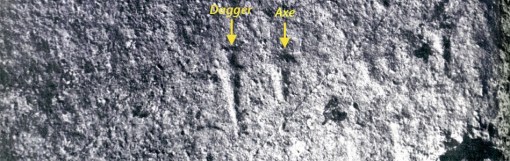
In 1953 during an archaeological investigation a set of carvings were noticed on the inner face of one of the stones of the central trilithons (Stone 53, to be precise). These carvings weren’t the usual graffiti that’ve been incised into many of the stones over the last 200 years or so – people’s names, initials, dates and so on. They were in fact very ancient indeed, dating back to the middle Bronze Age around 1700BC and were of bronze axe heads and a dagger.

Here’s a photo from 1953 showing the ancient carvings, followed by a more recent one:
atkinson-croppedstone-53-modern

The ancient carvings are noticeably “softer” around the edges in the modern shot and this is largely due to the action of people’s fingers tracing their outlines over the course of the last 63 years. Sarsen may be hard, but it’s still a sandstone.

Some bluestones exist only as stumps and many are fallen. These get trampled over by thousands of feet at the solstices and equinoxes, and many have acquired a polish as a result.

One of two examples of bluestone are so soft that they crumble away at a touch and these have eroded down to stumps that barely break the surface of the ground.

It’s been a while since tourists were rented hammers by the local blacksmith so they could take souvenirs, but it’s not unknown even in modern times for people to try it.
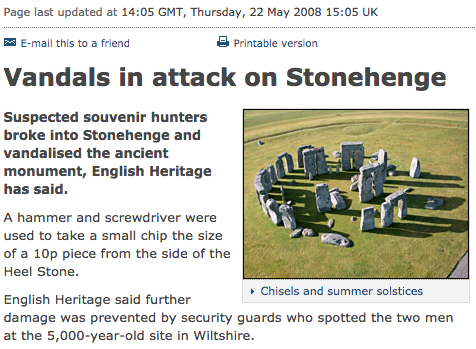
vandals

Although deliberate damage is rare, it does happen. At the 2014 Summer Solstice, someone thought it’d be a good idea to start writing the date (in US format – 6.21.14) in letters about 3” high, using a marker pen, near the bottom of Stone 3.
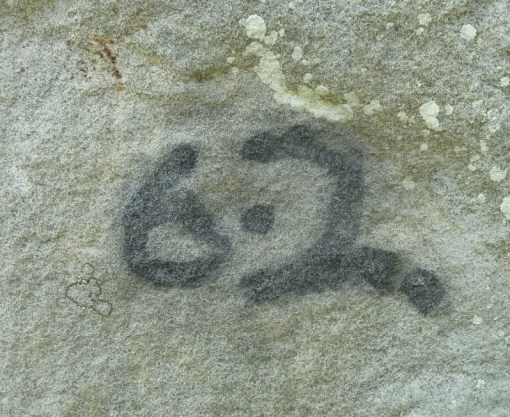
stone-3-graffiti
This damage is permanent. The ink has been carried deep into the stone surface and the conservators have been unable to remove it.

At the winter solstice that year, another bright spark decided to annoint the sides of about a dozen stones with some kind of oil, leaving dark streaks over 18” long that will take decades to fade. If you’re going to annoint the stones with anything, then use pure spring water and not some nasty goo you’ve bought off eBay.

Thoughtless damage happens every year – candlewax from spilt tealights, rubbings with crayon that goes through the paper, forcing random items like crystals or coins into crevices, digging in the ground and even trying to light a fire on a stone.

Disrespectful damage – vomiting, urinating or even defecating on the stones – is less common but also occurs. It’s hard to imagine the kind of person who thinks that sort of behaviour is acceptable anywhere, let alone at our most famous ancient monument.
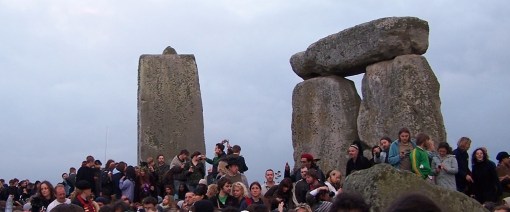
Stonehenge Summer Solsice

While standing on the stones is bad enough, climbing up them is far worse.


The fuzzy grey-green lichen that coats the upper reaches of most of the sarsen stones is a species called Sea Ivory (Ramalina Siliquosa) and usually only grows on marine cliffs, particularly in southwest England and Wales. It’s very easily knocked off by people brushing against the stones and large areas are destroyed by someone sliding back down having scaled any of the uprights.

There are at least 9 marine cliff species of lichen present, and how they ended up 50km from the sea is something of a mystery.

The last major study of the Stonehenge lichens was carried out in 2003. It found 77 different species, including two that are found in a particular recess of one specific stone and nowhere else on site, and another that only grows on one single stone at Stonehenge and nowhere else in southern England.

So the next time you decide to come along to an Open Access Equinox or Solstice Dawn, please be one of the people who understands how fragile the monument is and who treats it with respect.

Tell your friends too and – even better – if you find any litter that other people have dropped, please pick it up and put it in one of the bins.  Please share this article on social media and help raise awareness.

The stones, the ancestors, and the staff who do the tidying up after you’ve gone home and who genuinely love Stonehenge, all thank you! (This article was submitted with thanks by Simon Banton who worked at the monument for many years)

Stonehenge is protected under the Ancient Monuments and Archaeological Areas Act and you must adhere to the regulations outlined in the act or face criminal prosecution. No person may touch, lean against, stand on or climb the stones, or disturb the ground in any way. The Ancient Monuments Protection Act 1882 was an Act of the Parliament of the United Kingdom of Great Britain and Ireland (as it then was). It was introduced by John Lubbock, 1st Baron Avebury, recognising the need for a governmental administration on the protection of ancient monuments – more information

If you are considering visiting Stonehenge for the Solstice or Equinox celebrations you can join an organised tour.  Use a reputable tour operator who respect the conditions.  Stonehenge Guided Tours are the longest established company and Solstice Events offer small group Solstice tours using only local expert guides.

The Stonehenge News Blog
Follow us on Twitter and Facebook for all the latest Stonehenge News
http://www.Stonehenge.News

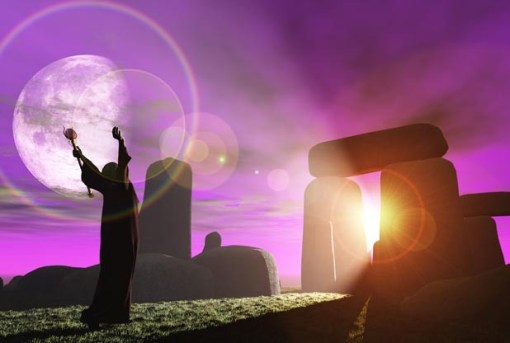


English Heritage are hiring a new ‘solstice coordinator’ at Stonehenge.

12 01 2017

How would you like to help organise this year’s solstice celebrations at Stonehenge?

English Heritage is advertising for a solstice coordinator to help put on seasonal gatherings at the ancient site near Salisbury.

The successful candidate will be tasked with arranging access to the stones during pagan celestial celebrations.

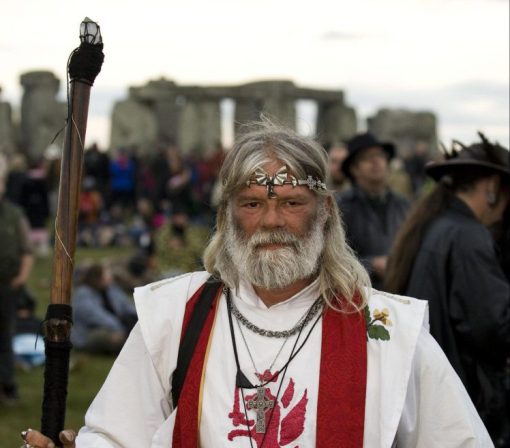
Druid greets the dawn at Stonehenge

Druids were traditionally allowed to attend Stonehenge for free on the solstice but there has been controversy recently over parking charges.

English Heritage is looking for somebody to: “Coordinate the planning and delivery of safe managed open access to Stonehenge for celebration of the summer solstice, winter solstice, spring and autumn equinoxes (and any other agreed seasonal gatherings).”

The salary is £20,000 pro rata on a part time basis working 14 hours a week and you must be available overnight on the night of each seasonal gathering.

There is a history of tension between the druid and pagan communities and English Heritage. Last year tempers flared when King Arthur Pendragon, Britain’s head druid said high parking charges meant solstice visitors had to ‘pay to pray’ at the sacred stones. English Heritage has also accused protestors of ‘vandalising’ the site.

According to the job advertisement, “The right person for this role will have excellent organisational skills and experience of organising events and controlling budgets. Resilience, empathy, diplomacy and a good sense of humour are a must.”

English Heritage cares for over 400 historic buildings, monuments and sites – from world famous prehistoric sites to grand medieval castles; from Roman forts on the edges of empire to a Cold War bunker.
Article by By JoeTSmith SomersetLive

Visit the English Heritage Jobs page

The Stonehenge News Blog
Follow us on Twitter and Facebook for all the latest Stonehenge News


Druid Protester King Arthur Pendragon granted Stonehenge ‘pay to pray’ court date.

10 01 2017

Senior druid Arthur Pendragon has been told he can take English Heritage to court to challenge “pay to pray” car parking charges at Stonehenge.

King Arthur Pendragon believes the £15 parking fee at Stonehenge was “an illegal charge” A senior druid has been told he can take English Heritage to court to challenge “pay to pray” car parking charges at Stonehenge. King Arthur Pendragon argued a parking fee of £15 for the 2016 summer solstice breached his human rights. Parking at the Neolithic monument, managed by English Heritage (EH), usually costs £5. A judge at Salisbury County Court granted Mr Pendragon a full hearing at a small claims court.

8012908913_1b46a670da_zOther druids and pagans were at the court to support King Arthur Pendragon, who was joined by other druid and pagan supporters to protest outside the court, believes the £15 fee was “illegal” and excluded 12,500 from the event. He told the judge at the allocation hearing that the claim was not about money or costs, but the fact it “unfairly targeted his religion”. An estimated 23,000 people attended the Neolithic site in 2015 compared to 12,000 in 2016 The increased charge was introduced to encourage more people to car share or travel by bus, but Mr Pendragon said he wanted to prove EH was wrong to turn him away when he refused to “pay to pray”. A spokeswoman for EH said: “This was a procedural hearing establishing the next steps and we look forward to presenting our full case at a later date. “As legal proceedings are ongoing it…
Mr Pendragon asked that the date for the full hearing does not clash with the spring or summer solstice.

PAY TO PRAY NEWS LINKS
http://www.bbc.co.uk/news/uk-england-wiltshire-38558778

http://www.spirefm.co.uk/news/local-news/2193973/king-arthur-pendragon-taking-english-heritage-to-court/

https://www.wbnews.info/2017/01/king-arthur-pendragon-granted-stonehenge-pay-to-pray-court-date/


The Stonehenge News Blog
Follow us on Twitter and Facebook for all the latest Stonehenge news and stories


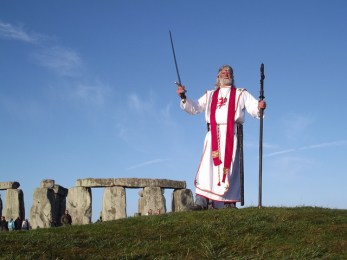
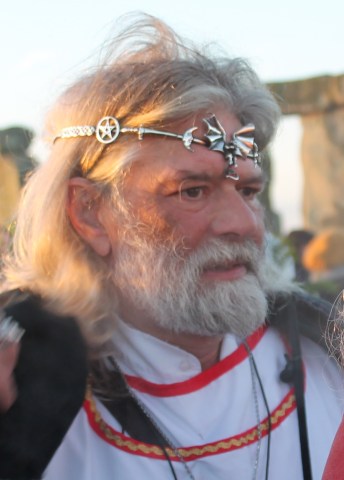
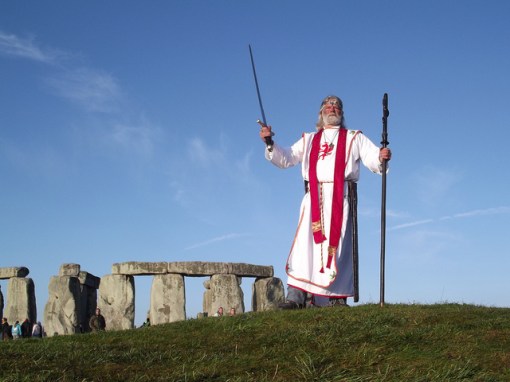
Druid Leader King Arthur Uther Pendragon, Head of the Loyal Arthurian Warband.

10 12 2016

King Arthur Uther Pendragon is the Chosen Chief and titular Head of the Loyal Arthurian Warband, a highly political modern Druid order that campaigns on a variety of issues primarily to do with Stonehenge.

8012908913_1b46a670da_z

These issues include protesting against the inclusion of human remains in English Heritage’s visitor centre exhibition, championing the right of celebrants to freely attend Solstices and Equinoxes at Stonehenge without having to “pay to pray” and calling for the return of the cremated remains that have been excavated from the Aubrey Holes and removed from the site by archaeologists.

He’s also got a long history as an eco-warrior and civil rights activist, protesting against road developments (notably the Newbury Bypass and Twyford Down) and of standing as an independent Parliamentary candidate for the Salisbury constituency.

When the media are looking for a soundbite from the rapidly growing pagan community in the UK, they invariably call Arthur and as a result the perception of many of the public is that he is the King of all the Druids. This tends to annoy some other people in the pagan and Druid community who resent the implication that Arthur speaks for all of them. Arthur, however, doesn’t claim this for himself.

What Arthur does believe is that he’s the modern reincarnation of the archetypal King Arthur of legend – returned to do battle for Truth, Honour and Justice in Britain’s hour of need.

arthur-closeupIn 1986 he changed his name from John Rothwell (ex biker and ex Army serviceman) by deed poll and he is unique in that his passport – in the name of Arthur Uther Pendragon – shows him wearing his crown.
The sword that he carries – Excalibur, naturally – is one of the originals made for the film of the same name. Its previous owner initially refused to part with it, on the basis that he’d only sell if the real King Arthur showed up to claim it. Arthur promptly presented his passport, much to the surprise of the owner!

His life story is too involved and full of startling magical coincidence to go into here but his biography “The Trials of Arthur” (C. J. Stone and A. U. Pendragon, Element Books, 2003) is worth reading if you want to better understand the man and his motivation.

After the government shut down the Stonehenge Free Festival with the infamous and appalling police violence of the Battle of the Beanfield in 1985, an exclusion zone was established around Stonehenge for the Summer Solstice complete with roadblocks, razor wire, helicopters, horses and dogs. Years of conflict between the festival community and the authorities followed.

Arthur was a key figure in the campaign to re-open Stonehenge to celebrants and eventually took the government to the European Court in 1998, claiming that the exclusion zone breached his freedom of thought, conscience, religion and freedom of expression, in contravention of Articles 9, 10 and 11 of the European Convention on Human Rights.

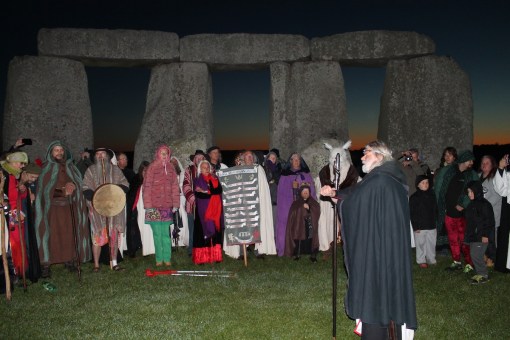
The exclusion zone was lifted in 1999 and in 2000 the first of the Summer Solstice Managed Open Access events took place, with around 5000 people attending a celebration through the night in pouring rain.

arthur-ceremony

These open accesses have continued ever since at Solstices and Equinoxes and it is doubtful that they would have ever begun if not for the campaigning of Arthur and others.

In the great British tradition of eccentrics, Arthur stands out proudly – he is the grit in the oyster, a thorn in the side of bureaucracy and passionate about the causes he champions.

You may or may not agree with him, you may like or dislike him, but you can’t deny that he gets out there and tries to change things in the face of almost overwhelming odds.

Without him the world would be a much less colourful place – as a nation, we could do with more of his kind.

Article by guest blogger and local Stonehenge historian Simon Banton

Loyal Arthurian Warband website: http://www.warband.org.uk
“The Trials of Arthur” Book review
Follow King Arthur on Twitter
King Arthur live periscope broadcast at the Autumn Equinox
King Arthur and Stonehenge images on Flickr

The Stonehenge News Blog
Follow us on Twitter and Facebook for all the latest Stonehenge news and stories


Solar Astronomy at Stonehenge

4 11 2016

Most people are aware that Stonehenge is somehow aligned to the annual movements of the Sun.

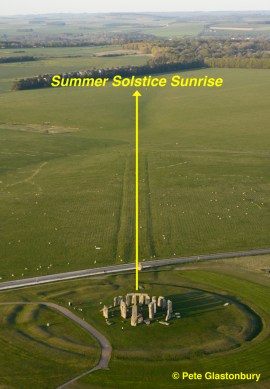
Each year thousands of pilgrims, druids and party-goers gather in celebration, hoping to Stonehenge Avenue.jpgwitness the most famous of these – the Summer Solstice Sunrise on June 21st.
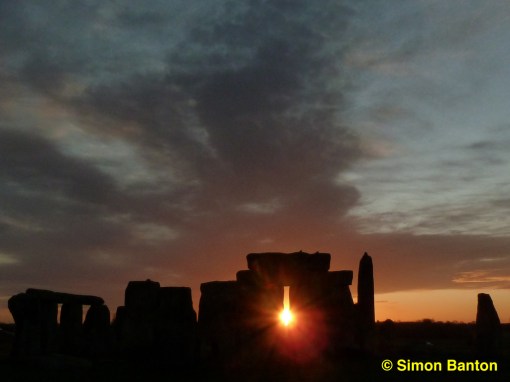
At this time of year, as seen from the centre of the monument, the Sun rises in the same direction as the centre-line of the Avenue – the ancient processional approach to Stonehenge – towards the northeast.

The Stonehenge Avenue alignment was first pointed out by William Stukeley in 1740.

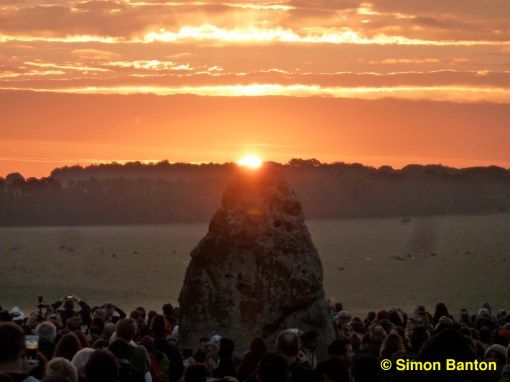
Even though almost everyone believes the Heel Stone was put up by the builders to exactly mark the summer solstice sunrise position, this can’t be true because it stands off to the right hand side of the alignment.

Today the Sun seems to rise out of the top of the Heel Stone due to the modern trees that are on the horizon.

heel-stone-sunrise

Walking up the Avenue they would have seen the Sun setting exactly into the middle of the stones between the uprights of the tallest trilithon in the southwest. We can still experience this today, even though only one upright of that trilithon – Stone 56, the tallest stone on the site – remains in place.

There’s a secondary alignment too – from Winter Solstice Sunrise to Summer Solstice Sunset.

This was first described by Prof. Gordon Freeman in 1997 and it makes use of a “notch” in the edge of Stone 58 of the western trilithon to give a clear sightline across the stone circle.

Viewed through this notch, Winter Solstice Sunrise is seen over Coneybury Hill to the southeast…

winter-solstice-sunrise

If they weren’t there, sunrise would be almost a Sun’s width to the left – and 4,500 years ago the Sun would have risen a whole degree further over to the left.

Even though the Heel Stone wasn’t intended as the solstice sunrise marker, the sight is still magnificent – when the weather cooperates.

Along the same alignment, but exactly in the opposite direction, lies the Winter Solstice Sunset point.

… and Summer Solstice Sunset is seen over Fargo Wood to the northwest.

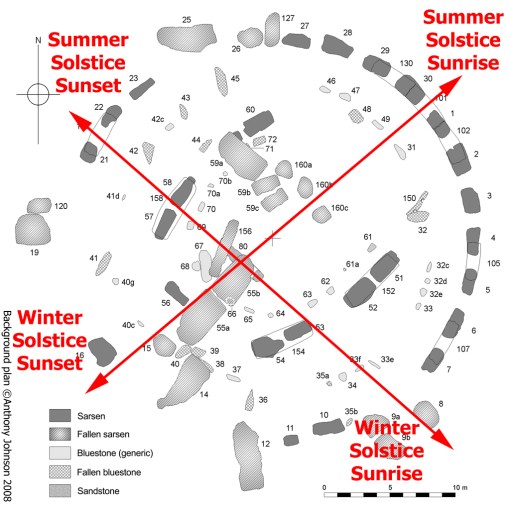
What’s remarkable about these alignments through the circle is that they intersect over the centre of the Altar Stone (shown as Stone 80 in the plan below). The Altar Stone is not perpendicular to the main alignment but is offset so that it lies exactly along the secondary one.

image description

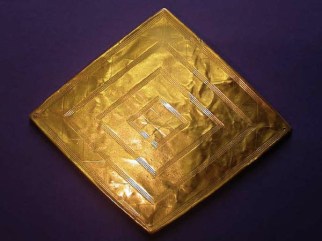
The intersection angle of 80° between summer and winter solstice sunrises at this latitude is echoed in the large gold lozenge discovered in 1808 when the Bronze Age “shamanic” burial from Bush Barrow, just south of Stonehenge, was excavated.

The intersection angle of 80° between summer and winter solstice sunrises at this latitude is echoed in the large gold lozenge discovered in 1808 when the Bronze Age “shamanic” burial from Bush Barrow, just south of Stonehenge, was excavated.bush-barrow-lozenge
Some see this as coincidence. Others believe the lozenge shows that the knowledge of this important astronomical angle was passed down the generations for at least 600 years.

The lozenge and the other astonishing Bush Barrow finds are on display at Wiltshire Museum in Devizes.

There are Stonehenge lunar alignments too, but that will be the subject of a different article.

Article by guest blogger and local Stonehenge historian Simon Banton

The Stonehenge News Blog
Follow us on Twitter and Facebook for all the latest Stonehenge news and discoveries


Why did the builders of Stonehenge choose Salisbury Plain?

23 10 2016

One of the most frequently asked questions about Stonehenge is “Why is it where it is?” and there are several possible explanations for this. They’re described below but it’s important to understand that combinations of these are also possible – there may not be just one single reason.

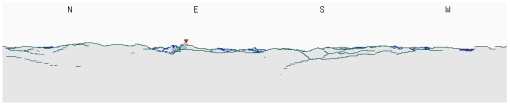
The location isn’t at all the obvious choice because it’s not at the top of the slope, which rises further towards the west. However, if you analyse the terrain you realise that it’s ideally positioned to give medium to long distance views to the northeast, southeast, southwest and northwest over a horizon that is relatively flat in profile.

In fact, the horizon is less than 1° in elevation in all directions.

Salisbury Plain

Archaeologists believe that there were only isolated stands of trees in the Salisbury Plain landscape at the time Stonehenge was built, far fewer than are evident today, so the far-reaching views that are hidden today by modern plantations wouldn’t have been obscured.

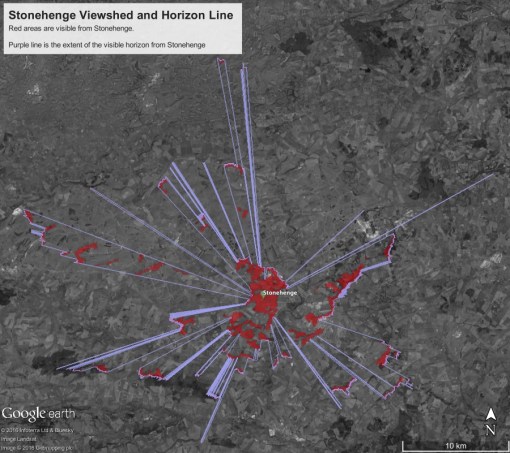
viewshed-and-horizon

In the Google Earth image the areas coloured red are directly visible from Stonehenge while the purple line shows the extent of the visible horizon (without trees in the way).

So why not build it further up the westerly slope and achieve even further-reaching views? To do so would be to lose some of the flatness of the horizon in key directions. As it is, Stonehenge appears to be in the centre of a bowl of visibility where the directions to the important astronomical events of summer and winter solstice sunrise and sunset are clear and level.

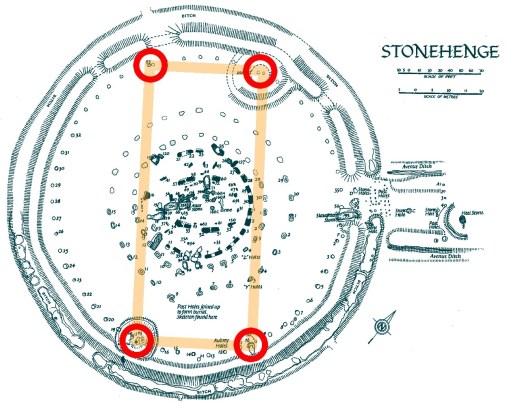
The second theory relates to the Station Stone Rectangle. Originally there were four Station Stones situated just inside the henge bank. Only two remain in place, the positions of the others (whose stoneholes have been detected) are known.

The short sides of this rectangle are parallel to the main alignment at Stonehenge – winter solstice sunset to summer solstice sunrise. In 1966, C.A. “Peter” Newham pointed out in an article in

station-stone-rectangle

Nature that the long sides of the rectangle are aligned on the extreme moonrise and moonset positions, in a cycle that takes 18.6 years to complete.

It’s a feature of the astronomical geometry that only at the latitude of Stonehenge (give or take 30 miles) that these solar and lunar alignments occur at right angles to each other. Further north or south than that limit and the Station Stone Rectangle would become a parallelogram.

The third possibility concerns the Heel Stone and the Avenue. The Heel Stone is an unshaped sarsen boulder weighing in at over 35 tons that is positioned to the northeast of Stonehenge at the top of the ceremonial approach way called the Avenue. It is traditionally associated with marking the position of sunrise on the summer solstice as seen from the centre of the circle.

During excavations by the Stonehenge Riverside Project in the mid-2000s, a series of features were discovered at the top of the Avenue which have been identified as “periglacial stripes”. These cracks and runnels in the underlying chalk where water has repeatedly frozen and thawed happen to run exactly along the main solstice alignment down the slope to the northeast beyond the Heel Stone.

periglacial

The SRP team suggest that these features would have been visible as parallel lines in the grass leading towards the Heel Stone. They go on to suggest that since the Heel Stone is unshaped, it may always have been lying in the landscape very close to where it has been set upright.

They conclude that a series of noticeable stripes in the grass leading up a slope towards a massive rock exactly in the direction of the winter solstice sunset may be the reason why this spot was regarded as a special place, worthy of memorialising.

Fourthly, there’s the theory that the combination of Bluestones from Wales with Sarsens from the more local area represents the symbolic political unification of two different groups of people at this spot on the borderland between their separate spheres of influence.

We do know that the area has been a focus of activity for more than 10,000 years going right back to the end of the last Ice Age in Britain, as shown by the recent discoveries at Blick Mead in Amesbury, and there are the massive Mesolithic post holes in the landscape only a couple of hundred metres northwest of Stonehenge.

Perhaps we’re looking at the continuation of a specialness that was handed down across the generations, with each successive group embellishing the stories and the monumentalisation a little for itself until finally we end up with a Visitor Centre that receives over a million people a year.

Ultimately though, the reasons for the choice of this location will remain one of the more puzzling Stonehenge mysteries.
Article by guest blogger and local Stonehenge historian Simon Banton

Salisbury Plain links:
Salisbury Plain Safaris offers a unique look at the dramatic landscapes, rich history and picturesque villages surrounding Salisbury, Stonehenge and the surrounding villages.
Stonehenge Guided Tours offer unique guided tours of the Stonehenge landscape and Salisbury Plain
Stonehenge ATV. This is what you have been looking for – the ultimate two seater buggy Salisbury Plain experience.
Visit Wiltshire.  Looking for more information on the famous Salisbury plain?…If so, click here to get the latest information direct from the official Wiltshire tourism site!

The Stonehenge News Blog
Follow us on Twitter and Facebook for all the latest Stonehenge news and discoveries


King Arthur takes council to court in Stonhenge parking row

30 09 2016

Even kings have problems with councils, it seems.

King Arthur in all his glory (Picture: SWNS)

King Arthur in all his glory (Picture: SWNS)

Arthur Pendragon, the self-titled druid king of Britain and who says he’s the reincarnation of King Arthur, is suing over a parking charge at Stonehenge.

He’s also taking action against a police force and English Heritage over the £15 fee.

King Arthur believes the charge is ‘illegal’ for worshippers to the stones for the summer solstice, dubbing ‘pay to pray’.

The charge was introduced for this year’s event on June 21, which saw 12,000 people flock to Stonehenge, in Salisbury, Wiltshire, to mark the longest day of the year.

When Mr Pendragon refused to fork out – saying the £15 fee is ‘grossly unfair’ as it is three times what tourists pay on any other day of the year – he was barred from the UNESCO World Heritage site.

The 62-year-old, who rides a motorbike, decided to take action against the ‘money-grabbing’ authorities because it breaches his human rights.

Mr Pendragon – an ex-soldier and biker gang leader who was born John Timothy Rothwell to parents May and Wilfred – said he will do ‘whatever it takes’ to win.

Who is the modern-day King Arthur?

Mr Pendragon is an English eco-campaigner and Neo-Druid leader of the Loyal Arthurian Warband, who believes he is the reincarnation of King Arthur.

He rose to fame in the 90s when he won a case at the European Court of Human Rights to allow open access to Stonehenge for religious festivals.

He said: ‘If you go to Stonehenge as a tourist today you will pay £5, but if you go there on the solstice as a pilgrim they make you pay ££15.

‘As soon as they bring in a parking charge, it means it is virtually impossible to attend unless you pay. They are stopping me from praying.’

English Heritage has previously stated that it needs to charge the fee as £60,000 is spent on parking facilities during summer solstice.

He said: ‘It is all about money. Stonehenge is getting 1.3 million tourists a year – it is English Heritage’s biggest cash cow.

Read the full story on the Metro website

More relevant links:

Arthur Pendragon Facebook Page: (Arthur is a Warrior, Druid, Witch and Pagan High Priest defending environmental and libertarian causes) https://www.facebook.com/arthur.rex.984

Arthur Pendragon at Stonehenge: Live Periscope video footage from the Autumn Equinox 2016 celebrations: https://www.periscope.tv/w/1vOxwRaaZMdJB

King Arthur launches Stonehenge parking legal action | Plymouth Herald

NEWS: Senior druid launches legal challenge over £15 parking charge at for solstice: http://www.spirefm.co.uk/news/local-news/2106390/king-arthurs-stonehenge-parking-wars-to-be-shown-on-tv/

King Arthur sues council, police and English Heritage over ‘pay to pray’ scheme: 

The Stonehenge News blog
Follow us us on Twitter for all the latest Stonehenge News


When is the Stonehenge summer solstice 2016? Everything you need to know including times and rituals

28 05 2016

Here’s everything you need to know about the longest day of the year and traditions surrounding the summer solstice

Midsummer-Solstice-celebrations-at-Stonehenge

Party time: Druids, pagans and revellers take part in a winter solstice ceremony at Stonehenge

Every year, around this time, we start talking about the summer solstice.

Mostly it’s because it’s the longest day of the year, and there’s a very British pessimism that says the days will immediately start to shorten into winter from now on.

But there’s also the shenanigans at Stonehenge, general celebrations and a pause to celebrate the summer.

But what does it all mean?

What is it?

It’s generally understood to mark the middle of summer – even though some of us may feel like we haven’t really had the first half yet in the UK.

Technically, it’s when the tilt of Earth’s axis is most inclined towards the sun, and that’s why we get the most daylight of the year.

In the winter solstice, we’re tilted furthest away from the sun, hence shorter hours of daylight and the shortest day.

The word solstice is derived from the Latin words sol (sun) and sistere (to stand still).

Read more: New Stonehenge alignment theory proved right as monument’s tallest stone points at solstice sunset

When is it?

In the northern hemisphere, the summer solstice takes place between June 20 and 22. This year it’s on Monday, June 20.

As it happens twice annually, the winter solstice in the UK is between December 20 and 22.

In London on the summer solstice, the sun will rise at 04:43 and set at 21:21.

Near Stonehenge in Salisbury, sunrise will be at 04:52 and sunset will occur at 21:26.

Why Stonehenge?

The midsummer solstice is being celebrated at Stonehenge on Saturday into Sunday and at the Avebury stone circle from Friday until Monday.

Thousands flock to the English Heritage site for the solstice in a tradition which has its roots in pagan times, when Midsummer Day was considered to have power.

Of those who attend, many are druids, but some are tourists.

This year it’s falling on a weekend for the first time in more than a decade and is expected to draw much larger crowds.

The way that the stones are positioned is said to be aligned with sunrises on the two annual solstices.

Read more: Stonehenge attracts thousands as Pagans mark longest day of the year with celebration

Although not much is known about its formation, those facts are thought to be involved with whatever religious, mystical or spiritual elements were central to its construction.

The monument field at Stonehenge is open from 19:00 on Monday 20 June to 08:00 on Tuesday 21 June. Admission is free, but parking fees apply.

The Solstice Car Park opens at 7pm on 20th June with last admissions at 6am (or when full, if earlier) on 21st June. The car park will close at 12 noon on 21st June.

Visitors, including sunrise-worshipping Druids for whom it is a religious occasion, are encouraged to use public transport or arrange to car share.

How else do people celebrate it?

It’s not just for the arch-druids in Wiltshire – there are celebrations worldwide among lots of different cultures.

The holidays, festivals and rituals do tend to have themes of religion or fertility.

Read more: ‘Fridgehenge’ pranksters mark summer solstice with homage to Stonehenge – made out of white goods

In Latvia there’s Jāņi, when women wear wreaths on their heads. Estonia has Jaanipäev or St John’s Day, which marks a change in the farming year.

Wianki happens in Poland, with roots in a pagan religious event, and Kupala Night happens in Russia and Ukraine, where people jump over the flames of bonfires in a ritual test of bravery and faith.

Are the days going to be shorter now?

They will of course get shorter between now and the winter solstice on December 21, but don’t worry, we’re not talking early dark nights quite yet.

Read more: Stonehenge and Statue of Liberty ‘in direct and immediate danger’ from climate change

Article Source: Kirstie McCrum ,  (Daily Mirror)

Stonehenge Summmer Solscice Open Access

“We strongly advise anyone planning to come to Stonehenge for solstice to leave their cars at home and travel by public transport. Salisbury is easily accessible by train and the local Salisbury Reds bus company will be running a special service from Salisbury to Stonehenge through Saturday night and into the next day. Solstice Events are offering their usual transport from Bath and Stonehenge guided tours are offering their small group tour from London.

Follow  @St0nehenge @EH_Stonehenge @HighwaysEngland and @Wiltshirepolice for#summersolstice updates on the night.

If you are unable to visit Stonehenge on the Solstice you can watch our LIVE PERISCOPE BROADCAST

The Stonehenge News Blog


Stonehenge Summer Solstice 2016 Open Access

24 04 2016

English Heritage is pleased to welcome people to Stonehenge to celebrate this year’s Summer Solstice. This is the 17th year that English Heritage has provided access to the stones and are looking forward to a peaceful celebration.

MONDAY 20th JUNE
Access to monument field – 7pm
Sunset – 9:26pm
TUESDAY 21st JUNE
Sunrise – 4:52am
Monument field closes – 8am
solstice-astronomy
The Solstice Car Park opens at 7pm on 20th June with last admissions at 6am (or when full, if earlier) on 21st June. The car park will close at 12 noon on 21st June.Alcohol is not permitted in the monument field during Summer Solstice.Admission to the Summer Solstice at Stonehenge is free of charge, however please note that parking fees in the official car park apply – cars: £15, commercial coaches and minibuses: £50, motorcycles: £5.

Conditions of Entry
 Amplified music is not permitted in or around the monument field.
 No alcohol is allowed within the monument or the monument field. Alcohol will be
confiscated or individuals in possession of alcohol will be asked to leave.
 Drunken, disorderly and anti-social behaviour will not be tolerated and anybody
considered to be behaving in this way will be asked to leave by security staff and/or
the police and will not be allowed back in.
 Illegal drugs are illegal at Stonehenge as they are anywhere else. The police will be
on site and will take action against anyone breaking the law.
 Please don’t bring any glass in to the monument field. Many people walk barefoot
and livestock and wildlife also graze in the area. Any glass items will be confiscated.
 Please do not climb or stand on any of the stones – this includes the stones that
have fallen. This is for your own safety and also to protect this special site and
respect those around you.
 Please be aware that in order to keep everybody safe, random searching may be
undertaken. Any items found that might be used in an illegal or offensive manner will
be confiscated.
 Camping equipment, fires, Chinese lanterns, fireworks, candles, tea-lights or BBQs
are not permitted at Stonehenge, in the Solstice Car Park, or anywhere in the
surrounding National Trust land.
 In the interests of safety, sleeping bags or duvets are not allowed on site. Sleeping
on the ground creates a trip hazard and can interfere with the work of emergency
services and hinder their ability to help people. Small ground sheets and blankets are
permitted for people to sit on but please do not bring chairs etc (unless used as a
recognised disability aid). Shooting-sticks are not permitted.
 To help us reduce the amount of litter on site, leafleting or flyering is not allowed.
 Drones or any type of remote-controlled flying devices are not permitted at
Stonehenge or in any of the Solstice Car Parks.

Admission to Stonehenge

• Admission to the Summer Solstice at Stonehenge is free of charge.
• There is a charge for parking – cars: £15, commercial coaches and minibuses: £50,
motorcycles: £5.
• Public transport is available from Salisbury.
• Access to the car park will start at 7pm
• Children under 16 must be accompanied by a responsible adult.
Please remember that you will not be allowed access to the Monument with the following
items:
– Alcohol
– Drugs
– Large bags or rucksacks (or similar items)
– Sleeping bags or duvets
– Flaming torches, Chinese lanterns, fireworks or candles etc.
– Dogs (with the exception of registered assistance dogs), pets or other creatures
– Camping equipment, including foldaway chairs, garden furniture, shooting-sticks
– BBQs or gas cylinders
– Glass bottles or other glass objects
– Trolleys, wheel barrows or any other form of porterage
– Pushchairs or buggies that are not exclusively used for a child
– Large “golf-style” umbrellas, gazebos
– Drones or any kind of remote control aircraft

From :http://www.english-heritage.org.uk/visit/places/stonehenge/plan-your-visit/summer-solstice/

“We strongly advise anyone planning to come to Stonehenge for solstice to leave their cars at home and travel by public transport. Salisbury is easily accessible by train and the local Salisbury Reds bus company will be running a special service from Salisbury to Stonehenge through Saturday night and into the next day. Solstice Events are offering their usual transport from Bath and Stonehenge guided tours are offering their small group tour from London.

Follow  @St0nehenge @EH_Stonehenge @HighwaysEngland and @Wiltshirepolice for #summersolstice updates on the night.

If you are unable to visit Stonehenge on the Solstice you can watch our LIVE PERISCOPE BROADCAST


The Stonehenge News Blog