Stonehenge and its surrounding landscape have seen an unprecedented amount of research in the last decade. One of the most significant strands of this has been Historic England’s survey of the stones, the surrounding earthworks and the hidden
Given it was on the market 16 years earlier for £125,000, lawyer Cecil Chubb bagged a bargain when he picked up Stonehenge at a 1915 auction for £6600, two years after Druids cursed the relic’s owner.
First angering Druid worshippers by building a fence and charging admission, in 1913 Edmund Antrobus, whose family bought 525ha on Salisbury Plain around Stonehenge in 1824, banned Druid solstice celebrations in 1913.
Druid leader Macgregor Reid called down a “kara” on Antrobus, chanting “in grief and sorrow I call down the curse of Almighty God”.
Antrobus died at 67 in February 1915, four months after his only son, Edmund Jr, 28, perished on Belgian battlefields. A Grenadier Guards lieutenant, he died fighting Germans on October 24, 1914, and was buried in an orchard in a village outside Ypres.
Estate agents Knight, Franck and Rutley put the historic site under the hammer at Salibury’s Palace Theatre on September 21, 1915. Chubb placed the winning bid for “Lot 15: Stonehenge with 30 acres of adjoining land”.
Sir Cecil Chubb purchased the Stonehenge site in 1915.
Chubb reportedly placed the bid on a whim, either to purchase the site as a gift for his wife or because be believed a “Salisbury man ought to buy it”.
Chubb was born in 1876 at Shrewton, 6km west of Stonehenge, to saddler Alfred and his wife Mary. He attended Bishop Wordsworth’s School in Salisbury, working as a student teacher from age 14, when he met his future wife Mary Finch at a school cricket game.
Chubb earned a double first in science and law at Christ’s College, Cambridge and in 1902 married Mary, whose uncle Corbin Finch owned Fisherton House mental asylum.
After Finch’s death in 1905, the business and buildings were transferred to Mary. A limited company ran the hospital in 1924, with Chubb, then Sir Cecil, as chairman.
Under his management it became Europe’s largest private mental hospital. He also served on Salisbury City Council, became a successful racehorse owner and cattle breeder.
An 1800 engraving of Stonehenge.
Stonehenge ownership records date to at least 1620, when a “Mr Newdick”, probably Robert Newdyk who bought land at Amesbury, Wiltshire, in 1614, refused “any offer from George, Duke of Buckingham”. Amesbury, 3km east of Stonehenge, is the oldest continuously occupied site in Britain, dating to 8820BC.
By 1639 Stonehenge had passed to knight Laurence Washington. His friend, architect Inigo Jones visited to write in 1665 of “the most notable Antiquity of Great Britain, vulgarly called Stonehenge”.
When antiquarian William Stuckley described walking “hard and dry, chalky soil” in 1740 in “Stonehenge, A Temple Restor’d to the British Druids”, it stood “in the lordship of … Armesbury, the possession of Rev Mr Thomas Hayward … the Arch-Druid of the Island”.
It belonged to William, Duke of Queensberry, in 1778, passing on his death in 1810 to Archibald, Lord Douglas, who in 1824 sold the Amesbury estates to Cheshire baronet Edmund Antrobus. His great-nephew Edmund, 4th Baronet and former Grenadier Guards colonel, put Stonehenge on the market in September, 1899.
Druids at Stonehenge in 1998.
“The most splendid relic of man’s work in Britain … is under offer to the British Government by owner Sir Edmund Antrobus, who asks no less than £125,000,” the Spectator reported. “This includes 1300 acres of land surrounding the great stone circles. The proposal … will, no doubt, receive serious consideration. It cannot be disputed that if so priceless a relic of antiquity is to pass from a private owner, who has never interfered with the public’s enjoyment of it, the State should be the purchaser.”
Today the ancient site attracts millions of visitors from all over the world.
But the Spectator suggested a value of £25,000, allowing “£10 an acre for the land, which from an agricultural point of view is probably the worst in England and … the remoteness of Stonehenge from the beaten tracks of tourists and sightseers”, encouraging few visitors. The government refused, so in 1901 Antrobus enclosed Stonehenge and charged 1 shilling, or about £5, admission. Some 700 brothers joined an Ancient Order of Druids ceremony at Stonehenge in August, 1905, when Antrobus was inducted into the society.
In June, 1912, Reid led his Universal Bond of Zoroastrian-inspired Druids in “Sun-worship at Stonehenge”. Antrobus banned the gathering in 1913, when police attempted to stop Reid entering the site. He clashed with police again at the 1914 solstice. Chubb, who died in 1934, permitted Druid celebrations before donating Stonehenge to the British nation in October, 1918.
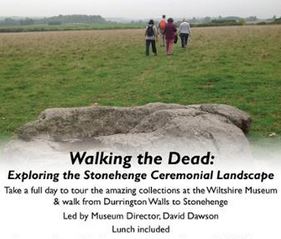
A guided tour of the amazing collections of the Wiltshire Museum, followed by a guided walk from Durrington Walls to Stonehenge. This full day tour will be led by Museum Director, David Dawson.
Note: this event was previously advertised for Saturday 19th September.and is now Thursday, 08th October, 2015
The morning visit to the Museum starts at 10.30am and the walk begins at 2pm. We should reach the Stonehenge Visitor Centre at about 5.30pm.
The day begins with coffee and a guided tour of the Wiltshire Museum. The early story of Wiltshire is told in new galleries featuring high quality graphics and leading-edge reconstructions. On display are dozens of spectacular treasures dating to the time of Stonehenge and worn by people who worshiped inside the stone circle.
The tour is followed by a light lunch at the Museum and minibus transport to the start of the walk, if required.
The walk will take approximately 3.5 hours, and starts at Durrington Walls and Woodhenge, close to the River Avon. The route passes the Cuckoo Stone, a megalithic standing stone, before following the Apple Track – a WW1 light railway. The route then passes the prehistoric Cursus, before passing the Bronze Age barrows of Kings Barrow ridge.
The route then follows the Avenue – the Neolithic ceremonial route that leads to Stonehenge following the line of the solstice.
At Stonehenge, you have three options:
1. Visit Stonehenge. This is free for English Heritage and National Trust members, but is not included in the cost. If you are not a member, then you should book your visit online from the English Heritage and you should choose a timed ticket for about 4.30 pm. You can then take the English Heritage shuttle bus to the Stonehenge Visitor Centre.
2. Continue to the Cursus barrows and the Western end of the cursus, before continuing to the Stonehenge Visitor Centre.
3. Take the English Heritage shuttle bus to the Stonehenge Visitor Centre and purchase a well-earned snack and cup of tea.
At about 5.30pm, at the end of the walk, there will be minibus transport back to your car at the start of the walk, or back to the Wiltshire Museum in Devizes.
Standing stones found buried near Stonehenge could be the “largest” intact prehistoric monument ever built in Britain, archaeologists believe.The large stones are located around the edge of the henge at Durrington Walls (Image copyrigh Ludwig Boltzmann Institute)
Using ground-penetrating radar, some 100 stones were found at the Durrington Walls “superhenge”, a later bank built close to Stonehenge.
The Stonehenge Living Landscapes team has been researching the ancient monument site in a five-year project.
Finding the stones was “fantastically lucky”, researchers said.
The stones may have originally measured up to 4.5m (14ft) in height and had been pushed over the edge of Durrington Walls.
The site, which is thought to have been built about 4,500 years ago, is about 1.8 miles (3km) from Stonehenge, Wiltshire.
The stones were found on the edge of the Durrington Walls “henge”, or bank, an area which had not yet been studied by researchers.
The stones could have measured up to 4.5m in height (Image copyright Ludwig Boltzmann Institute)
Lead researcher, Vince Gaffney said the stones were “lost to archaeology” but found thanks to modern technology.
National Trust archaeologist, Dr Nick Snashall said there were “hints” the stones could be buried in the landscape.
“In the field that lies to the south we know there’s a standing stone which is now the only standing stone, now fallen, that you can go up to and touch in the whole of the Stonehenge landscape,” he said.
“It’s called the Cuckoo Stone.
“If there are stones beneath the bank… they’re probably looking at stones of pretty much the same size as the Cuckoo Stone.”
Ground-penetrating radar was used to detect the large stones at Durrington Walls (Image copyright Geert Verhoeven)
Dr Snashall added there was a “sense” of an area set aside for the living and another for the dead at Durrington Walls – and that had changed over time.
“This gives us a a whole new phase that shows us that has started within 40 years of the site going out of use, or even less than that,” he said.
The findings are being announced later on the first day of the British Science Festival being held at the University of Bradford.
The row of stones were standing over the edge of the bank of the henge (Image copyright Ludwig Boltzmann Institute)
Stonehenge, Avebury and Associated Sites became a World Heritage Site in 1986 (we’ll be celebrating our 30th anniversary throughout 2016). “Stonehenge is the most architecturally sophisticated prehistoric stone circle in the world, while Avebury is the largest in the world.” The archaeological importance of both Stonehenge and Avebury is well known but not everyone is aware that both Stonehenge and Avebury are also a World Heritage Site (WHS) because of the “influence of the remains of Neolithic and Bronze Age funerary and ceremonial monuments and their landscape settings on architects, artists, historians, archaeologists and others”.
Stonehenge and King Barrow Ridge. Copyright Beth Thomas
The influence of Stonehenge and Avebury on artists can be seen in a number of art forms and over several centuries.
English Heritage celebrated the opening of the new Stonehenge Visitor Centre in 2013 with a special exhibition entitled Set in Stone. This exhibition told…
Stonehenge has been rated one of the 500 best places to visit in the world.
Travel guide Lonely Planet has put Wiltshire’s towering ancient monument at number 62. The number one spot was taken by the temples of Angkor in Cambodia.
Stonehenge named one of the world’s top destinations
Stonehenge has been rated one of the world’s must-sees. Credit: English Heritage/PA Wire
Stonehenge has been rated one of the 500 best places to visit in the world.
Travel guide Lonely Planet has put Wiltshire’s towering ancient monument at number 62. The number one spot was taken by the temples of Angkor in Cambodia.
The Ultimate Travelist is being published today, and has a reputation as a dream to-do list for many travellers.
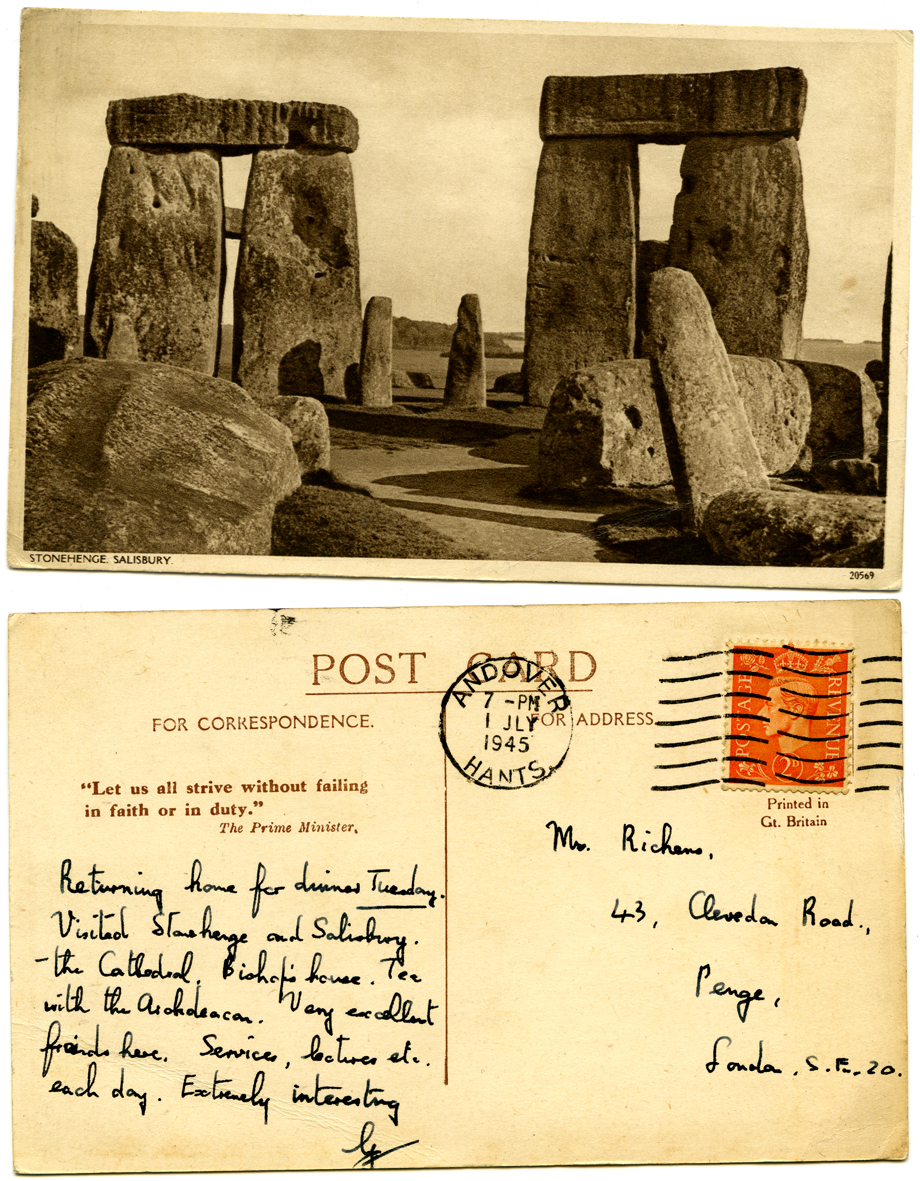
This rather nice postcard and its message give me an opportunity to return to Stonehenge. It’s curious to think of the stones promoting a homily from Winston Churchill – and not on an official card. Mr (? the Reverend) G Richens (his notification of his dinner needs suggests he’s writing to his wife or mother, but perhaps she was a care lady?) seems to have been enjoying a late war.
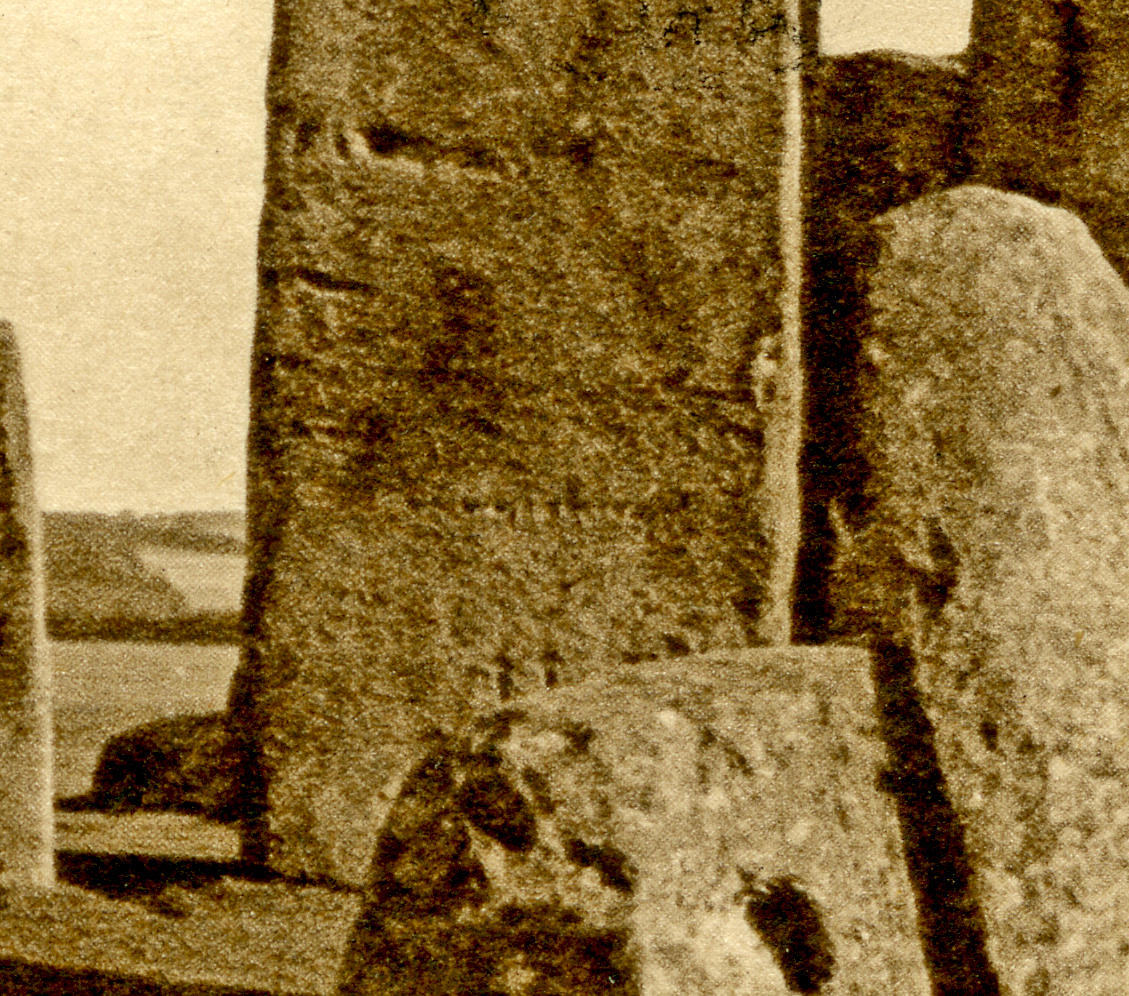
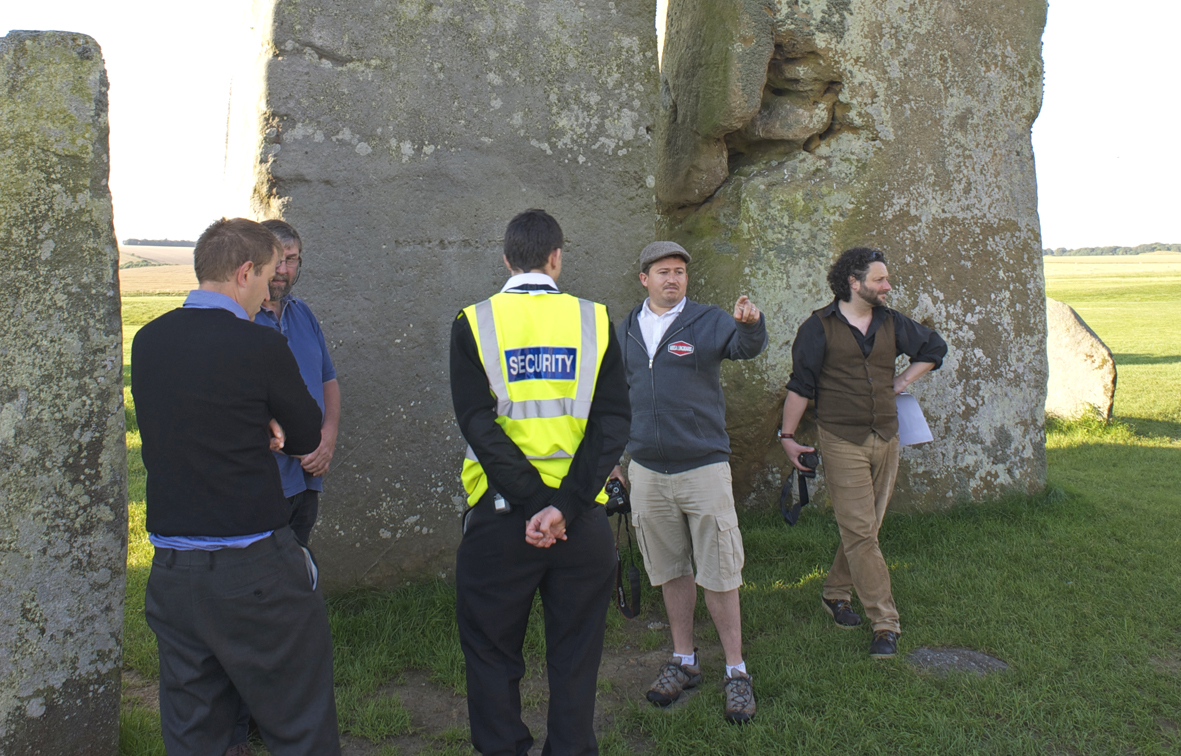
What’s interesting about the image is what you can see on Stone 53, the large sarsen upright second from right. There is an almost mythical story of Richard Atkinson in 1953, taking photos of a heavy inscription carved into the face of this stone. You can see the horizontal line of letters in the postcard, at about eye level, and again in a recent photo (above), to the left of the security guard’s head (facing front left to right are Mike…
You now park over a 2 kilometres from Stonehenge itself, out of sight of the Stonehenge monument. Here there is a modern visitor centre and excellent exhibition and education facilities plus a spacious cafe and souvenir gift shop. A Stonehenge shuttle bus transports you between the visitor centre and the Stone Circle. English Heritage advise to budget for a visit of around 2 hours. The Visit Wiltshire App is a must for those visiting Stonehenge and the surrounding area.
Last admission time is 2 hours before the advertised closing time.
Entrance to Stonehenge is now managed through timed tickets and advance booking is required. Booking is the only way to guarantee entry on the day and at the time of your choice. Advance bookings are advised!
This includes FREE visits by English Heritage and National Trust members (applicable to members of the National Trust in England only – does not include National Trust Scotland or other National Trust affiliated organisations).
Stonehenge was primarily a functional scientific instrument, used for measuring angles. The angles of interest were the rising and setting bearings of the sun, moon, and stars. It was therefore possible, over a period of time, to map the entire visible sky. Please find below accurate times for the sunset, sunrise and the moon phases.
July 2015 Stonehenge, Amesbury, Wiltshire, England
Stonehenge a mere 115 years ago was obviously a very different place from what we see today. No fences, no visitor centre, no interpretation signs, no caravans or campers on the by-ways.
The British Film Institute have a new web site, Britain on Film, which allows browsing and searching on a map for old films, from the mid-1800’s (if you’re lucky!) through to the present day. Many are free to view, for others there is a modest cost.
So far, there’s only one film showing Stonehenge, dated from 1900. It shows a brief panorama across the stones, where a solitary self-concious policeman is on ‘guard’ duty for a single visitor.
Imagine if that ratio of police to visitors were to be in place today!
We aim to make this the ultimate source of the latest Stonehenge news available on the web. This blog is updated almost daily and promises to deliver accurate 'up to date' information on new theories, new digs, solstice events, Druid gatherings, the new visitor centre, general megalithic links and some fun along the way. We welcome your input....
"There is so much misinformation about Stonehenge on the web, so it’s really refreshing to see such a clear and lucid presentation, what you have here looks like best general overview of Stonehenge to date, well done!"
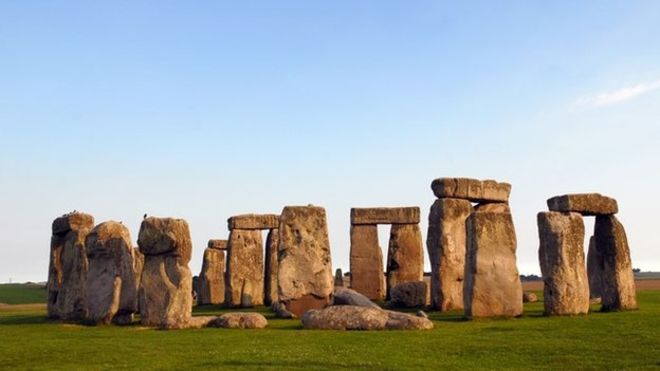
Mystery surrounds this 5,000 year old monument in the centre of the World Heritage Site. Visit this prehistoric South West site near Salisbury in Wiltshire, and decide for yourself whether Stonehenge was a place of sun worship, a healing sanctuary, a sacred burial site, or something different altogether!
THIS BLOG claims no credit for any images posted on this site unless otherwise noted. Images on this blog are copyright to its respectful owners. If there is an image appearing on this blog that belongs to you and do not wish for it appear on this site, please E-mail with a link to said image and it will be promptly removed.











 StonehengeNews
 travelstonehenge