Barbeque-style roasting. The culinary habits of the Stonehenge builders

15 10 2015

A team of archaeologists at the University of York have revealed new insights into cuisine choices and eating habits at Durrington Walls — a Late Neolithic monument and settlement site thought to be the residence for the builders of nearby Stonehenge during the 25th century BC.

A reconstruction drawing of how the prehistoric village of Durrington Walls  might have looked in 2500BC [Credit: English Heritage]

A reconstruction drawing of how the prehistoric village of Durrington Walls might have looked in 2500BC [Credit: English Heritage]

Together with researchers at the University of Sheffield, detailed analysis of pottery and animal bones has uncovered evidence of organised feasts featuring barbeque-style roasting, and an unexpected pattern in how foods were distributed and shared across the site.

Chemically analysing food residues remaining on several hundred fragments of pottery, the York team found differences in the way pots were used. Pots deposited in residential areas were found to be used for cooking animal products including pork, beef and dairy, whereas pottery from the ceremonial spaces was used predominantly for dairy.

Such spatial patterning could mean that milk, yoghurts and cheeses were perceived as fairly exclusive foods only consumed by a select few, or that milk products — today often regarded as a symbol of purity — were used in public ceremonies.

Unusually, there was very little evidence of plant food preparation at any part of the site. The main evidence points to mass animal consumption, particularly of pigs. Further analysis of animal bones, conducted at the University of Sheffield, found that many pigs were killed before reaching their maximum weight. This is strong evidence of planned autumn and winter slaughtering and feasting-like consumption.

The main methods of cooking meat are thought to be boiling and roasting in pots probably around indoor hearths, and larger barbeque-style roasting outdoors — the latter evidenced by distinctive burn patterns on animal bones.

Bones from all parts of the animal skeleton were found, indicating that livestock was walked to the site rather than introduced as joints of meat. Isotopic analysis indicates that cattle originated from many different locations, some far away from the site. This is significant as it would require orchestration of a large number of volunteers likely drawn from far and wide. The observed patterns of feasting do not fit with a slave-based society where labour was forced and coerced, as some have suggested.

Dr Oliver Craig, Reader in Archaeological Science at the University of York and lead author on the paper, said: “Evidence of food-sharing and activity-zoning at Durrington Walls shows a greater degree of culinary organisation than was expected for this period of British prehistory. The inhabitants and many visitors to this site possessed a shared understanding of how foods should be prepared, consumed and disposed. This, together with evidence of feasting, suggests Durrington Walls was a well-organised working community.”

Professor Mike Parker Pearson, Professor at University College London and Director of the Feeding Stonehenge project who also led the excavations at Durrington Walls, said: “This new research has given us a fantastic insight into the organisation of large-scale feasting among the people who built Stonehenge. Animals were brought from all over Britain to be barbecued and cooked in open-air mass gatherings and also to be eaten in more privately organized meals within the many houses at Durrington Walls.

“The special placing of milk pots at the larger ceremonial buildings reveals that certain products had a ritual significance beyond that of nutrition alone. The sharing of food had religious as well as social connotations for promoting unity among Britain’s scattered farming communities in prehistory. ”

Dr Lisa-Marie Shillito, who analysed the pottery samples and recently joined Newcastle University, added: “The combination of pottery analysis with the study of animal bones is really effective, and shows how these different types of evidence can be brought together to provide a detailed picture of food and cuisine in the past.”

The study has been published in the Antiquity Journal.
Source: University of York [October 12, 2015]

The Stonehenge News Blog


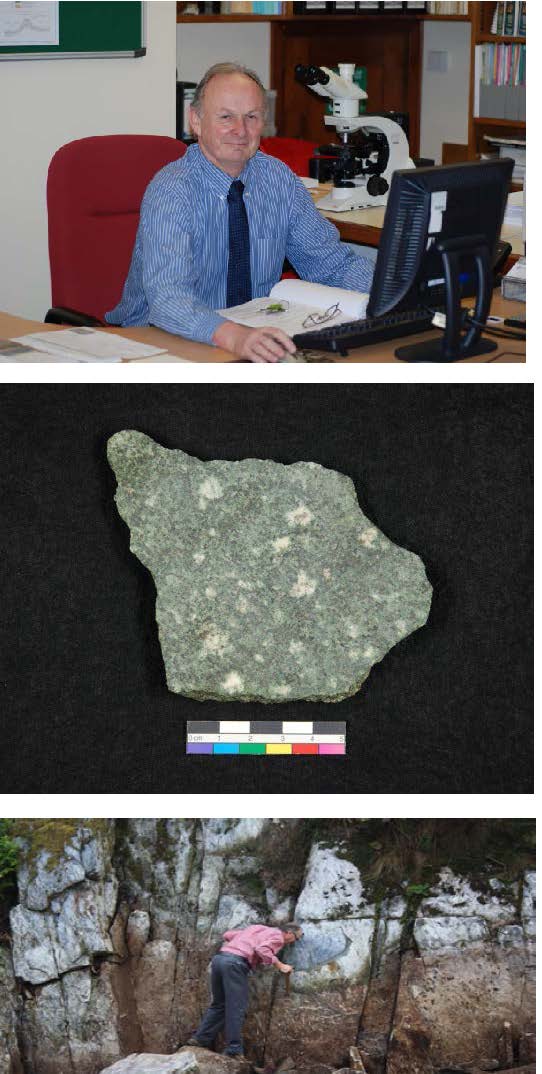
LECTURE: Old Stones, New ideas: Sourcing the Stonehenge Bluestones

10 10 2015

A Saturday afternoon lecture by Richard Bevins at the Wiltshire Museum. 21st November 2015

Stonehenge is arguably one of the most famous prehistoric monuments in the World. It is renowned for the Stonehenge Lectureenormous size of the sarsen monoliths used in its construction which comprise the Outer Circle and Outer Horseshoe. It is generally agreed that these stones were sourced from the Marlborough Downs area, some 30 km to the north of Stonehenge. However, a set of smaller stones, comprising the Inner Circle, the Inner Horseshoe and the Altar Stone, are exotic to the Salisbury Plain area; these are the so-called bluestones, and have been the subject of investigations since the latter part of the 19th Century. Early petrographical studies recognised that the bluestones largely comprise a range of altered volcanic, intrusive and tuffaceous rocks with rarer sandstones but could not provide a definitive source.

However, it was the seminal paper by H.H. Thomas in 1923 that persuasively demonstrated that the spotted dolerite component of the bluestones could be sourced to outcrops exposed towards the eastern margin of Mynydd Preseli in southwest Wales, citing the tors Carn Meini and Cerrigmarchogion as the most likely sources. Thomas also argued that other lithologies in the bluestone assemblage, notably the rhyolites and the ‘calcareous ash’, could be sourced in the same locale, in particuar from Carn Alw and the northern slopes of Foel Drygarn respectively.

The first major investigation of the geochemistry of bluestone assemblage was by Richard Thorpe and team who compared whole rock wavelength-dispersive X-ray fluorescence spectrometry analyses from both orthostats and debitage at Stonehenge with whole rock analyses from Mynydd Preseli
.
Using petrography, mineral chemistry and whole rock geochemistry Richard Bevins and Rob Ixer have re-examined the proposed source of the bluestone rhyolites and determined that Carn Alw, as proposed by Thomas, is not the source of bluestone rhyolite; instead they argued that the majority of the rhyolite debitage from the Stonehenge Landscape (but not the four rhyolitic/dacitic standing or recumbent orthostats) comes instead from a prominent outcrop called Craig Rhos y felin, located on low ground to the north of the Mynydd Preseli range in the vicinity of Brynberian. More recently they have re-examined the spotted and non-spotted dolerites and concluded that a large % of the dolerite fragments and cored samples from Stonehenge come from Carn Goedog rather than Carn Meini.

Biography
Dr Richard Bevins as Keeper and Head of the Department of Natural Sciences at the National Museum Wales in Cardiff is responsible for Strategic leadership for collections and research related activities within the Department.

Qualifications, memberships and relevant positions:
BSc (Hons) Geology (Aberystwyth University), PhD (Keele), Fellow (Geological Society of London), Chartered Geologist (CGeol), Fellow (Society of Antiquaries of London), Honorary Lecturer (School of Earth & Ocean Sciences, Cardiff University), Chair, Geological Society of London’s Geoconservation Committee, Member of the Geological Society of London’s External Relations Committee, Chair of the British Geological Survey’s National Geological Repository Advisory Committee.

References
Primary research area is centred on the the Caledonian igneous history of Wales and related areas, as well as on their low-grade metamorphism. More recent work has focussed on extending the petrology and geochemistry of altered igneous rocks from Pembrokeshire into a re-examination of the source of the Stonehenge bluestones.

Links:
http://www.wiltshiremuseum.org.uk/events/index.php?Action=2&thID=1029&prev=1
www.researchgate.net/profile/Richard_Bevins2

Saturday afternoon lectures start at 2.30pm and last approx. one hour.

Our Lecture Hall is accessible via a lift if required, has a hearing loop and air conditioning.
Booking Options
Book online using Paypal
Telephone – 01380 727369
Email – hello@wiltshiremuseum.org.uk

The Stonehenge News Blog


7 New Discoveries about Stonehenge

8 10 2015

Historic England's avatarThe Historic England Blog

Stonehenge and its surrounding landscape have seen an unprecedented amount of research in the last decade. One of the most significant strands of this has been Historic England’s survey of the stones, the surrounding earthworks and the hidden

View original post 1,209 more words


English Lawyer Cecil Chubb snagged #Stonehenge for just £6600 100 years ago.

20 09 2015

Given it was on the market 16 years earlier for £125,000, lawyer Cecil Chubb bagged a bargain when he picked up Stonehenge at a 1915 auction for £6600, two years after Druids cursed the relic’s owner.

First angering Druid worshippers by building a fence and charging admission, in 1913 Edmund Antrobus, whose family bought 525ha on Salisbury Plain around Stonehenge in 1824, banned Druid solstice celebrations in 1913.

Druid leader Macgregor Reid called down a “kara” on Antrobus, chanting “in grief and sorrow I call down the curse of Almighty God”.

Antrobus died at 67 in February 1915, four months after his only son, Edmund Jr, 28, perished on Belgian battlefields. A Grenadier Guards lieutenant, he died fighting Germans on October 24, 1914, and was buried in an orchard in a village outside Ypres.

Estate agents Knight, Franck and Rutley put the historic site under the hammer at Salibury’s Palace Theatre on September 21, 1915. Chubb placed the winning bid for “Lot 15: Stonehenge with 30 acres of adjoining land”.

Sir Cecil Chubb purchased the Stonehenge site in 1915.

Chubb reportedly placed the bid on a whim, either to purchase the site as a gift for his wife or because be believed a “Salisbury man ought to buy it”.

Chubb was born in 1876 at Shrewton, 6km west of Stonehenge, to saddler Alfred and his wife Mary. He attended Bishop Wordsworth’s School in Salisbury, working as a student teacher from age 14, when he met his future wife Mary Finch at a school cricket game.

Chubb earned a double first in science and law at Christ’s College, Cambridge and in 1902 married Mary, whose uncle Corbin Finch owned Fisherton House mental asylum.

After Finch’s death in 1905, the business and buildings were transferred to Mary. A limited company ran the hospital in 1924, with Chubb, then Sir Cecil, as chairman.

Under his management it became Europe’s largest private mental hospital. He also served on Salisbury City Council, became a successful racehorse owner and cattle breeder.

An 1800 engraving of Stonehenge.

Stonehenge ownership records date to at least 1620, when a “Mr Newdick”, probably Robert Newdyk who bought land at Amesbury, Wiltshire, in 1614, refused “any offer from George, Duke of Buckingham”. Amesbury, 3km east of Stonehenge, is the oldest continuously occupied site in Britain, dating to 8820BC.

By 1639 Stonehenge had passed to knight Laurence Washington. His friend, architect Inigo Jones visited to write in 1665 of “the most notable Antiquity of Great Britain, vulgarly called Stonehenge”.

When antiquarian William Stuckley described walking “hard and dry, chalky soil” in 1740 in “Stonehenge, A Temple Restor’d to the British Druids”, it stood “in the lordship of … Armesbury, the possession of Rev Mr Thomas Hayward … the Arch-Druid of the Island”.

It belonged to William, Duke of Queensberry, in 1778, passing on his death in 1810 to Archibald, Lord Douglas, who in 1824 sold the Amesbury estates to Cheshire baronet Edmund Antrobus. His great-nephew Edmund, 4th Baronet and former Grenadier Guards colonel, put Stonehenge on the market in September, 1899.

Druids at Stonehenge in 1998.

“The most splendid relic of man’s work in Britain … is under offer to the British Government by owner Sir Edmund Antrobus, who asks no less than £125,000,” the Spectator reported. “This includes 1300 acres of land surrounding the great stone circles. The proposal … will, no doubt, receive serious consideration. It cannot be disputed that if so priceless a relic of antiquity is to pass from a private owner, who has never interfered with the public’s enjoyment of it, the State should be the purchaser.”

Today the ancient site attracts millions of visitors from all over the world.

But the Spectator suggested a value of £25,000, allowing “£10 an acre for the land, which from an agricultural point of view is probably the worst in England and … the remoteness of Stonehenge from the beaten tracks of tourists and sightseers”, encouraging few visitors. The government refused, so in 1901 Antrobus enclosed Stonehenge and charged 1 shilling, or about £5, admission. Some 700 brothers joined an Ancient Order of Druids ceremony at Stonehenge in August, 1905, when Antrobus was inducted into the society.

In June, 1912, Reid led his Universal Bond of Zoroastrian-inspired Druids in “Sun-worship at Stonehenge”. Antrobus banned the gathering in 1913, when police attempted to stop Reid entering the site. He clashed with police again at the 1914 solstice. Chubb, who died in 1934, permitted Druid celebrations before donating Stonehenge to the British nation in October, 1918.


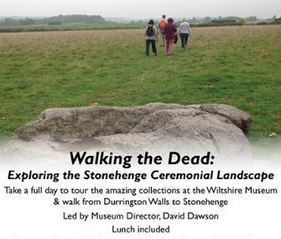
Walking the Dead: Exploring the Stonehenge Ceremonial Landscape

12 09 2015

A guided tour of the amazing collections of the Wiltshire Museum, followed by a guided walk from Durrington Walls to Stonehenge. This full day tour will be led by Museum Director, David Dawson.

Note: this event was previously advertised for Saturday 19th September.and is now Thursday, 08th October, 2015Walking the Dead: Exploring the Stonehenge Ceremonial Landscape

The morning visit to the Museum starts at 10.30am and the walk begins at 2pm. We should reach the Stonehenge Visitor Centre at about 5.30pm.

The day begins with coffee and a guided tour of the Wiltshire Museum. The early story of Wiltshire is told in new galleries featuring high quality graphics and leading-edge reconstructions. On display are dozens of spectacular treasures dating to the time of Stonehenge and worn by people who worshiped inside the stone circle.

The tour is followed by a light lunch at the Museum and minibus transport to the start of the walk, if required.

The walk will take approximately 3.5 hours, and starts at Durrington Walls and Woodhenge, close to the River Avon. The route passes the Cuckoo Stone, a megalithic standing stone, before following the Apple Track – a WW1 light railway. The route then passes the prehistoric Cursus, before passing the Bronze Age barrows of Kings Barrow ridge.

The route then follows the Avenue – the Neolithic ceremonial route that leads to Stonehenge following the line of the solstice.

At Stonehenge, you have three options:

1. Visit Stonehenge. This is free for English Heritage and National Trust members, but is not included in the cost. If you are not a member, then you should book your visit online from the English Heritage and you should choose a timed ticket for about 4.30 pm. You can then take the English Heritage shuttle bus to the Stonehenge Visitor Centre.
2. Continue to the Cursus barrows and the Western end of the cursus, before continuing to the Stonehenge Visitor Centre.
3. Take the English Heritage shuttle bus to the Stonehenge Visitor Centre and purchase a well-earned snack and cup of tea.

At about 5.30pm, at the end of the walk, there will be minibus transport back to your car at the start of the walk, or back to the Wiltshire Museum in Devizes.

Cost: £35 (WANHS member), £40 (non-member)

Booking:CLICK HERE TO BOOK DIRECT

The Stonehenge News Blog


Stonehenge researchers ‘may have found largest prehistoric site’

7 09 2015
Standing stones found buried near Stonehenge could be the “largest” intact prehistoric monument ever built in Britain, archaeologists believe.Large stones at Durrington Walls
The large stones are located around the edge of the henge at Durrington Walls (Image copyrigh Ludwig Boltzmann Institute)

Using ground-penetrating radar, some 100 stones were found at the Durrington Walls “superhenge”, a later bank built close to Stonehenge.

The Stonehenge Living Landscapes team has been researching the ancient monument site in a five-year project.

Finding the stones was “fantastically lucky”, researchers said.

The stones may have originally measured up to 4.5m (14ft) in height and had been pushed over the edge of Durrington Walls.

The site, which is thought to have been built about 4,500 years ago, is about 1.8 miles (3km) from Stonehenge, Wiltshire.

The stones were found on the edge of the Durrington Walls “henge”, or bank, an area which had not yet been studied by researchers.

Large stones at Durrington Walls
The stones could have measured up to 4.5m in height (Image copyright Ludwig Boltzmann Institute)

Lead researcher, Vince Gaffney said the stones were “lost to archaeology” but found thanks to modern technology.

National Trust archaeologist, Dr Nick Snashall said there were “hints” the stones could be buried in the landscape.

“In the field that lies to the south we know there’s a standing stone which is now the only standing stone, now fallen, that you can go up to and touch in the whole of the Stonehenge landscape,” he said.

“It’s called the Cuckoo Stone.

“If there are stones beneath the bank… they’re probably looking at stones of pretty much the same size as the Cuckoo Stone.”

Radar scanning at Durrington Walls, Wiltshire
Ground-penetrating radar was used to detect the large stones at Durrington Walls (Image copyright Geert Verhoeven)

Dr Snashall added there was a “sense” of an area set aside for the living and another for the dead at Durrington Walls – and that had changed over time.

“This gives us a a whole new phase that shows us that has started within 40 years of the site going out of use, or even less than that,” he said.

The findings are being announced later on the first day of the British Science Festival being held at the University of Bradford.

Large stones at Durrington Walls
The row of stones were standing over the edge of the bank of the henge (Image copyright Ludwig Boltzmann Institute)

Source and full story : BBC Wiltshire

The Stonehenge News Blog


Guest Blog: Stonehenge and Avebury World Heritage Site – Inspiration across time

21 08 2015

Meril Morgan's avatarThe Arts in Wiltshire

Stonehenge, Avebury and Associated Sites became a World Heritage Site in 1986 (we’ll be celebrating our 30th anniversary throughout 2016). “Stonehenge is the most architecturally sophisticated prehistoric stone circle in the world, while Avebury is the largest in the world.” The archaeological importance of both Stonehenge and Avebury is well known but not everyone is aware that both Stonehenge and Avebury are also a World Heritage Site (WHS) because of the “influence of the remains of Neolithic and Bronze Age funerary and ceremonial monuments and their landscape settings on architects, artists, historians, archaeologists and others”.

Stonehenge and King Barrow Ridge. Copyright Beth Thomas Stonehenge and King Barrow Ridge.
Copyright Beth Thomas

The influence of Stonehenge and Avebury on artists can be seen in a number of art forms and over several centuries.

English Heritage celebrated the opening of the new Stonehenge Visitor Centre in 2013 with a special exhibition entitled Set in Stone. This exhibition told…

View original post 720 more words


Stonehenge named one of the world’s top destinations

20 08 2015

Stonehenge has been rated one of the 500 best places to visit in the world.

Travel guide Lonely Planet has put Wiltshire’s towering ancient monument at number 62. The number one spot was taken by the temples of Angkor in Cambodia.

Stonehenge named one of the world’s top destinations

stonehenge
Stonehenge has been rated one of the world’s must-sees. Credit: English Heritage/PA Wire

Stonehenge has been rated one of the 500 best places to visit in the world.

Travel guide Lonely Planet has put Wiltshire’s towering ancient monument at number 62. The number one spot was taken by the temples of Angkor in Cambodia.

The Ultimate Travelist is being published today, and has a reputation as a dream to-do list for many travellers.

Full story here

The Stonehenge News Blog


Is this a dagger which I see before me?

31 07 2015

Mike Pitts's avatarMike Pitts Digging Deeper

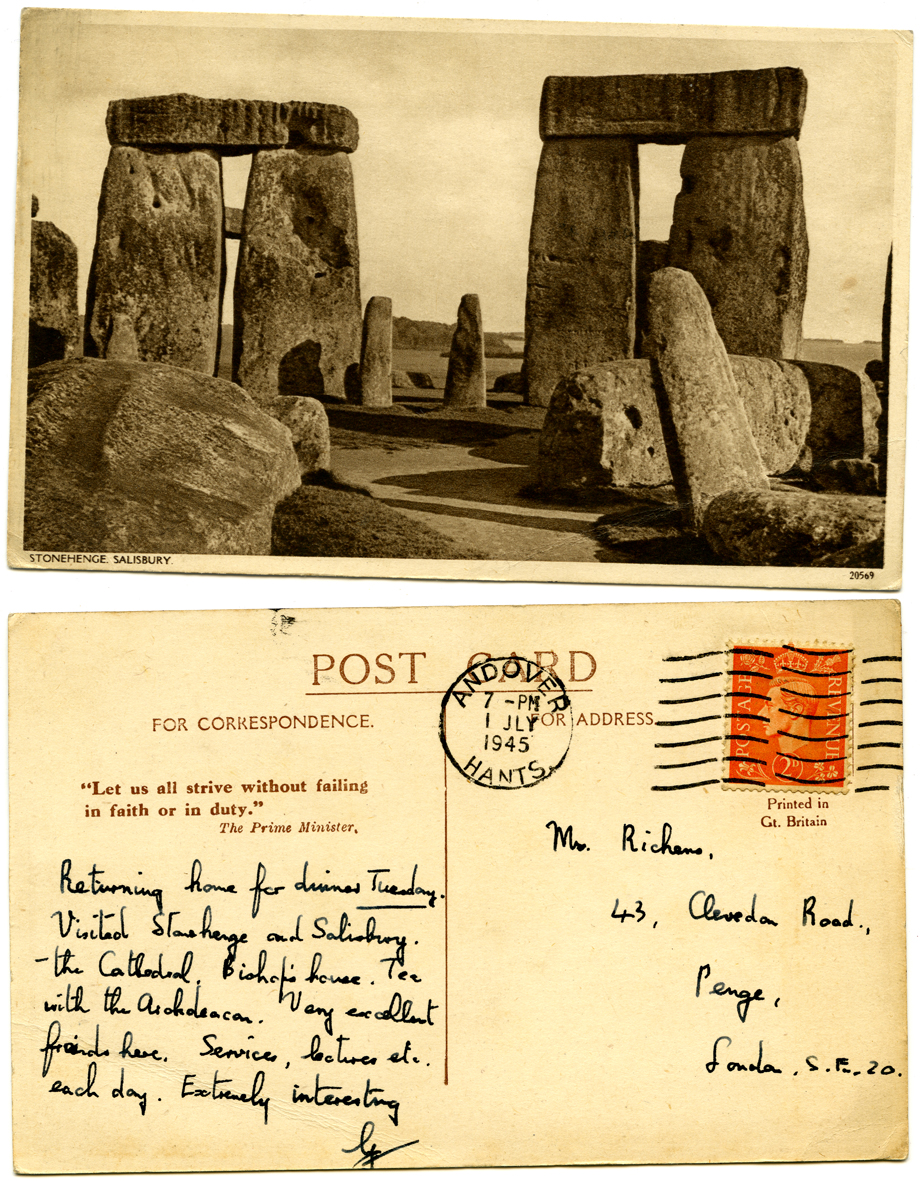
posctard 1945This rather nice postcard and its message give me an opportunity to return to Stonehenge. It’s curious to think of the stones promoting a homily from Winston Churchill – and not on an official card. Mr (? the Reverend) G Richens (his notification of his dinner needs suggests he’s writing to his wife or mother, but perhaps she was a care lady?) seems to have been enjoying a late war.

carvings 1945

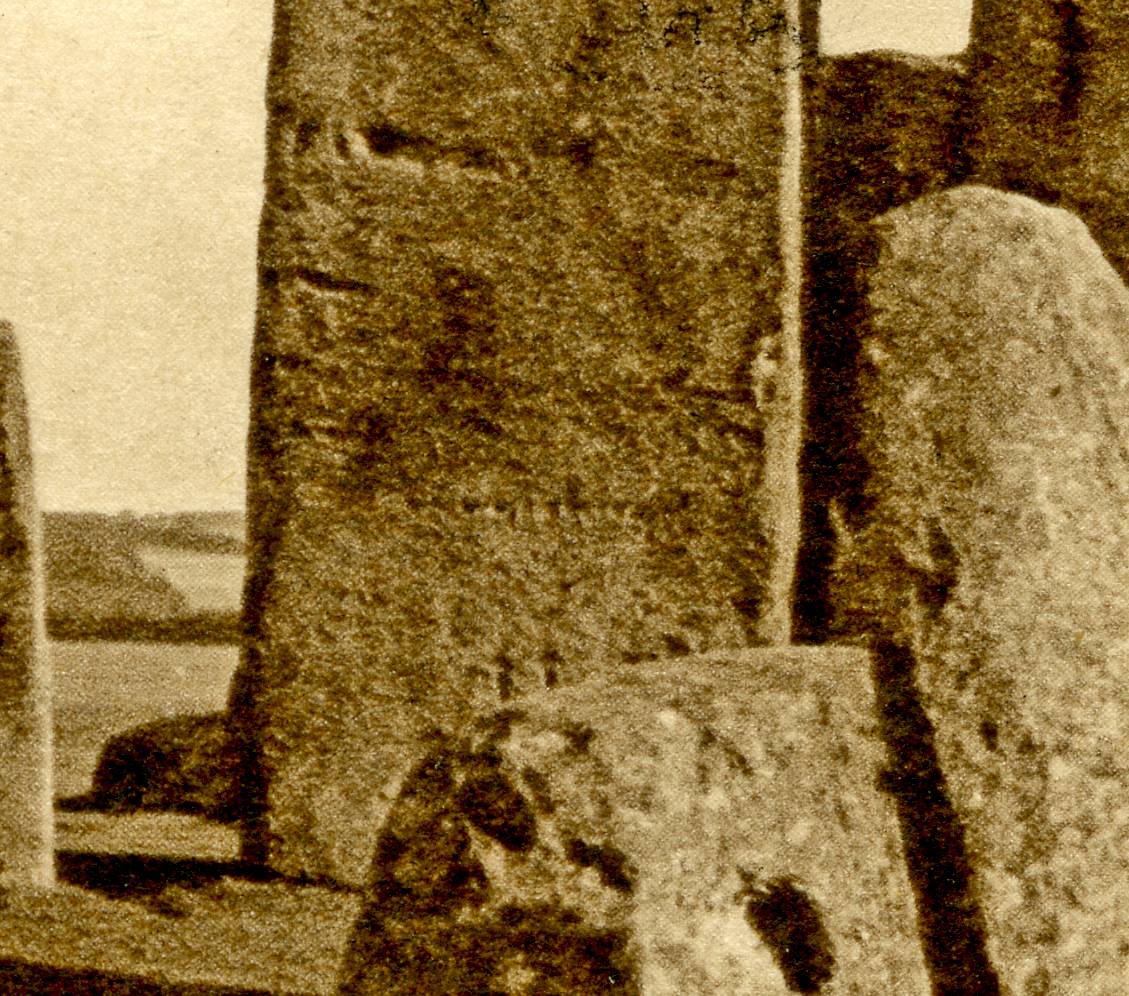
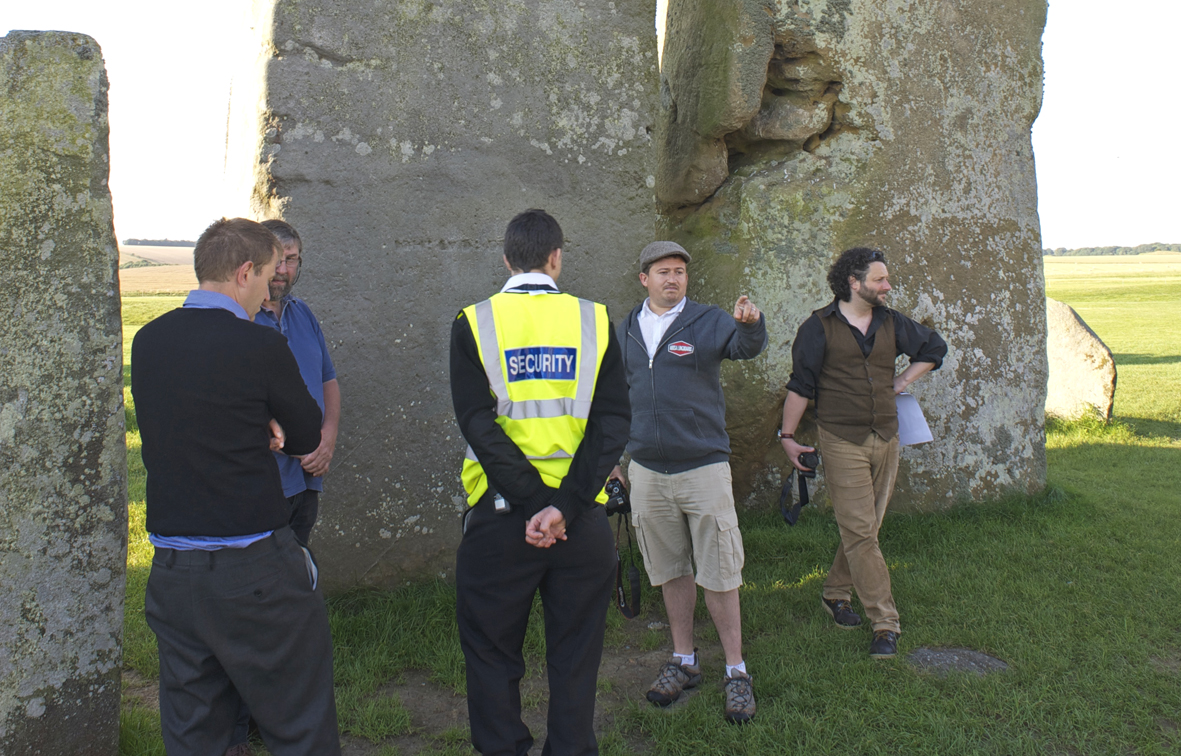
What’s interesting about the image is what you can see on Stone 53, the large sarsen upright second from right. There is an almost mythical story of Richard Atkinson in 1953, taking photos of a heavy inscription carved into the face of this stone. You can see the horizontal line of letters in the postcard, at about eye level, and again in a recent photo (above), to the left of the security guard’s head (facing front left to right are Mike…

View original post 586 more words


Stonehenge Opening Hours Summer 2015

21 07 2015

You now park over a 2 kilometres from Stonehenge itself, out of sight of the Stonehenge monument. Here there is a modern visitor centre and excellent exhibition and education facilities plus a spacious cafe and souvenir gift shop. A Stonehenge shuttle bus transports you between the visitor centre and the Stone Circle.  English Heritage advise to budget for a visit of around 2 hours. The Visit Wiltshire App is a must for those visiting Stonehenge and the surrounding area.

Last admission time is 2 hours before the advertised closing time.

Entrance to Stonehenge is now managed through timed tickets and advance booking is required. Booking is the only way to guarantee entry on the day and at the time of your choice. Advance bookings are advised!

A temporary coach park will be built near to Stonehenge, Wiltshire Council has agreed

This includes FREE visits by English Heritage and National Trust members (applicable to members of the National Trust in England only – does not include National Trust Scotland or other National Trust affiliated organisations).

1 JUNE – 31 AUGUST 2015

Monday 9:00 – 20:00
Tuesday 9:00 – 20:00
Wednesday 9:00 – 20:00
Thursday 9:00 – 20:00
Friday 9:00 – 20:00
Saturday 9:00 – 20:00
Sunday 9:00 – 20:00

1 SEPTEMBER – 15 OCTOBER 2015

Monday 9:30 – 19:00
Tuesday 9:30 – 19:00
Wednesday 9:30 – 19:00
Thursday 9:30 – 19:00
Friday 9:30 – 19:00
Saturday 9:30 – 19:00
Sunday 9:30 – 19:00

16 OCTOBER 2015 – 15 MARCH 2016

Monday 9:30 – 17:00
Tuesday 9:30 – 17:00
Wednesday 9:30 – 17:00
Thursday 9:30 – 17:00
Friday 9:30 – 17:00
Saturday 9:30 – 17:00
Sunday 9:30 – 17:00

HOLIDAY OPENING TIMES FOR THIS PERIOD

Christmas Eve
24 Dec 2015
Closed
Christmas Day
25 Dec 2015
Closed
Boxing Day
26 Dec 2015
10:00 – 16:00
Boxing Day Bank Holiday
28 Dec 2015
9:30 – 17:00
New Year’s Eve
31 Dec 2015
9:30 – 17:00
New Year’s Day
1 Jan 2016
10:00 – 16:00

Please visit the English Heritage Website for details and current prices

Visit Wiltshire Official Website
Salisbury Museum
Devizes Museum
Amesbury Museum
Stonehenge Transport from Salisbury
Stonehenge Guided Tours from London

Enjoy your visit to Stonehenge!

The Stonehenge News Blog
Follow us on Twitter for  all the latest Stonehenge News