Stonehenge Archaeology Landscape Walk 2016

26 01 2016

Explore the wider Stonehenge World Heritage landscape with a National Trust guide discovering hidden histories and ancient mysteries.

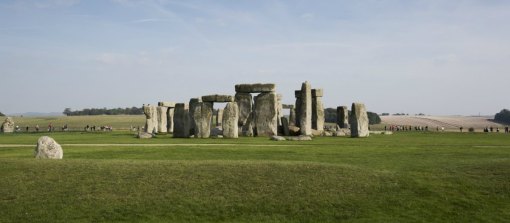
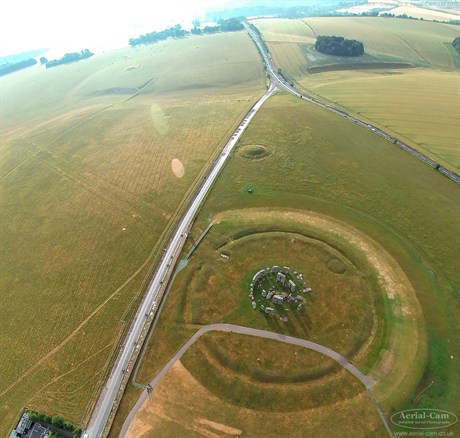
An afternoon walk up on the downs learning about the ancient archaeology of the Stonehenge World Heritage Site. On this 4 mile walk with views of the stone circle, we’ll visit ancient earthworks that have revealed much about the people who once lived and celebrated here. Talking points include the Cursus, the many and varied barrows, and an ancient avenue connecting ceremonial centres.
stonehengelandscape

Booking details:
Call 0844 249 1895A 5% booking fee applies. Phone lines are open Mon to Fri 9am-5.30pm, plus Sat and Sun 9am-4pm. National Trust website

Suitability:
Accompanied children welcome, free. Dogs on leads are welcome.

Meeting point:
Meeting in a car park off Tombs Road (Larkhill) at OS grid reference SU 14382 43626 (nearest postcode SP4 8NB). A map of the meeting point on can be found on the event’s webpage.

What to bring and wear:
Dress for the weather – wrap up warm as it gets chilly up on the downs – and wear stout footwear. You may like to bring a drink and a snack.

Accessibility:
Access is by pedestrian and farm gates; the terrain is mostly grassland and trackways, often uneven underfoot. Cattle and sheep graze the gently sloping downs.

Other:
Please note, traffic on the A303 is often congested around holidays and weekends. Although your guide will tell you about it, this walk doesn’t visit the Stone Circle. You might like to visit it before the walk; NT members are admitted free.

Times

Event opening times and availability
Day Times Availability
5 March 2016 14:00 – 16:30
7 May 2016 14:00 – 16:30


Stonehenge Midwinter Solstice Walk

13 11 2015

On the midwinter solstice, explore the ancient monuments of the Stonehenge landscape with National Trust. This walk is around three and a half miles. (December 20th 2015)

Stonehenge does not stand in isolation, but forms part of a remarkable ancient landscape of early Neolithic, late Neolithic and snow-hengeearly Bronze Age monuments. The best way to appreciate Stonehenge is on foot. You can enjoy the impressive Wiltshire countryside while exploring the ancient history that has shaped it. Follow in the footsteps of our ancient ancestors and discover the prehistoric monuments that fill the vast ancient landscape surrounding Stonehenge.

Stonehenge has far more than the stone circle. It encompass unrivalled Neolithic landscapes that contain many other fascinating and unique monuments. You could easily spend a whole day in either part of the World Heritage Site.

Containing more than 350 burial mounds and major prehistoric monuments such as the Stonehenge Avenue, the Cursus, Woodhenge and Durrington Walls, this landscape is a vast source of information about the ceremonial and funerary practices of Neolithic and Bronze Age people.

It can also help our understanding of regional and international contacts from the 4th to 2nd millennia BC, and shed light on how prehistoric society was organised.

National Trust Stonehenge Midwinter Walk: 20th December (1pm – 5pm)
Immerse yourself in the ancient landscape of Stonehenge, there’s so much to explore and many mysteries to unravel.
Booking essential (click here to book direct)

Stonehenge Guided Tours are offering their usual Midwinter Solstice Tours from London and Bath
Booking essential (click here to book direct)

The Stonehenge News Blog
Follow us on Twitter


Stonehenge Debate: Mike Parker Pearson at the British Academy – 9th November 2015

2 11 2015

The CBA will be hosting a debate on the future management options for the landscape around Stonehenge – including the options for the road tunnel – at their Annual General Meeting on 9th November in London.

Mike Parker Pearson has been invited to give the 2015 Beatrice de Cardi Lecture at the British Academy on 9th November 2015.  The eminent scholar and archaeologist presentation will draw together years of groundbreaking research to share new interpretations of the iconic prehistoric site of Stonehenge and the landscape in which it sits.

Mike’s lecture will be preceded by a debate on the future management of the Stonehenge landscape, the CBA’s Annual General Meeting and presentation of the 2015 Marsh archaeology awards.

The event is free but registration is essential. Tickets are available now via Eventbrite or may be booked on 01904 671417 (during office hours).

Beatrice de Cardi was first Assistant Secretary and latterly Secretary of the Council for British Archaeology (CBA) from 1949 to 1973. In order to recognise her outstanding contribution to the CBA and to the archaeology discipline, the Council decided in 1976 to inaugurate a series of lectures, to be called after her. The speakers are given the freedom to discuss their own approach to any aspect of British archaeology.

The CBA headquarters in York was renamed ‘Beatrice de Cardi House’ in honour of her 100th birthday in 2014.

The Council for British Archaeology has taken a long-standing interest in the presentation and long-term preservation of the Stonehenge World Heritage Site – a unique cultural landscape.

Details of our engagement and the development of the CBA’s view can be found on our Stonehenge Saga archive web page, which includes the summary of our case to the 2004 roads inquiry.

The CBA broadly supports the position of ICOMOS UK which seeks to “achieve a solution which respects and maintains the Outstanding Universal Value of this iconic, important and unique site at the earliest opportunity”.

CBA Director, Dr Mike Heyworth MBE said:

“Stonehenge is arguably the best known prehistoric monument in the world and we must think hard before we cause irreversible damage to the landscape surrounding it – which contains many nationally important archaeological features which are not yet fully understood.

There are potential benefits from a tunnel to bury the A303 in the area of Stonehenge, but any proposals need to carefully scrutinised and we need to think of the long term implications, not just the short term needs.”

Join the debate on future options

The CBA will be hosting a debate on the future management options for the landscape around Stonehenge – including the options for the road tunnel – at our Annual General Meeting on 9 November in London.

The event is free but registration is essential. Tickets are available now via Eventbrite or may be booked on 01904 671417 (during office hours).

LINKS:
http://new.archaeologyuk.org/news/stonehenge-debate
http://www.ucl.ac.uk/archaeology/people/staff/parker_pearson

The Stonehenge News Blog
Follow us on Twitter and Facebook


The Stonehenge Landscape Tour, introduced by Phil Harding: CBA Members’ Event

22 02 2015

Join Time Team favourite Phil Harding and expert guide Pat Shelley for a unique exploration of the Stonehenge landscape at the exclusive Council for British Archaeology (CBA) and English Heritage (EH) members’ event on Sunday 19th April 2015.

EH-Tour

The pair will be leading a walk through some of the often-overlooked enigmatic elements of the landscape, combining rich archaeological background with personal anecdotes and replica artefacts. The walk will take around an hour and a half, and highlights will include round barrows at nearby Fargo Woods and the Cursus barrow group, before visiting the Cursus itself. The culmination of the walk will see our group descending into Stonehenge Bottom before walking up the Avenue to Stonehenge.

CBA and EH members will meet at the Stonehenge Visitor Centre where they can enjoy complimentary refreshments Phil supporting the New YAC Dolls raising money for the Young Archaeologists' Clubbefore beginning the walk at 11.30am. Participants should wear suitable clothing and footwear for the walk, and be of a reasonable level of fitness. Please note that this is a walk around the wider Stonehenge landscape putting the monument into its context, and does not include access into the stones themselves.

Tickets for this CBA and EH members’ event are just £30 per head, and can be booked now via the English Heritage events booking line on: 0370 333 1183. Proceeds from the walk will go towards supporting the work of the Young Archaeologists’ Club (YAC).

Phil Harding is best known and loved as the hat-wearing archaeologist from Channel 4’s Time Team. His expertise lies in© www.tripadvisor.com.au prehistory, and his personal experience and anecdotes – coupled with the opportunity to handle some of his beautiful handmade replica artefacts – will add a unique extra dimension to your walking tour.
Pat Shelley is an experienced independent guide, with years of experience of bringing Stonehenge and its landscape to life. Described on ‘TripAdvisor’ as “the ONLY way to see Stonehenge”, Pat is an engaging speaker who will be only to pleased to share his love of Stonehenge with you, and answer any questions that you might have.

Visit the Council for British Archaeology Website for full details.

Visit the English Heritage website if you are planning to visit Stonehenge

Stonehenge Guided Tours offer frequent tours and many also include ‘Stonehenge Inner Circle Access Tours

The Visit Wiltshire website lists local operators based in Salisbury offering Stonehenge tours

Merlin @ Stonehenge
The Stonehenge News Blog


LECTURE: The Stonehenge Landscape – 31st January

24 01 2015

There will be a lecture by Sharon Soutar of English Heritage at Devizes Town Hall, Wiltshire, England from 2:30 pm on Saturday, 31 January 2015.  

20141227_083502With the construction of the new Visitor Centre at Airman’s Corner it was vital that Stonehenge and its surrounding landscape were re-presented with the fullest and most up-to-date information available. Fantastic as it may seem very few of the monuments, not even Stonehenge itself, had been surveyed to modern standards. To rectify this English Heritage set up a project to significantly enhance the record and understanding of all upstanding archaeological monuments within the World Heritage Site. The fieldwork was conducted between 2009 and 2012 and the book is nearing publication, while a number of research reports on the different areas are available through the website (see below).

The fieldwork covered just over 15% of the World Heritage Site in detail. It included Stonehenge, the Greater Cursus and all of the principal barrow cemeteries and incorporated sites later in date, such as the medieval settlement earthworks at Lake. English Heritage surveyed almost half of the known or suspected round barrows within the WHS; nearly all of those surviving as earthworks. At the same time colleagues looked at the historic buildings, added high resolution Ground Penetrating Radar [GPR] to complement earlier geophysical surveys and took new photography of the landscape and artefacts found within it. ~English Heritage also commissioned a laser scan of the stones and surrounding henge.

Sharon will describe some of the important discoveries resulting from the project and take a look at the more surprising aspects of the field archaeology in the Stonehenge landscape.

Sharon is a landscape archaeologist specialising in the survey and visualisation of heritage landscapes and data; from maps and site plans right through to infographics. After a number of years interpreting and mapping archaeology visible in aerial photographs and lidar data for different parts of England she was lucky enough to join the team investigating the Stonehenge WHS landscape.

The project webpage is: www.english-heritage.org.uk/professional/research/landscapes-and-areas/archaeological-field-survey-and-investigation/stonehenge-landscape/

The project monograph is due for publication in the spring of 2015:
Bowden, M.C.B., Soutar, S., Field, D.J. and Barber, M.J. forthcoming. The Stonehenge Landscape. Swindon: EH.

The 1:10,000 scale map – Stonehenge and Avebury: Exploring the World Heritage Site is available in our shop www.english-heritage.org.uk/publications/stonehenge-avebury-map

The various Research Department Reports are available through: research.english-heritage.org.uk

Booking:

Essential. To contact us, either:
* Tel: 01380 727369 to book and pay using credit/debit card (Monday to Friday 10am to 5pm preferred)
* Send an e-mail
Visit the Wiltshire Museum website: http://www.wiltshiremuseum.org.uk/events/index.php?Action=2&thID=972&prev=1

The Stonehenge News Blog


Soldiers at Stonehenge: A new special exhibition is being launched at the Stonehenge visitor centre in November

4 10 2014

Salisbury Plain and the journey to the First World War.

A new special exhibition is being launched at the Stonehenge visitor centre in November to tell the story of the Stonehenge War memorial at Stonehengelandscape, its neighbouring communities and how they were dramatically altered by the Great War.  During the First World War, the World Heritage Site was at the heart of Salisbury Plain’s military training ground and the Wiltshire landscape was dramatically transformed.  A 25 mile area around Stonehenge became home to the largest complex of military training camps in the world, as soldiers dug intricate networks of trenches in an attempt to replicate conditions on the Western Front.

This exhibition will open in November 2014. It tells the story of the Stonehenge landscape, its neighbouring communities, and how they were changed by the First World War.

Visit the English Heritage Website and see ten of the exhibition objects and images in more detail.

NOVEMBER 11th 2014 EVENT:  Join English Heritage for an insight into the First World War exhibition at Stonehenge with Guest Curator and Historian Simon Jones .  Enjoy a guided tour of the exhibition and discover the story of the soldiers who trained on Salisbury Plain. £22 (visit the English Heritage website)

The Stonehenge News Blog

.


The New Discoveries at Blick Mead: the Key to the Stonehenge Landscape

29 10 2013

An archaeological team from the University of Buckingham’s Humanities Research Institute has been uncovering very large amounts of Mesolithic material from a site immediately adjacent to Stonehenge.

Stonehenge At a point called Blick Mead (a part of the Stonehenge landscape known as ‘Vespasian’s Camp’ on the mistaken assumption that it was the remains of a former Roman settlement) around 12,000 pieces of worked flint and burnt flint have been unearthed, as well as over 500 pieces of bone dating from over 8000 years ago. Virtually all the tools are in pristine condition – indeed, some of the team have had their fingers cut by them as they are still so sharp.

The most significant consequence of the excavation is that we have now discovered where the communities who built the first monuments at Stonehenge once lived – something that has eluded archaeologists for the best part of two centuries.  But the fact that the site also provides evidence for ritual activity in later periods suggests that the Buckingham team has also discovered a rare ‘multi-phase’ site, which was occupied over several millennia – indeed into the early medieval period.

David Jacques, Senior Research Fellow in Archaeology at the University of Buckingham’s Humanities Research Institute, has been directing the excavations at Vespasian’s Camp, Amesbury, Wiltshire, since 2005.

Burnt flint used in cookingThe archaeological potential of Vespasian’s Camp first came to light as a result of David Jacques’ detailed research of the site’s estate and nearby farm records. Indeed, before his team started their excavations, there was no evidence of Vespasian’s Camp having played any significant part in the Salisbury Plain ritual landscape or its history, and the site had been generally ignored by archaeologists, who assumed that any archaeological evidence on the site had been destroyed in the course of the landscaping of the area as a park for a neighbouring country house during the course of the 18th century.

Radiocarbon dating of objects from the Buckingham-sponsored excavations now shows that this site was occupied between 7550-4700 BC, which means that the Blick Mead site was in continuous use for almost 3,000 years.

This is generating great interest from archaeologists who have long pondered the possibility of a ‘missing link’ between the Mesolithic and Neolithic periods of activity at Stonehenge. The radiocarbon dates make this the oldest ever ‘homebase’ found in the Stonehenge area and could be one of the reasons why Stonehenge is sited where it is.

The findings produced by the Buckingham-funded excavations have led English Heritage to describe Vespasian’s Camp as potentially ‘one of the pivotal places in the history of the Stonehenge landscape’.

The 7500 BC dating of Blick Mead correlates strongly with the enigmatic posts found underneath Stonehenge car park in the late 1960s, which appear to be marking this area up as somewhere of special cultural significance

Finds from the springA copper alloy Bronze Age dagger, found nearby, at the Bluestonehenge monument in 2009, a 5th-century Anglo-Saxon disc brooch from a nearby spring, and medieval wooden staves from the main spring also connect Blick Mead to the early Anglo-Saxon and Amesbury Abbey periods. They add to the picture of the Blick Mead area being a place associated with veneration over the longue durée.

As a result of the support from the University of Buckingham’s Humanities Research Institute, further work is planned over the next two years.


Article Source: http://www.buckingham.ac.uk/research/hri/blickmead

Related link