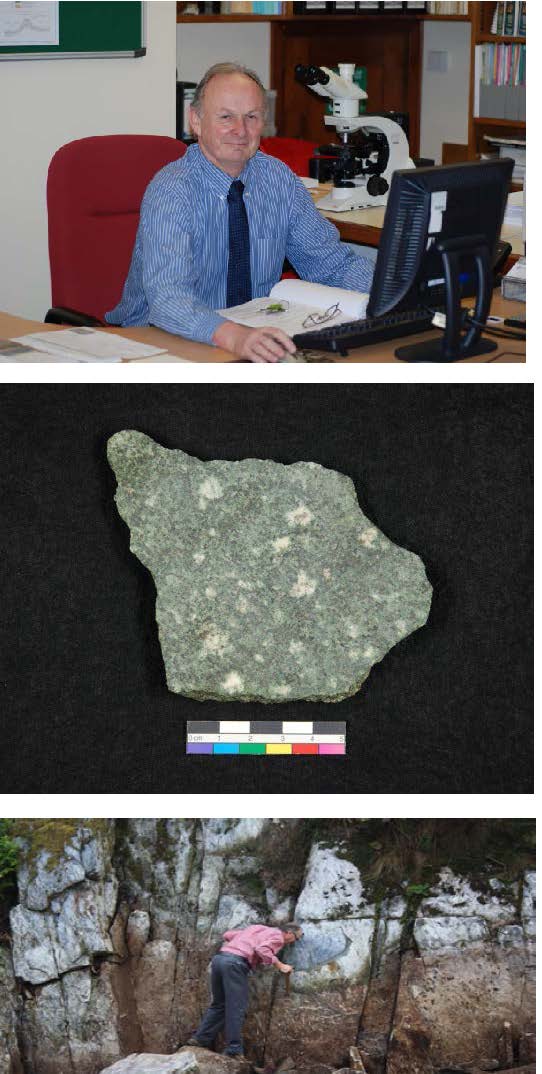
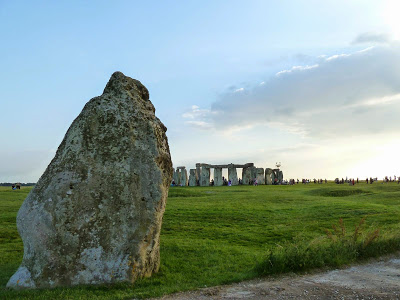
Experts believe the Stonehenge Altar Stone could have come from as far away as northern England or Scotland. We anticipate an exciting revelation shortly.

22 04 2024

Altared States: The Altar Stone at Stonehenge is one of the most mysterious of the 900 tons of rock that has been deliberately brought to the site by humans over the last 5000 years.

It sits inside the stone circle in a very special position – lying prone, mostly buried in the turf, directly in front of what was once the tallest trilithon on the site of which only a single stone still stands, the slim and elegant Stone 56.

It’s tricky to see as it’s mostly obscured by the collapsed upright and lintel of that tallest trilithon, but this image shows the eastern half of it highlighted in red – the dotted lines indicate that it continues off-picture to the right.

The primary axis of the monument – from Summer Solstice Sunrise to Winter Solstice Sunset – crosses directly over the centre of the Altar Stone, and the secondary axis – from Winter Solstice Sunrise to Summer Solstice Sunset – runs down the midline of this 16’ long x 3’ 6” wide x 1’ 9” deep lump of fine grained greenish sandstone. It therefore lies precisely on the intersection of the main solar alignments at Stonehenge.
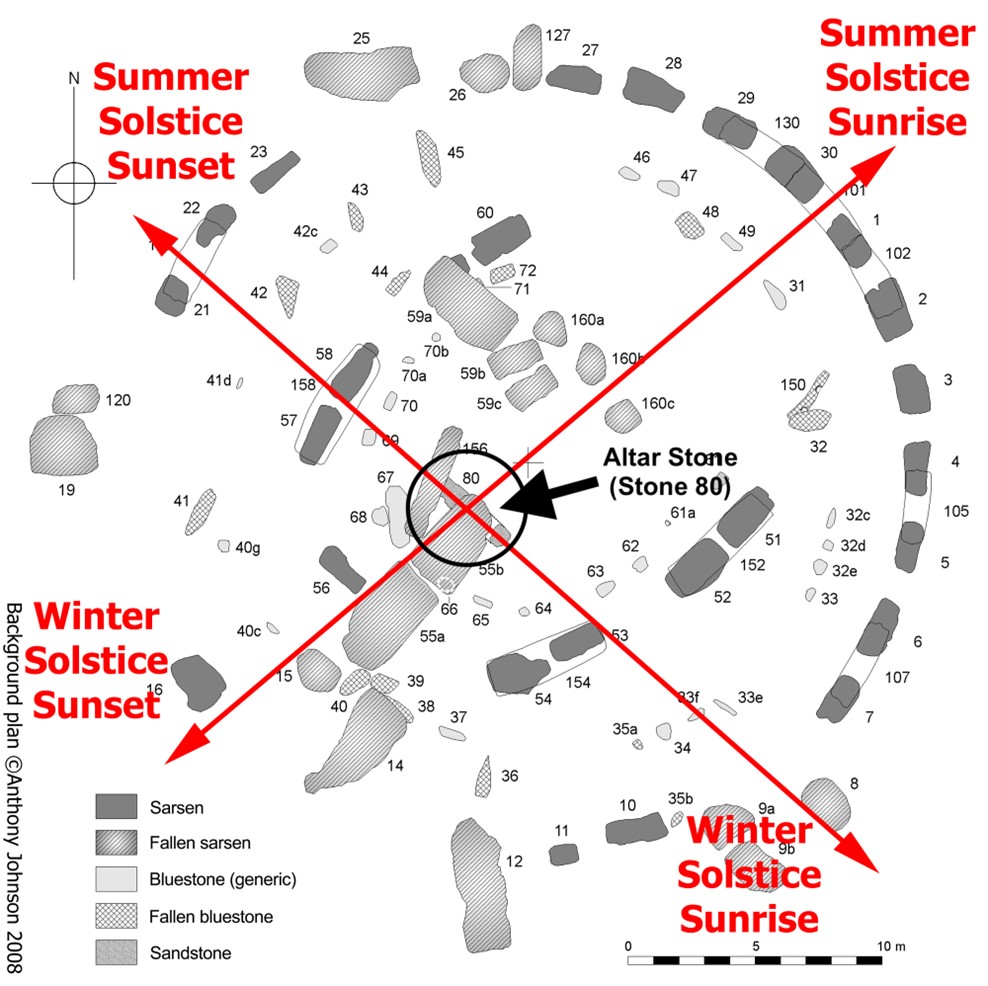
It has always been recognised that the Altar Stone is a “foreign” stone, that it is not a locally-sourced sarsen.

For over a century it had been grouped with the bluestones that originate in the Preseli Hills of Pembrokeshire in south west Wales but – being a sandstone rather than a dolerite or rhyolite – its likely source was thought to be the Cosheston Beds of Old Red Sandstone near Milford Haven.

The suggestion was that it had been collected along the supposed coastal route that the bluestones were assumed to have taken.

However…

As recently as 2020, detailed analysis revealed that the unique Altar Stone didn’t closely match the Cosheston Beds mineralogy. This led to its provenance changing to a possible source in the Bannau Brycheiniog (Brecon Beacons) in south east Wales –  the formation known as the Senni Beds – just north of Abergavenny.

This was particularly interesting because it bolstered the idea that the bluestones had been transported to Stonehenge by a land route rather than being rafted by sea around the coast.
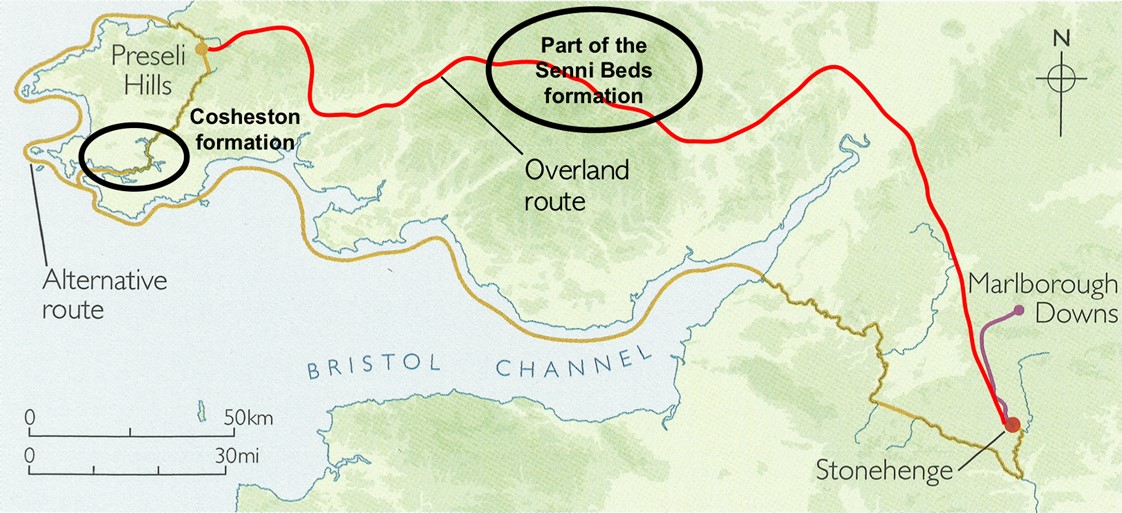
The story didn’t stop there. Further analysis revealed another wrinkle – the Altar Stone has a very high level of barium, much higher than the samples extracted from the Anglo-Welsh basin for comparison. The historical linking of the Altar Stone and bluestones as “foreign” stones had biased researchers towards looking for a South Wales source for it, and the evidence was now pointing a different way.

In 2023, via a paper entitled “The Stonehenge Altar Stone was probably not sourced from the Old Red Sandstone of the Anglo-Welsh Basin: Time to broaden our geographic and stratigraphic horizons?” (https://doi.org/10.1016/j.jasrep.2023.104215) Ixer, Pearce, Bevins et al dropped a bombshell.

Looking at the geological map of Britain, there are only a few possible sources of an Old Red Sandstone with such high levels of baryte cement – the West Midlands, the north of England and… Orkney.

It is far too early to know whether this last possibility is in fact true, but there are established links in the archaeology between Orkney and Stonehenge and it’s an intriguing idea that the Altar Stone may conceivably have made a 500+ mile journey. We expect exciting news this week, you heard here 1st!

GUEST BLOGGER: SIMON BANTON

RELEVANT LINKS:
New mystery over origins of Stonehenge after remarkable discovery – THE GUARDIAN
100-year-old origin theory of Stonehenge’s iconic Altar Stone could be wrong, scientists say – LIVE SCIENCE
Tours of Stonehenge with local guided experts – STONEHENGE GUIDED TOURS
Analyze This: Stonehenge’s ‘Altar Stone’ has mysterious origins – SCIENCE NEWS
Stonehenge Guided Landscape Tours – STONEHENGE TOUR COMPANY
Stonehenge Altar Stone is probably not from Wales – THE PAST

The Stonehenge News Blog
Follow us on Twitter and Facebook for all the latest Stonehenge News and Equinox updates.
http://www.Stonehenge.News


The search is on! Stonehenge’s Altar Stone did NOT come from Wales:

27 09 2023
  • The Stonehenge Altar Stone may have come from the Midlands or even Scotland
  • New geological analysis suggests its geology doesn’t match most Welsh
  • The Stonehenge Altar Stone was probably not sourced from the Old Red Sandstone of the Anglo-Welsh Basin: Time to broaden our geographic and stratigraphic horizons?

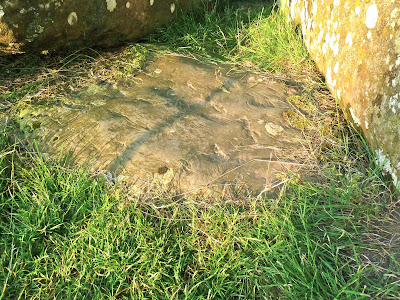
The Altar Stone lies at 80° to the main solstitial axis beneath the collapsed upright of the Great Trilithon (Stone 55b) and its lintel (Stone 156), sunk into the grass. The stone itself was broken by the fall of the Great Trilithon’s upright and is in two pieces. IMAGE SOURCE

New research, led by Aberystwyth University, analysed 58 rock samples from all over the country to figure out where the curious Bronze Age rock may have come from. 

For the last 100 years the Stonehenge Altar Stone has been considered to have been derived from the Old Red Sandstone (ORS) sequences of south Wales, in the Anglo-Welsh Basin, although no specific source location has been identified,’ the scientists say.

‘We have concluded that the Altar Stone appears not, in fact, to come from the ORS of the Anglo-Welsh Basin and further, we propose that the Altar Stone should no longer be included in the “bluestone” grouping of rocks essentially sourced from the Mynydd Preseli.

‘Attention will now turn to the ORS of the Midland Valley and Orcadian Basins in Scotland as well as Permian-Triassic of northern England to ascertain whether any of these sandstones have a mineralogy and geochemistry which match the Stonehenge Altar Stone.’ 

Stonehenge’s most prominent slabs – the sandstone sarsens – were sourced locally, from Marlborough Downs, a mere 20 miles from the monument’s site.

But the origin of the Altar Stone – which lies partially hidden under two fallen columns – has been at the centre of mystery for centuries.

Previous investigations suggest its geology completely contrasts to the rocks found in Wiltshire, and may have been sourced from a quarry 140 miles away.

This Welsh site is home to various other ‘bluestones’ like the Altar Stone, formed when lava cools before crystallising and solidifying.

But new research suggests the so-called ‘Stone 80’ should be ‘de-classified’ as a bluestone due to its unique characteristics. 

After conducting 106 analyses, experts say the Altar Stone has an unusually high content of Barium.

This matched just one sample taken from rocks across south Wales, the Welsh Borders, the West Midlands and Somerset.

Now, the team have expanded their search for the source to northern Britain, in the hopes of finding similar geology in Caithness and even Orkney, Scotland.

If it were sourced in Orkney, ancient builders may have dragged the six-ton rock across roughly 682 miles.

This took place thousands of years before heavy-lifting machinery was even invented. 

‘Monoliths used in the construction of stone circles are usually locally derived,’ scientists added.

‘It is the long-distance transport of the bluestones that makes Stonehenge of particular interest.

The bluestones in fact represent one of the longest transport distances known from source to monument construction site anywhere in the world.’ 

Some experts theorise that the Altar Stone was shipped on a raft up the Bristol Channel, before travelling the final leg to Salisbury Plain over land.

However, more recent studies have called this into question and suggest the rock may have been hauled across numerous hills.

The truth of this remains unknown, but MailOnline has approached the experts of this study to hear their thoughts. 

RELEVANT STONEHENGE LINKS:

The Stonehenge Altar Stone was probably not sourced from the Old Red Sandstone of the Anglo-Welsh Basin: Science Direct
The Altar Stone – Not welsh, so where is it from? The Sarsen
Stonehenge’s Altar Stone did NOT come from Wales: The Daily Mail
The Stones of Stonehenge On this site you’ll find photos of every stone at Stonehenge/ Simon Banton
Visit Stonehenge with the experts and hear all the latest discoveries and theories – STONEHENGE GUIDED TOURS
Private Guided Tours of Stonehenge with local expert tour guides – STONEHENGE AND SALISBURY GUIDED TOURS

The Stonehenge News Blog
Follow us on Twitter and Facebook for all the latest Stonehenge News
http://www.Stonehenge.News


LECTURE: Old Stones, New ideas: Sourcing the Stonehenge Bluestones

10 10 2015

A Saturday afternoon lecture by Richard Bevins at the Wiltshire Museum. 21st November 2015

Stonehenge is arguably one of the most famous prehistoric monuments in the World. It is renowned for the Stonehenge Lectureenormous size of the sarsen monoliths used in its construction which comprise the Outer Circle and Outer Horseshoe. It is generally agreed that these stones were sourced from the Marlborough Downs area, some 30 km to the north of Stonehenge. However, a set of smaller stones, comprising the Inner Circle, the Inner Horseshoe and the Altar Stone, are exotic to the Salisbury Plain area; these are the so-called bluestones, and have been the subject of investigations since the latter part of the 19th Century. Early petrographical studies recognised that the bluestones largely comprise a range of altered volcanic, intrusive and tuffaceous rocks with rarer sandstones but could not provide a definitive source.

However, it was the seminal paper by H.H. Thomas in 1923 that persuasively demonstrated that the spotted dolerite component of the bluestones could be sourced to outcrops exposed towards the eastern margin of Mynydd Preseli in southwest Wales, citing the tors Carn Meini and Cerrigmarchogion as the most likely sources. Thomas also argued that other lithologies in the bluestone assemblage, notably the rhyolites and the ‘calcareous ash’, could be sourced in the same locale, in particuar from Carn Alw and the northern slopes of Foel Drygarn respectively.

The first major investigation of the geochemistry of bluestone assemblage was by Richard Thorpe and team who compared whole rock wavelength-dispersive X-ray fluorescence spectrometry analyses from both orthostats and debitage at Stonehenge with whole rock analyses from Mynydd Preseli
.
Using petrography, mineral chemistry and whole rock geochemistry Richard Bevins and Rob Ixer have re-examined the proposed source of the bluestone rhyolites and determined that Carn Alw, as proposed by Thomas, is not the source of bluestone rhyolite; instead they argued that the majority of the rhyolite debitage from the Stonehenge Landscape (but not the four rhyolitic/dacitic standing or recumbent orthostats) comes instead from a prominent outcrop called Craig Rhos y felin, located on low ground to the north of the Mynydd Preseli range in the vicinity of Brynberian. More recently they have re-examined the spotted and non-spotted dolerites and concluded that a large % of the dolerite fragments and cored samples from Stonehenge come from Carn Goedog rather than Carn Meini.

Biography
Dr Richard Bevins as Keeper and Head of the Department of Natural Sciences at the National Museum Wales in Cardiff is responsible for Strategic leadership for collections and research related activities within the Department.

Qualifications, memberships and relevant positions:
BSc (Hons) Geology (Aberystwyth University), PhD (Keele), Fellow (Geological Society of London), Chartered Geologist (CGeol), Fellow (Society of Antiquaries of London), Honorary Lecturer (School of Earth & Ocean Sciences, Cardiff University), Chair, Geological Society of London’s Geoconservation Committee, Member of the Geological Society of London’s External Relations Committee, Chair of the British Geological Survey’s National Geological Repository Advisory Committee.

References
Primary research area is centred on the the Caledonian igneous history of Wales and related areas, as well as on their low-grade metamorphism. More recent work has focussed on extending the petrology and geochemistry of altered igneous rocks from Pembrokeshire into a re-examination of the source of the Stonehenge bluestones.

Links:
http://www.wiltshiremuseum.org.uk/events/index.php?Action=2&thID=1029&prev=1
www.researchgate.net/profile/Richard_Bevins2

Saturday afternoon lectures start at 2.30pm and last approx. one hour.

Our Lecture Hall is accessible via a lift if required, has a hearing loop and air conditioning.
Booking Options
Book online using Paypal
Telephone – 01380 727369
Email – hello@wiltshiremuseum.org.uk

The Stonehenge News Blog


NEW THEORY: Stonehenge’s tallest stone ‘points at winter sunrise’

22 04 2015

The tallest stone at Stonehenge points towards the sunrise on the midwinter solstice, according to a new theory from an English Heritage steward.

Aerial photograph of Stonehenge
The newly observed alignment (red line) is at 80 degrees to the line of the axis of the monument (blue line)

Historians have long known the circle of stones is aligned with the midsummer sunrise but Tim Daw says the tallest one is lined up with the midwinter sun.

It was previously thought the stone had been put back at the wrong angle when it was re-erected in 1901.

But Mr Daw, who works there, says his research shows its angle is deliberate.

‘Botched job’

Mr Daw said: “The largest stone at Stonehenge is not where it ‘should’ be, it is twisted.

“This stone, Stone 56, is the tallest one at the end of the inner horseshoe of sarsen stones.

“Because it was put back to the vertical in 1901 it has been assumed that the twist is the result of the modern excavators botching the job.

Drawing of Stonehenge prior to 1901
The tallest stone in the monument was straightened in 1901

“My research shows that not only was the standing stone out of symmetry with the central solstice alignment originally, but that its now fallen partner had also been, and so were surrounding stones, including the Altar Stone.”

Mr Daw, who last year came up with evidence that the outer stone circle at Stonehenge was once complete, said his newly discovered alignment was at 80 degrees to the line of the axis of the monument, which points to midsummer solstice sunrise and midwinter sunset.

‘100 tonnes of stone’

“The stones point to the midwinter solstice sunrise and midsummer sunset,” he said.

“This alignment had been missed by previous investigators… as they used an idealised plan rather than an actual plan for their calculations.”

“This isn’t some nebulous sighting line on a distant star; this is 100 tonnes of stone deliberately pointing to the major event at the other end of the day the rest of the monument celebrates.

“One stone out of line might be a coincidence but that it is five of the major stones, at least, shows it was a designed feature.

“It shows what can be discovered by simple observation even in such a well-researched site as Stonehenge.”

Stonehenge
Tim Daw said the tallest stone (centre) was positioned to align with the midwinter sunrise

Director of the Wiltshire Archaeological and Natural History Society (WANHS), David Dawson, said: “This is an interesting new idea which highlights the “skew” of the Stonehenge trilithons, which has been known for some time.

“It highlights the significance of the summer and winter solstices at Stonehenge, and the 80 degree angle between them.

“We know that the Bush Barrow lozenge, on display at the Wiltshire Museum, hints at this same significant astronomical feature.

“There will now be a debate between archaeologists and a re-examination of the evidence to test this new hypothesis.”

Jessica Trethowan from English Heritage said it was “an interesting idea”.

Mr Daw’s theory has been published in the latest WANHS magazine.

Midwinter sunrise at Stonehenge
People traditionally gather at Stonehenge for the winter and summer solstices

Read the full story on the BBC News website

The Stonehenge News Blog


The Stones of Stonehenge. A new web site with a page devoted to each stone at Stonehenge.

11 02 2015

Strange as it may seem, there isn’t a useful reference work that shows photographs of every stone at Stonehenge from all (easily) available angles, until now.  The website is a work in progress toward that end. Not all stones currently have pages, but eventually they will have.

Stone Numbering System

The numbering system for the stones is that devised by W.M. Flinders Petrie in the late 19th century and which is still in use

Heel Stone

The HeelStone (or HeleStone or HealStone) is a natural stone that has not been worked or tooled.

by researchers and archaeologists to this day.

Petrie carried out one of the first highly (and dependably) accurate surveys of Stonehenge and decided that all previous systems of numbering the stones were inadequate in one way or another.
He resolved to number the stones in ascending order clockwise from the main axis of the monument and beginning with the sarsen immediately to the east of the axis in the outer circle as seen from the centre. This is Stone 1. All the actual and supposed positions of sarsen stones are numbered, whether or not there is a stone (or fragment of stone) at or near the position.
The horizontal lintels of the outer sarsen circle are numbered by adding 100 to the number for the higher of the two uprights that support each one. So the lintel supported by Stones 4 and 5 is numbered 105, and that supported by Stones 21 and 22 is numbered 122.
There is a single exception to this rule for the lintel spanning Stones 30 and 1 across the main entrance into the monument which is numbered 101 rather than 130. This is because the number 130 is already in use for the neighbouring lintel that is supported by Stones 29 and 30.
The bluestones of the circle within the sarsen circle are similarly numbered clockwise from the main axis beginning with Stone 31. In the case of the bluestones, Petrie did not assign numbers to the supposed positions of any that are missing.
The sarsens in the horseshoe of massive trilithons are numbered clockwise starting from Stone 51 round to Stone 60. Their respective five lintels (or “imposts” as Petrie called these huge lintels) are numbered 152, 154, 156, 158 and 160.
The bluestones of the innermost horseshoe arrangement are numbered clockwise from Stone 61.
The Altar Stone is Stone 80. The two remaining Station Stones outside the circle are numbered 91 (eastern stone) and 93 (western stone). Station Stones 92 and 94 are missing. The Slaughter Stone is Stone 95 and the Heel Stone is Stone 96.
Fragments of stones which are clearly associated with each other are given alphabetical indices, for example Stones 55a and 55b are the two parts of the broken fallen sarsen upright of the Great Trilithon.

Image credit:

Merlin @ Stonehenge
The Stonehenge News Blog