Secret history of Stonehenge revealed

26 11 2011

 Ancient site may have been place of worship 500 years before the first stone was erected

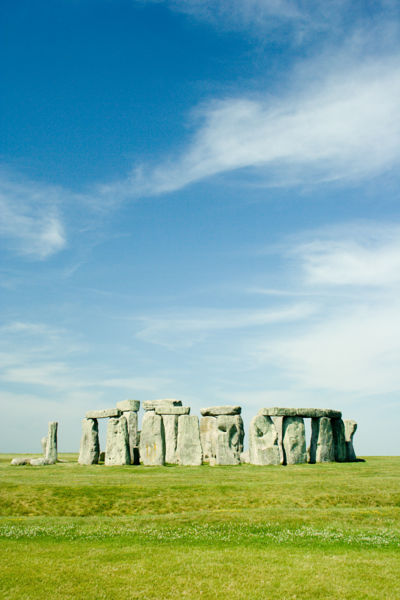
Extraordinary new discoveries are shedding new light on why Britain’s most famous ancient site, Stonehenge, was built – and when.

Current research is now suggesting that Stonehenge may already have been an important sacred site at least 500 years before the first Stone circle was erected – and that the sanctity of its location may have determined the layout of key aspects of the surrounding sacred landscape.

What’s more, the new investigation – being carried out by archaeologists from the universities’ of Birmingham, Bradford  and Vienna – massively increases the evidence linking Stonehenge to pre-historic solar religious beliefs. It increases the likelihood that the site was originally and primarily associated with sun worship

The investigations have also enabled archaeologists  to putatively reconstruct the detailed route of a possible religious procession or other ritual event which they suspect may have taken place annually to the north of Stonehenge.

That putative pre-historic religious ‘procession’ (or, more specifically, the evidence suggesting its route) has implications for understanding Stonehenge’s prehistoric religious function – and suggests that the significance of the site Stonehenge now occupies emerged earlier than has previously been appreciated.

The crucial new archaeological evidence was discovered during on-going survey work around Stonehenge in which archaeologists have been ‘x-raying’ the ground, using ground-penetrating radar and other geophysical investigative techniques. As the archaeological team from Birmingham and Vienna were using these high-tech systems to map the interior of a major prehistoric enclosure (the so-called ‘Cursus’) near Stonehenge, they discovered two great pits, one towards the enclosure’s eastern end, the other nearer its western end.

When they modelled the relationship between these newly-discovered Cursus pits and Stonehenge on their computer system, they realised that, viewed from the so-called ‘Heel Stone’ at Stonehenge, the pits were aligned with sunrise and sunset on the longest day of the year – the summer solstice (midsummer’s day). The chances of those two alignments being purely coincidental are extremely low.

The archaeologists then began to speculate as to what sort of ritual or ceremonial activity might have been carried out at and between the two pits. In many areas of the world, ancient religious and other ceremonies sometimes involved ceremonially processing round the perimeters of monuments. The archaeologists therefore thought it possible that the prehistoric celebrants at the Cursus might have perambulated between the two pits by processing around the perimeter of the Cursus.

Initially this was pure speculation – but then it was realized that there was, potentially a way of trying to test the idea. On midsummer’s day there are in fact three key alignments – not just sunrise and sunset, but also midday (the highest point the sun reaches in its annual cycle). For at noon the key alignment should be due south.

One way to test the ‘procession’ theory (or at least its route) was for the archaeologists  to demonstrate that the midway point on that route had indeed a special relationship with Stonehenge (just as the two pits – the start and end point of the route – had).  The ‘eureka moment’ came when the computer calculations revealed that the midway point (the noon point) on the route aligned directly with the centre of Stonehenge, which was precisely due south.

This realization that the sun hovering over the site of  Stonehenge at its highest point in the year appears to have been of great importance to prehistoric people, is itself of potential significance. For it suggests that the site’s association with the veneration of the sun was perhaps even greater than previously realized.

But the discovery of the Cursus pits, the discovery of the solar alignments and of the putative ‘processional’ route, reveals something else as well – something that could potentially turn the accepted chronology of the Stonehenge landscape on its head.

For decades, modern archaeology has held that Stonehenge was a relative latecomer to the area – and that the other large monument in that landscape – the Cursus – pre-dated it by up to 500 years.

However, the implication of the new evidence is that, in a sense, the story may have been the other way round, i.e. that the site of Stonehenge was sacred before the Cursus was built, says Birmingham archaeologist, Dr. Henry Chapman, who has been modelling the alignments on the computerized reconstructions of the Stonehenge landscape

The argument for this is simple, yet persuasive. Because the ‘due south’ noon alignment of the ‘procession’ route’s mid-point could not occur if the Cursus itself had different dimensions, the design of that monument has to have been conceived specifically to attain that mid-point alignment with the centre of Stonehenge.

What’s more, if that is so, the Stonehenge Heel Stone location had to have been of ritual significance before the Cursus pits were dug (because their alignments are as perceived specifically from the Heel Stone).

Those two facts, when taken together, therefore imply that the site, later occupied by the stones of Stonehenge, was already sacred before construction work began on the Cursus. Unless the midday alignment is a pure coincidence (which is unlikely), it  would imply  that the Stonehenge site’s sacred status is at least 500 years older than previously thought – a fact which raises an intriguing possibility.

For 45 years ago, archaeologists found an 8000 BC Mesolithic (‘Middle’ Stone Age) ritual site in what is now Stonehenge’s car park. The five thousand year gap between that Mesolithic sacred site and Stonehenge itself meant that most archaeologists thought that ‘sacred’ continuity between the two was inherently unlikely. But, with the new discoveries, the time gap has potentially narrowed. Indeed, it’s not known for how long the site of Stonehenge was sacred prior to the construction of the Cursus. So, very long term traditions of geographical sanctity in relation to Britain’s and the world’s best known ancient monument, may now need to be considered.

The University of Birmingham  Stonehenge area survey – the largest of its type ever carried out anywhere in the world – will take a further two years to complete, says Professor Vince Gaffney, the director the project.

Virtually every square meter in a five square mile area surrounding the world most famous pre-historic monument will be examined geophysically to a depth of  up to two metres, he says.

It’s anticipated that dozens, potentially hundreds of previously unknown sites will be discovered as a result of the operation.

The ongoing discoveries in Stonehenge’s sacred prehistoric landscape – being made by Birmingham’s archaeologists and colleagues from the University of Vienna’s Ludwig Boltzmann Institute – are expected to transform scholars’ understanding of the famous monument’s origins, history and meaning.

Full Article: http://www.independent.co.uk/life-style/history/secret-history-of-stonehenge-revealed-6268237.html

Sponsored by the Stonehenge Tour Company – www.StonehengeTours.com

Merlin @ Stonehenge
The Stonehenge Stone Circle Website


‘Stonehenge is just scaffolding’ claim experts

24 11 2011

After many tens of years of investigation, the meaning behind the ancient monument of Stonehenge may finally have been discovered. Professor Mike Smith and his Oxford University team have concluded that the stones are not the final construction but just the scaffolding to allow work to take place.

Stonehenge‘The missing piece of the puzzle was put in place when I employed some roofers to re-tile over the bathroom and spare bedroom’ he explained. ‘They seemed keen and put up the scaffolding very quickly, but then vanished once the deposit had been paid. One evening the sunlight beamed through the metal pipework from the kitchen door to the cactus collection on the study windowsill, and I saw that this scaffolding was essentially the same structure as at Stonehenge, only not as well put together.’

After the initial discovery the team worked tirelessly to test their new hypothesis, and to work out what final structure was to have been built at the site. ‘The clues led us to the nearest comparable stone age building of Silbury Hill, and a ‘Silbury 2’ constructed on the plain would have been a towering white elephant on the scale of the Millennium Dome or High Speed Rail 2’ claimed the Professor. ‘It was essentially a huge temple to the capacity of a centralised organisation to waste millions of man hours in pointless endeavour. It was obviously planned to be a national piece of work as well – the scaffolding was produced by a sub-contractor from South Wales, which shows that the Government paid lip-service to allocating work in areas of economic deprivation 4000 years ago as well.’

‘We will never be fully sure as to why the Stonehenge hill was not completed but it is likely to have been an early impact of the current government funding cuts’ he concluded.

Professor Smith’s roof has still not been fixed.

‘Spoof ‘Article from  http://www.newsbiscuit.com

Sponsored by The Stonehenge Tour Company – www.StonehengeTours.com

Its not all serious……………………

Merlin @ Stonehenge


Stonehenge News Flash: Stonehenge byways to remain open

22 11 2011

A PLANNING inspector has ruled that byways surrounding Stonehenge will remain open.

The decision follows inquiries into proposals to close the byways as well as parts of the A344 and the inspector has decided that although the road will close, the byways should remain open.

English Heritage plans to return the area to grass as part of plans for a new visitors’ centre at Airman’s Corner.

Planning inspector Alan Boyland said: “I accept that Wiltshire has a considerably greater length of byways than any other county. This is not however, in itself, a reason for allowing a further loss for recreational motor vehicle users.

“In this case, the loss of a further 7km, particularly given the strategic importance of those routes, and without similar alternative routes being available, would in my view be significantly detrimental to the current users.”

At the inquiry, Druid leader King Arthur Pendragon objected to the proposals to close the byways as he said it is a violation of his human rights not to be able to access the area, particularly during Pagan ceremonies such as celebrations of the solstices and equinox.

Mr Pendragon said: “It appears that the inspector has erred on the side of common sense and found himself in agreement with the points made.”

The new visitor centre has got planning permission and despite funding problems English Heritage hopes the it can be completed by 2013.

Article: http://www.salisburyjournal.co.uk/news/salisbury/salisburynews/9378111.Stonehenge_byways_to_remain_open/#commentsList

Sponsored by The Stonehenge Tour Company – www.StonehengeTours.com

Merlin @ Stonehenge


The Stonehenge Landscape Project. Lecture: 10th December 2011

19 11 2011


Recent Analytical survey and investigation in the World Heritage Site, by David Field.

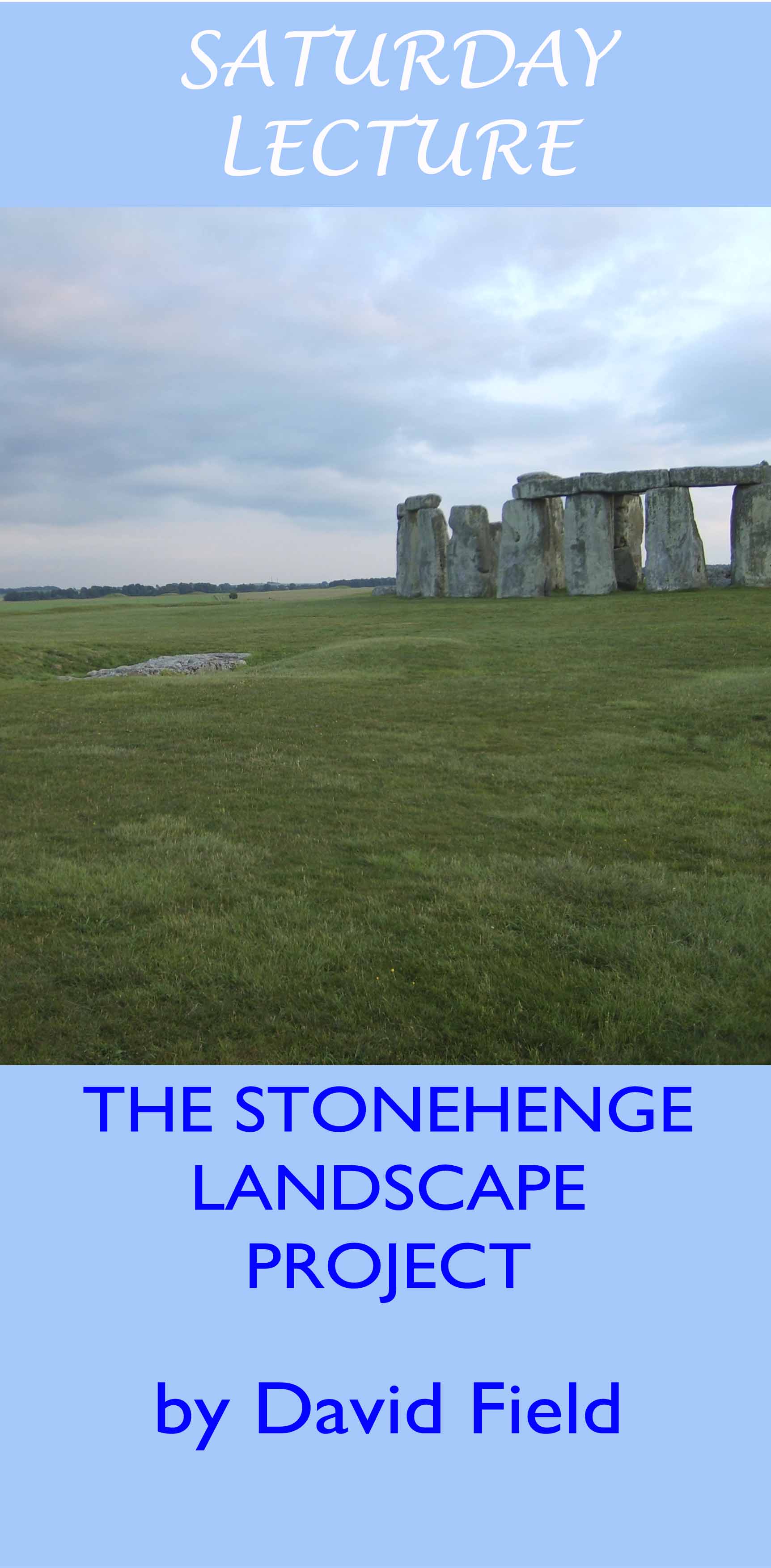
Saturday LectureMonuments within the Stonehenge Landscape have rarely been subject to survey techniques in modern times and in many cases reliance has been placed on Ordnance Survey depictions of the early 20th century. In advance of the establishment of a new visitor centre and to complement and support the recent university programmes of excavation in the area, English Heritage has been conducting the Stonehenge WHS Landscape Project to determine what non-destructive survey techniques can tell us about the area. Using ground survey, aerial photography, lidar and laser scanning a number of fresh and sometimes surprising conclusions emerge. This talk will outline the results so far.

David Field is a senior landscape archaeologist at English Heritage. He has undertaken extensive research into the prehistory of Salisbury Plain and the Vale of Pewsey, including the Stonehenge World Heritage Site. Publications include ‘Earthen Long Barrows’ 2006),‘The story of Silbury Hill’ (co author with Jim Leary, 2010), ‘The Field Archaeology of the Salisbury Plain Training Area’ (2002) and ‘Ancient water management on Salisbury Plain’ in Patterns of the Past: Essays in Landscape Archaeology (1999). He has also contributed a number of articles to WANHM, most recently as one of the joint authors of the reports on the Breamore jadeite axehead and the Late Bronze Age and Early Iron Age Midden at East Chisenbury, in Volume 103 (2010).

Saturday afternoon lectures start at 2.30pm and last approx. one hour.

Booking:

Contact the Bookings Secretary if you would like to be added to a reserve list:
* Tel: 01380 727369 (10am to 5pm Monday to Saturday)
* Send an e-mail.
Cost:   £5 (£3 for WANHS members)

Visiting Stonehenge ?  Visit the Wiltshire Heritage Museum in Devizes:  http://www.wiltshireheritage.org.uk

Sponsored by The Stonehenge Tour Company – www.StonehengeTours.com

Merlin @ Stonehenge
The Stonehenge Stone Circle Website
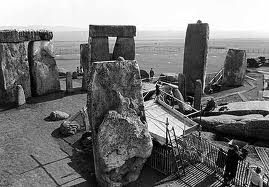


Haulage companies set to by bypass Stonehenge

5 11 2011

Fleet drivers will have to seek alternative routes when travelling through the county of Wiltshire later next year, following an announcement that roads around Stonehenge will be closed.

The news came after roads minister Mike Penning backed plans for a £3.5 million investment in diverting traffic away from Stonehenge in a bid to reduce congestion in the area.

Under the plans, the 879m length section of the A344 and its junction with the A303 will be closed.

Along with this, a 263m length segment of the B3086 and its junction with the A344 are also set to be closed under the scheme.

According to Mr Penning, further improvement will see “increased capacity delivered on the A360/A303 at Longbarrow Crossroads”, to compensate for the stopped up roads around Stonehenge.

The move was greeted positively by English Heritage, with Stonehenge project director Lorraine Knowles calling it “necessary in order to enable the Stonehenge Environmental Improvements Project to proceed”.

“It will significantly improve the experience of visitors to the Stonehenge monument and facilitate greater access to the wider World Heritage Site landscape,” she said.

At present, the Highways Agency is set to finish improvements to the Longbarrow roundabout in the area before closing the roads near the site from next year

Hope that will stop them ‘honking’ their horns as they travel passed as well (noisy bas***ds)

Sponsored by ‘The Stonehenge Tour Company’ www.StonehengeTours.com

Where will they go ?

Merlin ‘ Stonehenge
The Stonehenge Stone Circle Website
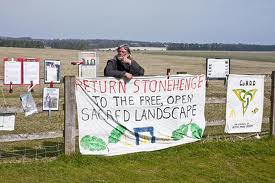


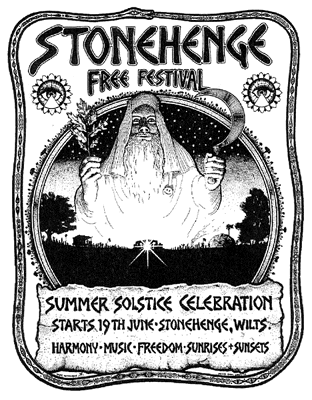
Campaign launched to bring back Stonehenge Solstice Festival

3 11 2011

A CAMPAIGNhas been launched to bring back a summer solstice festival to

Stoneheneg free festival flyer

Stoneheneg free festival flyer

Stonehenge after more than 25 years.

Paul Hegarty travels from his home in London to Stonehenge four times a year and he is behind the campaign to see a legal, organised festival on land next to the ancient stones.

“We want to see the return of a festival site. Stonehenge is getting a lot of people turning up for the summer solstice, between 15,000 and 30,000, and the site just isn’t big enough,” he said. “We want to see the return of a more communal festival,” he said.

Mr Hegarty, 45, is currently in talks with English Heritage and the National Trust, who own the land, about whether or not it’s possible.

He said: “I’m waiting for something positive to come back and I would like to gauge the feelings of local people.”

The last solstice festival took place at Stonehenge in 1985 and it was stopped by police following rioting and violence but Mr Hegarty says after 26 years it is time for a legal, organised, licensed festival site.

He is asking for people to write to him with their thoughts to 725 Hobart House, Wandsworth Road, London, SW8 2JB

Sponsored by ‘The Stonehenge Tour Company’ www.StonehengeTours.com

STOP PRESS | STOP PRESS | STOP PRESS | STOP PRESS | STOP PRESS |
I was up at the Stones during the recent Autumn Equinox (2011) and met Paul – he gave me this leaflet (sorry – not the best scan)

Stonehenge Free Festival Campaign

Stonehenge Free Festival Campaign

Link:  http://www.ukrockfestivals.com/henge-menu.html
Link: http://www.salisburyjournal.co.uk/

Merlin @ Stonehenge
The Stonehenge Stone Circle Website


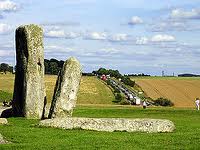
Stonehenge A344 road closure approved

1 11 2011

Plans to close a main road running past Stonehenge have been backed by the government following a public inquiry.

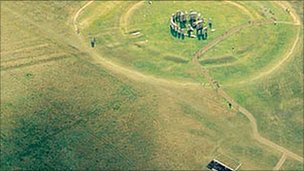
An aerial view of Stonehenge without the A344 road

An aerial view of Stonehenge without the A344 road

English Heritage wanted to stop traffic from travelling close to the stones and “restore the dignity” of the World Heritage Site by closing the A344.

Following a public inquiry, an independent inspector recommended part of the road could be closed off.

Roads minister Mike Penning has approved the plans and £3.5m will be used to improve nearby roads.

In June 2010 Wiltshire Council granted planning permission for a new visitors centre at Airman’s Corner, 1.5 miles (2km) west of Stonehenge.

At the public inquiry, opponents claimed the plans would give English Heritage a monopoly on access to the site.

The scheme will see an 879 metre section of the A344 from its junction with the A303 closed.

Part of the B3086 from its junction with the A344 will also be closed and “increased capacity” added at Longbarrow Crossroads.

A decision over the remainder of the A344 and other byways will be decided by Wiltshire Council.

“This is an important contribution to improve the setting of the monument and ensure its preservation as an iconic World Heritage Site,” said Mr Penning.

LINK: http://www.bbc.co.uk/news/uk-england-wiltshire-15540031

Sponsored by the ;Stonehenge Tour Company’ www.StonehengeTours.com

Merlin @Stonehenge


Stonehenge and Avebury Small Group Guided Tour.

28 10 2011

A new tour operating from London gives the  unique opportunity to explore the awe inspiring world famous Stonehenge and Avebury Prehistoric Landscapes with an expert service, guided by a qualified archaeologist.
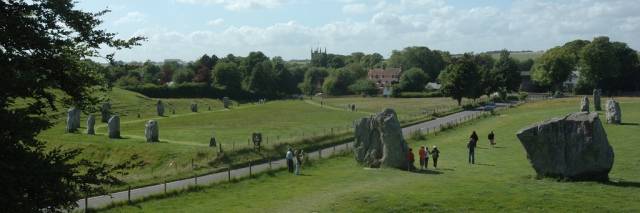
avebury-guided-tour
The tour includes –

  • Return travel from London in a luxury coach 
  • Entrance in to Stonehenge
  • Visit Stonehenge Cursus, Stonehenge Avenue and several Bronze Age Round Barrows (burial mounds)
  • A visit to one of the world’s most beautiful cities, Bath. Nourished by natural hot springs, stunning architecture, great shopping and iconic attractions
  • Guided coach tour around some of the most beautiful and stunning architectural works in Bath
  • Visit Woodhenge and Durrington Walls
  • Visit West Kennet Long Barrow and Silbury Hill
  • Visit Avebury Stone Circle and Henge 

 You will enjoy the passion and enthusiasm expressed by our professional,  archaeologist tour leaders.
The Avebury Landscape

West Kennet Long Barrow
– One of the largest Neolithic burial tombs in Britain. The West Kennet Long Barrow was constructed about 3700 BC, and was in continual use for well over 1000 years.

Silbury Hill – The largest man-made mound in ancient Europe, Silbury Hill was constructed c2800 BC. Even after centuries of research, archaeologists have still not discovered the original purpose of the Hill – ideas include it use as a territorial marker, burial mound and as a cenotaph.

Avebury Henge, Stone Circle and West Kennet Avenue – The largest stone circle in Europe, Avebury formed the centre of one of the most impressive Neolithic ceremonial landscapes in Britain. The great circles, 200 standing stones arranged in an outer and 2 inner circles, surrounded by a massive bank and ditch, were the focal point of the area. They were connected by the West Kennet Avenue of standing stones to other locales in the region, including the Sanctuary on Overton Hill – the site of a postulated temple. Hundreds of great sarsen stones from the downland around, often weighing over 20 tonnes, were used in the construction of the site, some 2500-2200 BC.


Visit Bath for Lunch, Guided coach tour and ‘Free Time’


The Stonehenge Landscape


Durrington Walls – is the site of a large Neolithic settlement and later henge enclosure. It is 2 miles north-east of Stonehenge. Recent excavation at Durrington Walls, support an estimate of a community of several thousand, thought to be the largest one of its age in north-west Europe. At 500m in diameter, the henge is the largest in Britain and recent evidence suggests that it was a complementary monument to Stonehenge


Woodhenge – Neolithic monument, dating from about 2300 BC, six concentric rings, once possibly supported a ring-shaped building.


Stonehenge Cursus –  (sometimes known as the Greater Cursus) is a large Neolithic cursus monument next to Stonehenge. It is roughly 3km long and between 100 and 150m wide. Excavations by the Stonehenge Riverside Project in 2007 dated the construction of the earthwork to between 3630 and 3375 BC. This makes the monument several hundred years older than the earliest phase of Stonehenge in 3000 BC.


Bronze Age round barrows – The Stonehenge UNESCO world heritage site is said to contain the most concentrated collection of prehistoric sites and monuments in the world. One monument type missed by the casual observer is that of the Bronze Age round barrow (burial mounds). As we walk through this landscape, you will come into contact with these intriguing ancient burial sites and through the expertise of our tour leaders, you will come face to face with the customs and people of Bronze Age society buried in close proximity to the unique stone circle of Stonehenge.Stonehenge Avenue – Walk along the Stonehenge Avenue and approach this unique stone circle as was the intended route experienced by the Stonehenge’s contempories.


Admission to Stonehenge – The great and ancient stone circle of Stonehenge is an exceptional survival from a prehistoric culture now lost to us. The monument evolved between 3000 BC – 1600 BC and is aligned with the rising and setting of the sun at the solstices.


Evening: Return 19.00 (winter schedule 18.00)


 These are Archaeology Tours, and as a result we believe we offer an excellent up-to-date specialist service; giving you the opportunity to learn in great detail about these amazing prehistoric sites, but also leaving you time to explore your surroundings by yourself.

This exclusive tour operates all year and can be booked through:
‘The Stonehenge Tour company’ – www.StonehengeTours.com

Merlin @ The Stonehenge Stone Circle Website


Henge for Sale £250k – 1 previous owner

20 10 2011


Stanton Drew stone circles yield more clues to the past

18 10 2011

 A geophysical survey at the three stone circles at Stanton Drew near Bath, England, has uncovered more details about the prehistoric monuments.

This is Bath reports that subsurface imaging has added to a similar survey done in 1997. That survey revealed that the largest of the three circles was surrounded by a ditch with a wide entrance. The new survey, done with more modern equipment, discovered a second, smaller entrance. Archaeologists also found that one of the smaller stone circles stood on a leveled platform.

Stanton Drew’s main circle is more than 110 meters in diameter, making it the second largest stone circle in the UK, bigger than Stonehenge and second only to Avebury. The main entrance of its surrounding ditch faced a smaller stone circle to the northeast. Further away to the southwest was a third circle. Inside the main circle were nine concentric rings of wooden posts. These rings may have served as a sort of calendar marking important celestial events such as solstices and equinoxes. The megaliths of the three stone circles served a similar function.

Local folklore says the stones are a wedding party tricked by the Devil into celebrating on a Sunday. Stone circles have accumulated lots of folklore and several are said to be petrified people, including the Rollright Stones.

The complete archaeological reports are available here.
Sean McLachlan

Sponsored by ‘The Stonehenge Tour’ Company www.StonehengeTours.com

Merlin @ Stonehenge