Stonehenge Winter Solstice Managed Open Access 2013

14 11 2013

The celebration of the Winter Solstice at Stonehenge will take place at sunrise on Saturday 21 December 2013 (approximately 08:09 hrs).

English Heritage is pleased to be offering ‘Managed Open Access’ for those who wish to celebrate the Winter Solstice peacefully

Visitors will be allowed into the Monument when it is considered sufficiently light to ensure safe Stonehenge Winter Solsticeaccess. Entry will be available from approximately 07:30 hrs until 09:00 hrs when visitors will be asked to vacate the site. All vehicles must vacate the area by 09.30.

Access might not be possible if the ground conditions are poor or if it is felt that access might result ¡n severe damage to the Monument.

Toilets are available at Stonehenge for the duration of the access although these facilities will not be available prior to access commencing.

Public car parking will be made available on Byway 12, the old Visitor Centre Car Park and along the A344.

Disabled parking will be in the old Visitor Centre Car Park, and will require a special permit.

TRANSPORT FROM LONDON: Our friends at Solstice UK events are offering their usual transport from London and can be booked here: http://www.stonehengetours.com/html/stonehenge-winter-solstice-tour.htm(mention us for a £20 discount)

New theory of a Winter Solstice Sunrise Alignment – Stonehenge and the Winter Solstice leaflet (ISBN 9780957093010)
(Background on the Winter Solstice Sunrise Alignment theory is here)

Follow Stonehenge on Twitter for Solstice updates and Stonehenge news:

Merlin @ Stonehenge
The Stonehenge News Blog


Antiquarians: Dr William Stukeley 1687-1765

7 11 2013

Alan S's avatarThe Heritage Journal

Described by Professor Ronald Hutton as “probably… the most important of the early forerunners of the discipline of archaeology”, William Stukeley was born this day in 1687 at Holbeach in Lincolnshire.

Although his father was a lawyer, medicine was William’s initial preferred area of study, which he followed at St Thomas’ Hospital in London after taking a degree at Cambridge. He returned to Lincolnshire to practice in 1710, where he forged friendships with the likes of Isaac Newton and William Wake (who was later to become Archbishop of Canterbury). At this time he also began his long distance travels around Britain, before returning to London once more in 1717. In London he joined several societies, including the Royal College of Physicians the Freemasons and the Society of Antiquaries – where he served as it’s first Secretary, a post he held for nine years. He also continued his travels in this…

View original post 218 more words


The Best Stonehenge Tour Operators

3 11 2013

2014 will be a vintage year to visit Stonehenge and Wiltshire

The removal of a nearby road and the construction of a new, off-site, visitor center will return England’s prehistoric stone circle, Stonehenge, to a more tranquil, natural setting. Until now, facilities to welcome visitors to the World Heritage Site have been limited and outdated. But the project led by English Heritage to transform Stonehenge not only provides world-class facilities, but also returns a sense of context and dignity to this ancient marvel of human endeavour.
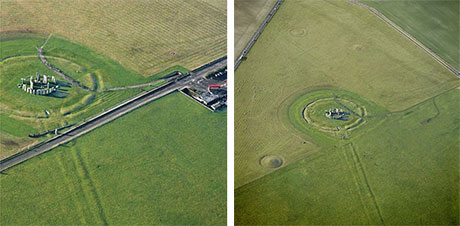
Before and after aerial views of Stonehenge

Before and after aerial views of Stonehenge

After removal of the road and high ugly fencing right next to the Stone Circle the old parking area and visitor buildings will be cleared and is currently being grassed. Eventually, the road, car park and visitor buildings will be gone – leaving Stonehenge surrounded by grass and reunited with its ancient approach, the Avenue. Visitors will be able to enjoy the special atmosphere of the Stone Circle with fewer distractions from modern–day sights and sounds.  English Heritage will open the new visitor centre in the winter of 2013.The past year has seen epic improvements. Over £40 million pound has been invested to offer the best experience since Neolithic times.

Stonehenge Tours
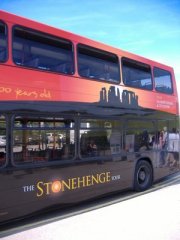
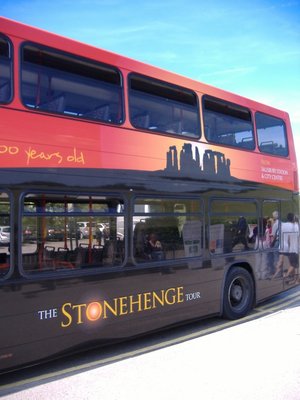
Stonehenge Tour BusBy far the easiest and most convenient way to experience Stonehenge is by joining a guided tour from London, Salisbury or Bath.

Stonehenge is in a remote area of the West Country and can be difficult and costly via public transport. There are many operators (some better than others) offering half and full day tours that include Stonehenge and other popular attractions in the West county.  Typical itineraries from London include;

  • Stonehenge, Bath, and Lacock Village in the Cotswolds
    Stonehenge, Salisbury Cathedral and Avebury Stone Circle
    Stonehenge, Oxford and Windsor Castle


Stonehenge Special Access Tours

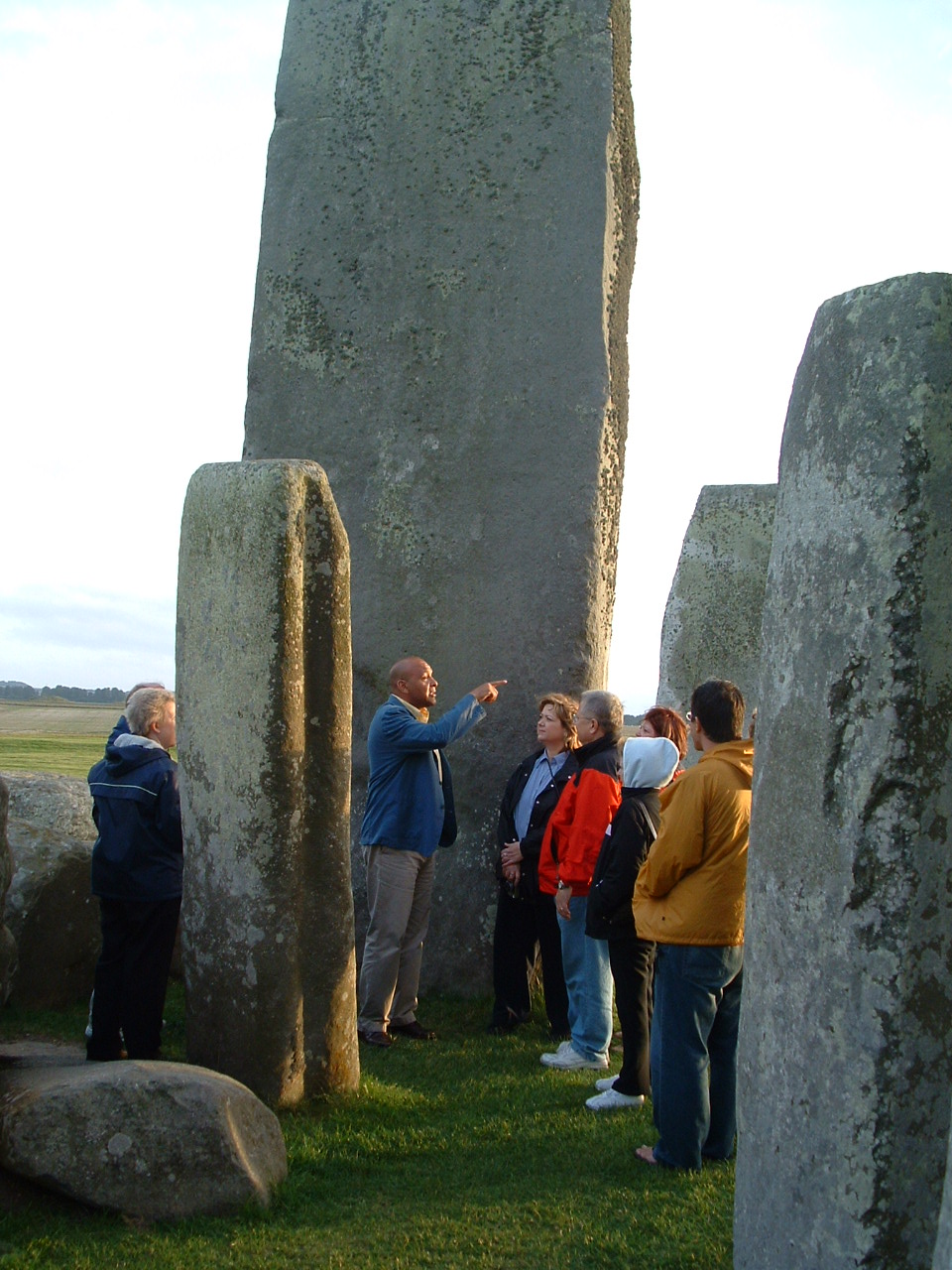
Most tours enter Stonehenge during public opening hours of Stonehenge. 2014 will see the introduction of a ‘monorail’ travelling someinner-circle-tour 2km from to the monument which will be a greatly improved experience to previous years. If you are able to plan ahead we strongly recommend booking a ‘private access inner circle tour’ which offer guided trips outside of public opening hours but there are very limited sessions where you can actually walk among the stones and demand is great. These sessions are very early morning  or evening on a tour its either a very early start from London or a late return in the evening.  These viewings are called ‘special access’ or ‘inner circle’ tours.  Some operators even go to the length of gaining access during the actual sunrise or sunset and we highly recommend this if you are able to book in advance.
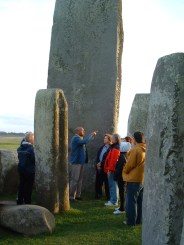
Stonehenge’s orientation on the rising and setting sun has always been one of its remarkable features. Whether this was simply because the builders came from a sun-worshipping culture, or because – as some scholars believe – the circle and its banks were part of a huge astronomical calendar, remains a mystery.

By far the best way to experience Stonehenge is on a sunrise / sunset guided tour.

Stonehenge Guided Tours from London

The highly recommended ‘Stonehenge Guided Tour’ Company, known as the ‘Stonehenge Experts’ have been offering daily scheduled coach tours and exclusive ‘special access’ tours since the early 1990’s and have the best reputation by far – visit their website here:  Stonehenge Guided Tours

Premium tours, Golden Tours, Welcome2Britain and Evan Evans also offer coach or mini bus tours from London on limited dates and can be booked through the established discount sightseeing tour website BestValueTours

Local Stonehenge tour Operators.

There are also local operators offering tours from Salisbury, Bath and the port of Southampton.  Staying close to Stonehenge gives the opportunity to absorb local culture and its rich history and get a taste of the real England that many tourists miss whilst staying in the tourist capital of London.

Stonehenge Guided Tours from Bath

Mad Max Tours and Lion Tours  are on hand to offer day trips from Bath to Stonehenge, Avebury Stone Circle, Lacock (as seen in the Harry Potter films) and the Wiltshire Cotswolds.  Wessex Guided Tours offer private guided tours from Bath for families and small groups wishing to experience Stonehenge and explore ancient Wiltshire

Stonehenge Guided Tours from Salisbury

For expert knowledge on the history of Wiltshire, local guides can help you discover the myths, the history and the legends behind this county:

The Stonehenge Tour Bus is an ideal way to learn about the history of Stonehenge if you are travelling by public transport. The hop-on hop-off service stops at Stonehenge and Old Sarum and gives a recorded commentary on the history of Salisbury.

The Stonehenge Travel Company based in Salisbury offer scheduled small group guided tours including the popular Stonehenge sunset special access tours and can often arrange additional dates for private groups. Their exclusive tours; half and full day options are also available. There popular tours also visit the other Neolithic sites like Woodhenge, Durrington Walls, Avebury Stone Circle, Silbury Hill, West Kennet Long Barrow, Chalk Hill Figures and also get you off the tourist trail seeing some of the delightful English countryside in the area.

There’s also Salisbury, Stonehenge and Sarum tours with their minibus and tour in several languages.

Visit Wiltshire

The official ‘Visit Wiltshire’ tourism association also have a list of approved tour local operators and transport providers: Click here

Wiltshire is a perfect all-year destination for groups with plenty to see, do and experience. Extend your day visit to an overnight stay and see more of what Wiltshire has to offer. With a history spanning over 6,000 years, we have Stonehenge and Avebury World Heritage Site, Britain’s tallest Cathedral spire in Salisbury and the Magna Cartta, magnificent stately homes and gardens and some great shopping experiences. Download the Visit Wiltshire and Visit Salisbury Apps and have up to date information at your fingertips!

Whether you are travelling from overseas or live in the UK, make 2014 the year to visit Stonehenge and explore historic Wiltshire

The Stonehenge News Blog
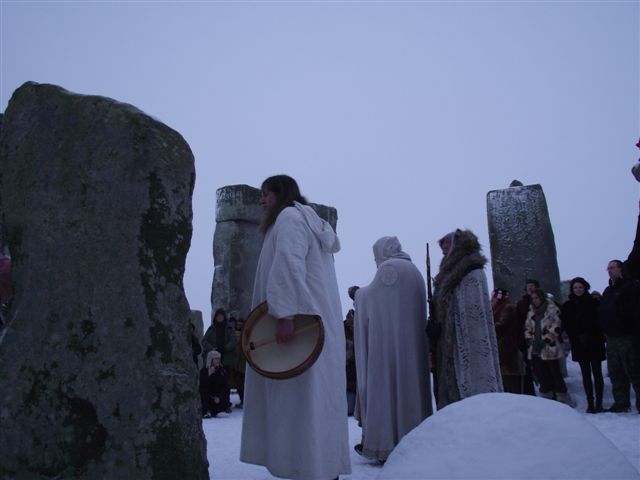


The New Discoveries at Blick Mead: the Key to the Stonehenge Landscape

29 10 2013

An archaeological team from the University of Buckingham’s Humanities Research Institute has been uncovering very large amounts of Mesolithic material from a site immediately adjacent to Stonehenge.

Stonehenge At a point called Blick Mead (a part of the Stonehenge landscape known as ‘Vespasian’s Camp’ on the mistaken assumption that it was the remains of a former Roman settlement) around 12,000 pieces of worked flint and burnt flint have been unearthed, as well as over 500 pieces of bone dating from over 8000 years ago. Virtually all the tools are in pristine condition – indeed, some of the team have had their fingers cut by them as they are still so sharp.

The most significant consequence of the excavation is that we have now discovered where the communities who built the first monuments at Stonehenge once lived – something that has eluded archaeologists for the best part of two centuries.  But the fact that the site also provides evidence for ritual activity in later periods suggests that the Buckingham team has also discovered a rare ‘multi-phase’ site, which was occupied over several millennia – indeed into the early medieval period.

David Jacques, Senior Research Fellow in Archaeology at the University of Buckingham’s Humanities Research Institute, has been directing the excavations at Vespasian’s Camp, Amesbury, Wiltshire, since 2005.

Burnt flint used in cookingThe archaeological potential of Vespasian’s Camp first came to light as a result of David Jacques’ detailed research of the site’s estate and nearby farm records. Indeed, before his team started their excavations, there was no evidence of Vespasian’s Camp having played any significant part in the Salisbury Plain ritual landscape or its history, and the site had been generally ignored by archaeologists, who assumed that any archaeological evidence on the site had been destroyed in the course of the landscaping of the area as a park for a neighbouring country house during the course of the 18th century.

Radiocarbon dating of objects from the Buckingham-sponsored excavations now shows that this site was occupied between 7550-4700 BC, which means that the Blick Mead site was in continuous use for almost 3,000 years.

This is generating great interest from archaeologists who have long pondered the possibility of a ‘missing link’ between the Mesolithic and Neolithic periods of activity at Stonehenge. The radiocarbon dates make this the oldest ever ‘homebase’ found in the Stonehenge area and could be one of the reasons why Stonehenge is sited where it is.

The findings produced by the Buckingham-funded excavations have led English Heritage to describe Vespasian’s Camp as potentially ‘one of the pivotal places in the history of the Stonehenge landscape’.

The 7500 BC dating of Blick Mead correlates strongly with the enigmatic posts found underneath Stonehenge car park in the late 1960s, which appear to be marking this area up as somewhere of special cultural significance

Finds from the springA copper alloy Bronze Age dagger, found nearby, at the Bluestonehenge monument in 2009, a 5th-century Anglo-Saxon disc brooch from a nearby spring, and medieval wooden staves from the main spring also connect Blick Mead to the early Anglo-Saxon and Amesbury Abbey periods. They add to the picture of the Blick Mead area being a place associated with veneration over the longue durée.

As a result of the support from the University of Buckingham’s Humanities Research Institute, further work is planned over the next two years.


Article Source: http://www.buckingham.ac.uk/research/hri/blickmead

Related link


The Henge on a Hill off Longhollow Road: It’s a Mystery!

18 10 2013

nancy wisser's avatarCLONEHENGE

Recent update since this page is getting some traffic: this Stonehenge is no longer a mystery. In fact its builder, Ralph Radke, even joined the Clonehenge: Stonehenge Replicas Unleashed group on Facebook. And here is a delightful article about him and his henge from the Galena Gazette, June 2020: Building his very own Stonehenge. Anyway, we welcome any new visitors and invite you to have a look at our list of large permanent replicas around the world!

________[the original article below]________

Happy October and welcome! When we last left the state of Illinois (almost five years ago!), it was boasting a single, rather idiosyncratic Stonehenge replica not far outside Chicago at a paragliding and flight field. That one has since gone to new owners and for all we know may no longer be there.

Illinois was chugging along with that large replica and one or two smaller museum replicas…

View original post 647 more words


Asseyez-vous, s’il vous plait: Thank you, could we have a table by the trilithon please

16 10 2013

The Heritage Trust's avatarThe Heritage Trust

 
Pugh appears courtesy of the Daily Mail
 
 
Was Stonehenge the ultimate place to dine out 8,000 years ago 🙂 Mark Brown, arts correspondent for The Guardian, reports yesterday that –
 
Archaeologists digging about a mile away from Stonehenge have made a discovery that appears to overturn centuries of received wisdom: frogs’ legs were an English delicacy around eight millennia before becoming a French one. The shock revelation was made public on Tuesday by a team which has been digging at a site known as Blick Mead, near Amesbury in Wiltshire. Team leader David Jacques said: “We were completely taken aback.”
 
In April they discovered charred bones of a small animal, and, following assessment by the Natural History Museum, it has been confirmed that there is evidence the toad bones were cooked and eaten. “They would have definitely eaten the leg because it would have been…

View original post 101 more words


Stonehenge …. getting better!

16 10 2013

heritageaction's avatarThe Heritage Journal

SHbette

As can be seen, the Eastern portion of the A344 has been consigned to history, fulfilling the wishes of generations of visitors. As a result the map has been amended and now looks a lot less of a national disgrace.

In fact, the map is already out of date because the remaining portion of the road should be shown as “restricted” for as from last week ….

“vehicles travelling along the A344 to the car park near the Stones will need to display a permit. During Stonehenge opening hours, visitors will need to stop at the gated entry point on the A344 near Airman’s Corner roundabout to collect a permit before proceeding to the Stonehenge car park. Permits will be collected at the same place from visitors leaving the site after their visit. Outside of Stonehenge opening hours, the gate across the A344 will be closed. The road will remain…

View original post 44 more words


Golden age: Ancient possessions of Stonehenge worshippers go on display

14 10 2013

Golden treasures from prehistoric Britain’s Stonehenge era, most of which have never previously been on public display, are today being unveiled at a small provincial museum.

Copyright: David Keys

Copyright: David Keys

The exhibition is the largest collection of early Bronze-Age gold ever put on public display in England.

It was impossible to exhibit most of the gold treasures before because of security concerns. Up until now the closest the public got to them was by seeing photographs.

Housed in a new, high-security and humidity-controlled series of galleries inside the Wiltshire Museum in Devizes, 15 miles north of Stonehenge, the gold treasures and other objects are being used to reveal the remarkable cultural story behind the world famous prehistoric stone monument.

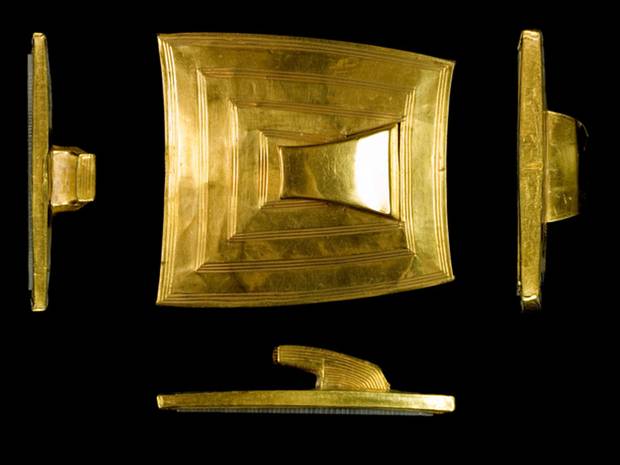
The new Stonehenge-era galleries will feature at least 500 Neolithic and Bronze-Age objects from Wiltshire, many of them from the once sacred landscape around the monument itself, including a beautifully decorated golden cloak fastener, a magnificent bronze dagger with a gold-covered hilt, a gold decoration from a dagger sheath, the golden tip of a ceremonial sceptre and gold necklaces, earrings and pendants – as well as other high- status precious objects made of jet, amber and stone.

“These and other spectacular treasures from the age of Stonehenge were unearthed by antiquarians and archaeologists in the late 18th and early 19th centuries, but until now it’s never been possible to give the public permanent access to them,” said the museum’s director, David Dawson.

“Stonehenge is an iconic monument – but this is the first time that such a wide range of high-status objects from the spectacular burials of the people who used it, has ever been put on permanent display”.

They will tell the story of the people who lived in and around the Stonehenge landscape when the monument was one of the great religious centres of Western Europe.

“Many of the items may well have been worn by Bronze-Age priests and chieftains as they worshipped inside Stonehenge,” said Mr Dawson. Axes and daggers on display in the new purpose-built galleries are identical to images of weapons carved into the giant stones of Stonehenge itself.

“We believe the new displays are a major step forward in helping to explain the extraordinary sophistication of the remarkable people who used the world’s most famous prehistoric monument,” said Mr Dawson.

Over the past few years, an unprecedented amount of new research has been carried out on Stonehenge and its ancient culture – and the new galleries reflect that new knowledge, especially an increased understanding of how the different prehistoric artefacts were made and what they were originally used for.

Around 30 gold objects, made by craftsman between the 2200 and 1800BC, will be on permanent display along with hundreds of other Stonehenge-era treasures.

The creation of the new high-security Stonehenge-period galleries puts Devizes’ Wiltshire Museum into a totally different league in terms of exhibits and their interpretation.

The new galleries have cost £750,000 to build – with funding coming from, among others,  the Heritage Lottery Fund, English Heritage and Wiltshire Council.

Devizes has its magnificent collection because it is the home of one of Britain’s oldest local archaeology organisations – the Wiltshire Archaeological and Natural History Society which has been collecting Wiltshire archaeological material since its foundation 160 years ago.

Over that period it has conducted more than 50 excavations which have provided the museum with more than 50,000 archaeological finds. The town itself is located between prehistoric Britain’s two top monuments – Stonehenge and the Avebury stone circles.

The launch of the new permanent display at the town is part of a wider display of Stonehenge-era archaeology. On 18 December, just one and half miles from Stonehenge itself, English Heritage will open its new Stonehenge visitor centre, complete with around 300 Stonehenge-period exhibits – while, next spring, Salisbury Museum will unveil newly redesigned archaeological galleries including material of a similar age.
including material of a similar age.

David Keys: Independent: http://www.independent.co.uk/news/science/archaeology/news/golden-age-ancient-possessions-of-stonehenge-worshippers-go-on-display-8877704.html

Stonehenge News Blog


Crown jewels of Stonehenge go on dazzling display: new prehistory galleries opening 14th October!

12 10 2013

In September 1808, William Cunnington, who was Britain’s first professional archaeologist, wrote to his patron to tell him that he had discovered what were to become known as the crown jewels of the “King of Stonehenge”.

On Monday, some of the treasures he found will go on permanent public display for the first time.

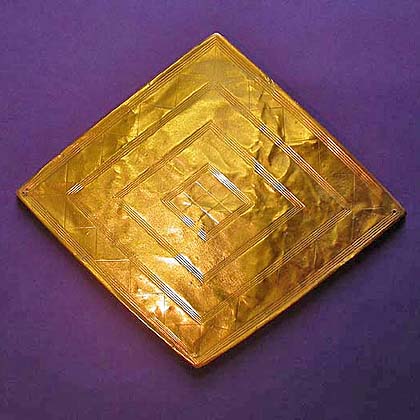
Gold from the time of Stonehenge:  new prehistory galleries at the Wiltshire Bush Barrow LozangeMuseum in Devizes Opening on 14 October, a completely new display over 4 galleries will tell the story of the Stonehenge and Avebury World Heritage Site.

On display for the first time are dozens of gold items dating to the time of Stonehenge. Many were found Bronze Age burial mounds within sight of Stonehenge, and were worn by people who worshipped inside the stone circle. These nationally important objects have never been on permanent display, and are now on show as part of this £750,000 gallery development at the Wiltshire Museum – home of Britain’s richest Bronze Age collection.

The centrepiece of the stunning new displays is Britain’s most important Bronze Age burial. The Bush Barrow chieftain lived almost 4,000 years ago and was buried in a barrow overlooking Stonehenge wearing the objects that showed his power and authority – including a gold lozenge, a ceremonial mace and a gold-decorated dagger. Axes and daggers like those found in the grave are carved onto the Sarsen stones at Stonehenge. The precision and design of the Bush Barrow lozenge proves that the people who built and used Stonehenge had a detailed knowledge of mathematics and geometry. The gold finds from Bush Barrow have never before been on permanent display in Wiltshire.

The image alongside show Sebastian Foxley of the Wiltshire Council Conservation Service and David Dawson, Director, moving the Stonehenge Urn to its new home.

Wiltshire Heritage Museum: http://www.wiltshireheritage.org.uk/news/index.php?Action=8&id=162&page=0

Follow Stonehenge News on Twitter: https://twitter.com/ST0NEHENGE

Merlin @ Stonehenge
The Stonehenge News Blog


Shape the future of Stonehenge. English Heritage Roashow

10 10 2013

There’s a chance for us to have a say on the way Stonehenge is looked after at a series of meetings around South Wiltshire Stonehengethis month.

English Heritage are taking their World Heritage Site Management Plan on a roadshow, so as many local people as possible can see it.

It’s thought there are many major changes in the document, but the plan has to be renewed this year.

Events are due to take place at:

Durrington Library – Wednesday October 23rd from 2.00 – 5.00pm
The Bowman Centre, Amesbury – Thursday October 24th from 12.00 – 3.00pm
Amesbury Library – Thursday October 24th from 4.00 – 7.00pm
Shrewton Recreation Hall – Tuesday October 29th from 10.00 – 1.00pm
Salisbury Library – Tuesday October 29th from 4.00 – 7.00pm

Story from Spire FM: http://www.spirefm.co.uk/news/local-news/1094590/shape-the-future-of-stonehenge/

Merlin @ Stonehenge
The Stonehenge News Blog