View original post 28 more words
Stonehenge – whose culture?
10 12 2013Comments : Leave a Comment »
Categories : Uncategorized
Countdown to a New Dawn. New Stonehenge Visitor Centre opening on 18th December 2013
6 12 2013
The new Stonehenge visitor centre will open on the 18th December, in time for the winter solstice. Over the festive period you can visit Stonehenge without booking and from 1st February 2014, entrance to Stonehenge will be managed through timed tickets and advance booking is strongly recommended.
For the first time ever at the site, they will be able to learn more about this complex monument in a stunning, museum-quality permanent exhibition curated by English Heritage experts.
“The exhibition will change the way people experience and think about Stonehenge forever”
The £27m project also includes grassing over the A334 alongside the ancient monument and closing another section of the busy road.
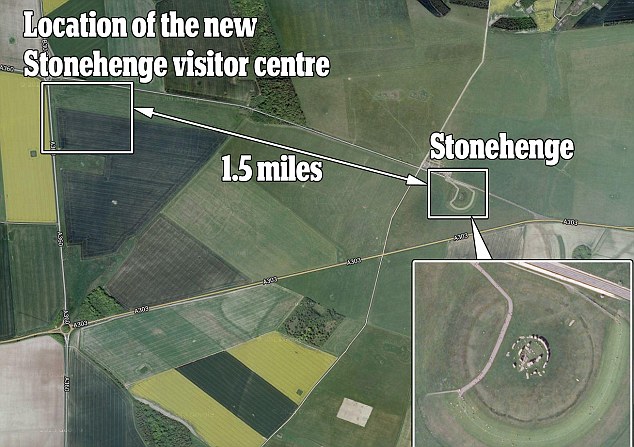
The visitor centre and museum will be located about a mile-and-a-half from the stones. Visitors will be shuttled to Stonehenge by a little train, pulled by a Land Rover.
The first part of the long-awaited environmental improvements to Stonehenge will be the unveiling of a new visitor experience. This includes the new visitor centre and exhibition facilities to enhance your visit to the Stones.
A 360-degree virtual, immersive experience will let visitors ‘stand in the stones’ before they enter a gallery presenting the facts and theories surrounding the monument through various displays and nearly 300 prehistoric artefacts.
The archaeological finds on display are on loan from the Salisbury and South Wiltshire Museum, the Wiltshire Museum in Devizes, and the Duckworth Collection, University of Cambridge. All were found inside the World Heritage Site and many are on public display for the first time.
Set in Stone? How our ancestors saw Stonehenge, will be the first special temporary exhibition. It will chart more than 800 years of ideas and debate – from 12th-century legends to radiocarbon dating reports in the 1950s – on who built Stonehenge and when, and features objects on loan from many national museums.

Down the road: An aerial view of the site shows how developers have managed to place the site nearby, without spoiling the immediate surroundings of Stonehenge
In Easter 2014, visitors can look forward to the opening of a group of reconstructed Neolithic houses. The Neolithic houses are the highlight of the outdoor gallery and will be built from January 2014 onwards by volunteers based on houses where the builders of Stonehenge may have lived, complete with furniture and fittings.
Advance booking will be available shortly to give you guaranteed entry on the day and at the time of your choice.
Please note: road access to Stonehenge has changed and permits are being issued to vehicles driving on the A344 to Stonehenge until the new visitor centre opens at Airman’s Corner. Please go to the Directions page for more details.
Stonehenge Links:
http://www.english-heritage.org.uk/daysout/properties/stonehenge/
http://www.visitwiltshire.co.uk/explore/stonehenge-and-avebury/stonehenge-visitor-centre
Stonehenge on Twitter: https://twitter.com/ST0NEHENGE
The Stonehenge News Blog
Comments : 1 Comment »
Tags: english heritage, Neolithic houses, New dawn, Salisbury and South Wiltshire Museum, Stonehenge Exhibition Centre, Stonehenge Visitor Centre, Visit Stonehenge, Winter Solstice
Categories : Uncategorized
Stonehenge: International team of broadcasters and experts to collaborate on new two-part documentary
5 12 2013They are recruiting for film extras: Stonehenge Empire film extras wanted. Neolithic Male/Females to play pre-historic man. http://tinyurl.com/qxmydly
Comments : 1 Comment »
Categories : Uncategorized
Visit Avebury and Stonehenge: Explore these World Heritage Sites with the new English Heritage Map
3 12 2013The Stonehenge and Avebury World Heritage Site is internationally important for its outstanding prehistoric monuments. This new map would make a great Christmas gift!
Stonehenge is the most architecturally sophisticated prehistoric stone circle in the world, while Avebury is the largest. Around them lie numerous other monuments and sites, which demonstrate over 2,000 years of continuous use.
Together they form a unique prehistoric landscape. There is no better way to learn about and experience the monuments than to go out and explore the World Heritage Site on foot. This map is ideal for walkers and others wishing to explore the fascinating landscape of the two areas of the World Heritage Site.
The map uses an Ordnance Survey 1:10,000 base and draws upon information from the English Heritage Archive and recent archaeological investigations. With Stonehenge on one side and Avebury on the other, the map shows and describes both visible and hidden remains, with information about where you can find out more. The map is divided into two parts on a durable double sided waterproof sheet.
A great Christmas Gift! You can purchase a copy now at the excellent Wiltshire Museum in Devizes: The Museum shop is located in the entrance hall and sells a variety of items. Non-Museum visitors very welcome to go in, browse – and hopefully purchase. http://www.wiltshiremuseum.org.uk/
You can also pre order a copy of the book on Amazon: http://www.amazon.co.uk/Map-Stonehenge-Avebury-Exploring-Heritage/dp/1848021267
Stonehenge and Avebury Stone Circle Links:
Stonehenge and Avebury were inscribed together on the UNESCO World Heritage Site List in 1986. The Stonehenge, Avebury and Associated Sites World Heritage Site was one of the UK’s very first World Heritage Sites http://www.stonehengeandaveburywhs.org/
The Stonehenge and Avebury World Heritage Site (English Heritage): http://www.english-heritage.org.uk/daysout/properties/stonehenge/world-heritage-site/
Stonehenge and Avebury Stone Circle guided tours: http://www.stonehengetours.com/day-tours.html
Wiltshire is proud to be the home of Stonehenge and Avebury which form part of a UNESCO World Heritage Site and our mystical landscape. http://www.visitwiltshire.co.uk/explore/stonehenge-and-avebury
Stonehenge News on Twitter: https://twitter.com/ST0NEHENGE
The Stonehenge News Blog
Comments : Leave a Comment »
Tags: Christmas gift, english heritage, Maps, Prehistoric Landscape, Stonehenge and Avebury, Wiltshire Heritage Museum, World Heritage Site
Categories : stonehenge landscape, stonehenge map, Stonehenge news, world heritage site
Phase 2 begins!!!!!
3 12 2013After a long break it was great to see some familiar faces arrive in Garston Woods. We are beginning the harvesting of materials needed to construct the buildings at the new Visitor Centre.
Our coup is very close to the one that we harvested last time and it was great to see the hazel growing back strongly. We are coppicing in the same way as the first phase of the project with all of the collected rods being tied into bundles. This makes the job of counting the number collected easier and also allows the rods to be transported more efficiently.
The main difference this time is that all of the experiments are complete and so we are now trying to harvest efficiently because we have a lot of material to collect.
The first week has flown by with all our volunteers working incredibly hard, fuelled of course, with tea…
View original post 2 more words
Comments : Leave a Comment »
Categories : Uncategorized
The Path to Stonehenge from Avebury: Walking Guide
24 11 2013Wiltshire is home to arguably the greatest concentration of prehistoric monuments in Europe, if not the world!
The 45 mile route begins at Windmill Hill before heading south to spend the first day walking amongst the stone circles of Avebury.

DOWNLOAD: The Path to Stonehenge walking guide (PDF 883kb)
The download includes full day by day walking instructions with accompanying history guide.
Discover how the famous monuments of the area are connected and what they can tell us about life, and death, in Neolithic Britain. The walk takes us across some of the most beautiful landscape in the south west, as we uncover the actions of our ancestors here between 4000 and 2000BC.
Day 1

A gentle first day with plenty of time for admiring the monuments encountered along the route.
- Windmill Hill to Avebury via Avebury Stone Circle and the Sanctuary
Distance: 6.5 miles
Day 2

We up the pace as we hunt for hard evidence of our elusive ancestors at Silbury Hill and the West Kennet Long Barrow. We skirt the Marlborough Downs and head up and over Milk Hill for some more modern mysteries, like crop circles.
- Avebury to Honeystreet, via Silbury Hill, Swallowhead Springs, West Kennet Long Barrow, Field of Sarsen Stones, Milk Hill and the Alton Barnes White Horse, and Adam’s Grave.
Distance: 15.5 miles
Day 3

We follow our ancestors down the River Avon to the greatest prehistoric monument of them all – Stonehenge.
- Honeystreet to Stonehenge via: Durrington Walls, West Amesbury Henge and the Avenue
Distance: 23.5 miles
The Map
OS Explorer Maps 157, 130 (1:25k) or OS Landranger 173, 184 (1:50k)
All distances are approximate so allow plenty of time
Please share your Stonehenge / Avebury pics on Twitter: https://twitter.com/ST0NEHENGE
Merlin @ Stonehenge
The Stonehenge News Blog
Comments : Leave a Comment »
Tags: avebury, Stonehenge, Wiltshhire Walks, Windmill Hill
Categories : Archaeology, The Great Stones Way, world heritage site
Unravelling the mysteries of Stonehenge
22 11 20135th December 2013. You can watch it live online at http://www.ucl.ac.uk/lhl/streamed
Comments : Leave a Comment »
Categories : Uncategorized
The case for making Stonehenge bigger
22 11 2013Now that millions of pounds worth of new infrastructure is in place at Stonehenge is it time to consider if the way it is used should be expanded? It’s going to remain a mass tick-box for the world’s tourists of course, plus it will host Solstice and Equinox gatherings, but is that it? Shouldn’t it now be used for a whole range of events and interactions?
We’ve previously suggested some new ways Stonehenge could be used. However, as Sarah May has pointed out there’s always a tension at heritage assets between the need for conservation and the perceptions and aspirations of the many groups that see them as theirs: “There is a process by which buildings, places and objects come to take this more distant role permanently. They are extracted from the lived landscape. No longer available for the kind of rough and tumble interactions they may have…
View original post 252 more words
Comments : Leave a Comment »
Categories : Uncategorized
Another piece in Stonehenge rock source puzzle.
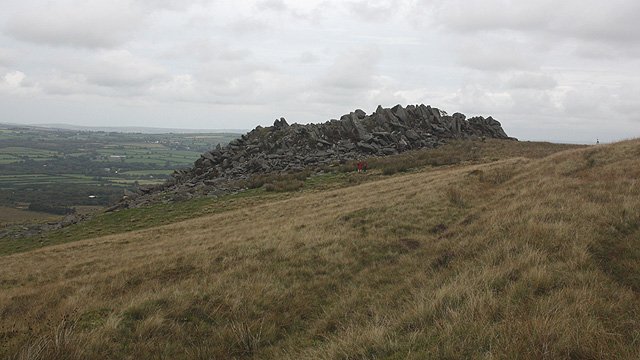
20 11 2013Research to be published this month may bring us a step closer to understanding how bluestones from Pembrokeshire ended up at Stonehenge. A team of geologists have identified a hill in the Preseli Hills as the site from which 11 stones known as spotted dolerites were transported to Stonehenge
Scientists from Aberystwyth University, University College London and National Museum of Wales have located the specific outcrop, Carn Goedog, in the Preseli Mountains.
The chances of Stonehenge’s spotted dolerites not coming from Carn Goedog are ‘infinitesimally small’
This is where the distinctive spotted dolerites originated.
The findings are to be published in the Journal of Archaeological Science.
Geologist Herbert Henry Thomas first proposed in 1923 that the rocks which form the giant inner ring were specifically quarried for Stonehenge by Neolithic man around 5,000 years ago, and were hauled to Wiltshire via land and sea.
However, other geologists theorise that they were carried east on an ice-age glacier 20,000 years ago.
“Trying to match the rocks at Stonehenge to a specific outcrop is considerably more complicated than looking for a needle in a haystack”
End Quote Dr Richard Bevins National Museum Wales
While the new discovery will not answer the debate, according to Dr Richard Bevins, of the National Museum Wales, it may eliminate some of the unknown variables.
“I’m not here to come down on one side of the argument or the other,” he explained.
“But our research is aimed at better informing the debate.”
Dr Bevins, keeper of natural sciences, added: “Trying to match the rocks at Stonehenge to a specific outcrop is considerably more complicated than looking for a needle in a haystack but the more we can trace them back to their original source, the closer archaeologists and geologists can hunt for clues to back-up their theories.
The research has brought together archaeologists and geologists“Archaeologists can now search an area of hundreds of metres rather than hundreds of kilometres for evidence of Neolithic quarrying.
“While geologists supporting the glacier theory know exactly where to hunt for the scarring they’d expect to find on the landscape if enormous chunks of the stone had indeed been swept east on a glacier.”
As the name suggests, the spotted dolerites have highly distinctive markings created by the elements contained within, cooling at different rates in the minutes after they were spewed out of an underwater volcano 450 million years ago.
In 2011, Dr Bevins’s team located the source of another of Stonehenge’s Pembrokeshire Bluestones – the rhyolites – 3km away from the spotted dolerites at Craig Rhos y Felin.
Although the relative proximity of the two discoveries offers evidence to both camps.
“Three kilometres is both closer and farther away than expected, depending on which theory you support.
“From a geologist’s point of view, 3km is nothing, and the rocks which ended up close to each other in Wiltshire could easily have been carried on the same glacier.
“However, for the archaeologists a distance of 3km between the potential quarries could be seen as evidence of planning and forethought, and a suggestion that the different types of stone were chosen for some specific purpose.”
‘Each piece of the puzzle’
Dr Bevins’s team are able to say so categorically that they have discovered the source of the spotted dolerites thanks to a range of laser mass spectrometry techniques which analyse both the chemical composition of the rock and the microbiology present when it was formed.
He says that the chance of them having originated anywhere other than Carn Goedog is “statistically-speaking, infinitesimally small”.
And while he is the first to admit that this discovery on its own gets us no closer to solving the riddle, he believes a definitive answer will come eventually.
“I’ve been studying the bluestones for over 30 years now, and I’m no closer to finding an answer which convinces me either way. But the one thing which I am increasingly sure of is that each piece of the puzzle we find brings us another step closer to the truth.
“We’ve located two of the sources, and there’s another five or possibly six to go.”
He added: “By the time we have identified those then I’m certain we’ll have an answer either way. Whether that happens in my career, or even my lifetime, who knows?”
By Neil Prior BBC News: http://www.bbc.co.uk/news/uk-wales-25004282
Link:http://www.walesonline.co.uk/news/wales-news/origin-stonehenges-blue-stones-pinpointed-6317230
Follow Stonehenge News on Twitter: https://twitter.com/ST0NEHENGE
Merlin @ Stonehenge
The Stonhenge News Blog

Comments : Leave a Comment »
Tags: Journal of Archaeological, Preseli Hills, Stonehenge news
Categories : bluestones, stonehenge new theories
Avebury to Stonehenge. Walking Through History with Tony Robinson.
17 11 2013Tony Robinson embarks on spectacular walks through some of Britain’s most historic landscapes in search of the richest stories from our past
Tony heads off for a 45-mile walk across Wiltshire to tell the story of life and death in the last centuries of the Stone Age. His route over chalk downlands and Salisbury plain takes him through the greatest concentration of prehistoric sites in Europe.
From Avebury to Stonehenge and from spirituality to engineering, this is a journey through our ancestors’ remarkable development in the latter days of the Neolithic Age.
Windmill Hill near Avebury is the start of his route; with earthworks dating to 4500BC, it’s one of the most ancient sites in Wiltshire. From here, Tony moves on through 2000 years of the ‘New Stone Age’, encountering increasingly complex burial sites and processional routes that have helped make this area both captivating and intriguing.
As he heads south Tony can’t escape the eccentric characters and weird phenomena that have accompanied Wiltshire’s ancient history. Mysterious crop circles and unexplained underground energy sources enliven his visit, but his mind is firmly fixed on the extraordinary array of monuments in his path.
That means listening to the fanciful notions of 18th-century antiquarians, which have a grain of truth at their heart, and grasping the cutting edge of scientific archaeology around Stonehenge, which is finally offering up some astounding answers.
CHANNEL 4: 8PM: Saturday 23rd November 2013
http://www.channel4.com/programmes/walking-through-history/episode-guide
Merlin @ Stonehenge
The Stonehenge News Blog
Comments : 1 Comment »
Tags: Antiquarians, Crop Circles, Neolithic, New Stone Age, Salisbury Plain, Tony Robinson, Visit Avebury, Visit Stonehenge, visit wiltshire
Categories : Avebury, Salisbury Plain, stonehenge landscape, Stonehenge news, Visit Stonehenge, wessex archaeology, world heritage site