The heart of the Stonehenge bluestone problem

28 01 2016

Mike Pitts's avatarMike Pitts Digging Deeper

Chronicle 1972.jpg

For some of us old archaeologists last night’s Timewatch film was as much about memories as Stonehenge, but it was great for both (and good to see Salisbury Museum’s new prehistory gallery).

I enjoyed Magnus Magnusson talking to Richard Atkinson and Geoffrey Kellaway about bluestones for a Chronicle film in 1972, like a polite Newsnight interview (love that rug!). Glyn Daniel sits beside Atkinson, struggling to conceal a quizzical smirk. (Photo above is from the film.)

Did the bluestones get to Stonehenge by human transport or glacial action?

The fundamental problem with resolving this issue is clear in the film clip, and it hasn’t changed a bit. Kellaway (a geologist) talks about archaeology and the motivations of people who built Stonehenge. Atkinson (an archaeologist) talks about geology.

Kellaway: What nobody has explained is why were rotten stones that have in fact come out of a peat bog, which are absolutely useless for…

View original post 135 more words


Stonehenge Archaeology Landscape Walk 2016

26 01 2016

Explore the wider Stonehenge World Heritage landscape with a National Trust guide discovering hidden histories and ancient mysteries.

An afternoon walk up on the downs learning about the ancient archaeology of the Stonehenge World Heritage Site. On this 4 mile walk with views of the stone circle, we’ll visit ancient earthworks that have revealed much about the people who once lived and celebrated here. Talking points include the Cursus, the many and varied barrows, and an ancient avenue connecting ceremonial centres.

stonehengelandscape

Booking details:
Call 0844 249 1895A 5% booking fee applies. Phone lines are open Mon to Fri 9am-5.30pm, plus Sat and Sun 9am-4pm. National Trust website

Suitability:
Accompanied children welcome, free. Dogs on leads are welcome.

Meeting point:
Meeting in a car park off Tombs Road (Larkhill) at OS grid reference SU 14382 43626 (nearest postcode SP4 8NB). A map of the meeting point on can be found on the event’s webpage.

What to bring and wear:
Dress for the weather – wrap up warm as it gets chilly up on the downs – and wear stout footwear. You may like to bring a drink and a snack.

Accessibility:
Access is by pedestrian and farm gates; the terrain is mostly grassland and trackways, often uneven underfoot. Cattle and sheep graze the gently sloping downs.

Other:
Please note, traffic on the A303 is often congested around holidays and weekends. Although your guide will tell you about it, this walk doesn’t visit the Stone Circle. You might like to visit it before the walk; NT members are admitted free.

Times

Event opening times and availability
Day Times Availability
5 March 2016 14:00 – 16:30
7 May 2016 14:00 – 16:30


Moon Phases for Stonehenge, Wiltshire 2016

23 01 2016

moon-phase

Lunation New Moon First Quarter Full Moon Third Quarter Duration
1150 2 Jan 05:30 29d 15h 01m
1151 10 Jan 01:30 16 Jan 23:26 24 Jan 01:45 1 Feb 03:27 29d 13h 08m
1152 8 Feb 14:38 15 Feb 07:46 22 Feb 18:19 1 Mar 23:10 29d 11h 16m
1153 9 Mar 01:54 15 Mar 17:02 23 Mar 12:00 31 Mar 16:16 29d 9h 29m
1154 7 Apr 12:23 14 Apr 04:59 22 Apr 06:23 30 Apr 04:28 29d 8h 06m
1155 6 May 20:29 13 May 18:02 21 May 22:14 29 May 13:11 29d 7h 30m
1156 5 Jun 03:59 12 Jun 09:09 20 Jun 12:02 27 Jun 19:18 29d 8h 01m
1157 4 Jul 12:00 12 Jul 01:51 19 Jul 23:56 26 Jul 23:59 29d 9h 44m
1158 2 Aug 21:44 10 Aug 19:20 18 Aug 10:26 25 Aug 04:40 29d 12h 19m
1159 1 Sep 10:03 9 Sep 12:48 16 Sep 20:05 23 Sep 10:56 29d 15h 08m
1160 1 Oct 01:11 9 Oct 05:32 16 Oct 05:23 22 Oct 20:13 29d 17h 27m
1161 30 Oct 17:38 7 Nov 19:51 14 Nov 13:52 21 Nov 08:33 29d 18h 40m
1162 29 Nov 12:18 7 Dec 09:02 14 Dec 00:05 21 Dec 01:55 29d 18h 35m
1163 29 Dec 06:53 29d 17h 14m
* All times are local time Stonehenge. Time is adjusted for DST when applicable. Dates are based on the Gregorian calendar.

Links:
http://www.timeanddate.com/moon/phases/uk/london
http://www.calendar-uk.co.uk/lunar-calendar/
http://www.history.com/news/ask-history/why-was-stonehenge-built

The Stonehenge News Blog
Follow us on Twitter and Facebook for daily Sunrise and Moon phase times


Designers appointed for A303 tunnel at Stonehenge

15 01 2016

A DESIGN consultant has been appointed to develop a preferred option to improve the A303 between Amesbury and Berwick Down in Wiltshire.

303-henge-road

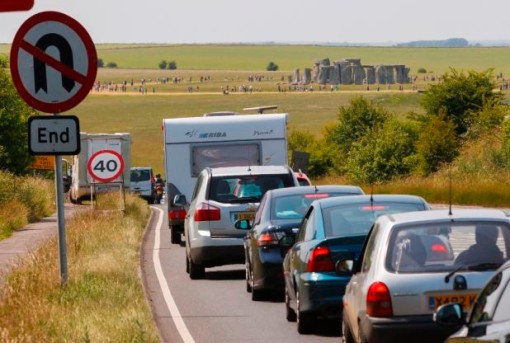
Traffic queues along the A303 past Stonehenge in Wiltshire as people head away to the west country this weekend. PRESS ASSOCIATION Photo. Picture date: Friday July 5, 2013. Photo credit should read: Chris Ison/PA Wire

As part of a £15B strategy to invest in roads over the next five years, the government has pledged to improve this section of the A303, including a tunnel near Stonehenge and a bypass of Winterbourne Stoke.

Highways England has announced that a package of work with an estimated value of £17.5M has been awarded to an Atkins/Arup joint venture. The companies will develop options to take to public consultation and ultimately will announce a preferred route.

Once the preferred route has been announced, the Planning Inspectorate will examine the development in public, before the transport secretary makes any final approval. Construction work is expected to begin by April 2020.

By WGD_Mumby

Read more: http://www.westerngazette.co.uk/Designers-appointed-A303-tunnel-Stonehenge/story-28528092-detail/story.html#ixzz3xIEN8jG0

The Stonehenge News Blog
Follow us on Twitter: https://twitter.com/ST0NEHENGE


William Maton’s 1797 report on Stonehenge

5 01 2016

The Heritage Trust's avatarThe Heritage Trust

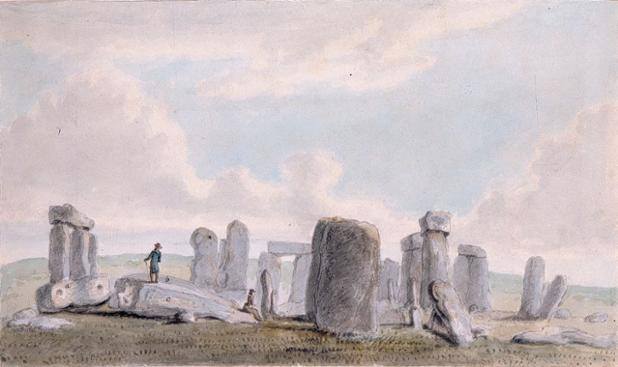
Watercolour illustrating (bottom left) a fallen Stonehenge trilithon and lintel

In 1797…the large south-west trilithon (two upright stones supporting a lintel) at Stonehenge collapsed. The sound of the collapse was so loud that it was said to have been heard by people working in the surrounding fields. The collapse was blamed on a sudden thaw after a cold spell, or on burrowing rabbits. This trilithon was not reset back into position until 1958. One visitor to the scene was William Maton [William George Maton M.D. 1774–1835] a Fellow of the Linnean Society (our neighbours here at Burlington House). He was travelling in the region, collecting items of natural history and antiquity, and visited the site. He went on to write a report which was read at a meeting of the Society of Antiquaries of London in June 1797, and by November he had obtained two drawings illustrating the fall…

View original post 22 more words


Archaeologists Feud Over Second-Hand Stonehenge Theory

15 12 2015

The ink wasn’t even dry (or the bits weren’t even embedded in the Cloud) yet on the 2 Comments about a new theory that Stonehenge once stood in Wales before being moved to Wiltshire when a cry rose up from other archaeologists who claim that it was glaciers, not humans, that pushed the monoliths to their current resting place in Wiltshire. Who’s right, who’s wrong and what’s the betting line on the fight?

Stonehenge-585x306

The feud started with a report last week in the journal Antiquity that archaeologists from University College London (UCL) identified two quarries in Wales that matched some of the bluestones at Stonehenge. The more controversial part of the report was their belief that the stones were made into a monument in Wales which stood for a few hundred years before being toppled and moved to England, making Stonehenge what some were sacrilegiously calling a “second-hand monument.”

Just a week later, Dr. Brian John, Dr. Dyfed Elis-Gruffydd and John Downes thumbed their noses at their peers in a paper published in the journal Archaeology in Wales where they stated that there are “no traces of human intervention in any of the features that have made the archaeologists so excited.”

Path and distance the bluestones would have had to travel from Wales to Wiltshire

The stone of contention in this argument is foliated rhyolite debris – fragments of thinly-layered volcanic rock that were found at both sites, prompting the UCL team to declare that they came to Glastonbury with the bluestones from Wales. Dr. John’s team says the Irish Sea Glacier brought the foliated rhyolite debris (a great name for a heavy metal band) 500,000 years ago.

While Dr. John’s team agrees that the Welsh outcrops of Carn Goedog and Craig Rhos-y-felin show signs of human campgrounds, there’s no evidence the Neolithic humans were quarrying monoliths and building a miniature Welsh Stonehenge. In fact, he suggests that the features the UCL team thought were evidence of quarry activity were actually made by the archaeologists themselves. As Dr. John eloquently puts it:

An expectation or conviction that ‘engineering features’ would be found has perhaps led to the unconscious fashioning of archaeological artifices.

Archaeologists at the site in Wales - are they finding evidence or creating their own?

Ouch! But Dr. John doesn’t stop there.

On the contrary, there is substantial evidence in favour of glacial transport and zero evidence in support of the human transport theory … We think the archaeologists have been so keen on telling a good story here that they have ignored or misinterpreted the evidence in front of them. That’s very careless. They now need to undertake a complete reassessment of the material they have collected.

Dr. John has taken the lead. Back to you, team from University College London.

Article by Paul Seaburn | Mysterious Universe

The Stonehenge News Blog


Stonehenge may have been first erected in Wales, ‘amazing’ finds suggest

7 12 2015

StonehengeNews's avatarStonehenge Stone Circle News and Information

‘Evidence that bluestones were quarried in Wales 500 years before they were put up in Wiltshire prompts theory that Stonehenge is ‘second-hand monument’
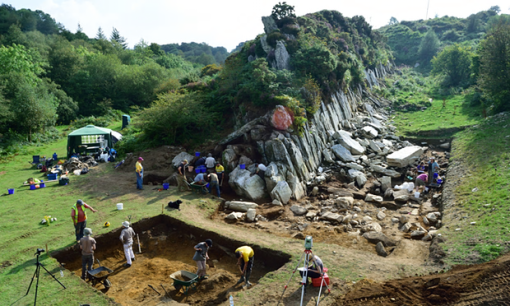
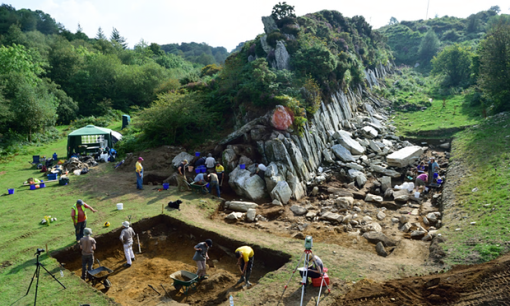
Archaeologists at one of the Stonehenge quarry sites in Wales. Photograph: UCL Archaeologists at one of the Stonehenge quarry sites in Wales. Photograph: UCL

Evidence of quarrying for Stonehenge’s bluestones is among the dramatic discoveries leading archaeologists to theorise that England’s greatest prehistoric monument may have first been erected in Wales.

It has long been known that the bluestones that form Stonehenge’s inner horseshoe came from the Preseli hills in Pembrokeshire, around 140 miles from Salisbury Plain.

Now archaeologists have discovered a series of recesses in the rocky outcrops of Carn Goedog and Craig Rhos-y-felin, to the north of those hills, that match Stonehenge’s bluestones in size and shape. They have also found similar stones that the prehistoric builders extracted but left behind, and “a loading bay” from where the huge stones could be dragged away.

Carbonised hazelnut…

View original post 567 more words


Have archaeologists found Stonehenge quarries?

7 12 2015

Mike Pitts's avatarMike Pitts Digging Deeper

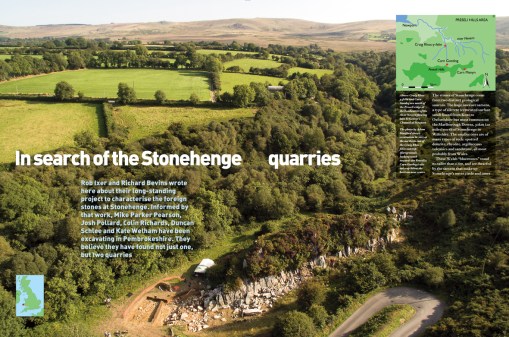
Bluestone open spread.jpgThey certainly think so – not all, but two important ones. I went to visit their excavations in Pembrokeshire this summer, and was sufficiently impressed to ask them to write about their discoveries for British Archaeology. You can read their report with many photos – including this fabulous opening shot by Adam Stanford – in the new magazine later this week. Digital on Wednesday December 9 (as an App and in web form) and print in the shops on Friday. Copies for Council for British Archaeology members and magazine subscribers are on their way.

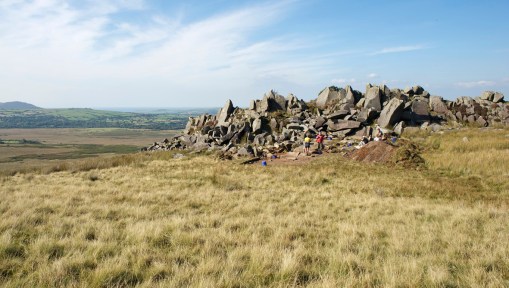
Carn Goedog M Pitts.jpgExcavations at Carn Goedog (photo M Pitts)

In the meantime, here is the UCL press release.

Stonehenge ‘bluestone’ quarries confirmed 140 miles away in Wales

Excavation of two quarries in Wales by a UCL-led team of archaeologists and geologists has confirmed they are sources of Stonehenge’s ‘bluestones’– and shed light on how they were quarried…

View original post 912 more words


Stonehenge may have been first erected in Wales, ‘amazing’ finds suggest

7 12 2015

‘Evidence that bluestones were quarried in Wales 500 years before they were put up in Wiltshire prompts theory that Stonehenge is ‘second-hand monument’

Archaeologists at one of the Stonehenge quarry sites in Wales. Photograph: UCL

Archaeologists at one of the Stonehenge quarry sites in Wales. Photograph: UCL

Evidence of quarrying for Stonehenge’s bluestones is among the dramatic discoveries leading archaeologists to theorise that England’s greatest prehistoric monument may have first been erected in Wales.

It has long been known that the bluestones that form Stonehenge’s inner horseshoe came from the Preseli hills in Pembrokeshire, around 140 miles from Salisbury Plain.

Now archaeologists have discovered a series of recesses in the rocky outcrops of Carn Goedog and Craig Rhos-y-felin, to the north of those hills, that match Stonehenge’s bluestones in size and shape. They have also found similar stones that the prehistoric builders extracted but left behind, and “a loading bay” from where the huge stones could be dragged away.

Carbonised hazelnut shells and charcoal from the quarry workers’ campfires have been radiocarbon-dated to reveal when the stones would have been extracted.

Prof Mike Parker Pearson, director of the project and professor of British later prehistory at University College London (UCL), said the finds were “amazing”.

“We have dates of around 3400 BC for Craig Rhos-y-felin and 3200 BC for Carn Goedog, which is intriguing because the bluestones didn’t get put up at Stonehenge until around 2900 BC,” he said. “It could have taken those Neolithic stone-draggers nearly 500 years to get them to Stonehenge, but that’s pretty improbable in my view. It’s more likely that the stones were first used in a local monument, somewhere near the quarries, that was then dismantled and dragged off to Wiltshire.”

The dating evidence suggests that Stonehenge could be older than previously thought, Parker Pearson said. “But we think it’s more likely that they were building their own monument [in Wales], that somewhere near the quarries there is the first Stonehenge and that what we’re seeing at Stonehenge is a second-hand monument.”

There is also the possibility that the stones were taken to Salisbury Plain around 3200 BC and that the giant sarsens – silicified sandstone found within 20 miles of the site – were added much later. “Normally we don’t get to make that many fantastic discoveries in our lives,” Parker Pearson said. “But this is one.”

Parker Pearson heads a project involving specialists from UCL and the universities of Manchester, Bournemouth and Southampton, among others. Their findings are published on Monday in the journal Antiquity alongside a new book by the Council for British Archaeology titled Stonehenge: Making Sense of a Prehistoric Mystery.

Prof Kate Welham, of Bournemouth University, said the ruins of a dismantled monument were likely to lie between the two megalith quarries. “We’ve been conducting geophysical surveys, trial excavations and aerial photographic analysis throughout the area and we think we have the most likely spot. The results are very promising. We may find something big in 2016,” she said.

The long-distance transport of the bluestones from Wales to Stonehenge is one of the most remarkable achievements of Neolithic societies. The archaeologists estimate that each of the 80 monoliths weighed less than two tons and that people or oxen could have dragged them on wooden sledges sliding on rail-like timbers.

Parker Pearson said people in Madagascar and other societies were known to have moved such standing stones long distances and that doing so created a spectacle that brought together communities from afar.

“One of the latest theories is that Stonehenge is a monument of unification, bringing together people from across the many parts of Britain,” he said.

He recalled the moment he looked up the near-vertical rock-face and realised that this was one of the quarries. “Three metres above us were the bases of these monoliths that were actually sitting there ready simply to be lowered out of their recesses,” he said.
“It’s the Ikea of Neolithic monument building. The nice thing about these particular outcrops is that the rock has formed 480 million years ago as pillars. So prehistoric people don’t have to go in there and bash away … All they have to do is get wedges into the cracks. You wet the wedge, it swells and the stone pops off the rock.”


 Article source:  (Guardian News)
The Stonehenge News Blog


A vote in a Wiltshire field about drainpipes

3 12 2015

Mike Pitts's avatarMike Pitts Digging Deeper

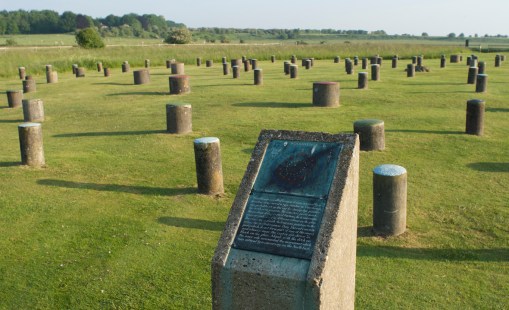
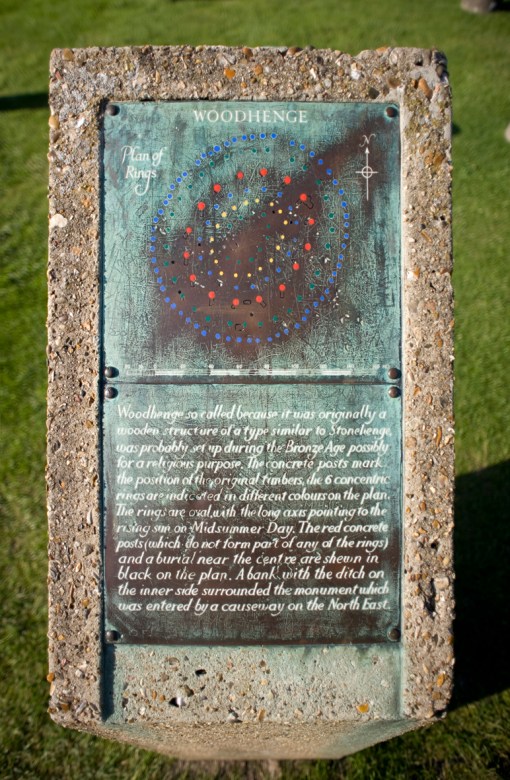
Woodhenge view 1.jpg

The last time I visited Woodhenge, the site of a great ritual timber structure near to, and of the same age as, Stonehenge, there was a small community notice on the back of a road sign. ‘BEWARE!’ it read, ‘THIEVES OPERATE IN THIS AREA!’

They do indeed, and they’re not just after our ‘mobile phones, wallets and bags’. Some time in November a pair of bronze plaques that told the visitor about the site were prized off their concrete pillar and taken away.

Woodhenge plaques.jpg

It may not sound much if you don’t know the site, but it would be dreadfully sad if the plaques were not seen again. We don’t know of course, but it’s unlikely that whoever took them understands (or understood) their significance. They have no market value – a tiny amount of metal, and they are too recognisable to be sellable without being caught. If you’ve got them…

View original post 1,223 more words