Stonehenge discovery could rewrite British pre-history

20 12 2014

The most important discovery at Stonehenge for a generation could be destroyed by David Cameron’s plan to build a tunnel at the World Heritage Site

David Cameron announced plans to route the A303 into a tunnel to take traffic away from the world heritage site of Stonehenge Photo: AP

David Cameron announced plans to route the A303 into a tunnel to take traffic away from the world heritage site of Stonehenge Photo: AP

Archaeologists have discovered the earliest settlement at Stonehenge – but the Mesolithic camp could be destroyed if government plans for a new tunnel go ahead.

Charcoal dug up from the ‘Blick Mead’ encampment, a mile and a half from Stonehenge, dates from around 4,000BC. It is thought the site was originally occupied by hunter gatherers returning to Britain after the Ice Age, when the country was still connected to the continent.

Experts say the discovery could re-write history in prehistoric Britain.

There is also evidence of feasting – burnt flints and remains of giant bulls – aurochs – as well as flint tools.

The dig has also unearthed evidence of possible structures, but the site could be destroyed if plans for a 1.8 mile tunnel go ahead.

Earlier this month David Cameron, the prime minister, visited Stonehenge, in Amesbury, Wiltshire and announced plans to duel the A303 and build a new tunnel to take traffic away from the world heritage site.

But archaeologists want more time to assess the importance of the site and record new findings.

“The PM is interested in re-election in 140 days – we are interested in discovering how our ancestors lived six thousand years ago,” said archaeologist David Jacques, who made the discovery on a dig for the University of Buckingham.

“British pre-History may have to be rewritten. This is the latest dated Mesolithic encampment ever found in the UK.


A shard of bone found at the site

“Blick Mead site connects the early hunter gatherer groups returning to Britain after the Ice Age to the Stonehenge area all the way through to the Neolithic in the late 5th Millennium BC.

“Britain is beginning across this time period. Blick Mead connects a time when the country was still joined to the mainland to it becoming the British Isles for the first time.”

The experts believe that the site could show the Stonehenge was built as a monument to the ancestors of Neolithic Britons.

“Our only chance to find out about the earliest chapter of Britain’s history could be wrecked if the tunnel goes ahead,” added Mr Jacques.

A previous dig at the site, led by the University of Buckingham, revealed Amesbury is the longest continually-occupied place in the country. They discovered that frogs’ legs from 7,000 years ago were a delicacy here long before the French took a liking to them.

Archaeologists believe that early Britons were drawn to the site because of a natural spring. A The combination of a water of a constant temperature and a rare algae also produced the only colour-changing stones, which change from brown to pink, found at any archaeological site in the country.

Professor Tim Darvill, of Bournemouth University has described this as “This is the most important discovery at Stonehenge in over 60 years.”

Experts are calling on the government to rethink plans to build on the critically important landscape.

Andy Rhind-Tutt, of Amesbury and chairman of the Amesbury Museum and Heritage Trust, added: “Traffic congestion to one of the country’s most visited attractions will not be solved by a tunnel with one exit lane – the current tailback can extend five miles and can take two hours to get through.

“Any tunnel would need to be motorway standard, and even with four lanes there would still be tailbacks.

“A much more practical solution would be to reroute the A303 supporting South Wiltshire as well as the West Country.”
Article by , Telegraph Science Editor: http://www.telegraph.co.uk/news/earth/environment/archaeology/11303127/Stonehenge-discovery-could-rewrite-British-pre-history.html

Merlin @ Stonehenge
The Stonehenge News Blog


Stonehenge tunnel plans could be revived

25 04 2014

Tunnel beneath Stonehenge could be reconsidered as part of plans to ease traffic congestion

Plans for a 1.3 mile road tunnel beneath the site and bypass have been proposed before but were dropped in 2007 due to the estimated £470 million cost

Plans for a 1.3 mile road tunnel beneath the site and bypass have been proposed before but were dropped in 2007 due to the estimated £470 million cost Photo: ALAMY

Plans to build a road tunnel under Stonehenge could be revived as the Government looks to ease bottlenecks on some of Britain’s most congested stretches of road.

A study to be completed this summer will consider whether a dual carriageway or underground tunnel could solve the traffic problem caused by drivers slowing down to admire one of Britain’s most famous world heritage sites.

Plans for a 1.3 mile road tunnel beneath the site and bypass have been proposed before but were dropped in 2007 due to the estimated £470 million cost.

Yesterday, the Government outlined detailed plans for a “feasibility study” which will examine all possibilities for easing congestion along the route.

It pledged to deliver its final proposals in this year’s Autumn Statement along with the findings of five similar road-widening proposals on the A27 corridor, the A47 between Peterborough and Great Yarmouth, Trans-Pennine routes and two areas of the A1 around Newcastle.

Countryside campaigners attacked the plans which they claimed would scar beauty spots by laying extra tarmac along stretches of land which have remained untouched since Roman times.

Plans to widen the A27 include parts of the South Downs, Britain’s newest national park, while parts of the Norfolk Broads national park and the Northumberland coast could be affected under plans for the A47 and A1, they said.

The A303/A30/A358 corridor, which forms the main route from London to the south west, was highlighted by ministers last summer as one of six areas where solutions were urgently needed for the country’s most “notorious and long standing” congestion hot spots.

The A303 in particular is frequently gridlocked during summer weekends at a number of points where the dual carriageway narrows to a single lane, bringing holiday traffic to a standstill.

The feasibility study will “look to initially build on work done to date on potential proposals” rather than drawing up new solutions, beginning several plans for new stretches of dual carriageway including a 12km passage from Amesbury to Berwick Down (Stonehenge).

But the study will also “draw upon” work from a range of other projects including historic plans to tunnel beneath the prehistoric monument, with sources insisting all options are on the table.

The Campaign to Protect Rural England said several of the spots under examination, including Stonehenge, are only congested at certain times of year and do not merit major development.

Ralph Smyth, senior transport campaigner for the CPRE, said: “The traffic [at Stonehenge] hasn’t increased in the last 10 years and it does not justify the huge cost of a tunnel.”

A long tunnel would at least be preferable to a dual carriageway at the surface, which could cause the historic site to lose its world heritage status, he added.

Last month John Glen, Conservative MP for Salisbury, said a tunnel was the “only realistic” solution to protect Stonehenge while solving traffic problems which he said had turned the stretch into the “devil’s highway”.

A spokesman for the Department for Transport said the six studies would “develop solutions to some of the most notorious and  long-standing hot spots on the national road network.”

An English Heritage spokesman said: “We want to make certain the necessary improvements to the A303 are delivered in a way that will ensure the protection of the Outstanding Universal Value of the Stonehenge World Heritage Site.”

By , Transport Correspondent: Full article: http://www.telegraph.co.uk/news/uknews/road-and-rail-transport/10783496/Stonehenge-tunnel-plans-could-be-revived.html

The Stonehenge News Blog


Visit Avebury and Stonehenge: Explore these World Heritage Sites with the new English Heritage Map

3 12 2013

The Stonehenge and Avebury World Heritage Site is internationally important for its outstanding prehistoric monuments. This new map would make a great Christmas gift!

Stonehenge and Avebury MapStonehenge is the most architecturally sophisticated prehistoric stone circle in the world, while Avebury is the largest.  Around them lie numerous other monuments and sites, which demonstrate over 2,000 years of continuous use.

Together they form a unique prehistoric landscape. There is no better way to learn about and experience the monuments than to go out and explore the World Heritage Site on foot.  This map is ideal for walkers and others wishing to explore the fascinating landscape of the two areas of the World Heritage Site.

The map uses an Ordnance Survey 1:10,000 base and draws upon information from the English Heritage Archive and recent archaeological investigations.  With Stonehenge on one side and Avebury on the other, the map shows and describes both visible and hidden remains, with information about where you can find out more. The map is divided into two parts on a durable double sided waterproof sheet.

A great Christmas Gift! You can purchase a copy now at the excellent Wiltshire Museum in Devizes: The Museum shop is located in the entrance hall and sells a variety of items.  Non-Museum visitors very welcome to go in, browse – and hopefully purchase. http://www.wiltshiremuseum.org.uk/

You can also pre order a copy of the book on Amazon: http://www.amazon.co.uk/Map-Stonehenge-Avebury-Exploring-Heritage/dp/1848021267

Stonehenge and Avebury Stone Circle Links:

Stonehenge and Avebury were inscribed together on the UNESCO World Heritage Site List in 1986. The Stonehenge, Avebury and Associated Sites World Heritage Site was one of the UK’s very first World Heritage Sites http://www.stonehengeandaveburywhs.org/

The Stonehenge and Avebury World Heritage Site (English Heritage): http://www.english-heritage.org.uk/daysout/properties/stonehenge/world-heritage-site/

Stonehenge and Avebury Stone Circle guided tours: http://www.stonehengetours.com/day-tours.html

Wiltshire is proud to be the home of Stonehenge and Avebury which form part of a UNESCO World Heritage Site and our mystical landscape. http://www.visitwiltshire.co.uk/explore/stonehenge-and-avebury

Stonehenge News on Twitter: https://twitter.com/ST0NEHENGE

The Stonehenge News Blog


The Best Stonehenge Tour Operators

3 11 2013

2014 will be a vintage year to visit Stonehenge and Wiltshire

The removal of a nearby road and the construction of a new, off-site, visitor center will return England’s prehistoric stone circle, Stonehenge, to a more tranquil, natural setting. Until now, facilities to welcome visitors to the World Heritage Site have been limited and outdated. But the project led by English Heritage to transform Stonehenge not only provides world-class facilities, but also returns a sense of context and dignity to this ancient marvel of human endeavour.

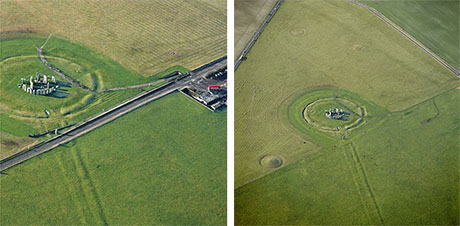
Before and after aerial views of Stonehenge

Before and after aerial views of Stonehenge

After removal of the road and high ugly fencing right next to the Stone Circle the old parking area and visitor buildings will be cleared and is currently being grassed. Eventually, the road, car park and visitor buildings will be gone – leaving Stonehenge surrounded by grass and reunited with its ancient approach, the Avenue. Visitors will be able to enjoy the special atmosphere of the Stone Circle with fewer distractions from modern–day sights and sounds.  English Heritage will open the new visitor centre in the winter of 2013.The past year has seen epic improvements. Over £40 million pound has been invested to offer the best experience since Neolithic times.

Stonehenge Tours

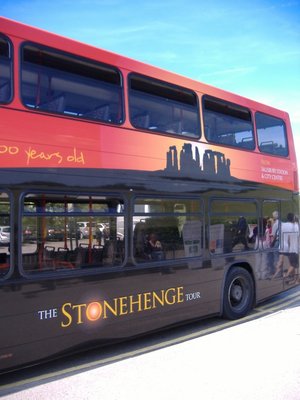
Stonehenge Tour BusBy far the easiest and most convenient way to experience Stonehenge is by joining a guided tour from London, Salisbury or Bath.

Stonehenge is in a remote area of the West Country and can be difficult and costly via public transport. There are many operators (some better than others) offering half and full day tours that include Stonehenge and other popular attractions in the West county.  Typical itineraries from London include;

  • Stonehenge, Bath, and Lacock Village in the Cotswolds
    Stonehenge, Salisbury Cathedral and Avebury Stone Circle
    Stonehenge, Oxford and Windsor Castle


Stonehenge Special Access Tours

Most tours enter Stonehenge during public opening hours of Stonehenge. 2014 will see the introduction of a ‘monorail’ travelling someinner-circle-tour 2km from to the monument which will be a greatly improved experience to previous years. If you are able to plan ahead we strongly recommend booking a ‘private access inner circle tour’ which offer guided trips outside of public opening hours but there are very limited sessions where you can actually walk among the stones and demand is great. These sessions are very early morning  or evening on a tour its either a very early start from London or a late return in the evening.  These viewings are called ‘special access’ or ‘inner circle’ tours.  Some operators even go to the length of gaining access during the actual sunrise or sunset and we highly recommend this if you are able to book in advance.
Stonehenge’s orientation on the rising and setting sun has always been one of its remarkable features. Whether this was simply because the builders came from a sun-worshipping culture, or because – as some scholars believe – the circle and its banks were part of a huge astronomical calendar, remains a mystery.

By far the best way to experience Stonehenge is on a sunrise / sunset guided tour.

Stonehenge Guided Tours from London

The highly recommended ‘Stonehenge Guided Tour’ Company, known as the ‘Stonehenge Experts’ have been offering daily scheduled coach tours and exclusive ‘special access’ tours since the early 1990’s and have the best reputation by far – visit their website here:  Stonehenge Guided Tours

Premium tours, Golden Tours, Welcome2Britain and Evan Evans also offer coach or mini bus tours from London on limited dates and can be booked through the established discount sightseeing tour website BestValueTours

Local Stonehenge tour Operators.

There are also local operators offering tours from Salisbury, Bath and the port of Southampton.  Staying close to Stonehenge gives the opportunity to absorb local culture and its rich history and get a taste of the real England that many tourists miss whilst staying in the tourist capital of London.

Stonehenge Guided Tours from Bath

Mad Max Tours and Lion Tours  are on hand to offer day trips from Bath to Stonehenge, Avebury Stone Circle, Lacock (as seen in the Harry Potter films) and the Wiltshire Cotswolds.  Wessex Guided Tours offer private guided tours from Bath for families and small groups wishing to experience Stonehenge and explore ancient Wiltshire

Stonehenge Guided Tours from Salisbury

For expert knowledge on the history of Wiltshire, local guides can help you discover the myths, the history and the legends behind this county:

The Stonehenge Tour Bus is an ideal way to learn about the history of Stonehenge if you are travelling by public transport. The hop-on hop-off service stops at Stonehenge and Old Sarum and gives a recorded commentary on the history of Salisbury.

The Stonehenge Travel Company based in Salisbury offer scheduled small group guided tours including the popular Stonehenge sunset special access tours and can often arrange additional dates for private groups. Their exclusive tours; half and full day options are also available. There popular tours also visit the other Neolithic sites like Woodhenge, Durrington Walls, Avebury Stone Circle, Silbury Hill, West Kennet Long Barrow, Chalk Hill Figures and also get you off the tourist trail seeing some of the delightful English countryside in the area.

There’s also Salisbury, Stonehenge and Sarum tours with their minibus and tour in several languages.

Visit Wiltshire

The official ‘Visit Wiltshire’ tourism association also have a list of approved tour local operators and transport providers: Click here

Wiltshire is a perfect all-year destination for groups with plenty to see, do and experience. Extend your day visit to an overnight stay and see more of what Wiltshire has to offer. With a history spanning over 6,000 years, we have Stonehenge and Avebury World Heritage Site, Britain’s tallest Cathedral spire in Salisbury and the Magna Cartta, magnificent stately homes and gardens and some great shopping experiences. Download the Visit Wiltshire and Visit Salisbury Apps and have up to date information at your fingertips!

Whether you are travelling from overseas or live in the UK, make 2014 the year to visit Stonehenge and explore historic Wiltshire

The Stonehenge News Blog


Crown jewels of Stonehenge go on dazzling display: new prehistory galleries opening 14th October!

12 10 2013

In September 1808, William Cunnington, who was Britain’s first professional archaeologist, wrote to his patron to tell him that he had discovered what were to become known as the crown jewels of the “King of Stonehenge”.

On Monday, some of the treasures he found will go on permanent public display for the first time.

Gold from the time of Stonehenge:  new prehistory galleries at the Wiltshire Bush Barrow LozangeMuseum in Devizes Opening on 14 October, a completely new display over 4 galleries will tell the story of the Stonehenge and Avebury World Heritage Site.

On display for the first time are dozens of gold items dating to the time of Stonehenge. Many were found Bronze Age burial mounds within sight of Stonehenge, and were worn by people who worshipped inside the stone circle. These nationally important objects have never been on permanent display, and are now on show as part of this £750,000 gallery development at the Wiltshire Museum – home of Britain’s richest Bronze Age collection.

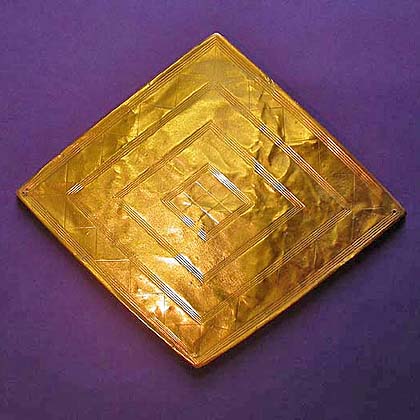
The centrepiece of the stunning new displays is Britain’s most important Bronze Age burial. The Bush Barrow chieftain lived almost 4,000 years ago and was buried in a barrow overlooking Stonehenge wearing the objects that showed his power and authority – including a gold lozenge, a ceremonial mace and a gold-decorated dagger. Axes and daggers like those found in the grave are carved onto the Sarsen stones at Stonehenge. The precision and design of the Bush Barrow lozenge proves that the people who built and used Stonehenge had a detailed knowledge of mathematics and geometry. The gold finds from Bush Barrow have never before been on permanent display in Wiltshire.

The image alongside show Sebastian Foxley of the Wiltshire Council Conservation Service and David Dawson, Director, moving the Stonehenge Urn to its new home.

Wiltshire Heritage Museum: http://www.wiltshireheritage.org.uk/news/index.php?Action=8&id=162&page=0

Follow Stonehenge News on Twitter: https://twitter.com/ST0NEHENGE

Merlin @ Stonehenge
The Stonehenge News Blog


Chairman needed for Stonehenge panel

6 10 2013

A NEW partnership panel set up to coordinate cooperation between the Stonehenge and Avebury is looking for a chairman.

Following a recent review it is hoped managers of the two parts of the World Heritage Site (WHS) will be working more closely together and it has been decided there will be a partnership panel led by an independent chairman.

This panel will also act as a representative for the whole WHS. It will be made up of the three key partners – English Heritage the National Trust and Wiltshire Council – together with the chairmen of the local Stonehenge and Avebury steering committees and a representative from the research community

“The new panel and chair will play a key role in ensuring this continues and that new opportunities to protect and present the World Heritage Site are identified.”

For more information go to jobs.wiltshire.gov.uk.

By Morwenna Blake: Salisbury Journal
http://www.salisburyjournal.co.uk/news/10720098.Chairman_needed_for_Stonehenge_panel/


Merlin @ Stonehenge
The Stonehenge News Blog


Multi-million pound Stonehenge visitor centre to open in time for winter solstice

1 10 2013

Visitors to Stonehenge will get the chance to  explore an impressive new visitor centre close to the ancient site later this  year.

English Heritage today announced that the  first phase of its long-awaited £27million improvements  to the area will be launched to the public on 18 December, in time for  winter solstice on 21 December.

Exploring the past: The impressive new visitor centre will open on 18 December

Exploring the past: The impressive new visitor centre will open on 18 December

The new visitor centre will house a permanent  exhibition that will offer visitors the chance to learn more about the famous  monument.

They will be able to ‘stand in the stones’  thanks to a 360-degree virtual experience before they enter a gallery where they  will be able to view nearly 300 prehistoric artefacts and displays that reveal  facts and theories about the ancient monument.

Many of the archaeological finds – which are  on loan from various museums including the Salisbury and South Wiltshire Museum  – will be on public display for the first time.

Ancient artefacts: A permanent exhibition will feature nearly 300 prehistoric objects

Ancient artefacts: A permanent exhibition will feature nearly 300 prehistoric objects

The first temporary exhibition will chart  over 800 years of theories about who built Stonehenge – from 12th-century  legends to radiocarbon dating reports in the 1950s.

The environmentally-friendly building,  which  has been designed by Denton Corker Marshall,  features a café, shop, dedicated  education space and visitor’s car park, and will offer tourists free audio  guides.

The centre is 1.5 miles from Stonehenge and  visitors will be transported to the monument on a special shuttle  service

Ambitious: The £27million project features three stages, the first of which is the opening of the visitor centre

Ambitious: The £27million project features three stages, the first of which is the opening of the visitor centre

English Heritage’s chief executive Simon  Thurley said: “This world famous monument, perpetually described as a mystery,  finally has a place in which to tell its story.

“The exhibition will change the way people  experience and think about Stonehenge forever – beyond the clichés and towards a  meaningful inquiry into an extraordinary human achievement in the distant  past.”


Easy access: The centre will be 1.5 miles from Stonehenge and visitors will be transported between the sites on a shuttle service

Easy access: The centre will be 1.5 miles from Stonehenge and visitors will be transported between the sites on a shuttle service


Volunteers will begin work on the  construction of a group of Neolithic houses in January. The buildings, which are  expected to be finished by Easter, will be based on houses where the builders of  Stonehenge may have lived, complete with furniture and fittings.

The final phase of the project – the  restoration of the landscape around Stonehenge – will be completed by next  summer.

The Avenue, Stonehenge’s ancient  processional approach, has been reconnected to the stone circle after  being  severed by the A344 road for centuries.

The £27million project has been financed  almost entirely by Heritage Lottery Fund money (£10million), English Heritage  commercial income and donations.

From 18 December, entrance to the site will  be managed through timed tickets and online booking opens on 2  December at www.english-heritage.org.uk/stonehenge.

Stepping back into the past: Construction of a group of Neolithic houses will begin in January next year

Stepping back into the past: Construction of a group of Neolithic houses will begin in January next year

Stonehenge, which was constructed between  3,000 BC and 1,600 BC, attracts around 900,000 visitors a year, and is  particularly popular during the summer and winter solstice.

It is still shrouded in mystery as nobody is  sure how or why the giant boulders were transported hundreds of miles to be  constructed at the site.

However, scientists now believe that  Neolithic engineers may have used ball bearings in the construction of  Stonehenge.

The same technique that allows vehicles and  machinery to run smoothly today could have been used to transport the monument’s  massive standing stones from Wales to Wiltshire more than 4,000 years ago,  according to the theory.

Full story: http://www.dailymail.co.uk/travel/article-2438896/Stonehenge-visitor-centre-open-time-winter-solstice.html
By  Travelmail Reporter

Merlin @ Stonehenge
The Stonehenge News Blog


Stonehenge was built on solstice axis, dig confirms

9 09 2013

English Heritage excavations show site has nothing to do with sun worshipping, and find evidence circle was once complete

Archeologists found ridges, formed by Ice Age meltwater, that align Stonehenge with the solstice axis. Photograph: Francis Dean/Rex

Archeologists found ridges, formed by Ice Age meltwater, that align Stonehenge with the solstice axis. Photograph: Francis Dean/Rex

English Heritage says it has discovered a “missing piece in the jigsaw” in our understanding of Stonehenge, England’s greatest prehistoric site. Excavations  along the ancient processional route to the monument have confirmed the theory that it was built along an ice age landform that happened to be on the solstice axis.

The Avenue was an earthwork route that extended 1.5 miles from the north-eastern entrance to Wiltshire’s standing stones to the River Avon at West Amesbury. Following the closure of the A344 road, which cut across the route, archaeologists have been able to excavate there for the first time.

Just below the tarmac, they have found naturally occurring fissures that once lay between ridges against which prehistoric builders dug ditches to create the Avenue. The ridges were created by Ice Age meltwater that happen to point directly at the mid-winter sunset in one direction and the mid-summer sunrise in the other.

Professor Mike Parker Pearson, a leading expert on Stonehenge, said: “It’s hugely significant because it tells us a lot about why Stonehenge was located where it is and why they [prehistoric people] were so interested in the solstices. It’s not to do with worshipping the sun, some kind of calendar or astronomical observatory; it’s about how this place was special to prehistoric people.

“This natural landform happens to be on the solstice axis, which brings heaven and earth into one. So the reason that Stonehenge is all about the solstices, we think, is because they actually saw this in the land.”

The findings back theories that emerged in 2008 following exploration of a narrow trench across the Avenue. Parker Pearson said: “This is the confirmation. It’s being able to see the big picture.”

Dr Heather Sebire, English Heritage’s Stonehenge curator, said: “The part of the Avenue that was cut through by the road has obviously been destroyed forever, but we were hopeful that archaeology below the road would survive. And here we have it: the missing piece in the jigsaw. It is very exciting to find a piece of physical evidence that officially makes the connection which we were hoping for.”

The excavation was conducted by Wessex Archaeology for English Heritage.

The A344 will be grassed over next year as part of English Heritage’s £27m transformation of the World Heritage Site, which receives more than 1m visitors annually. There will be a new visitor centre, 1.5 miles away out of sight, to allow Stonehenge to reconnect with the surrounding landscape.

Sebire, who likens the Avenue to The Mall leading to Buckingham Palace, said that the latest findings should prompt vigorous academic debate.

The excavations have also uncovered three holes where missing stones would have stood on the outer sarsen circle, evidence, it is believed, that the circle was indeed once complete. Surprisingly, even the most sophisticated surveys failed to spot them. Two members of staff noticed dry areas of grass, or parchmarks.

Susan Greaney, an English Heritage historian, said: “The discovery … has certainly strengthened the case for it being a full circle.”

Asked why no one noticed them until now, Parker Pearson said: “The problem is we’ve not had a decent dry summer in many years. Stonehenge is always regularly watered, and the only reason these have shown up is because – for some reason this year – their hose was too short … So we’re very lucky.”

Article source: : The Guardian: http://www.theguardian.com/culture/2013/sep/08/stonehenge-ice-age-solstice-axis

Merlin @ Stonehenge
The Stonehenge News Blog  
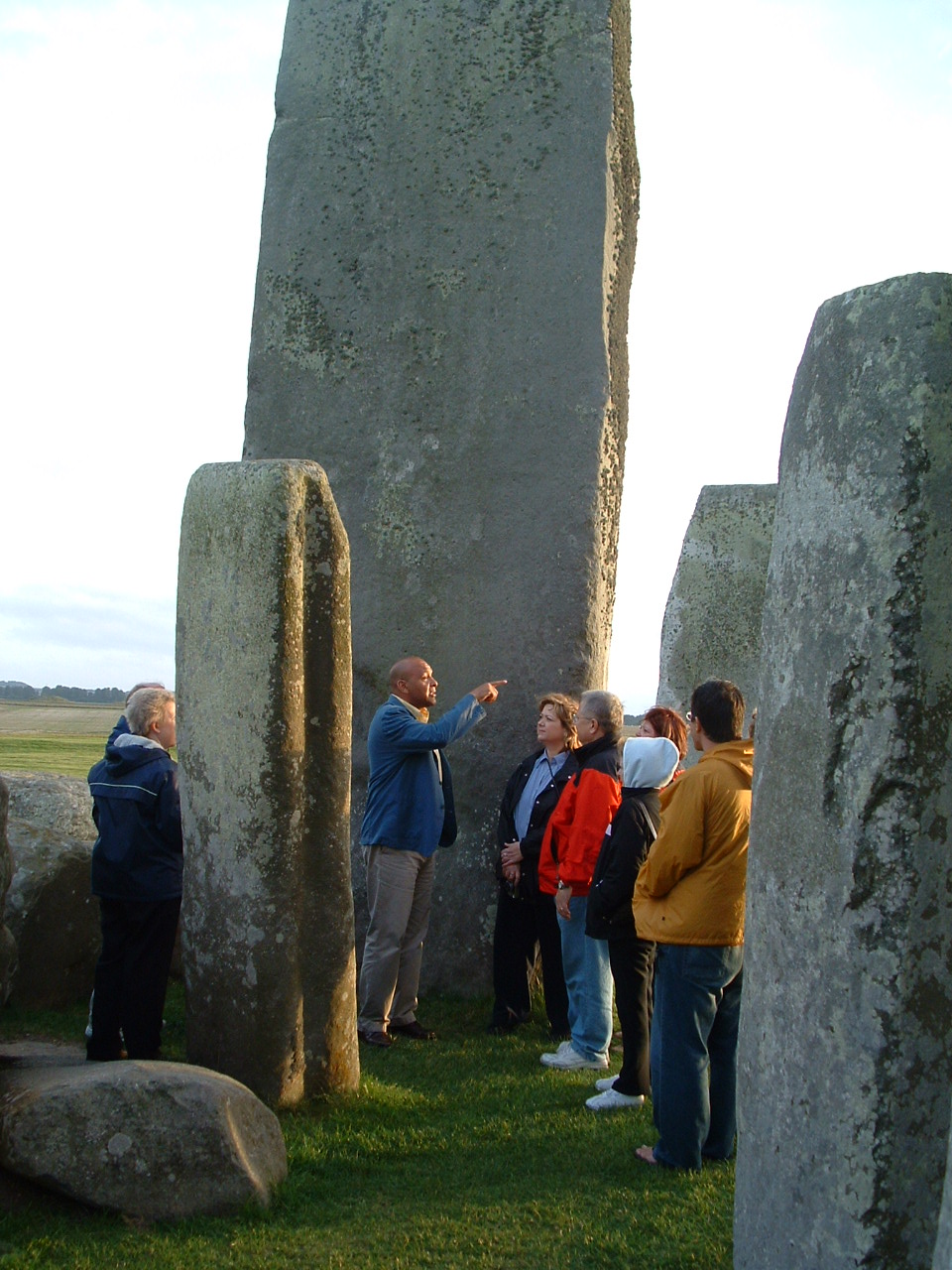


Stonehenge Solstice Ancient Celebration. June 21st 2013

16 06 2013

With the Summer Solstice fast approaching we start to see our visitor numbers increase in Wiltshire. It is a bumper time for our tourist industry as people from all over the world descend upon our county and join in with this ancient celebration.

The Summer Solstice is known to Pagans as ‘Alban Hefin’ which means ‘Light of the Shore’. It occurs on the 21st June when the sun is at its highest point in the sky and the days are at their longest. The nights begin to draw in after this date, which is a scary thought as summer has only just got going. The Druids celebrate this event with special ceremonies and rituals that are believed to date back several millennia. Although the 4000 year old monument of Stonehenge has been the centre stage for these ceremonies; Avebury, Woodhenge and the Kennet long barrow have also attracted worshippers at this special time of year.

Looking into our local studies archives I have discovered that the Solstice festivities have not always been peaceful as the Druids would wish.

In 1901, Salisbury Police invoiced the landowner of Stonehenge, Colonel Sir Edmund Antrobus ‘for police services rendered’ for the night of 20th June. He was charged for one Superintendent, one Inspector, two Sergeants and seven Constables a total of £3. 4s.2d. presumably this would have been for crowd control or public order duties.

During the 1950s the Druid procession was accompanied by the Military Police and members of the Army. The security operation was overseen by the Ministry of Works (a government department responsible for building projects). Public gatherings at Stonehenge increased not only by the number of people but also in disorder. There were reported to be many barrels and crates on site, presumably of beer. The ‘high jinks’ was quashed in 1956 when young officers threw ‘thunderflashes’ in to the unruly crowd.

By the early 1970s a small music festival was conceived, which took place in woods near Amesbury during the days leading up to the 21st June. This was the beginning of the Free Festival which continued to grow in popularity and controversy throughout the ‘70s until 1984 when it ended abruptly.

During the early 80s a new wave of ‘new age travellers’ replaced the ‘hippy’ label of the ‘60s. Large numbers of travellers would congregate on private land and were reported to have committed trespass, criminal damage and public order offences.

On June 1st 1985, events came to a head culminating in the infamous ‘Battle of the Beanfield’. It wasn’t until June 2000 that a truce was finally made between the authorities and members of the public; 5000 people were given the privilege of entering the sacred circle.

On Thursday 5th September, one of our archaeologists, Rachel Foster, will be giving a talk on ‘Stonehenge & Avebury World Heritage Sites’ at the History Centre, contact the centre for further details. Alternatively, records are available to view by members of the public. We have copies of newspapers on microfilm, newspaper articles in our ephemera collection and also scrapbooks on ‘The Battle of Stonehenge’. We also hold the book ‘The Battle of the Beanfield’, edited by Andy Worthington, published by Enabler Publications in 2005 and utilised for this article.

Article by: Anna Ervine Local Studies Assistant
Source: http://www.wshc.eu/blog/item/the-summer-solstice.html

Link: https://blog.stonehenge-stone-circle.co.uk/2013/06/01/stonehenge-summer-solstice-celebrations-2013/
Link: https://blog.stonehenge-stone-circle.co.uk/2013/06/10/summer-solstice-2013-stonehenge-managed-access/

Follow Stonehenge on Twitter for all the Solstice News: https://twitter.com/ST0NEHENGE

Merlin @ Stonehenge
The Stonehenge News Blog