Events are planned throughout 2018 to mark Stonehenge’s special anniversary.

6 01 2018

A series of English Heritage exhibitions and archaeology projects will be run from March to celebrate the centenary year of Stonehenge being donated to the nation.

2018 is an important anniversary for Stonehenge. A hundred years ago, in 1918, local barrister Cecil Chubb and his wife Mary gifted it to the nation. This public spirited decision marked a turning point in the history of Stonehenge and its fortunes.

A programme of restoration began almost immediately, starting a centenary of care and conservation at Stonehenge which continues to this day.

Once a supposed gift for a wife we, as the public, have now had access to one of the most famous prehistoric monuments for around 100 years.

Stonehenge was donated by Cecil Chubb and his wife Maryin 1918 so that they could be properly looked after and enjoyed by all.

Cecil bought the stones in an auction in 1915 and it’s been said that the only reason he was there at the auction was to buy a set of dining chairs!

Legend has it that he bought it for his wife but she was not happy about…

Late in 1918, Cecil and Mary, gave the stones away to be cared for The Office of Works (what would be English Heritage).

Throughout 2018, English Heritags will be celebrating the centenary of the gift, and discovering what this iconic monument means to people today.

They were in a ‘perlilous condition’ according to the charity, so they set to work to restore it to it’s former glory.

For the past 100 years, millions of people have visited the monument from locals to people travelling thousands of miles to see it.

BRIEF HISTORY

The first monument was an early henge monument, built about 5,000 years ago, and the unique stone circle was erected in the late Neolithic period about 2500 BC.

In the early Bronze Age many burial mounds were built nearby.

From 1927, the National Trust began to acquire the land around Stonehenge to preserve it and restore it to grassland.

A new visitors centre was built in 2013 and the byway next to the stones was closed.

CELEBRATION

Throughout 2018 there will be special programmes to celebrate the centenary, such as a special collaboration with the British Museum featuring an exhibition on the Neolithic and Bronze age items found.

You can see all that’s going on here: www.english-heritage.org.uk
Link source (Spire FM)

The Stonehenge News Blog
Follow us on Twitter and Facebook for all the latest Stonehenge News
http://www.Stonehenge.News


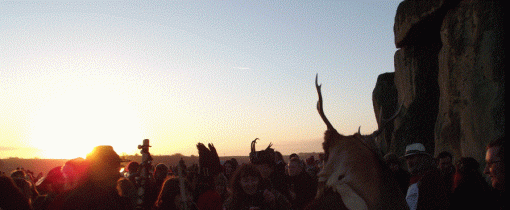
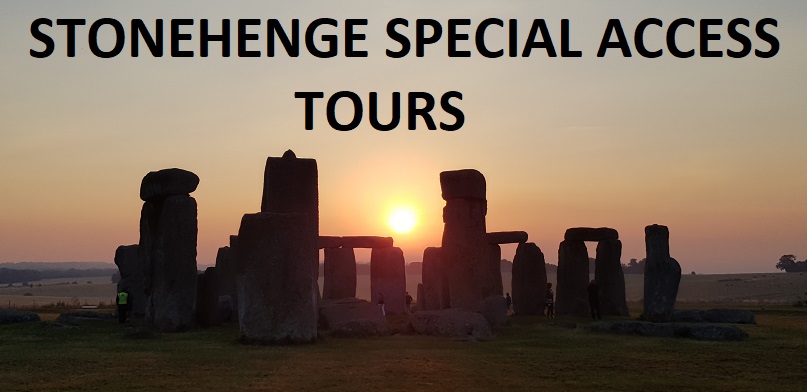
THOUSANDS gathered at Stonehenge to celebrate the first sunrise after the winter solstice.

23 12 2017

Thousands of people gathered at Stonehenge to witness the sunrise on the shortest day of the year in the northern hemisphere.

DRovTT0X0AArw1e

Crowds arrived at the Wiltshire landmark before dawn with many others travelling to the Avebury stone circle, which is also in the county.

The winter solstice marks the point when the North Pole is tilted 23.5 degrees away from the sun.

The solstice occurred at 04:49 GMT, with the sun rising at 08:04.

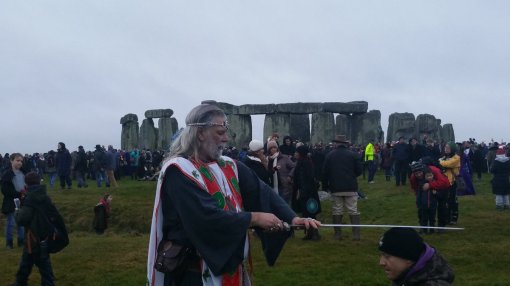
Pagans and druids dressed in traditional clothing joined families and a choir to mark the end of the longest night of the year.

Thick cloud at the prehistoric site in Wiltshire meant the sunrise, at 8.10am, was not visible.

Kate Davies, of English Heritage, said: “We were delighted to welcome approximately 5,000 people to Stonehenge to celebrate winter solstice this morning.

“It was an enjoyable and peaceful celebration despite the damp weather and it was great to see so many families enjoying the music and chanting around the monument.

The Stonehenge News Blog
Follow us on Twitter and Facebook for all the latest Stonehenge news,


Stonehenge Winter Solstice Celebrations: 22nd December 2017

25 11 2017

English Heritage will once again welcome people to Stonehenge to celebrate the Winter Solstice. Sunrise is just after 8am on Friday 22nd December and visitors will be able to access the monument as soon as it is light enough to do so safely. Please read the information below before planning your visit

ws

PRACTICAL INFORMATION:

DATE AND TIMINGS
FRIDAY 22nd DECEMBER 2017
MONUMENT FIELD OPENS: 07.45am (approximately, depending on light levels)
MONUMENT FIELD CLOSES: 10am

Please note, access to Stonehenge for Winter Solstice is free. Parking charges apply.

CONDITIONS OF ENTRY

Access to Stonehenge for solstice is subject to the Conditions of Entry – please read these before deciding whether to attend.  Please aslo read this article on respecting the Stones.

COME PREPARED

Stonehenge is in a field on Salisbury Plain and the weather in December will be cold and may be wet and windy. Even if it isn’t raining, the ground will be wet from the dew. There may also be frost.

Please be prepared for a 30 minute walk (in low light or darkness), from the bus drop off and from parking areas to the monument. You are strongly advised to wear warm and waterproof clothing and footwear and bring a torch with you.

Toilets at the Monument Field will only be available once the access period begins. There are no catering facilities in the monument field, however the café at the visitor centre is open for hot drinks and breakfast rolls from 6am.

Please note that there are no other amenities or facilities available to visitors until the Monument Field opens.

GETTING HERE:

Parking for Winter Solstice is very limited and English Heritage cannot guarantee that you will be able to park near to Stonehenge. If you are planning to travel by car, wherever you park there may be a 30 minute walk to the Monument. We strongly recommend car sharing or using public transport.

Car Sharing – Request or offer a lift to Solstice at Stonehenge

Travel by bus – Salisbury Reds buses will be running from 06:30 from Salisbury (New Canal, Stop U and Salisbury Rail Station). Check timetable.

Organised Tours – If you are considering visiting Stonehenge for the Winter Solstice celebrations you can even join an organised tour.  Use a reputable tour operator who respect the conditions.  Stonehenge Guided Tours are the longest established company and offer guided tours and transport from London and Solstice Events offer small group Winter Solstice tours from Bath using local expert guides.

Blue Badge Parking – Blue badge parking is in the visitor centre car park and permits must be booked in advance. There is accessible transport to the monument field from the visitor centre beginning at approximately 6.30am. Permits available from Solstice.Stonehenge@english-heritage.org.uk

Parking and parking charges Limited parking is available in the winter solstice car parks, which will open at 5.30am on the 22nd December. (Stonehenge re-opens to all visitors from 11.30am on Friday 22nd December)

As you approach Stonehenge, there will be signs to direct you to the car park – please ensure that you follow these. Please do not arrive early as there is no waiting on the roads in the area and you will be moved on.

Parking may involve a shuttle journey to the visitor centre and wherever you park there may be a 30 minute walk.

  • Cars, private hire minibuses and live-in vehicles £5
  • Motorbikes £2
  • Commercial coaches £100

The car parking charge is designed to encourage people to car share and will help the charity offset  the costs of providing additional staffing and lighting in the car parks.

Please note, car parking charges apply to all users of the Winter Solstice car parks, including Blue Badge holders, and members of English Heritage and National Trust.

Motorists have access to a park and ride shuttle from the off-site solstice car parking to the visitor centre. A shuttle will also be provided between the visitor centre and Stonehenge, however visitors are asked to note that disabled people have priority on this bus and should therefore be prepared for a 30 minute walk, in low light, from parking areas to the monument.

English Heritage cannot guarantee entry to the car parks and recommend coming by public transport as cars will be turned away when the car parks are full.


Please visit the official English Heritage website for full details.

Relevant links:
Respecting the Stones
Salisbury Reds Local Bus Service

English Heritage Conditions of Entry
The Salisbury Reds special solstice shuttle service

Follow @St0nehenge @EH_Stonehenge @VisitStonehenge @HighwaysEngland @VisitWiltshire and @Wiltshirepolice for #WinterSolstice2017 updates on the day.

The Stonehenge News Blog
Follow us on Twitter and Facebook for all the latest Stonehenge news and Winter Solstice updates.  Watch the live Winter Solstice broadcast on Periscope


The new Permissive Path at Stonehenge is finally open.

9 10 2017

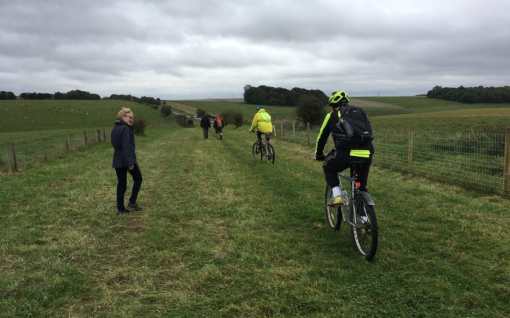
The new Permissive Path at Stonehenge is finally open after a three-year delay waiting for the grass to grow strong enough to bear the weight of a few cyclists and pedestrians.

Opening-of-Permissive-Path-Stonehenge-1-1080x675

A group of pedestrians and cyclists from surrounding villages joined together to mark the re-opening of the route, accompanied by former Wiltshire councillor Ian West. He campaigned strongly against English Heritage for the path to be re-opened as specified in a planning agreement.

The right of way passes within a few feet of the Heal Stone and gives free access to the public. The path allows the public to use the old A344 road and the new path from Airman’s Corner roundabout to the A303 free of charge and without any passes.

“It allows you to take some beautiful photographs without having to have a local residents’ pass and then booking your appointment time along with other tourists,” said a jubilant Mr West. “The path opens up the old connection between Shrewton and West Amesbury, if you are brave enough to cross the A303, although the authorities deem it to be a safe crossing,” he added.

Horses are not permitted on the new path, which is part of the old road now grassed over, but they can go from the roundabout to By-Way 12, which passes close to the stones, to Larkhill in one direction and Druids Lodge in the other, free of charge and without passes. This opens up the access to the by-way and allows travel in both directions on horseback.

Article source: Valley News

Relative links:
A344 Permissive Path – Open by 1st Oct 2017
Usability of the Stonehenge Permissive Path on the route of the old A344

The Stonehenge News Blog
Follow us on Twitter for Equinox updates and Stonehenge news


Hundreds of druids and pagans descend on Stonehenge to celebrate the Autumn Equinox

24 09 2017

Hundreds of pagans and druids descended on Stonehenge on the 23rd September to celebrate the equinox as autumn began.

Visitors headed to the famous 5,000-year-old site in Wiltshire in the dark to ensure they got to see the sun rise.

And they made the most of one of only four public annual events that allows people to get so close to the stones.

Photographs showed attendees singing and wearing a variety of extravagant outfits as onlookers watched on.


This slideshow requires JavaScript.

Follow us on Twitter and like our Facebook page for updates and Stonehenge news
The Stonehenge News Blog


A tunnel past Stonehenge will be dug largely along the route of the existing A303, the government has announced.

12 09 2017

Stonehenge tunnel route altered to protect winter solstice view

Previously it was planned to go south of the stones but there were concerns this would intrude on the view of the setting sun at the winter solstice.

How Stonehenge could be viewed if the tunnel is built

Historic England, the National Trust and English Heritage said “if designed with care”, this would “restore peace and tranquillity” to the landscape.

But campaign groups have called for a “complete rethink” to the plan.

They fear the work will mean the area will lose World Heritage Status after Unesco, the organisation that decides on such sites, said the tunnel should be “reconsidered”.

Unesco has previously backed the option for a bypass to be built.

What is new in this plan?

  • A tunnel that is “at least” 1.8m (2.9km) long beneath the World Heritage site
  • The western tunnel entrance will move 50 metres further away from the stones
  • A new bypass to the north of Winterbourne Stoke
  • A new flyover at the Countess Roundabout – on the eastern side of the tunnel
  • Junctions to the A345 and A360 at either end of the tunnel

Read the full story in on the BBC NEWS website

The Stonehenge News Blog
Follow us on Twitter and Facebook for all the latest Stonehenge News
http://www.Stonehenge.News


Take a Guided Tour of Marden Henge Excavations and Wiltshire Museum: July 2017

7 07 2017

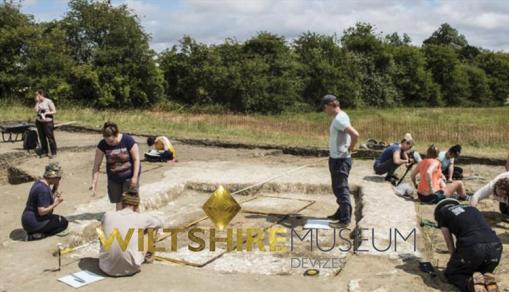
Marden Henge is the third ‘super-henge’ in Wiltshire, alongside Stonehenge and Avebury. In July 2017 there is a fantastic opportunity to find out more about prehistory and these enigmatic henges before a visit to see the site being excavated by archaeologists from the University of Reading.

mar

TOURS ON SATURDAY 8th JULY, TUESDAY 18th JULY & THURSDAY 20th JULY 2017
£30 (£20 WANHS members) – booking essential

A specialist Archaeology tour which starts by exploring the award-winning galleries of the Wiltshire Museum. The Museum will also have a special exhibition about the excavations at Marden Henge featuring some of the finds from previous seasons.

After lunch there will be a guided tour of the excavations (student guides) – with a chance to see archaeologists in action and to find out about the latest discoveries.

Tour Itinerary:

10.30 – Visit Wiltshire Museum, tea/coffee served on arrival. Museum specialist tour.
12pm – Lunch at the Museum
1.30pm – Depart for the archaeological site at Marden Henge (own transport/car share – if you have any questions please contact us)

Booking:

Book your place for “Excavating a Neolithic Henge” using our Yapsody event booking service.

Stonehenge Guided Tours also offer weekly Stonehenge and Avebury archaeology Tours, and as a result offer an excellent up-to-date specialist service; giving you the opportunity to learn in great detail about these amazing prehistoric sites, but also leaving you time to explore your surroundings by yourself.

The Stonehenge News Blog
Follow us on Twitter and Facebook for all the latest Stonehenge New


The Stonehenge visitor centre and excellent English Heritage exhibition.

6 05 2017

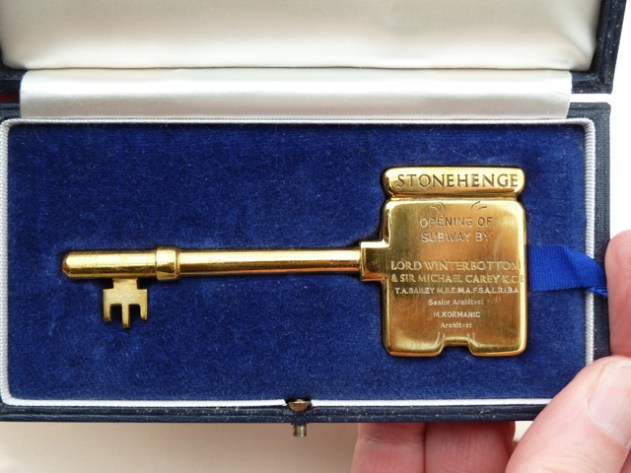
From 1968 until 2013, the visitor facilities at Stonehenge amounted to a collection of brutalist concrete bunkers,  and a small car park almost opposite the monument alongside the old A344 road, with a subway below the road so that visitors could safely reach the stones. The old visitor centre was opened with much fanfare, and a ceremonial gold key.
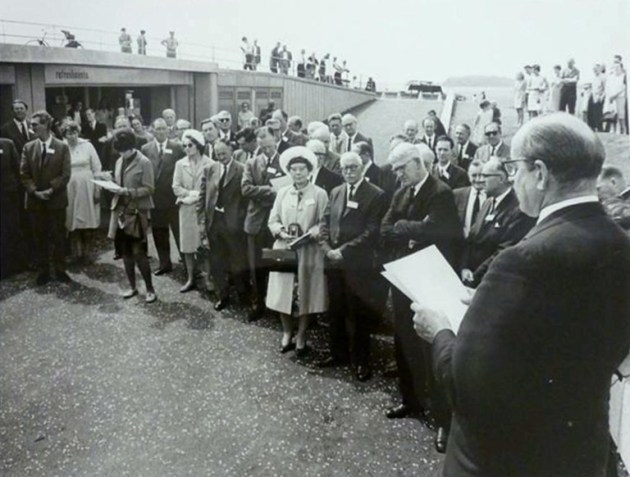
subway opening 1968

key

As visitor numbers increased year on year these facilities (latterly expanded by the addition of some portakabins) rapidly became overwhelmed, eventually being described as “a national disgrace” in Parliament.
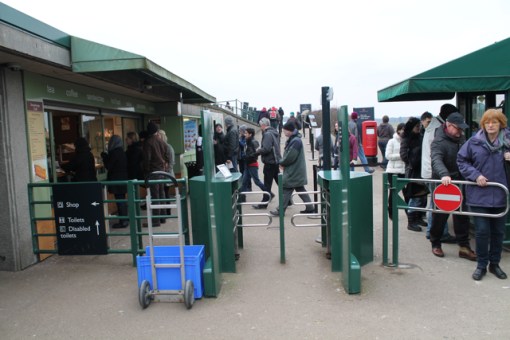
old_visitor_centre

After endless consultations and arguments, with almost a dozen options being tabled and rejected, eventually a location was found over a mile and a half away to the west that was chosen for the new Visitor Centre. The A344 road past the monument was closed and grassed over, the old facilities and car park decommissioned and in December 2013 the new centre opened.

Designed by an Australian firm Denton Corker Marshall, with an initial budget of £27M, the intention was to create a building that sat quietly in the landscape and deliberately didn’t reference the form of Stonehenge in any way.

Its elegantly curved roof was to evoke the sense of a leaf lightly resting on angled columns that called to mind the trunks of trees in a wood, with dappled sunlight falling through the perforations at the roof’s edge and a gentle breeze cooling the central corridor between the two independent building “pods” below it.

For those that geek out on these things, there is one direct reference to Stonehenge – the tallest columns supporting the roof at the NE and SW corner are each the same height as the tallest trilithon at Stonehenge was when first erected 4,500 years ago.
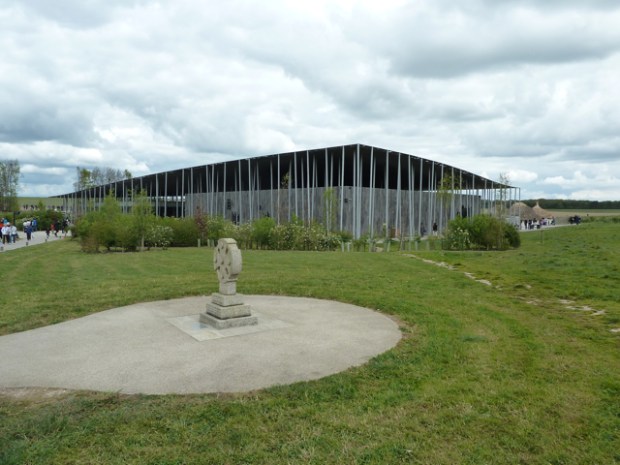
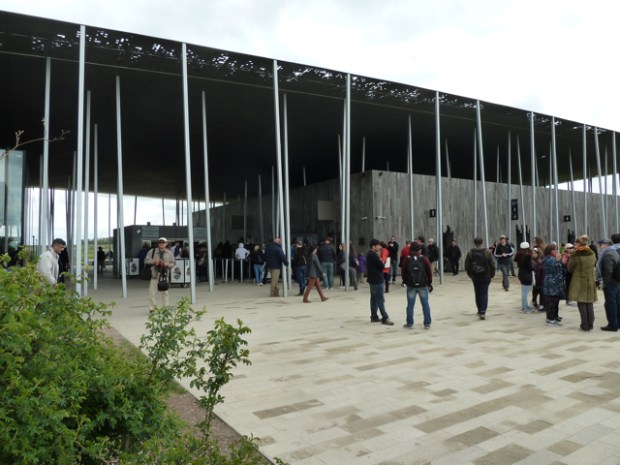
new vc

new vc closeup

There are two major advantages over the old centre – firstly, the café is now indoors and secondly there is an excellent exhibition which showcases artefacts from both the Stonehenge landscape and the monument itself.

There are two major advantages over the old centre – firstly, the café is now indoors and secondly there is an excellent exhibition which showcases artefacts from both the Stonehenge landscape and the monument itself.

Entrance to the exhibition is included in the ticket price and this part of the Stonehenge experience definitely shouldn’t be missed – it helps to place the monument in context without overwhelming a casual visitor, but has enough detail to interest the nerdiest Stonehenge enthusiast.

There is a walk-in 360° video theatre which places you in the centre of the monument at all the major stages in its development, from 3000BC when the henge bank and ditch was dug along with the Aubrey Hole circle of 56 post or stone holes, through the arrival of the large Sarsen stones around 2,500BC, the final rearrangement of the Bluestones in 2,200BC and the 3 minute presentation brings you up to the modern day appearance complete with traffic flowing by on the A303. As the seasons change, you see representations of both summer solstice sunrise and winter solstice sunset as shadowy – almost ghostly – figures process around the circle.
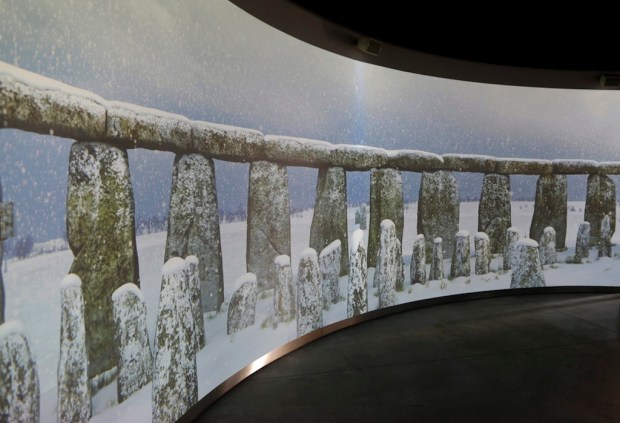
A 360 degree virtual experience video display showing Stonehenge is played at  the new exhibition centre at Stonehenge in Salisbury, southern England

Passing through into the main exhibition space, you find five display cases containing genuine archaeological finds that are on loan from Salisbury Museum and Wiltshire Museum (in Devizes) including some of the grave goods – flint arrowheads, bronze daggers, gold, amber and jet jewellery as well as ceramics – from the burial mounds along with the remains of two occupants. Both museums offer reduced price entry to Stonehenge ticketholders and each have recently enjoyed major upgrades to their own exhibition spaces.
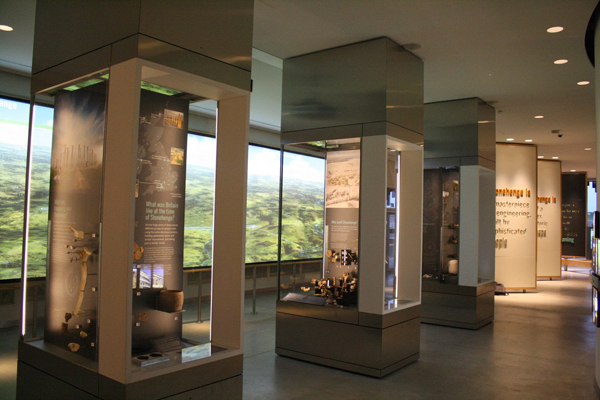
exhibition cases

On one side is a huge dynamic video wall showing the evolution of the landscape and the sites of its key monuments over time, along the other are four large bronze models of Stonehenge at the main points in its evolution (feel free to touch the models, it’s encouraged).

As well as the permanent exhibition, there is a side gallery which houses temporary displays that are periodically replaced. Presently, the side gallery contains Julian Richards’ “Wish You Were Here” exhibition of Stonehenge collectibles and memorabilia down the ages, from postcards through Druidic regalia and some bizarre items that have used the Stonehenge image as part of their marketing. This includes phone cards, stamps and a wonderful brass Trilithon-topped crumpet-toasting fork. No such collection would be complete without a copy of the Spinal Tap Trilithon-shaped single record, and sure enough it’s here too.

Staff and volunteers in the exhibition are happy to explain the items on display in the main hall and the side gallery, so don’t fail to take advantage of their knowledge.
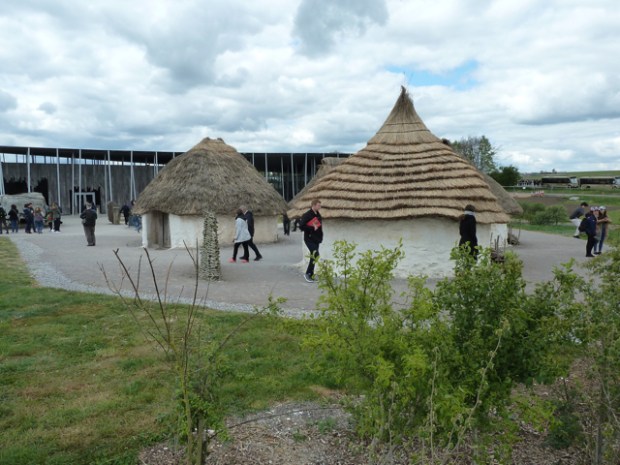
neoliothic houses

These houses were built by experts from the Ancient Technology Centre on Cranbourne Chase and a cohort of keen volunteers, some of whom can often be found in the houses giving demonstrations of ancient skills. It’s only by attempting to replicate the work of our long-dead ancestors that we gain new insights into the subtler aspects of their lives – the houses (not mere “huts”) are spacious, comfortable, sturdy structures and with periodic maintenance will easily last 25 years or more.

The new Visitor Centre may be a building that divides opinion, but within and without there are some fantastic displays that give a genuinely fresh perspective on Neolithic and Bronze Age life.

Just outside the visitor centre, at the back, sits the collection of replica Neolithic houses that are closely based on the remarkable archaeological discovery of such buildings at nearby Durrington Walls – the probable settlement site in use when the large Sarsen stones were being erected 4,500 years ago.

Entrance to Stonehenge is now managed through timed tickets and advance booking is the only way to guarantee entry on the day and time of your choice. By booking in advance you will also benefit from an advanced booking discount. It is also possible to purchase advance Stonehenge tickets here to beat the lines.

If you are short on time and would like to join an organised guided tour of Stonehenge, it is possible to do this from London, Salisbury or Bath. You can even arrange for local expert guide to meet you at the visitor centre for a guided walking tour.

Article by guest blogger and local Stonehenge historian Simon Banton

The Stonehenge News Blog
Follow us on Twitter and Facebook for all the latest Stonehenge News
http://www.Stonehenge.News


Loop in the Landscape Workshop. Stonehenge Event 13th / 20th May.

3 05 2017

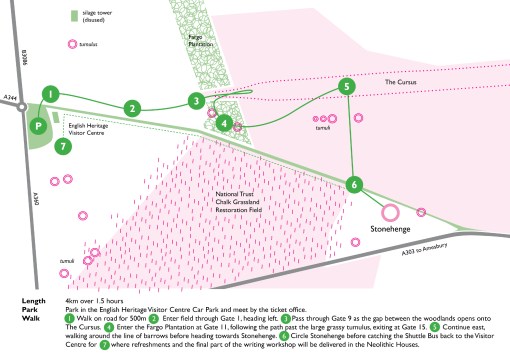
Take your imagination for a walk in this outdoor writing workshop in the Stonehenge Landscape. Working with award-winning poet Holly Corfield Carr, you will explore the ancient contours and hidden corners of the World Heritage Site, learning how to use field writing techniques and observational excercises to draw inspiration from even the smallest rock. (13th and 20th May at 2pm £5)

loop2

This event is generously supported by the National Trust and English Heritage and tickets include parking, refreshments, access to Stonehenge and a return journey to the Visitor Centre on a shuttle bus.

All ages and writing experience welcome. We are keen to meet local residents from Amesbury and Salisbury and the surrounding areas, as well as National Trust and English Heritage members.

Participants will have the chance to have their writing published as part of loop, a book of poems, photographs and walking routes celebrating life in the landscape around Stonehenge and Amesbury, the UK’s longest continuously-occupied settlement. For more information, please visit loop.org.uk.

looproutemap.jpg

Please be advised that the workshop will take place on the move and we will be walking at a gentle pace across 4km of uneven ground so please wear suitable footwear, clothing and sunscreen if appropriate. There will be regular breaks for writing and sitting on chairs which will be provided and the workshop will end with refreshments in the Neolithic Huts at the Visitor Centre.

More details: https://www.eventbrite.com/e/loop-in-the-landscape-tickets-33924131992

The Stonehenge News Blog
Follow us on Twitter and Facebook for all the latest Stonehenge New


The Knotty Problem of the A303 and Stonehenge.

16 03 2017

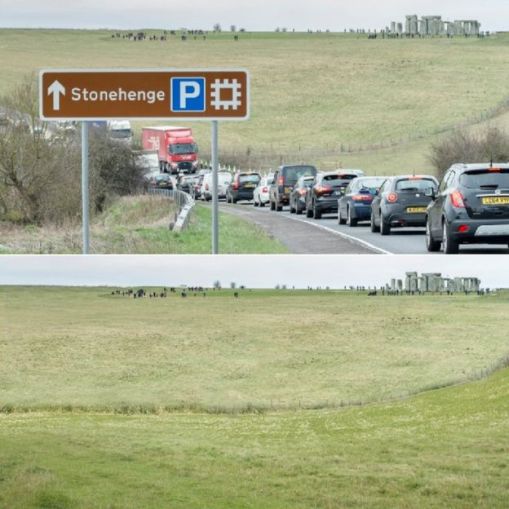
For over 30 years people have been trying to come up with a solution to the problem of the A303 road that runs past Stonehenge. It’s a stretch of single carriageway road with a dual carriageway at either end. As a result it’s a traffic bottleneck, especially during holiday season, and people slow down to take a picture of Stonehenge as they drive by.

A number of options have been proposed – from upgrading the single carriageway road into a dual carriageway on the existing route, to a tunnel to hide an upgraded road from view. Tunnels have been suggested that range in length from 2km to 4.5km constructed either as “cut and cover” or “bored”.

Over 50 alternate routes – some that take the road entirely out of the World Heritage Site – have been put forward, so many that the map showing them all is called the Spaghetti Diagram.

A303routes
Most recently, a 2.9km long bored tunnel has been proposed which would run about 200m south of the existing A303. The tunnel would be below the archaeological layer, well away from Stonehenge itself and remove the view, noise and fumes of traffic from the immediate vicinity of the monument.

You’d think everyone would be delighted. They’re not.

The UNESCO World Heritage Site (WHS) runs from the A345 road in the east to the A360 road in the west, a distance of 5.4km. A tunnel of 2.9km clearly isn’t long enough to span its entire width, and this means that the tunnel portals must be dug into the ground within the WHS itself.

On top of that, new lengths of road and new junctions must also be built within the WHS – at the western and eastern end of the tunnel – to link up with the existing roads.

When the Stonehenge and Avebury WHS was inscribed in 1986 they were recognised as Cultural Sites. At the time, there was no designation of “Cultural Landscape” but the inscription said:

Criterion (iii): The complexes of monuments at Stonehenge and Avebury provide an exceptional insight into the funerary and ceremonial practices in Britain in the Neolithic and Bronze Age. Together with their settings and associated sites, they form landscapes without parallel.

The proposal to destroy large areas of the Stonehenge landscape with new roads and tunnel portals is what has upset a lot of people.

The Stonehenge Alliance is a group that represents the views of a number of organisations, their view is that the tunnel is too short and would cause “irreparable damage to the WHS”.

SA Leaflet

ICOMOS is an important heritage advisory group to UNESCO and it firmly objects to the current option for a 2.9km tunnel for the substantial negative and irreversible impact it would have on the attributes of Outstanding Universal Value (OUV) of the World Heritage site (WHS) of Stonehenge, Avebury and Associated sites.”

A group of 21 leading archaeologists who have worked in the Stonehenge landscape over decades says that the proposal has dreadful consequences for the world’s most famous archaeological site and its landscape setting.

The list of objecting organisations goes on and on – the Council for British Archaeology, the Wiltshire Archaeological and Natural History Society, the Prehistoric Society, the Campaign to Protect Rural England, the Society of Antiquaries, the International Astronomical Union Commission on Heritage and Astronomy….

The National Trust, English Heritage and Historic England have also expressed very strong concerns over the positioning of the western portal and its approach road.

Historic England said The current location is very close to the Normanton Down barrow cemetery, one of the best preserved and most significant Neolithic and Bronze Age cemeteries in the UK. The portal would certainly have a significant adverse impact upon the setting of this barrow group and upon the OUV of the WHS.

The National Trust’s chief archaeologist for the WHS says, in an appendix to the Historic England report, The western portal is very close to the Normanton Down Barrow Group while both surface routes have adverse visual and aural impacts on the surrounding Winterbourne Stoke, Normanton Down, Lake and Diamond Groups (nearly a quarter of the identified key attribute groups).

The proposal actually places the western tunnel portal directly on the Winter Solstice Sunset line as seen from Stonehenge, and the new road leading away from it runs along this alignment.

Western Portal Trenching SMR Montage

Astronomers have viewed this idea as absolutely crazy.

Prof. Clive Ruggles, a leading archaeoastronomer and key figure in the interpretation of astronomical sightlines of ancient monuments across the world says there are serious concerns that the integrity of the SW sightline from Stonehenge could be permanently destroyed, eliminating forever the possibility of visitors to Stonehenge once again seeing the winter solstice sun setting behind the distant natural horizon along the axis of the monument.

The public consultation for the initial route proposals finished on the 5th March 2017. Highways England now have several months of work ahead of them to refine their proposal to take into account the more than 7,000 submissions they’ve received so far.

Local residents, holidaymakers and hauliers have suffered traffic problems along the A303 for over 30 years, so a solution that speeds up traffic is desperately sought by Government.

What’s crucial to bear in mind is that whatever solution is implemented, unless a route entirely outside the WHS is found, it will have a permanent impact on the setting of one of the most important landscapes in the world, and that we all have a responsibility to the future not to make a terrible mistake.

Article by guest blogger and local Stonehenge historian Simon Banton

The Stonehenge News Blog
Follow us on Twitter and Facebook for all the latest Stonehenge News
http://www.Stonehenge.News