Stonehenge Winter Solstice 2016: Travel Trade News

26 11 2016

Arrangements for Groups on Tuesday 20th and Wednesday 21st December

Stonehenge closes to visitors at the usual time of 5pm on Tuesday 20th December ahead of the annual Winter Solstice celebrations on the morning of Wednesday 21st December.

stonehengewinter

The last timed-ticket admission for pre-booked groups is the usual time of 3pm, providing a 2-hour window for groups arriving at this time to view the monument and enjoy the exhibition and other facilities in the visitor centre.

All coaches and minibuses and their passengers must be off-site by 5pm as usual.

Stonehenge re-opens to visitors from 11.30am on Wednesday 21 December.

Coach Parking for Winter Solstice 2016

Parking for coaches and minibuses bringing visitors for the Winter Solstice will cost £50 per vehicle and is provided from 6am until 10am in the Stonehenge Coach Park.

Coach and minibus parking for Winter Solstice is limited and tour operators and group travel organisers should contact the Stonehenge Bookings Team from today to book coach or minibus parking. Booking is essential.

There will be a number of temporary road closures in the local area. There will be no access to Byway 12 throughout the Winter Solstice access period.

Further Information for Winter Solstice

Access to Stonehenge for solstice is subject to the Conditions of Entry which we would ask tour operators, group leaders and drivers to ensure their group members are aware of and adhere to.

Stonehenge is in a field in the middle of Salisbury Plain and the weather in December will be cold and wet. Even if it isn’t raining, the ground will be wet from the dew. There may also be frost. Sensible footwear and warm, waterproof clothing are essential.

There is at least a 30 minute walk (in low light or darkness), from the coach park to the monument. Visitors are therefore strongly advised to wear strong, waterproof footwear and bring a torch with you.

Toilets at the monument field will only be available once the access period begins. There are no catering facilities in the monument field, however the café at the visitor centre is open for hot drinks and breakfast rolls from 6am.

On Wednesday 21 December, sunrise is at 8.09am.

The monument field will open at approximately 7.45am, depending on light levels and will close at 10am.

Stonehenge re-opens to day visitors from 11.30am on Wednesday 21st December.

Please visit the official English Heritage website for more details

Solstice Events are offering their usual small group Winter Solstice guided tour from London and Bath, ideal if you do not have your own transport. Visit their website

The Stonehenge News Blog
Follow us on Twitter , Facebook  and Periscope broadcast for all the latest Stonehenge news and Winter Solstice updates.


Stonehenge and the Druids

20 10 2016

Back in the mid 1600s one man came to the realisation that Stonehenge was far older than previously thought. Based on his studies, John Aubrey attributed the monument to the British pre-Roman priesthood called the Druids.

This began an association that has persisted for over 350 years despite all attempts by archaeologists to shake it. In the minds of most people, the Druids built Stonehenge.

The popularisation of the idea really took off in the 1700s when William Stukeley wrote a book called “Stonehenge – A Temple Restor’d to the British Druids”. So convinced was Stukeley that he styled himself as the Druid “Chyndonax” in the frontispiece of his book.
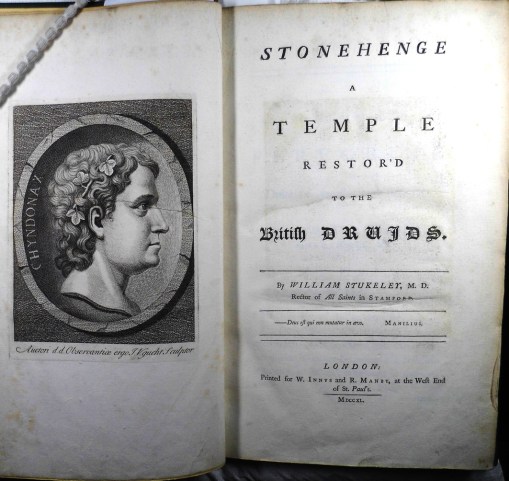
Stukeley as Chyndonax.jpg

Inspired, perhaps, by this vision of an ancient British tradition one of the first of a number of modern Druid groups was founded in 1781 by Henry Hurle. Called the “Ancient Order of Druids” (AOD), it was created as a fraternal organisation and quickly established a quasi-Masonic lodge structure that eventually spread to the USA and Australia.

What followed over the next century was the creation of a plethora of groups, orders and groves whose history is intertwined and overlapping. Making sense of this Druidic family tree is an almost impossible task but in broad outline it is as follows.

In 1792, a Welshman named Edward Williams (aka Iolo Morganwg), who claimed that the rites and customs of the ancient Druids had survived the Roman invasion, founded the Gorsedd of Welsh Bards at Primrose Hill in London. His literary works were to have a profound effect on the early neo-Druid movement and his influence persists to this day.

In 1833 the AOD split over a disagreement about lodge independence from the central Grand Lodge and a group of more than 100 lodges set up a new group called the “United Ancient Order of Druids”. Such arguments and secessions have been a hallmark of neo-Druidism ever since.

The Ancient and Archaeological Order of Druids (AAOD) was founded in 1874 by Wentworth Little, a Rosicrucian and Freemason, with the intent of studying the links between freemasonry and ancient Druidic tradition.

By 1905, the AOD were holding ceremonies at Stonehenge to initiate new members into their order, up to 250 at a time. Some of the press ridiculed the use of cardboard sickles and fake beards, but many of their members were respected members of society – lawyers, doctors and clergy – who wanted to remain anonymous.

Sir Winston Churchill and Sir Edmund Antrobus (then owner of Stonehenge) were members of the AOD, although Churchill has also been associated with the AAOD.
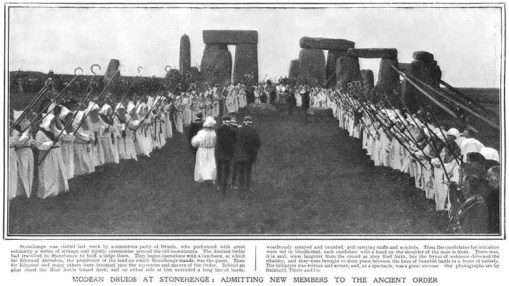
ancient-order-of-druids-stonehenge-1905

In 1909 another new group – “The Druid Order” was founded by George MacGregor-Reid. Somewhat confusingly they were also known variously as “The Ancient Druid Order”, “The British Circle of the Universal Bond” and “An Druidh Uileach Braithreachas” (ie “The Universal Druid Brotherhood”). This group claims to have been founded in 1717 by John Toland, though this is disputed.

Ultimately this group also split – in 1964 – to form the “Order of Bards, Ovates and Druids” under its leader Ross Nichols. The group offers correspondence courses to those interested in Druidry.

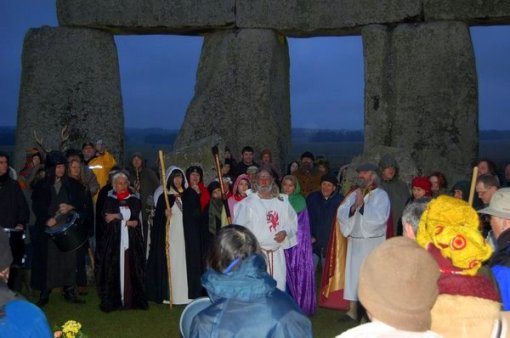
Of all the Druids that celebrate Summer Solstice at Stonehenge, it’s The Druid Order that arguably has the longest tradition. They begin at midnight at the barrows southwest of Stonehenge, continue with a dawn observance and ultimately hold a noon ceremony within the monument itself.
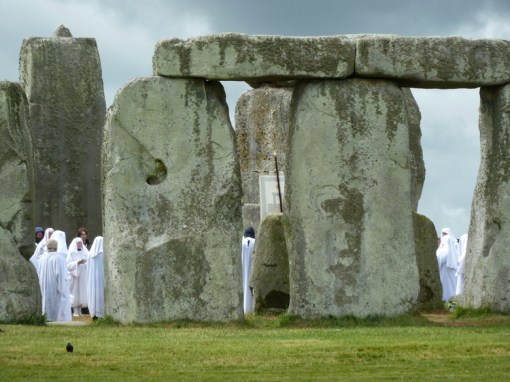
The Druid Order at Stonehenge.jpg

More recently founded neo-Druid and pagan groups also hold ceremonies at Stonehenge at various times of the year. These include – in no particular order – the Dolmen Grove, the Dorset Grove, the Cotswold Order, the Loyal Arthurian Warband (LAW), the Stonehenge and Amesbury Druids and the Gorsedd of Cor Gawr.
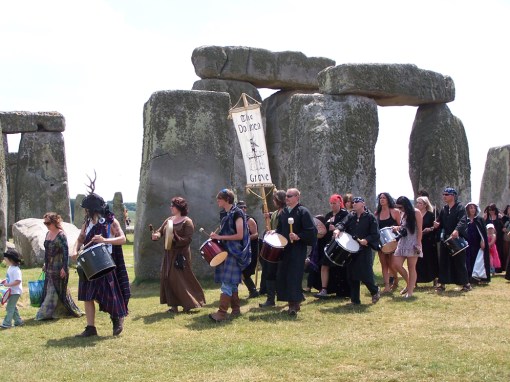
the-dolmen-grove

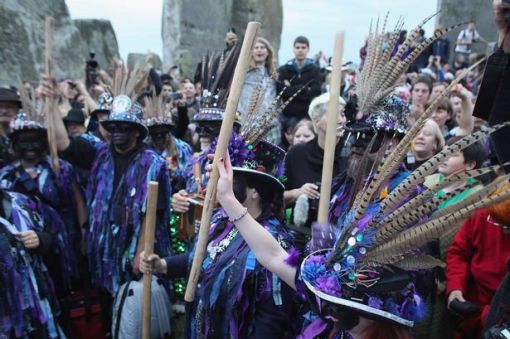
Although the details of the ceremonies are varied, one theme is the re-enactment of a ritual battle between the Oak King and the Holly King which occurs twice a year, at Summer Solstice (when the Holly King wins) and the Winter Solstice (when the Oak King wins). Usually this is carried out using swords or wooden staves, but it has been seen done with rubber chickens and water pistols!

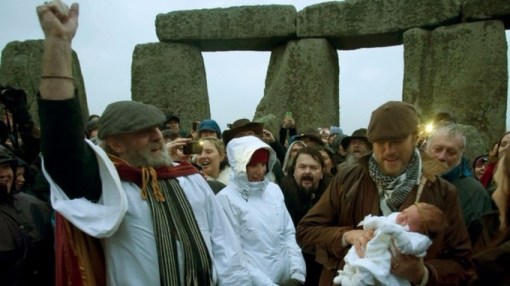
For the Open Access events at the Solstices and Equinoxes, at which everyone is allowed in to the centre of the monument to witness the sunrise, a pre-Dawn ceremony is usually led by some of the most recognisable of the modern Druids – notably King Arthur Uther Pendragon of the LAW and Rollo Maughling of the Glastonbury Order.

These are inclusive ceremonies that allow the general public an insight into the beliefs and traditions while serving to highlight the continuing modern use of Stonehenge as a Druidic Temple.
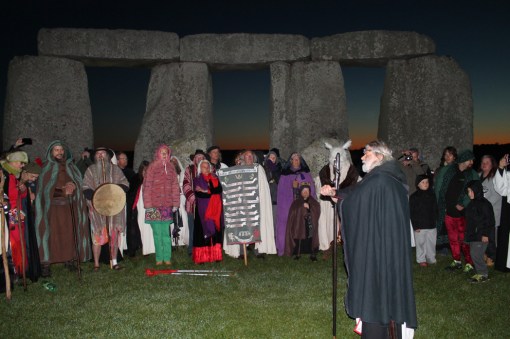
loyal-arthurian-warband

Here are links to some of the Druid Orders.

The Ancient Order of Druids – http://www.aod-uk.org.uk

The Druid Order – http://thedruidorder.org

Order of Bards, Ovates and Druids – http://druidry.org/

The Dolmen Grove – http://www.dolmengrove.co.uk/

The Dorset Grove – http://www.dorsetgrove.co.uk/

The Cotswold Order – http://www.twistedtree.org.uk/

The Loyal Arthurian Warband – http://www.warband.org.uk/

The Stonehenge and Amesbury Druids – http://www.stonehenge-druids.org/

The Gorsedd of Cor Gawr – http://bards.org.uk/

The Glastonbury Order of Druids – http://www.glastonburyorderofdruids.com/

Article written by guest blogger Simon Banton. Local historian and Stonehenge expert.

The Stonehenge News Blog
Follow us on Twitter and Facebook for all the latest Stonehenge news
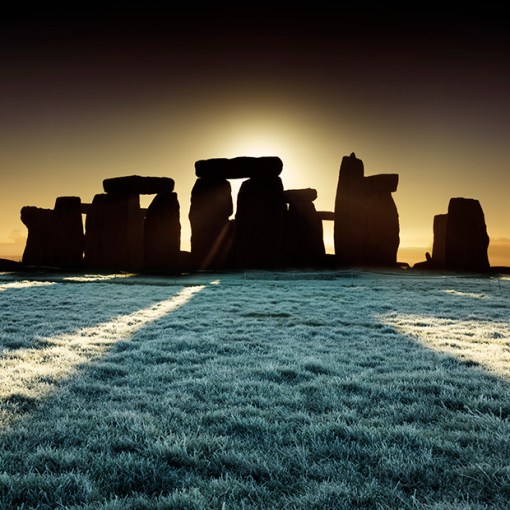


Barrows or Burial Mounds Near Stonehenge.

5 10 2016

The area within a 2 mile radius around Stonehenge contains more than 300 Bronze Age burial mounds or “barrows”. Often these are clustered into what are termed “cemeteries” – groups of barrows that often occur along the ridgelines within sight of the stone circle. Almost all have been opened by investigators and treasure hunters prior to the 20th century and have had their grave goods removed.

The nearest ones to Stonehenge are within easy walking distance – 10 to 20 minutes away – and the views across the landscape are well worth the journey. Please don’t climb the barrows, tempting though it is, as they are easily eroded.

Less than a mile to the east lie the King Barrows under the beech trees on the horizon to the north of the A303 main road. These are amongst the very few barrows that have not been opened by antiquaries in the 18th or 19th centuries and are some of the largest and oldest.

Northwest of Stonehenge are the Cursus Barrows, a group that is easily accessible – being less than a quarter of a mile from the entrance to the monument field. These were all excavated by William Cunnington and Richard Colt Hoare in the early 19th century.

The double bell barrow in this group had previously been opened by Lord Pembroke in 1722 and it contained some very fine grave goods including a dagger; amber, shale and faience beads as well as a gold mounted amber disc which all accompanied the cremated remains of a young teenage girl.

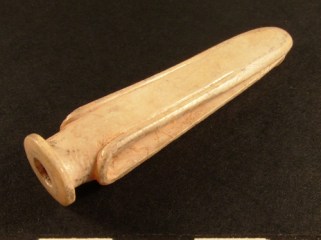
Within the monument field itself, 100m east of the stone circle, sits a wonderful example tweezersof a bell barrow. It was excavated twice by Cunnington and on his second attempt he discovered a cremation burial within an urn along with a beautiful set of bone tweezers which are now in Wiltshire Museum in Devizes.
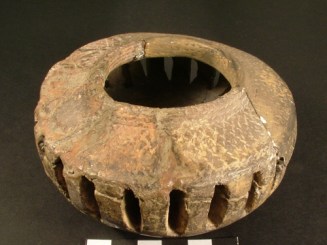
Visible from Stonehenge on the ridge south of the main A303 road are the Normanton Down Barrows, a huge linear cemetery of burial mounds. This group is on private farmland and so cannot be visited.

stonehenge-cupWithin the group is a bell barrow catalogued as Wilsford G8 that contained some extraordinary items of gold and amber jewellery along with a ceramic incense vessel that is known as the “Stonehenge Cup” because of a perceived resemblance to the monument.
At the time of writing (October 2016), the items from Wilsford G8 are on display in the
Stonehenge Visitor Centre Exhibition, on loan from Wiltshire Museum.

Also in this group is the famous Bush Barrow – so called because it has a large bush growing out of the top of it.

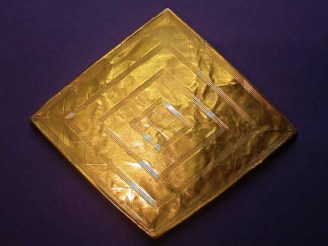
The excavation of this barrow in 1808, again by Cunnington and Colt Hoare, found the body bush-barrow-lozengeof an adult male laid north-south accompanied by one of the most spectacular grave assemblages ever found in Britain, including two lozenges of sheet gold, a polished macehead and 5 cylindrical bone mounts, bronze and copper daggers, and thousands of tiny gold pins used to decorate the hilt. All of the Bush Barrow finds are on display in Wiltshire Museum.
There is an interactive map showing all of the barrows which were investigated by Cunnington and Colt Hoare in the Stonehenge landscape at http://web.org.uk/barrowmap/

The Ordnance Survey 1:25000 Explorer Map 130 “Salisbury and Stonehenge” is an excellent reference for exploring the area, showing public footpaths and National Trust open access land.

This weeks article was submitted by guest blogger and local Stonehenge expert Simon Banton

Stonehenge Landscape walking Tours:
National Trust: Walk with an archaeologist: Durrington Revealed
Local Tour Operator: Stonehenge and Salisbury Guided Tours
Foot Trails:  Full Day Stonehenge Guided Walking Tours
Tours from London:  The Stonehenge Experts
Durrington Walls, Wiltshire walk of the week: The Daily Telegraph

The Stonehenge News Blog


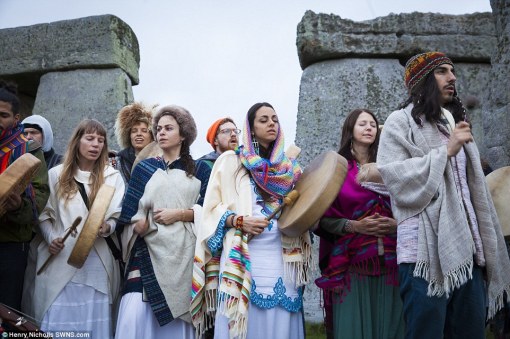
Hundreds of druids and pagans descend on Stonehenge to celebrate the Equinox which marks the official start of autumn

23 09 2016
  • Visitors headed to famous 5,000-year-old site in Wiltshire to see the sun rise this morning
  • Autumn equinox is one of four public annual events when people can get so close to stones
  • Hundreds of attendees sang and wore variety of extravagant outfits as onlookers watched on
  • Temperatures stayed high as Britain entered astronomical autumn after we had 23.6C yesterday

Hundreds of druids and pagans descended on Stonehenge today to celebrate the equinox as autumn began.

Visitors headed to the famous 5,000-year-old site in Wiltshire in the dark to ensure they got to see the sun rise.

And they made the most of one of only four public annual events that allows people to get so close to the stones.

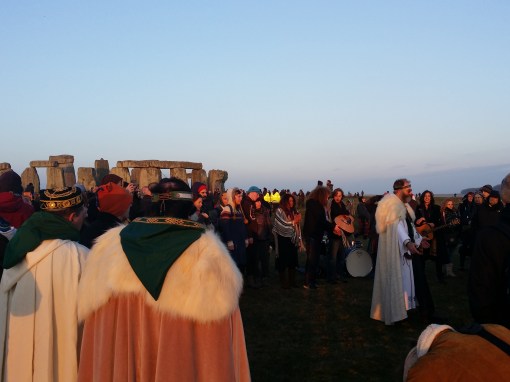
Photographs showed attendees singing and wearing a variety of extravagant outfits as onlookers watched on.

Autumn Equinox Celebrations

Big event: The equinox happens twice a year around March 20 and September 22, between the summer and winter solstices

Read the full story in the Daily Mail
By MARK DUELL FOR MAILONLINE

The Stonehenge News Blog


2016 Stonehenge Summer Solstice Information

17 06 2016

Once upon a time (until 1977, actually) it was possible to turn up and wander around the world-famous prehistoric monument of Stonehenge, touching ancient stones and experiencing wonderment at being in such an atmospheric place, often alone. Not any more – all those hands were contributing to erosion and today’s multitudinous visitors may look but not touch.

druids-equinox

Stonehenge began as a circular ditch and earth bank constructed around 3100 BC, with the standing stone circle erected some nine centuries later. Research suggests that Stonehenge marked an important burial site, but this prosaic explanation is not accepted by everyone.  The purpose of Stonehenge has long been passionately debated with diverse theories mooted – these include religious ritual, astronomical observation and assorted complex and often outlandish supernatural notions. Was it really a landing site for space travellers? Probably not.

Whatever the truth, the place retains an aura of mystery. It was the site of the
Stonehenge Free Festival
1972 and 1984, when revellers gathered to celebrate alternative culture at the summer solstice. That laid-back era came to end in 1985 when the police did battle with ‘New Agers’ bent on reaching Stonehenge after the festival was banned.

Guardians English Heritage relented in 1999, and those who wish to experience the summer solstice in the company of like-minded people are now permitted to do so. Many thousands who gather to do just that invariably experience powerful emotion at the moment when the sun rises over the mystical circle on solstice morning, and find themselves amidst all sorts of alternative believers like neo-pagans and druids in fantastic garb who are conducting esoteric ceremonies. It’s a magical moment, but reality soon intrudes – the site must be cleared by 08.00 so Stonehenge can revert to lucrative ‘tourist business as usual’. (content extracted from 501 Must-be-there Events (501 Series) by David Brown and Arthur Findlay)

English Heritage are pleased to welcome people to Stonehenge to celebrate this year’s Summer Solstice. This is the 17th year that English Heritage has provided access to the stones and are looking forward to a peaceful and sober celebration.

MONDAY 20th JUNE
Access to monument field – 7pm
Sunset – 9:26pm
TUESDAY 21st JUNE
Sunrise – 4:52am
Monument field closes – 8am

 Timings for Summer Solstice at Stonehenge
    • SOLSTICE CAR PARK OPENS 19.00 hours (7pm) 20 June (see new charges)
    • ACCESS TO STONEHENGE MONUMENT FIELD 19.00 hours (7pm) 20 June
    • LAST ADMISSION TO SOLSTICE CAR PARK 06.00 hours (6am) 21 June – or earlier if full
    • STONEHENGE MONUMENT FIELD CLOSES 08.00 hours (8am) 21 June
    • SOLSTICE CAR PARK TO BE VACATED 12.00 hours (12 Noon) 21 Jun

“We strongly advise anyone planning to come to Stonehenge for solstice to leave their cars at home and travel by public transport. Salisbury is easily accessible by train and the local Salisbury Reds bus company will be running a special service from Salisbury to Stonehenge through Saturday night and into the next day. Solstice Events are offering their usual transport from Bath and Stonehenge Guided Tours are offering their popular annual tour / transfer from London.


Bus service information: including timetables and costs can be found on Salisbury Reds website.
Train service information: trains run regularly to Salisbury from London, Bristol, Bath and Southampton. Train times, tickets and further information for your train journey can be found at:
South West Trains
South West Trains
Tel: 0845 6000 650
Great Western Railways
Great Western
Tel: 0845 7000 125
National Rail Enquiries
Tel: 0845 7484 950

Follow @St0nehenge @EH_Stonehenge @HighwaysEngland @Wiltshirepolice and @VistWiltshire for #summersolstice updates on the night.

If you are unable to visit Stonehenge on the Solstice you can watch our LIVE PERISCOPE BROADCAST

The Stonehege News Blog
Respect the Stones and each other!
Follow the Solstice News on Twitter: @St0nehenge  and Facebook


When is the Stonehenge summer solstice 2016? Everything you need to know including times and rituals

28 05 2016

Here’s everything you need to know about the longest day of the year and traditions surrounding the summer solstice

Midsummer-Solstice-celebrations-at-Stonehenge

Party time: Druids, pagans and revellers take part in a winter solstice ceremony at Stonehenge

Every year, around this time, we start talking about the summer solstice.

Mostly it’s because it’s the longest day of the year, and there’s a very British pessimism that says the days will immediately start to shorten into winter from now on.

But there’s also the shenanigans at Stonehenge, general celebrations and a pause to celebrate the summer.

But what does it all mean?

What is it?

It’s generally understood to mark the middle of summer – even though some of us may feel like we haven’t really had the first half yet in the UK.

Technically, it’s when the tilt of Earth’s axis is most inclined towards the sun, and that’s why we get the most daylight of the year.

In the winter solstice, we’re tilted furthest away from the sun, hence shorter hours of daylight and the shortest day.

The word solstice is derived from the Latin words sol (sun) and sistere (to stand still).

Read more: New Stonehenge alignment theory proved right as monument’s tallest stone points at solstice sunset

When is it?

In the northern hemisphere, the summer solstice takes place between June 20 and 22. This year it’s on Monday, June 20.

As it happens twice annually, the winter solstice in the UK is between December 20 and 22.

In London on the summer solstice, the sun will rise at 04:43 and set at 21:21.

Near Stonehenge in Salisbury, sunrise will be at 04:52 and sunset will occur at 21:26.

Why Stonehenge?

The midsummer solstice is being celebrated at Stonehenge on Saturday into Sunday and at the Avebury stone circle from Friday until Monday.

Thousands flock to the English Heritage site for the solstice in a tradition which has its roots in pagan times, when Midsummer Day was considered to have power.

Of those who attend, many are druids, but some are tourists.

This year it’s falling on a weekend for the first time in more than a decade and is expected to draw much larger crowds.

The way that the stones are positioned is said to be aligned with sunrises on the two annual solstices.

Read more: Stonehenge attracts thousands as Pagans mark longest day of the year with celebration

Although not much is known about its formation, those facts are thought to be involved with whatever religious, mystical or spiritual elements were central to its construction.

The monument field at Stonehenge is open from 19:00 on Monday 20 June to 08:00 on Tuesday 21 June. Admission is free, but parking fees apply.

The Solstice Car Park opens at 7pm on 20th June with last admissions at 6am (or when full, if earlier) on 21st June. The car park will close at 12 noon on 21st June.

Visitors, including sunrise-worshipping Druids for whom it is a religious occasion, are encouraged to use public transport or arrange to car share.

How else do people celebrate it?

It’s not just for the arch-druids in Wiltshire – there are celebrations worldwide among lots of different cultures.

The holidays, festivals and rituals do tend to have themes of religion or fertility.

Read more: ‘Fridgehenge’ pranksters mark summer solstice with homage to Stonehenge – made out of white goods

In Latvia there’s Jāņi, when women wear wreaths on their heads. Estonia has Jaanipäev or St John’s Day, which marks a change in the farming year.

Wianki happens in Poland, with roots in a pagan religious event, and Kupala Night happens in Russia and Ukraine, where people jump over the flames of bonfires in a ritual test of bravery and faith.

Are the days going to be shorter now?

They will of course get shorter between now and the winter solstice on December 21, but don’t worry, we’re not talking early dark nights quite yet.

Read more: Stonehenge and Statue of Liberty ‘in direct and immediate danger’ from climate change

Article Source: Kirstie McCrum ,  (Daily Mirror)

Stonehenge Summmer Solscice Open Access

“We strongly advise anyone planning to come to Stonehenge for solstice to leave their cars at home and travel by public transport. Salisbury is easily accessible by train and the local Salisbury Reds bus company will be running a special service from Salisbury to Stonehenge through Saturday night and into the next day. Solstice Events are offering their usual transport from Bath and Stonehenge guided tours are offering their small group tour from London.

Follow  @St0nehenge @EH_Stonehenge @HighwaysEngland and @Wiltshirepolice for#summersolstice updates on the night.

If you are unable to visit Stonehenge on the Solstice you can watch our LIVE PERISCOPE BROADCAST

The Stonehenge News Blog


Stonehenge Summer Solstice 2016 Open Access

24 04 2016

English Heritage is pleased to welcome people to Stonehenge to celebrate this year’s Summer Solstice. This is the 17th year that English Heritage has provided access to the stones and are looking forward to a peaceful celebration.

MONDAY 20th JUNE
Access to monument field – 7pm
Sunset – 9:26pm
TUESDAY 21st JUNE
Sunrise – 4:52am
Monument field closes – 8am
solstice-astronomy
The Solstice Car Park opens at 7pm on 20th June with last admissions at 6am (or when full, if earlier) on 21st June. The car park will close at 12 noon on 21st June.Alcohol is not permitted in the monument field during Summer Solstice.Admission to the Summer Solstice at Stonehenge is free of charge, however please note that parking fees in the official car park apply – cars: £15, commercial coaches and minibuses: £50, motorcycles: £5.

Conditions of Entry
 Amplified music is not permitted in or around the monument field.
 No alcohol is allowed within the monument or the monument field. Alcohol will be
confiscated or individuals in possession of alcohol will be asked to leave.
 Drunken, disorderly and anti-social behaviour will not be tolerated and anybody
considered to be behaving in this way will be asked to leave by security staff and/or
the police and will not be allowed back in.
 Illegal drugs are illegal at Stonehenge as they are anywhere else. The police will be
on site and will take action against anyone breaking the law.
 Please don’t bring any glass in to the monument field. Many people walk barefoot
and livestock and wildlife also graze in the area. Any glass items will be confiscated.
 Please do not climb or stand on any of the stones – this includes the stones that
have fallen. This is for your own safety and also to protect this special site and
respect those around you.
 Please be aware that in order to keep everybody safe, random searching may be
undertaken. Any items found that might be used in an illegal or offensive manner will
be confiscated.
 Camping equipment, fires, Chinese lanterns, fireworks, candles, tea-lights or BBQs
are not permitted at Stonehenge, in the Solstice Car Park, or anywhere in the
surrounding National Trust land.
 In the interests of safety, sleeping bags or duvets are not allowed on site. Sleeping
on the ground creates a trip hazard and can interfere with the work of emergency
services and hinder their ability to help people. Small ground sheets and blankets are
permitted for people to sit on but please do not bring chairs etc (unless used as a
recognised disability aid). Shooting-sticks are not permitted.
 To help us reduce the amount of litter on site, leafleting or flyering is not allowed.
 Drones or any type of remote-controlled flying devices are not permitted at
Stonehenge or in any of the Solstice Car Parks.

Admission to Stonehenge

• Admission to the Summer Solstice at Stonehenge is free of charge.
• There is a charge for parking – cars: £15, commercial coaches and minibuses: £50,
motorcycles: £5.
• Public transport is available from Salisbury.
• Access to the car park will start at 7pm
• Children under 16 must be accompanied by a responsible adult.
Please remember that you will not be allowed access to the Monument with the following
items:
– Alcohol
– Drugs
– Large bags or rucksacks (or similar items)
– Sleeping bags or duvets
– Flaming torches, Chinese lanterns, fireworks or candles etc.
– Dogs (with the exception of registered assistance dogs), pets or other creatures
– Camping equipment, including foldaway chairs, garden furniture, shooting-sticks
– BBQs or gas cylinders
– Glass bottles or other glass objects
– Trolleys, wheel barrows or any other form of porterage
– Pushchairs or buggies that are not exclusively used for a child
– Large “golf-style” umbrellas, gazebos
– Drones or any kind of remote control aircraft

From :http://www.english-heritage.org.uk/visit/places/stonehenge/plan-your-visit/summer-solstice/

“We strongly advise anyone planning to come to Stonehenge for solstice to leave their cars at home and travel by public transport. Salisbury is easily accessible by train and the local Salisbury Reds bus company will be running a special service from Salisbury to Stonehenge through Saturday night and into the next day. Solstice Events are offering their usual transport from Bath and Stonehenge guided tours are offering their small group tour from London.

Follow  @St0nehenge @EH_Stonehenge @HighwaysEngland and @Wiltshirepolice for #summersolstice updates on the night.

If you are unable to visit Stonehenge on the Solstice you can watch our LIVE PERISCOPE BROADCAST


The Stonehenge News Blog


Alcohol to be banned from Stonehenge celebrations

12 04 2016

Alcohol will be banned from summer solstice celebrations at Stonehenge this June – and there will also be a £15 fee to park at the stones.

stream_img

Stonehenge attracts thousands of people every year Credit: ITV

English Heritage say the new rules will encourage more people to car share or use public transport. Forty thousand people attended two years ago and the stones were vandalised. Money raised will go towards maintenance.

Article source: ITV NEWS

The Stonehenge News Blog


Stonehenge Spring (Vernal) Equinox Open Access: 20th March 2016

8 03 2016

The ‘Managed Open Access’ at Stonehenge for the Vernal (Spring) Equinox, will be from approximately 05.45 am until 08.30 on 20th March 2016

• Access to Stonehenge for the Spring Equinox will take place on the morning of 20th March 2016 (source: http://www.sarsen.org/)

The Vernal Equinox is at 04:30GMT
Sunrise will be 6.07am

Stonehenge-Spring-Equinox-2015 (60)

• Entrance to the monument will commence as soon as ‘light-levels’ are deemed safe enough to permit. For the past couple of years this has occurred around 0545h however EH would ask that people are patient should the morning prove ‘overcast’ and a slight delay occurs.

• Access to Stonehenge will cease at 0830h and the cooperation of all of visitors in ensuring the monument is vacated at this time would be most appreciated.

• Temporary toilets (Porta-Loos) will be available at the monument once the site is open for public access. This includes a provision for those with disabilities.

•The Cafe and Shop at the new Visitor Centre at Airmans Cross should be opening for visitors from approximately 0800h on the morning of 20 March. Please note that the toilets at this location will also become available for use at this time. Although the Cafe will be opening only hot and cold drinks will be available for the first hour. Pasties etc will become available after 0900h.

Final confirmation from English Heritage as to these arrangements has not been forthcoming so please check before relying on this notice.

Follow us on Twitter for the lastest news and Equinox Sunrise pics

The Stonehenge News Blog


WINTER SOLSTICE AT STONEHENGE 2015

29 11 2015

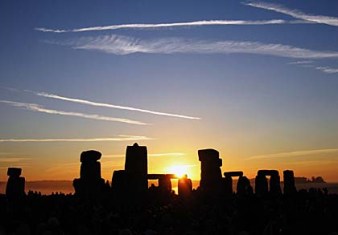
English Heritage will once again welcome people to Stonehenge to celebrate the Winter Solstice. Sunrise is just after 8am on Tuesday 22nd December and visitors will be able to access the monument as soon as it is light enough to do so safely.

frosty-sunrise

Why 22nd December? 

Many people – not least diary manufacturers – believe that the Winter Solstice always falls on 21st December. But the celebration of Winter Solstice at Stonehenge is not fixed to a specifiic date – this is because of a mismatch between the calendar year and the solar year.

MANAGED OPEN ACCESS PRACTICAL INFORMATION

Please read and respect the Conditions of Entry for Winter Solstice 2015 and the English Heritage website.

Public Transport is being provided by Salisbury Reds buses and will be running from 06:00 from Salisbury.  Stonehenge Guided Tours are offering their usual transport with expert guide service from London and Bath. Booking essential (click here to book direct)

Please be aware that parking is very limited. There is a thirty minute walk, depending on where you are parked, in low light or darkness, from the parking areas to the monument. You are therefore strongly advised to bring a torch with you for personal use.

Accessibility – parking provision for people with disabilities

A limited number of permits will be avaialable for blue badge disabled parking and there will be dedicated accessible transport to the stone circle – which will begin just prior to the opening of the monument field. Please apply to Sandra.Ross@english-heritage.org.uk

Please note that there are no other amenities or facilities available to visitors until such time as  commences.

Conditions of Entry

Please read and respect the Conditions of Entry.

Stonehenge Audio Tour: Free Download from English Heritage

Follow Stonehenge and English Heritage on Twitter for Stonehenge Solstice news and updates

The Stonehenge News Blog