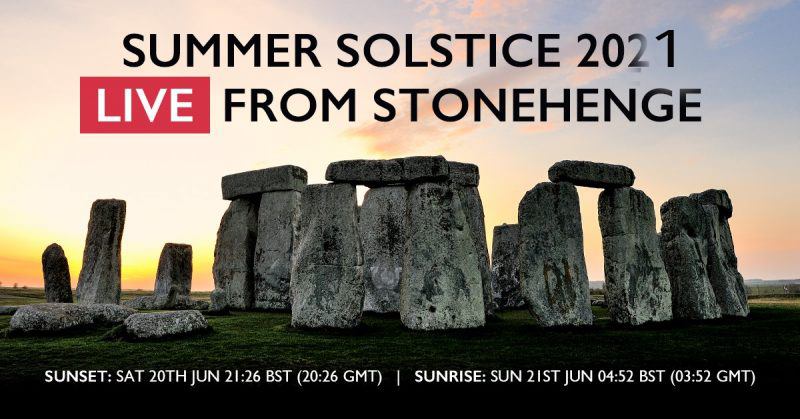
You can stream this year’s summer solstice live from Stonehenge. English Heritage will be live-streaming the sunset and sunrise for free so that those who cannot join in person or feel nervous about attending an event with lots of people, may still enjoy the occasion from the comfort and safety of their own home.
English Heritage will livestream two solstice events for free via its Facebook page. Tune in to catch the sunset on June 20 and the sunrise on June 21.
RELEVANT SUMMER SOLSTICE LINKS: Summer Solstice will return to Stonehenge 2021. Stonehenge News Blog The Legendary Stonehenge Summer Solstice Celebration. A once-in-a-lifetime experience. Stonehenge News Stonehenge: Summer Solstice 2021 to go ahead as normal. Salisbury Journal Summer Solstice at Stonehenge. From Past to Present. Stonehenge New Blog Attending the Stonehenge 2021 Summer Solstice. English Heritage Stonehenge Summer Solstice Tours and Trasnprort – The Stonehenge Tour Company Why Thousands Of Pagans Gather At Stonehenge For The Solstice Stonehenge News Blog Respect the Stones: Stonehenge News Blog
We all need a little positivity in our lives, so we are pleased to announce the 2021 Summer Solstice celebrations will return this year – if the lockdown restrictions are lifted as planned.
The celebration is due to take place on the evening of June 20 into the morning of June 21 – the same date all legal restrictions are due to be lifted in England. English Heritage has said it is “well underway” with planning, and is working carefully with the police, Wiltshire Council and other authorities to “keep abreast of the latest Covid guidance and how it impact on access to Stonehenge.” However, if the guidance changes for England or Wiltshire, English Heritage says plans will need to change.
ATTENDING SUMMER SOLSTICE 2021 (read full statement on the English Heritage website) With Summer Solstice fast approaching, we wanted to give you an update on the arrangements for access to Stonehenge for Solstice this year. We are well underway with planning, and are working carefully with the Police, Wiltshire Council and others to keep abreast of the latest COVID-19 guidance and how it may impact on Summer Solstice access. Many will have noticed that the date coincides with that identified in the Government’s re-opening roadmap for England as Step Four – the final stage of ‘un-locking.’ If that remains the case, we can confirm that Solstice celebrations will be going ahead at Stonehenge on the evening of the 20 June into the morning of the 21 June. However, if the guidance changes for England, or indeed for Wiltshire, our plans will need to change. Updates will be posted here.
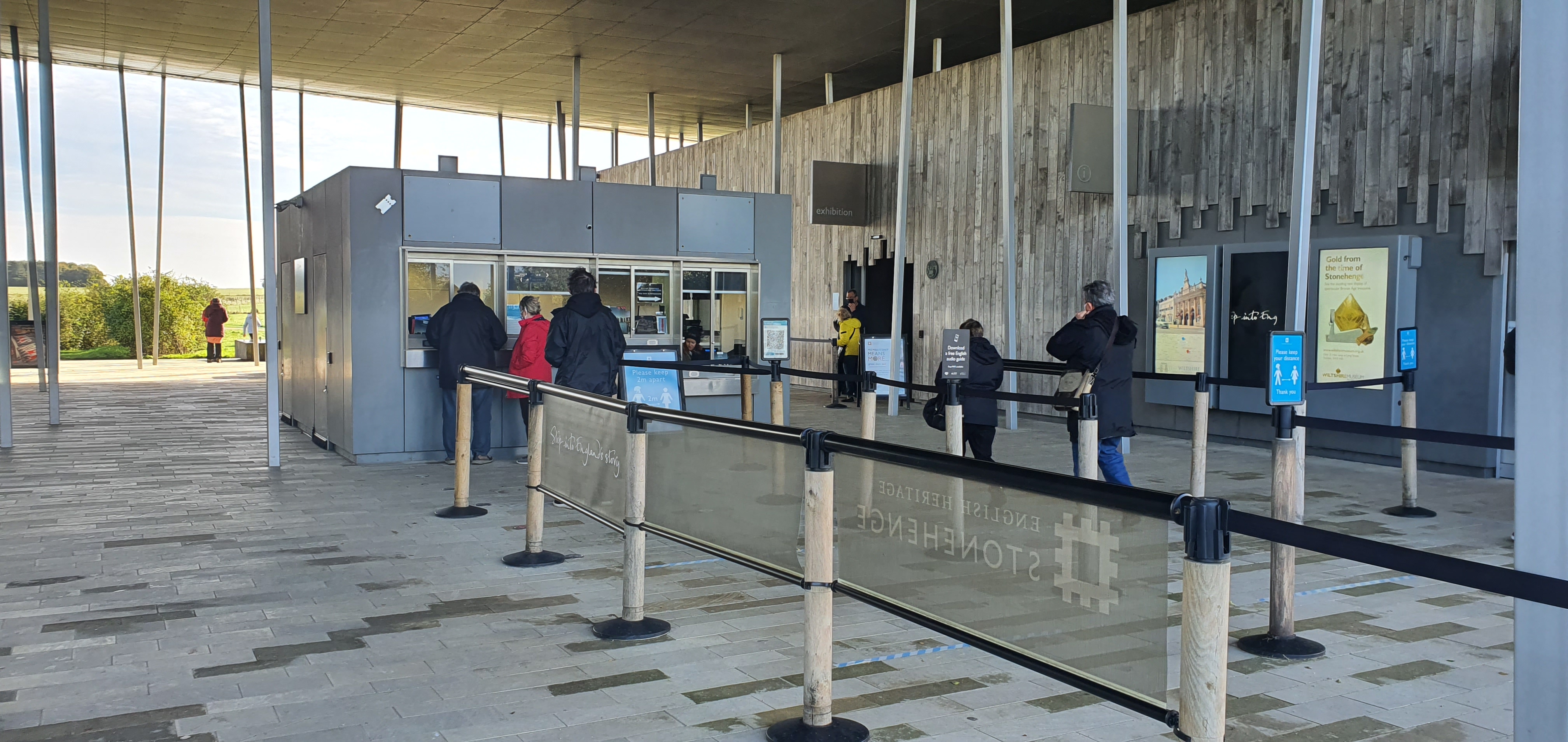
This year, there will be plenty of additional safety measures in place and we do ask that anyone who is thinking of coming, check here for details of these along with precautionary health measures and the usual conditions of entry. Anyone arriving on 20 June can expect to see socially distanced queuing, hand sanitiser stations, and reminders to keep your distance and to stay within groups of fewer than 30. Catering outlets will all operate under Covid-secure arrangements.
English Heritage is pleased to provide Managed Open Access to Stonehenge for the Summer Solstice. We ask that if you are planning to join us for this peaceful and special occasion that you read the Conditions of Entry and the information provided on their website before deciding whether to come.
Stonehenge is an ancient prehistoric world heritage site which has been a place of worship and celebration at the time of Summer Solstice for thousands of years. Stonehenge is a world renowned historic Monument and part of a World Heritage Site. It is seen by many who attend as a sacred place.
Stonehenge is a significant World Heritage Site and to many it is sacred – please respect the stones and all those who are attending.
GETTING THERE:
Parking for the Summer Solstice is very limited and English Heritage cannot guarantee that you will be able to park near Stonehenge itself. If you are planning to travel by car, wherever you park there may be a 30 minute walk to the Monument. We strongly recommend car sharing or using public transport. ‘Stonehenge Stone Circle News’ has negotiated a special 25% discount with the organised tour companies listed below* who offer various transport and tour options from London, Bath and Salisbury. An organised tour takes all the hassle out of getting there and most likely cheaper than using public transport. Use discount code ‘SOLSTICE2021’
*Organised Solstice Tours – If you are considering visiting Stonehenge for the Solstice celebrations you can even join an organised tour. Use a reputable tour operator who respect the conditions. Stonehenge Guided Tours are the longest established company and offer guided tours and transport from London and Solstice Events offer small group Summer Solstice Tours from Bathusing local expert guides. The Stonehenge Tour Company also offer several options to attend the summer solstice. Use discount code ‘SOLSTICE2021’ to recieve 25% discount!
Travel by bus – Salisbury Reds buses will be running from 06:30 from Salisbury (New Canal, Stop U and Salisbury Rail Station). Check timetable.
Blue Badge Parking – Blue badge parking is in the visitor centre car park and permits must be booked in advance. There is accessible transport to the monument field from the visitor centre beginning at approximately 6.30am. Permits available from Solstice.Stonehenge@english-heritage.org.uk
As you approach Stonehenge, there will be signs to direct you to the car park – please ensure that you follow these. Please do not arrive early as there is no waiting on the roads in the area and you will be moved on.
Parking may involve a shuttle journey to the visitor centre and wherever you park there may be a 30 minute walk.
RELEVANT SOLSTICE LINKS: The Legendary Stonehenge Summer Solstice Celebration. A once-in-a-lifetime experience. Stonehenge News Stonehenge: Summer Solstice 2021 to go ahead as normal. Salisbury Journal Summer Solstice at Stonehenge. From Past to Present. Stonehenge New Blog Attending the Stonehenge 2021 Summer Solstice. English Heritage Stonehnege Summer Solstice Tours and Trasnprort – The Stonehenge Tour Company Why Thousands Of Pagans Gather At Stonehenge For The Solstice Stonehenge News Blog Respect the Stones: Stonehenge News Blog
Stonehenge normally receives over one million visitors a year. During peak periods, there are over 10,000 visitors a day with queues stretching up to 100 meters from the ticket office to the car park. Due to current travel restrictions and very few overseas visitors, capacity has reduced to a fifth of what it is normally.
The English Heritage Stonehenge experience as an independent visitor:
I’m sure that if you’re planning a trip to Stonehenge you already have an idea of how special the monument is. Stonehenge is full of mystery; its construction and very existence are still open to interpretation even in our technologically advanced world. Stonehenge boasts an amazing and unique design. Many believe that the stones possess healing powers. All this is true and visiting Stonehenge is almost an ethereal experience, perhaps because of the mysteries surrounding it. I want you to get the most out of your visit so here are a few of my top tips – enjoy!
There are special buses from local towns such as Salisbury and Bath that offer direct pick up / drop off services to Stonehenge. Remember to check their timetables and give yourself plenty of time to get back to the bus stop. Once the last one has gone there is no service until the next day and although the security guards are very friendly and informative they will not let you stay overnight to sleep by the trilithons, under the stars!
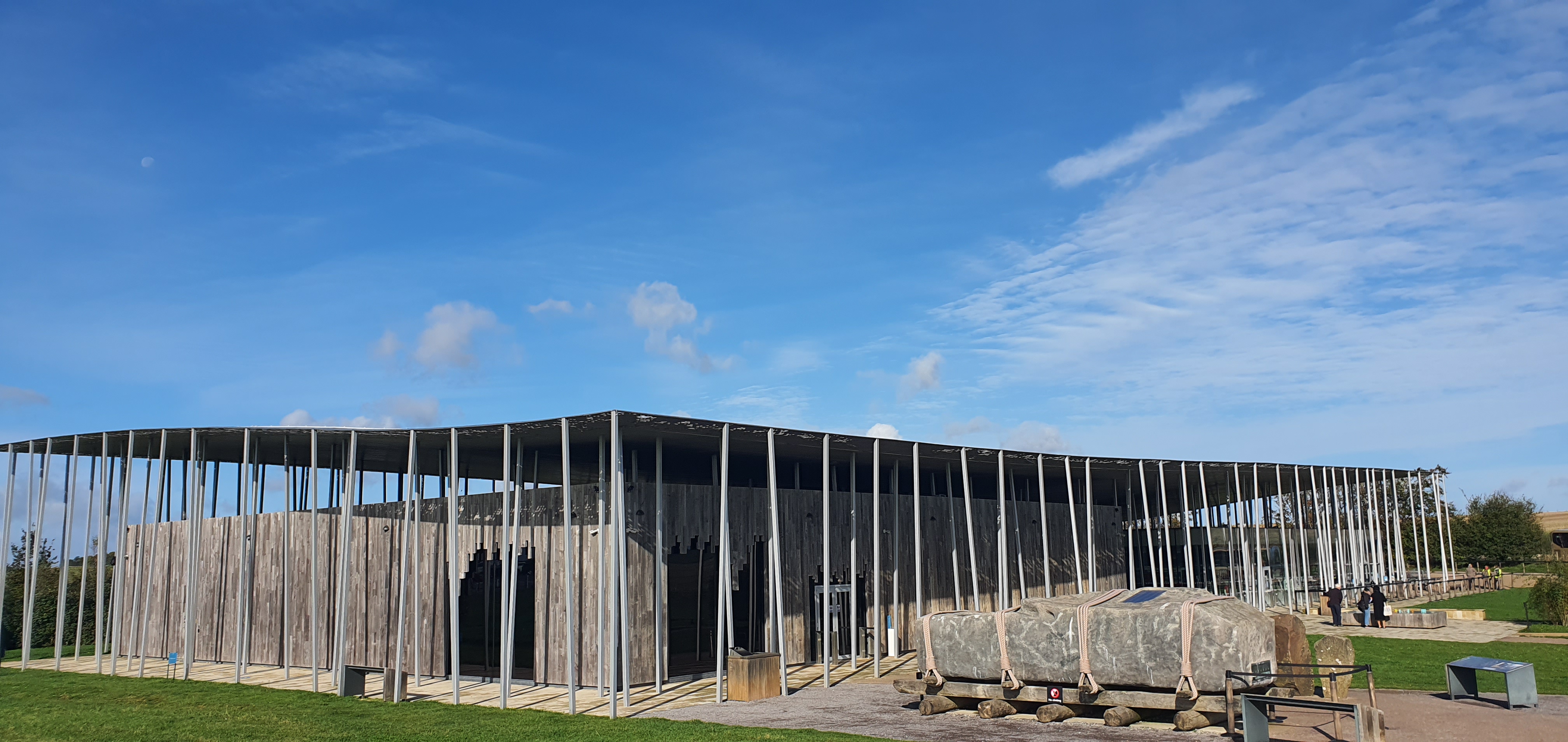
When you arrive as an independent traveler the first thing you’ll notice is the visitor centre. It was moved away from the monument itself a few years ago giving a far better experience than previously.
Currently all tickets must be brought in advance and visitor numbers are limited. You must present your booking confirmation on arrival. [something about it being a good opportunity as there are usually large crowds] Tickets cost £22.80 per adult
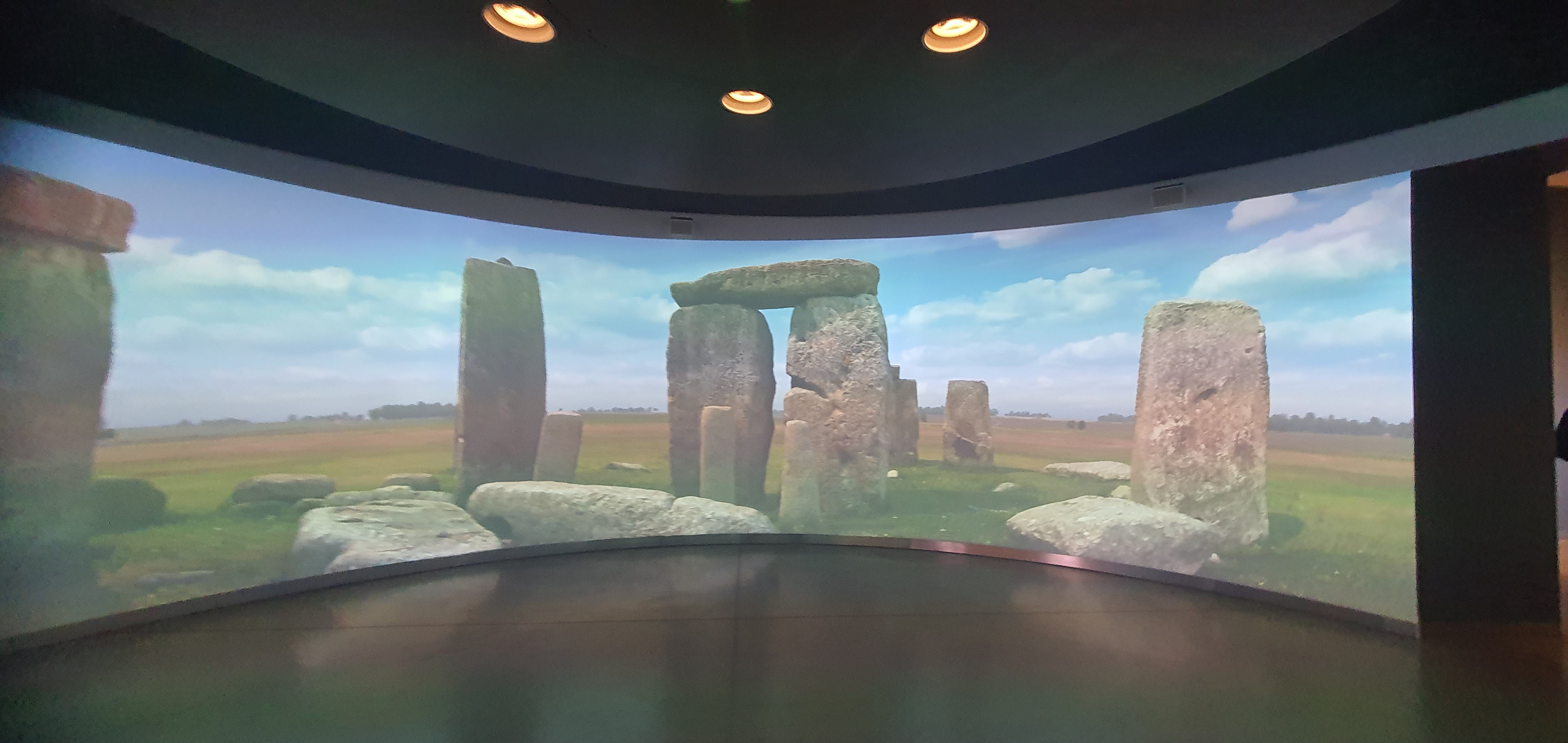
Although it’s very tempting to show your ticket confirmation and rush straight to the stones, take the time to go to the visitor centre and exhibition space first. Take in the atmosphere of the World Heritage Site, allow yourself to step into the landscape of when the Henge was constructed 4,500 years ago.
I’d highly recommend you use English Heritage’s complementary wifi to download the free multi-language audio guide. Covering the exhibition and the monument itself, it’s a fantastic way to learn about the local landscape and the most famous prehistoric monument in the world!
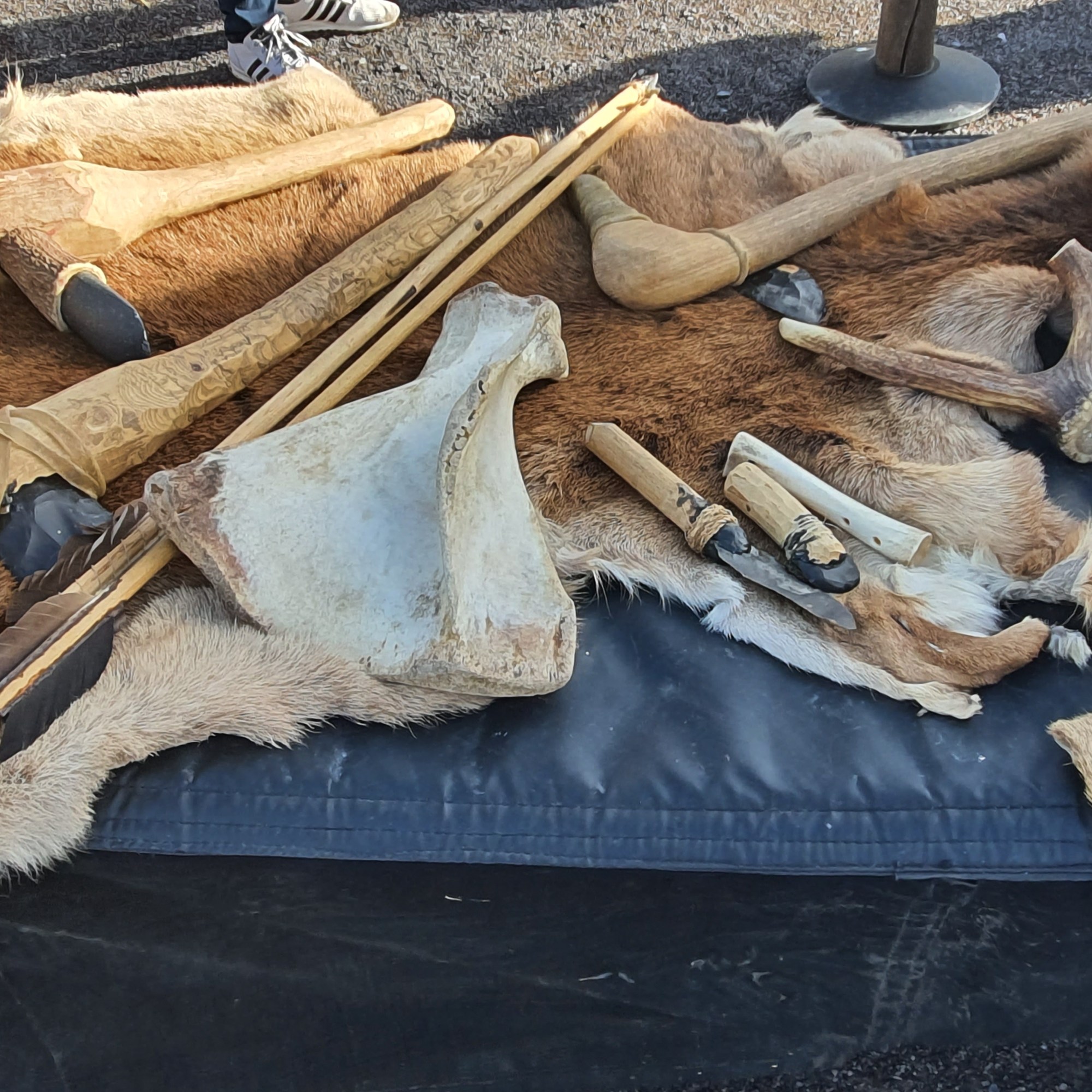
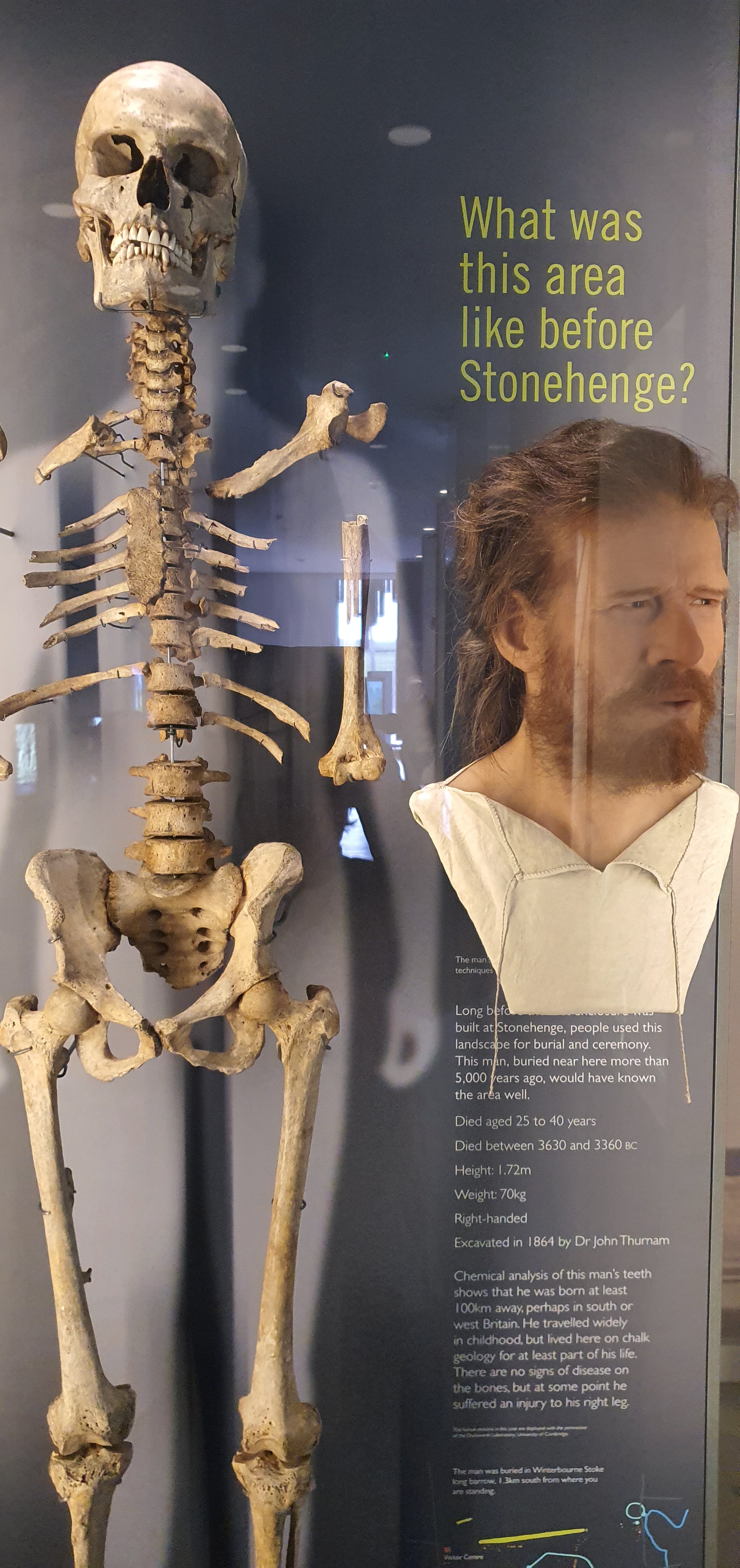
In the exhibition you’ll discover more than 250 significant archaeological artefacts showing how local Neolithic people lived, worked and played around the monument. You’ll see hand tools including antler picks, jewellery, Grooved Ware pottery, Arrowheads, Battle Axes, as well as ancient human remains. One of my favourite exhibits uses advanced technology to reconstruct a man’s face from a skull discovered locally. It really helped me connect with the people who erected the monument.
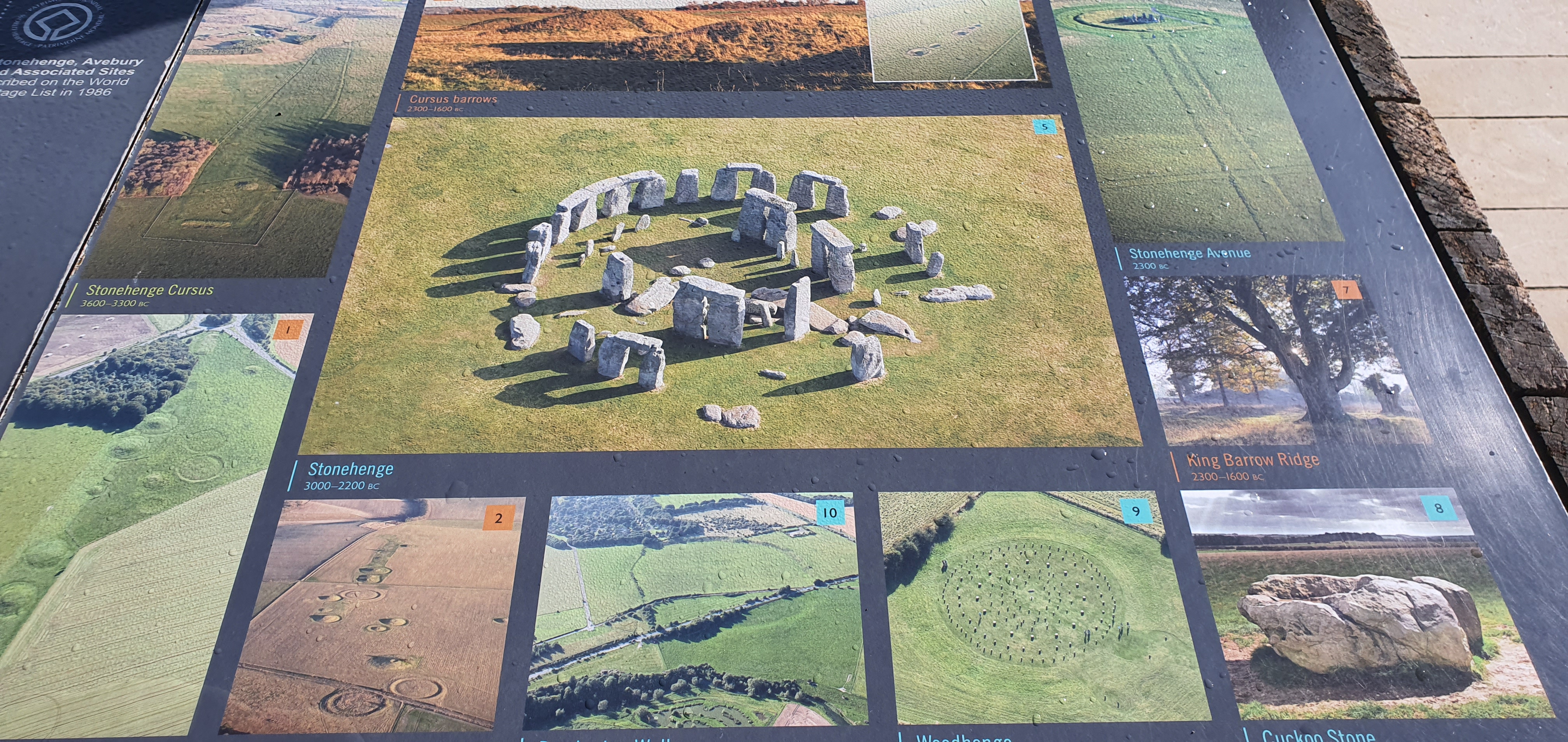
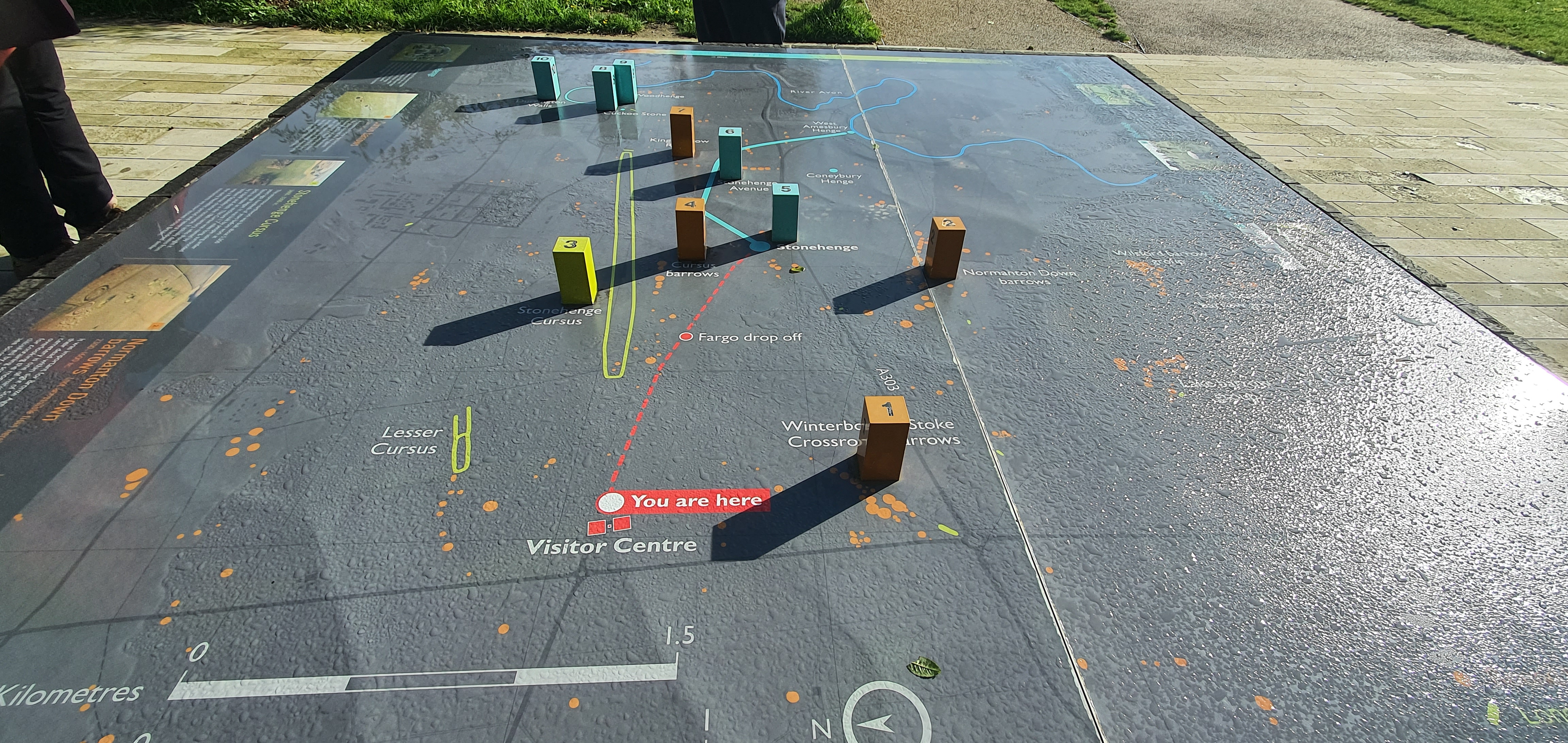
Once you leave the exhibition, you’ll find a large scale map of the UNESCOWorld Heritage Site local landscape including Durrington Walls, Woodhenge and Avebury as well as Stonehenge. It shows how Stonehenge is best considered in its ancient landscape and not in isolation as we often think of it today.
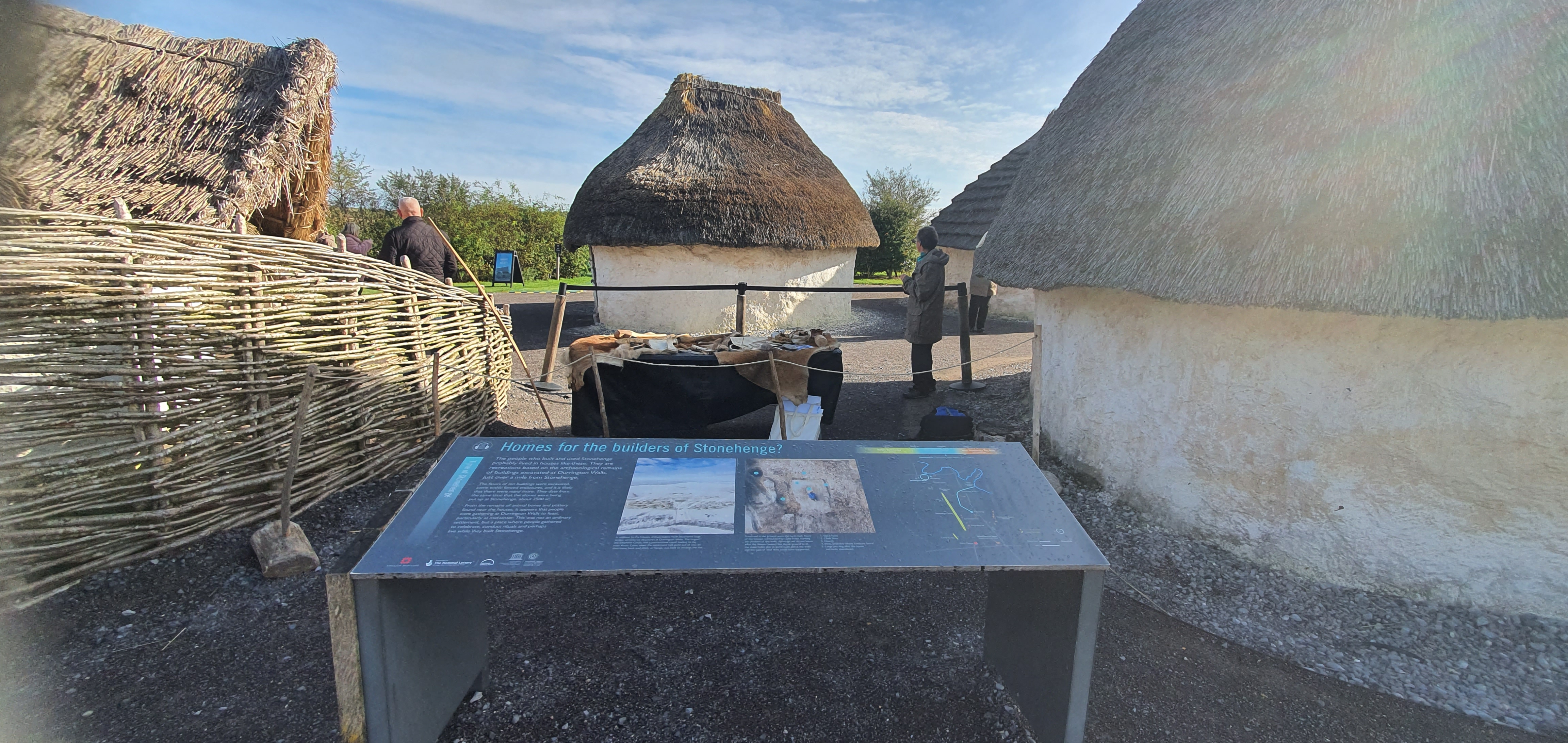
Half a dozen Neolithic houses have been lovingly recreated just outside the visitor and exhibition centre. They are very closely based on archaeological evidence from 100 plus houses in a huge ceremonial earthworks enclosure discovered in 2006/7 about a mile away at Durrington Walls. They dated from about the same time as the erection of the large Sarsen stones at Stonehenge. The houses are constructed with local hazel wood weaved around supporting stakes, with thatched straw roofs and walls of chalk daub. They give a fascinating clue to where the builders of Stonehenge lived during its construction.
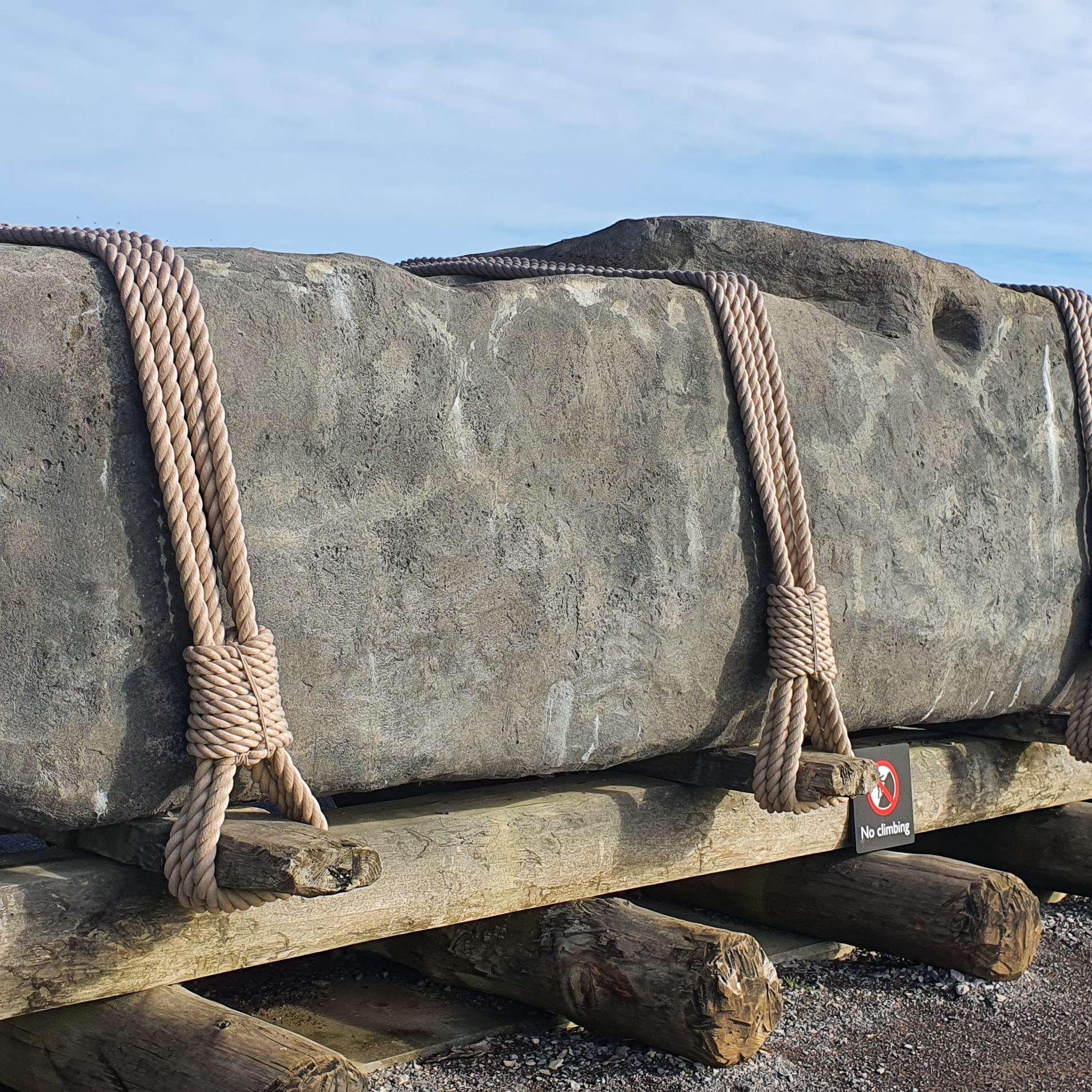
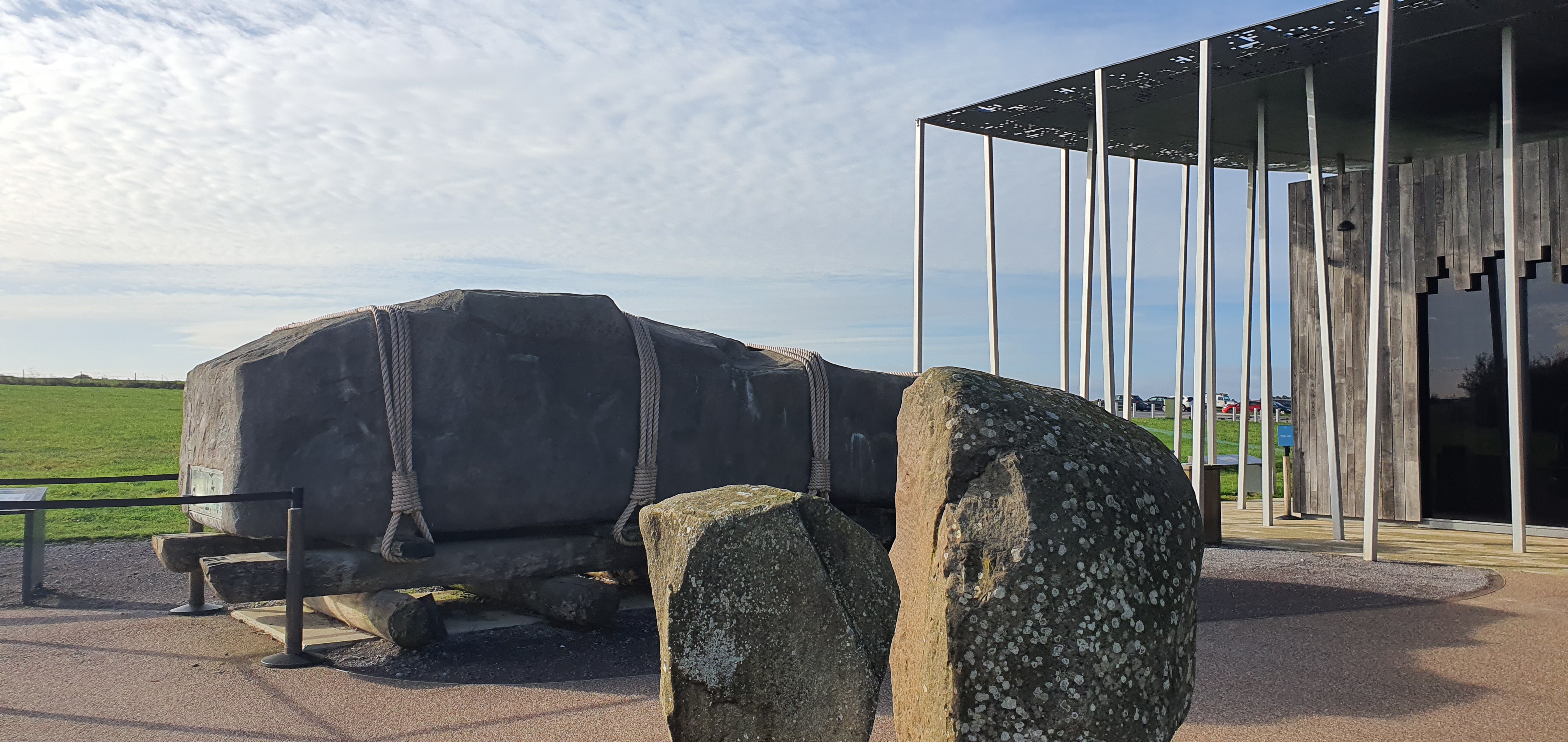
There are two Touching Stones, one of the same material as the Blue Stones and the other of the Sarsens. Feel how they radiate heat from the sun differently, remembering you cannot touch the stones of the monument itself. Right by the touching stones is the ‘Pull A Sarsen’ experience, you can have a go at trying to move a real scale Sarsen that shows how many people it takes to move it if they all pulled as hard as you!
The most important thing to remember before you head up to the stones themselves is to use the public facilities as there is no toilet / washroom up at the monument!
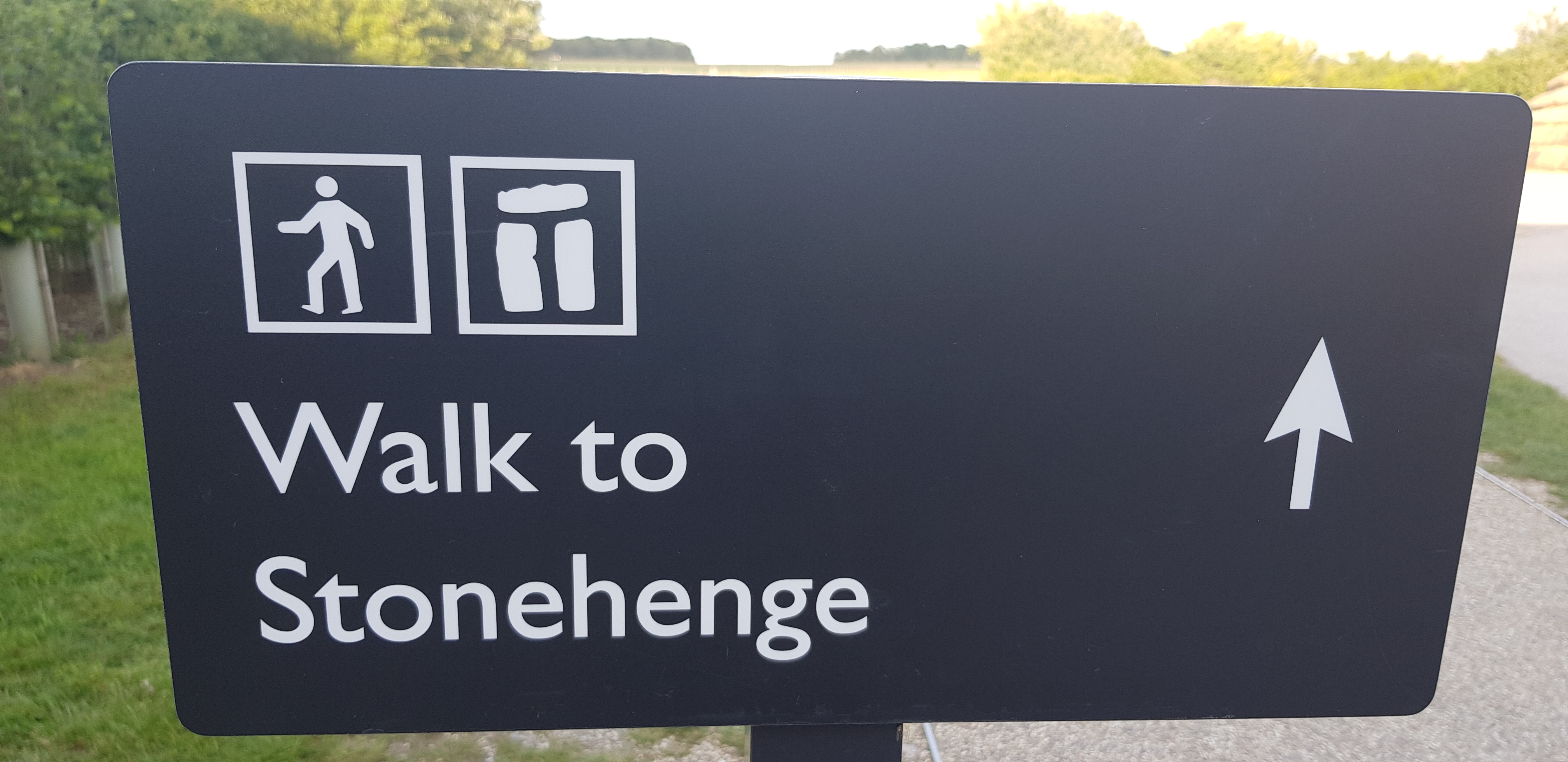
The stones are just over a mile away from the visitor centre and there are two ways to get there. The quickest is the complimentary shuttle bus which runs every ten minutes and takes five minutes. The best way, if you are up for it, is to arrive at Stonehenge on foot, through the landscape. You get to experience the unchanged landscape just as our Neolithic ancestors did.
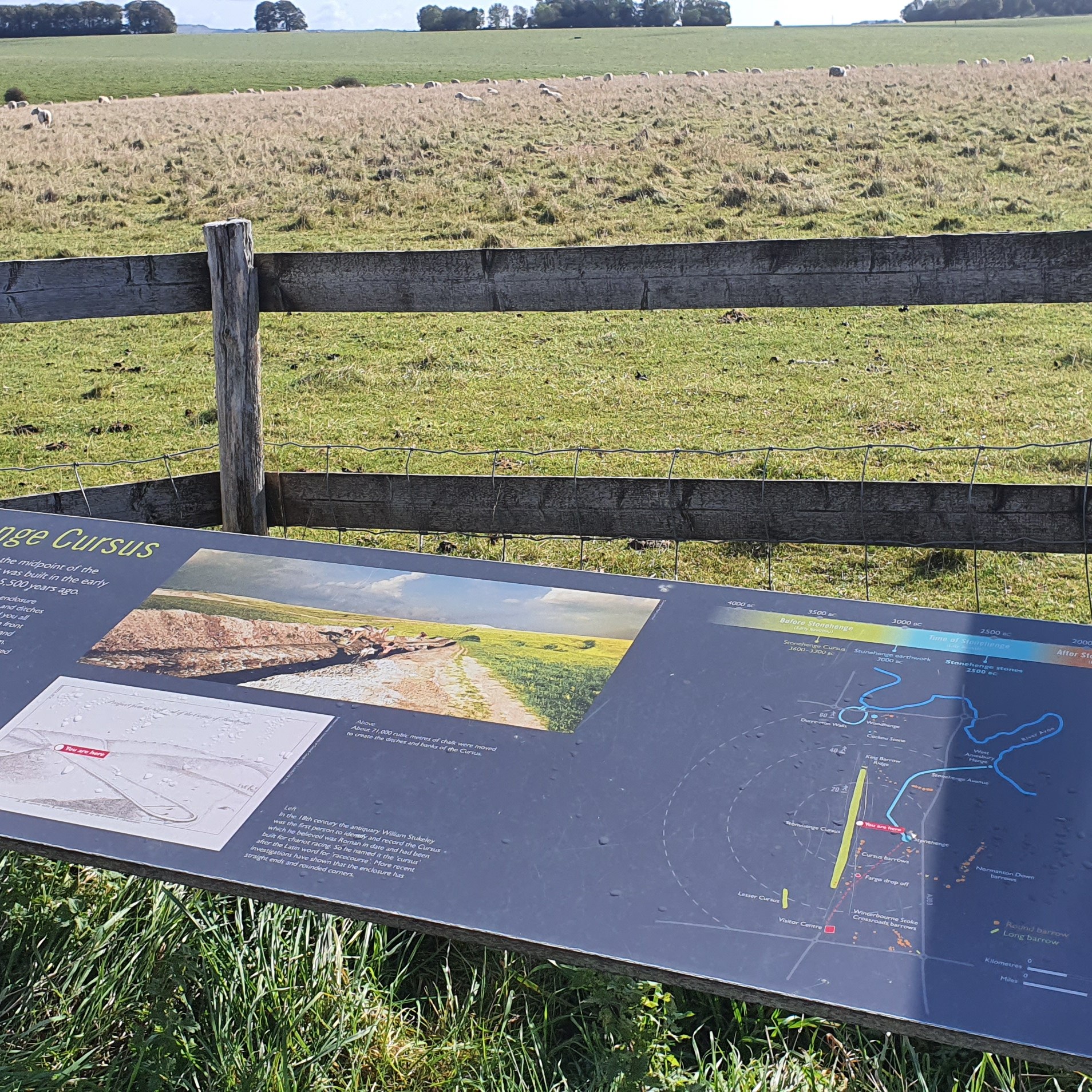
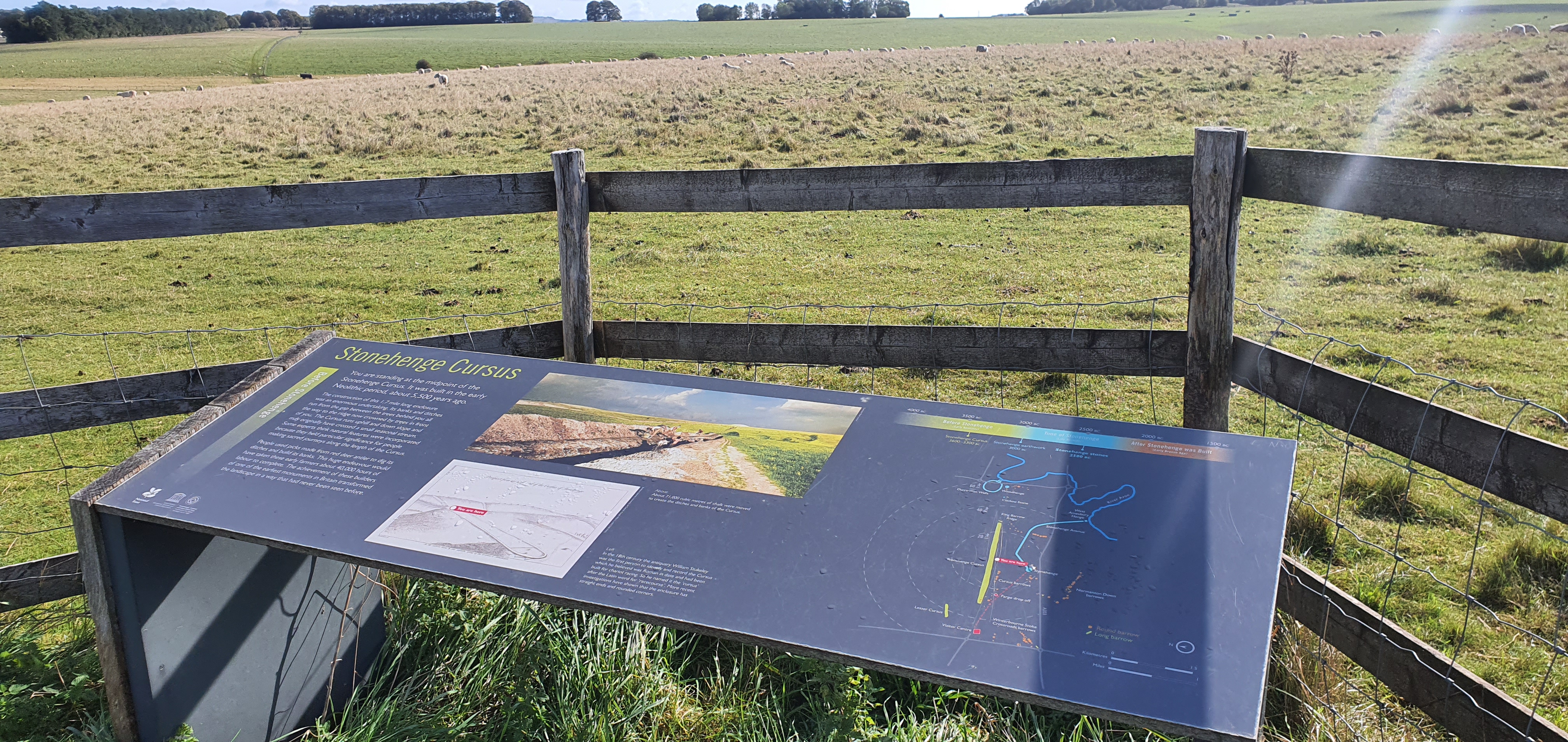
I can walk up to the stones in 15-20 minutes walking at my usual pace so give yourself a leisurely half hour. Fargo Wood marks a halfway point to the stones and is a great place to get close up to one of the many burial mounds. You can’t miss them – they look like big overturned dessert bowls covered in grass and are not giant mole hills! As you walk up to the stones, use the audio guide to for information about The Long Barrow, The Avenue and Cursus.
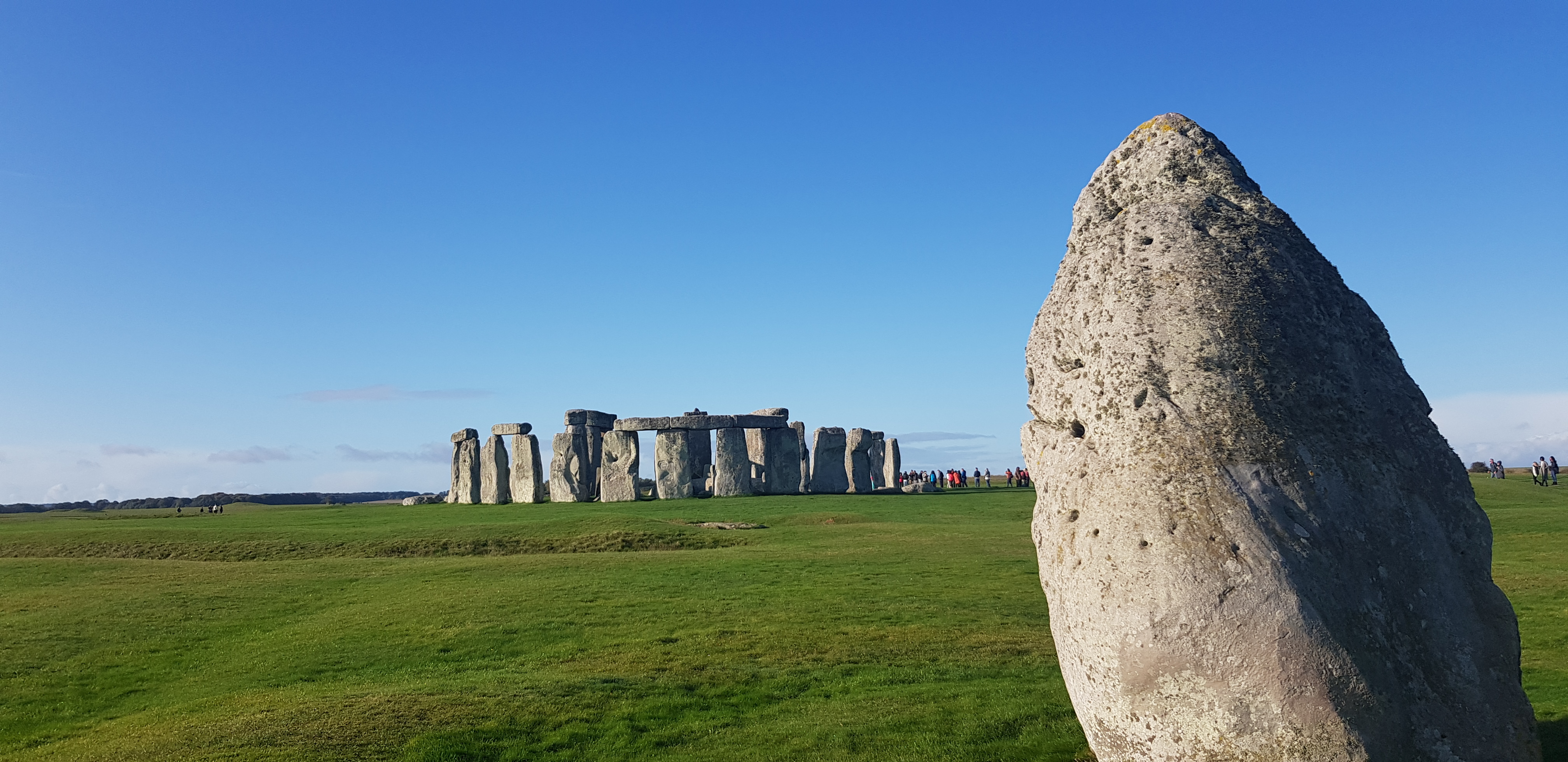
Once at the monument itself I recommend you walk in a clockwise direction, towards the Heel Stone (which marks the place on the horizon where the summer solstice sunrise appears when viewed from the centre of the stone circle) and The Avenue, connecting the River Avon with Stonehenge. Here you’ll get a great opportunity to take photos of the best views of the monument – the Heel Stone and section of outer ring of Sarsen stones that are still capped with their lintels. Once you have that Iconic shot remember to take it all in, enjoy your time by the stones! There is a rope barrier around the monument that takes you away from the site to get a good feel of the Henge (earth works) that the stones are set inside, before it allows you to the closest point of your visit for some great up close photos. If the stones are wet you may be able to see some of the carved graffiti – see if you can spot where Sir Christopher Wren (architect of St. Paul’s Cathedral) carved his name twice on the stones!
Now you can choose to walk back to the visitor centre through the landscape you will now be so aware of or get the shuttle bus if your feet are tired.
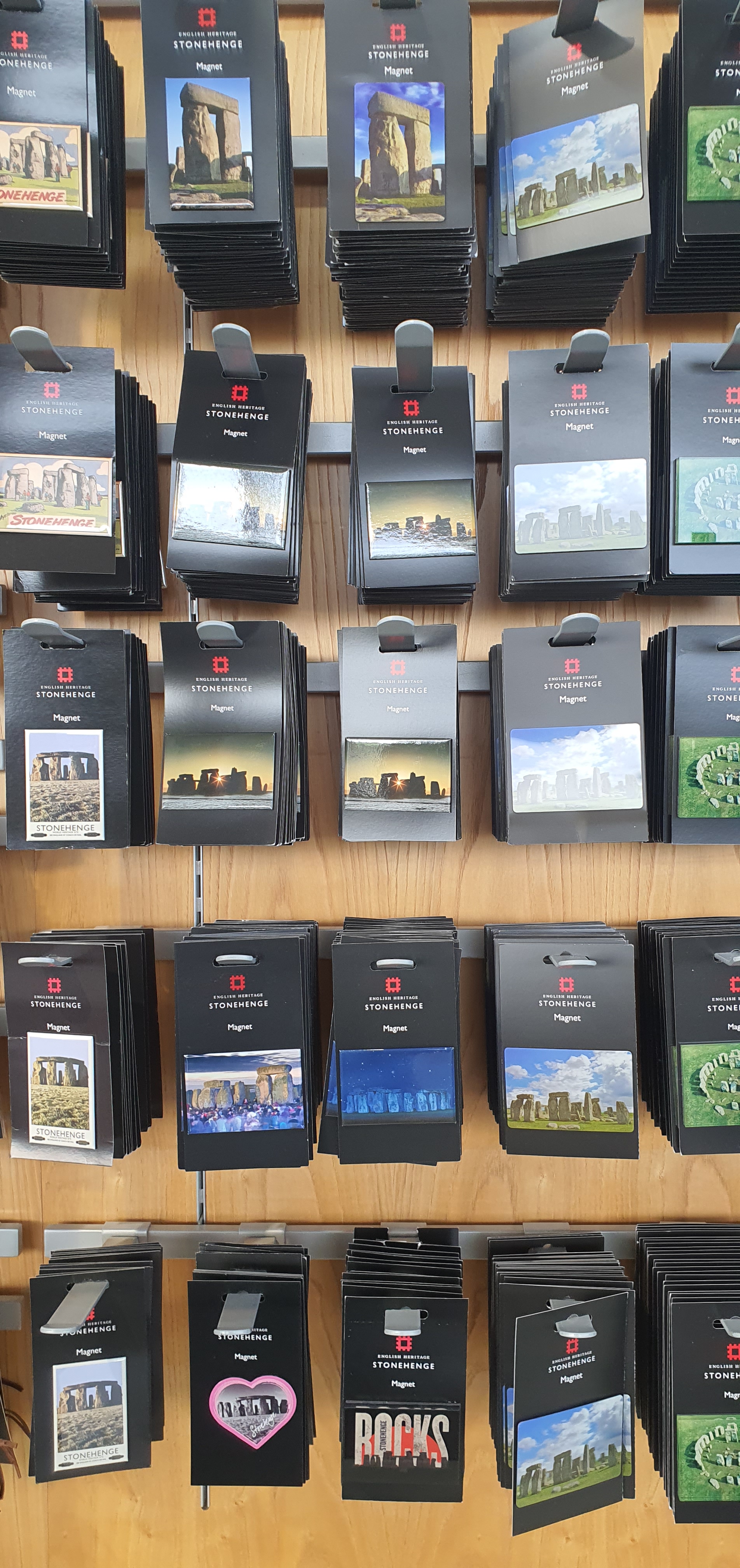
Once back at the visitor centre you can’t ignore the shop for a memento of your visit. My favourite items have ‘Stonehenge Rocks’ emblazoned on them! There’s everything from postcards and pop-up books to beautiful bespoke jewellery and even a limited edition Stonehenge Monopoly!
Before you leave there is also the cafe to grab a coffee and reflect on your experience at one of the most iconic monuments in the world.
At present the indoor exhibition and cafe are closed. There is an outside concession stall for takeaway refreshments. The shop is open with face coverings required and safety measures in place. Indoor spaces at the site are due to open 17th May. Please check the website for current restrictions before your visit. Stonehenge’s audio guide handsets aren’t available. Instead, download the free app, which has similar (good) information, and take headphones.
Salisbury Reds have frequent tour buses departing from Salisbury city centre and can also include Old Sarum Hill Fort.
The Stonehenge Travel Company can meet you in Salisbury or the railway station and conduct small group private guided tours at very reasonable prices. They also include Durrington Walls and Woodhenge.
The summer solstice celebration at Stonehenge is a once-in-a-lifetime experience that happens every year. Unless you are lucky enough to live close by for many of the thousands of sun-worshipping pilgrims who flock to the unique UNESCO World Heritage monument, it really is a bona fide top grade ‘bucket list’ experience, up there with visiting the Great Pyramids of Giza, Uluru (Ayers Rock), the Taj Mahal, or Machu Piccu – for Stonehenge is indubitably one of the seven modern wonders of the world.
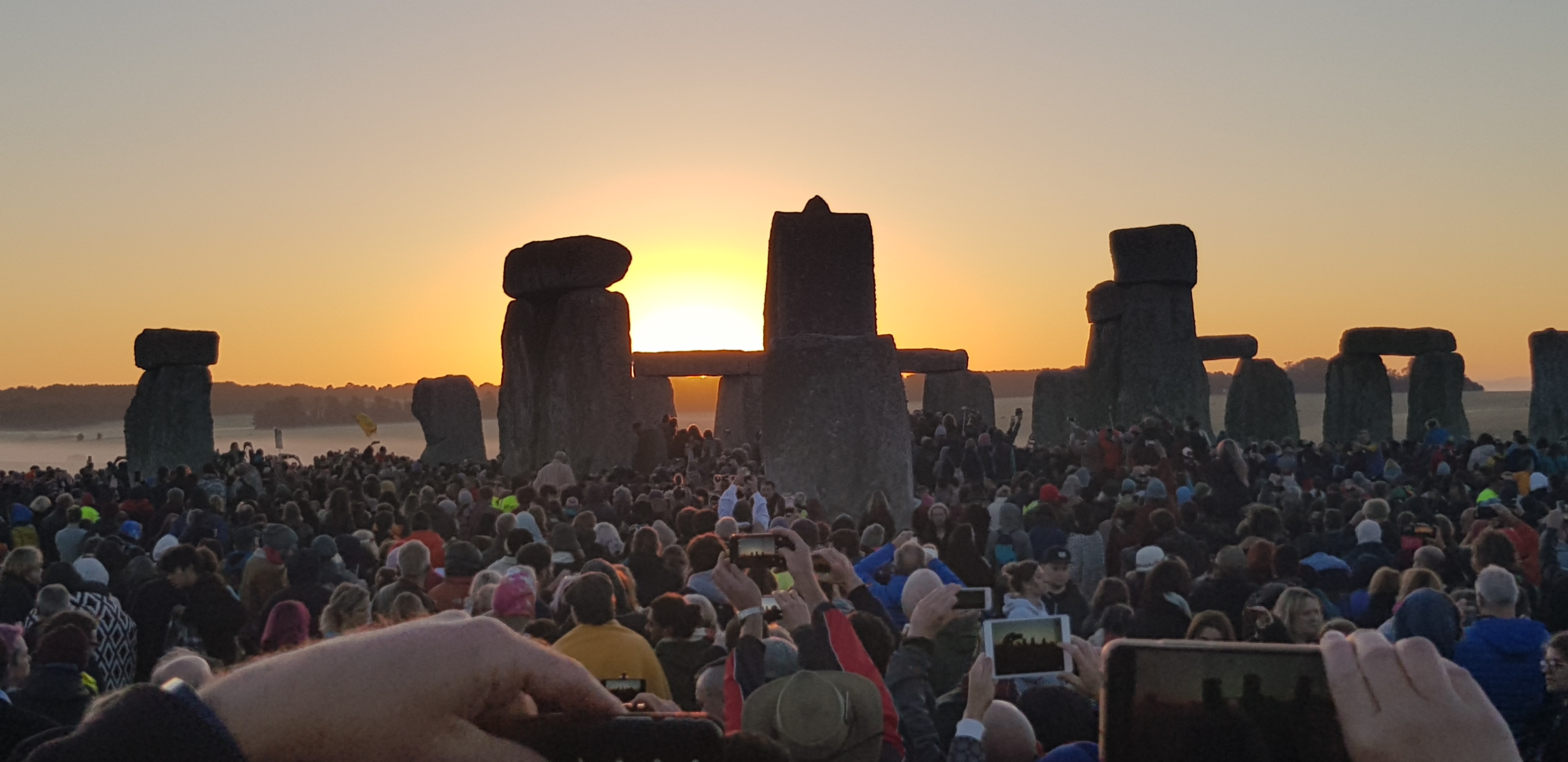
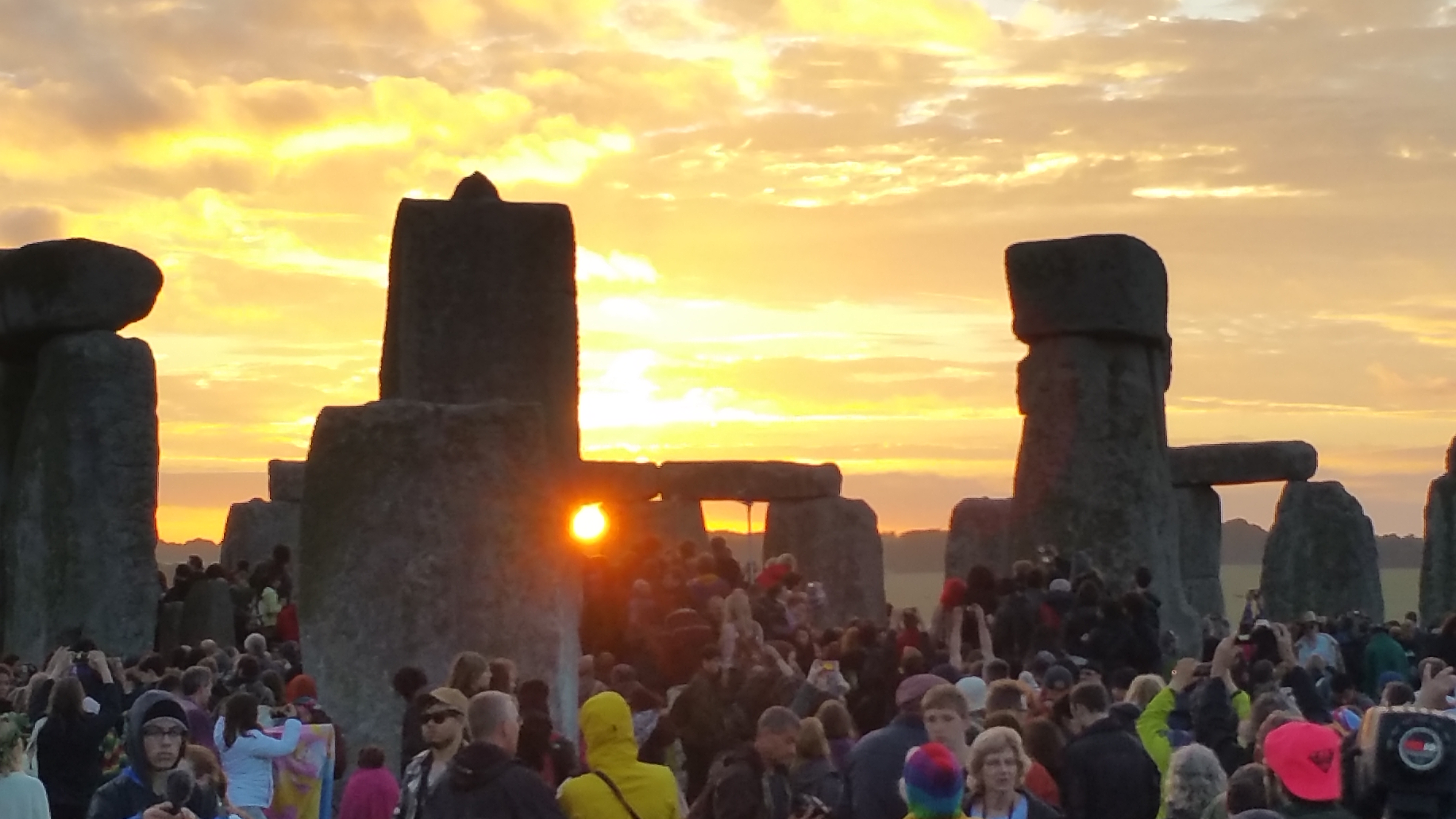
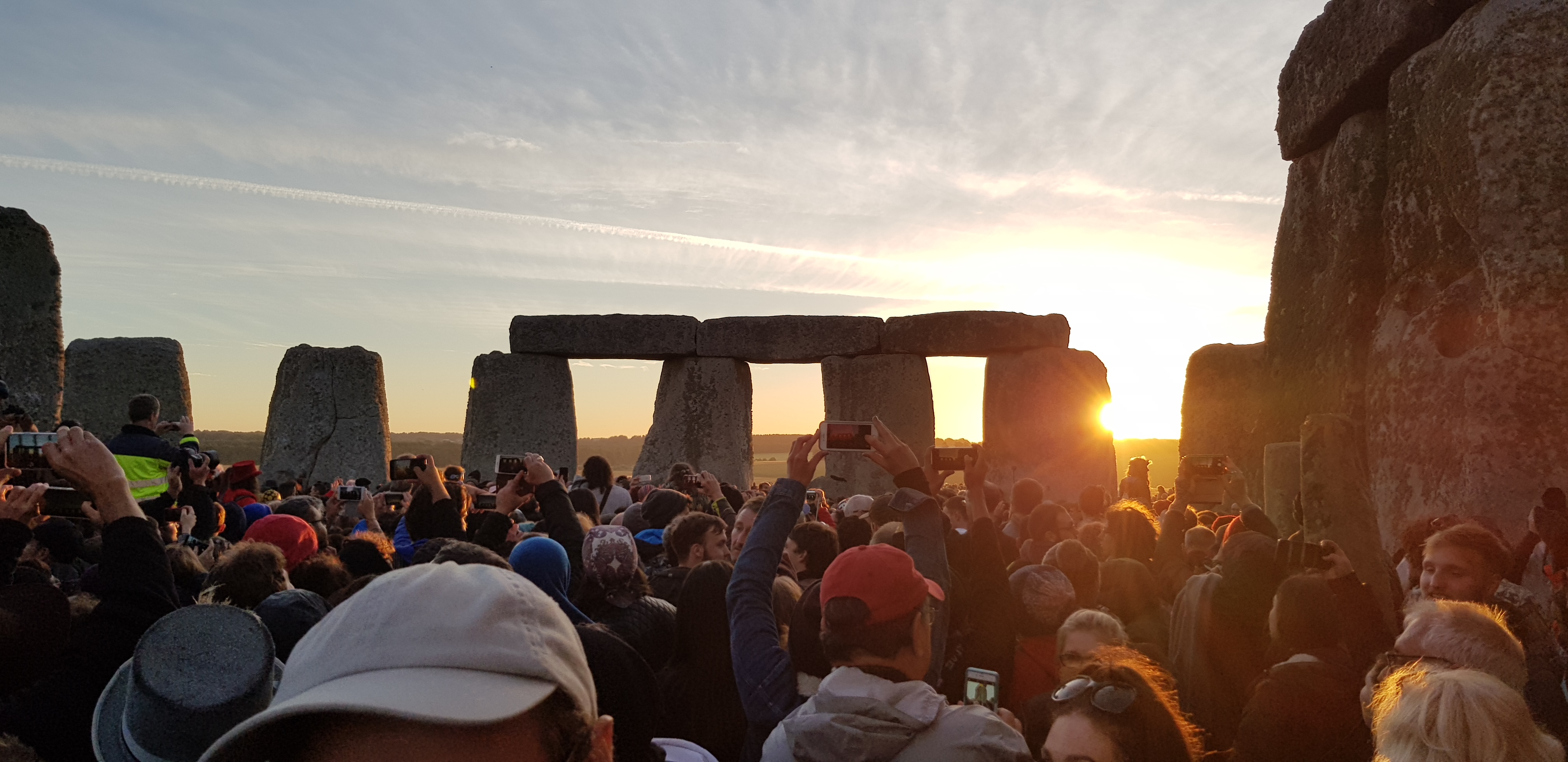
Once seen up-close-and-personal, which is only possible at the solstices and equinoxes (excluding pandemics and other acts of god), unless a private access tour is booked, the stones are never forgotten. Visitors who make a special effort to visit Stonehenge specifically at the time of the summer or winter solstices will experience something perhaps indistinguishable to the Neolithic affect intended by its architects and priesthood over the 1500 years of its construction (3100-1600 BCE) and primary usage – for the 75 interlocking sarsen stones, and (approximately) 80 blue stones are, among other things, a gigantic solstice engine: designed to be a place to not only precisely observe the summer solstice sunrise and winter solstice sunset, but a place activated by this vast celestial drama.
If there could said to be a single ‘Stonehenge code’ that unlocks its mysteries it is the giant solar key that turns in its Neolithic lock twice a year. And it is this grand spectacle, aligning self-reflective carbon-based bipeds with the near miraculous nuclear fusion of the life-sustaining sun, which draws the hordes from across the globe. When witnessed, it is a moment of primal power – a universal leveller that connects all who gather in an instant international fellowship of life-affirming light.
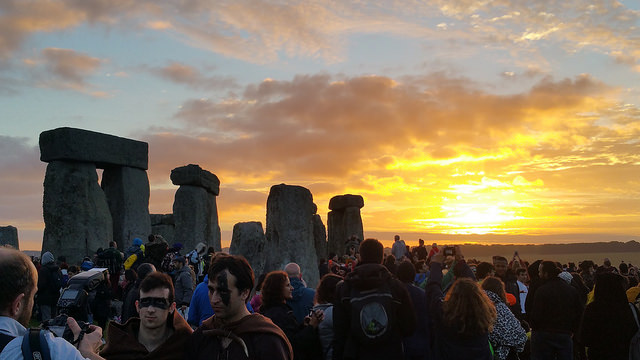
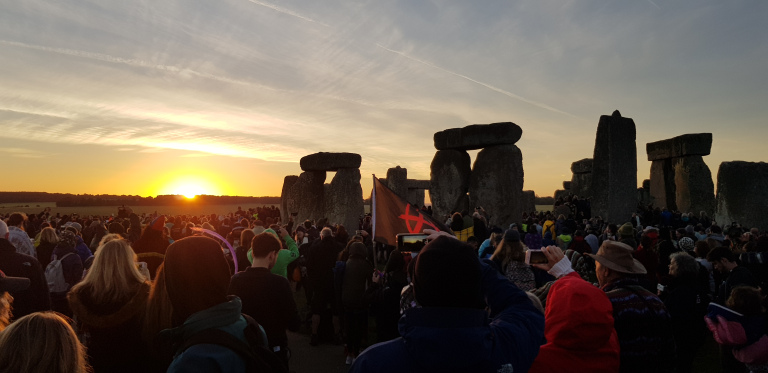
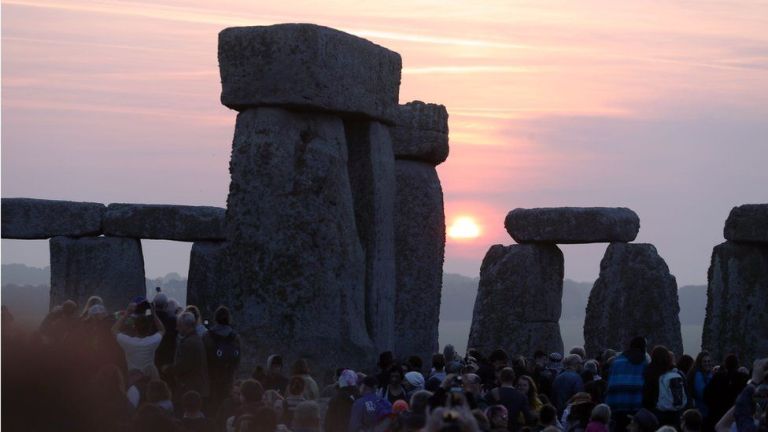
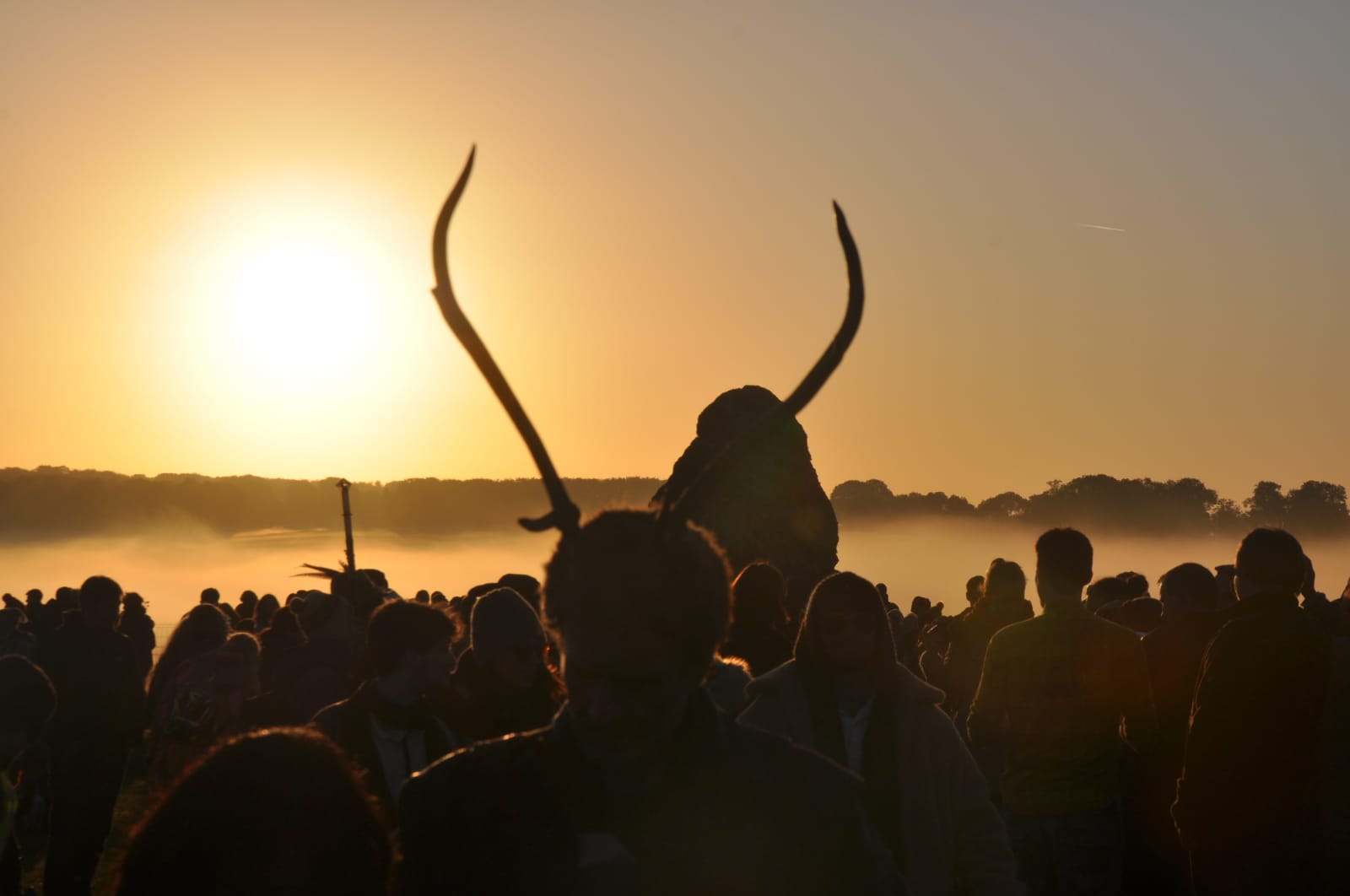
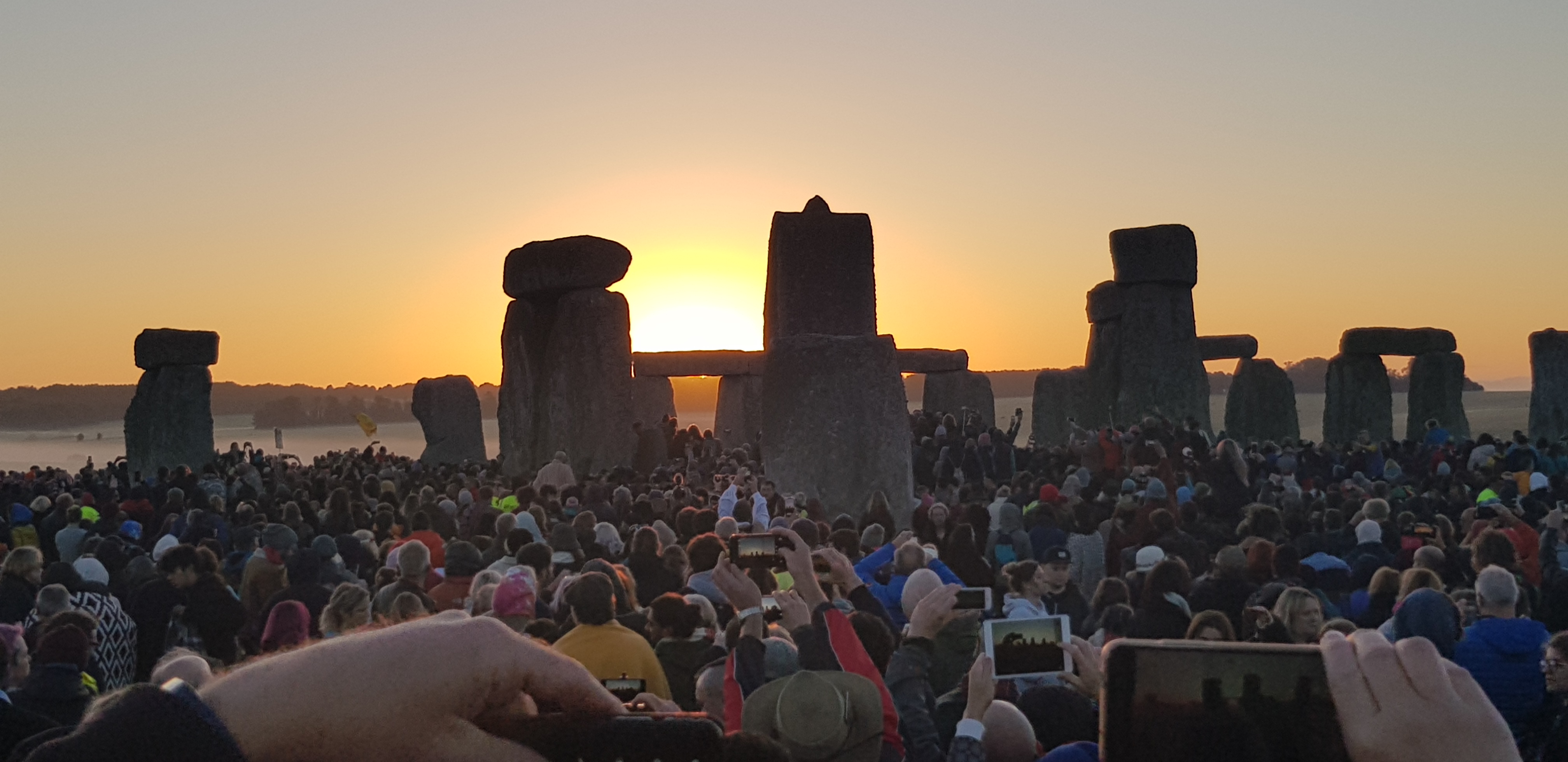
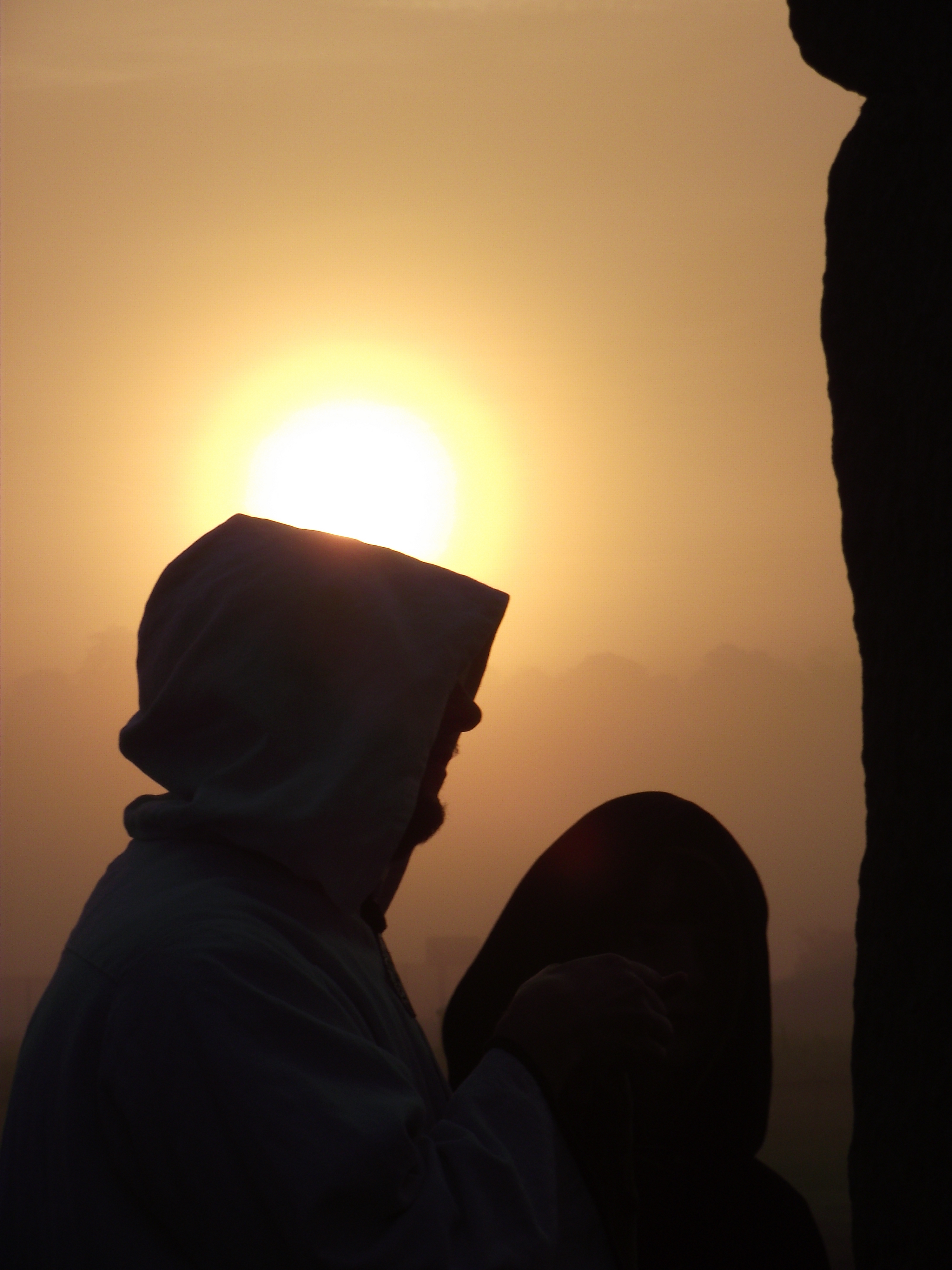
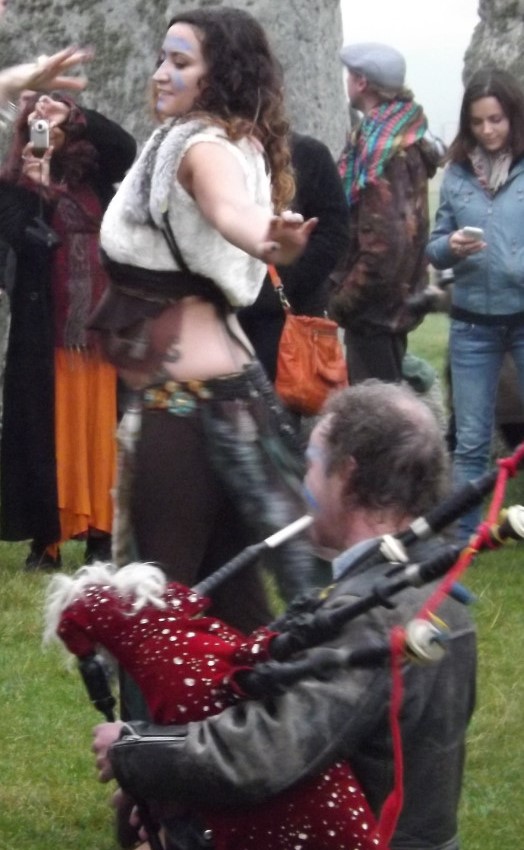
The energy released by the summer solstice sunrise is a visceral whoop of joy: a universal ‘Yes!’ that makes those holding vigil erupt spontaneously into cheering, chanting, hugging, and dancing. It is a beautiful moment that cuts through all barriers, and the party that often builds throughout the preceding night really erupts at this point – but it is one without alcohol or drugs. For even if such things were not firmly forbidden by English Heritage (and bags are scrupulously checked before entry), they are really not needed in the natural euphoria of the moment.
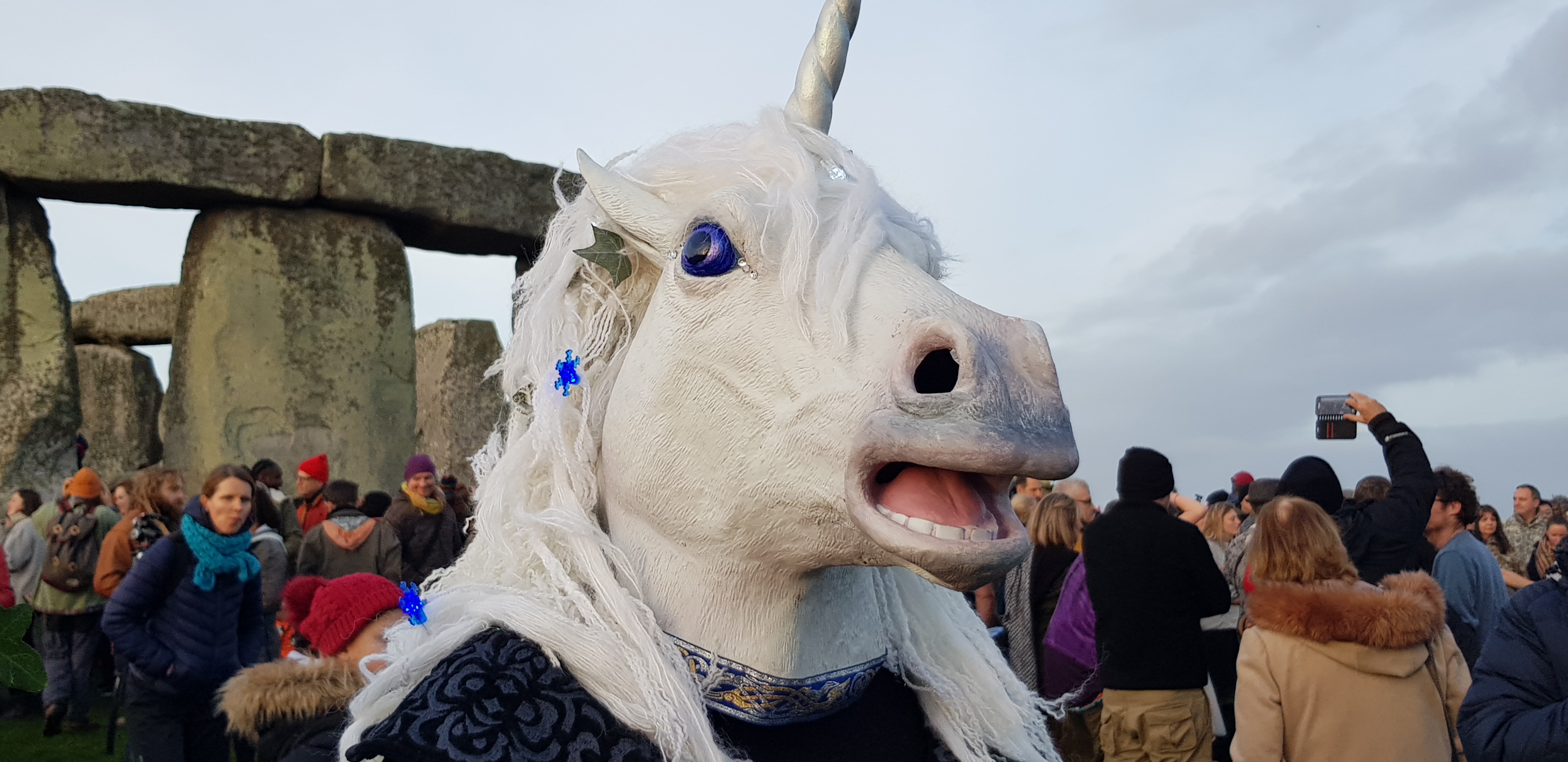
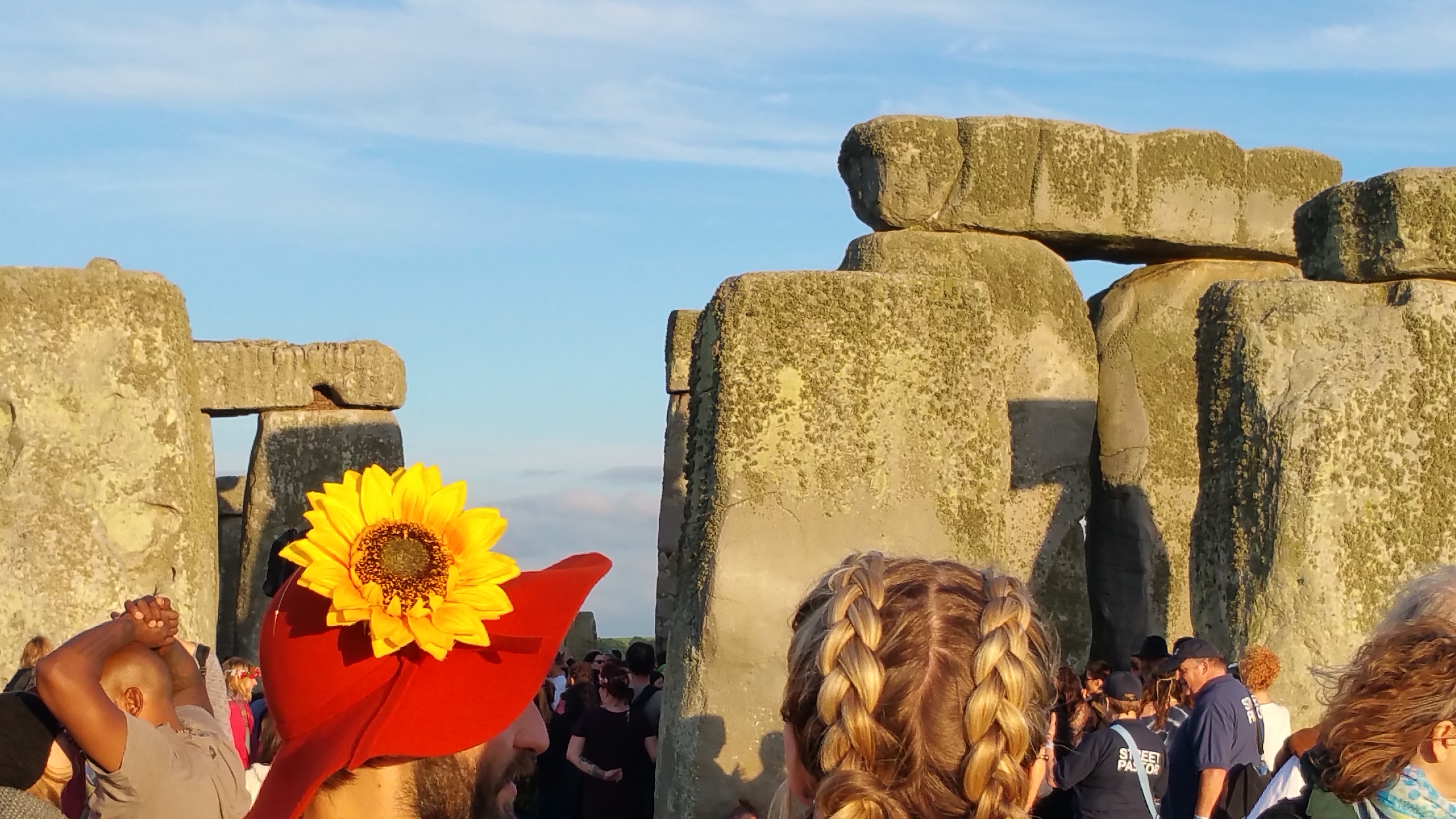
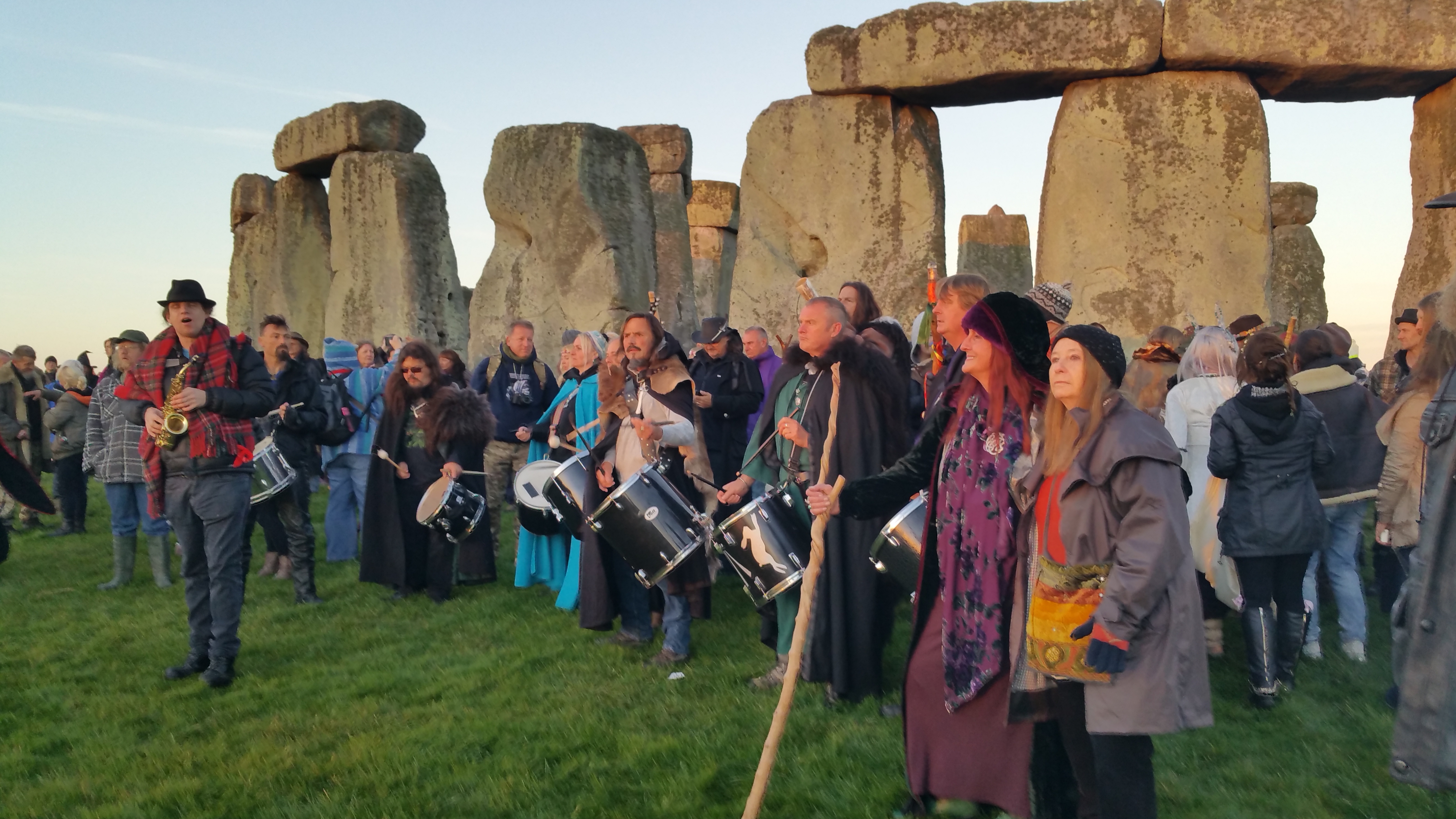
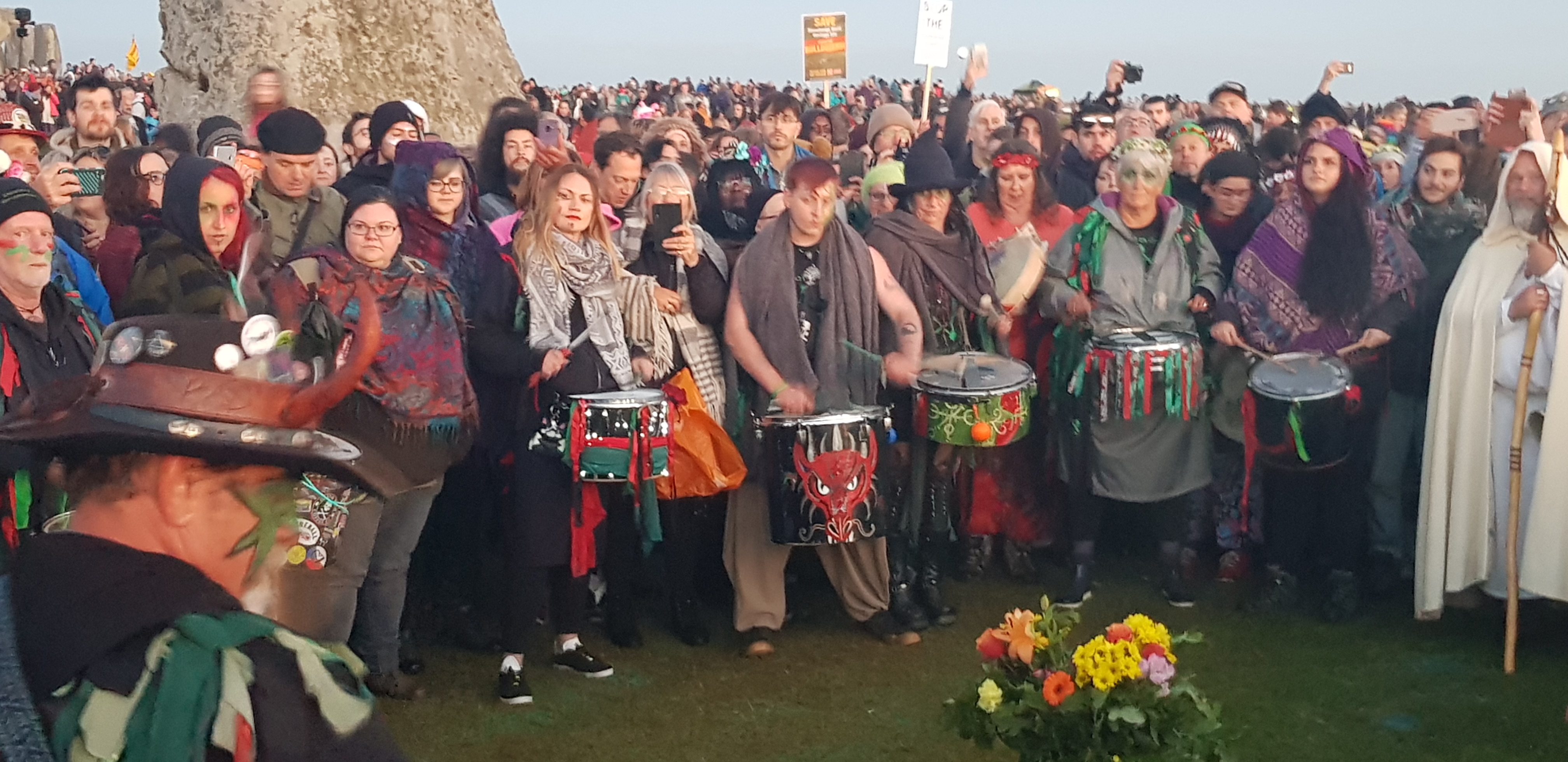
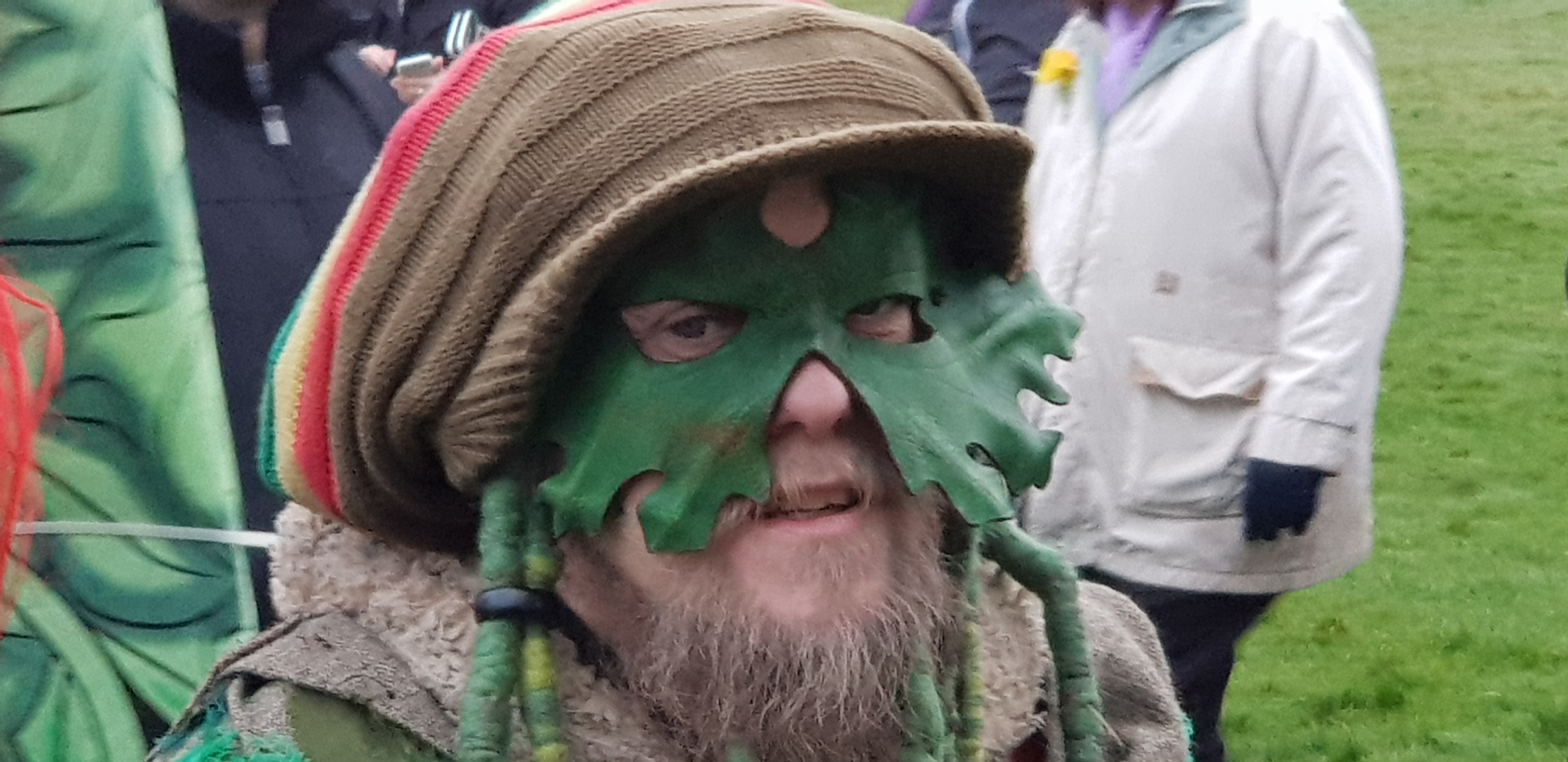
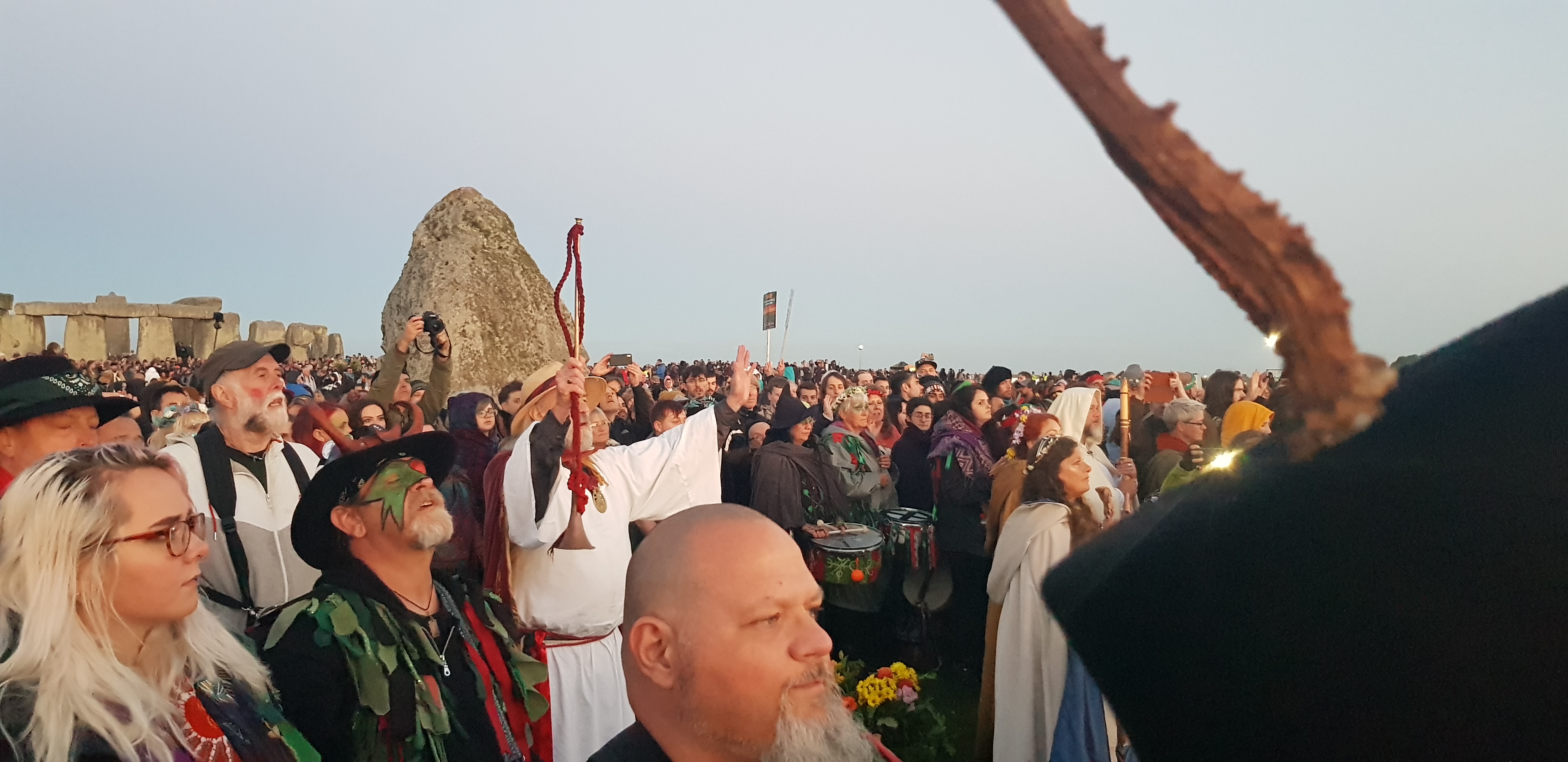
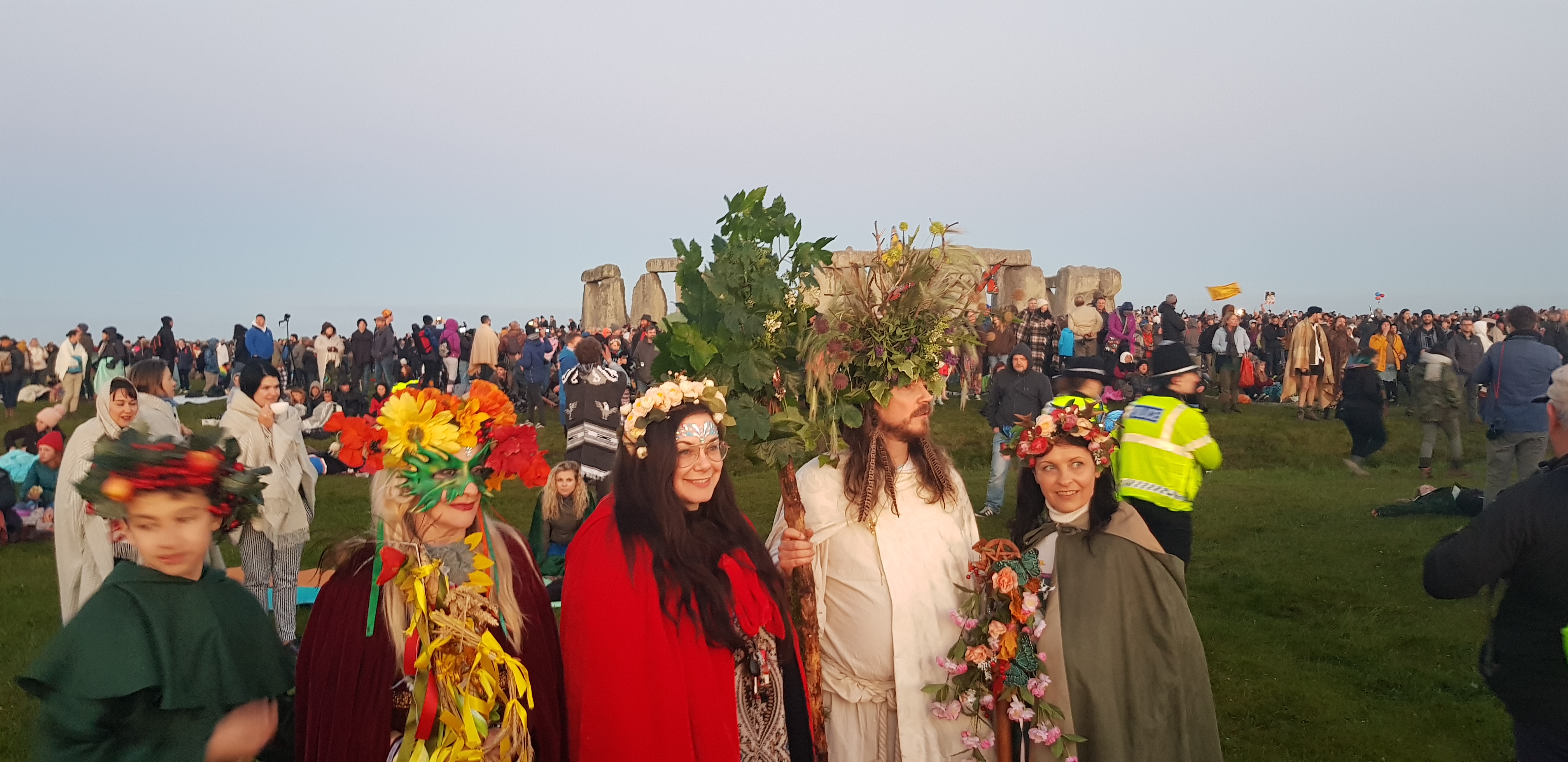
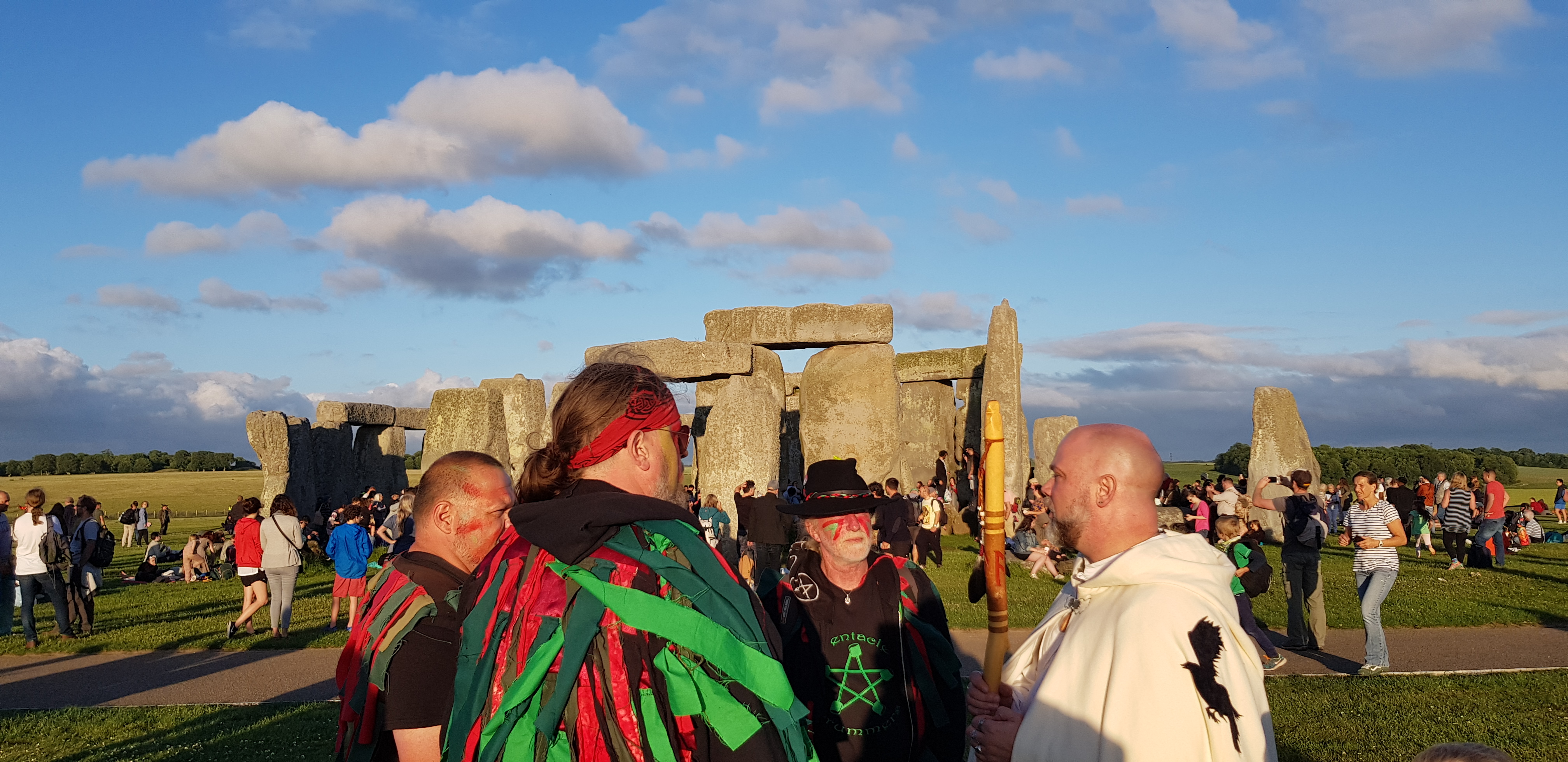
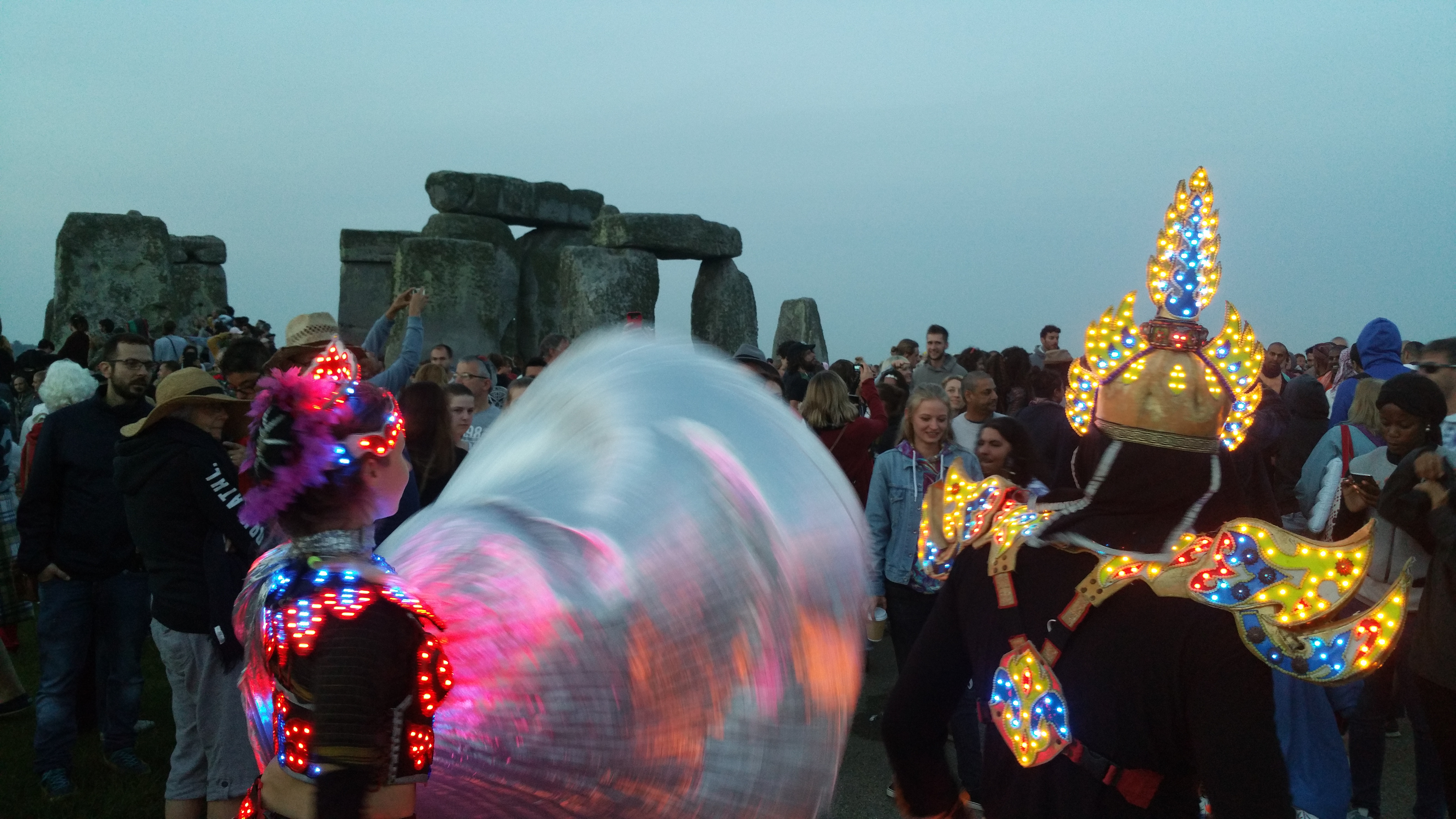
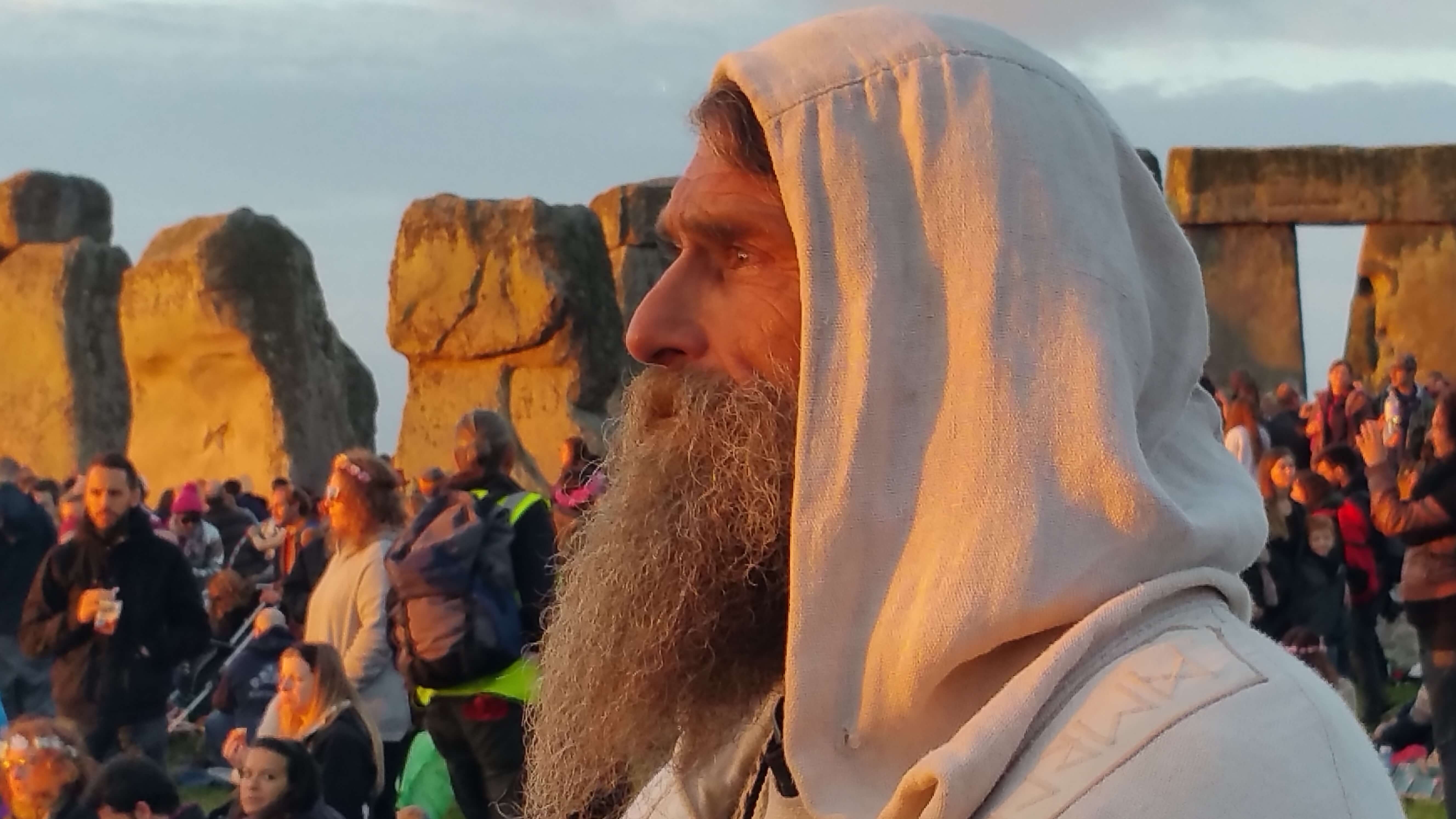
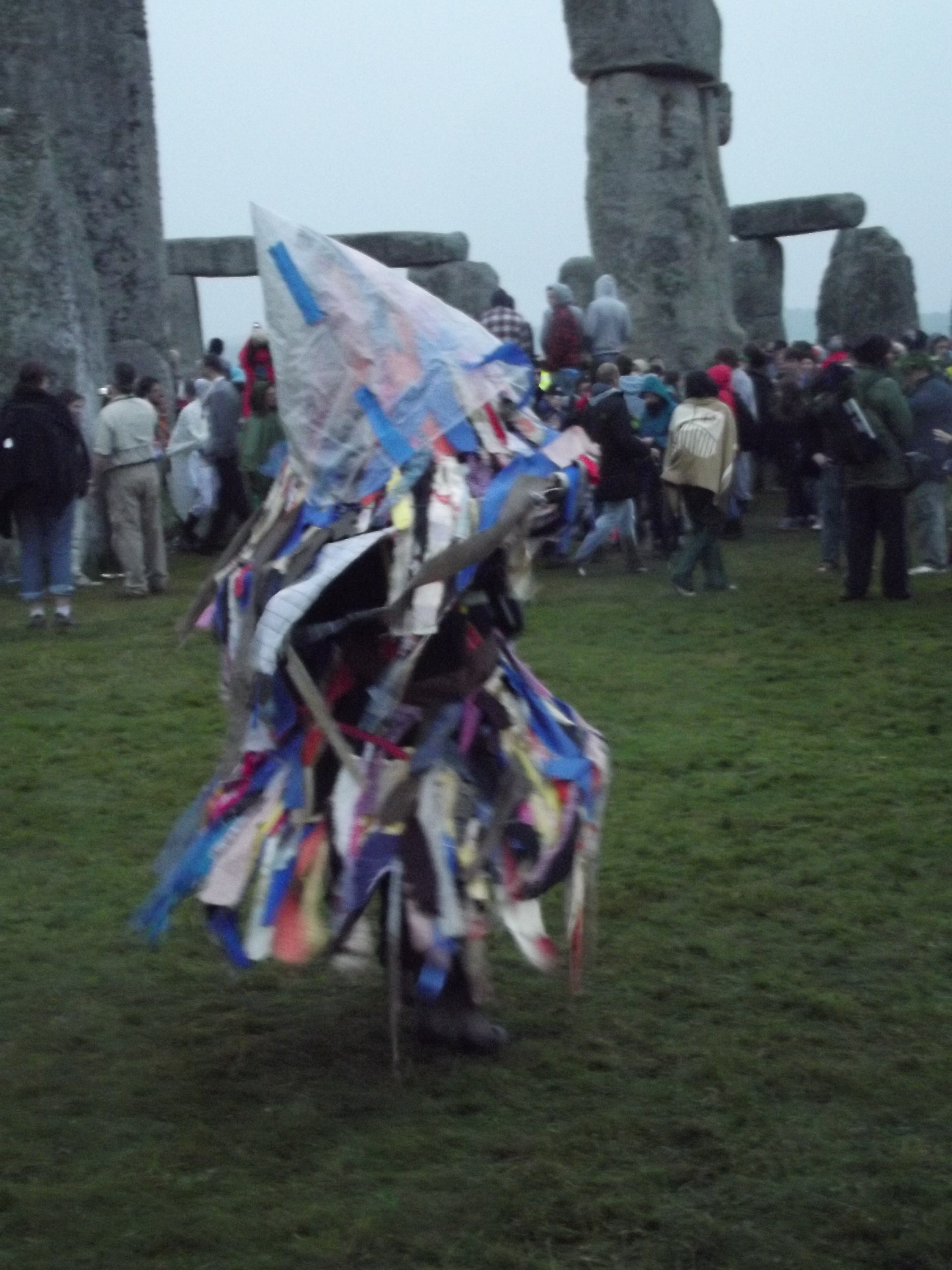
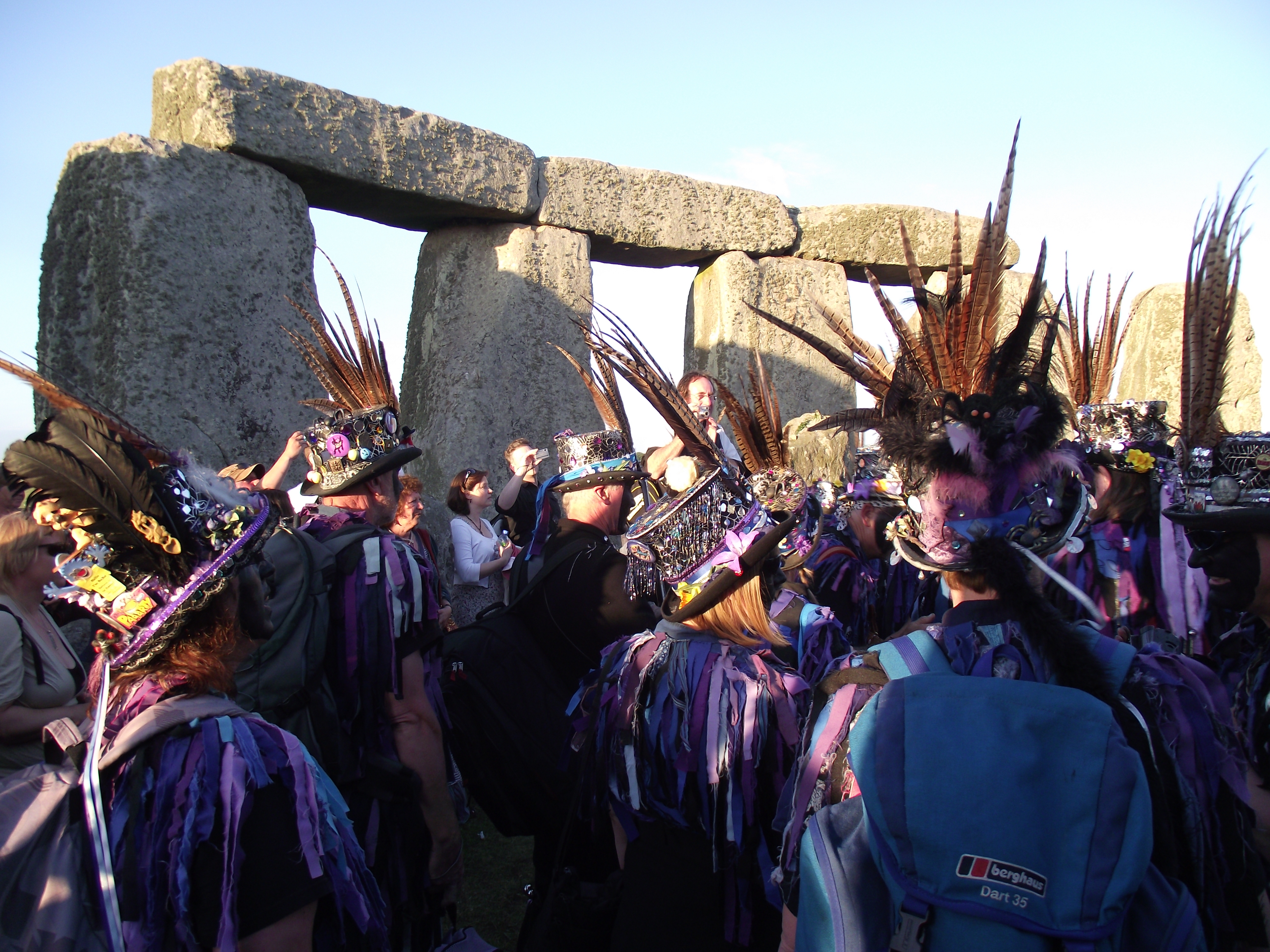
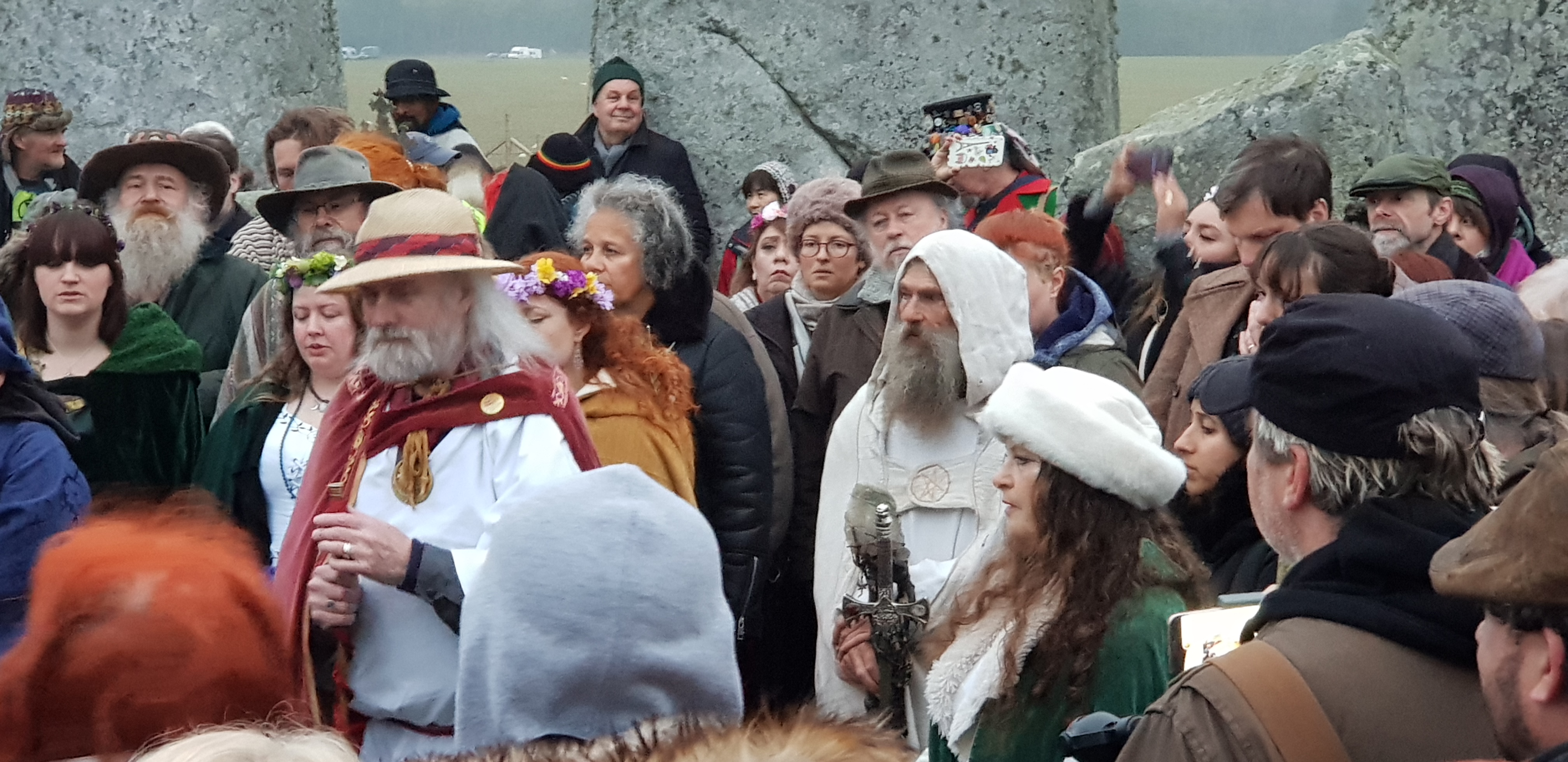
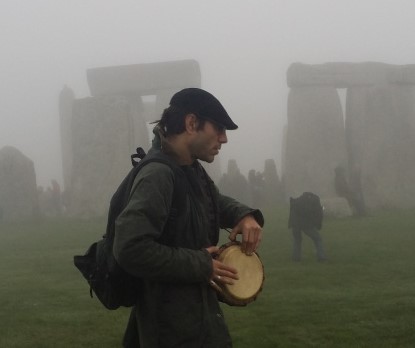
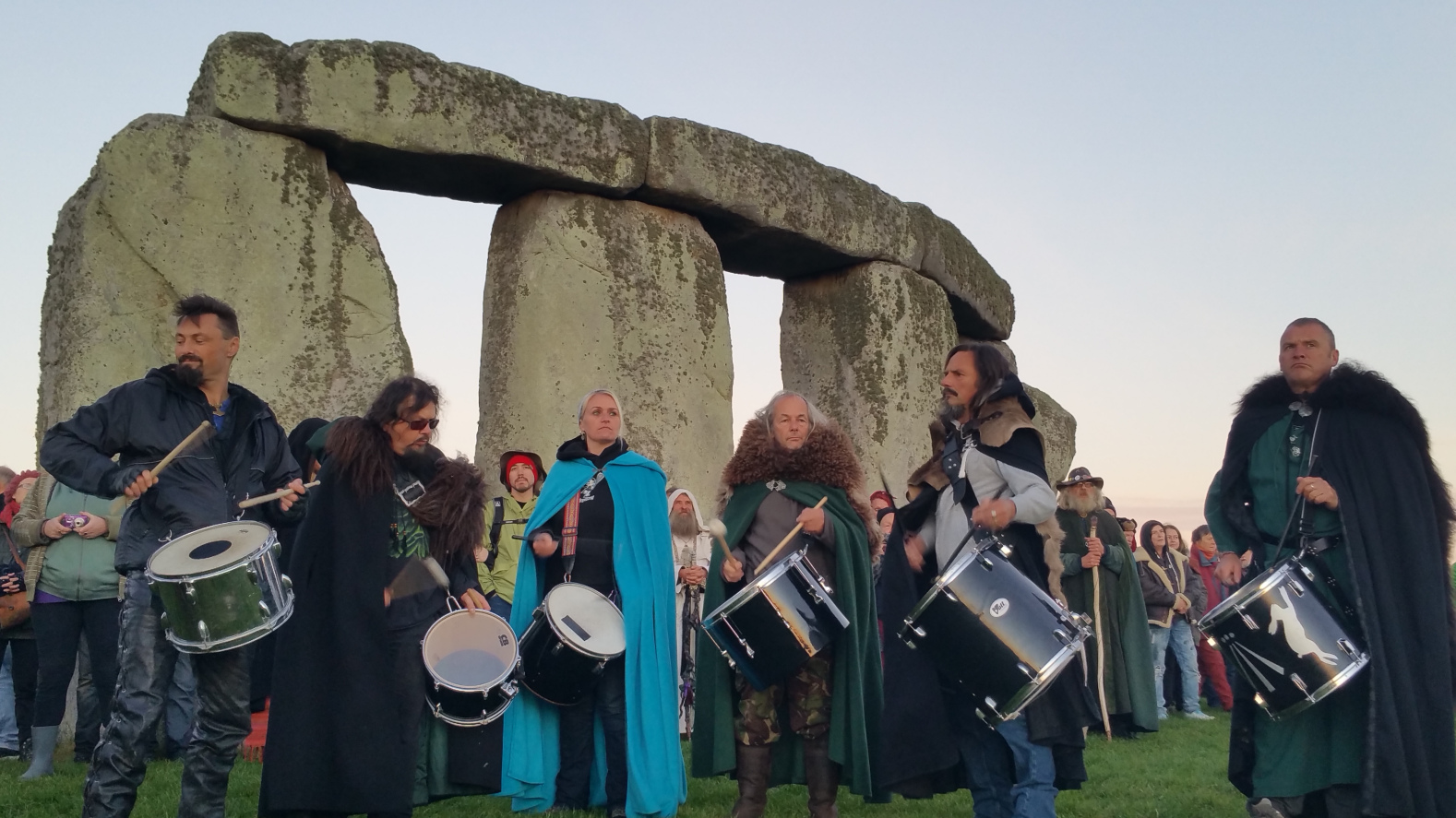
The family-friendly atmosphere is warm-hearted and infectious – one can simply wander amid the stones and revellers enjoying the vibes; join in a druidic ceremony; witness a handfasting (a pagan wedding), knighting (performed by no less than King Arthur Pendragon), or a barding in the gorsedd bardic circle that traditionally follows the dawn druid ceremony. One can dance with wild abandon to a drumming circle, or join in yourself if you bring along a percussive instrument – but be warned, for suddenly you can find yourself shaking your feathers next to a unicorn, dragon, green man, or fairy! If you prefer you can meditate by a stone, imbibing the energy lines that have been tangibly dowsed around the temple – a nexus for many mysterious forces, both visible and invisible.
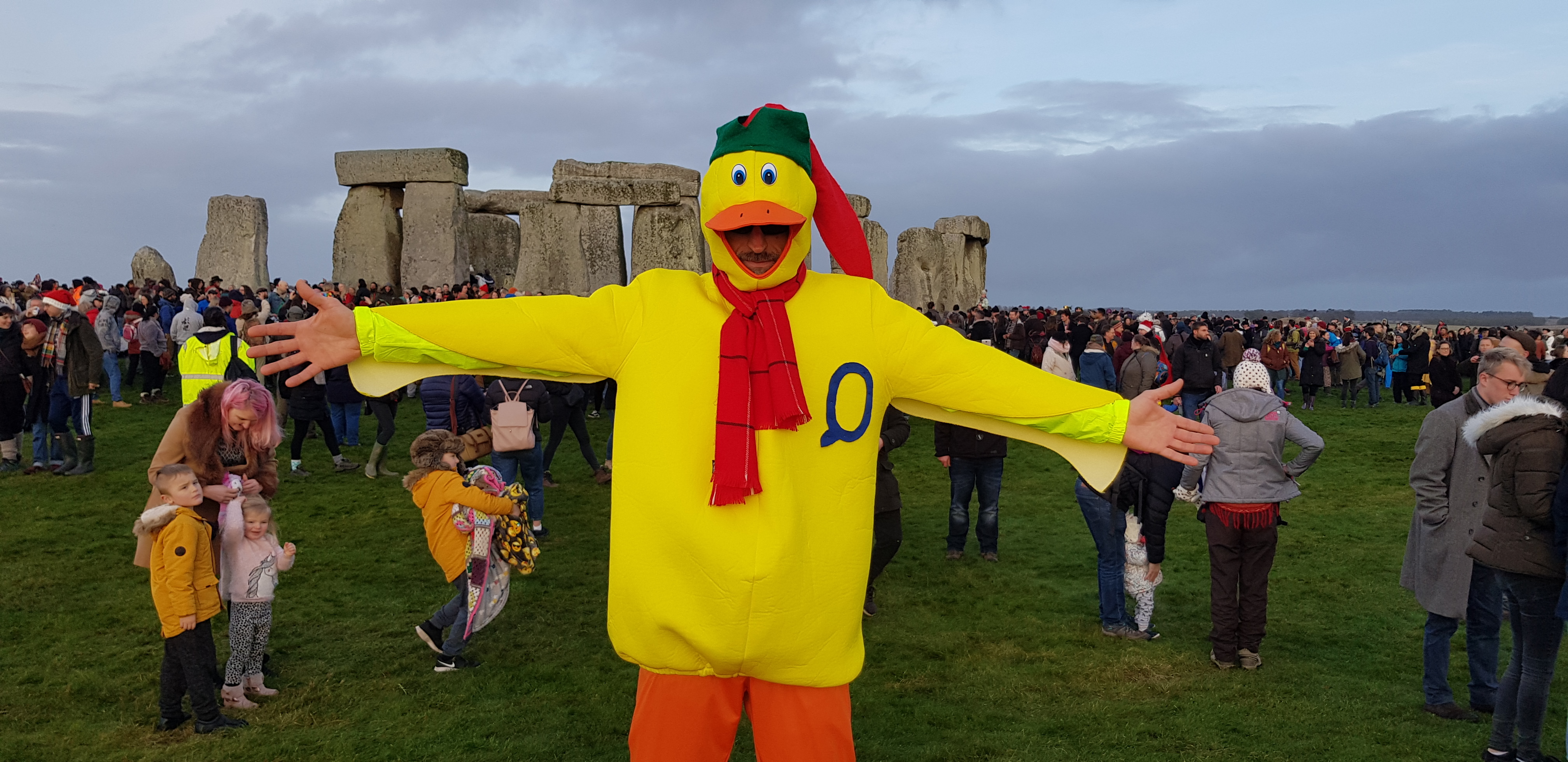
Open your eyes for a moment and don’t be alarmed to see a Great Bustard waddle by (the magnificent Gertrude, who returns annually); the cast of Hair the Musical; or a concertina-playing Christmas tree. The atmosphere is unique and can perhaps be epitomized as Woodstock remixed through the British Counter Culture: the pixie-punks of the anarcho-traveller Peace Convoy meet the refugees of the Summers of Love (’67; ’88-89), blended with a mash-up of every fashion wave and belief bubble before and since. Whether you want you to sing your heart out with the Sing Shakti Choir, hug a hippy, connect with ancient earth energies or cosmic cross-currents, take iconic selfies and panorama shots to make your friends green with envy back home, or simply just be, Stonehenge is big enough for all persuasions.
It is the broadest church with the biggest heart, and it waits to enfold you in its timeless embrace. Come and join the celebration – a five thousand year long party that everyone is invited to.
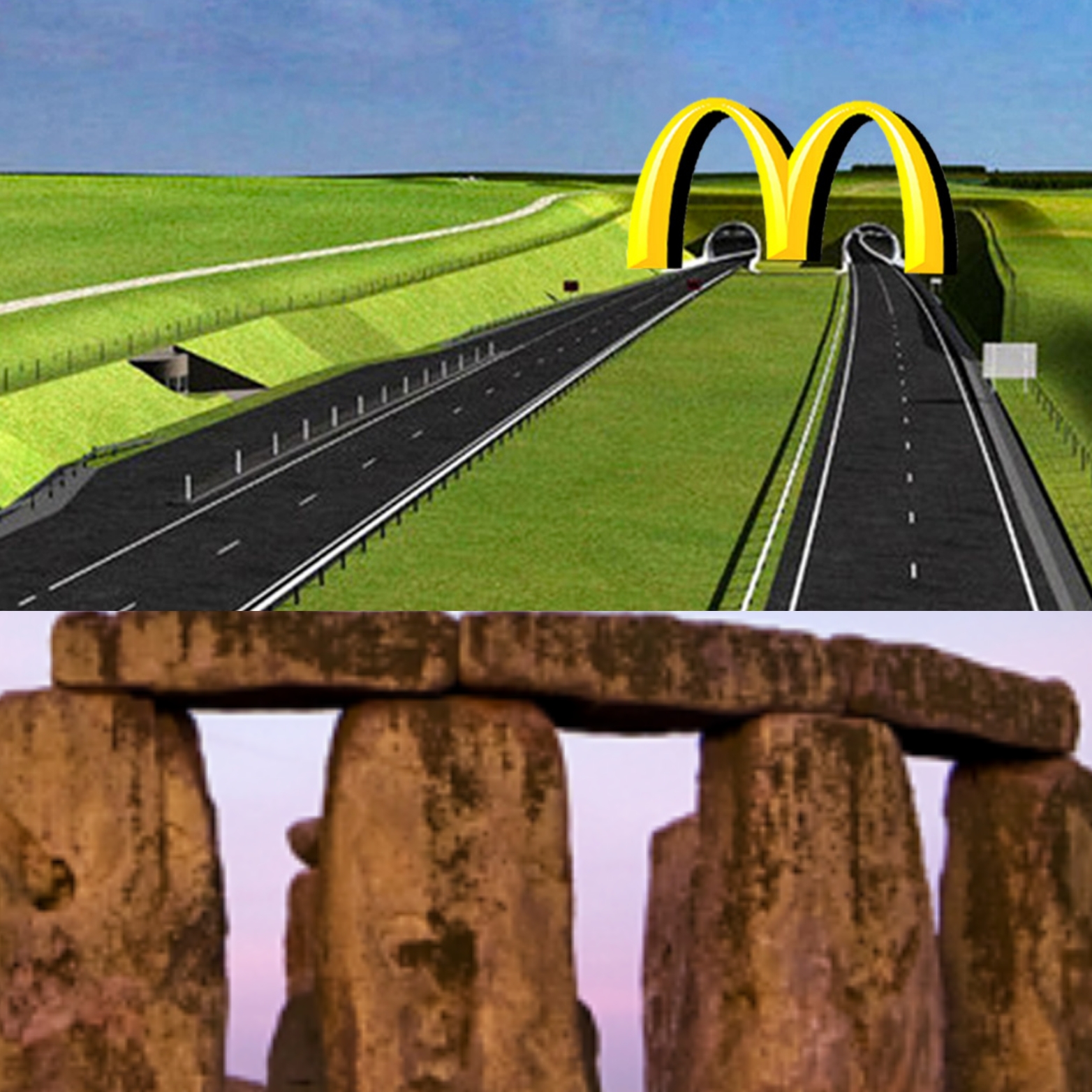
Today, companies large and small take advantage of the opportunity to adopt sections of roadway and more all over the world. Local governments are constantly looking for creative ways to sponsor tunnel and roadway infrastructure. McDonald’s offers fresh insights on developing innovative sponsorship including naming opportunities for projects such as tunnels and bridges. In England, spiraling tunnel costs are forcing the Government to announce a corporate infrastructure sponsorship with the fast-food giant sponsoring the Stonehenge tunnel project. Plans also include a tunnel toll fee that will be implemented to help recoup the costs of the tunnels construction and maintenance.
According to the National Audit Office report, the Amesbury and Berwick Down project, which includes the tunnel, is forecast to cost between £1.5bn and £2.4bn, with a likely cost of around £2.1bn. In return for financial sponsorship, McDonald’s receives prominent fleet and uniform brand positioning. In addition to the Golden Arches on the east and west entrances, you will see their branding (sponsor recognition panels) on the tunnel interior with several hundred intersecting horse-shoe shaped arches.
“The Golden Arches of McDonald’s will rise gloriously across the Wiltshire landscape, Contempo-monolithic, and as simple in concept as Stonehenge” said Terence Hillier, a spokesperson for the McDonald’s sponsorship scheme.
Wiltshire council leaders have been defending the private funding initiative and reportedly welcome the prospect of bringing the Golden Arches to within sniffing distance of Britain’s greatest archaeological monument.
All these factors, coupled with the public’s growing comfort with naming public assets after private entities, make road and tunnel “branding” a reality in today’s economic climate. Two decades ago few people could have imagined sports stadiums named after financial and energy companies, yet it is a common practice today. The Stonehenge tunnel on the A303 will not be far behind.
The introduction of toll electronic road pricing (ERP) is expected to cost £7 per vehicle however, discounts will be offered to local residents. Also, motorists on the A303, who will no longer get a free view of Stonehenge whilst travelling through the tunnel, will be able to claim a 25% discount at the English Heritage visitor centre.
McDonald’s will also be offering discounts on their exclusively branded menu for toll payers at any of their A303 restaurants. Vouchers will be redeemable on Chicken McDruids, Stone Burgers and Solstice Shakes.
The Stonehenge Drive-Thru is expected to open in 2026 and local residents are ‘lovin’ it.
1st APRIL 2021
Related Topics: Plans for proposed dome to cover Stonehenge from 2021 – Stonehenge News Blog April Fool! ‘Plans’ to beam advertising onto Stonehenge circle at night – Daily Mail Moving the Avebury stones for British Summer Time – National Trust When is April Fools’ Day 2021? Why we mark it with jokes, what time it ends and the best pranks from history – INEWS Stonehenge To Move (April Fool’s Day – 1991) – Daily Mail Geophysical survey reveals secret chambers and corridors underneath Stonehenge – Stonehenge News Blog Stonehenge Tours with expert tour local tour guides – Stonenge Tour Company
In line with government guidance, National Trust countryside space and the Stonehenge landscape is open for local visitors to access for walks. We ask all visitors to follow guidance on social distancing to keep everyone safe. The English Heritage visitor centre is currently closed and will open on 12th April.
Please park considerately, and maintain social distancing on your walk.
This wide and open landscape is perfect for dedicated walkers. You can explore by finding your own routes, or if you prefer you can follow some of the National Trust set walks that take you past some of the most important archaeological sites.
Explore the Stonehenge Landsapeon foot Stonehenge does not stand in isolation, but forms part of a remarkable ancient landscape of early Neolithic, late Neolithic and early Bronze Age monuments. The best way to appreciate Stonehenge is on foot. You can enjoy the impressive Wiltshire countryside while exploring the ancient history that has shaped it. Follow in the footsteps of our ancient ancestors and discover the prehistoric monuments that fill the vast ancient landscape surrounding Stonehenge. Stonehenge has far more than ther stone circle. It encompass unrivalled Neolithic landscapes that contain many other fascinating and unique monuments. You could easily spend a whole day in either part of the World Heritage Site.
How to see the site on an independent walk Download a National Trust map for one of the following routes and explore for yourself.
Ramble around on a Durrington Walls and Landscape walk and explore the connection between two of the most important henge enclosures in the country in a less-known part of the Stonehenge World Heritage Site. View the route
Go on a Durrington Walls to Stonehenge walk and discover the landscape in its full glory from the Bronze Age barrow First World War military railway track, as well as its diverse wildlife and plants. View the route
Look for the National Trust and English Heritage information boards placed at key monuments in the landscape.
Durrington Walls to Stonehenge This walk explores three major prehistoric monuments, Durrington Walls, the Stonehenge Avenue and the Cursus, all in the heart of the World Heritage Site. You will discover this landscape’s past starting with the monuments built by the first farmers, as well as finding out about its diverse range of wildlife and plants. View the route
A Kings View A walk that explores the chalk downland at the heart of the Stonehenge World Heritage Site. From Bronze Age burial mounds to ceremonial pathways, Britain’s most famous prehistoric landscape is crammed with globally important archaeology. There’s also an array of wildlife to look out for all year round, including hares, deer and birds. View the route.
Sectrets of the Stonehenge Landsacpe A walk that explores some of the lesser known areas of the Stonehenge landscape with great views of the famous stone circle and some breathtaking archaeology. Within Fargo Woodland there are Bronze Age burial mounds and lots of wildlife to discover as well as a useful information and view point. The chalk grassland supports a wealth of native flora and fauna. View the route
Durrington Walls to King Barrow Ridge With this walk you will explore the landscape to the east of Stonehenge. You will take in the timber circle of Woodhenge and Durrington Walls henge, the Cuckoo Stone and the burial mounds on King Barrow Ridge. All of these sites played an important part in the story of the World Heritage Site at Stonehenge. View the route
Stonehenge Landscape Winterbourne Stoke barrows Wide, open spaces, fresh air and a deep connection with history. This short dog friendly walk takes in thousands of years of history, with amazing views in a landscape rich in wildflowers, insects, animals and birds. View the route
Walking in Wiltshire With around 8,200 paths and almost half the county designated an Area of Outstanding Natural Beauty, walks in Wiltshire has never been better. Visit Wiltshire
Wiltshire Walks The county is rich with ancient history, including the world famous stone circles at Stonehenge and Avebury – The Walking Moon Raker
Wiltshire Walks App The ‘Wiltshire Walks’ app is now available for iPhone and Android and includes over 150 GPS guided walking routes in and around Wiltshire. The app can be downloaded by simply searching for ‘Wiltshire Walks’ on the app stores or by visiting the website. Download the app here
Wiltshire Rural and Leisure walking Walking through Wiltshire’s Countryside really shows you rural England at its best – Connecting Wiltshire
Stonehenge Walking Tours The best way to approach Stonehenge is on foot across the landscape with an expert local tour guide. Stonehenge Walks
Stonehenge from AmesburyWalk This 6-mile circular walk crosses sweeping downland, passes important prehistoric sites and visits the world-famous Stone Circle at StonehengeWiltshire. The Outdoor Guide
Relevant Stonehenge Links: English Heritage – Interactive Maps of the Stonehenge Landscape – click here Forget sitting in traffic – you should walk to Stonehenge instead – The Telegraph Ticking Stonehenge off your bucket list. Stonehenge News Blog – Click here Stonehenge Guided Tours – The Stonehenge Touring Experts – click here 5 Ways to Visit Stonehenge for Free – The Portable – click here National Trust – The Stonehenge Landscape – click here
Owing to the pandemic, and in the interests of public health, there will be no Spring Equinox gathering at Stonehenge this year.People wanting to watch the sunrise to mark the first day of spring have been told not to travel to Stonehenge.English Heritage maintains it cannot host the usual celebrations at the prehistoric monument on 20 March due to safety concerns.
The spring equinox is one of the rare occasions that English Heritage opens up the stones for public access. Equinox open accesses attract fewer people than the Solstices – in the several hundreds rather than tens of thousands – and there are modern Druid ceremonies which are held in the circle around dawn, so if you prefer a quieter experience then attending a future Equinox is a good choice.
English Heritage, which manages the site, has cancelled the event and remains closed Stonehenge until 12th April following government advice on coronavirus. About 800 people usually gather at the Wiltshire monument, on or around 20 March, to mark the spring equinox.
The Spring, or Vernal, Equinox is the point at which the sun crosses the equator, returning to the northern hemisphere, the point when day and night are at equal length. The exact time of the 2021 Spring (Vernal) Equinox is at 09.37am The spring equinox is one of the rare occasions that English Heritage opens up the stones for public access. While touching the stones has been banned since 1977, rules had been traditionally relaxed during the summer and winter solstice, as well as the spring and autumn equinox, allowing people to get closer to the stones.
English Heritage is continuing to plan for the 2021 summer solstice. English Heritage are having a Round Table Group meeting in April to discuss the summer solstice celebrations and have issued a brief statement:
The main item on the agenda will of course be Summer Solstice 2021 at Stonehenge where we welcome your input into plans for access to Stonehenge. While we at English Heritage remain cautiously optimistic about being able to offer access in some form, I would ask that attendees bear in mind that there is likely to still be some uncertainty on how to proceed as we continue to navigate the pandemic and the changing regulations under which we are living.
Related Topics: How the Spring Equinox marks the changing seasons – The Telegraph What is the vernal equinox? Why does it mark the first day of spring? – Express Summer Solstice at Stonehenge. From Past to Present – Stonehenge News Blog Stonehenge Equinox Tours – Stonehenge Guided Tours Solstice at Stonehenge – English Heritage The Stonehenge Pilgrims – Stonehenge News Blog What Exactly Is the Spring Equinox? – Country Living Stonehenge Summer Solstice Tours – Solstice Events UK Stonehenge Winter Solstice ban criticised by senior druid – BBC
The 17th Century gentleman antiquarian, John Aubrey, is a fascinating, if elusive figure. Most famous for his proto-biography anthology, Brief Lives, in which he pithily captures in a few well-turned lines the key movers and shakers of his age, he is somewhat eclipsed by the greater lives he wrote about. Of Welsh descent (with family connections in Hereford and South Wales), Aubrey was born in Easton Piercy, Wiltshire 1626, and was to witness some of the most tumultuous events in English history.
Growing up within living memory of the rein of Elizabeth I, and amid the ruinous devastation caused by her murderous father, Henry VIII, Aubrey was the witness firsthand the chaos of the English Civil War, the execution of Charles I, the merry England of Charles II, the brief rein of James II, and the Glorious Revolution, which saw in William and Mary. Living through such turbulent times, it is perhaps small wonder that Aubrey developed an obsession for the collection and preservation of the fragile, precious icons of the past. As his biographer, Ruth Scurr, pointed out, he was not alone in this predilection: ‘Rescuing or remembering the material remains of lost or shattered worlds became compelling for many who lived through the English Civil War.’ (2015: 4) Yet Aubrey felt he was not only born in the right time, but the right place: ‘I was inclined by my genius from childhood to the love of antiquities: and my Fate dropt me in a countrey most suitable for such enquiries.’ One could also say ‘county’ as much as ‘countrey’, for in Aubrey’s birthplace and home, Wiltshire, he found an area worthy of a lifetime’s study.
With its hundreds of prehistoric monuments it is an antiquarian’s paradise. It seemed to have his name on it, literally. In 1649, when out hunting, he stumbled upon a remarkable arrangement of stones, half-hidden behind ivy and briar and apparently ignored as the mundane backdrop to the lives of simple farming folk, who grazed their livestock and grew their crops amongst them. This was the village of Avebury, and Aubrey couldn’t help but be tickled at the similarity between the names.
Tourists and gentlemen antiquaries can be seen visiting England’s most famous prehistoric monument, in this engraving by David Loggan
By the time Aubrey was elected a Fellow of the Royal Society in 1663 news of his discovery of a monument, which ‘…doth exceed Stonehenge as a Cathedral does a Parish Church,’ reached the ears of Charles II, who asked Aubrey to show it to him on a hunting trip in Wiltshire. The monarch asked Aubrey to dig for treasure, but Aubrey discretely deferred this royal command, and instead undertook something for more useful. He conducted a proto-survey of it, alongside one of Stonehenge in 1666, where he discovered the holes of timbered uprights, which bore cremated Neolithic remains – thousands of individual bone fragments from 56 individuals. These became known as the Aubrey Holes. Aubrey was educated in Dorset, then Trinity College, Oxford, before taking the bar at the Middle Temple, London. Although he moved in exalted circles as a member of the Royal Society, Aubrey often struggled with money. Fortunately, as an erudite and entertaining conversationalist (and, perhaps, more importantly a great listener) he was a favoured guest and enjoyed the rolling hospitality of his wealthy circle. Yet, living amid other lives had its deficits – although it was ideal ‘access’ for a future biographer, it meant his own projects were always deferred and piecemeal (tellingly, Miscellanies was the only monograph published in his lifetime, although he authored several, notably on his beloved Wiltshire, and he laboured upon his magnum opus, Monumenta Britannica, for thirty years).
Aubrey himself, an agnostic with more of a belief in astrology, thought such professional procrastination was written in the stars, as he reflected in later years, writing about himself like a subject of one of his own brief biographies: ‘His life is more remarqueable in an astrologicall respect then for any advancement of learning, having from his birth (till of late years) been labouring under a crowd of ill directions’. But it is precisely that restless interest in all things that resulted in the preservation of so much priceless history, for his precious collection of books, manuscripts, artefacts, art, and antiquities, was eventually bequeathed to Elias Ashmole, who went on to found the Ashmolean Museum in Oxford.
Aubrey died in Oxford in 1697, at the end of a relatively brief (the Biblical ‘three score years and ten’) but certainly ‘remarqueable’ life. Through his tireless efforts he saved for posterity many treasures from the deluge of time, and his own legacy should be celebrated as Wiltshire’s most remarkable son.
Guest Blogger: Dr Kevan Manwaring is an author, lecturer, and specialist tour-guide. His books include The Long Woman (a novel which features Stonehenge and Avebury), Lost Islands, Turning the Wheel: seasonal Britain on two wheels, Desiring Dragons, Oxfordshire Folk Tales, Northamptonshire Folk Tales, and Herepath: a Wiltshire songline. He is a keen walker and loves exploring the ancient landscape of the Marlborough Downs (where he lives) and beyond. www.kevanmanwaring.co.uk
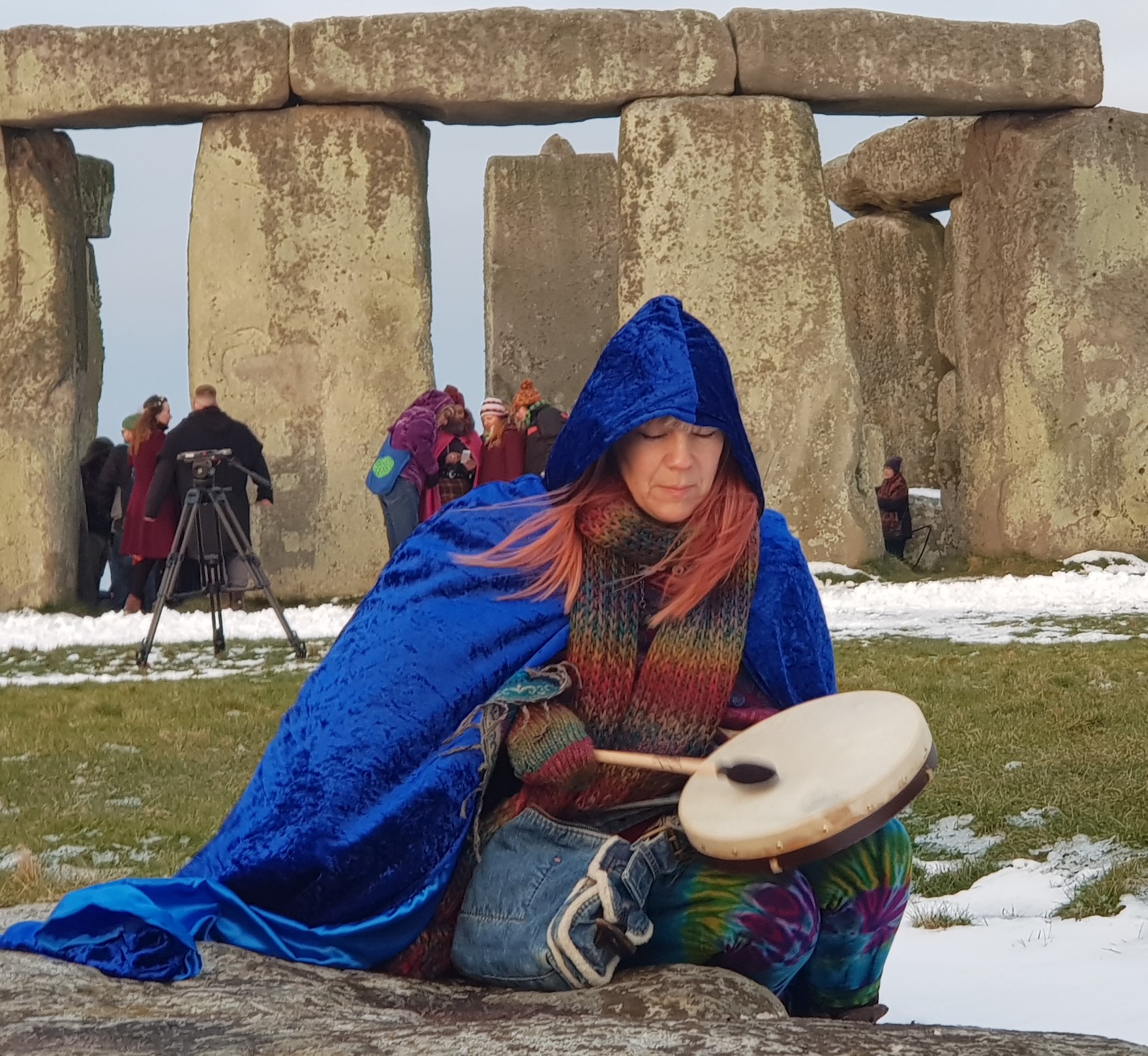
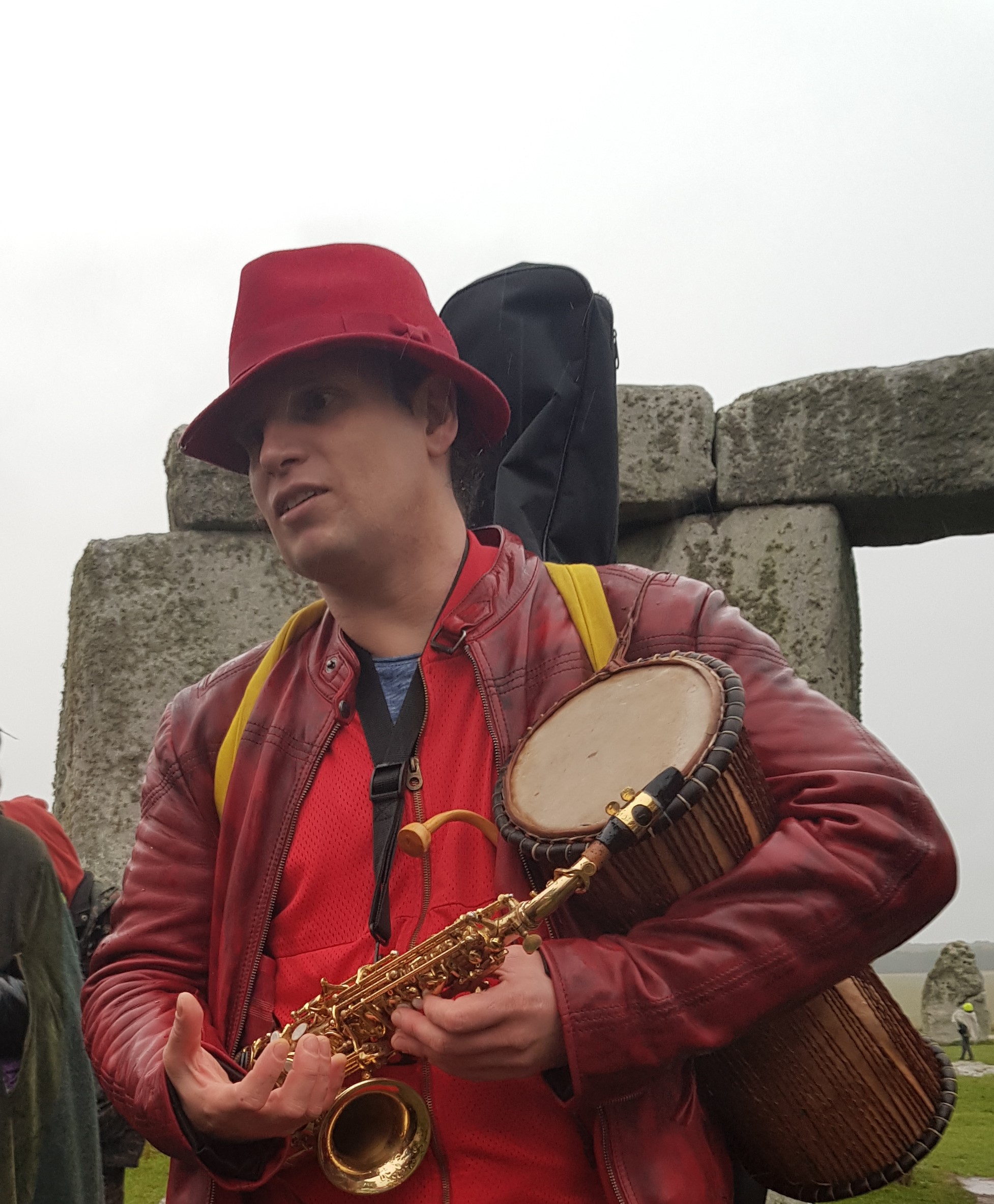
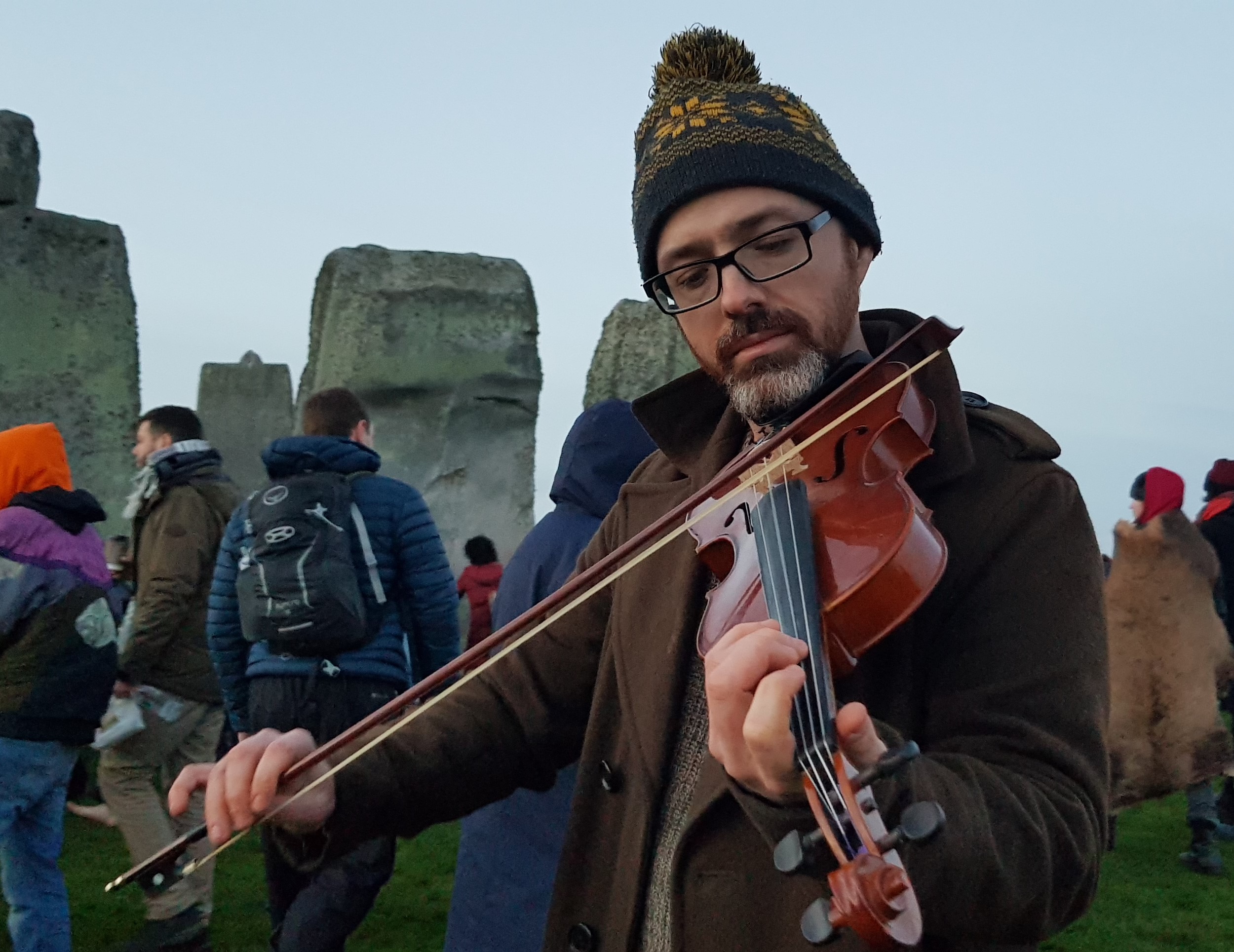
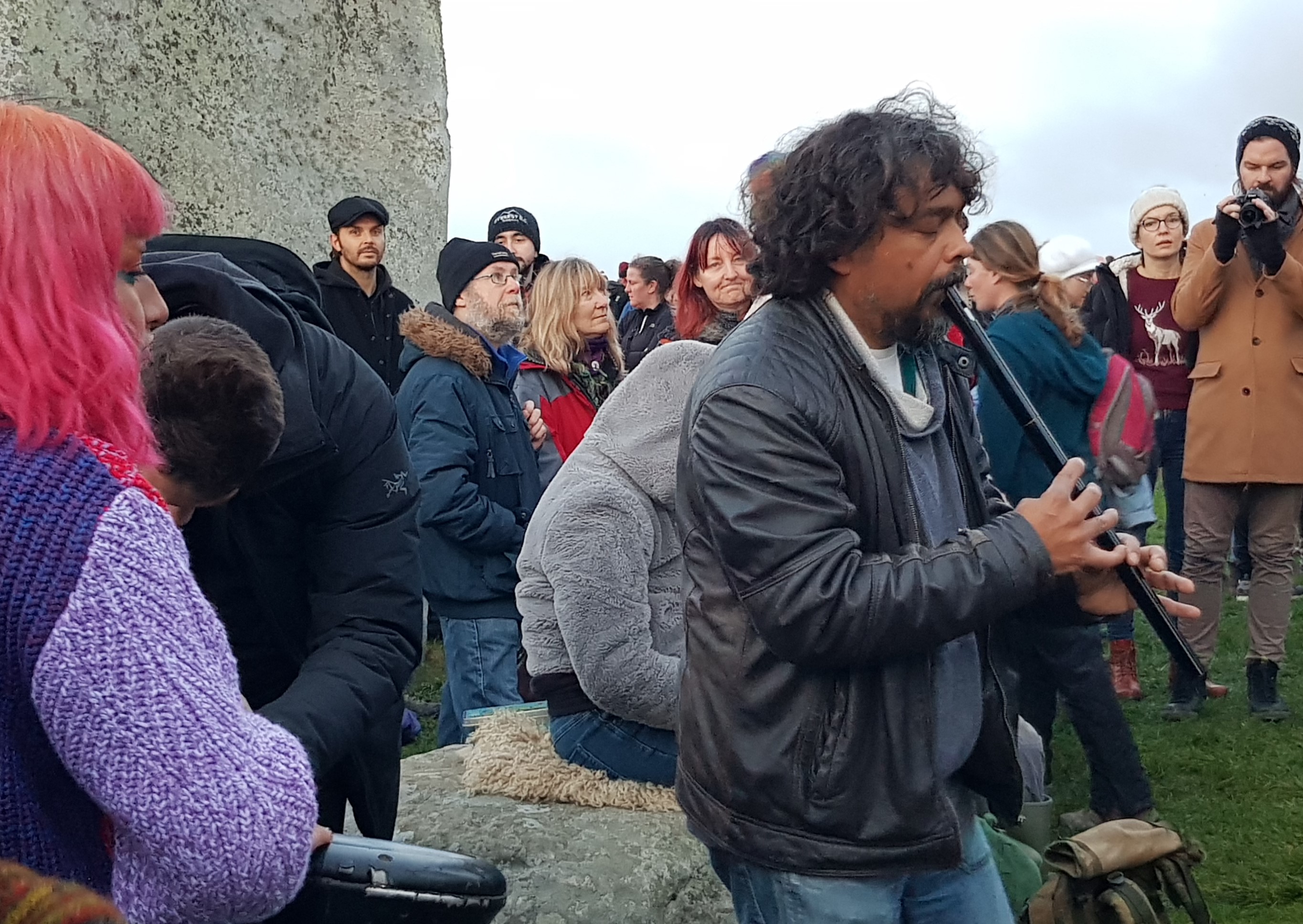
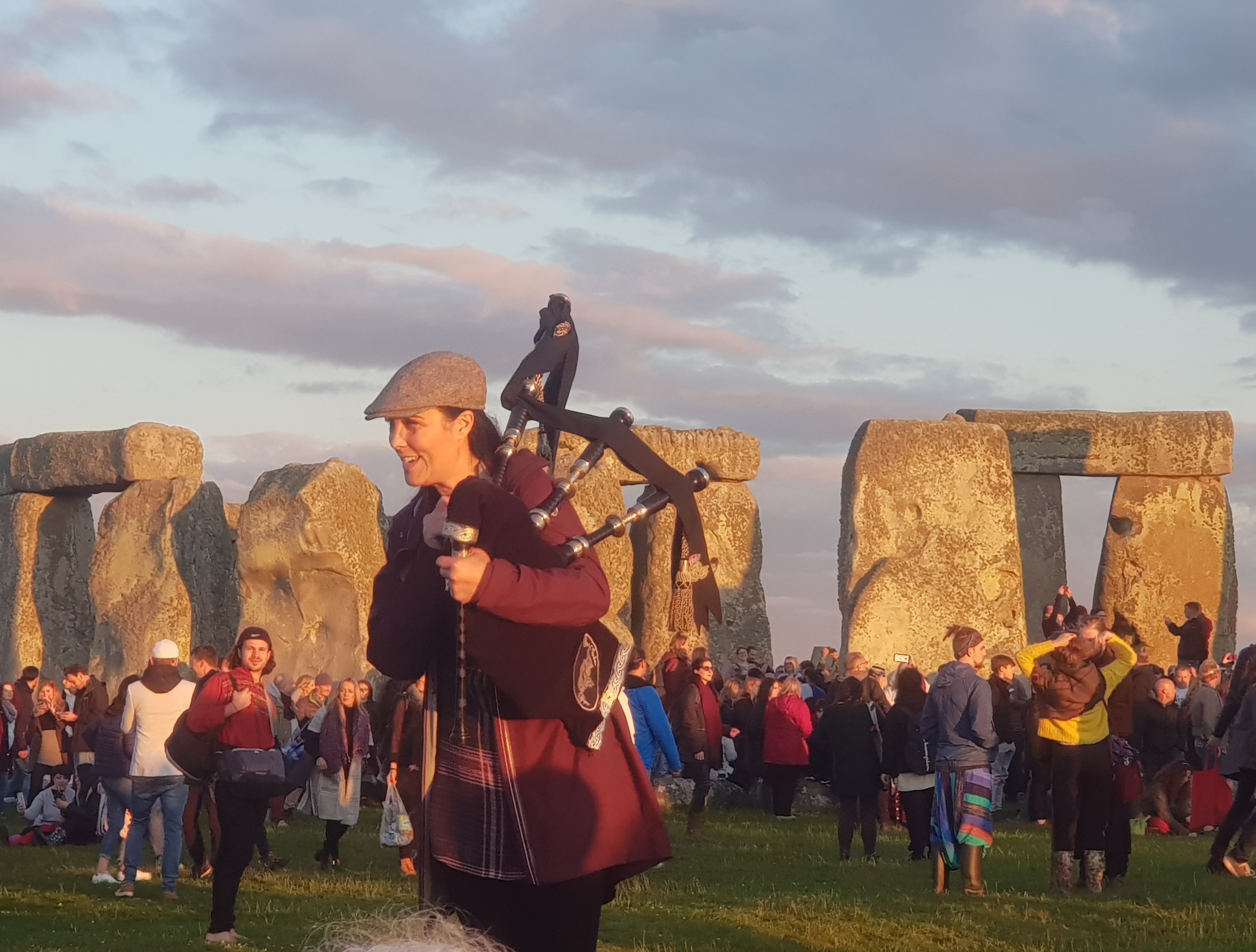
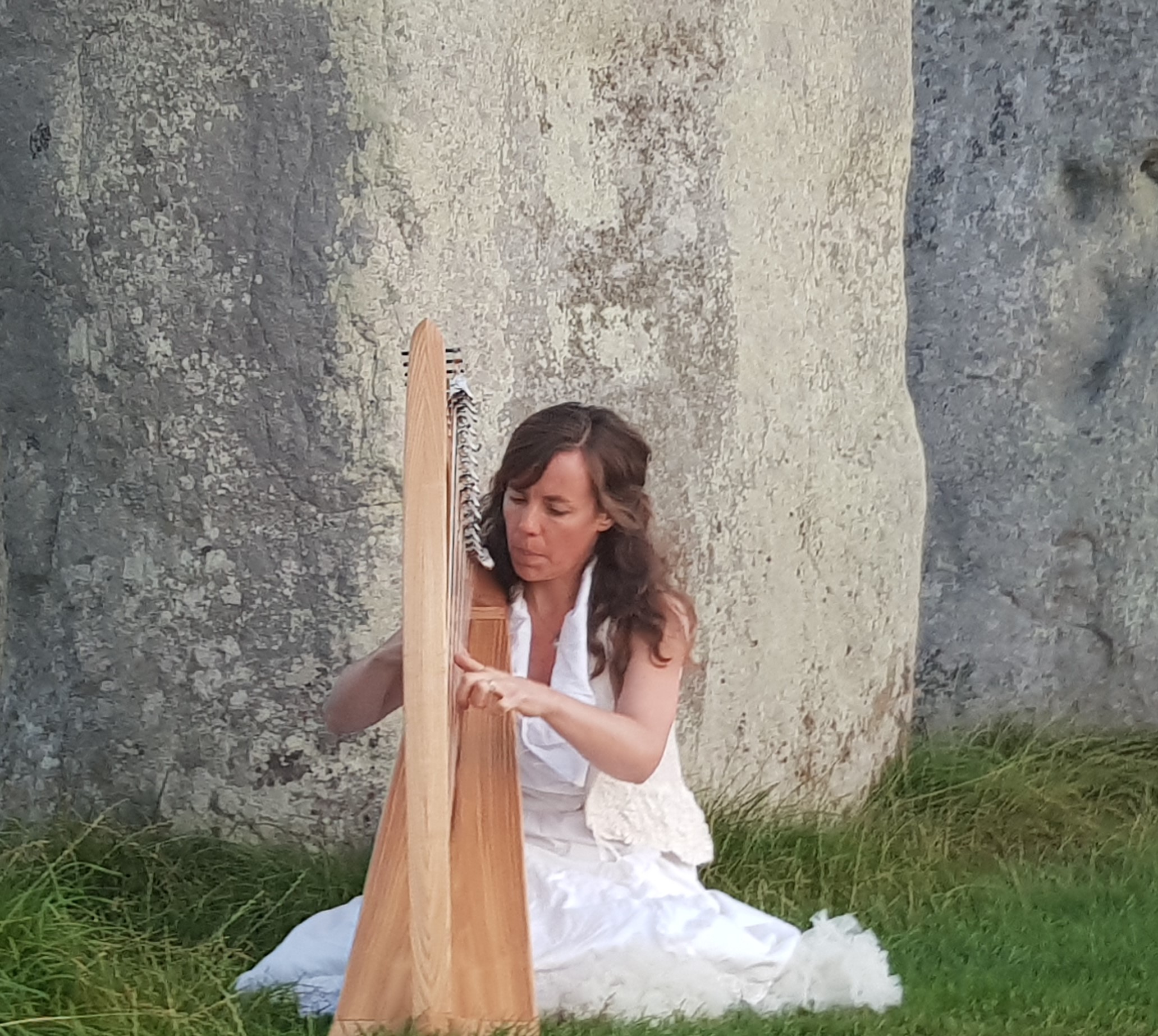
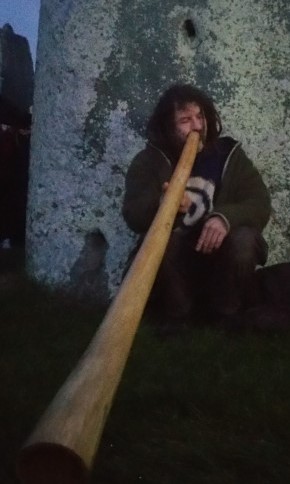
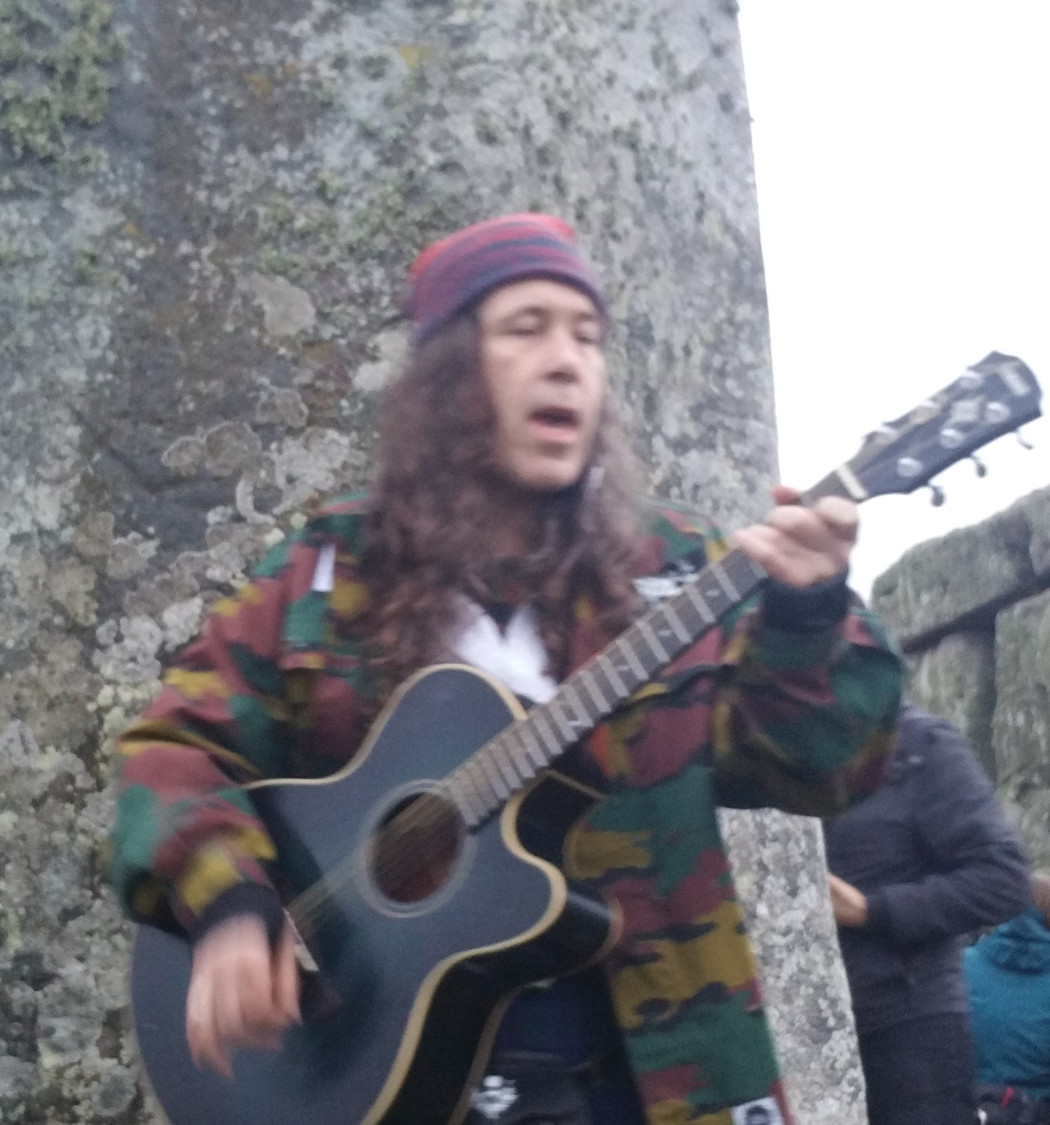
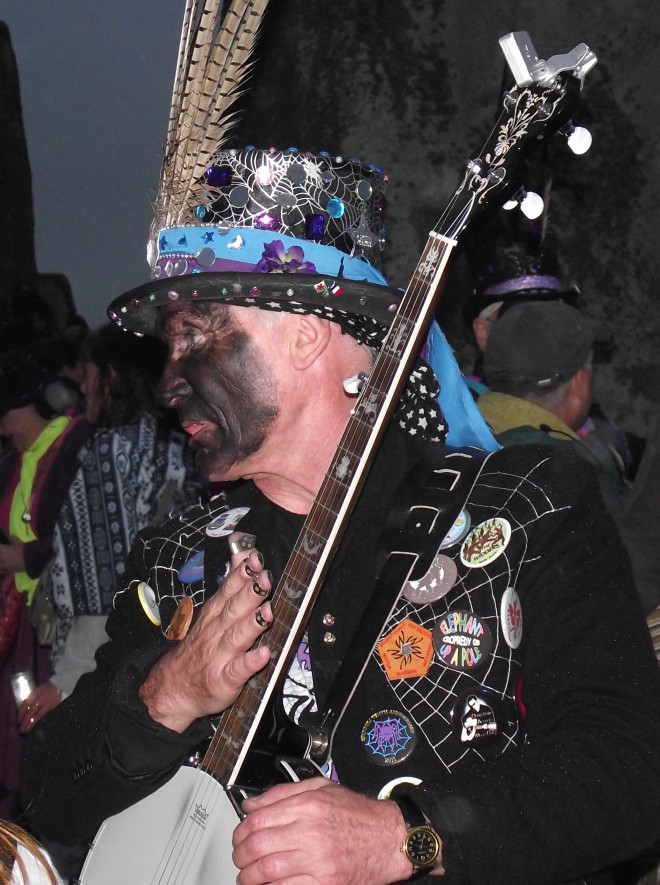
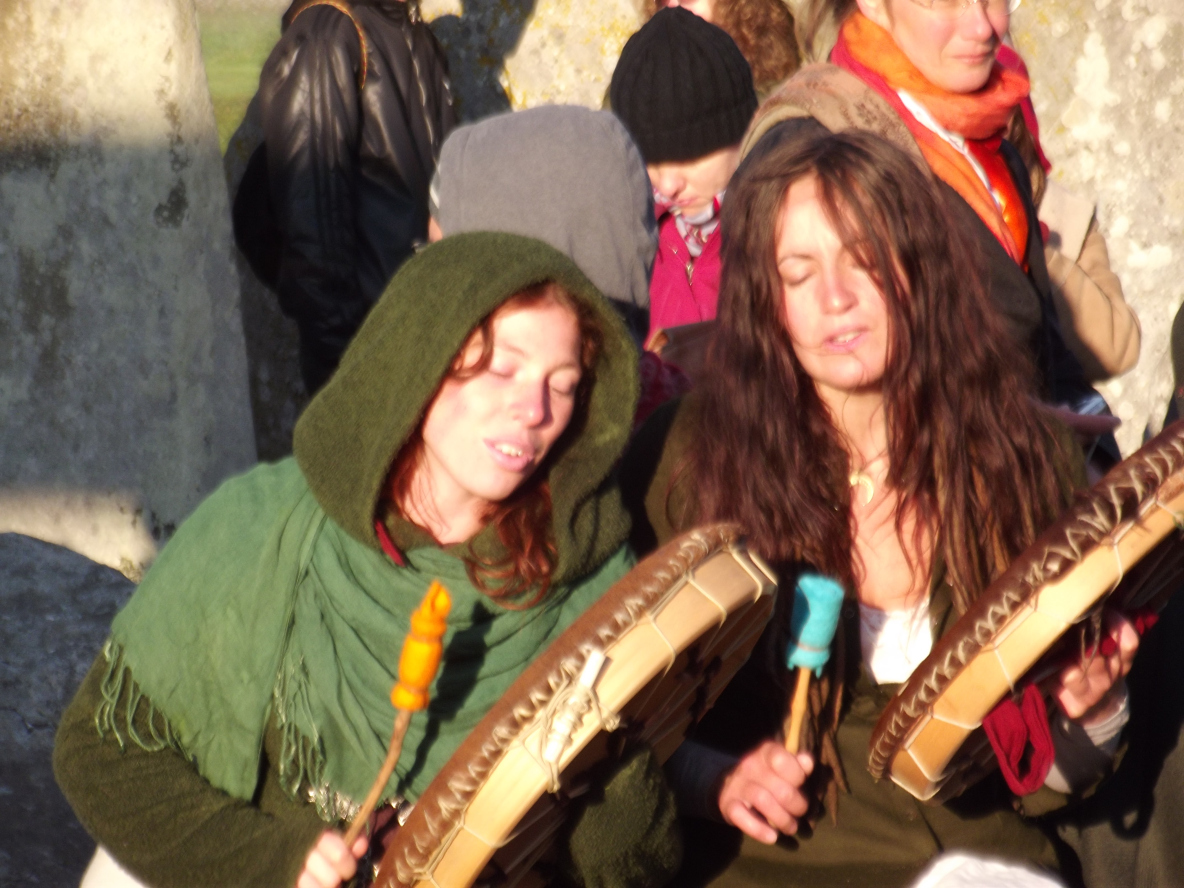
For anyone who has ever been to Stonehenge for one of the four solar festivals – Summer or Winter solstice; Spring or Autumn equinox – it is impossible to think of it without thinking of some kind of music: the drumming circle that sometimes last all night, building up to a crescendo at dawn (and then continuing as the perpetual soundtrack of the sunrise celebration); the melodies of a wandering minstrel, strangely-attired saxophonist, opportunist young band with full kit, community choir, or scratch protest band; the chanting of Hare Krishnas, Pagans, Druids, and enthusiastic crowds; or even just the countless pilgrimage mixtapes listened to on the way there and again. It seems the unique Neolithic monument was designed for sound, as all who have stood within the inner circle when a great chant or cheer has been raised would agree – the stones act as tuning forks, and the circle seems to come alive with song.
Archaeacoustic theories about Stonehenge, and other prehistoric monuments, have been around for a long time, but a 2020 study by the Salford Innovation Research Centre, based at the University of Salford, confirms the design intentionality of this. The researchers rebuilt a precise 3-D printed scale model of a complete Stonehenge in their sound lab, and used this to recreate the acoustics of the third phase, when all the trilithons were locked into place, and the inner ring of bluestones from West Wales stood sentinel like a ready-made (or reconfigured) stone audience. As an aside to the latest discovery of what appears to be the proto-Stonehenge at Waun Mawn, it is interesting to note that to this day the National Eisteddfod of Wales conducts its bardic inaugurations in specially constructed stone circles, as a symbolic recreation of the ‘pocketful of stones’ its spiritual founder, Iolo Morganwg, used to create a sacred circle on Primrose Hill, in 1792. The Cornish scholar, Alan M. Kent, has noted how the Kernow Mystery Play tradition had their own equivalent Gorseth circle, the Plen an Gwari, or ‘playing place’ (with two surviving, the Plain in St Just, Penwith; and St Pirran’s Round in Perranporth). And across the Greco-Roman world the amphitheatre took this basic concept to its zenith, such as in the theatre of Epidaurus, which could seat 14,000 people, who were able to hear a stage whisper from a performer standing on its proscenium stage. And yet, according to the scientific modelling of the Salford researchers, it seems Stonehenge was not designed to enhance this acoustic effect for a large gathering, but only those standing within the inner circle. Susan Greaney, senior properties historian for English Heritage, concludes that: ‘the results show that music, voices or percussion sounds made at the monument could only really be heard by those standing within the stone circle, suggesting that any rituals that took place there were intimate events.’
Writer Paul Deveraux has made an in-depth study of archeoacoustics, which he summarises in his 2001 book, Stone Age Soundtracks. It is hard to disavow the heightened acoustics of sites like the underground Neolithic temple, Metageum, in Malta, or of Newgrange (where, it has been noted, drumming creates observable patterns in the dust-mote laden shards of sunlight that seem to be encoded in the chevrons and spirals of the petroglyphs adorning its passage and entrance stones). The ‘vibes’ of such places have led to artistes like Julian Cope actually recording within chambered barrows (‘Paranormal in the West Country’, from his 1994 album Autogeddon, was recorded in West Kennet long barrow). The Beatles visited Stony Littleton long barrow, while the guests of Sergeant Peppers’ cover artist, Peter Blake, in Wellow. Whether they made any music there is unknown, but Ringo apocryphally said, ‘It’s a great place to get stoned.’
Yet, even with a plethora of educated guesses there is a telling absence of instruction tablets from the archeoarchitects, So, pending the discovery of a ‘Rosetta Stone’, the jury is still out on whether prehistoric monuments were sonic temples, or if the phenomenon is just an interesting side-effect.
Nevertheless, the Counter Culture has not shirked in providing its own Stone Age soundtrack for Stonehenge. Most people associate Stonehenge with one song, the satirical rock anthem, ‘Stonehenge’ from This is Spinal Tap (1984). It is hard not to think of it without images of diminutive descending megaliths and pratfalling little people being conjured from the dry ice of movie memory.
And yet in the same year as Rob Reiner’s comedy classic, the prog-rock band who is entwined with Stonehenge more than any other, Hawkwind, was playing an epic summer solstice set at what was to be the last Stonehenge Free Festival. With their lysergically-enhanced sci-fi flavoured psychedelia, legendary light shows, epic lyrics by New Wave author Michael Moorcock, body-painted dancers, and Warp Factor 10 wildness, Hawkwind were the unofficial laureates of Stonehenge.
When the Stonehenge Free Festival was smashed in the Battle of the Beanfield of 1985 it seemed like the silver machine of the Counter Culture had been shot down in flames, but its spirit re-emerged in the road protest movement that was to be a rallying point throughout the late 80s and 90s. During a 15 year exclusion zone around Stonehenge during the times of the solstices, raggle-taggle bands like the Spacegoats and the Poison Girls kept the spirit of the Free Festival going, their pixie-punk offerings conveying messages of ecological awareness and anarchy.
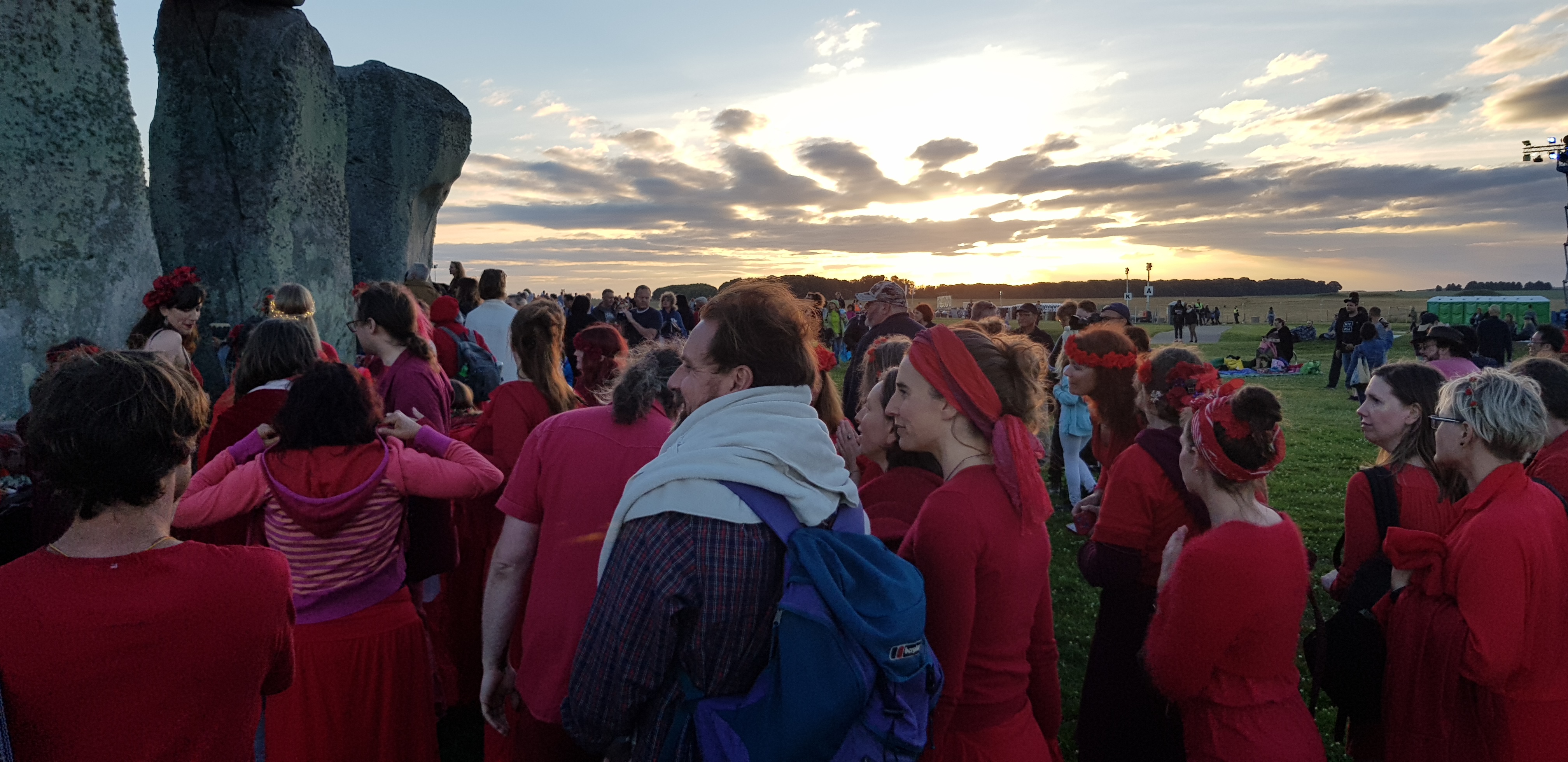
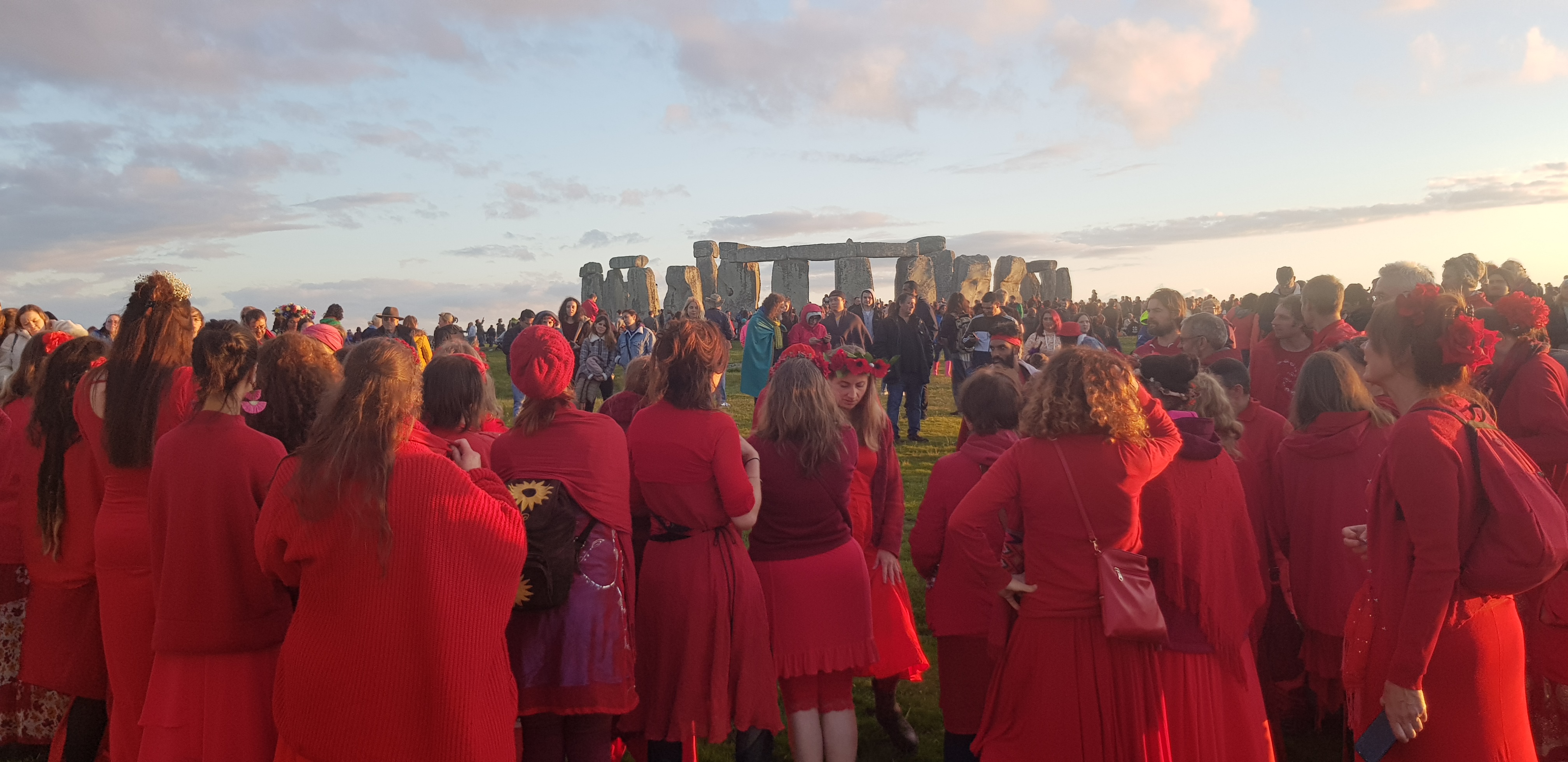
With the opening up of access for the summer solstice in 2000 many old veterans were reunited and new bloods were initiated into the Stonehenge family, a Hakim Bey ‘temporary autonomous zone’ or Brigadoon that continues to manifest (excluding periods of pandemic lockdown) at the solar festivals once more, albeit in a more civilised, co-ordinated way – with infrastructure such as parking, toilets, lighting, and walkways, provided by English Heritage, to manage the often large crowds. And new stars have emerged in this Neolithic platform for a new millennium – made internationally famous by the news crews and, increasingly so, by the smartphone footage shared on social media – including the striking crimson ensemble known as the Shakti Sing Choir, who introduce some quality harmonies to an often ragged, and discordant, free-for-all. Yet Stonehenge is nothing if not a broad church, and all are welcomed – whatever their ability. This is part of its popularity, resilience, and unique ambience – it offers a chance for everyone to shine, to have their moment in the sun, ‘under the eye of light’ as the druids say. It offers a world-famous platform for exhibitionists, the ultimate busking spot, but also for everyone to dress up, strut their stuff, and have a good time. Some have used Stonehenge as a backdrop for their own pop videos or comedy routines – the Norwegian comedy duo, Ylvis, combined the two in their own mock-anthem of 2013, ‘Stonehenge’; Germanic rapper Kellegah throws Stonehenge into the mix in his song of 2019 without any apparent significance; while Soundgarden’s grungy ‘Exit Stonehenge’ of 1994 starts with the memorable line, ‘Jesus I can’t feel my penis.’ And yet, in contrast, gentle, heartfelt songs such as Kellianna’s ‘Stonehenge’ evoke the spiritual feelings of many a pilgrim to the stones. Without a doubt, music and spirituality go hand-in-hand at Stonehenge – it provides an expression of belief system, ideology, and lifestyle.
Let us end our brief foray into the music of Stonehenge with a song which, although it doesn’t mention the iconic stone circle and was composed amid the concrete sarsens of the capitol, seems to evoke the spirit of the very best of the gatherings to have graced such places over the years – David Bowie’s ‘Memory of a Free Festival’ from his second self-titled album of 1969. This was actually inspired by a free festival he had helped organise at the bandstand of Croydon Road Recreational Ground in Beckenham on 16th August, 1969, to raise funds for the Beckenham Arts Lab, which was formative to his artistic development. Both a paean and a eulogy for a golden day, it ends with a chorus that could sum up the hopes of many a pilgrim-reveller, making their way to the stones for the solstice, ‘The song machine is coming down and we’re gonna have a party…’
Guest Blogger: Dr Kevan Manwaring is an author, lecturer, and specialist tour-guide. His books include The Long Woman (a novel which features Stonehenge and Avebury), Lost Islands, Turning the Wheel: seasonal Britain on two wheels, Desiring Dragons, Oxfordshire Folk Tales, Northamptonshire Folk Tales, and Herepath: a Wiltshire songline. He is a keen walker and loves exploring the ancient landscape of the Marlborough Downs (where he lives) and beyond. www.kevanmanwaring.co.uk
Relevant Stonehenge Links: Heavy rock music: Stonehenge was a ‘neolithic rave venue’ – Daily Mail The first-ever scale model of Stonehenge that lets researchers explore how the monument would have sounded in its heyday has been created by UK researchers. – Stonehenge News Blog Salford scientists reveal the ‘sound of Stonehenge’ – The Guardian Stonehenge Private Access Inner Circle Tours – Stonehenge Guided Tours Stonehenge enhanced sounds like voices or music for people inside the monument – Science News Scientists recreate prehistoric acoustics of Stonehenge – The Independent Stonehenge enhanced voices and music within the stone ring – Science for Students Stonehenge Solstice and Equinox Tours – The Stonehenge Tour Company The lost sounds of Stonehenge – BBC
When commercial traveller, photographic inventor, and amateur antiquarian Alfred Watkins wrote up his lecture expounding his theory about ancient routemarkers in Early British Trackways (1922), delivered to the Woolhope Club of Hereford only five months previously, he started a movement, some would say a craze, which shows no signs of diminishing even in the cold light of the 21st century.
From his business peregrinations up and down the Welsh Marches Watkins deduced that prehistoric travellers must have created a system of routes and landmarks to aid navigation, and upon realising this he felt he ‘held in [his] hand the key plan of a long-lost fact’. When he glimpsed in an epiphanic flash ‘the original sighting pegs used by the earliest track makers in marking out their travel ways’, it seemed as though a secret map of Britain had been revealed to him. Such a claim met with ‘violent opposition’, but he fine-tuned his controversial theorem in The Old Straight Track: its mounds, beacons, moats, sites and mark stones, his influential monograph published in 1925. Watkins drew upon archaeological, topographical, and etymological evidence, tested by exhaustive field research. He postulated that alignments had developed over a long period of time – beginning in the Palaeolithic – and that navigational aids were placed along them, starting with simple piles of stones (walkers’ cairns, such as can be found on many summits and popular walking routes across Britain), which were sometimes developed into megalithic monuments, churches, towers, follies, and so forth, through the ages, the initial purpose fading in the mists of time: ‘The straight track became an organised possession of the community for all to use, but mystery and reverence for a superior knowledge grew round its making and its mark-points’. Critically, Watkins did not perceive these ‘leys’, as he called them (from the Anglo-Saxon word for a clearing, and linked to ‘sight’) as in any way supernatural. He emphasised the practical application: ‘Utility was the primary object’. Only later, Watkins suggested, did such sites become co-opted for religious purposes, such as the predominance of churches dedicated to the Michael on hill-tops – the archangel who is commonly depicted as slaying the dragon with his spear, or ‘fixing the point’, focalising the serpent energy of the land in geomantic terms.
Yet Watkins’ revolutionary idea was tantalising enough to inspire generations of ‘ley-hunters’, and it is hard not to be caught up in his vision when he, in a rare moment of lyricism, waxes about his grand vision: ‘imagine a fairy chain stretched from mountain peak to mountain peak, as far as the eye could reach, and paid out until it touched the “high places” of the earth at a number of ridges, banks, and knowls.’ Watkins envisioned ponds and streams being deliberately enhanced to reflect beacon fires lit upon the high places. Anyone who has stood upon Glastonbury Tor on a sunny day would have witnessed this phenomenon, as the sunlight reflects off the dykes that thread the Somerset Levels, creating chains of light across the land.
And Watkins’ vision was to act like a beacon fire to many who followed. His work was taken up in the late Sixties by antiquarian and occult author John Michel, in The View Over Atlantis (1969), who took Watkins’ ideas, and run with them – reconceptualising his ‘leys’ as ‘leylines’, a matrix of energy stretching across not only Britain, but the world, and connecting ancient sites such as the Pyramids of Giza, Uluru (Ayers Rock), Machu Piccu in Peru, and Stonehenge. These energy lines were seen as the meridians of the planet, to use the analogy from Chinese acupuncture, with sacred sites acting as ‘needles of stone’ (an idea crystallised by Tom Graves in his 1978 book). Leylines had gone viral, a meme that the Counter Culture adopted as their own. Some have tried to adopt a scientific approach to their study, most notably Paul Deveraux, who has undertaken extensive field research at sacred sites, (the Dragon Project of the late Seventies), yet the leyline theory is largely discredited by archaeologists. It is argued that you could draw a random line on a map and the probability is that it will intersect ‘sacred’ or historic sites; also, that the sites offered as evidence of a ley vary so widely over time and usage that no single, coherent purpose can be applied to them. And yet humans, the pattern-making creature, love to see patterns. We are biologically hard-wired to respond to simulacra – from our mother’s face, to human forms in nature. We seek meaning in what is otherwise a random, meaningless universe. It is no wonder we fashion lines of narrative, or song, to guide us – internally and externally – across life’s journey. It is something we have been doing for at least fifty thousand years, as the complex system of the Aboriginal dreamtime, with its songlines, attests. It seems unlikely that such an intuitive (and useful) way of mapping only developed in a single place on Earth. Enigmatic monuments like the Nazca lines in Peru, and the cursus in England, suggest otherwise. Deveraux suggests these could be ‘spirit roads’, and are a macrocosmic version of the countless ‘corpse paths’ found in many cultures. Certainly, there is more to such routes than the prosaically utilitarian. Some historic routes, such Roman roads, droveways, saltways, the ‘herepaths’ (or military track) of Alfred the Great, General Wade’s roads across Scotland, and so forth, clearly did have a primarily practical purpose – and although sometimes these overlap with other, older routes or usages, there are too many obscurer routes, ‘hidden paths that run towards the moon, or to the sun’ (as Tolkien put it), to be simply ignored. And the fact is (perplexing as it may be to an empirical, rationalist paradigm) that many of them can be dowsed. They are discernible, and anyone with a pendant, rod, or sensitive persuasion, can detect them. Many converge at Stonehenge – the Spaghetti Junction of leylines (or Mother Node, if you prefer) – and cross the land and beyond, as Hamish Miller and Paul Broadhurst have pointed out. Something is there, and what that signifies – Palaeolithic navigational aids, geomagnetic earth energies, the meridians of Mother Earth, ghost paths, extraterrestrial guidance beacons – who can rightly say? Perhaps the true nature of such alignments depends on the awareness and paradigm of the one seeking them – we find the road we wish to walk; the evidence to support the theory we wish to believe. It seems ley/lines are to be experienced, more than understood – and they add a little bit of mystery to a world suffering from a dearth of the imagination. They provide a counter-narrative, of other ways of experiencing reality, one that opens up, rather than shuts down possibility. It turns the prose of the everyday into a poem, even a song. They offer another way of being in the landscape. Choosing to follow these invisible paths is an act of faith – like The Fool in the tarot, the seeker steps off the precipice of reason and hopes their vision will sustain them. It certainly sustained Watkins. So, it feels right and fitting to give the man who started it all the last word: ‘Such alignments are either facts beyond the possibility of accidental coincidence or they are not’.
Guest Blogger: Dr Kevan Manwaring is an author, lecturer, and specialist tour-guide. His books include The Long Woman (a novel which features Stonehenge and Avebury), Lost Islands, Turning the Wheel: seasonal Britain on two wheels, Desiring Dragons, Oxfordshire Folk Tales, Northamptonshire Folk Tales, and Herepath: a Wiltshire songline. He is a keen walker and loves exploring the ancient landscape of the Marlborough Downs (where he lives) and beyond. www.kevanmanwaring.co.uk
Further Reading: Watkins, Alfred, The Old Straight Track, London: Abacus, 1974 Deveraux, Paul, Spirit Roads: an exploration of otherworldly routes, London: Collins & Brown Hippisley-Cox, R. The Green Roads of England, London: Metheun & Co., 1914 Macfarlane, Robert, The Old Ways: a journey on foot, London: Hamish Hamilton, 2012 Rudd-Jones, N., & David Stewart, Pathways: journeys along Britain’s historic byways, from pilgrimage routes to smuggler’s trails, London: Guardian Books
We aim to make this the ultimate source of the latest Stonehenge news available on the web. This blog is updated almost daily and promises to deliver accurate 'up to date' information on new theories, new digs, solstice events, Druid gatherings, the new visitor centre, general megalithic links and some fun along the way. We welcome your input....
"There is so much misinformation about Stonehenge on the web, so it’s really refreshing to see such a clear and lucid presentation, what you have here looks like best general overview of Stonehenge to date, well done!"
Mystery surrounds this 5,000 year old monument in the centre of the World Heritage Site. Visit this prehistoric South West site near Salisbury in Wiltshire, and decide for yourself whether Stonehenge was a place of sun worship, a healing sanctuary, a sacred burial site, or something different altogether!
THIS BLOG claims no credit for any images posted on this site unless otherwise noted. Images on this blog are copyright to its respectful owners. If there is an image appearing on this blog that belongs to you and do not wish for it appear on this site, please E-mail with a link to said image and it will be promptly removed.














 StonehengeNews
 travelstonehenge