Stonehenge Summer Solstice Celebrations 2012 – June 20th / June 21st

15 02 2012

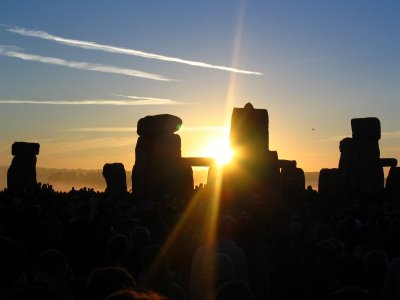
English Heritage are again expected to provide “Managed Open Access” to Stonehenge for the Summer Solstice. Please help to create a peaceful occasion by taking personal responsibility and following the conditions (see below).

Please note that a high volume of traffic is anticipated in the Stonehenge area on the evening of Wednesday 20th June. The car park (enter off the A303 from the roundabout – it’s signposted) will open at around 7pm on Wenesday 20th June, and close at around noon on Thursday 21st June.
Note that last admission to the car park for vehicles is at around 6am. Access Access to the stones themselves is expected to be from around 8.30pm on Wednesday 20th June until 8am on Thursday 21st June.

Stonehenge Summer Solstice

There’s likely to be casual entertainment from samba bands & drummers but no amplified music is allowed. When you visit Stonehenge for the Solstice, please remember it is a Sacred Place to many and should be respected. Van loads of police have been present in the area in case of any trouble, but generally a jovial mood prevails. Few arrests have been made in previous years, mostly in relation to minor drug offences.

Facilities Toilets and drinking water are available and welfare is provided by festival welfare services. There are normally one or two food and drink vans with reasonable prices but huge queues, all well away from the stones themselves.

Sunrise is at around 5.14am.- in 2012

Conditions Rules include no camping, no dogs, no fires or fireworks, no glass bottles, no large bags or rucksacks, and no climbing onto the stones. Please use the bags given free on arrival and take them out, filled with your litter, to the skips provided.

Please respect the rules so that we’re all able to enjoy the solstice morning at Stonehenge for years to come.

Getting there: Where possible, please travel to Stonehenge using public transport. The local bus company, Wilts & Dorset, will be running a service from Salisbury railway and bus stations to Stonehenge over the Solstice period. This bus service will commence at 1830 hours (6.30pm) on Wednesday 20th June and run regularly until 0115 hours (1.15am) on Thursday 21st June. A service taking people back to Salisbury will start again at 0400 hours (4am) and run frequently until 0945 hours (9.45am). Access to Stonehenge from the bus drop off point is through the National Trust farmland. More information will be here when available.  Needless to say this service is extremly busy, please allow plenty of time.

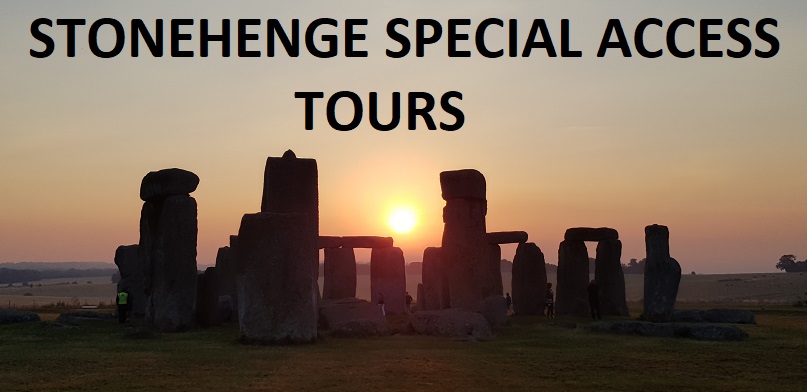
From London: Our friends at the ‘Stonehenge Tour Company’ will be offering their usual small group unobtrusive tours to the solstice from London.  There are two services departing London at 4pm and 1am – Click here: ‘Stonehenge Summer Solstice Tour 2012’
Stonehenge summer solstice tours

LINKS: http://www.efestivals.co.uk/festivals/stonehenge/2011/
http://www.english-heritage.org.uk/daysout/properties/stonehenge/explore/summer-solstice-2011/:
http://www.thestonehengetour.info/

TWITTER: Follow Stonehenge on twitter.  Get all the latest news and Solstice updates – http://twitter.com/ST0NEHENGE

FACEBOOK: Join Stonehenge on facebook: http://www.facebook.com/stonehenge.tours

See you all at the Summer Solstice, yipee……………..

Merlin @ Stonehenge
The Stonehenge Stone Circle Website


Romance in the stones as Stonehenge monument tops poll

14 02 2012

It may have been a site of ritual slaughter and Druidic practices but a new poll of the UK’s top romantic locations puts Stonehenge in second place overall but top in England, beating Windermere and King Arthur’s Seat.

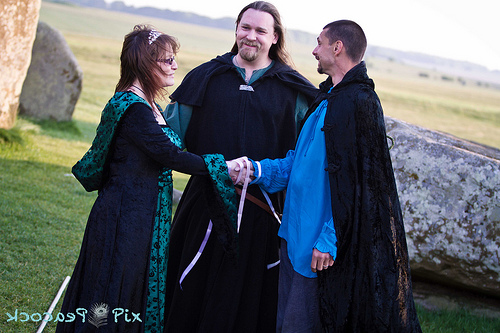
Stonehenge Handfasting

Despite its Druidic history Stonehenge has topped a poll of most romantic place in England to propose

The Welsh coastline tops the poll with 24 per cent of those surveyed voting the secluded beaches of the principality as the perfect leap year proposal spot. The Cotswolds, with its picturesque stone cottages and countryside comes third.

The survey, by PCH Prizes, also revealed that twice as many men as women voted for the turf of Wembley as their most romantic location.

Stonehenge has been attracting the spiritual and the curious for 5,000 years and while it may now be deemed romantic for Dorset novelist Thomas Hardy it was a symbol of isolation. In Tess of the d’Urbervilles Tess falls asleep on an ancient stone altar at Stonehenge after murdering Alec d’Urbeville, not the kind of future that leap-year brides are planning.
Source: http://www.thisissomerset.co.uk

Sponsored by ‘The Stonehenge Tour’ www.StonhengeTours.com

Merlin says “Happy Valentines Day, remember it is actually a Pagan festival!

Merlin @ Stonehenge
The Stonehenge stone Circle website


Mystery of Britain’s Largest Meteorite Solved. Found at Druids burial site near Stonehenge

10 02 2012

With a weight that rivals a baby elephant, a meteorite that fell from space some 30,000 years ago is likely Britain’s largest space rock. And after much sleuthing, researchers think they know where it came from and how it survived so long without weathering away.
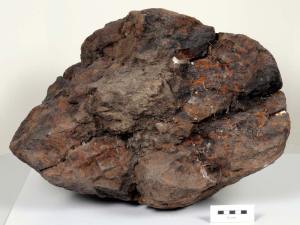
Likely the largest meteorite found in Britain, this one spans about 1.6 feet (0.5 meters) across and has been on Earth some 30,000 years.

Likely the largest meteorite found in Britain, this one spans about 1.6 feet (0.5 meters) across and has been on Earth some 30,000 years.

The giant rock, spanning about 1.6 feet (0.5 meters) across and weighing 205 pounds (93 kilograms), was likely discovered by an archaeologist about 200 years ago at a burial site created by the Druids (an ancient Celtic priesthood) near Stonehenge, according to said Colin Pillinger, a professor of planetary sciences at the Open University.

Pillinger curated the exhibition “Objects in Space,” which opens today (Feb. 9th) and is the first time the public will get a chance to see the meteorite. The exhibition will explore not only the mystery that surrounds the origins of the giant meteorite, but also the history and our fascination with space rocks.

As for how the meteorite survived its long stint on Earth, researchers point to the ice age.

“The only meteorites that we know about that have survived these long ages are the ones that were collected in Antarctica,” said Pillinger, adding that more recently, some ancient meteorites have been collected in the Sahara Desert. This rock came from neither the Sahara Desert nor Antarctica, but rather the Lake House in Wiltshire.

“Britain was under an ice age for 20,000 years,” Pillinger told LiveScience, explaining the climate would have protected the rock from weathering.

At some point, the Druids likely picked up the meteorite when scouting for rocks to build burial chambers. “They were keen on building burial sites for [the dead] in much the same way the Egyptians built the pyramids,” Pillinger said.

Then, years later, an archaeologist with ties to other, famous archaeologists, likely found the rock while excavating the Druids’ burial sites, he said. The archaeologist then brought the rock back to his house in Wiltshire, where its more recent residents took notice and alerted researchers.

“The men whose house this was found at spent a lot of time opening these burial sites 200 years ago for purposes of excavating them,” Pillinger said. “Our hypothesis is that the stone probably came out of one of those burial chambers.”

The meteorite is called a chondrite, a group that includes primitive meteorites that scientists think were remnants shed from the original building blocks of planets. Most meteorites found on Earth fit into this group.
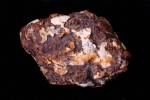
The much smaller meteorite on display at the Royal Society's exhibit was excavated from a grain pit where ancient peoples of the Iron Age stored their crops.

The much smaller meteorite on display at the Royal Society's exhibit was excavated from a grain pit where ancient peoples of the Iron Age stored their crops.

Other objects on display include a much smaller meteorite, weighing about an ounce (32 grams), and excavated from a grain pit where ancient peoples of the Iron Age stored their crops. It was discovered in the 1970s at Danebury Hill Fort in Hampshire, though it wasn’t until the 1980s when scientists analyzed metal in the walnut-size object did they realize its extraterrestrial origin.

The exhibition will also include a Damien Hirst “spot painting,” which features the famous Beagle 2 spacecraft as its center spot. In addition, part of Newton’s apple tree will be on display.

The story of how researchers are uncovering the origins of these impressive specimens will astonish and delight visitors to this remarkable exhibition, which also contains letters and books charting the history of scientific interest in meteorites.  

The Royal Society’s London headquarters will house the exhibit through March 30.

Follow LiveScience for the latest in science news and discoveries on Twitter @livescienceand on Facebook.
Sore: http://www.livescience.com

Sponsored by ‘The stonehege Tour Company’ – www.StonehengeTours.com

Merlin says “Out of this world”

Merlin @ Stonehenge
The Stonehenge Stone Circle Website
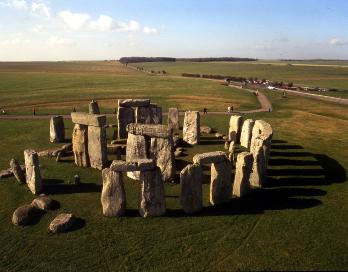


Celebrations at Stonehenge for World Heritage Day 2012

7 02 2012

A CELEBRATION of World Heritage Day is set to take place at Stonehenge and Avebury in April.

Stonehenge heritage dayPeople are being invited to join English Heritage experts and discover the prehistoric landscapes and how World Heritage Site status is helping to conserve them.

The event, being held between 10am and 6pm on April 18, is also a celebration of the 40th anniversary of the World Heritage Convention.

Tickets cost £35 per person and must be booked in advance.

To find out more and to book a place, contact English Heritage customer services on 0870 333 1181.

Link: http://www.salisburyjournal.co.uk
Sponsored by ‘The Stonehnege Tour Company” www.StonehengeTours.com

Melin says “All good for Wiltshire Tourism, bring it on…….”

Merlin @ Stonehenge


Brand new image for Wiltshire’s historic stones

6 02 2012

The builders of Stonehenge and Salisbury Cathedral would be puzzled to hear their creations are now considered ‘brands’.

 But VisitWiltshire, the tourism organisation subsidised by £1.5million of council taxpayers’ money, has launched a new “group visits and travel trade guide” advertising the county’s many attractions.

A statement from the organisation said: “Major brands working with VisitWiltshire include Stonehenge, Salisbury Cathedral, Longleat, Bowood, STEAM, McArthurGlen Swindon Designer Outlet, English Heritage and the National Trust.”

 The guide also mentions events being organised during 2012, such as the Olympic torch relay, the illumination of the White Horses at Devizes and Alton Barnes, an elemental fire garden at Stonehenge and Le Concert du Feu in Salisbury.

David Andrews, chief executive of VisitWiltshire, said: “With a record number of members in the 2012 guide, we are increasing our focus on travel trade activity.

 “Tourism plays a vital role in Wiltshire’s economy, generating an estimated £1billion and creating 20,000 jobs.” For a copy of the guide, call (01722) 341760 or visit www. visitwiltshire.co.uk

Link: http://www.thisiswiltshire.co.uk

Sponsored by ‘The Stonehenge Tour Company’ www.StonehengeTours.com

Merlin @ Stonehenge


Archaeologists and pagans alike glory in the Brodgar complex

2 02 2012

Let’s not jump to conclusions about ritual significance, but this site is clearly immensely important to ancient British history

The Ring of Brodgar ancient standing stones in Orkney, Scotland, flank the Brodgar complex, now thought to be older than Stonehenge. Photograph: Murdo Macleod

The Ring of Brodgar ancient standing stones in Orkney, Scotland, flank the Brodgar complex, now thought to be older than Stonehenge. Photograph: Murdo Macleod

Archaeologists are notoriously nervous of attributing ritual significance to anything (the old joke used to be that if you found an artefact and couldn’t identify it, it had to have ritual significance), yet they still like to do so whenever possible. I used to work on a site in the mid-1980s – a hill fort in Gloucestershire – where items of potential religious note occasionally turned up (a horse skull buried at the entrance, for example) and this was always cause for some excitement, and also some gnashing of teeth at the prospect of other people who weren’t archaeologists getting excited about it (“And now I suppose we’ll have druids turning up”).

The Brodgar complex has, however, got everyone excited. It ticks all the boxes that make archaeologists, other academics, lay historians and pagans jump up and down. Its age is significant: it’s around 800 years older than Stonehenge (although lately, having had to do some research into ancient Britain, I’ve been exercised by just how widely dates for sites vary, so perhaps some caution is called for). Pottery found at Stonehenge apparently originated in Orkney, or was modelled on pottery that did.

The site at the Ness of Brodgar – a narrow strip of land between the existing Stone Age sites of Maeshowe and the Ring of Brodgar – is massive: the size of five football pitches and circled by a 10ft wall. Only a small percentage of it has been investigated; it is being called a “temple complex”, and researchers seem to think that it is a passage complex – for instance, one in which bones are carried through and successively stripped (there is a firepit across one of the doors, and various entrances, plus alcoves like those in a passage grave, which are being regarded as evidence for this theory – but it’s a bit tenuous at present). Obviously, at this relatively early stage, it’s difficult for either professional archaeologists or their followers to formulate too many firm theories.

When it comes to the pagan community, I don’t think that its sounder members will be leaping to too many conclusions too soon; as discussed in a previous column, some of us would prefer to rely on the actual evidence rather than rushing off at a tangent. I cannot help wondering whether the relatively muted response across the pagan scene to the Brodgar findings has to do with the fact that the central artefact discovered so far – the “Brodgar Boy” – is apparently male rather than female. I am cynical enough to wonder whether, if it had been a northern Venus, there would be much more in the way of rash speculation about ancient matriarchies. Will we see the pagan community flocking to Orkney at the solstices? I doubt it. Orkney is a long way off and rather difficult to get to, whereas Stonehenge and Avebury are with a reasonably easy drive if you happen to live in the south of the country. In the days when the site was at its peak, most traffic would have been coastal, and remained so for hundreds of years to come. (And to be fair, many modern pagans aren’t actually too keen on trampling over ancient sites, sacred or otherwise, due to awareness of their relative fragility).

With regard to the “boy” himself, and other ancient representations of the human form, we simply don’t know why people made them. Maybe they are gods, goddesses, spirits. Maybe they’re toys, or lampoons of particular individuals, or just someone doing some carving in an idle moment. It’s hardly a startling theory that, throughout history, people have made stuff for fun: I’ve always been very amused by Aztec pots made in the shape of comical animals, looking for all the world like the early precursor to Disney and somewhat at variance with the sombre bloodiness of other aspects of that culture.


As soon as the Bronze Age arrived, Brodgar was completely abandoned. There was apparently a mass slaughter of cattle, which would have fed as many as 20,000 people on the site; this is being taken by some experts as evidence of a complete and sudden cultural replacement. But whether it has ritual significance or not, the sheer size, age and numbers involved with the Orkney site make it of immense importance to the history of ancient Britain.

Source: http://www.guardian.co.uk

Sponsored by ‘The Stonehenge Tour Compay’  www.StonehengeTours.com

Merlin @  Stonehenge 


The Celtic Festival of Imbolc – 1st / 2nd February

1 02 2012

Imbolc is traditionally regarded as the first day of Spring.
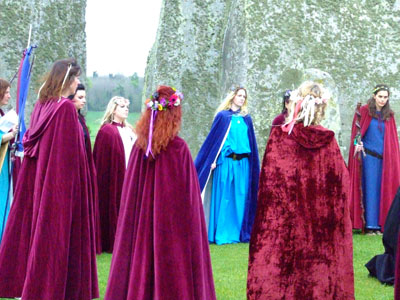
Life is beginning to stir again. The Celtic festival of Imbolc or Imbolg – pronounced without the ‘b’ sound – is sometimes known as Oimelc, means ‘ewe’s milk’ – named due to the birth of the first lambs at this time, and celebrates the return of fresh milk. Sheep are earlier with their offspring than cattle, because they could crop lower for grass and so thrive on the sparse vegetation in late winter. Cattle would calf around March. Bulbs are beginning to shoot and new lambs are born – the cycle of new life returns to the earth. Imbolc marks the rebirth of nature and fertility. It is the celebration of the gradual dawning of increasing light, bringing nature to life again. Nature is awakening from her winter rest – the long winter darkness begins to break as the daylight hours begin to get longer. Christians celebrate this festival as Candlemas.Stonehenge maidens - Imbolc

“As the light lengthens, so the cold strengthens”

Maidens
Imbolc focuses on the Goddess, both as Mother – as she gave birth to the Sun God at the Winter solstice, and as the Maiden. Brigit was originally considered a form of the Triple Goddess.
Imbolc is a feast dedicated to the Goddess in her maiden aspect, in her guise as Brigid, Bridget, Bride, Brighid, Brigit or Brig – goddess of learning, poetry, prophesying, craftmanship, agriculture and healing. Imbolc is considered a traditional healing time and it is a good time to consider ways to improve your health.

Brigid is the virgin goddess who brings new life to the earth. She is known as Bride in Scotland – pronounced Breed – which is the origin of the word ‘bride’. Imbolc is also known as Bride’s Day. She was christianised as St. Bridget of Kildare, the patroness of sheep and fertility, and she was also known as the ‘Mother of Ireland’.
Briget’s Cross is woven from corn and consists of four arms that meet to form a square centre – a fire wheel.
Traditionally, on this day candlelit processions were led to St. Bridget’s holy shrines – wells

Imbolc Traditions

Imbolc is a ‘fire festival’. particular attention was paid to the hearth fire and keeping it alight.
A celebratory dish used to be made from the new lambs’ docked tails.

Bridie dolls are made out of a sheaf of oats and dressed in women’s clothing, and then ritually buried in the earth as a fertility rite. Another custom was to place the doll in a ‘Bride’s bed’ of woven wheat, like a basket, which was placed near the front door, or sometimes near the hearth. A white candle was burnt nearby all night.

Spring cleaning comes from the habit at Imbolc of getting rid of unwanted clutter and preparing for the new season, physically and mentally.
Now is the time to finish old habits and make a fresh start, and realise the world is full of new opportunities.

Imbolc is a time of optimism and for making new plans for the sunny days ahead. Plant the seeds of your plans now and tend them so they mature into your hopes and dreams. Now is the time to renew your New Year resolutions.

Like many Celtic festivals, the Imbolc celebrations centred around the lighting of fires. Fire was perhaps more important for this festival than others as it was also the holy day of Brigid (also known as Bride, Brigit, Brid), the Goddess of fire, healing and fertility. The lighting of fires celebrated the increasing power of the Sun over the coming months. For the Christian calendar, this holiday was reformed and renamed ‘Candlemas’ when candles are lit to remember the purification of the Virgin Mary.

Imbolc is still a special time for Pagans. As people who are deeply aware of what is going on in the natural world they recognise that there is strength in cold as well as heat, death as well as life. The Horned God reigns over the Autumn and Winter and although the light and warmth of the world may be weak, he is still in his power.

Many feel that human actions are best when they reflect the actions of nature, so as the world slowly springs back into action it is time for the small tasks that are neglected through the busy year. Rituals and activities might include the making of candles, planting spring flowers, reading poetry and telling stories.

Links: http://www.druidry.org/obod/intro/festivals.html
Link: http://www.new-age.co.uk

Merlin says “It is called Imbolc in the Druid tradition, or sometimes Oimelc. Although we would think of Imbolc as being in the midst of Winter, it represents in fact the first of a trio of Spring celebrations, since it is the time of the first appearance of the snowdrop, and of the melting of the snows and the clearing of the debris of Winter. It is a time when we sense the first glimmer of Spring, and when the lambs are born. In the Druid tradition it is a gentle, beautiful festival in which the Mother Goddess is honoured with eight candles rising out of the water at the centre of the ceremonial circle.”

Blog Sponsored by ‘Stonehenge Guided Tours’ www.StonehengeTours.com

Merlin@ Stonehenge
The Stonehenge Website


Stonehenge Landscape Tour – Winter archaeology walk

31 01 2012

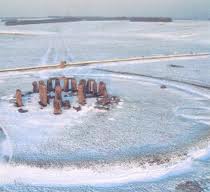
Stonehenge snow sceneWinter archaeology walk – Saturday, 04 February 2012

Explore the wider Stonehenge World Heritage Site with a guide and discover hidden histories, ancient mysteries and winter wildlife.

Enjoy a winter afternoon walk up on the downs learning about the ancient archaeology of the Stonehenge World Heritage Site and the area’s varied wildlife. On this three mile walk with views of the stone circle, we’ll visit ancient earthworks that have revealed much about the people who once lived and celebrated here. Talking points include the Cursus, the many and varied barrows, and an ancient avenue connecting ceremonial centres

NOTES:

Sponsored by ‘The Sonehenge Tour Company’ www.StonehengeTours.com

Melin says “This is a great tour of the Stonhenege landscape by The National Trust’

Merlin @ Stonehenge


Trio collaborate for exhibition of Hardy’s Wessex

27 01 2012

THOMAS Hardy immortalised Wessex in his novels and poems. Three artists who share a common interest in the writer’s use of landscape, Dave Gunning, David Inshaw and Rob Pountney, have collaborated in a fascinating exhibition currently on show in the upstairs gallery at Salisbury and South Wiltshire Museum.

Salisbury Cathedral and The Close feature in Jude the Obscure (Salisbury became Melchester in Hardy novels), and it is fitting that the exhibition is in the museum. In Jude the Obscure, Hardy based the college that Sue Bridehead attends on the training college for schoolmistresses that his sisters attended. This was the King’s House, now home to the museum.

Stonehenge plays a starring role at the tragic end of Tess of the D’Urbervilles and Robert Pountney’s works in the exhibition capture the stones in a dramatic context.

Landscapes of Thomas Hardy’s Wessex is a beautifully crafted exhibition and well worth a visit. It runs until April 14

Sourse: http://www.salisburyjournal.co.uk

Sponsored  by ‘The Stonehenge Tour Company’ www.StonehengeTours.com


Community bus could take tourists from Amesbury to Stonehenge

27 01 2012

AMESBURY’S community minibus will be used to ferry tourists from the town centre to Stonehenge as part of a move to improve the connection between the town and the world heritage site.

Stonehenge signAs the Journal reported last week, Amesbury Town Council has called for public transport links to be restored after the town was rebranded as Historic Amesbury and signs were put up welcoming people to the home of Stonehenge.

Visitors have been arriving in Amesbury expecting to see the ancient stone circle to be told the only way to reach it is to walk or go by taxi as the Wilts & Dorset operated Stonehenge Bus Tour does not stop at Amesbury bus station.

Now mayor of Amesbury Andy Rhind-Tutt has put forward plans for the community bus to be used to take people to Stonehenge.

He hopes to trial the scheme on Wednesdays, which is market day in Amesbury.

“It would be great for both tourists and local people,” he said.

“People could come and park in Amesbury and then the bus will take them up Countess Road, to Woodhenge, along Fargo Road, through Larkhill and on to Stonehenge.

“They could spend a couple of hours there and then get the bus back to Amesbury for lunch or some shopping.

“It will also provide a service for the people of Countess Road and Larkhill who lost out when Wilts and Dorset changed its bus routes.

“We are a historic town and we do have a lot to offer but we need to help people to get into Amesbury from Stonehenge.”

Initially it is hoped the service will be free while the new bus route is publicised.

It will travel a circular route and run on an hourly basis, and Mr Rhind-Tutt hopes to get it up and running before the Easter holidays.

“We hope that it will increase footfall in Amesbury which will boost local businesses,” he said.

“I understand the difficulty that Wilts a& Dorset would have running a service along the A303 due to the traffic, but this way we could use our community bus to further benefit Amesbury.”

Sponsored by ‘The Stonehenge Tour Company’ www.StonehengeTours.com

Merlin says “At last, tranport from Amesbury – save me walking”

Merlin at Stonehenge