Stonehenge news. Seven Wonders of the Ancient World ?

16 08 2011

Stonehenge may not be one of the seven wonders of the ancient world, but that’s probably only because Heroditus never came to Britain. If he came here now, he’d be appalled by the site of the stones – sandwiched as they are between two busy main roads, a car park complete with portaloos, and a visitor centre that makes you wish you were visiting something else.

A “national disgrace” is what a committee of MP’s called it more than a decade ago, and nothing much has changed since then. Until now that is. After years of wrangling over a series of schemes involving tunnels, by-passes and road closures, the Government believes it may finally have a plan that does Stonehenge justice. Others, including several prominent archaeologists, are not so sure and have set up The Stonehenge Alliance to fight the proposals.

When Sir Jocelyn Stevens took the reigns at English Heritage in 1992. He vowed to make Stonehenge his top priority, to “sort out” the mess of roads criss-crossing the site, and the inappropriate and inadequate visitor facilities that had been branded a national disgrace by the Public Accounts Committee:
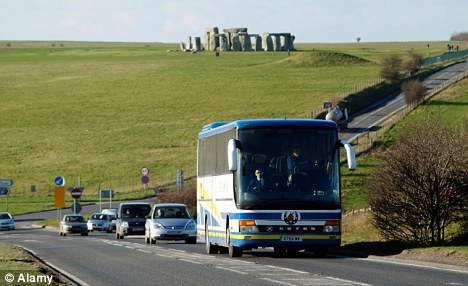
From the top of the King Barrows Ridge heading south on the A303 it’s easy to see what the problem is. The road itself, and the smaller A344 that forks off to the right, dominate the landscape as the raised bowl in which Stonehenge sits opens out in front of you. The view of the stones is a good one – and is much appreciated by motorists – but it’s hardly an appropriate setting for such an historic monument.

Buried in the down right beside the stones themselves the bunker-like concrete visitor centre, with it’s shop, ticket office, take-away cafe, and portaloos, is little better. Everyone agrees something must be done. The question is what?

Earlier plans, for a 4 kilometre tunnel bored under the entire site were rejected by the then Conservative government in 1996 on the grounds of cost. The current proposal, the “master plan” as it’s called, is backed by both English Heritage and the National Trust which owns much of the land. The idea is to bury the A303 in a 2 kilometre cut-and-cover tunnel, to close and green-over the A344, and to re-locate and improve the visitor facilities at a site outside the boundary of the World Heritage Site:

Kate Fielden, is a founding member of the Stonehenge Alliance. The problem with the master plan is that a shorter tunnel, although missing the stones, would both start and finish well within the boundaries of the wider World Heritage Site. Opting for cut and cover construction rather than a bored tunnel would more than halve the cost, but means digging up the ground along its entire length. An act of archaeological vandalism the alliance says beggars belief:

And the Stonehenge Alliance is not alone. In July ICOMOS, the International Council on Monuments and Sites, urged the Government to “pay due regard to the World Heritage Site as a whole, and not just that part closest to the stones”. And now even the National Trust’s support for the scheme is under attack from within. A motion before this month’s AGM calls on the charity to abandon its position. The Trust’s Mark Harold accepts the master plan is far from perfect, but he believes, its a good compromise:

Sponsored by ‘The Stonehehenge Tour Company’ – www.StonehengeTours.com

Merlin @ Stonehenge
The Stonehenge Stone Circle Website
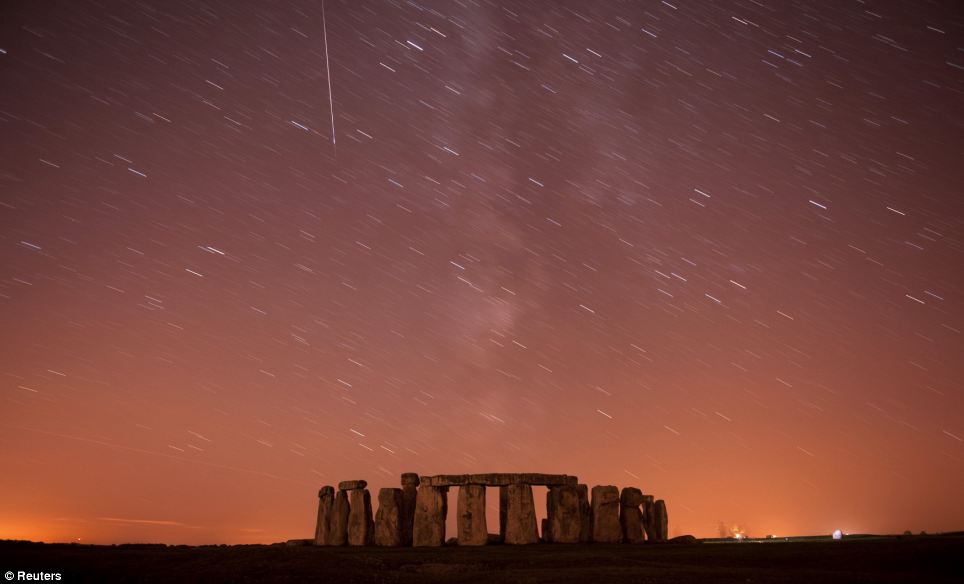


Perseid Meteor Shower at Stonehenge

12 08 2011

Star gazers prepare for Perseid meteor shower

Stonehenge in Wiltshire is one of the best places in Britain to witness this spectacular event.  As always I will be up all night overlooking Stonehenge as our ancestors have for 1000’s of years.
 

Perseid Meteor shower over Stonehenge.  Streaking down towards Stonehenge across the path of all the other stars in the sky, this shooting star is hurtling to Earth at 135,000 miles per hour – 100 times the speed of Concorde.

Perseid Meteor shower over Stonehenge. Streaking down towards Stonehenge across the path of all the other stars in the sky, this shooting star is hurtling to Earth at 135,000 miles per hour – 100 times the speed of Concorde.

Skywatchers were today given advice on how to enjoy this year’s display of Perseid meteors despite a full moon.

 The Perseids, which come every August, are normally one of the highlights of the celestial year for amateur astronomers.

Under ideal conditions up to 100 of the shooting stars an hour should be visible when the shower peaks tomorrow.
But the glare of the full moon will make it difficult to see the fainter meteors.

The moon generates natural light pollution that can be equal to that from an illuminated city centre.To help anyone hoping to spot the Perseids the National Trust has produced an online stargazing guide and listed some of its best “dark skies” locations.

Dr Marek Kukula, public astronomer at the Greenwich Royal Observatory in London, said: “The Perseids are always an exciting meteor shower to watch out for. Even in large cities it’s often possible to catch site of some of the brighter Perseid meteors streaking across the sky, but from a really dark site you can sometimes see dozens per hour.

 “Despite this year’s Perseid shower coinciding with the full moon it’s still well worth going out for a look. The meteors can appear anywhere in the sky so try looking away from the bright moon to maximise your chances of seeing one.”

 The Perseids are grains of dust shed from the tail of Comet Swift-Tuttle burning up in the atmosphere.

Every year in August the Earth ploughs through a cloud of the dust as it orbits the sun.

Among the locations highlighted by the National Trust are the area around Stonehenge in Wiltshire and Mam Tor in the Peak District, high above Sheffield.

Philip Broadbent, National Trust outdoors programme manager, said: “It’s worth spending the time to find the perfect spot to gaze up at the stars as once you’re there looking into the night sky it will take your breath away. And the best thing is that it won’t cost you a penny and this star time will always stay with you as one of those experiences that money can’t buy.”

 Alastair McBeath, director of the Society for Popular Astronomy’s meteor section, said: “As Perseid meteors near the peak are usually bright to occasionally very bright, this should mean observing will be quite rewarding despite the loss of fainter meteors to the moonlight.”

Sponsored by the ‘Stonehenge Tour Company’ www.StonehengeTours.com

Merlin at Stonehenge
The Stonehenge Stone Circle Wbsite


Chichen Itza points to Stonehenge – GPS research proves

26 07 2011

Jarome Vahai’s research on early GPS devices fascinated a group of students and scholars at this year’s Stanford Honors Research Symposium

Pyramids and monoliths around the world perform four functions that modern GPS devices perform, according to a newly released study by Jarome Vahai. The ancient navigational device researcher recently told a captivated audience at the 2011 Stanford Honors Research Symposium that ancient structures helped societies tell time, measure the circumference of the earth, pinpoint their location on the earth and identify their location during travel—just like modern GPS devices.

GPS systems are used for many things, including exploration, expanding territories, and conducting import/export trade and commerce over great distances.

“Early civilizations thought the same way we think now,” said Jarome Vahai. “We use GPS devices to locate where we are and how to get to other places—and so did they.” Vahai notes that as tools have improved, building structures like the pyramids has become unnecessary.

Many of the ancient landmarks that are still in existence are positioned in ways that mark the longest and shortest days of the year by the patterns of shadows they cast at equinox. In addition to showing calendar position, shadows could also be used to tell time during the day.

The Giza pyramids and shadows were also used by Eratosthenes to calculate the circumference of the earth. Ancient civilizations understood they were on a round, turning planet because their stone markers line up with one another around the globe. Some even line up with other planets and constellations, says Vahai.

Vahai’s research shows that markings identified at the pyramid at Chichen Itza point to the pyramids at Giza; others point to Stonehenge, the pyramids in China, and the great Cambodian temple Angkor Wat. He has also found that the stone markers of Ha’amonga, known as Tonga’s Stonehenge, line up with Fiji, Hawaii, Samoa, New Zealand and the Cook Islands.

“These ancient structures were lasting landmarks that told people where they are located in relation to other parts of the world,” said Vahai.

The usefulness of landmarks in the ancient world cannot be understated. Rulers had expansive empires that covered huge amounts of land, and protecting those lands could be challenging. Babylon and Giza are located in places that are difficult to find and get to, probably for security reasons. The large structures were helpful landmarks.

“I am very proud that Stanford selected my research; they only accept about 20% of submissions,” said Vahai. “The audience was extremely engaged—the moderator was so wrapped up in the topic, we ended up going over the time limit.”

Sponsored by ‘The Stonehenge Tour Company’ www.StonehengeTours.com

Merlin at Stonehenge
The Stonehenge Stone Circle Website


Costly changes to Stonehenge

30 06 2011

English Heritage seems determined to spend millions of pounds of taxpayers’ money on not altogether necessary changes to the site around Stonehenge in Wiltshire.

The saga began last summer when the Coalition government cancelled a proposed £25m scheme to replace the current visitor centre and shift it one and a half miles away from the stones, as well as diverting the nearby A344. This was all for aesthetic reasons so as to present the Neolithic stones in a more pleasing environment away from horrid cars and pesky tourists.

At the time, the Chief Secretary to the Treasury said the scheme had been devised when the previous government was going on a ‘pre-election spending spree’ and the English Heritage proposal did not ‘represent good value for money’.
Stonehenge

Five months later, however, the scheme was back on when English Heritage received a £10m grant towards the new visitor centre and closure of the A344. Now, it is happy to see taxpayers’ money spent on a costly public inquiry into diverting the road away from the site so as to ‘restore the dignity’ of the stones.

Chief Druid Arthur Pendragon, however, smells a rat, believing the costly shifting of visitor centre and road will actually reduce public access to the prehistoric monument and give English Heritage a monopoly over visiting it.

‘We will not shrink from our responsibilities,’ he says, ‘to ensure that future generations can enjoy the environs of Stonehenge and the World Heritage site without being excluded for fiscal reasons.’

Still, maybe we should be grateful for small mercies, as English Heritage had earlier asked for £500m so they could place the section of road that runs nearest the stones to be hidden away in a tunnel. Even the previous free spending government thought this was going too far and binned the extravagant scheme in 2007.

Sponsored by the Stonehenge Tour Company – www.StonehengeTours.com

Merlin @ Stonehenge
The Stonehenge Stone Circle Website


Inquiry into Stonehenge A344 closure plans

26 06 2011

Plans to close the main road east of Stonehenge and return it to grass are being scrutinised at a public inquiry.

English Heritage wants to stop traffic from travelling close to the stones and

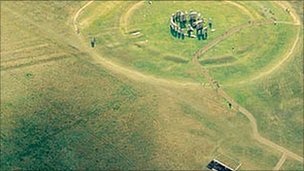
An aerial view of Stonehenge without the A344 road

An aerial view of Stonehenge without the A344 road

“restore the dignity” of the World Heritage Site by closing the A344.

Those opposed include chief druid Arthur Pendragon who has argued that it would give English Heritage a monopoly on access to the site.

The inquiry in Salisbury, Wiltshire, begins on Wednesday.

In June 2010 Wiltshire Council granted planning permission for a new visitors centre at Airman’s Corner, 1.5 miles (2km) west of Stonehenge.

Grassed over

Under the current scheme, the existing car park and visitor facilities at the stones will be removed and the area “returned to grass”.

English Heritage has said it will be necessary to close the A344 between Stonehenge Bottom and Byway 12 and close part of the B3086.

A new roundabout will replace the current Airman’s Corner junction to cope with the increased traffic caused by the road closures.

The Longbarow Roundabout on the A303 will also be improved.

English Heritage said it believed “everyone agrees that Stonehenge’s landscape setting is severely compromised by the intrusion of roads and traffic”.

Mr Pendragon said he was strongly opposed to the proposed traffic regulation order to restrict motorised vehicles on the remaining A344 west of Stonehenge and on two nearby byways.

He said: “We will not shrink from our responsibilities to ensure that future generations can enjoy the environs of Stonehenge and the World Heritage site without being excluded for fiscal reasons.”

Sponsored by ‘The Stonehenge Tour Company’ – www.StonehengeTours.com

Merlin @ Stonehenge
The Stonehenge Stone Circle Website


World Heritage Site Landscape Project: Stonehenge, Amesbury, Wiltshire

10 06 2011

Summary of an English Heritage Report on Stonehenge by David Field and Trevor Pearson:

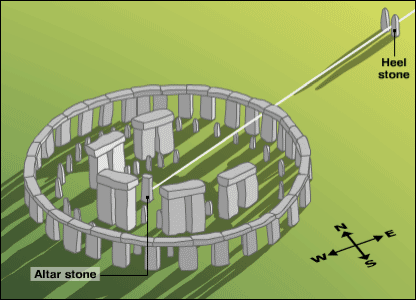
Analytical survey of the ground surface at Stonehenge revealed the presence of a number of interesting earthworks that have a bearing on interpretation and the development of the monument. Chief among these is a low mound that was revealed within the stone settings. Its location focuses attention on that part of the arrangement which is ruinous and supplements former reservations as to whether the monument was ever complete. Survey also revealed that the Y and Z holes are visible asStonehenge plan earthworks and that each circuit has a shallow bank within it. The feature known as the North ‘Barrow’ may have preceded the enclosure and therefore be one of the earliest elements at the site. The South ‘Barrow’ by contrast is, at least in one of its phases, a later feature. These are clearly not barrows and the more neutral term ‘circles’ is therefore preferred. An outer bank to the enclosure has been largely truncated by cultivation, while a mis-match of the Avenue at the enclosure entrance indicates that the two may have been mutually exclusive entities. The eastern ditch and bank of the Avenue is revealed to have changed course, perhaps in an attempt to avoid the pre-existing ditch around the Heel Stone.

http://services.english-heritage.org.uk/ResearchReportsPdfs/109_2010WEB.pdf
http://heritageaction.wordpress.com

Sponsored by ‘The Stonehenge Tour Company’ www.StonehengeTours.com

Merlin @ Stonehenge
The Stonehenge Stone Circle Website


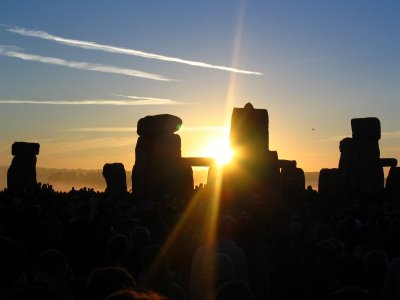
Stonehenge Summer Solstice Celebrations 2011 – June 20th / June 21st

27 04 2011

English Heritage are again expected to provide “Managed Open Access” to Stonehenge for the Summer Solstice. Please help to create a peaceful occasion by taking personal responsibility and following the conditions (see below).

Please note that a high volume of traffic is anticipated in the Stonehenge area on the evening of Sunday 20th June. The car park (enter off the A303 from the roundabout – it’s signposted) will open at around 7pm on Monday 20th June, and close at around noon on Tuesday 21st June.
Note that last admission to the car park for vehicles is at around 6am. Access Access to the stones themselves is expected to be from around 8.30pm on Monday 20th June until 8am on Tuesday 21st June.

Stonehenge Summer Solstice

 There’s likely to be casual entertainment from samba bands & drummers but no amplified music is allowed. When you visit Stonehenge for the Solstice, please remember it is a Sacred Place to many and should be respected. Van loads of police have been present in the area in case of any trouble, but generally a jovial mood prevails. Few arrests have been made in previous years, mostly in relation to minor drug offences.

Facilities Toilets and drinking water are available and welfare is provided by festival welfare services. There are normally one or two food and drink vans with reasonable prices but huge queues, all well away from the stones themselves.

Sunrise is at around 4:45am.

Conditions Rules include no camping, no dogs, no fires or fireworks, no glass bottles, no large bags or rucksacks, and no climbing onto the stones. Please use the bags given free on arrival and take them out, filled with your litter, to the skips provided.

Please respect the rules so that we’re all able to enjoy the solstice morning at Stonehenge for years to come.

Getting there: Where possible, please travel to Stonehenge using public transport. The local bus company, Wilts & Dorset, will be running a service from Salisbury railway and bus stations to Stonehenge over the Solstice period. This bus service will commence at 1830 hours (6.30pm) on Monday 20th June and run regularly until 0115 hours (1.15am) on Tuesday 21st June. A service taking people back to Salisbury will start again at 0400 hours (4am) and run frequently until 0945 hours (9.45am). Access to Stonehenge from the bus drop off point is through the National Trust farmland. More information will be here when available.  Needless to say this service is extremly busy, please allow plenty of time.

From London: Our friends at the ‘Stonehenge Tour Company’ will be offering their usual small group unobtrusive tours to the solstice from London.  There are two services departing London at 4pm and 1am – Click here: ‘Stonehenge Summer Solstice Tour 2011’
Stonehenge summer solstice tours

LINKS: http://www.efestivals.co.uk/festivals/stonehenge/2011/
http://www.english-heritage.org.uk/daysout/properties/stonehenge/explore/summer-solstice-2011/:
http://www.thestonehengetour.info/

TWITTER: Follow Stonehenge on twitter.  Get all the latest news and Solstice uddates – http://twitter.com/ST0NEHENGE

FACEBOOK: Join Stonehenge on facebook: http://www.facebook.com/stonehenge.tours

See you all at the Summer Solstice, yipee……………..

Merlin @ Stonehenge
The Stonehenge Stone Circle Website
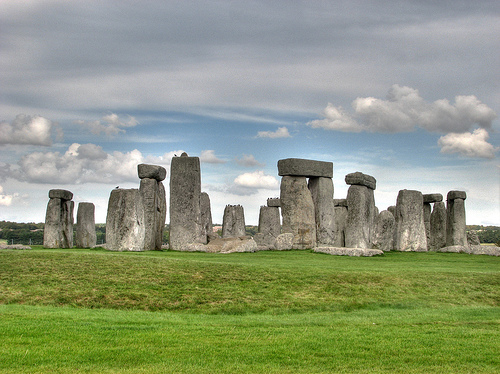


Why the future of Stonehenge must live up to its past

25 04 2011

Interesting article by Steve Kemp of Amesbury, Wiltshire in This is Devon.

Western Daily Press reader Steve Kemp, of Amesbury, Wiltshire, met foreign tourists as they marvelled at the Stonehenge World Heritage site – and asked them for their impressions. Many shared his view that more could be done to present the stones more helpfully and favourably when the world comes visiting. The nearby A303 is a major distraction for many visitors, Steve found. Pictured right are some of the visitors he met, and some famous images of Stonehenge over the years

 A303 Stonehenge

It’s around 5,000 years old, a World Heritage site since 1986 and as well known throughout the universe as the Taj Mahal and the Great Wall. It’s in Wiltshire. It has to be Stonehenge.

Cared for by English Heritage, the ‘stones’ are visited by just over a million people each year. That’s a few less than the Roman Baths and Spa but more than the Eden Project. Well over half that number come from abroad. Having paid an entrance fee of up to £7.50, selected one of the audio headsets available in ten different languages from Japanese to Russian, Mandarin to French, what do our guests really think of the Stonehenge experience? Living within walking distance of the stones, and having a free pass (courtesy of the previous owner, Sir Cecil Chubb) I thought I’d try and find out.

Four young men from Singapore approached me with a request to take their picture in front of the monument. They had hired a car for a week, done Bath yesterday and next up was Portsmouth.

One of them, George Tong, who spoke excellent English, said: “I thought there might have been more to see. Been here a quarter of an hour and that’s it really. There’s an awful lot of people here, is it always this busy?” The site was indeed heaving, perhaps due to the fact that everybody has to stay on the roped path.

Rohak and Anchal Singh and their three-year-old son had travelled from India. Rohak was on his third trip to Stonehenge. “This time I’ve brought my wife and son. Otherwise two visits were more than enough. What do I think? Well it’s cold and dreary, but a duty to take my family here.” Mrs. Singh was clearly unimpressed; perhaps she just wanted to see her relatives in Birmingham.

A group of Americans from Michigan listened intensely as their guide explained to them they had one hour before the coach left for Salisbury Cathedral, the rest rooms were over there and you were not allowed to touch the “ruins” as she called them.

 Kathleen Barbour asked me when the fog would disappear so they could see something, whilst Mike Guinn was just astounded at “how old everything was here”. “It’s incredible people could have put this together all those thousands of years ago, but I have to tell you it’s not as impressive as our Grand Canyon.” With that they headed back to the coach.

Many of us will remember visiting the stones in our childhood, cars parked on the field, walking up to and touching the monument. In British archaeologist Christopher Chippendale’s book, Stonehenge Complete, he traced the first tourist back to 1562.

A Swiss chap, by the name of Hermon, escaping religious persecution, took refuge at the Bishop of Salisbury’s residence. With time on his hands he asked the bishop to take him to “something that will astound me”. The bishop duly obliged with a day out at Stonehenge, at that time owned by Edward Seymour, Earl of Hertford. What an experience he must have had.

About 20 French students were listening to their audio sets, and I asked their tutor, Claude Thierry, for his views. “Very honoured to be here, much interest and questions from my pupils. This visit will be high on a list for our practical work. Have you noticed how well behaved the group is?” Yes, I had, and how several of them had chosen the English language audio sets. Again I was asked to take a picture of a couple, this time from Hong Kong. They were so polite, and obviously enjoying the experience. Chen Qingi said that back home the stones were very well known and had been on their wish list for years. “What an amazing place, it was so mysterious early on with the mist surrounding. Glad we came.”

There were at least two dozen Japanese tourists there, one young couple dressed up against the chill in reindeer and rabbit hats. They said they had bought them in London. Sadakazu Nogami told me: “It is 6,000 miles from our home. We had been planning this journey for many months, and despite the tsunami, our parents wanted us to go ahead. “We’re very pleased with what we see here. Stonehenge deserves our respect.

The birds nesting in the cracks are from the past, that’s what we believe.” Coaches and different languages were piling up all over the place. There was Polish, Russian, Danish and Dutch, plus Australian and New Zealand accents. I didn’t ask who was who, as from previous experience I know how our Antipodean cousins can get upset if you get it wrong. Perhaps something to do with rugby and cricket. There was no mistaking the Germans though. Herr Schroder said he had all the time in the world to give his views. He and his wife had travelled over in their own car from Munich, calling in at Avebury before here. “This is fascinating, what skill to have put these stones up, and get them here in the first place. You do know we Germans were involved,” he said. No, I did not, but please go on. “A long time ago, when there was no sea separating us, people moved around. Remember there was no borders then. “If I had my way that road (A303) wouldn’t be there. In Germany we would have solved problems like that years ago. We could still solve it for you, but you haven’t got the money now,” he concluded. You can’t help but notice, and indeed feel, how both roads completely throw the whole experience for visitors.

Even English Heritage staff whom I spoke to now find the whole situation an “embarrassment”. “These people, who have travelled in many cases thousands of miles to see the stones, are being let down. A proper Stonehenge Experience would be a world beater,” said one staff member. With a fair wind, work on a new visitor centre, one and a half miles away at Airman’s Corner, could start in April 2012, plus low noise surfacing for the main road, at a total cost of £30 million.

So there is the prospect of a proper experience and existence for Stonehenge. The people who built Stonehenge, wherever they came from, must have felt proud when the work was finished, I think the least we can do is put the pride back into the Stonehenge Experience.
http://www.thisisdevon.co.uk

Merlin @ Stonehnenge
The Stonehenge Stone Circle Website
Sponsored by ‘The Stonehenge Tour Company’ – www.SonehengeTours.com


Stonehenge is a landing strip.

5 04 2011

Aircraft at Stonhenge for first time in 90 years

AIRCRAFT landed at the former Stonehenge airfield on Friday for the first time in 90 years.

Stonehenge landing strip

Stonehenge landing

The event was arranged by the National Trust to commemorate the centenary of the formation of the first British military aeroplane unit.

Although overcast weather and strong winds hampered the occasion, three Auster planes, the oldest dating back to 1942, did manage to land.

A number of other planes including some replica First World War aircraft were due to take part but were unable to take off because of the conditions.

The airfield, RFC Stonehenge, was part of the Royal Flying Corps, although part of the site was also used by the Royal Naval Air Service as RNAS Stonehenge.

It became part of the Royal Air Force when it was formed in 1918 and the airfield remained open until March 1921.

The fly-in commemorated the formation of No 2 (Aeroplane) Company, Air Battalion, Royal Engineers which was formed at Larkhill on April 1, 1911.

“We are delighted to bring this aspect of the history of Stonehenge to life again, with the fly-in by this wonderful collection of aircraft,” said Stonehenge project officer Lucy Evershed.

National Trust volunteer guide Ted Mustart added: “Although No 2 Company was based at Larkhill, much of their flying in 1911 and 1912 was over the Stonehenge landscape.

“The Austers which have visited were used in the same roles as those of the first military aeroplanes – scouting, artillery co-operation and liaison in the period immediately after World War II.”

The National Trust has also organised a series of walks revealing the aviation history of the Stonehenge landscape.

The Wings over Stonehenge walks have taken visitors to the former airfield and more walks are planned for the summer, including one commemorating the first fatal military aircraft accident.

More information is available at www.nationaltrust.org.uk/stonehengelandscape
http://www.salisburyjournal.co.uk
http://www.StonehengeTours.com

Merlin @ Stonehenge
The Stonehenge Stone Circle Website


£5.5million announced for Stonehenge project

5 04 2011

AN extra £5.5million to help transform the Stonehenge landscape was announced this morning.  Should be enough to install a new coffee machine.

On a visit to the monument, Roads Minister Mike Penning said the government has agreed to give £3.5million to close the A344 junction with the A303 and improve the Long Barrow roundabout to cope with extra traffic.

The work will include resurfacing a mile-long stretch of the A303 with a ‘low noise’ road surface so visitors to the stones should not be able to hear the passing traffic.

Tourism and Heritage Minister John Penrose said English Heritage will be allowed to take £2million from its reserves to put towards the £27.5million it needs to move the visitor centre to Airman’s Corner and install a road train system to take visitors to the stones.

Chief executive Simon Thurley said the organisation is now just £3million short of its target and hopes to raise this from private sources such as trusts and charitable funds.

A public inquiry will be needed to authorise the permanent road closure.

But Dr Thurley said: “I am confident that we will be able to start work next year.”

If all goes well, English Heritage says the entire project could be completed by spring 2014.

Link: http://www.salisburyjournal.co.uk

Is it enough ?

Merlin @ Stonehenge
The Stonehenge Stone Circle Website