Stonehenge Winter Solstice is on 22nd December 2011

19 12 2011

For us in the northern hemisphere, the December solstice marks the longest night and shortest day of 2011 and falls on Thursday, 22nd DecemberAfter the winter solstice, the days will get longer. Celebration time!
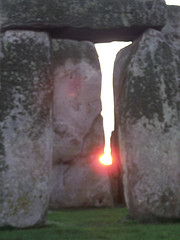
Stonehenge Winter Sunrise

Stonehenge Winter Sunrise

December 2011 solstice will occur on Wednesday, 21st December  at 11:30 p.m or 05:30am Coordinated Universal Time (UTC) on December 22, 2011. It is also known as the winter solstice in the northern hemisphere and the summer solstice in the southern hemisphere due to the seasonal differences.

The date varies from December 20 to December 23 depending on the year in the Gregorian calendar. The 2012 December solstice will be on December 21, 2012, which is a speculated date for “the end of the world”.

Use the Seasons Calculator to find December solstice date in other time zones or other years.

Solstice and Stonehenge

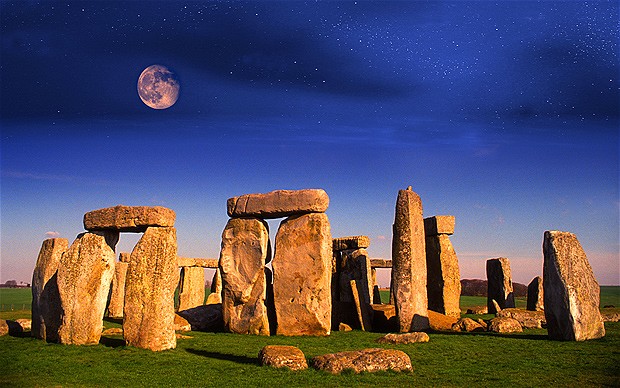
At Stonehenge  on this day, people watch as the sun sets in the midst of three great stones – known as the Trilithon – consisting of two large vertical stones supporting a third, horizontal stone across the top.

In the case of Stonehenge, this great Trilithon faces outwards from the center of the monument, with its smooth flat face turned toward the midwinter sun. In fact, the primary axes of Stonehenge seems to have been carefully aligned on a sight-line pointing to the winter solstice sunset.

This Stonehenge monument – built in 3,000 to 2,000 BC – shows how carefully our ancestors watched the sun. Astronomical observations such as these surely controlled human activities such as the mating of animals, the sowing of crops and the metering of winter reserves between harvests. Stonehenge is perhaps the most famous of of the ancient astronomical monuments found around the world.

Stonehenge on Twitter.  For the latest Solstice information and all the latest Stonehenge news (including images live from the Stones) follow: http://twitter.com/ST0NEHENGE
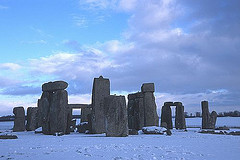
Stonehenge snow

Will it snow at Stonehenge this year ?

The December Solstice Explained

The December solstice occurs when the sun reaches its most southerly declination of -23.5 degrees. In other words, it is when the North Pole is tilted 23.5 degrees away from the sun. Depending on the Gregorian calendar, the December solstice occurs annually on a day between December 20 and December 23. On this date, all places above a latitude of 66.5 degrees north are now in darkness, while locations below a latitude of 66.5 degrees south receive 24 hours of daylight.

The sun is directly overhead on the Tropic of Capricorn in the southern hemisphere during the December solstice. It also marks the longest day of the year in terms of daylight hours for those living south of the Tropic of Capricorn. Those living or travelling south from the Antarctic Circle towards the South Pole will see the midnight sun during this time of the year.

On the contrary, for an observer in the northern hemisphere, the December solstice marks the day of the year with the least hours of daylight for those living north of the Tropic of Cancer. Those living or traveling north of the Arctic Circle towards the North Pole will not be able to see the sun during this time of the year.

What is the Winter Solstice?
The Winter Solstice is a magickal event, yet sadly, it is in the main a forgotten celebration. At this time, Christmas preparations are taking place, and the focus is primarily on ‘what colour scheme to go for?  Will the wrapping paper co-ordinate?  Have I forgotten anyone?  What shall we eat?  Will my funds stretch!’

The Solstice is however, the complete antithesis of what has now become Christmas in contemporary society. Also known as ‘Yule’, the Solstice is generally celebrated on the 21st of December, (although the astronomical date changes from year to year – this year the actual Solstice takes place on the 22nd, at 00.22a.m). The Winter Solstice is the shortest day, and longest night of the year, and is the traditional time to celebrate the truly important things in life: your family, your children, your home and looking forward to a wonderful year to come.

Yule is a time throughout time that honours love and new birth, as well as the collective unity of man. Just as Christmas celebrates the birth of Christ, Yule celebrates the birth of the Sun God – child of the Goddess in the Pagan belief system. Yule is primarily the celebration of the rebirth of the Sun. Many people associate the Winter Solstice, or winter itself with death, as it is the season in which nature is dormant, and in which many plants die off and crops are scarce. Conversely, the Winter Solstice, although it is the longest night, (boasting more than 12 hours of darkness), it is also the turning point of the year, as following this night the sun grows stronger in the sky, and the days become gradually longer once more. Thus the Winter Solstice is also a celebration of rebirth, and there are many traditions that stem from this perspective.

Traditions:  Holly, Ivy and Mistletoe

The Holly and the Ivy

The holly and the ivy
When they are both full grown
Of all the trees that are in the wood
The holly bears the crown.

Chorus:
Oh, the rising of the sun
And the running of the deer
The shining of the winter stars
As the longer days draw near.

The holly bears a blossom
As white as any flower
As our Mother bears the infant Sun
In the winter’s darkest hour.

Chorus

The holly bears a berry
As red as any blood
As our Father bears the hunter’s spear
for His hungry children’s good.

Chorus

The holly bears a prickle
As sharp as any thorn
As we shall bear our song of hope
On triumphant Yuletide morn.

Adapted by Hilda Marshal.

The tradition of bringing sprigs of Holly and Ivy into the home pays homage to the masculine and feminine elements. Both of these powerfully magickal plants are evergreen, a reminder in itself that the earth never dies, but merely sleeps during the winter months, (a tradition which was the precursor to our modern tradition of the evergreen Christmas tree). The male element is represented by the prickly holly; with its sexually potent red berries. The mistletoe is the female; entwining, gentle yet powerful. An alternative view of Holly is that the leaves of the plant represent the male, whereas the red berries symbolise the resting Mother Goddess, and life returning to the land.

The symbolism of Holly is especially potent. The Holly King and the Oak King are part of Celtic/Pagan mythology, and they represent two sides to the Greenman, or Horned God. Since the Summer Solstice, the Holly King has ruled the half-year of waning light, yet on this night the Oak King will take his throne to rule. In other words, the Oak King rules over the lighter half of the year, (Yule to Litha), and the Holly King over the darker half (Litha to Yule).

Another account of the Holly King and Oak King imagery is that they do not directly switch places twice a year, but rather both exist concurrently. The Oak King is born of the Goddess at Yule, growing in power through the spring, peaking at Beltane and then weakening through autumn until he dies at Samhain.
The Holly King however lives a reverse existence, and is born at Midsummer (Litha), increasing in strength throughout summer and autumn, reaching his zenith at Samhain. His sway then diminishes until it is his turn to pass at Beltane. Thus the two Kings enjoy a more elaborate sense of duality in this account, and it is perhaps a better illustration of their twofold nature, and their varying levels of influence throughout the year. As such they both have their characteristics. The reign of the Oak King is a time for growth, development, healing, and new beginnings. The Holly King’s time is for rest, reflection, and learning. Thus the Holly King is honoured with the boughs of Holly, and the Oak King is honoured with Mistletoe – the belief being that Mistletoe is best grown on the Oak as Mistletoe’s most powerful host, (a belief strengthened by the opinion of the 17th century herbalist, Culpepper). Ivy is representative of the Goddess; mother of both Kings, both Kings also being her consort – again powerful ideas of duality.

Mistletoe has a most compelling and influential history. According to ancient Druid tradition, Mistletoe was the most sacred of all plants. Mistletoe was used by the Druid priesthood in a very special ceremony; held five days after the New Moon following winter solstice. The Druid priests would cut Mistletoe from a holy Oak tree with a golden sickle. The branches had to be caught before they touched the ground. The priest then divided the branches into sprigs and dispersed them to the people, who hung them over doorways as protection. The folklore, and the magickal powers of this plant, have blossomed over time, although most are now forgotten. It was believed it had miraculous properties that could cure illnesses, antidote poisons, ensure fertility and protect against witchcraft. It was also a sign of peace and goodwill. When warring tribes came across Mistletoe, a temporary truce would be observed until the next day.

However, although Mistletoe carries a broad array of customs, and benefits in ancient times, the tradition which has lived on is that concerning fertility and love. According to most current day traditions, a young woman stands under the mistletoe and awaits her lover’s kiss. But from where did this tradition spring? It is considered that Mistletoe and kissing tradition is borne of a Norse myth.

The Norse god Balder was son of Frigga, goddess of love and beauty. She loved her son to such a degree that she had the four elements: Fire, Water, Air, and Earth- promise that they would not harm her son. However, Loki, an evil spirit, found the one thing that could defy this promise – mistletoe. He made an arrow from its wood, which was shot at Balder’s heart, and he fell dead, and Frigga’s tears became the mistletoe’s white berries. Balder is however, restored to life, and Frigga is so grateful that she reverses the reputation of the offending plant–making it a symbol of love and promising to bestow a kiss upon anyone who passes under it.

In the true spirit of Yule, focus your celebrations as a family upon love, and the fact that every ending is a new beginning. There are many simple rituals that you can enjoy as a family, to seal your bonds and celebrate each other at this magickal time of year.

Link: http://www.timeanddate.com/calendar/december-solstice.html
Link: http://brighterblessings.co.uk/articles/yule.htm
Link: http://earthsky.org
Link: http://www.english-heritage.org.uk/daysout/properties/stonehenge/
Link: http://www.druidry.org/
Linj: http://www.phreak.co.uk/stonehenge/psb/stonecam.htm

Sponsored by ‘The Stonehenge Tour Company’ – www.StonehengeTours.com

Merlin says “Happy solstice everyone, see you at the Stones..”

Stonehenge on Twitter.  For the latest Solstice information and all the latest Stonehenge news follow: http://twitter.com/ST0NEHENGE

The Stonehenge Stone Circle Website
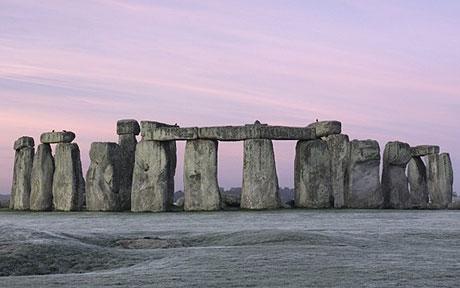


Season Greetings…………….

15 12 2011

Merlin says:  For centuries men have kept an appointment with Christmas. Christmas means fellowship, feasting, giving and receiving, a time of good cheer –   See you at the Winter Solstice 2011

Sponsored by ‘The Stonehenge Tour Company’ www.StonehengeTours.com

Merlin @ Stonehenge
The Stonehenge Stone Circle website


Stonehenge Tours at Christmas and the New Year

14 12 2011

There are a number of tours departing from London that include Stonehenge on Christmas Day, the New Year and over the festive period.  Please use the link below to view the available coach tours.

All are discounted and have printable tickets

Top Stonehenge tour operators:
The Stonehenge Experts – www.StonehengeTours.com
Coach tours departing from London- www.SightseeingTours.co.uk
Histouries UK (Bespoke Tours),  – www.Histouries.co.uk

Stonehenge Christmas Toursclick here

Christmas Eve in Windsor, Stone
Christmas in Windsor, Stonehenge and Bath
Boxing Day in Windsor, Stonehenge and BathPrivate Viewing of Stonehenge including Bath and Lacock


Melin says:  Its a good time to visit Wiltshire, in particular Salisbury

Merlin @ Stonehenge
The Stoneheneg Stone Circle Website


Stonehenge transformed into an eerie blaze of colour by light-art expert

11 12 2011

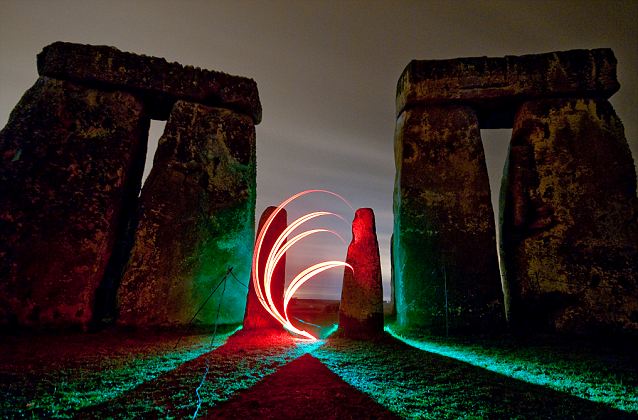
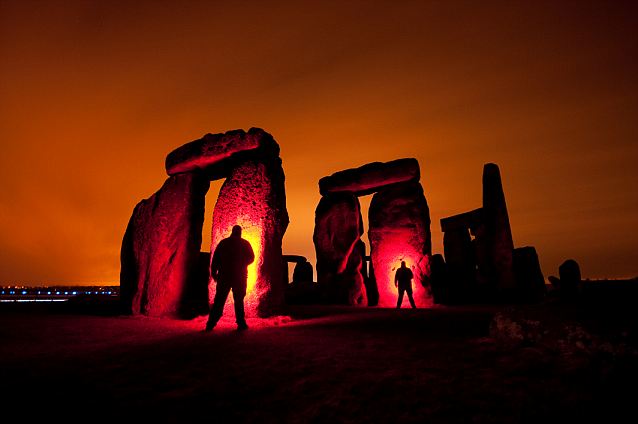
It’s a stunning illuminating technique which when used at Stonehenge turned the ancient British wonder into an amazing after-dark spectacular .. welcome to the world of light-painting.

Light-painter Marc Bowyer-Briggs has fused his photographic creativity and technological skills to turn the Wiltshire standing stones into a technicolour lightshow.

Using a technique involving electroluminescent wire and a long exposure on his camera, the 33-year-old from Portsmouth brought the dark stone monoliths to life with dazzling multi-coloured effects.

Light fantastic: Stonehenge as it has never been seen before

Light fantastic: Stonehenge as it has never been seen beforeMarc was granted exclusive access to the World Heritage site was given just two hours to transform the ancient standing stones into light art.The light artist explained: 'It was always my dream to go to Stonehenge.'It has to be one of the most iconic landmarks in the country.'I got the chance to shoot there at night so I snapped it up. I was only allowed two hours, so I really had to think on my feet.'I'm forever looking for locations, as whilst it's great to make a shot purely out of your light tools, it's also great to combine the location you're at within the shot.'Glow in the dark: Stonhenge in Wiltshire proves an incredible setting for the illuminating 'light painting' techniques

The dark nature of his art means that Marc is constantly roaming Britain’s countryside and cities by night – a task that comes with its own challenges.

Glow in the dark: Stonhenge in Wiltshire proves an incredible setting for the illuminating 'light painting' techniques

Glow in the dark: Stonhenge in Wiltshire proves an incredible setting for the illuminating 'light painting' techniques

‘It can get very exciting when you’re shooting in an inner city at night, especially when a group of drunk people are coming your way,’ he said.

‘In the past I’ve watching security guards at Stonehenge spot people trying to mount the fence.

‘Then with military precision dart over and explain why they shouldn’t be doing it.’

Marc, who has been honing his talent for light painting over four years, explained how he is able to create such fantastic images.

He said: ‘There are many methods to the madness but ultimately, you just need a camera that’ll take a long exposure.

‘You can keep the shutter of your camera open for as long as you wish.

‘Coupled with a cable release and a tripod, some light tools and some imagination, anyone can do it – the limit is purely your imagination.

‘You can use a simple torch to start with to illuminate objects, or draw stick men, then

‘I get such a sense of pride at a certain shot I’m happy with.’

Marc’s previous works include green laser tunnels and light painted UFOs gliding over the shadowy English countryside.

He has received popular enthusiasm for his work – so much so that he has now started to share his expertise with others.

He said: ‘Once people understand how the picture is created, more often than not, they’re in awe and want to go out and try it for themselves.

‘I’ve recently run an evening training course that I’m looking to increase the frequency of with a couple of friends.

‘The first half starts with the theory behind night photography, and how to do it, and the second half is a practical hands on.

‘The reaction we had from the first evening was fantastic.

‘My dream is to make it into the TATE Modern with some of my art.’ For  For more information see www.marcbb.co.uk

Full story by Daily Mail reporter: http://www.dailymail.co.uk/news/article-2072069/Stonehenge-transformed-eerie-blaze-colour-light-art-expert.html?ito=feeds-newsxml

Sponsored by ‘The Stonehenge Tour Company’ www.StonehengeTours.com

Merlin says: Trippy stuff man………………

Merlin @ Stonehenge
The Stonehenge Stone Circle Website
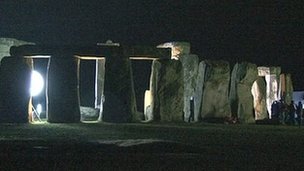


Stonehenge lit up ‘will make it theme park’ claims Druid

4 12 2011

Lighting up Stonehenge at night would turn it into a “theme park”, says a senior Druid.

Lady Mimi Pakenham from Warminster sparked the idea of illuminating the stones to “really display them” in a letter to a national newspaper.

Stonehenge was lit up at night for a period in the 1970s and early 1980s

Stonehenge was lit up at night for a period in the 1970s and early 1980s

Senior Druid, King Arthur Pendragon, said it would “detract from the very purpose of Stonehenge”.

English Heritage, which manages the site, said it could be a distraction for nearby traffic.

Lady Pakenham, who raised the idea on the letters pages of the Times, said lights would give the monument dignity.

“I can’t understand why they haven’t at least done a trial run of very subtle lighting,” she said.

“I think very soft illumination, sort of like moonlight, for a few hours in the evening would really display it far more than it is now – where it’s looking rather abandoned.

“It’s all fenced in like a concentration camp, so soft lights for a few hours in the dark of the night – it would actually be the real jewel in England’s wonderful, wonderful monuments and buildings.”

‘Dark and broody’

King Arthur Pendragon, battle chieftain of the Council of British Druid Orders, said: “The place is supposed to be dark and broody – that’s part of the mysticism of Stonehenge – and illuminating it would only detract from its very purpose as a sun temple.

“It’s not designed to be illuminated at night and in my opinion it smacks of theme park Stonehenge which is everything I stand against.”

According to English Heritage, Stonehenge was lit up at night for a period in the 1970s and early 1980s.

“But that practice was stopped due to an increase in road accidents caused by vehicles slowing down to observe the monument,” said a spokesperson.

“As there is even more traffic today on the A303, that risk cannot be ignored.”

Full story: http://www.bbc.co.uk/news/uk-england-wiltshire-15998526

Sponsored by ‘The Stonehenge Tour Company’ www.StonehengeTours.com

Merlin say: No! moonlight only please………….

Merlin @ Stonehenge
The Stonehenge Stone Circle Website


Stonehenge Book Gift Guide

3 12 2011

As Mid-Winter approaches, it’s time to consider the accompanying consumerfest. Whether you’re buying gifts for someone else, or just giving yourself a year-end treat, the following is a list of books, in no particular order, that we have enjoyed throughout the year. You may too.

Note that not all of these are new books by any means, but they are books we’ve read, enjoyed and can recommend.

  • Britain BC: Life in Britain and Ireland Before the Romans – Francis Pryor. The first in a four-part opus spanning athe Ice Age to Modern Times, this books concentrates on the birth of Farming and Agriculture in Britain, a subject close to Pryor’s heart.
  • A History of Ancient Britain – Neil Oliver. A companion to the TV series, this book spans half a million years of human occupation, through several Ice Ages to the Romans, looking at the various objects left behind for us to interpret. A thoughtful read.
  • A Brief History of the Druids (Brief Histories) – Peter Berresford Ellis. Forget the romantic antiquarian view of the Druids, this books tells it like it is, using the latest research into classical sources to give a good general overview of life and society in the pre-Roman period.
  • A Brief History of Stonehenge – Aubrey Burl. Although titled ‘A Brief History’, the scope and detail in this book is remarkable. casting aside the more lunatic fringe ideas, this book deals purely in facts, but is no less readable for all that. The ‘Brief History’ series generally is to be recommended, whatever your historical period of interest.
  • The Modern Antiquarian: A Pre-millennial Odyssey Through Megalithic Britain – Julian Cope. First written in the 1990′s and recently re-printed, this book spawned a website of the same name that has gone from strength to strength. A series of extraordinary essays followed by a decent gazetteer of some 300 ancient sites to visit in Britain.
  • Standing with Stones: A Photographic Journey Through Megalithic Britain and Ireland –  “Across the length and breadth of Britain and Ireland lies an unsurpassed richness of prehistoric heritage. Standing with Stones is a personal voyage of discovery, taking the reader to over a hundred megalithic sites in a photographic journey through the British Isles.” Stunning photography and an easily accessible text make this book a must-have. A companion DVD is also available.
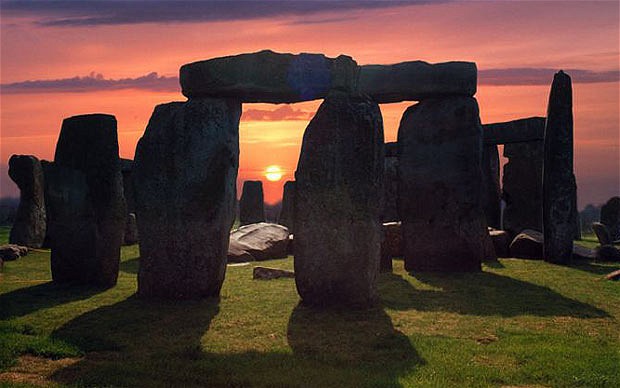
  • A Guide to the Stone Circles of Britain, Ireland and Brittany – Aubrey Burl. A superb gazetteer of stone circles. Provides what it says on the cover. In our view, an indispensible item.

Any of the above should provide a decent background to our ancient heritage. There are of course many more academic books we could recommend which go into fine detail about specific sites or time periods, but those above are targetted to a more general readership. If you think we’ve left anything important off our list, please add a comment to let us know.

Thanks to Heritage Action for the recommendations

Stonehenge Bookshop:
Please take the time to visit our online shop: http://astore.amazon.co.uk/stonetours-21

Sponsored by The Stonehenge Tour Company – www.StonehengeTours.com

Melin @ Stonehenge


Pagan stone circle built at US Air Force training academy

29 11 2011

The US military has built a stone circle in its Air Force academy to give pagans, druids and witches somewhere to practice their religion.

Stonehenge, UK: The Colarado base has spent around £50,000 building the Stonehenge-like structure

Stonehenge, UK: The Colarado base has spent around £50,000 building the Stonehenge-like structure


The Colorado base has spent around £50,000 building the Stonehenge-like structure to allow witches to cast spells, and pagans to form “circles of power” by night.

it is situated on top of a wooded hill and includes a fire pit.

The academy says it is for cadets who practice ‘Earth based’ religions including druids, witches and North American faiths.

Despite the expenses it is believed only three out of the 4,300 cadets have openly admitted that they are pagan.

Bob Barr, a former Republican congressman, campaigned to ban witches from the military, saying: “What’s next? Will armoured divisions be forced to travel with sacrificial animals for Satanic rituals? Will Rastafarians demand the inclusion of ritualistic marijuana cigarettes in their rations?”

The Wiccan religion was added to the US Army’s chaplain’s handbook in the 1970s and includes details on how covens are organised and how Druids worship ‘Mother Earth and Father Sky.’

“Most Wiccan groups also practise magic, by which they mean the direction and use of ‘psychic energy’ — those natural but invisible forces which surround all living things,” it explains.

The air force says the site is to help to protect the constitutional right to religious freedom.

But some think it is an attempt to attract more Wiccans to the army.

“Many men attracted to wicca are also attracted to this fantasy of the ancient warrior who is spiritually adept, but also a great fighter,” Margot Adler, a renowned witch and broadcaster, said.

The American Religious Identification Survey estimated that there were 700,000 pagans and wiccans in the US

US Army says Wiccan work it out

Sponsored by ‘The Stonehenge Tour Company’ www.StonehengeTours.com

Merlin @ Stonehenge
The Stonehenge Stone Circle Website


Stonehenge ‘should be lit at night’ campaigner claims

29 11 2011

Calls for Stonehenge to be lit up at night to capitalise on its appeal have been resisted by experts who claim it would spoil enjoyment of the prehistoric Wiltshire monument.

I was listening to this discussion on Radio 2 (Chris Evans) this morning so thought I would share this article by Andy Bloxham in the Telegraph today

Some people believe Stonehenge should be lit at night

Some people believe Stonehenge should be lit at night

After years of little progress, a multi-million-pound development plan was recently adopted to improve the site, which abuts the busy A303.

However, some people believe more could be done to ensure that Stonehenge can be appreciated around the clock.

They suggest the ancient stone circle could be lit at night “like the pyramids in Egypt or Castel Sant’Angelo in Rome”.

The discussion became a national debate when Lady Mimi Pakenham, of Warminster, in Wiltshire, raised it in a newspaper.

She said: “The magic of Stonehenge could be shared every evening with all who pass, many of whom can’t afford a ticket, just as it was a magical place thousands of years ago, sometimes with the Moon and clouds shining as well.

With subtle lighting sunk well out of view and endless possibilities of solar energy, the monumental power of ancient man’s achievement in another age would inspire all who pass by.

“Perhaps in depressing times a cocktail of cost-free magic is the very least we can expect from the guardians of the national heritage.”

However, some archaeologists disagreed.

Clive Ruggles, a professor of archaeoastronomy – the study of how ancient cultures understood the sky, said seeing Stonehenge alongside the stars was a key part of its appeal.

He said: “Stonehenge is iconic of the connections between ancient monuments and the sky, not only with strong connections to the annual cycles of the Sun but also very likely to the Moon and stars.

“Lighting up the monument would cut the visual connection between the monument and the starry night sky at a stroke.”

A number of groups, including the Royal Astronomical Society and the International Astronomical Union, have been working alongside English Heritage for several years to try to preserve as dark a night sky as possible in the area.

They have also been exploring ways in which “night tourism” might be permitted and encouraged in the future, Prof Ruggles said.

However, the debate is likely to only make the ongoing struggle to acceptably improve the site more knotted.

Link: http://www.telegraph.co.uk/earth/environment/archaeology/8922352/Stonehenge-should-be-lit-at-night-campaigner-claims.html

Sponsored by ‘The Stonehenge Tour Company’ www.StonehengeTours.com

Merlin @ Stonehenge
The Stonehenge Stone Circle Website


Stonehenge News Flash: Stonehenge byways to remain open

22 11 2011

A PLANNING inspector has ruled that byways surrounding Stonehenge will remain open.

The decision follows inquiries into proposals to close the byways as well as parts of the A344 and the inspector has decided that although the road will close, the byways should remain open.

English Heritage plans to return the area to grass as part of plans for a new visitors’ centre at Airman’s Corner.

Planning inspector Alan Boyland said: “I accept that Wiltshire has a considerably greater length of byways than any other county. This is not however, in itself, a reason for allowing a further loss for recreational motor vehicle users.

“In this case, the loss of a further 7km, particularly given the strategic importance of those routes, and without similar alternative routes being available, would in my view be significantly detrimental to the current users.”

At the inquiry, Druid leader King Arthur Pendragon objected to the proposals to close the byways as he said it is a violation of his human rights not to be able to access the area, particularly during Pagan ceremonies such as celebrations of the solstices and equinox.

Mr Pendragon said: “It appears that the inspector has erred on the side of common sense and found himself in agreement with the points made.”

The new visitor centre has got planning permission and despite funding problems English Heritage hopes the it can be completed by 2013.

Article: http://www.salisburyjournal.co.uk/news/salisbury/salisburynews/9378111.Stonehenge_byways_to_remain_open/#commentsList

Sponsored by The Stonehenge Tour Company – www.StonehengeTours.com

Merlin @ Stonehenge


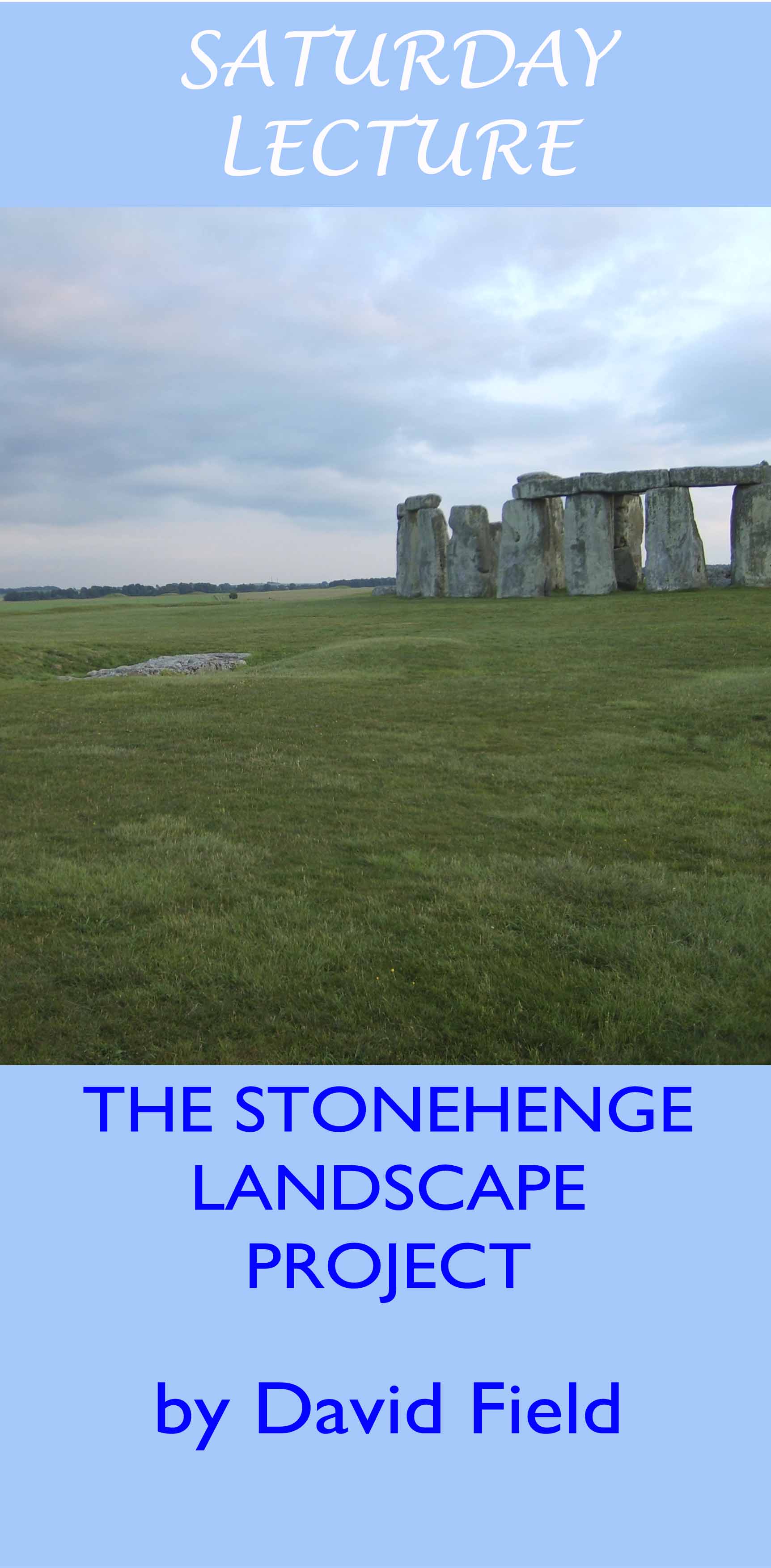
The Stonehenge Landscape Project. Lecture: 10th December 2011

19 11 2011


Recent Analytical survey and investigation in the World Heritage Site, by David Field.

Saturday LectureMonuments within the Stonehenge Landscape have rarely been subject to survey techniques in modern times and in many cases reliance has been placed on Ordnance Survey depictions of the early 20th century. In advance of the establishment of a new visitor centre and to complement and support the recent university programmes of excavation in the area, English Heritage has been conducting the Stonehenge WHS Landscape Project to determine what non-destructive survey techniques can tell us about the area. Using ground survey, aerial photography, lidar and laser scanning a number of fresh and sometimes surprising conclusions emerge. This talk will outline the results so far.

David Field is a senior landscape archaeologist at English Heritage. He has undertaken extensive research into the prehistory of Salisbury Plain and the Vale of Pewsey, including the Stonehenge World Heritage Site. Publications include ‘Earthen Long Barrows’ 2006),‘The story of Silbury Hill’ (co author with Jim Leary, 2010), ‘The Field Archaeology of the Salisbury Plain Training Area’ (2002) and ‘Ancient water management on Salisbury Plain’ in Patterns of the Past: Essays in Landscape Archaeology (1999). He has also contributed a number of articles to WANHM, most recently as one of the joint authors of the reports on the Breamore jadeite axehead and the Late Bronze Age and Early Iron Age Midden at East Chisenbury, in Volume 103 (2010).

Saturday afternoon lectures start at 2.30pm and last approx. one hour.

Booking:

Contact the Bookings Secretary if you would like to be added to a reserve list:
* Tel: 01380 727369 (10am to 5pm Monday to Saturday)
* Send an e-mail.
Cost:   £5 (£3 for WANHS members)

Visiting Stonehenge ?  Visit the Wiltshire Heritage Museum in Devizes:  http://www.wiltshireheritage.org.uk

Sponsored by The Stonehenge Tour Company – www.StonehengeTours.com

Merlin @ Stonehenge
The Stonehenge Stone Circle Website