Stonehenge was built on solstice axis, dig confirms

9 09 2013

English Heritage excavations show site has nothing to do with sun worshipping, and find evidence circle was once complete

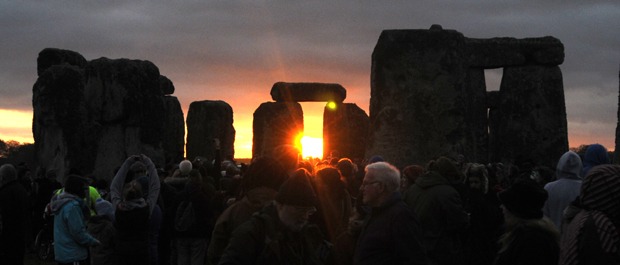
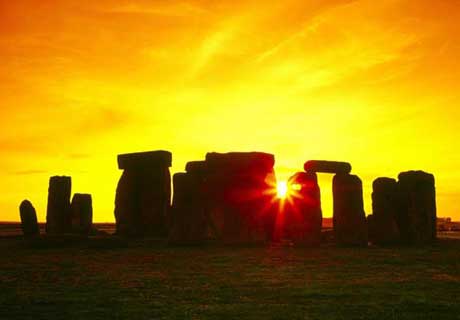
Archeologists found ridges, formed by Ice Age meltwater, that align Stonehenge with the solstice axis. Photograph: Francis Dean/Rex

Archeologists found ridges, formed by Ice Age meltwater, that align Stonehenge with the solstice axis. Photograph: Francis Dean/Rex

English Heritage says it has discovered a “missing piece in the jigsaw” in our understanding of Stonehenge, England’s greatest prehistoric site. Excavations  along the ancient processional route to the monument have confirmed the theory that it was built along an ice age landform that happened to be on the solstice axis.

The Avenue was an earthwork route that extended 1.5 miles from the north-eastern entrance to Wiltshire’s standing stones to the River Avon at West Amesbury. Following the closure of the A344 road, which cut across the route, archaeologists have been able to excavate there for the first time.

Just below the tarmac, they have found naturally occurring fissures that once lay between ridges against which prehistoric builders dug ditches to create the Avenue. The ridges were created by Ice Age meltwater that happen to point directly at the mid-winter sunset in one direction and the mid-summer sunrise in the other.

Professor Mike Parker Pearson, a leading expert on Stonehenge, said: “It’s hugely significant because it tells us a lot about why Stonehenge was located where it is and why they [prehistoric people] were so interested in the solstices. It’s not to do with worshipping the sun, some kind of calendar or astronomical observatory; it’s about how this place was special to prehistoric people.

“This natural landform happens to be on the solstice axis, which brings heaven and earth into one. So the reason that Stonehenge is all about the solstices, we think, is because they actually saw this in the land.”

The findings back theories that emerged in 2008 following exploration of a narrow trench across the Avenue. Parker Pearson said: “This is the confirmation. It’s being able to see the big picture.”

Dr Heather Sebire, English Heritage’s Stonehenge curator, said: “The part of the Avenue that was cut through by the road has obviously been destroyed forever, but we were hopeful that archaeology below the road would survive. And here we have it: the missing piece in the jigsaw. It is very exciting to find a piece of physical evidence that officially makes the connection which we were hoping for.”

The excavation was conducted by Wessex Archaeology for English Heritage.

The A344 will be grassed over next year as part of English Heritage’s £27m transformation of the World Heritage Site, which receives more than 1m visitors annually. There will be a new visitor centre, 1.5 miles away out of sight, to allow Stonehenge to reconnect with the surrounding landscape.

Sebire, who likens the Avenue to The Mall leading to Buckingham Palace, said that the latest findings should prompt vigorous academic debate.

The excavations have also uncovered three holes where missing stones would have stood on the outer sarsen circle, evidence, it is believed, that the circle was indeed once complete. Surprisingly, even the most sophisticated surveys failed to spot them. Two members of staff noticed dry areas of grass, or parchmarks.

Susan Greaney, an English Heritage historian, said: “The discovery … has certainly strengthened the case for it being a full circle.”

Asked why no one noticed them until now, Parker Pearson said: “The problem is we’ve not had a decent dry summer in many years. Stonehenge is always regularly watered, and the only reason these have shown up is because – for some reason this year – their hose was too short … So we’re very lucky.”

Article source: : The Guardian: http://www.theguardian.com/culture/2013/sep/08/stonehenge-ice-age-solstice-axis

Merlin @ Stonehenge
The Stonehenge News Blog  


Discovery of 5,000-year-old skull ‘in fabulous condition’ on side of river sparks mystery as archaeologists claim it would not have survived in water

1 09 2013
  • Skull is  believed to be of a middle aged woman living in 3,300 BC
  • Unbroken  skull found on the banks of the River Avon in Worcestershire
  • Carbon  dating technology places the piece between 3,338BC and 3,035  BC
  • The  ‘exceptional’ find suggests there is an undiscovered burial site  nearby

A 5,000-year-old human skull in ‘fabulous’  condition has been discovered on the banks of a river in Worcershire by a walker  who thought it was a coconut.

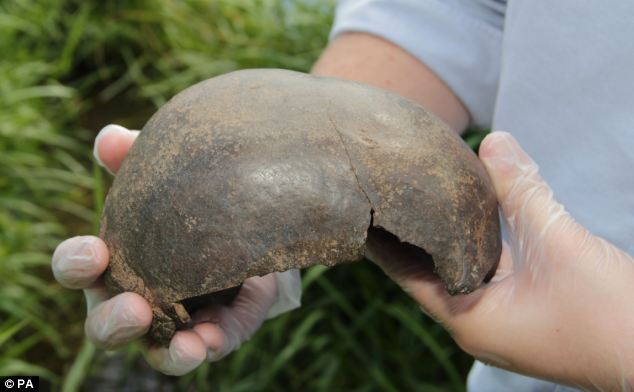
Remarkable discovery: Nick Daffern, senior archaeologist with Worcestershire Archaeology holds the 5,000-year-old skull which has baffled experts

Remarkable discovery: Nick Daffern, senior archaeologist with Worcestershire Archaeology holds the 5,000-year-old skull which has baffled experts

Experts said the piece of ancient skull is an  ‘exceptional find’ as the intricate marks  from blood vessels are still visible on the inner surface.

The smooth dark outer side gives only a  tantalising glimpse as to what the person may have looked like, although there  are ‘tentative’ suggestions it may have belonged to a woman in middle age living  in the Neolithic period – around the time Stonehenge was built.

The skull is not only prompting questions  about the person it belonged to, but where it may have come.

A dog walker first stumbled across the skull  piece, which is about 15cms (6ins) in length and 10cm (4ins) in width, earlier  this year but initially thought it was a ball or a coconut shell.

Detectives from West Mercia Police  investigated the scene and contacted experts at Worcestershire Archaeology, who  sent the skull to be radiocarbon dated.

‘When I first saw the skull, I thought it may  have been Anglo-Saxon or Roman but I knew that it was not recent due to the  colour,’ said Nick Daffern, senior archaeologist.

‘But we were all surprised when the  radiocarbon dating put it at between 3,338 BC and 3,035 BC, or about the middle  Neolithic period.’

‘It is so well preserved, it is unthinkable  that this had been in the river for any length of time which begs the question  as to where it has come from.

‘We know of Roman, Saxon and medieval burials  along the river, but this is very rare – it is an exceptional  find.

‘What it suggests is that we have a Neolithic  burial site very near here – we just don’t know where.’

He said: ‘I don’t think it was found where  the remains were buried, I think we’ve got a riverside burial and then flooding  has brought this down the river.

‘Finding that burial site though would be  like finding a needle in a haystack.’Who was neolithic man

Mr Daffern said that without the rest of the  skeleton it was difficult to draw conclusions about the person found, and  certainly there is no clue as to how they met their death.

‘Both myself and a forensic anthropologist  believe it is a woman due to the slightness of the skull and the lack of any  brow ridges although our conclusions are very tentative because we’re dealing  only with the top of a skull,’ he added.

‘There’s no trauma to the bone, and where it  has broken those are natural breaks, nor is there any sign of disease so we’ve  no idea as to cause of death.

‘The natural fusion of the bone in the skull  leads me to believe it may be an older woman, possibly in her 50s, but that is  very tentative again.

‘Unfortunately, it remains a bit of a  mystery.’

The find is a few miles from Bredon Hill,  which has been a scene of human activity down the ages and still boasts the  earthen ramparts of what was an Iron Age hill fort, however finds of Neolithic  remains are rare.

‘Whenever we come across Neolithic remains,  there seems to be a solid dividing line between where they buried their dead,  and where they lived and that is no accident,’ he said.

‘But it is frustrating as an archaeologist  because although we have the physical evidence, we still don’t have the answers  as to why.’

The skull is only the second set of Neolithic  remains to be found in the county, although two large 6,000-year-old ‘halls of  the dead’ were found in nearby Herefordshire this year but without any human  remains present.

Article source: By  Daily Mail Reporter – http://www.dailymail.co.uk/sciencetech/article-2407337/Discovery-5-000-year-old-skull-fabulous-condition-sparks-mystery.html

Merlin @ Stonehenge
The Stonehenge News Blog


Telling the story of prehistoric Wiltshire.

18 08 2013

The Wiltshire Museum in Devizes is opening new prehistory galleries in the autumn.

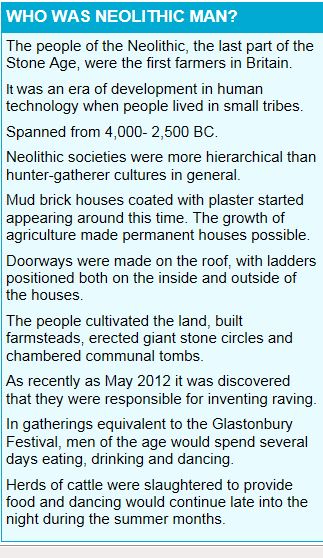
The centrepiece of the stunning new displays are the objects buried with the Bush Barrow Chieftain almost 4,000 years ago. He was buried close to Stonehenge with the objects that showed his power and authority– a gold lozenge, a ceremonial mace and a gold-decorated dagger.These are just some of the rich Bronze Age objects that are on display for the first time in new high security showcases. Gold ornaments, amber necklaces, ritual costume, polished stone axes and bronze daggers tell the story of the people who lived at the time when Stonehenge, Avebury and Marden henges were great ceremonial centres.

Bronze Age artefacts on show at the Wiltshire Museum

Bronze Age artefacts on show at the Wiltshire Museum


The displays feature models and full-size reconstructions that bring archaeology to life. There is lots for children to do, with trails and quizzes, a chance to build Stonehenge and Bronze Age clothes to try on.

Some of the important Bronze Age gold finds from the museum will be on loan for display at the new Stonehenge visitor centre. This is part of an integrated strategy to encourage visitors to Stonehenge to explore Wiltshire and to visit the museums in Devizes and Salisbury. These new displays have been developed with support from the Heritage Lottery Fund, English Heritage and the North Wessex Downs AONB

More details here: http://www.english-heritage.org.uk/content/imported-docs/k-o/megalith-jul2013.pdf

Museum link: http://www.wiltshireheritage.org.uk/

Merlin @ Stonehenge
The Stonehenge News Blog
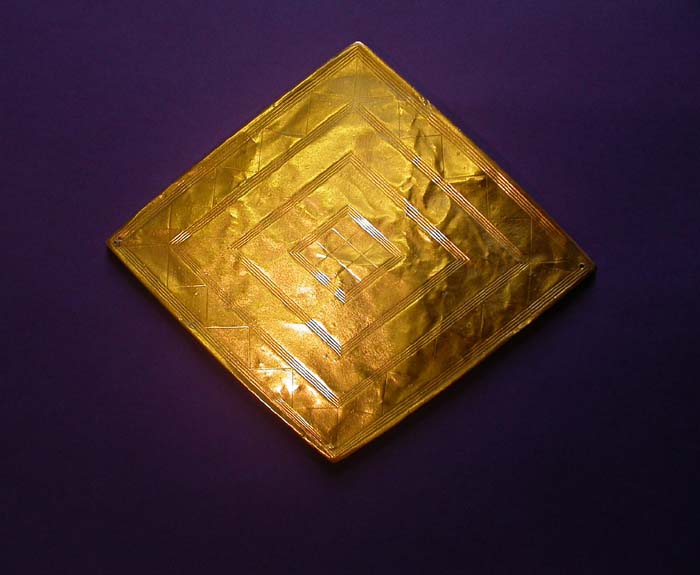


Stonehenge and the Stars: Perseid Meteor Shower 12th August 2013

27 07 2013

Facilitated by English Heritage and led by an expert local volunteer, the group will enjoy sole access to Stonehenge for two hours. The first hour will be dedicated to a guided tour and Q&A focussing on the astronomical theories surrounding Stonehenge. During the second hour visitors are invited to set up their own telescopes and cameras to star gaze and moon gaze, to share stories and experiences and, weather permitting, to enjoy the Perseid Meteor Shower at its fullest.

Meteor showers have always captured peoples interests. In astronomy, there’s nothing quite like a bright meteor streaking across the glittering canopy of a moonless night sky. The unexpected flash of light adds a dash of magic to an ordinary walk under the stars.Visitors are invited to bring their own telescopes, cameras and binoculars. (Please note: Tripods may not be pressed into the earth and must have rubber/protective feet. We are unable to provide any equipment ourselves). We recommend that visitors also bring red-filter torches. Visitors should wear appropriate clothing and footwear

Meteor showers have always captured peoples interests. In astronomy, there’s nothing quite like a bright meteor streaking across the glittering canopy of a moonless night sky. The unexpected flash of light adds a dash of magic to an ordinary walk under the stars.

How to Book

Purchase your tickets today by calling our dedicated Ticket Sales Team on 0870 333 1183 (Mon – Fri 8.30am – 5.30 Sat 9am – 5pm).

Prices

Ticket price includes entrance to Stonehenge stone circle, star gaze and guide

Link: http://www.english-heritage.org.uk/daysout/events/stonehenge-and-the-stars-sh-12-aug/
Link: http://www.clarksvilleonline.com/2013/07/27/nasa-research-shows-perseid-meteor-shower-to-peak-august-12th-and-13th/
Link: http://www.meteorwatch.org/

Merlin says “In total, the Perseid meteor rate from dark-sky sites could top 100 per hour. That’s a lot of magic. Enjoy the show.”

Merlin @ Stonehenge
The Stonehenge News Blog


New Stonehenge tourist attraction planned in Wiltshire

29 06 2013

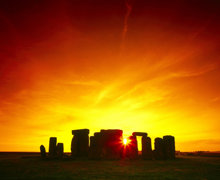
Plans have been unveiled for another Stonehenge stone circle to be built in Wiltshire using different-coloured stones from around the world.

Organisers of the £50m project want it to become another major tourist destination in the county, and one which will last for thousands of years.

Archaeologists believe the original Stonehenge was built anywhere from 3000 BC to 2000 BC

Archaeologists believe the original Stonehenge was built anywhere from 3000 BC to 2000 BC

New Stonehenge would include yurt huts for visitors to stay in, a planetarium and an observatory.

It would be located about four miles (6 km) from the existing stone circle.

The land is close to Fugglestone Red where Wiltshire Council has proposed a major new housing development as part of its 2009 Core Strategy.

“For tourism in Wiltshire, it will be a huge boost. The new Stonehenge will compliment the old one”
Graham Gould Salisbury City Centre Management

The project is currently in the planning stages while the team behind it seeks funding for consultation on the environmental impact of the proposed structure.

Private investment for the build is currently being sought, with organisers expecting the attraction to make back the outlay within 6-10 years of it opening.

‘Homage’ to original circle

Project leader Colin Shearing said it will be an “homage” to the original Stonehenge.

He said: “You can’t really experience how it was when it was new because it’s old, so a new one would give you an opportunity to experience what our ancestors experienced when they went to the original one.”

Archaeologists believe the original Stonehenge was built anywhere from 3000 BC to 2000 BC.

Mr Shearing said the new Stonehenge circle would be built with stones imported from different countries around the world, with each one matching a colour of the spectrum.

He said the entire structure will be polished and set into a floor of white quartz granite and surrounded by a white stone wall.

It is planned for the attraction to host events such as summer concerts and festivals as well as conferences and weddings.

Graham Gould, of Salisbury City Centre Management, described it as a “fantastic idea”.

He said: “For tourism in Wiltshire, it will be a huge boost. The new Stonehenge will compliment the old one.

“The two can work together, without a doubt.”

An English Heritage spokesperson said it is an “ambitious and interesting” project, and the organisation will be watching its development “with interest.”

Following a full environmental impact study, organisers hope to apply for planning permission to Wiltshire Council in 2014.

Article source: http://www.bbc.co.uk/news/uk-england-wiltshire-23094202

More info: http://www.newstonehenge.co.uk/

Merlin says “Great idea”
The Stonehenge News Blog


Summer Solstice Celebrations at Stonehenge 2013

20 06 2013

English Heritage is pleased to be providing Managed Open Access to Stonehenge for the Summer Solstice on 20-21 June 2013. Please help us to create a peaceful occasion by taking personal responsibility and following the Conditions of Entry and guidelines set out on these pages. The full Conditions of Entry can also be downloaded from the link at the bottom of this page. 

Stonehenge during sunrise at midsummer

English Heritage  have a duty of care to ensure public safety and are responsible for protecting  Stonehenge and its surrounding Monuments. If we are to ensure that future access is sustainable, it is essential that everyone observes and abides by these Conditions of Entry.

Celebrating the Summer Solstice at Stonehenge 

Stonehenge is an ancient prehistoric site and has been a place of worship and celebration at the time of Summer Solstice since time immemorial.

During Managed Open Access for Summer Solstice at Stonehenge, we support all individuals and groups conducting their own forms of ceremony and celebration providing that they are mutually respectful and tolerant of one another. It is a place seen by many as a sacred site – therefore please respect it and those attending.

English Heritage continues to work closely with the many agencies and people from all sectors of the community and we would like to thank them for their help and support.

Parking and entry to the Monument will be free, subject to the Conditions of Entry.  Please do not arrive at the Solstice Car Park or Stonehenge in advance of the opening times listed below:

    Timings for Summer Solstice at Stonehenge

  • SOLSTICE CAR PARK OPENS  1900 hours (7pm) Thursday 20th June
  • ACCESS TO STONEHENGE 1900 hours (7pm) Thursday 20th June
  • LAST ADMISSION TO SOLSTICE CAR PARK   0600 hours (6am) Friday 21st June
  • STONEHENGE CLOSES  0800 hours (8am) Friday 21st June
  • SOLSTICE CAR PARK TO BE VACATED  1200 hours (12 Noon) Friday 21st June – see Travel and Parking for further information on travel and parking arrangements.

We hope the weather will be kind and wish you a peaceful and celebratory solstice.

    Sunset and Sunrise

Sunset and sunrise occur at the following times:

  • Sunset on Thursday 20th June 2013 is at 2126 hrs (9.26pm)
  • Sunrise on Friday 21st June 2013 is at 0452 hrs (4.52am)

Travelling to Stonehenge for Summer Solstice: http://www.english-heritage.org.uk/daysout/properties/stonehenge/summer-solstice/travel-to-stonehenge/

Parking for Summer Solstice at Stonehenge: http://www.english-heritage.org.uk/daysout/properties/stonehenge/summer-solstice/parking/

Conditions of Entry for Summer Solstice: http://www.english-heritage.org.uk/daysout/properties/stonehenge/summer-solstice/conditions-entry/

Solstice Traffic Bulletin: http://www.highways.gov.uk/news/press-releases/traffic-bulletin-stonehenge-summer-solstice-advice-for-drivers/

Other stuff about Stonehenge

Hopefully it will be warm and clear at Stonehenge for the Solstice, but it might be worth stating:

  • there’s no shelter at Stonehenge. If it rains you will get wet and muddy
  • it typically feels colder in Salisbury than it does in London, and it feels colder at Stonehenge than it does in Salisbury. It’s not going to be winter-solstice-cold but you might want to bring an extra layer or two
  • the English Heritage info is worth reading
  • be careful of your personal safety – it’s easy to assume Stonehenge will be full of mystics and gentle hippies. It’s not! (Link source: http://salisburyandstonehenge.net/stonehenge-2/stonehenge-summer-solstice-2013)

Follow Stonehenge on Twitter for all the latest Solstice News: https://twitter.com/ST0NEHENGE

Merlin says ” Happy Solstice Folks, lets make it a peaceful gathering.  Respect the Stones and Respect each other!”

The Stonehenge News Blog


Stonehenge Solstice Ancient Celebration. June 21st 2013

16 06 2013

With the Summer Solstice fast approaching we start to see our visitor numbers increase in Wiltshire. It is a bumper time for our tourist industry as people from all over the world descend upon our county and join in with this ancient celebration.

The Summer Solstice is known to Pagans as ‘Alban Hefin’ which means ‘Light of the Shore’. It occurs on the 21st June when the sun is at its highest point in the sky and the days are at their longest. The nights begin to draw in after this date, which is a scary thought as summer has only just got going. The Druids celebrate this event with special ceremonies and rituals that are believed to date back several millennia. Although the 4000 year old monument of Stonehenge has been the centre stage for these ceremonies; Avebury, Woodhenge and the Kennet long barrow have also attracted worshippers at this special time of year.

Looking into our local studies archives I have discovered that the Solstice festivities have not always been peaceful as the Druids would wish.

In 1901, Salisbury Police invoiced the landowner of Stonehenge, Colonel Sir Edmund Antrobus ‘for police services rendered’ for the night of 20th June. He was charged for one Superintendent, one Inspector, two Sergeants and seven Constables a total of £3. 4s.2d. presumably this would have been for crowd control or public order duties.

During the 1950s the Druid procession was accompanied by the Military Police and members of the Army. The security operation was overseen by the Ministry of Works (a government department responsible for building projects). Public gatherings at Stonehenge increased not only by the number of people but also in disorder. There were reported to be many barrels and crates on site, presumably of beer. The ‘high jinks’ was quashed in 1956 when young officers threw ‘thunderflashes’ in to the unruly crowd.

By the early 1970s a small music festival was conceived, which took place in woods near Amesbury during the days leading up to the 21st June. This was the beginning of the Free Festival which continued to grow in popularity and controversy throughout the ‘70s until 1984 when it ended abruptly.

During the early 80s a new wave of ‘new age travellers’ replaced the ‘hippy’ label of the ‘60s. Large numbers of travellers would congregate on private land and were reported to have committed trespass, criminal damage and public order offences.

On June 1st 1985, events came to a head culminating in the infamous ‘Battle of the Beanfield’. It wasn’t until June 2000 that a truce was finally made between the authorities and members of the public; 5000 people were given the privilege of entering the sacred circle.

On Thursday 5th September, one of our archaeologists, Rachel Foster, will be giving a talk on ‘Stonehenge & Avebury World Heritage Sites’ at the History Centre, contact the centre for further details. Alternatively, records are available to view by members of the public. We have copies of newspapers on microfilm, newspaper articles in our ephemera collection and also scrapbooks on ‘The Battle of Stonehenge’. We also hold the book ‘The Battle of the Beanfield’, edited by Andy Worthington, published by Enabler Publications in 2005 and utilised for this article.

Article by: Anna Ervine Local Studies Assistant
Source: http://www.wshc.eu/blog/item/the-summer-solstice.html

Link: https://blog.stonehenge-stone-circle.co.uk/2013/06/01/stonehenge-summer-solstice-celebrations-2013/
Link: https://blog.stonehenge-stone-circle.co.uk/2013/06/10/summer-solstice-2013-stonehenge-managed-access/

Follow Stonehenge on Twitter for all the Solstice News: https://twitter.com/ST0NEHENGE

Merlin @ Stonehenge
The Stonehenge News Blog
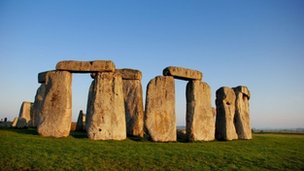


Summer Solstice 2013 – Stonehenge managed access

10 06 2013

English Heritage is once again welcoming people to Stonehenge to celebrate the 2013 Summer Solstice. Sunrise will occur at 4.52am on Friday 21 June, on what is the longest day of the year.
Summer Solstice

Peter Carson, Head of Stonehenge at English Heritage, said: “This is the 14th year that English Heritage has provided free access to the stones and we are looking forward to a peaceful celebration enjoyed by thousands of people. This ongoing success is due to English Heritage working closely with the key partners and communities and together delivering an enjoyable and safe solstice. And, as with every year, we will balance the needs of those attending the solstice with our duty to protect the Stone Circle and its surrounding monuments.”

“The opening of the new Stonehenge visitor centre in December this year with its museum-quality exhibitions, a spacious café, and dedicated education space, will herald an exciting new era for Stonehenge. The way in which people visit Stonehenge in the future will change: we will be uplifting the whole experience to a level that befits this extraordinary and important monument.”

Over the night, people have the opportunity to celebrate the Solstice and this includes spontaneous drumming within the stone circle, playing of acoustic instruments and dancing in the performance area.  There will be a number of druid, pagan and other spiritual ceremonies throughout the night and especially at sunset and sunrise at various places around the monument, in particular the Heel Stone.

 For an idea of what to expect, view the Stonehenge Summer Solstice 2012 photo gallery.

Stonehenge will be open from 7pm on Thursday 20 June to 8am on Friday 21 June. The solstice car park, just off the A344 near Airman’s Corner, will open from 7pm on Thursday 20 June, with last admission at 6am on Friday 21 June.

Access to the stones and the car park is free of charge and subject to ‘Conditions of Entry’ which are published on the English Heritage website http://www.english-heritage.org.uk/summersolstice

Posted on June 5th, 2013 by in Stonehenge
InsideWiltshire: http://www.insidewiltshire.co.uk/2013-summer-solstice-stonehenge-managed-access/

The Stonehenge News Blog
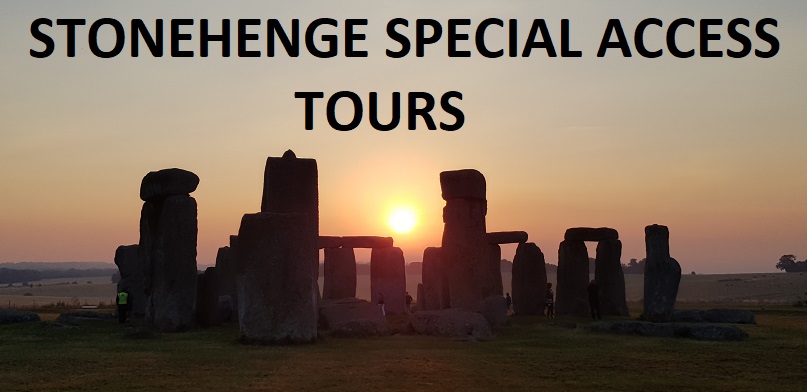


Stonehenge Summer Solstice Celebrations 2013

1 06 2013

English Heritage is pleased to be providing Managed Open Access to Stonehenge for the Summer Solstice on 20-21 June 2013. Please help us to create a peaceful occasion by taking personal responsibility and following the Conditions of Entry and guidelines set out on these pages. The full Conditions of Entry can also be downloaded from the link at the bottom of this page

Stoneheng Summer Solstice Tour 2013

We have a duty of care to ensure public safety and are responsible for protecting  Stonehenge and its surrounding Monuments. If we are to ensure that future access is sustainable, it is essential that everyone observes and abides by these Conditions of Entry.

Celebrating the Summer Solstice at Stonehenge 

Stonehenge is an ancient prehistoric site and has been a place of worship and celebration at the time of Summer Solstice since time immemorial.

During Managed Open Access for Summer Solstice at Stonehenge, we support all individuals and groups conducting their own forms of ceremony and celebration providing that they are mutually respectful and tolerant of one another. It is a place seen by many as a sacred site – therefore please respect it and those attending.

English Heritage continues to work closely with the many agencies and people from all sectors of the community and we would like to thank them for their help and support.

Parking and entry to the Monument will be free, subject to the Conditions of Entry.  Please do not arrive at the Solstice Car Park or Stonehenge in advance of the opening times listed below:

    Timings for Summer Solstice at Stonehenge 

  • SOLSTICE CAR PARK OPENS  1900 hours (7pm) Thursday 20th June
  • ACCESS TO STONEHENGE 1900 hours (7pm) Thursday 20th June
  • LAST ADMISSION TO SOLSTICE CAR PARK   0600 hours (6am) Friday 21st June
  • STONEHENGE CLOSES  0800 hours (8am) Friday 21st June
  • SOLSTICE CAR PARK TO BE VACATED  1200 hours (12 Noon) Friday 21st June – see Travel and Parking for further information on travel and parking arrangements.

We hope the weather will be kind and wish you a peaceful and celebratory solstice.

    Stonehenge Sunset and Sunrise

Sunset and sunrise occur at the following times:

  • Sunset on Thursday 20th June 2013 is at 2126 hrs (9.26pm)
  • Sunrise on Friday 21st June 2013 is at 0452 hrs (4.52am)

STONEHENGE LINKS::

Conditions of entry: http://www.english-heritage.org.uk/content/imported-docs/p-t/summer-solstice-coe13.pdf
More info: http://www.english-heritage.org.uk/daysout/properties/stonehenge/summer-solstice/

Follow Stonehenge on Twitter for Solstice News, traffic updates, photos on the day: https://twitter.com/ST0NEHENGE

Merlin says “Please respect the Stones!”

The Stonehenge News Blog



Archaeologists uncover Pagan skeletons at housing development near Stonehenge

21 05 2013

Archaeologists have discovered six Pagan Saxon skeletons dating back over 1,000 years on a housing development site just a few miles from Stonehenge.

Wessex Archaeology

Wessex Archaeology

The discoveries, which also include round barrows dating back to the Bronze Age 4,000 years ago, were unearthed at a redundant brownfield development site in Amesbury, Wiltshire, which is also famous for the Amesbury Archer – an early Bronze Age man found buried among arrowheads.

The remains are thought to be those of adolescent to mature males and females. Five skeletons were arrayed around a small circular ditch, with the grave of a sixth skeleton in the centre. Two lots of beads, a shale bracelet and other grave goods were also found, which suggest the findings are Pagan.

The site is now being excavated for other artefacts by Wessex Archaeology, led by Phil Harding, known for his work on Channel 4’s Time Team, while colleagues back at the unit’s laboratory examine the remains and jewellery, which have already been removed.

Phil said: “Given that the Stonehenge area is a well-known prehistoric burial site, it was always very likely some interesting discoveries would be made here. The fact that these round barrows were previously unknown makes this particularly exciting.

“Finding the skeletons also helps us to get a clearer picture of the history of this area. To my knowledge these are the first Pagan Saxon burials to be excavated scientifically in Amesbury. “

Landowner Aster Group is building 14 affordable homes at the redundant brownfield site, which will be available to rent from 2014.

Anna Kear, Aster’s regional development director for Hampshire and Wiltshire, said: “Wiltshire is a treasure trove of archaeology, drawing people from across the world.

“Discovering a burial site in this beautiful county is always a possibility when building affordable homes. We’re working with everyone involved to ensure Phil and his team can investigate this exciting find while the build continues.”

Contractor Mansell, a Balfour Beatty brand, was preparing the site for the build when it made the discovery.

Site manager Brian Whitchurch-Bennett, of Mansell, said: “When we’re working in an area of historical importance we always undertake archaeological investigations to make sure that our construction works don’t damage hidden remains or artefacts. The findings within this particular site really are a one off, we’ve been amazed by the number of discoveries and the level of preservation. It’s certainly a project to remember.”

The archaeologists are expected to be on site for six weeks in total. Footage from the site may also be included in an archaeological production for ITV’s History Channel, due to be aired in January 2014.

Source: Published by Jon Land for 24dash.com: http://www.24dash.com/news/housing/2013-05-17-Archaeologists-uncover-Pagan-skeletons-at-housing-development-near-Stonehenge

Merlin @ Stonehenege
The Stonehenge News Blog