18th Century William Stukeley book on Stonehenge is now online.

3 02 2014

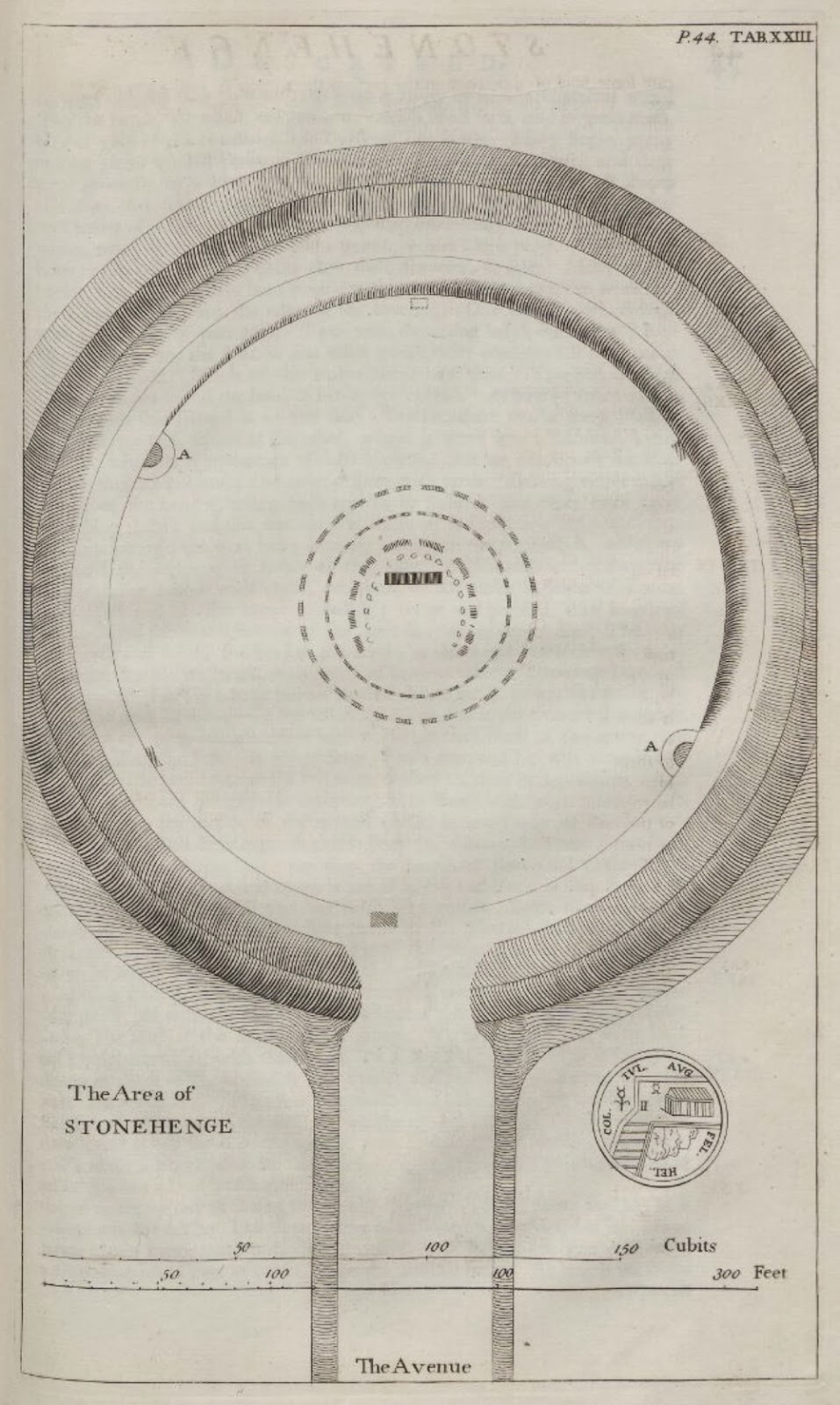
In 1740, British vicar William Stukeley published Stonehenge, A Temple Restor’d to the British Druids.

In more than 30 illustrations, Stukeley’s book documents the way Stonehenge appeared when he visited it in the early 18th century. The historian was only the 1-stukely-stonehengesecond scholarly investigator (after the 17th-century antiquarian John Aubrey) to take an interest in the site, and the first to publish a comprehensive account of what he found on his visits,  including images of the way that the monument looked in context of the  surrounding farmland.

In maps and vistas, Stukeley tried to capture the layout of the  monument’s stones. Much of his sense of urgency in the task came from  his belief that the stones’ arrangement needed preservation, as the  monument was under constant threat of vandalism and interference. For  example, Aubrey found and documented 20 stones in one area of the monument; a century later, Stukeley found only five remaining.

Stonehenge Visitor Centre: English Heritage current ‘Set in Stone’ exhibition includes an oil portrait of William Stukeley: http://www.english-heritage.org.uk/daysout/properties/stonehenge/discover/set-in-stone-exhibition

Link: http://tywkiwdbi.blogspot.co.uk/2014/01/1740-book-on-stonehenge-now-online.html
Stonehenge area news on twitter: https://twitter.com/ST0NEHENGE

The Stonehenge News Blog
Sponsored by ‘Stonehenge Guided Tours’ www.StonehengeTours.com


Neolithic-looking extras finding work for Stonehenge Empire Film

25 01 2014

It was perhaps the most bizarre request for extras issued in the West for a while – skinny men and women were required who had the look of the Neolithic about them.
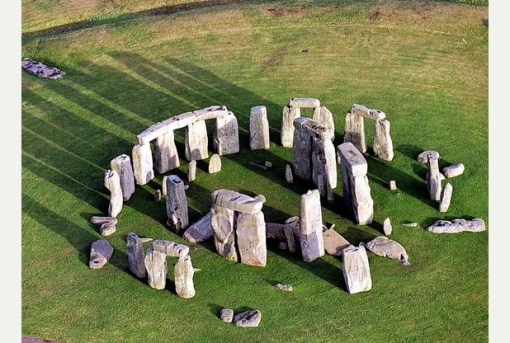
Stonehenge, WiltshireThat meant “lean or athletic-framed” men and women who might have been just about fit enough to pull a huge lump of rock from west Wales to Salisbury Plain.

Filming has continued this week on a multi-national new TV series which sets out to be the definitive docu-drama about the building and use of Stonehenge ever made.

The BBC has joined forces with TV channels in the US, Canada, France, Austria, Germany and more to commission Stonehenge Empire, an epic documentary telling the story of the West’s most famous landmark.

And that means as well as discovering the latest from the so far ten-year project investigating the stones, re-enactments of the days when Neolithic people dragged the huge stones to the final spot near Amesbury are included.

So actors and jobbing extras across the West were summoned to be the Neolithic people.

And being in the background requires a certain look.

“They would have been Caucasian and fairly classic looking,” a spokesman for the extras agency said and added “Character faces are also good.”

Females had long hair with a natural tone, while males needed to be either bald, semi-bald with long hair at the back, or have longish hair.

“Beards are also beneficial,” the notice said.

Some actors went further than others in the pursuit of the perfect recreation of the world of the henge builders.  Lee Ravitz, an actor from Hertfordshire, played a “trepanning patient” in the docu-drama – which involved pretending to have a hole drilled in his skull.

The film will be screened over two, one-hour-long episodes and will change the way we look at Stonehenge, according to the creative director from film company October, Adam Bullmore.

“Stonehenge Empire will dramatically change the way we understand Stonehenge and the prehistoric culture that flourished around it,” he said. “Instead of seeing Stonehenge as an extraordinary achievement of an otherwise relatively primitive, prehistoric people, it will reveal Stonehenge as the epicentre of a truly remarkable and highly sophisticated ancient civilisation.”

The BBC are excited by the prospect of the film, which could be screened later this year, and uses CGI to recreate the vast scenes of thousands working on the stones.

Martin Davidson, BBC commissioner, said: “This is a really exciting project which will, using drama, CGI and the latest archaeological discoveries, allow us to properly understand the achievements and character of the people that built it; people who mastered deep mining and sophisticated engineering.”

Tristan Cork: tristan.cork@b-nm.co.uk
Article source from The Western Daily Press: : http://www.westerndailypress.co.uk/Neolithic-looking-extras-finding-work/story-20492638-detail/story.html#ixzz2rO9iDeQj

Stonehenge Empire Film: http://realscreen.com/2013/12/04/wcsfp-13-bbc-cbc-unite-for-stonehenge-copro/

Stonehenge Film links: http://www.stonehenge-avebury.net/Media/Stonehenge&AveburyFilms.html

The Stonehenge News Blog


1913-2013: 100 Years of Protecting the Past.

11 12 2013

This year, the centenary of the 1913 Ancient Monuments Act, will culminate in the opening of English Heritage’s new Stonehenge exhibition galleries and visitor centre on 18th December.

“A Monumental Act”

2013 is the centenary of a landmark moment for England’s heritage.

eh-centenary-logo

The passing of the Ancient Monuments Consolidation and Amendment Act in 1913 recognised for the first time that there are physical remains of the nation’s history which are so special and so significant that the state has a duty to ensure their continued survival.


Preservation Orders and Scheduling

The Act did three new things. It introduced a system whereby the Office of Works could issue a compulsory ‘Preservation Order’ when a monument or building of sufficient ‘historic, architectural, traditional, artistic, or archaeological interest’ was at risk of demolition by a private owner.

Each order would need an Act of Parliament to confirm it, making it an unwieldy instrument, but the Act did at least establish the principle that some buildings in private ownership might, if they were important enough, warrant the intervention of the state to save them.

The second major innovation was the ‘scheduling’ of monuments. This involved compiling a list, or schedule, of monuments which were deemed by an expert board to be of ‘national importance’. Once a site was on the list and the owner informed, it became a crime to damage it.

Under the Act, the Office of Works could give free advice to an owner regarding the treatment of an ancient monument on their land and could oversee any works free of charge. Scheduling considerably widened the scope of protection to the thousands of monuments on private land rather than just those in Government or local authority care.

These two initiatives – the preservation order and scheduling – established the statutory protection of those parts of the nation’s heritage in private hands. It would develop in future years through the listing system and a rapidly evolving planning system.

http://www.stonehengeandaveburywhs.org/assets/Nomination-Document.pdf

http://www.english-heritage.org.uk/caring/heritage-centenary/1913-ancient-monuments-act/

http://www.legislation.gov.uk/ukpga/1979/46

Stonehenge News Blog


Visit Avebury and Stonehenge: Explore these World Heritage Sites with the new English Heritage Map

3 12 2013

The Stonehenge and Avebury World Heritage Site is internationally important for its outstanding prehistoric monuments. This new map would make a great Christmas gift!

Stonehenge and Avebury MapStonehenge is the most architecturally sophisticated prehistoric stone circle in the world, while Avebury is the largest.  Around them lie numerous other monuments and sites, which demonstrate over 2,000 years of continuous use.

Together they form a unique prehistoric landscape. There is no better way to learn about and experience the monuments than to go out and explore the World Heritage Site on foot.  This map is ideal for walkers and others wishing to explore the fascinating landscape of the two areas of the World Heritage Site.

The map uses an Ordnance Survey 1:10,000 base and draws upon information from the English Heritage Archive and recent archaeological investigations.  With Stonehenge on one side and Avebury on the other, the map shows and describes both visible and hidden remains, with information about where you can find out more. The map is divided into two parts on a durable double sided waterproof sheet.

A great Christmas Gift! You can purchase a copy now at the excellent Wiltshire Museum in Devizes: The Museum shop is located in the entrance hall and sells a variety of items.  Non-Museum visitors very welcome to go in, browse – and hopefully purchase. http://www.wiltshiremuseum.org.uk/

You can also pre order a copy of the book on Amazon: http://www.amazon.co.uk/Map-Stonehenge-Avebury-Exploring-Heritage/dp/1848021267

Stonehenge and Avebury Stone Circle Links:

Stonehenge and Avebury were inscribed together on the UNESCO World Heritage Site List in 1986. The Stonehenge, Avebury and Associated Sites World Heritage Site was one of the UK’s very first World Heritage Sites http://www.stonehengeandaveburywhs.org/

The Stonehenge and Avebury World Heritage Site (English Heritage): http://www.english-heritage.org.uk/daysout/properties/stonehenge/world-heritage-site/

Stonehenge and Avebury Stone Circle guided tours: http://www.stonehengetours.com/day-tours.html

Wiltshire is proud to be the home of Stonehenge and Avebury which form part of a UNESCO World Heritage Site and our mystical landscape. http://www.visitwiltshire.co.uk/explore/stonehenge-and-avebury

Stonehenge News on Twitter: https://twitter.com/ST0NEHENGE

The Stonehenge News Blog


Avebury to Stonehenge. Walking Through History with Tony Robinson.

17 11 2013

Tony Robinson embarks on spectacular walks through some of Britain’s most historic landscapes in search of the richest stories from our past

Tony heads off for a 45-mile walk across Wiltshire to tell the story of life and death in the last centuries of the Stone Age. His route over chalk downlands and Salisbury plain takes him through the greatest concentration of prehistoric sites in Europe.

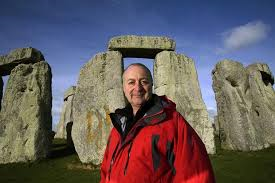
Tony Robinson at StonehengeFrom Avebury to Stonehenge and from spirituality to engineering, this is a journey through our ancestors’ remarkable development in the latter days of the Neolithic Age.

Windmill Hill near Avebury is the start of his route; with earthworks dating to 4500BC, it’s one of the most ancient sites in Wiltshire. From here, Tony moves on through 2000 years of the ‘New Stone Age’, encountering increasingly complex burial sites and processional routes that have helped make this area both captivating and intriguing.

As he heads south Tony can’t escape the eccentric characters and weird phenomena that have accompanied Wiltshire’s ancient history. Mysterious crop circles and unexplained underground energy sources enliven his visit, but his mind is firmly fixed on the extraordinary array of monuments in his path.

That means listening to the fanciful notions of 18th-century antiquarians, which have a grain of truth at their heart, and grasping the cutting edge of scientific archaeology around Stonehenge, which is finally offering up some astounding answers.

CHANNEL 4: 8PM: Saturday 23rd November 2013

http://www.channel4.com/programmes/walking-through-history/episode-guide

Merlin @ Stonehenge
The Stonehenge News Blog


The New Discoveries at Blick Mead: the Key to the Stonehenge Landscape

29 10 2013

An archaeological team from the University of Buckingham’s Humanities Research Institute has been uncovering very large amounts of Mesolithic material from a site immediately adjacent to Stonehenge.

Stonehenge At a point called Blick Mead (a part of the Stonehenge landscape known as ‘Vespasian’s Camp’ on the mistaken assumption that it was the remains of a former Roman settlement) around 12,000 pieces of worked flint and burnt flint have been unearthed, as well as over 500 pieces of bone dating from over 8000 years ago. Virtually all the tools are in pristine condition – indeed, some of the team have had their fingers cut by them as they are still so sharp.

The most significant consequence of the excavation is that we have now discovered where the communities who built the first monuments at Stonehenge once lived – something that has eluded archaeologists for the best part of two centuries.  But the fact that the site also provides evidence for ritual activity in later periods suggests that the Buckingham team has also discovered a rare ‘multi-phase’ site, which was occupied over several millennia – indeed into the early medieval period.

David Jacques, Senior Research Fellow in Archaeology at the University of Buckingham’s Humanities Research Institute, has been directing the excavations at Vespasian’s Camp, Amesbury, Wiltshire, since 2005.

Burnt flint used in cookingThe archaeological potential of Vespasian’s Camp first came to light as a result of David Jacques’ detailed research of the site’s estate and nearby farm records. Indeed, before his team started their excavations, there was no evidence of Vespasian’s Camp having played any significant part in the Salisbury Plain ritual landscape or its history, and the site had been generally ignored by archaeologists, who assumed that any archaeological evidence on the site had been destroyed in the course of the landscaping of the area as a park for a neighbouring country house during the course of the 18th century.

Radiocarbon dating of objects from the Buckingham-sponsored excavations now shows that this site was occupied between 7550-4700 BC, which means that the Blick Mead site was in continuous use for almost 3,000 years.

This is generating great interest from archaeologists who have long pondered the possibility of a ‘missing link’ between the Mesolithic and Neolithic periods of activity at Stonehenge. The radiocarbon dates make this the oldest ever ‘homebase’ found in the Stonehenge area and could be one of the reasons why Stonehenge is sited where it is.

The findings produced by the Buckingham-funded excavations have led English Heritage to describe Vespasian’s Camp as potentially ‘one of the pivotal places in the history of the Stonehenge landscape’.

The 7500 BC dating of Blick Mead correlates strongly with the enigmatic posts found underneath Stonehenge car park in the late 1960s, which appear to be marking this area up as somewhere of special cultural significance

Finds from the springA copper alloy Bronze Age dagger, found nearby, at the Bluestonehenge monument in 2009, a 5th-century Anglo-Saxon disc brooch from a nearby spring, and medieval wooden staves from the main spring also connect Blick Mead to the early Anglo-Saxon and Amesbury Abbey periods. They add to the picture of the Blick Mead area being a place associated with veneration over the longue durée.
As a result of the support from the University of Buckingham’s Humanities Research Institute, further work is planned over the next two years.


Article Source: http://www.buckingham.ac.uk/research/hri/blickmead

Related link


Crown jewels of Stonehenge go on dazzling display: new prehistory galleries opening 14th October!

12 10 2013

In September 1808, William Cunnington, who was Britain’s first professional archaeologist, wrote to his patron to tell him that he had discovered what were to become known as the crown jewels of the “King of Stonehenge”.

On Monday, some of the treasures he found will go on permanent public display for the first time.

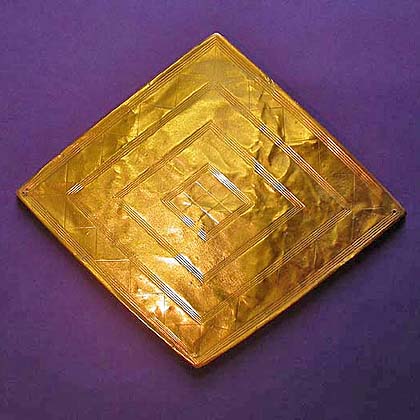
Gold from the time of Stonehenge:  new prehistory galleries at the Wiltshire Bush Barrow LozangeMuseum in Devizes Opening on 14 October, a completely new display over 4 galleries will tell the story of the Stonehenge and Avebury World Heritage Site.

On display for the first time are dozens of gold items dating to the time of Stonehenge. Many were found Bronze Age burial mounds within sight of Stonehenge, and were worn by people who worshipped inside the stone circle. These nationally important objects have never been on permanent display, and are now on show as part of this £750,000 gallery development at the Wiltshire Museum – home of Britain’s richest Bronze Age collection.

The centrepiece of the stunning new displays is Britain’s most important Bronze Age burial. The Bush Barrow chieftain lived almost 4,000 years ago and was buried in a barrow overlooking Stonehenge wearing the objects that showed his power and authority – including a gold lozenge, a ceremonial mace and a gold-decorated dagger. Axes and daggers like those found in the grave are carved onto the Sarsen stones at Stonehenge. The precision and design of the Bush Barrow lozenge proves that the people who built and used Stonehenge had a detailed knowledge of mathematics and geometry. The gold finds from Bush Barrow have never before been on permanent display in Wiltshire.

The image alongside show Sebastian Foxley of the Wiltshire Council Conservation Service and David Dawson, Director, moving the Stonehenge Urn to its new home.

Wiltshire Heritage Museum: http://www.wiltshireheritage.org.uk/news/index.php?Action=8&id=162&page=0

Follow Stonehenge News on Twitter: https://twitter.com/ST0NEHENGE

Merlin @ Stonehenge
The Stonehenge News Blog


Shape the future of Stonehenge. English Heritage Roashow

10 10 2013

There’s a chance for us to have a say on the way Stonehenge is looked after at a series of meetings around South Wiltshire Stonehengethis month.

English Heritage are taking their World Heritage Site Management Plan on a roadshow, so as many local people as possible can see it.

It’s thought there are many major changes in the document, but the plan has to be renewed this year.

Events are due to take place at:

Durrington Library – Wednesday October 23rd from 2.00 – 5.00pm
The Bowman Centre, Amesbury – Thursday October 24th from 12.00 – 3.00pm
Amesbury Library – Thursday October 24th from 4.00 – 7.00pm
Shrewton Recreation Hall – Tuesday October 29th from 10.00 – 1.00pm
Salisbury Library – Tuesday October 29th from 4.00 – 7.00pm

Story from Spire FM: http://www.spirefm.co.uk/news/local-news/1094590/shape-the-future-of-stonehenge/

Merlin @ Stonehenge
The Stonehenge News Blog


Stonehenge visitor centre and museum to open on 18th December 2013

30 09 2013

A new visitor centre at Stonehenge will open in time for the winter solstice, English Heritage has said.

The £27m project also includes grassing over the A334 alongside the ancient monument and closing another section of the busy road.

The visitor centre and museum will be located about a mile-and-a-half (2km) from the stones.

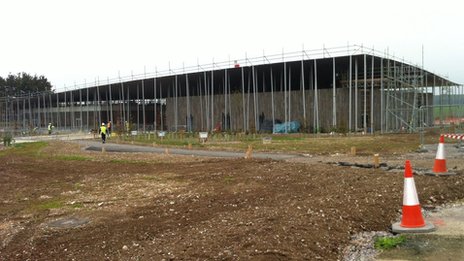
Stonehenge Visitor Centre

The visitor centre and museum will be located about a mile-and-a-half from the stones

Visitors will be shuttled to Stonehenge by a little train, pulled by a Land Rover.

Stonehenge, built between 3,000 BC and 1,600 BC, is thought to have been used for a variety of religious ceremonies.

It attracts around 900,000 visitors a year, about 70% of whom come from abroad.

Lorraine Knowle, from English Heritage, said the “beautifully and sensitively designed” centre “fits into the rolling landscape of Salisbury Plain very well”.

“It will give visitors a real sense of anticipation because the building is really just a stepping stone on the way to seeing the monument,” she added.

Also included is a museum which will be lent artefacts found around the stones, from local collections housed in Salisbury and Devizes.

Joe Studholme, from the Salisbury Museum said for the first time visitors to the stones will be able to put the exhibits in context.

“Before people go to the stones they need to know much more about the background. Previously there hasn’t been any background about the story of the stones.

“We’re thrilled to be in partnership with English Heritage and to be able to tell the whole story about Stonehenge and the wonderful area”

Link source: http://www.bbc.co.uk/news/uk-england-wiltshire-24329692

Follow developments on Twitter: https://twitter.com/ST0NEHENGE

Merlin @ Stonehenge
The Stonehenge News Blog


Summer Discoveries at Stonehenge Stone Circle

13 09 2013

Two ditches belonging to the Stonehenge Avenue buried beneath the modern roadbed of the A344 have been uncovered during works to decommission the road as part of English Heritage’s project to transform the setting and visitor experience of Stonehenge.

The two ditches represent either side of The Avenue, a long linear feature to the north-east of Stonehenge

The Avenue, severed by the A344, will be reconnected to Stonehenge soon

The Avenue, severed by the A344, will be reconnected to Stonehenge soon

linking it with the River Avon. It has long been considered as the formal processional approach to the monument and is aligned with the solstice axis of Stonehenge. But its connection with Stonehenge had been severed by the A344 for centuries as the road cut through the delicate earthwork at an almost perpendicular angle.

The two ditches were found in excavations undertaken by Wessex Archaeology in their expected positions near to the Heel Stone, about 24 metres from the entrance to monument.


Missing Piece in the Jigsaw

Heather Sebire, properties curator and archaeologist at English Heritage, said: “The part of the Avenue that was cut through by the road has obviously been destroyed forever, but we were hopeful that archaeology below the road would survive.  And here we have it – the missing piece in the jigsaw.  It is very exciting to find a piece of physical evidence that officially makes the connection which we were hoping for.”

Dr Nick Snashall, National Trust Archaeologist for the World Heritage Site, said “This is a once in several life time’s opportunity to investigate the Avenue beneath the old road surface.  It has enabled us to confirm with total certainty for the first time that Stonehenge and its Avenue were once linked and will be so again shortly.”

The Avenue is difficult to identify on the ground but is clearly visible on aerial photographs. Once the A344 has been restored to grass in the summer of 2014, interpretation features will be put in place to clearly mark out the solstice alignment to enable visitors to appreciate the position of the Avenue and its intimate connection with and significance to Stonehenge.


Parchmarks discovered at Stonehenge by staff Simon Banton and Timothy Daw © Simon Banton/English Heritage

Parchmarks discovered at Stonehenge by staff Simon Banton and Timothy Daw
© Simon Banton/English Heritage

Parchmarks at the Stone Circle

The recent prolonged spell of dry weather has also led to some exciting discoveries within the stone circle. Two eagle-eyed members of staff spotted some dry areas of grass, or parchmarks, amongst the stone circle in July. After investigation by English Heritage experts they seem to be positions of three holes where stones 17, 18 and 19 might have stood on the south-west side of the outer sarsen circle.

Susan Greaney, senior properties historian at English Heritage, said: “There is still debate among archaeologists whether Stonehenge was a full or incomplete circle, and the discovery of these holes for missing stones has strengthened the case for it being a full circle, albeit uneven and less perfectly formed in the south-west quadrant.”

NOTE: This story as reported in the Guardian on 9 September contains a number of inaccuracies. The article, including the headline, failed to distinguish between fact and interpretation, and presented one expert’s view as established fact. It also gives the impression that the expert’s view has been adopted by English Heritage. This is very confusing. English Heritage is firmly of the view that Stonehenge was built as a prehistoric temple aligned with the movements of the sun, contrary to what was implied in the article.

Professor Mike Parker Pearson’s theory about the naturally formed ridges is interesting, but is by no means established. English Heritage’s role was to record any archaeology that survived under the A344 and present the results of the recent discoveries clearly to the public. English Heritage’s interpretation of Stonehenge in general will be presented at the new visitor centre due to open in December 2013.

Article Source from English Heritage: http://www.english-heritage.org.uk/about/news/summer-discoveries-stonehenge/

The Stonehenge News Blog