Stonehenge Landscape Tour – Winter archaeology walk

31 01 2012

Stonehenge snow sceneWinter archaeology walk – Saturday, 04 February 2012

Explore the wider Stonehenge World Heritage Site with a guide and discover hidden histories, ancient mysteries and winter wildlife.

Enjoy a winter afternoon walk up on the downs learning about the ancient archaeology of the Stonehenge World Heritage Site and the area’s varied wildlife. On this three mile walk with views of the stone circle, we’ll visit ancient earthworks that have revealed much about the people who once lived and celebrated here. Talking points include the Cursus, the many and varied barrows, and an ancient avenue connecting ceremonial centres

NOTES:

Sponsored by ‘The Sonehenge Tour Company’ www.StonehengeTours.com

Melin says “This is a great tour of the Stonhenege landscape by The National Trust’

Merlin @ Stonehenge


Stonehenge tunnel idea resurrected.

17 01 2012

The idea of building a tunnel under Stonehenge has been resurrected by a consortium of council leaders from across the South West.

Stonehenge tunnel planWiltshire was among the authorities represented at a summit meeting to discuss A303 improvements, organised by Somerset County Council last week.

They discussed ways to raise the £1billion needed to widen the remaining single lane sections of the road between Wiltshire and Devon.

The tunnel, which would have cost more than £500million at the last count, is one of five separate schemes they believe are needed.

Somerset’s leader Ken Maddock believes there is scope to seek new funding in the light of Chancellor George Osborne’s autumn statement, which said that pension funds could be used to fund up to £20billion of infrastructure schemes.

He said: “This is a fabulous opportunity to put a joint bid together that will bring huge benefits to the whole of the West Country.”

The 2.1km tunnel plans were shelved in 2007 after the government said the soaring cost was not justified.

Link: http://www.salisburyjournal.co.uk

Sponsored by ‘The Stonehenge Tour Company’ – www.StonehengeTours.com

Stonehenge tunnel “Why not plant a hedgerow along the A303 ?  It would reduce road noise, prevent accidents because of people looking at the monument whilst driving and considerable cheaper and quicker”

Anyone agree with me ?

Merlin at Stonehenge
The Stonehenge Stone Circle Website


Stonehenge 3D app launched for 2012

10 01 2012

Stonehenge Solstice? There’s an app for that – Stonehenge Experience lets you explore 3D site in peace

Pulling across screen lets you explore site in 3D
Can ‘walk through’ the fenced-off area around stones
Lets you ‘dig up’ relics such as the Amesbury Archer

On the Winter Solstice, the stones at Stonehenge align perfectly with the sun. ‘Pagan’ worshippers gathered this year – as they do every year – at Salisbury Plain to mark the occasion.

The application offers virtual 3D 'tours' of the site - but also lets you 'dig through' layers of artefacts such as the gold breastplate found at the site

The application offers virtual 3D 'tours' of the site - but also lets you 'dig through' layers of artefacts such as the gold breastplate found at the site

But those of us who missed it can explore Stonehenge in considerably more comfort – and detail – using a new iPhone and iPad app, the Stonehenge Experience.

The app not only lets users explore Stonehenge in 3D, but also lets you ‘rub’ the screen to reveal different layers of prehistoric artefacts from the site – and recreates the sounds of when Stonehenge was constructed.

The site uses 3D digital ‘models’ so users can do things that visitors simply can’t – such as excavating down through layers of the site to reveal artefacts such as a ‘flesh hook’ and a solid gold breast plate found at the site.

All the 3D views of the site can be controlled via pinching and zooming on screen to let you ‘walk’ through Stonehenge – without the fences that usually keep visitors far from the stones.

You can stand in the middle of the stones, and an ‘acoustic model’ also captures what it sounds like to stand there.

Rupter Till of Huddersfield University – who ‘modelled’ the sounds of the app, said,

‘Creating the sound of Stonehenge as it was when it was first built was a really interesting challenge. When put together with the Ribui app it makes for an absorbing immersive experience and allows people to see and hear Stonehenge as it was five thousand years ago.’

The app incorporates some of the latest archaeological findings, providing you with up to date explanations of the site’s purpose, based on  respected academic theory.

The Stonehenge Experience works on the iPhone 3GS and later and the iPad

The app incorporates some of the latest archaeological findings, providing you with up to date explanations of the site’s purpose, based on  respected academic theory.

The Stonehenge Experience works on the iPhone 3GS and later and the iPad

This year will see mpre than one Stonehenge app being launcehed – watch this space for details.

Link: http://www.dailymail.co.uk/sciencetech/article-2077499/Missed-Winter-Solstice-Theres-app–Stonehenge-Experience-lets-explore-peace.html

Sponsored by ‘The Stonehenge Tour Company’ www.StonehengeTours.com

Merlin says: “Novel idea, however you cant beat physically walking the Stonehenge landscape at sunrise or sunset with an expert local guide”

Merlin @ Stonehenge Stone Circle


The Holy Grail of standing stone circles found as NASA spacecraft captures lunar Stonehenge image

2 01 2012

Space – Dismissed in 1959 by the USSR Luna 3 probe as a pile of inconsequential volcanic trash a 3,000ft diameter standing stone formation has been captured on camera by NASA’s latest mission.

The Lunar Stonehenge puts its Wiltshire, UK counterpart at the center of current human civilization

The Lunar Stonehenge puts its Wiltshire, UK counterpart at the center of current human civilization

Stunning pictures from the Grail-A spacecraft reveal a giant lunar Stonehenge close to the Mare Ingenii – or Sea of Ingenuity – impact crater.

NASA HQ astrophysicists said today they’d long suspected the existence of a Stonehenge-like structure on the Moon’s far side after decades of studying decrypted ancient Egyptian creation texts.

An Agency press release confirmed the Grail-A’s high definition close-ups depict some mysterious hieroglyphs hewn into the monoliths.

“The Pope will have a fit, heheh!” the head of the NASA Jet Convulsion Laboratory’s space artefucts division chuckled this morning, “these symbols hail Isis as the Mother of Creation!”

The news may also cause blood to boil at the European Space Agency where the possibility that Stonehenge’s Wiltshire site was chosen ‘by a vastly superior intelligence’ to copy the lunar edifice would place the UK at the heart of the current human civilization.

Belgian nationalism has always maintained the center of the Universe is located in Brussels, home of the Euro and of the moules-frites gastronomic delicacy (sick).

That gung-ho spin now faces oblivion as NASA pictures emerge from the shadows, echoing a June 2009 report claiming crumbling remains of the former palatial Atlantis fortress were filmed by International Space Station cameras focused on the Moon’s dark side.

Confirmation of the lunar Stonehenge creation could be the first step to unravelling the astrophysics of ‘As Above, So Below’ ancient pagan lore, the NASA source added.

Later today NASA’s Grail-B twin craft will track its companion’s lunar orbit and carry out its own 3D surveillance.

The Prime Minister and the US President have asked to be kept informed.

Merlin says: “Its not all serious”  Link- http://www.thespoof.co.uk

Sponsored by ‘The Stonehenge Tour Company’ www.StonehengeTours.com

Merlin @ Stonehenge
The Stonehenge Stone Circle Website


Stonehenge: Closure of A344 near monument to go ahead

1 01 2012

Plans to close a main road running past Stonehenge are to go ahead.

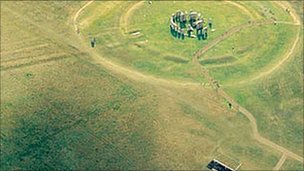
An aerial view of Stonehenge without the A344 road

An aerial view of Stonehenge without the A344 road

English Heritage wants to stop traffic from travelling close to the stones and “restore the dignity” of the World Heritage Site by closing the A344.

The road from the A303 at Stonehenge Bottom to west of the visitor centre has already been approved for closure.

Now, following a public inquiry, Wiltshire Council has approved an independent inspector’s report to close the remaining section of road.

In June 2010 the council granted planning permission for a new visitors centre at Airman’s Corner, 1.5 miles (2km) west of Stonehenge.

And in November, roads minister Mike Penning approved plans to close an 879m (2,884ft) section of the A344 from its junction with the A303 at Stonehenge Bottom with a stopping up order.

Byways remain open

Now the council has approved a traffic regulation order (TRO) for the remainder of the A344 to Airman’s Corner.

But proposals to close a number of byways around the ancient monument were refused.

Druid leader King Arthur Pendragon said the inspector’s recommendations and resulting council decision had “erred on the side of common sense”.

“I invited the inspector to recommend a modification to the order be made in that should the stopping up order be placed on the lower section of the A344 the remaining section of the metalled road be restricted by a traffic regulation order as requested.

“And he recommended that the proposed TRO be made with modification to the A344 only, leaving the byways in the World Heritage Site still open to all traffic, as they have been.”

Link: http://www.bbc.co.uk/news/uk-england-wiltshire-16352307

Sponsored by ‘The Stonehenge Tour Compant’ www.StonehengeTours.com

Merlin says “Good news”

Merlin @ Stonehenge


Winter solstice sunrise over Stonehenge 2011

23 12 2011

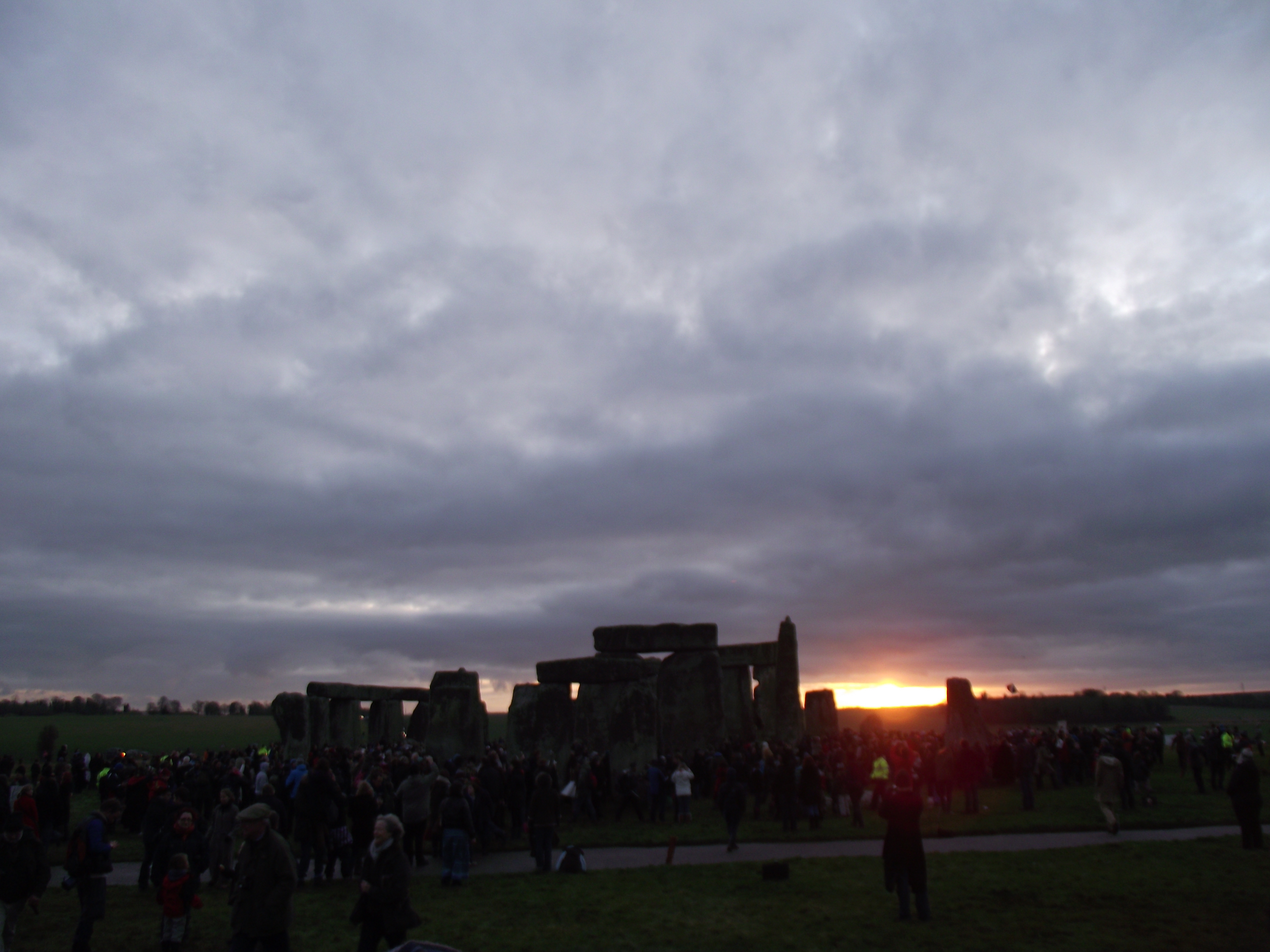
The omens are good that 2012 will be an excellent year, a druid said today, after the sun shone on Stonehenge during a dawn ceremony to mark the winter solstice.


Stonehenge Winter Solstice Sunrise

Stonehenge Winter Solstice Sunrise


Organisers of next year’s London Olympics could perhaps take heart from the positive pronouncement by Rollo Maughfling, the arch druid of the standing stones in Wiltshire, after this morning’s ceremony.

He said that the sun rising over the horizon at the end of the religious service, bathing more than 1,000 people who attended in pale light, meant good things for the next 12 months.

The mild temperatures and sunshine at the pre-historic site were a marked contrast to last year’s solstice, when the giant stones were surrounded by a thick blanket of snow and the winter morning mist obscured the actual sunrise.

”Just as the ceremony came to an end the sun came over the horizon, it was excellent,” Mr Maughfling said.

”It has been a very jolly occasion. It’s a good omen for the year ahead.”

During the winter solstice, the sun is closer to the horizon than at any other time in the year, meaning shorter days and longer nights.

The day after the winter solstice marks the beginning of lengthening days, leading up to the summer solstice in June.

The shortest day of the year often falls on December 21, but this year the druid and pagan community marked the first day of winter today because the modern calendar of 365 days a year – with an extra day every four years – does not correspond exactly to the solar year of 365.2422 days.

Linj:http://www.telegraph.co.uk/earth/earthnews/8972331/Winter-solstice-sunrise-over-Stonehenge-is-good-omen-for-2012-say-druids.html

Sponsored by ‘The Stonehenge Tour Company’ – www.StonehengeTours.com

Winter Solstice Videos: http://www.youtube.com/stonehengetours

Merlin says ” A truly great Solstice celebration with a spectacular sunrise” 

Merlin @ Stonehenge
The Stonehenge Stone Circle Website


Stonehenge Winter Solstice is on 22nd December 2011

19 12 2011

For us in the northern hemisphere, the December solstice marks the longest night and shortest day of 2011 and falls on Thursday, 22nd DecemberAfter the winter solstice, the days will get longer. Celebration time!
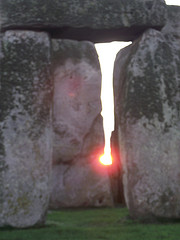
Stonehenge Winter Sunrise

Stonehenge Winter Sunrise

December 2011 solstice will occur on Wednesday, 21st December  at 11:30 p.m or 05:30am Coordinated Universal Time (UTC) on December 22, 2011. It is also known as the winter solstice in the northern hemisphere and the summer solstice in the southern hemisphere due to the seasonal differences.

The date varies from December 20 to December 23 depending on the year in the Gregorian calendar. The 2012 December solstice will be on December 21, 2012, which is a speculated date for “the end of the world”.

Use the Seasons Calculator to find December solstice date in other time zones or other years.

Solstice and Stonehenge

At Stonehenge  on this day, people watch as the sun sets in the midst of three great stones – known as the Trilithon – consisting of two large vertical stones supporting a third, horizontal stone across the top.

In the case of Stonehenge, this great Trilithon faces outwards from the center of the monument, with its smooth flat face turned toward the midwinter sun. In fact, the primary axes of Stonehenge seems to have been carefully aligned on a sight-line pointing to the winter solstice sunset.

This Stonehenge monument – built in 3,000 to 2,000 BC – shows how carefully our ancestors watched the sun. Astronomical observations such as these surely controlled human activities such as the mating of animals, the sowing of crops and the metering of winter reserves between harvests. Stonehenge is perhaps the most famous of of the ancient astronomical monuments found around the world.

Stonehenge on Twitter.  For the latest Solstice information and all the latest Stonehenge news (including images live from the Stones) follow: http://twitter.com/ST0NEHENGE
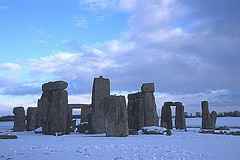
Stonehenge snow

Will it snow at Stonehenge this year ?

The December Solstice Explained

The December solstice occurs when the sun reaches its most southerly declination of -23.5 degrees. In other words, it is when the North Pole is tilted 23.5 degrees away from the sun. Depending on the Gregorian calendar, the December solstice occurs annually on a day between December 20 and December 23. On this date, all places above a latitude of 66.5 degrees north are now in darkness, while locations below a latitude of 66.5 degrees south receive 24 hours of daylight.

The sun is directly overhead on the Tropic of Capricorn in the southern hemisphere during the December solstice. It also marks the longest day of the year in terms of daylight hours for those living south of the Tropic of Capricorn. Those living or travelling south from the Antarctic Circle towards the South Pole will see the midnight sun during this time of the year.

On the contrary, for an observer in the northern hemisphere, the December solstice marks the day of the year with the least hours of daylight for those living north of the Tropic of Cancer. Those living or traveling north of the Arctic Circle towards the North Pole will not be able to see the sun during this time of the year.

What is the Winter Solstice?
The Winter Solstice is a magickal event, yet sadly, it is in the main a forgotten celebration. At this time, Christmas preparations are taking place, and the focus is primarily on ‘what colour scheme to go for?  Will the wrapping paper co-ordinate?  Have I forgotten anyone?  What shall we eat?  Will my funds stretch!’

The Solstice is however, the complete antithesis of what has now become Christmas in contemporary society. Also known as ‘Yule’, the Solstice is generally celebrated on the 21st of December, (although the astronomical date changes from year to year – this year the actual Solstice takes place on the 22nd, at 00.22a.m). The Winter Solstice is the shortest day, and longest night of the year, and is the traditional time to celebrate the truly important things in life: your family, your children, your home and looking forward to a wonderful year to come.

Yule is a time throughout time that honours love and new birth, as well as the collective unity of man. Just as Christmas celebrates the birth of Christ, Yule celebrates the birth of the Sun God – child of the Goddess in the Pagan belief system. Yule is primarily the celebration of the rebirth of the Sun. Many people associate the Winter Solstice, or winter itself with death, as it is the season in which nature is dormant, and in which many plants die off and crops are scarce. Conversely, the Winter Solstice, although it is the longest night, (boasting more than 12 hours of darkness), it is also the turning point of the year, as following this night the sun grows stronger in the sky, and the days become gradually longer once more. Thus the Winter Solstice is also a celebration of rebirth, and there are many traditions that stem from this perspective.

Traditions:  Holly, Ivy and Mistletoe

The Holly and the Ivy

The holly and the ivy
When they are both full grown
Of all the trees that are in the wood
The holly bears the crown.

Chorus:
Oh, the rising of the sun
And the running of the deer
The shining of the winter stars
As the longer days draw near.

The holly bears a blossom
As white as any flower
As our Mother bears the infant Sun
In the winter’s darkest hour.

Chorus

The holly bears a berry
As red as any blood
As our Father bears the hunter’s spear
for His hungry children’s good.

Chorus

The holly bears a prickle
As sharp as any thorn
As we shall bear our song of hope
On triumphant Yuletide morn.

Adapted by Hilda Marshal.

The tradition of bringing sprigs of Holly and Ivy into the home pays homage to the masculine and feminine elements. Both of these powerfully magickal plants are evergreen, a reminder in itself that the earth never dies, but merely sleeps during the winter months, (a tradition which was the precursor to our modern tradition of the evergreen Christmas tree). The male element is represented by the prickly holly; with its sexually potent red berries. The mistletoe is the female; entwining, gentle yet powerful. An alternative view of Holly is that the leaves of the plant represent the male, whereas the red berries symbolise the resting Mother Goddess, and life returning to the land.

The symbolism of Holly is especially potent. The Holly King and the Oak King are part of Celtic/Pagan mythology, and they represent two sides to the Greenman, or Horned God. Since the Summer Solstice, the Holly King has ruled the half-year of waning light, yet on this night the Oak King will take his throne to rule. In other words, the Oak King rules over the lighter half of the year, (Yule to Litha), and the Holly King over the darker half (Litha to Yule).

Another account of the Holly King and Oak King imagery is that they do not directly switch places twice a year, but rather both exist concurrently. The Oak King is born of the Goddess at Yule, growing in power through the spring, peaking at Beltane and then weakening through autumn until he dies at Samhain.
The Holly King however lives a reverse existence, and is born at Midsummer (Litha), increasing in strength throughout summer and autumn, reaching his zenith at Samhain. His sway then diminishes until it is his turn to pass at Beltane. Thus the two Kings enjoy a more elaborate sense of duality in this account, and it is perhaps a better illustration of their twofold nature, and their varying levels of influence throughout the year. As such they both have their characteristics. The reign of the Oak King is a time for growth, development, healing, and new beginnings. The Holly King’s time is for rest, reflection, and learning. Thus the Holly King is honoured with the boughs of Holly, and the Oak King is honoured with Mistletoe – the belief being that Mistletoe is best grown on the Oak as Mistletoe’s most powerful host, (a belief strengthened by the opinion of the 17th century herbalist, Culpepper). Ivy is representative of the Goddess; mother of both Kings, both Kings also being her consort – again powerful ideas of duality.

Mistletoe has a most compelling and influential history. According to ancient Druid tradition, Mistletoe was the most sacred of all plants. Mistletoe was used by the Druid priesthood in a very special ceremony; held five days after the New Moon following winter solstice. The Druid priests would cut Mistletoe from a holy Oak tree with a golden sickle. The branches had to be caught before they touched the ground. The priest then divided the branches into sprigs and dispersed them to the people, who hung them over doorways as protection. The folklore, and the magickal powers of this plant, have blossomed over time, although most are now forgotten. It was believed it had miraculous properties that could cure illnesses, antidote poisons, ensure fertility and protect against witchcraft. It was also a sign of peace and goodwill. When warring tribes came across Mistletoe, a temporary truce would be observed until the next day.

However, although Mistletoe carries a broad array of customs, and benefits in ancient times, the tradition which has lived on is that concerning fertility and love. According to most current day traditions, a young woman stands under the mistletoe and awaits her lover’s kiss. But from where did this tradition spring? It is considered that Mistletoe and kissing tradition is borne of a Norse myth.

The Norse god Balder was son of Frigga, goddess of love and beauty. She loved her son to such a degree that she had the four elements: Fire, Water, Air, and Earth- promise that they would not harm her son. However, Loki, an evil spirit, found the one thing that could defy this promise – mistletoe. He made an arrow from its wood, which was shot at Balder’s heart, and he fell dead, and Frigga’s tears became the mistletoe’s white berries. Balder is however, restored to life, and Frigga is so grateful that she reverses the reputation of the offending plant–making it a symbol of love and promising to bestow a kiss upon anyone who passes under it.

In the true spirit of Yule, focus your celebrations as a family upon love, and the fact that every ending is a new beginning. There are many simple rituals that you can enjoy as a family, to seal your bonds and celebrate each other at this magickal time of year.

Link: http://www.timeanddate.com/calendar/december-solstice.html
Link: http://brighterblessings.co.uk/articles/yule.htm
Link: http://earthsky.org
Link: http://www.english-heritage.org.uk/daysout/properties/stonehenge/
Link: http://www.druidry.org/
Linj: http://www.phreak.co.uk/stonehenge/psb/stonecam.htm

Sponsored by ‘The Stonehenge Tour Company’ – www.StonehengeTours.com

Merlin says “Happy solstice everyone, see you at the Stones..”

Stonehenge on Twitter.  For the latest Solstice information and all the latest Stonehenge news follow: http://twitter.com/ST0NEHENGE

The Stonehenge Stone Circle Website
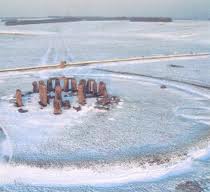


Season Greetings…………….

15 12 2011

Merlin says:  For centuries men have kept an appointment with Christmas. Christmas means fellowship, feasting, giving and receiving, a time of good cheer –   See you at the Winter Solstice 2011

Sponsored by ‘The Stonehenge Tour Company’ www.StonehengeTours.com

Merlin @ Stonehenge
The Stonehenge Stone Circle website


Hidden dimension of Stonehenge revealed

8 12 2011

A project directed by academics at the University of Sheffield has made the archaeology of the world-famous Stonehenge site more accessible than ever before.

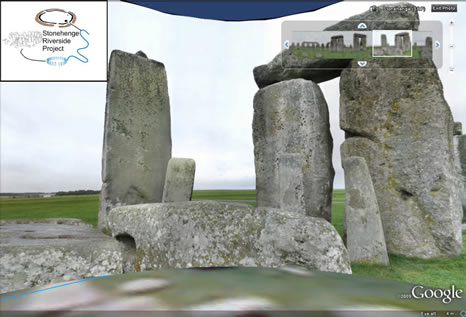
StonehengeGoogle Under-the-Earth: Seeing Beneath Stonehenge is the first application of its kind to transport users around a virtual prehistoric landscape, exploring the magnificent and internationally important monument, Stonehenge.

The application used data gathered from the University of Sheffield´s Stonehenge Riverside Project in conjunction with colleagues from the universities of Manchester, Bristol, Southampton and London. The application was developed by Bournemouth University archaeologists, adding layers of archaeological information to Google Earth to create Google Under-the-Earth.

The unique visual experience lets users interact with the past like never before. Highlights include taking a visit to the Neolithic village of Durrington Walls and a trip inside a prehistoric house. Users also have the opportunity to see reconstructions of Bluestonehenge at the end of the Stonehenge Avenue and the great timber monument called the Southern Circle, as they would have looked more than 4,000 years ago.

The project is funded through Google Research Awards, a program which fosters relationships between Google and the academic world as part of Google’s ambition to organise the world’s information and make it universally accessible and useful.

Professor Mike Parker-Pearson from the University of Sheffield’s Department of Archaeology said: “Google Under Earth: Seeing Beneath Stonehenge is part of a much wider project led by myself and colleagues at other universities – the Stonehenge Riverside Project – which began in 2003. This new Google application is exciting because it will allow people around the world to explore some of the fascinating discoveries we’ve made in and around Stonehenge over the past few years.”

Archaeological scientist Dr Kate Welham, project leader at Bournemouth University, explained that the project could also be the start of something much bigger:

“It is envisaged that Google Under-the-Earth: Seeing Beneath Stonehenge could be the start of a new layer in Google Earth. Many of the world’s great archaeological sites could be added, incorporating details of centuries’ worth of excavations as well as technical data from geophysical and remote sensing surveys in the last 20 years.” she said.

Dr Nick Snashall, National Trust Archaeologist at Stonehenge said: “The National Trust cares for over 2,000 acres of the Stonehenge Landscape. Seeing Beneath Stonehenge offers exciting and innovative ways for people to explore that landscape. It will allow people across the globe, many of whom may never otherwise have the chance to visit the sites, to share in the thrill of the discoveries made by the Stonehenge Riverside team and to appreciate the remarkable achievements of the people who built and used the monuments.”

You can download the application from the Google Under-the-Earth: Seeing Beneath Stonehenge site. The tool is easy to use and requires Google Earth to be installed on your computer.

Notes for Editors:
Google Under-the-Earth: Seeing Beneath Stonehenge was created at Bournemouth University by Dr Kate Welham, Mark Dover, Harry Manley and Lawrence Shaw. It is jointly directed by Dr Kate Welham and Professor Mike Parker Pearson at the University of Sheffield.

To find out more about the University of Sheffield’s Department of Archaeology, visit: Department of Archaeology

The Stonehenge Riverside Project was a joint collaboration between Universities of Bournemouth, Bristol, Manchester, Sheffield and University College London. It was led by Professor Mike Parker Pearson, University of Sheffield, and co-directed by Professor Julian Thomas, University of Manchester, Dr Joshua Pollard, University of Southampton (formally University of Bristol), Dr Colin Richards, University of Manchester, Dr Chris Tilley, University College London and Dr Kate Welham, Bournemouth University.

This project has been supported by: The Arts and Humanities Research Council, the British Academy, the Royal Archaeological Institute, the Society of Antiquaries, the Prehistoric Society, the McDonald Institute, Robert Kiln Charitable Trust, Andante Travel, University of Sheffield Enterprise Scheme, the British Academy, the National Geographic Society, with financial support from English Heritage and the National Trust for outreach. The project was awarded the Bob Smith Prize in 2004 and the Current Archaeology Research Project of the Year award for Bluestonehenge in 2010.
Links: www.shef.ac.uk/

Sponsored by ‘The Stonehenge Tour Company’ www.StonehengeTours.com

Merln says: The tool is easy to use and requires Google Earth to be installed on your computer.

Melin @ Stonehenge Stone Cirle
The Stonehenge Stone Circle Website


Stonehenge: Up Close 12th December 2011

4 12 2011

Stonehenge access guided tourGain a rare and fascinating insight into the famous World Heritage Site with an exclusive tour around the site led by one of English Heritage’s experts. Start the tour with exclusive early morning access to the stone circle at Stonehenge accompanied by our expert. Visit key archaeology sites including Durrington Walls, Woodhenge and The Cursus and learn more about the archaeological landscape and investigative work that has gone on in recent years. Includes tea and coffee.

MEMBERS EXCLUSIVE EVENT

How to Book

Purchase your tickets today by calling our dedicated Ticket Sales Team on 0870 333 1183 (Mon – Fri 8.30am – 5.30 Sat 9am – 5pm). Please note: Booking tickets for this event is essential as places are limited 

Prices

Ticket price includes entry to event site only

TYPE PRICE
Member (Adult) £30.00
 
Link: http://www.english-heritage.org.uk/daysout/events/stonehenge-up-close-s-12-dec/

Durrington Walls – is the site of a large Neolithic settlement and later henge enclosure. It is 2 miles north-east of Stonehenge. Recent excavation at Durrington Walls, support an estimate of a community of several thousand, thought to be the largest one of its age in north-west Europe. At 500m in diameter, the henge is the largest in Britain and recent evidence suggests that it was a complementary monument to Stonehenge

Woodhenge – Neolithic monument, dating from about 2300 BC, six concentric rings, once possibly supported a ring-shaped building.

Stonehenge Cursus –  (sometimes known as the Greater Cursus) is a large Neolithic cursus monument next to Stonehenge. It is roughly 3km long and between 100 and 150m wide. Excavations by the Stonehenge Riverside Project in 2007 dated the construction of the earthwork to between 3630 and 3375 BC. This makes the monument several hundred years older than the earliest phase of Stonehenge in 3000 BC.

Bronze Age round barrows – The Stonehenge UNESCO world heritage site is said to contain the most concentrated collection of prehistoric sites and monuments in the world. One monument type missed by the casual observer is that of the Bronze Age round barrow (burial mounds). As we walk through this landscape, you will come into contact with these intriguing ancient burial sites and through the expertise of our tour leaders, you will come face to face with the customs and people of Bronze Age society buried in close proximity to the unique stone circle of Stonehenge. Stonehenge Avenue – Walk along the Stonehenge Avenue and approach this unique stone circle as was the intended route experienced by the Stonehenge’s contempories.

Sponsored by ‘The Stonehenge Tour Company’ www.StonehengeTours.com
http://www.stonehengetours.com/html/stonehenge_archaeology_avebury_landscape_tour.htm

Merlin says: The Stonehenge landscape is more important than the Stone Circle – do this tour with the English Heritage………..

Merlin @ Stonehenge