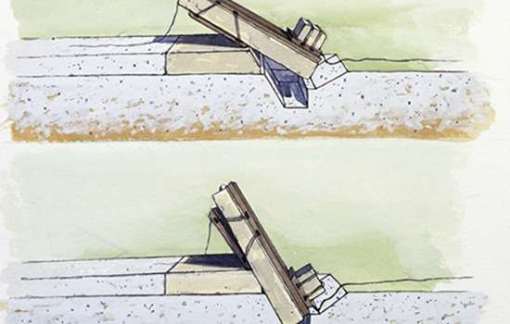
Now you can find out at one of our special workshops. Working with a team of other visitors, try your hand at moving and raising a 4 tonne limestone block using ropes, rollers and pulleys.
MOVING AND RAISING A STONE: 10th / 11th March 2018
DATE: Sat 10 & Sun 11 Mar 2018 TIME: 10.30am, 1pm and 3.30pm
LOCATION: Stonehenge Visitor Centre SUITABLE FOR: Everyone
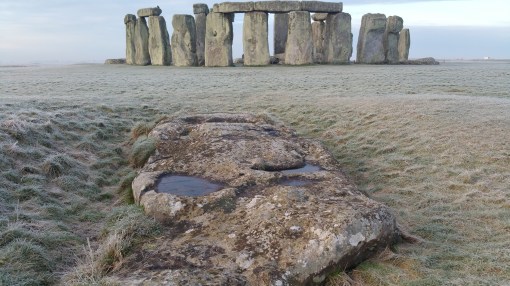
Stones of many different kinds, shaped and built into intriguing structures, is what makes Stonehenge special; a unique monument in the world of early farming communities in northwest Europe. Join Prof. Timothy Darvill as he explores some of the main components that made up Stonehenge in the late third millennium BC, asking: What were they for? How might they have worked? Why were the stones chosen? And what made the place rock?
THIS IS THE THIRD IN THE SERIES OF LECTURES TO MARK THE ANNIVERSARY OF CECIL AND MARY CHUBB’S GIFT OF STONEHENGE TO THE NATION.
Tickets are free but places must be reserved by calling the English Heritage Bookings Team on 0370 333 1183 (Mon – Fri 8.30am – 5.30pm, Sat 9am – 5pm). The telephone bookings will close at 3pm the day before the event.
The astonishing result comes from analysis of DNA extracted from 400 ancient remains across Europe.
The builders of Stonehenge are thought to be the last of Britain’s neolithic people
Stonehenge has a proud place in Britain’s history as one of the wonders of the world and the best-known prehistoric monument in Europe.
But, according to a major new study, modern-day Britons are barely related to the ingenious Neolithic farmers who built the monument 5,000 years ago.
Instead the British are related to the ‘Beaker people’ who travelled from modern-day Holland and all but wiped out Stonehenge’s creators.
The findings are ‘absolutely sort of mind-blowing,’ said archaeologist Barry Cunliffe, a professor emeritus at the University of Oxford.
‘They are going to upset people, but that is part of the excitement of it.
Stonehenge | Everything you need to know
Stonehenge is perhaps the world’s most enigmatic pile of rocks. Some archaeologists think it was an observatory, others a place of healing.
According to Swiss author Erich von Däniken, the building techniques were passed on from aliens; medieval texts show it being constructed by Merlin.
However, according to Win Scutt, properties curator at English Heritage, “the landscape in which Stonehenge sits is far more interesting than the circle itself”. Despite this, he adds, few people explore the wider area.
That landscape has been poorly treated in past decades, with traffic on the A303 and A344 roaring right past the site. In 2013, the A344 and old car park were removed; now, the landscape has recovered, grass has regrown and Stonehenge has been reconnected with its ancient processional avenue.
The next step is to re-route the A303, which cuts through the World Heritage Site, compromising its integrity. The Government has committed to building a tunnel for the road; in May 2016, the International Council on Monuments and Sites and Unesco backed the scheme, although current proposals remain controversial.
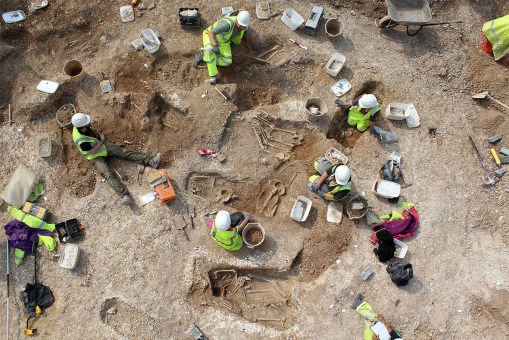
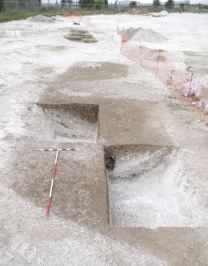
THE community that built the Neolithic causewayed enclosure at Larkhill may have been the architects of the Stonehenge landscape, archaeologists believe.
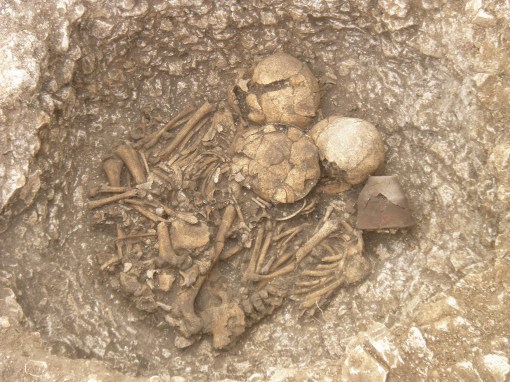
The causewayed enclosure, which dates between 3650 to 3750 BC – pre-dating Stonehenge by 600 years, was uncovered by archaeologists from Wessex Archaeology in 2016.
Si Cleggett, project manager and archaeologist at Wessex Archaeology now believes the community who built the causewayed enclosure may have been more closely involved in the planning of Stonehenge than previously thought.
He said: “The causewayed enclosure at Larkhill was constructed during the late Stone Age, a period of transition when our ancestors gradually moved away from a mobile hunter-gatherer lifestyle and embraced a farming existence where the domestication of livestock and control of agriculture began.”
Causewayed enclosures are believed to be meeting places, centres of trade and cult or ritual centres to name but a few. They are only 70 known examples.
The Wessex Archaeology teams were commissioned by WYG on behalf of the Defence Infrastructure Organisation (DIO) to undertake excavations on land adjacent to Royal Artillery Larkhill. The land, on the edge of Salisbury Plainand, immediately north of the Stonehenge World Heritage Site, has been earmarked for the provision of service family accommodation under the Army Basing Programme.
Archaeologists believe there was a five post alignment at the entrance of the causewayed enclosure which were positioned almost identically to the stones of Stonehenge.
Mr Cleggett said: “The communities who gathered at the Larkhill causewayed enclosure during the Early Neolithic were there 600 years before the landscape setting of Stonehenge was conceived and may have been involved in the conceptualisation or even the creation of the landscape we see today.
“It is enormously fitting that thousands of years later, those that strive to protect our identity as a nation will again meet at Larkhill through the delivery of service family housing.”
The Larkhill site, which is 24 hectares, is the largest open area archaeological excavation ever undertaken in proximity to the Stonehenge World Heritage Site.
It’s your final chance to have a say on the plans to build a tunnel for the A303 at Stonehenge over the next weeks before they get sent off to go for planning permission.
A public consultation starts today (Thursday Feburary 8th) and lasts through until Friday April 6th, with some public exhibitions planned for us to take a look for ourselves.
HAVE YOUR SAY:
Here’s the list of the public exhibition events being held over the next few weeks:
LARKHILL, ENGLAND —According to a report in The Guardian, a team led by Si Cleggett
Wessex Archaeology
of Wessex Archaeology has uncovered a series of nine post holes in a causewayed enclosure they say matches the orientation of the circle at Stonehenge. The site is located a short walk from Stonehenge, and dates to between 3750 and 3650 B.C., or about 600 years before a circular ditch and timber posts were first installed at the Stonehenge site. Cleggett suggests the people who built the enclosure at Larkhill may have been the architects of the Stonehenge landscape. “That nine-post alignment could be an early blueprint for the laying out of the stones at Stonehenge,” he said. For more, go to “The Square Inside Avebury’s Circles.”
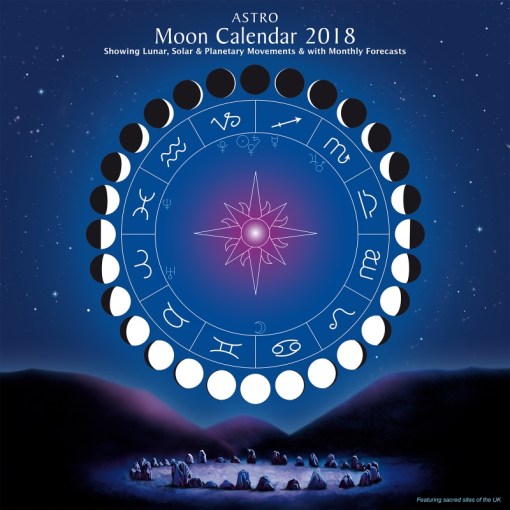
Ancient peoples had the benefit of dark skies and experienced the full spectacle of the starry heavens. The Moon gave light at night and would have been particularly useful in the two weeks centred on full Moon. The regular monthly cycle of lunar phases provided a convenient measure of time, upon which many ancient calendars were based.
Was it a Neolithic calendar? A solar temple? A lunar observatory? A calculating device for predicting eclipses? Or perhaps a combination of more than one of these? In recent years
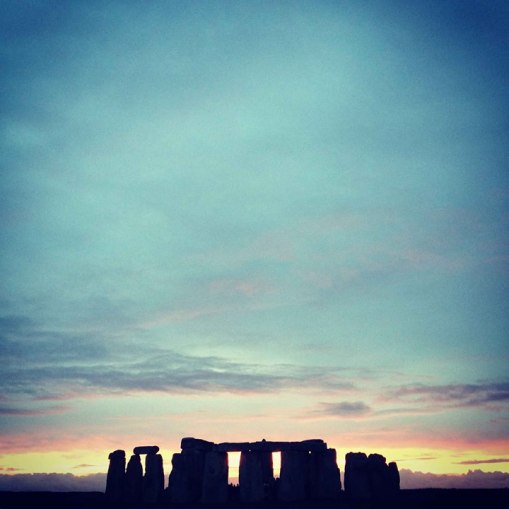
Stonehenge has become the very icon of ancient astronomy, featuring in nearly every discussion on the subject.
A more informed picture has been obtained in recent years by combining evidence from archaeology and astronomy within the new interdiscipline of archaeoastronomy – the
study of beliefs and practices concerning the sky in the past and the uses to which people’s knowledge of the skies were put.
Stonehenge Opening Times and Entrance Prices.
English Heritage advise to expect a visit to last around two hours. Please see the table below for opening times for 2018, with some seasonal variability, and entrance prices for adults, children, families, seniors and groups.
The English Heriatge Stonehenge Exhibition and Visitor Centre
The English Heritage Visitor Centre at Stonehenge is located 2 kilometers from the monument. This is your entry point to Stonehenge and the place where you pick up your tickets, souvenir guides and optional audio guides. The new Visitor Centre also offers a modern exhibition with prehistoric objects on display, and a spacious café and gift shop. A Stonehenge shuttle transports you between the Visitor Centre and Stonehenge (included in your ticket price).
If you come by car you will park in the car park outside the visitor centre. It is free for people purchasing tickets to enter Stonehenge, there is a charge if you are not. Tour buses have their own separate coach park.
All Members of English Heritage or National Trust must show a valid membership card on arrival to be granted free parking and site access.
To enter the Stonehenge Exhibition at the Visitor Centre you need a full ticket to Stonehenge, anyone can access the café, gift shop and toilets though, for free.
Very Important! Book Your Stonehenge Tickets in Advance
To be assured of entering Stonehenge the best way is to reserve timed tickets in advance on the English Heritage web site or if you need more flexibility and without the time constraint you can purchase discount advance Stonehenge tickets here
Tickets to Stonehenge are booked by half hour time slot, the website showing you how many tickets are still available for your chosen date and time.
Note: you cannot reserve tickets on-line on the day of your visit, you must reserve before midnight latest on the day before. Only a very small number of tickets are held back each day for walk-up visitors.
Note: the last admission time is two hours before closing time of Stonehenge. Closing times are variable according to month of the year (see below)
Stonehenge Admission & Opening From 1st January 2018 – October 2018
Admission
Opening Times
Adult
£16.50
16 Mar – 31 May
09.30 – 19:00
Child (5-15)
£9.90
1 Jun – 31 Aug
09.00 – 20:00
Students/Seniors *
£14.90
1 Sep – 15 Oct
09.30 – 19:00
Family Ticket †
£42.90
16 Oct – 15 Mar
09.30 – 17:00
Last entry 2 hours before closing
Members of the National Trust & English Heritage enter free
Prices are valid until 31st March 2018* 16-18 yr olds + seniors 60+† 2 Adults and 3 Children~ Closed 24th to 26th December
2018 STONEHENGE OPENING TIMES (Last entry 2 hours before closing)
1st JANUARY 2018 – 31st MARCH 2018
Monday
9:30 – 17:00
Tuesday
9:30 – 17:00
Wednesday
9:30 – 17:00
Thursday
9:30 – 17:00
Friday
9:30 – 17:00
Saturday
9:30 – 17:00
Sunday
9:30 – 17:00
1st APRIL 2018 – 31st MAY 2018
Monday
9:30 – 19:00
Tuesday
9:30 – 19:00
Wednesday
9:30 – 19:00
Thursday
9:30 – 19:00
Friday
9:30 – 19:00
Saturday
9:30 – 19:00
Sunday
9:30 – 19:00
1st JUNE 2019 – 31st AUGUST 2018
Monday
9:00 – 20:00
Tuesday
9:00 – 20:00
Wednesday
9:00 – 20:00
Thursday
9:00 – 20:00
Friday
9:00 – 20:00
Saturday
9:00 – 20:00
Sunday
9:00 – 20:00
1st SEPTEMBER 2018 – 15th OCTOBER 2018
Monday
9:30 – 19:00
Tuesday
9:30 – 19:00
Wednesday
9:30 – 19:00
Thursday
9:30 – 19:00
Friday
9:30 – 19:00
Saturday
9:30 – 19:00
Sunday
9:30 – 19:00
16th OCTOBER 2018 ONWARDS Opening times will be available nearer the time
For more information please visit the official English Heritage website. If you are looking to book a tour of Stonehenge, we recommend using Stonehenge Guided Tours
The Stonehenge News Blog
Follow us on Twitter and Facebook for all the latest Stonehenge News
A series of English Heritage exhibitions and archaeology projects will be run from March to celebrate the centenary year of Stonehenge being donated to the nation.
2018 is an important anniversary for Stonehenge. A hundred years ago, in 1918, local barrister Cecil Chubb and his wife Mary gifted it to the nation. This public spirited decision marked a turning point in the history of Stonehenge and its fortunes.
A programme of restoration began almost immediately, starting a centenary of care and conservation at Stonehenge which continues to this day.
Once a supposed gift for a wife we, as the public, have now had access to one of the most famous prehistoric monuments for around 100 years.
Stonehenge was donated by Cecil Chubb and his wife Maryin 1918 so that they could be properly looked after and enjoyed by all.
Cecil bought the stones in an auction in 1915 and it’s been said that the only reason he was there at the auction was to buy a set of dining chairs!
Legend has it that he bought it for his wife but she was not happy about…
Late in 1918, Cecil and Mary, gave the stones away to be cared for The Office of Works (what would be English Heritage).
Throughout 2018, English Heritags will be celebrating the centenary of the gift, and discovering what this iconic monument means to people today.
They were in a ‘perlilous condition’ according to the charity, so they set to work to restore it to it’s former glory.
For the past 100 years, millions of people have visited the monument from locals to people travelling thousands of miles to see it.
BRIEF HISTORY
The first monument was an early henge monument, built about 5,000 years ago, and the unique stone circle was erected in the late Neolithic period about 2500 BC.
In the early Bronze Age many burial mounds were built nearby.
From 1927, the National Trust began to acquire the land around Stonehenge to preserve it and restore it to grassland.
A new visitors centre was built in 2013 and the byway next to the stones was closed.
CELEBRATION
Throughout 2018 there will be special programmes to celebrate the centenary, such as a special collaboration with the British Museum featuring an exhibition on the Neolithic and Bronze age items found.
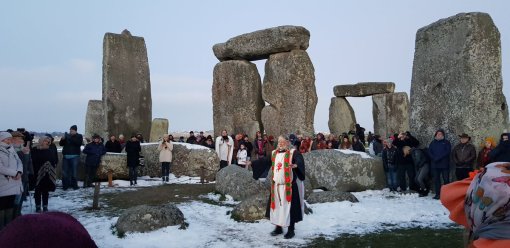
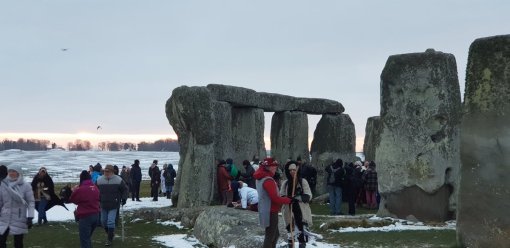
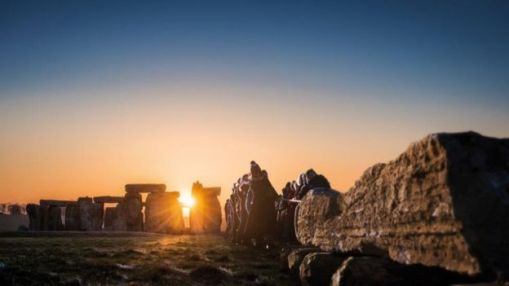
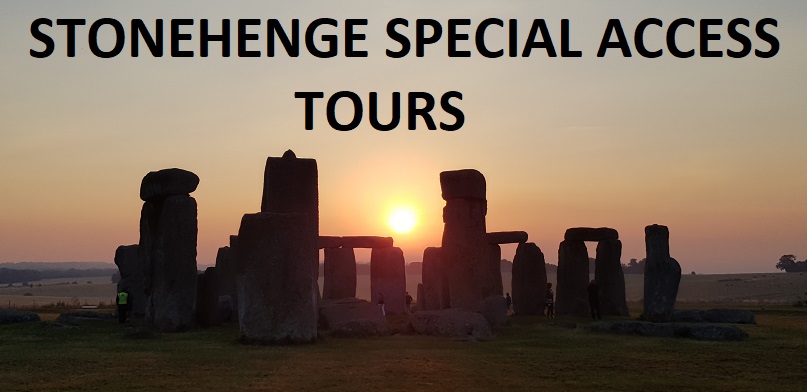
Thousands of people gathered at Stonehenge to witness the sunrise on the shortest day of the year in the northern hemisphere.
Crowds arrived at the Wiltshire landmark before dawn with many others travelling to the Avebury stone circle, which is also in the county.
The winter solstice marks the point when the North Pole is tilted 23.5 degrees away from the sun.
The solstice occurred at 04:49 GMT, with the sun rising at 08:04.
Pagans and druids dressed in traditional clothing joined families and a choir to mark the end of the longest night of the year.
Thick cloud at the prehistoric site in Wiltshire meant the sunrise, at 8.10am, was not visible.
Kate Davies, of English Heritage, said: “We were delighted to welcome approximately 5,000 people to Stonehenge to celebrate winter solstice this morning.
“It was an enjoyable and peaceful celebration despite the damp weather and it was great to see so many families enjoying the music and chanting around the monument.
The Stonehenge News Blog
Follow us on Twitter and Facebook for all the latest Stonehenge news,
We aim to make this the ultimate source of the latest Stonehenge news available on the web. This blog is updated almost daily and promises to deliver accurate 'up to date' information on new theories, new digs, solstice events, Druid gatherings, the new visitor centre, general megalithic links and some fun along the way. We welcome your input....
"There is so much misinformation about Stonehenge on the web, so it’s really refreshing to see such a clear and lucid presentation, what you have here looks like best general overview of Stonehenge to date, well done!"
Mystery surrounds this 5,000 year old monument in the centre of the World Heritage Site. Visit this prehistoric South West site near Salisbury in Wiltshire, and decide for yourself whether Stonehenge was a place of sun worship, a healing sanctuary, a sacred burial site, or something different altogether!
THIS BLOG claims no credit for any images posted on this site unless otherwise noted. Images on this blog are copyright to its respectful owners. If there is an image appearing on this blog that belongs to you and do not wish for it appear on this site, please E-mail with a link to said image and it will be promptly removed.