Ticking Stonehenge off your bucket list.

30 11 2019

For people across the world- Stonehenge is a must see location, it’s majesty as well as it’s mystery has made it a mainstay on everyone’s bucket list. 

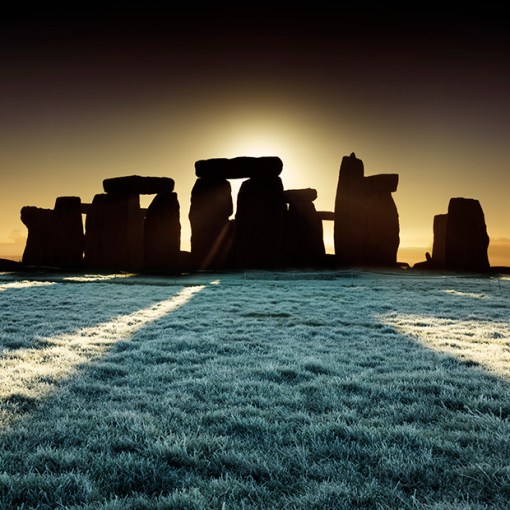
Stonehenge sunset

However, here lies the problem. Is Stonehenge merely a pretty collection of stones which need only be sited to be ticked off the list? There is no doubt that the site itself, taken as it is, is fulfilling. However- the occasion of ticking such a magnificent and ancient spectacle off a list of things to do on this earth before you die, should be done properly. The site and the whole surrounding area deserve more than tentative voyeurism. To truly ‘tick off’ Stonehenge, one must engage with its history its myths and crucially observe the entire  surrounding area which is a veritable tapestry of Neolithic history. A tapestry which considered in its entirety enriches the ultimate site to see- Stonehenge itself. 

I want to take you on a preliminary journey around Neolithic Wiltshire’s most fascinating sites- all a walking distance from the stones, which an expert guide can take you on for a holistic experience- Weaving together the history and myth of this most beautiful landscape.

On ground level-  you and the stones in front of you, it is hard to appreciate anything else. However, imagine you could fly straight up in the air and take a birds eye view- looking down on the ancient henge and its famous stones- so they are a wonderful miniature series of concentric circles…

…then go higher and take in more and more of the landscape and you’ll notice the ground is littered with meaningful scars- tell tale signs that the entire area surrounding Stonehenge has been heaving with meaning for 5,000 years. 

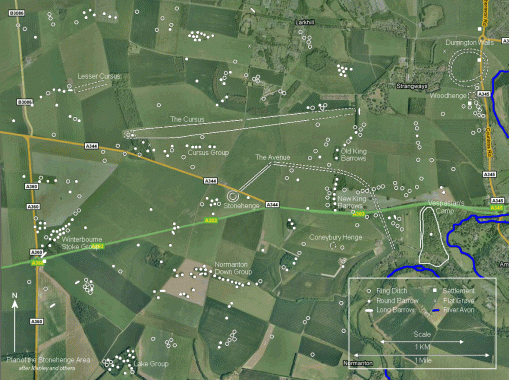
Luckily the wonder of the modern day means we needn’t defy gravity to appreciate the Neolithic saturation of the landscape- a simple satellite picture reveals all the key location you need to visit.

stonehenge-map

Durrington Walls 

Starting 2 miles east of the stones with Durrington walls. This was once a Neolithic settlement and may have even been the largest village in Northern Europe sometime between 2800-2100 B.C.

Woodhenge 

Heading immediately south from Durrington walls we soon will encounter Woodhenge, the elemental antithesis of Stonehenge itself. Sadly, due to the nature of wood,  the former structure has long since rotted away. This ancient site may well have been lost forever if it wasn’t for aerial photographs which revealed dark spots in wheat crops. These dark spots signalled the former post holes of large wooden posts which formed the ancient structure. Today the post holes have been filled with concrete to partially recreate the previous composition of woodhenge. It represents a magnificent symbiosis of past and present, modern techniques ensuring the survival of ancient monuments and their memory and preserve the heritage of Wiltshire .

The Cursus

Around 4000 years ago from our aerial view the Cursus would have been a bright white scar across the land, thanks to wiltshires famously chalky ground. In the Neolithic period the cursus was a 3k avenue cut into the earth for an unknown purpose.

The cursus is so named because the famous antiquarian William Stuckley and the Cursus’ discoverer- imagined roman chariots riding along its length (cursus meaning race course in Latin). Although the earth is no longer dredged along the cursus it still makes a fascinating route to wander along and to ponder, with its purpose still not totally understood

The Cursus group

At the west end of the cursus you might expect to get a good view of the Stonehenge- however your view is blocked. Instead you  are met with the curious view of a ridge of land, topped with a barrow; a Neolithic burial mound. Between the west end of the Cursus and Stonehenge itself lie the ‘Cursus Group’ an assortment of sixteen  of these Neolithic round barrows. The land literally bulges with history at this point- on top of the ridge you can see the land ripple with various barrows as you survey it- before your eyes are drawn magnetically to the stones themselves. But before you reach them it is fascinating to hear the tales of the barrows, how they had once concealed pottery, weaponry and even jewels for thousands of years.

Beyond tales of treasures it is edifying for those who wander the mounds to ponder their ancient logic- for there certainly appears to be a system- but it is yet to be determined. 

Stonehenge Avenue

Heading East from the swollen turf of the Cursus barrows you will intersect the penultimate Neolithic wonder of our imaginary tour. Like the Cursus, Stonehenge Avenue is an ancient Avenue, stretching for 3 kilometres. And like the cursus Stonehenge Avenue would have been an brilliant white scar on the earth- an alabaster pathway connecting Stonehenge with the river Avon. 

Today the avenue is still recognisable, If a slightly more furtive path then it once was but is nonetheless the pathway to the enigmatic stones, linking up with the henge as though drawn on by a higher being.

75435835_389325018446272_3664361428594196480_o

Photo taken by Stonehenge Dronescapes. Visit their Facebook Page for more amazing photos of Stonehenge and Wiltshire.

Stonehenge Stone Circle

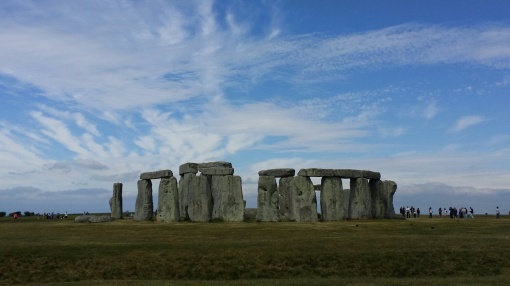
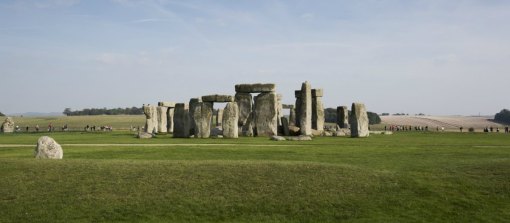
At last you reach the stones themselves. The colossal upright sarsen stones, rendering you minuscule in comparison- whilst the horizontal blue stones, quarried from South Wales, add the real dimension of wonder to this wonder of the world. The stones are the crowning sight to this antiquarian tour of Wiltshire’s Neolithic sights. 

Words can hardly to this magnificent structure justice and it really must be beheld to be appreciated. What is certain is that the truest appreciation of this cultural icon is ascertained through a thorough engagement with its surroundings- appreciating the wider history and indeed mystery of the land and truly attempting to cast your mind back to the remote past; ticking Stonehenge off your bucket list in the process.

Relevant Stonehenge Links:
English Heritage – Interactive Maps of the Stonehenge Landscape – click here
Stonehenge Guided Tours – The Stonehenge Touring Experts – click here
National Trust – The Stonehenge Landscape – click here
Stonehenge – Neolithic / Bronze Age Henge and Stone Circle. Click here
Salisbury and Stonehenge Guided Tours – The local megalithic tour operator – click here
Stonehenge Dronescapesclick here

The Stonehenge News Blog
Follow us on Twitter and Facebook for all the latest Stonehenge News
http://www.Stonehenge.News


Thousands of people gathered to greet the sun as it rose over Stonehenge for the summer solstice.

23 06 2019

About 10,000 people gathered at the Stonehenge to greet the start of the longest day of the year, according to Wiltshire Police. The celebrations at Stonehenge came as people descended on sites across the UK to celebrate the first day of summer.

This slideshow requires JavaScript.

Kate Logan, from English Heritage, said: “There was a lovely, friendly atmosphere, the sun shone and the dawn was greeted with loud cheers.”  For the first time, people from around the world were also able to join in from the comfort of their homes as English Heritage launched a live feed from a camera set up close to the stones.

The crowds encountered a chilly morning accompanied by clear skies as the sun rose at 4.52am. 

On the summer solstice, the sun rises behind the Heel Stone, the ancient entrance to the Stone Circle, and rays of sunlight are channelled into the centre of the monument.

Summer solstice takes place as one of the Earth’s poles has its maximum tilt toward the sun and the sun reaches its highest position in the sky, ensuring the longest period of daylight in the year.

It is believed that solstices have been celebrated at Stonehenge for thousands of years.

Follow us on Twitter and Facebook for all the latest Stonehenge news and stories.
The Stonehenge News Blog
http://www.Stonehenge.News


RELEVANT LINKS:
Evening Standard
BBC
TIME MAGAZINE
MSN


Stonehenge Events and News: Open days, talks, exhibitions, guided walks and family activities taking place at the World Heritage Site.

17 10 2018

There is always something happening around the Stonehenge World Heritage Site with events such as open days, family activities, lectures and guided tours for both adults and families. Please check the websites below to see what Stonehenge current events are available to book.

Stonehenge news

English Heritage Stonehenge 
Walk in the footsteps of your Neolithic ancestors at Stonehenge – one of the wonders of the world and the best-known prehistoric monument in Europe. Visit their Stonehenge Events page for exhibition news, special events and exclusive ‘members only’ events.  They also publish posts on their news blog.

National Trust’s Stonehenge Landscape
A World Heritage Site for its  ancient ceremonial landscape of archaeological and wildlife interest. Visit their events page

Amesbury History Centre 
The Amesbury History Centre is the place to visit to find out all you need to know about the oldest continually inhabited settlement in Britain.

Wiltshire Museum 
Award-winning Museum display – Gold from the Time of Stonehenge. Britain’s best Bronze Age archaeology collection. Visit their events page

Salisbury Museum 
The Salisbury Museum. Showcasing the medieval Cathedral town of Salisbury and the ancient wonders of Stonehenge. Visit their events page

Visit Wiltshire
Click here to find out all you need when visiting Stonehenge Wiltshire!…Easily search Attractions, Events and Accommodation suitable for your needs!…FREE MAPS & GUIDES!

Wessex Archaeology
Wessex Archaeology is proud to have had a long history of work at Stonehenge and to have played a leading role in their research, management and investigation.  Visit their news blog

Stonehenge Guided Tours
The longest established Stonehenge tour operator run daily Stonehenge Tours from London and offer exclusive inner circle access tours allowing you to walk amongst  the monument at sunrise or sunset.

Stonehenge and Salisbury Guided Tours
The Stonehenge Travel Company are based in nearby Salisbury and operate private guided tours of Stonehenge.  They are recognised as the local megalithic experts.

Follow us on Twitter and Facebook for all the latest Stonehenge News
The Stonehenge News Blog
http://www.Stonehenge.News


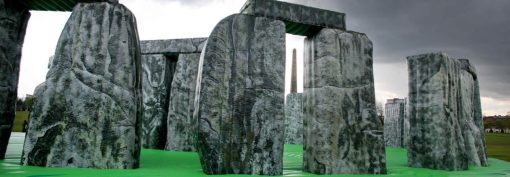
As part of the Stonehenge centenary celebrations, Friday 26th October 2018 will be the debut at Stonehenge of Sacrilege, Deller’s inflatable replica of Stonehenge. #SH100

5 10 2018

A day of specially commissioned art and events will celebrate the 100th anniversary of Stonehenge being donated to the nation. 

English Heritage and the artist Jeremy Deller will mark 100 years since Stonehenge was donated to the nation with a day of celebrations at the ancient stones. Curated by Deller, Friday 26th October will be full of music and art, an inflatable Stonehenge, an anniversary tea party, as well as a few surprises.

A life-sized, inflatable replica of the British heritage and pagan site, and tourist attraction, Stonehenge.

A life-sized, inflatable replica of the British heritage and pagan site, and tourist attraction, Stonehenge.

The artist describes Sacrilege as a light-hearted and playful way of visitors to “get reacquainted with ancient Britain with your shoes off”. Sacrilege has been loaned to English Heritage by The Store X Vinyl Factory, and will be outside the Stonehenge visitor centre from Friday 26th to Sunday 28th October.

‘Deller…offers the access to Stonehenge that English Heritage denies — with added bounce.’  – The Guardian

This ambitious project developed Turner Prize-winning Jeremy Deller’s exploration of art in public spaces alongside his interest in historic and contemporary icons.

WEEKEND OF CELEBRATION MARKS 100 YEARS OF STONEHENGE BELONGING TO THE NATION: 26th – 28th October 2018

RELEVANT LINKS:
Visit the Stonehenge 100 English Heritage website for full detail
Archaeology with a bounce! Mike Pitts blog 
Stonehenge goes on tour. Bouncy ‘Sacriledge’ comes to Wiltshire 2012
Jeremy Deller’s Stonehenge bouncy castle comes to London: The Telegraph

Follow us on Twitter and Facebook for all the latest Stonehenge news
The Stonehenge News Blog


The Stonehenge visitor centre and excellent English Heritage exhibition.

6 05 2017

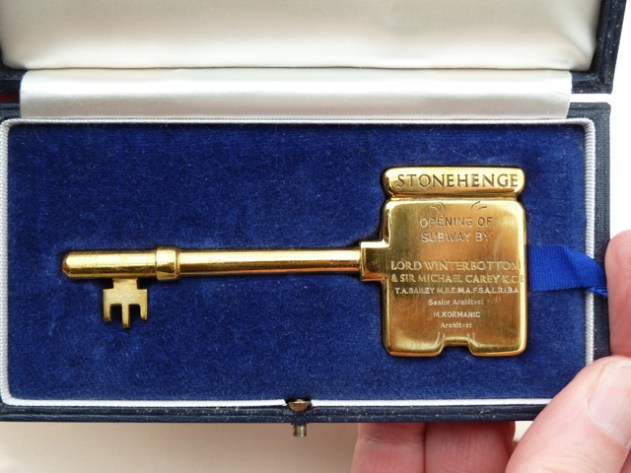
From 1968 until 2013, the visitor facilities at Stonehenge amounted to a collection of brutalist concrete bunkers,  and a small car park almost opposite the monument alongside the old A344 road, with a subway below the road so that visitors could safely reach the stones. The old visitor centre was opened with much fanfare, and a ceremonial gold key.
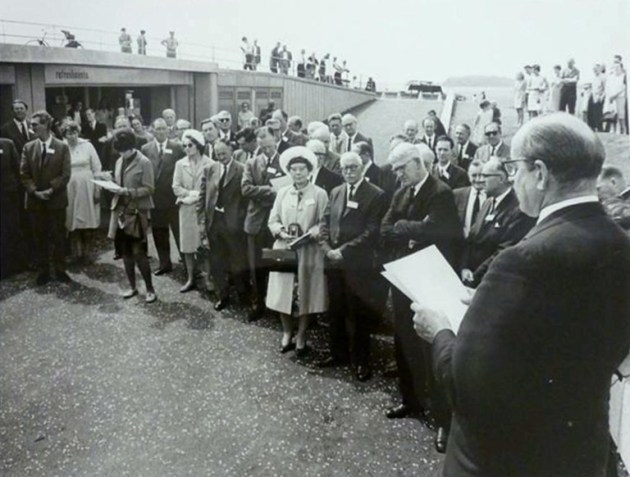
subway opening 1968

key

As visitor numbers increased year on year these facilities (latterly expanded by the addition of some portakabins) rapidly became overwhelmed, eventually being described as “a national disgrace” in Parliament.
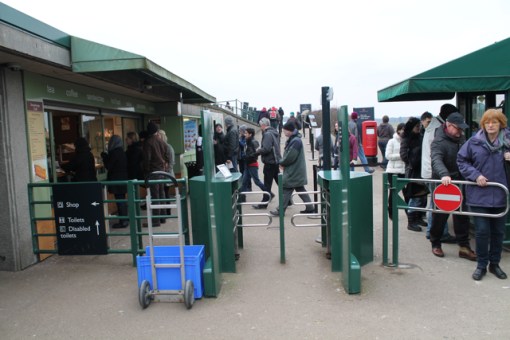
old_visitor_centre

After endless consultations and arguments, with almost a dozen options being tabled and rejected, eventually a location was found over a mile and a half away to the west that was chosen for the new Visitor Centre. The A344 road past the monument was closed and grassed over, the old facilities and car park decommissioned and in December 2013 the new centre opened.

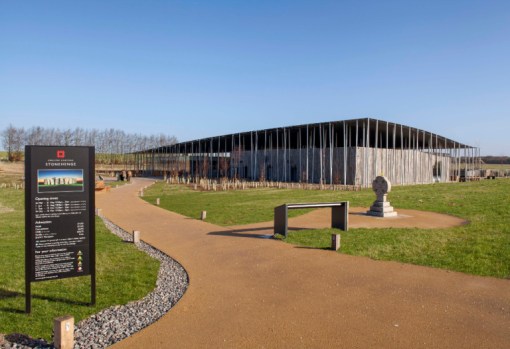
Designed by an Australian firm Denton Corker Marshall, with an initial budget of £27M, the intention was to create a building that sat quietly in the landscape and deliberately didn’t reference the form of Stonehenge in any way.

Its elegantly curved roof was to evoke the sense of a leaf lightly resting on angled columns that called to mind the trunks of trees in a wood, with dappled sunlight falling through the perforations at the roof’s edge and a gentle breeze cooling the central corridor between the two independent building “pods” below it.

For those that geek out on these things, there is one direct reference to Stonehenge – the tallest columns supporting the roof at the NE and SW corner are each the same height as the tallest trilithon at Stonehenge was when first erected 4,500 years ago.
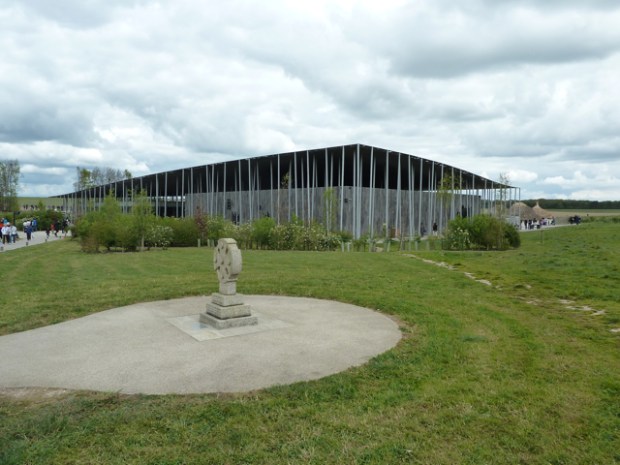
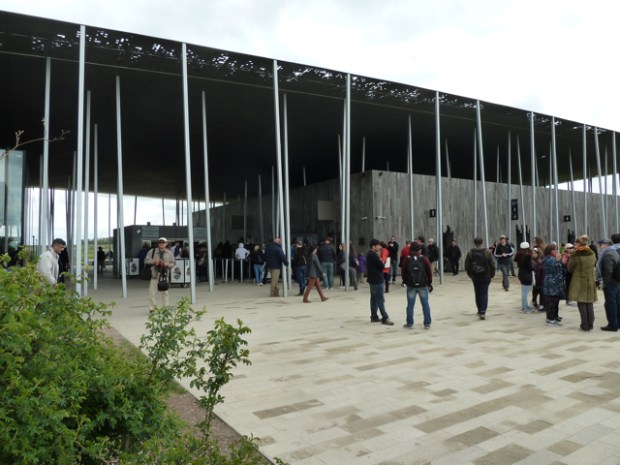
new vc

new vc closeup

There are two major advantages over the old centre – firstly, the café is now indoors and secondly there is an excellent exhibition which showcases artefacts from both the Stonehenge landscape and the monument itself.

There are two major advantages over the old centre – firstly, the café is now indoors and secondly there is an excellent exhibition which showcases artefacts from both the Stonehenge landscape and the monument itself.

Entrance to the exhibition is included in the ticket price and this part of the Stonehenge experience definitely shouldn’t be missed – it helps to place the monument in context without overwhelming a casual visitor, but has enough detail to interest the nerdiest Stonehenge enthusiast.

There is a walk-in 360° video theatre which places you in the centre of the monument at all the major stages in its development, from 3000BC when the henge bank and ditch was dug along with the Aubrey Hole circle of 56 post or stone holes, through the arrival of the large Sarsen stones around 2,500BC, the final rearrangement of the Bluestones in 2,200BC and the 3 minute presentation brings you up to the modern day appearance complete with traffic flowing by on the A303. As the seasons change, you see representations of both summer solstice sunrise and winter solstice sunset as shadowy – almost ghostly – figures process around the circle.
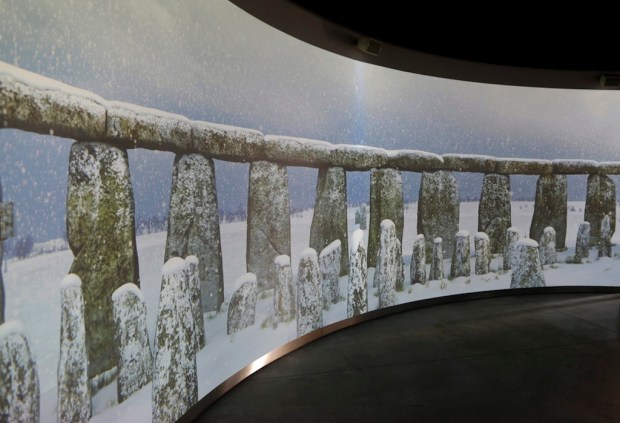
A 360 degree virtual experience video display showing Stonehenge is played at  the new exhibition centre at Stonehenge in Salisbury, southern England

Passing through into the main exhibition space, you find five display cases containing genuine archaeological finds that are on loan from Salisbury Museum and Wiltshire Museum (in Devizes) including some of the grave goods – flint arrowheads, bronze daggers, gold, amber and jet jewellery as well as ceramics – from the burial mounds along with the remains of two occupants. Both museums offer reduced price entry to Stonehenge ticketholders and each have recently enjoyed major upgrades to their own exhibition spaces.
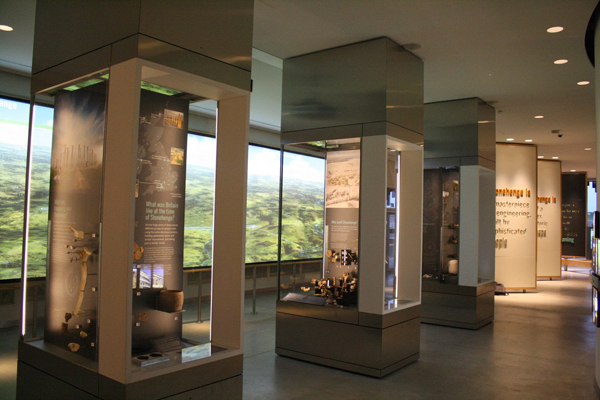
exhibition cases

On one side is a huge dynamic video wall showing the evolution of the landscape and the sites of its key monuments over time, along the other are four large bronze models of Stonehenge at the main points in its evolution (feel free to touch the models, it’s encouraged).

As well as the permanent exhibition, there is a side gallery which houses temporary displays that are periodically replaced. Presently, the side gallery contains Julian Richards’ “Wish You Were Here” exhibition of Stonehenge collectibles and memorabilia down the ages, from postcards through Druidic regalia and some bizarre items that have used the Stonehenge image as part of their marketing. This includes phone cards, stamps and a wonderful brass Trilithon-topped crumpet-toasting fork. No such collection would be complete without a copy of the Spinal Tap Trilithon-shaped single record, and sure enough it’s here too.

Staff and volunteers in the exhibition are happy to explain the items on display in the main hall and the side gallery, so don’t fail to take advantage of their knowledge.
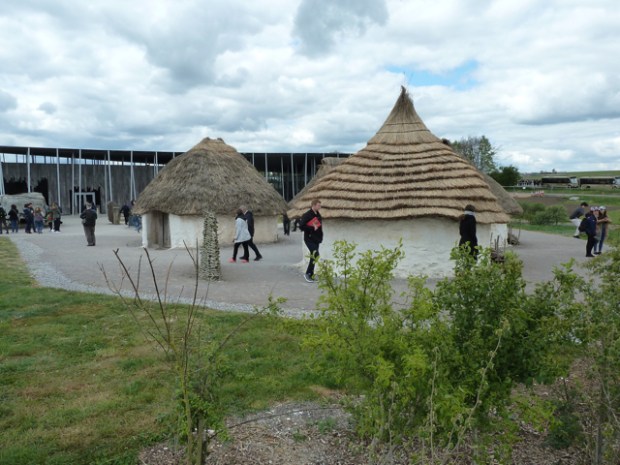
neoliothic houses

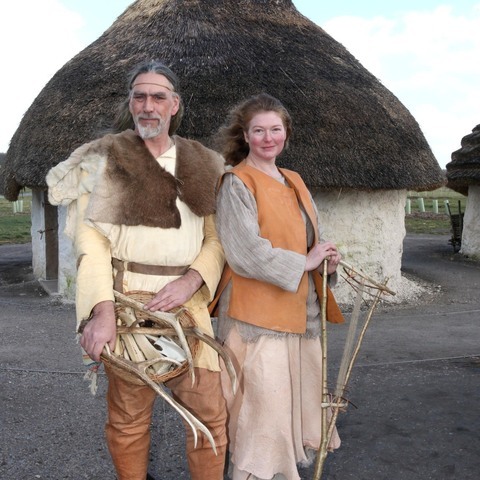
These houses were built by experts from the Ancient Technology Centre on Cranbourne Chase and a cohort of keen volunteers, some of whom can often be found in the houses giving demonstrations of ancient skills. It’s only by attempting to replicate the work of our long-dead ancestors that we gain new insights into the subtler aspects of their lives – the houses (not mere “huts”) are spacious, comfortable, sturdy structures and with periodic maintenance will easily last 25 years or more.

The new Visitor Centre may be a building that divides opinion, but within and without there are some fantastic displays that give a genuinely fresh perspective on Neolithic and Bronze Age life.

Just outside the visitor centre, at the back, sits the collection of replica Neolithic houses that are closely based on the remarkable archaeological discovery of such buildings at nearby Durrington Walls – the probable settlement site in use when the large Sarsen stones were being erected 4,500 years ago.

Entrance to Stonehenge is now managed through timed tickets and advance booking is the only way to guarantee entry on the day and time of your choice. By booking in advance you will also benefit from an advanced booking discount. It is also possible to purchase advance Stonehenge tickets here to beat the lines.

If you are short on time and would like to join an organised guided tour of Stonehenge, it is possible to do this from London, Salisbury or Bath. You can even arrange for local expert guide to meet you at the visitor centre for a guided walking tour.

Article by guest blogger and local Stonehenge historian Simon Banton

The Stonehenge News Blog
Follow us on Twitter and Facebook for all the latest Stonehenge News
http://www.Stonehenge.News



Stonehenge Winter Solstice 2016: Travel Trade News

26 11 2016

Arrangements for Groups on Tuesday 20th and Wednesday 21st December

Stonehenge closes to visitors at the usual time of 5pm on Tuesday 20th December ahead of the annual Winter Solstice celebrations on the morning of Wednesday 21st December.

stonehengewinter

The last timed-ticket admission for pre-booked groups is the usual time of 3pm, providing a 2-hour window for groups arriving at this time to view the monument and enjoy the exhibition and other facilities in the visitor centre.

All coaches and minibuses and their passengers must be off-site by 5pm as usual.

Stonehenge re-opens to visitors from 11.30am on Wednesday 21 December.

Coach Parking for Winter Solstice 2016

Parking for coaches and minibuses bringing visitors for the Winter Solstice will cost £50 per vehicle and is provided from 6am until 10am in the Stonehenge Coach Park.

Coach and minibus parking for Winter Solstice is limited and tour operators and group travel organisers should contact the Stonehenge Bookings Team from today to book coach or minibus parking. Booking is essential.

There will be a number of temporary road closures in the local area. There will be no access to Byway 12 throughout the Winter Solstice access period.

Further Information for Winter Solstice

Access to Stonehenge for solstice is subject to the Conditions of Entry which we would ask tour operators, group leaders and drivers to ensure their group members are aware of and adhere to.

Stonehenge is in a field in the middle of Salisbury Plain and the weather in December will be cold and wet. Even if it isn’t raining, the ground will be wet from the dew. There may also be frost. Sensible footwear and warm, waterproof clothing are essential.

There is at least a 30 minute walk (in low light or darkness), from the coach park to the monument. Visitors are therefore strongly advised to wear strong, waterproof footwear and bring a torch with you.

Toilets at the monument field will only be available once the access period begins. There are no catering facilities in the monument field, however the café at the visitor centre is open for hot drinks and breakfast rolls from 6am.

On Wednesday 21 December, sunrise is at 8.09am.

The monument field will open at approximately 7.45am, depending on light levels and will close at 10am.

Stonehenge re-opens to day visitors from 11.30am on Wednesday 21st December.

Please visit the official English Heritage website for more details

Solstice Events are offering their usual small group Winter Solstice guided tour from London and Bath, ideal if you do not have your own transport. Visit their website

The Stonehenge News Blog
Follow us on Twitter , Facebook  and Periscope broadcast for all the latest Stonehenge news and Winter Solstice updates.


Sights to visit around Stonehenge.

4 03 2016

While Stonehenge is by far and away the superstar of southern England, and no visit to Wiltshire is complete without touring it, Stonehenge is in fact just one of many ancient sites in the area. Indeed, the surrounds of Stonehenge contain the most densely-grouped collection of neolithic sites and monuments within England – and more are being discovered all the time. It’s thought that the nearby settlement of Amesbury (believed to be the oldest in Britain) was a major cultural centre during the island’s ancient days. If you’ve got some time to spare during your Stonehenge trip, and want to take in some of the area’s other sights, here are a few suggestions:

20150626_104439_resized

Within Walking/Cycling Distance Of Stonehenge – Woodhenge, Durrington Walls, The Cuckoo Stone

In all fairness, you can strike out in pretty much any direction from Stonehenge and hit archeological gold – although you may not always recognise it as such. Just be careful not to wander into the path of the military (who train on Salisbury Plain). If you’re cycling, be sure that you’re properly prepared for historically significant (but nonetheless unexpected) bumps and tumbles! Woodhenge, less than four miles from Stonehenge, is an odd sight at first glance. However, once you understand what you’re looking at, it becomes much more impressive. It’s thought that this was once a large burial mound with a complex system of banks and ditches (now eradicated through ploughing). Thousands of years ago, six concentric rings of wooden posts may have supported an enormous building. Today, the position of these posts are marked with stumps. It’s an atmospheric and very interesting place! A short walk away from Woodhenge is Durrington Walls – a recently discovered monument which in its heyday would have dwarfed Stonehenge. The ‘Walls’ were formed by lines of enormous stones, which could possibly have formed a processional way leading to Stonehenge itself. There’s not masses to see there now, but it’s still a lovely area! West of Woodhenge is the Cuckoo Stone – a sarsen boulder lying on its side. It was once a standing stone, the origins of which remain a matter of debate. It’s an enigmatic piece of history in a very atmospheric location.

Salisbury – Old Sarum, Salisbury Museum

Old Sarum is a wonderful visit for anyone with an interest in history. It’s the site of Salisbury’s oldest settlement – a hilltop fort commanding absolutely incredible views over Wiltshire. There’s an iron age hillfort to walk around, the remains of a castle to admire, and an absolutely breathtaking panorama which will give the camera-happy everything they could ever dream of. There are also plenty of events put on by English Heritage throughout the year, giving people the opportunity to really step back in time! Down in Salisbury itself, the Salisbury Museum is packed full of fascinating finds from all over the county. It’s a well laid-out and beautifully explained museum, with some truly intriguing exhibits. You can find it just opposite Salisbury Cathedral – which it itself a beautiful and interesting building.

A Short Drive Away – Avebury, West Kennet Long Barrow, Silbury Hill

A 40 minute or so drive from Stonehenge is Avebury. Managed by the National Trust, this ancient stone circle sits in a Neolithic landscape incorporating avenues of standing stones, a henge, and an enormous stone circle in which a village was once situated. The stone circle itself is the largest in the world, and contains two smaller circles. A short walk away is West Kennet long barrow, which can be entered by those who are neither claustrophobic nor fearful of our long-dead ancestors! Then, of course, there are the round barrows with which the landscape is littered, and the curious structure of Silbury Hill. Silbury Hill is the largest prehistoric mound in Europe, and would have taken similar effort to construct as its contemporary pyramids in Egypt. It was clearly important to those who built it – although, unlike most barrows of its kind, it contains no burial. Its purposes remain perplexing, but its presence is both beautiful and fascinating! Anyone with an interest in Stonehenge and its ilk, particularly those who enjoy the mystery of the structure, will find much to whet their appetites at Avebury and Silbury!

There are Stonehenge tour companies who operate guided tours of the area and the Visit Wiltshire webiste lists the best ones.  If you want to explore the Stonehenge landscape with a local expert then we recommend ‘The Stonehenge Travel Company

The Stonehenge News Website


Stonehenge Archaeology Landscape Walk 2016

26 01 2016

Explore the wider Stonehenge World Heritage landscape with a National Trust guide discovering hidden histories and ancient mysteries.

An afternoon walk up on the downs learning about the ancient archaeology of the Stonehenge World Heritage Site. On this 4 mile walk with views of the stone circle, we’ll visit ancient earthworks that have revealed much about the people who once lived and celebrated here. Talking points include the Cursus, the many and varied barrows, and an ancient avenue connecting ceremonial centres.

stonehengelandscape

Booking details:
Call 0844 249 1895A 5% booking fee applies. Phone lines are open Mon to Fri 9am-5.30pm, plus Sat and Sun 9am-4pm. National Trust website

Suitability:
Accompanied children welcome, free. Dogs on leads are welcome.

Meeting point:
Meeting in a car park off Tombs Road (Larkhill) at OS grid reference SU 14382 43626 (nearest postcode SP4 8NB). A map of the meeting point on can be found on the event’s webpage.

What to bring and wear:
Dress for the weather – wrap up warm as it gets chilly up on the downs – and wear stout footwear. You may like to bring a drink and a snack.

Accessibility:
Access is by pedestrian and farm gates; the terrain is mostly grassland and trackways, often uneven underfoot. Cattle and sheep graze the gently sloping downs.

Other:
Please note, traffic on the A303 is often congested around holidays and weekends. Although your guide will tell you about it, this walk doesn’t visit the Stone Circle. You might like to visit it before the walk; NT members are admitted free.

Times

Event opening times and availability
Day Times Availability
5 March 2016 14:00 – 16:30
7 May 2016 14:00 – 16:30


English Heritage Events at Stonehenge: December 2015

29 11 2015

Neolithic craft and textile demonstration (Sun 6 Dec 2015)

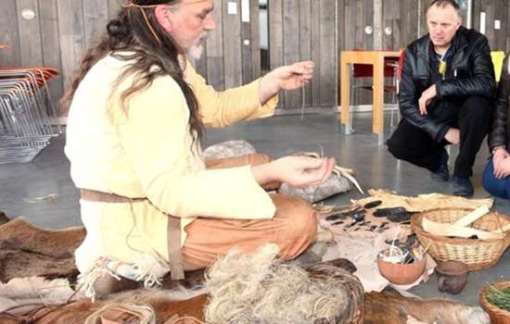
Sally Pointer and Gareth Riseborough will bring the past to life in their demonstrations of a variety of natural fabrics and crafts including cord making, twining, looped weaving, netting and leatherwork. See bone and antler worked and discover how all these materials were used in the Neolithic. Book here

neolithic-crafts-and-textile-workshop

Neolithic Textile and Craft Workshop (Mon 7 Dec 2015)

Work with textile experts Sally Pointer and Gareth Riseborough to discover more about the research and processes used to create replica Neolithic and Bronze Age clothing for Stonehenge and get hands-on experience with materials and techniques. Learn to make cordage from natural fibres and deer sinew and experiment with braiding, twining and looping techniques. All materials are supplied, and using flint tools, you will craft a needle from red deer antler to take home along with the resources to continue your project. Lunch and refreshments included. Book here

textiles-event-stonehenge

Stonehenge Christmas Shopping Evening (Wed 9 Dec 2015)

Join English Heritage on Wednesday 9th December for a festive evening of Christmas shopping and enjoy a 10% discount on purchases.

They will be serving delicious mince pies and hot mulled wine in the cafe.

Live music and Christmas carols will be sung throughout the evening and the exhibition will be open for free visits.  More info

xmas-stones.jpg

The Stonehenge News Blog


Visit Stonehenge for half term fun.

23 10 2015

This half term Stonehenge is hosting an interactive, theatrical performance which will take families back 100 years to the dramatic auction of 1915 where Stonehenge was put up for sale!~

stoneman2Last month English Heritage marked the 100th anniversary of Stonehenge – the most iconic prehistoric monument in Europe – being sold at auction to local Wiltshire man Cecil Chubb. The auction marked a turning point in the care of the ancient monument. A series of major restorations and excavations began a few years later and Stonehenge went from isolated ruin to national treasure. Today it is cared for by English Heritage, and thanks to extensive work now sits within a restored landscape that gives a sense of its original setting.

Bring the family this half term and play a part in bringing a monumental historical moment to life in this centenary year, with this fun theatrical performance – specially developed for English Heritage by historical theatre compan Time Will Tell.The play is in two parts and will take place outside the visitor centre by the Neolithic Houses, every day of half term from Monday 26th October to Sunday 1st November, between 10am and 4pm

What better way for kids to step into England’s story than exploring a World Heritage Site and its prehistoric monuments? The Stonehenge exhibition and visitor centre will entertain the most inquisitive of minds and there is plenty of outdoor space to work off extra energy, run and picnic. Pick up a family audio tour, explore our reconstructed Neolithic Houses and imagine what life would have been like for a Neolithic family four and a half thousand years ago!

Article by jspiteri  – Blackmore Vale Magazine

Entrance to Stonehenge is now managed through timed tickets and advance booking is the only way to guarantee entry on the day and time of your choice. By booking in advance you will also benefit from an advanced booking discount.
Click here for opening hours:

The Stonehenge News Blog