BREAKING NEWS: Plans for proposed dome to cover Stonehenge from 2021

31 03 2020

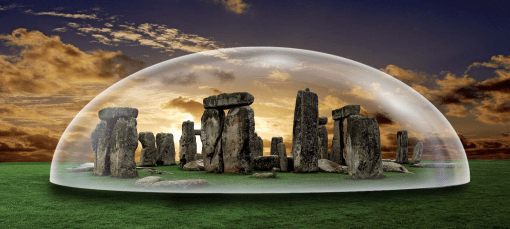
Stonehenge is one of the countries most beloved sites, the Neolithic monument becoming a UNESCO world heritage site in 1986. Although many measures have been taken since to protect the ancient stones, the current climate crisis is beginning to take its toll; increased carbon dioxide levels and acid rain have both contributed to the stones’ deterioration.  On top of that, vandalism and even the threat of terrorism has led English Heritage, in partnership with UNESCO, to seek drastic measures for the preservation of the prehistoric wonder:  namely covering the stones with a glass dome.

STONEHENGE GLASS DOME

Stonehenge Dome Architectural Illustration. Copyright Thor Design

The dome is the simplest way to preserve the monument, both protecting the stones from any external threat whilst allowing a nitrogen rich atmosphere to be maintained within the dome, preserving the delicate lichen which grows on the surface of the stones – slowing the rate of decay inexorably. An English Heritage representative excitingly described the project as an attempt to create “the world’s first climate-controlled stone circle”

Proposed Glass Specifications: UV resistant | Water resistant | Wind resistant |EN 1090- 1:2009+A1:2011 Compliant | Polyethylene 140 g/m2 

At this stage various firms are bidding for the project and their exact specifications
differ. An Exeter based architectural firm has proposed ‘a polycarbonate titan arch’, whilst another unnamed bidder has put forward a ‘louvre style pyramid’. The most likely option seems to be the idea put forward by the London based architectural engineering firm PCMR, who specify an ‘Igloo style dome’, designed with a PVC weatherproof cover. PCMR’s patented scratch resistant glass is reportedly ‘perfect’ for the project.

Sources at PCMR say the dome will take nothing away from the viewers experience whilst its “…magnifying properties would also make the stones look bigger from the outside as many tourists are disappointed by the size of the stones”.

However, with conservative estimates of the project getting into the millions, cheaper alternatives may have to be considered. Local councils have suggested more of a ‘gazebo’ style design or even a giant poly tunnel.

The plans have been labelled ‘project snowglobe’- and have summer Solstice organisers are excited by the technological prospects the project could bring to the celebrations. The dome allows for advanced lighting and sound systems to be installed; the Chemical Brothers are already rumoured to be interested in playing the maiden show and tickets could retail from upwards of £100.

Some plans even include adding additional features within the globe. One proposal plans to utilise the climate-controlled environment and plant an elegant orange grove, adding some continental beauty to Neolithic stones as well as the prospect of Wiltshire’s first orange juice vintage. Although the orange grove idea has been met with enthusiasm by residents, suggestions that the giant globe design could also be used for growing herbs has been called a waste of thyme.

However, the glass isn’t all rose tinted.  Representatives of the World Greenhouse Federation (WGF) have registered concerns as to the magnifying capabilities of the proposed dome, releasing a statement that nearby villages such as Amesbury and perhaps even parts of Salisbury could ignite if the sun was to shine on the globe from particular angles. Furthermore, local window cleaning firms have been fervently bidding for the job of cleaning the proposed dome, it being called the biggest job in the industry since the Shard. But things have turned nasty and there have been reports of threats and even of violent clashes between rival firms in the build up to the announcement. On top of that, Salisbury window company, Curt & Rod are disappointed local companies were not contacted and one preeminent Archaeologist claimed the greenhouse idea would be a costly and a real pain.

However, setbacks haven’t stopped the tide of incoming ideas. British Company Vision Express submitted plans for a grand ‘Crystal Palace’ design, however UNESCO dismissed the design and said, ‘we should have gone to Specsavers.’

Let’s hope whoever lands the contract, goes out there and absolutely smashes it.

The Stonehenge News Blog
Follow us on Twitter and Facebook for all the latest Stonehenge News
http://www.Stonehenge.News


STONEHENGE CLOSED FROM 19th MARCH DUE TO COVID-19

18 03 2020

English Heritage and The National Trust are both taking drastic action to limit the spread of Covid-19.

Stonehenge

In what would ordinarily be busy tourism season, visitor numbers have slumped due to the Covid-19 virus

Following the latest government recommendations, English Heritage have taken the decision to close Stonehenge and all their staffed historic sites from the end of Wednesday 18th March. They will be reviewing this and will keep you updated. Some sites may be opened earlier and they will let you know if this is the case. They will also need to cancel public events during this period. Visit the English Heritage website for more details.

In an email to its members, Kate Mavor the Chief Executive of English Heritage said:

“Following the latest government recommendations, we have taken the decision to close all our staffed historic sites from the end of Wednesday 18th March until 1st May. We will be reviewing this and will keep you updated. Some sites may be opened earlier and we will let you know if this is the case. We also need to cancel our public events during this period.

Free-to-enter sites will remain open to visitors. These sites have large open spaces in which visitors can maintain social distancing and they are often located in quieter spots away from crowds.

Our first priority is the health and wellbeing of all our Members, visitors, volunteers and staff, and we hope you can understand why we have taken this unprecedented step.

England’s past is full of stories of hope in the face of adversity, and of people coming together to overcome all kinds of challenges.

We look forward to welcoming you at our sites again soon, and we will let you know about our plans for reopening as soon as we are able. Until then, I hope that you and those close to you keep healthy and safe.”

The Stonehenge News Blog
Follow us on Twitter and Facebook for all the latest Stonehenge News
http://www.Stonehenge.News
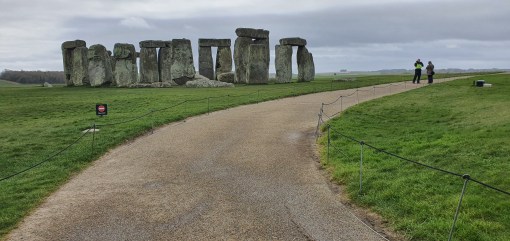


Stonehenge Ley Lines and Earth Energies – Why Does it Attract ‘New Agers’?

6 02 2020

Perhaps you thought you were drawn to Stonehenge because of its innate beauty and mystery, its petrous monoliths standing proud despite their antiquity,  their stark grey beauty upon the 5,000 year old barrow in sharp contrast to the green vibrancy of Wiltshire; an area of unparalleled Neolithic history? Or perhaps you were drawn by something even more ancient and mysterious – earth energies we no longer understand and the power of ley lines. Although little understood by modern science, many new age enthusiasts have found Stonehenge to be an epicentre of earth-energy. With as many as 14 ley lines converging on Stonehenge, I wanted to take a look at the history of ley lines, their potential significance and why they attract people to the world heritage site.

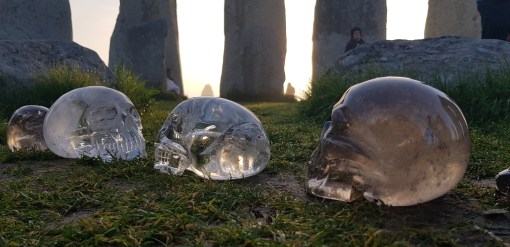
Stonehenge crystal skull gathering

Harnessing the Power of Stonehenge Ley Lines. It is believed Stonehenge like many other power places emits energy and the ancients knew the power of the circle to focus and harness this energy. Photo taken at a crystal skull gathering.

What are ley lines?
Many believe that areas of especial and arcane significance, namely standing stones, stone circles, barrows & mounds, hillforts and earthworks, pre-reformation churches, fords and prominent hill tops, not only possess an essential energy, but are connected by narrow channels of this energy  in straight lines or ley lines. The term was thought up by Alfred Watkins in his book The Old Straight Track in 1925 and has been adopted by ‘new agers’ to describe the paths of energy they sense between monuments. Some have even detected ley lines that stretch between continents, connecting ancient monuments across the globe like the Great pyramid at Giza and Stonehenge.

How are they Detected?
Many claim to sense or feel the earth energies, especially at site like Stonehenge. Ley Lines are traced by a process called ‘drowsing’, using a ‘drowsing  rod’ (or ‘divining rod’, ‘vining rod’ ‘witching rod’) – ‘A Y-shaped twig or rod, or two L-shaped ones’. If the rods cross or uncross naturally it means that you have traversed over a ley line, the rods reacting to its primordial energy.

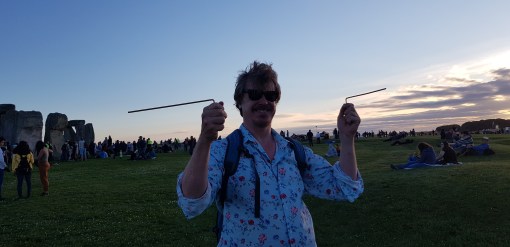
Dowsing the Stones at the Summer Solstice Celebrations. There is evidence that these straight tracks were used by the ancient peoples for spiritual purposes, and also for purposes such as trading and commerce. Photo of a tour guide demonstrating the ancient art divining.

Dowsing the Stones at the Summer Solstice Celebrations. There is evidence that these straight tracks were used by the ancient peoples for spiritual purposes, and also for purposes such as trading and commerce. Photo of a tour guide demonstrating the ancient art of divining.

Stonehenge – A Ley Line Hub?
As mentioned, for many Stonehenge is a cornucopia of earth energy and has a whole network of ley lines running through which connect it to the plethora of ancient wonders that surround it in Wiltshire and beyond. For example, one such ley line connects Stonehenge, Old Sarum, Salisbury Cathedral and Clearbury Ring. Although the churches were not built at the same time, the ley lines suggest, some would say, that intense earth energies were always present in these positions – causing later societies to build their monuments there. 

For many ‘new agers’, the ley line thoroughfare at Stonehenge marks it as vastly important centrepiece for ancient religions; ley lines perhaps helped worshippers on pilgrimages between sites of significance and even helped commerce and trade.

Why do the Ley Lines Attract New Agers?
Although the existence of ley lines isn’t easy to empirically prove, there is no doubt that some people, ‘new agers’,  feel a deep and elemental energy from the site of Stonehenge. The existence of the ley lines that link the ancient stones so directly to other monuments, seems to confirm what they know intrinsically that the site has always had an inborn significance and will continue to do so ad infinitum.

Our sponsors at Stonehenge Guided Tours offer private guided tours of Stonehenge.  Their guides will demonstrate dowsing and talk about Ley Lines and earth energies. Many of their tours allow inner circle access at sunrise or sunset.

Stonehenge and ley line relevant links:

The Stonehenge News Blog
Follow us on Twitter and Facebook for all the latest Stonehenge News


What are the issues surrounding the proposed Stonehenge Tunnel?

28 01 2020

The Stonehenge tunnel is a proposed tunnel or sunken dual carriageway drawn up by Highways England to upgrade the A303 road, which currently passes within 165 meters of Stonehenge. Beginning with the closure of the A344 road, the Stonehenge tunnel would complete the removal of traffic from around the site by redirecting the A303 under Stonehenge. The project aims on one hand to improve the landscape around the monument, freeing tourists from traffic that detracts from the ancient wonder of the site and on the other improving the safety on the A303, resulting in smoother travel for anyone travelling to and from the south-west of England.

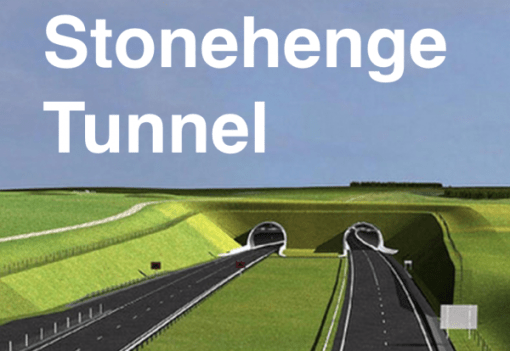
Stonehenge Tunnel

When it comes to the initiation and completion of this project there doesn’t seem to be much light at the end of the tunnel.

The proposed tunnel already has a long history of both bureaucratic and archaeological issues. Way back in 1995 was the first time it was proposed to build a tunnel for the A303 underneath the World Heritage Site. However, it did not take long for plans to be criticised for seemingly disregarding the archaeological significance of the Wessex landscape. It was suggested that the tunnel approach would cut in to a prehistoric track way between Stonehenge and a nearby river, resulting in the loss of archaeological remains which would harmfully affect the authenticity of the site and more than cancel out the benefits of the proposed tunnel. After years of bureaucratic wrangling the proposal was finally accepted by the Government on 12 January 2017. Today, the tunnel remains mired in controversy and the arguments against it haven’t changed much since the idea’s inception in 1995. The main issues with the proposal seem to be its staunch opposition from several parties, the complexity of the job and its price.

Opposition

The staunchest opposition to the tunnel is represented by the Stonehenge Alliance campaign group ‘a group of non-governmental organisations and individuals that seeks enhancements to the Stonehenge World Heritage Site’. This group includes environmentalists, archaeologists, residents and have recently repeated their belief that the proposed tunnel “would cause irreparable damage to the landscape”. They believe that the world heritage site of Stonehenge should be considered far wider than the barrow on which the stones stand:

The whole site, extending to beyond the horizons around the famous stones themselves, is c. 5.4 km across. All of it makes up a “huge ancient complex” that holds many secrets yet to be discovered. Yet the proposal is for a 2.9km (1.8 mile) tunnel… would result in at least 1.6 km of above-ground 21st-century road engineering…

All archaeology in the construction zones would be destroyed and the A303 would become the largest ever human intervention in an area fashioned and revered by over a hundred generations of our ancestors.

Cost

In 2018 Highways England proposed a cost of £1.6 billion and a planned start date in 2021 was indicated with the tunnel’s planned opening being in 2026. Unsurprisingly, this cost has created yet more opposition in both the commons and amongst the general public especially since the project was due to be privately funded, but now will be funded publicly since the government dismissed a ‘PFI financing model’ in the 2018 Budget.

Complexity

To protect the landscape, the plans are ambitiously complex. Not only is the job of sinking a dual carriageway a complex starting point but the project also proposes:

  • Four “green bridges” for wildlife to cross the dual carriageway.
  • Restoring areas of chalk grassland at Yarnbury Castle on Berwick Down through to the south of Parsonage Down national nature reserve.
  • 100ha of new chalk grassland to promote biodiversity in the area.
  • A viaduct at the River Till
  • Moving the junction between the A303 and A360 600m west

Adding a bureaucratic layer to the complexity is the fact that  all UK tier 1 contractors have refused to bid the job believing the current approach to be too complex with its shallow tunnel, complex geology, rabid opposition,  and huge public scrutiny because of both the cost and the environmental concerns.

Of course, all these issues are interlinked. The complexity of the job is a demanded by the opposition to protect the natural beauty of the area, but the complexity pushes up the price and then the price creates yet more opposition. It seems to be a vicious cycle. When it comes to the initiation and completion of this project there doesn’t seem to be much light at the end of the tunnel.

Stonehenge Tunnel Relevant Links:

The Knotty Problem of the A303 and Stonehenge. Stonehenge News Blog

Stonehenge Alliance calls for A303 tunnel to be scrapped in open letter to government. Salisbury Journal

Ministers do battle over £2billion Stonehenge tunnel. Daily Mail

Treasury pushes for £2bn Stonehenge tunnel to be axed. Financial Times

Reuniting the Stonehenge landscape and improving your journey. English Highways

Stonehenge and the A303 Joint Response. English Heritage

Stonehenge A303 Road Improvement Scheme. Historic England

A group of non-governmental organisations and individuals that seeks enhancements to the Stonehenge World Heritage Site. The Stonehenge Alliance

Stonehenge tunnel ‘at risk’ due to funding uncertainty. Construction News

The Stonehenge News Blog
Follow us on Twitter and Facebook for all the latest Stonehenge News


Audit Office says Stonehenge tunnel benefits ‘uncertain’

20 05 2019

There are “risks and uncertainty” over a road tunnel near Stonehenge and its benefits are “inherently uncertain”, a scrutiny body said. (BBC NEWS)

The government wants to build a tunnel past the monument as part of a £1.6bn plan to upgrade the A303.

However, the National Audit Office (NAO) estimates the likely cost as £1.9bn, and says it “must deliver value for taxpayers”.

Highways England says the route will cut congestion and boost the economy

Work is due to begin in 2021 with an expected opening date of 2026.

The NAO estimates the project will only deliver £1.15 in benefits for every £1 spent.

Auditor General Amyas Morse said: “The tunnel at Stonehenge is currently only just value for money by the department’s own business case.

“Based on experience, project costs tend to grow rather than fall, at least in the early years.

“It will take a very special effort by the department to protect public value up to completion.”

The NAO also warned the project poses “geological and archaeological risks”, and said Highways England must ensure it can “support the project throughout its life”.

The government wants to build the tunnel to hide the busy A303, but opponents claim it could destroy archaeological treasures and scar the landscape.

The International Council on Monuments and Sites (Icomos) described the plans as “severely flawed” while The Stonehenge Alliance – a campaign group which includes archaeologists and environmental campaigners – said the work threatened the area’s “fragile archaeology”.

Highways England said the “vital route” would cut congestion and boost the economy, and would “restore the tranquil environment and setting of the monument”.

The Department for Transport said the road upgrade would “improve connections” with the rest of the country.

“Stonehenge is a site of significant historical value – we have worked closely with heritage groups, including English Heritage and Historic England, to ensure it is protected both during the upgrade of the A303 and in the long-term.

“Across the South West, we are investing £2 billion to improve roads, on top of £133 million for Bristol, North Somerset and Gloucester to introduce the MetroBus rapid public transport.”

A public consultation into the scheme ended in April 2018.

Highways England submitted a development consent order to the Planning Inspectorate in November.

The agency has set a six-month timetable in order to examine the proposals.

RELEVANT LINKS:
Stonehenge tunnel benefits ‘uncertain’ says Audit Office BBC NEWS
National Audit Office questions value of Stonehenge tunnel  THE GUARDIAN
Benefits of Stonehenge road tunnel scheme `uncertain´DAILY MAIL
DfT’s cost benefit methodology puts Stonehenge tunnel at risk SCIENCE TELLS
National Audit Office reports on the A303 and Stonehenge Tunnel HIGHWAYS ENGLAND

The Stonehenge News Blog
Follow us on Twitter and Facebook for all the latest Stonehenge News

http://www.Stonehenge.News


Street Pastor Summer Solstice at Stonehenge Volunteer Call

2 05 2019

Street Pastor volunteers are once again being asked to patrol the summer solstice at Stonehenge.
This will be the 4th year in a row that Street pastors have cared, listened and helped at the event. The event will be taking place from Thursday the 20th of June until Friday the 21st of June. 

Stonehenge Solstice

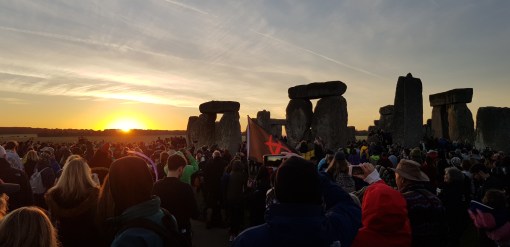
Stonehenge Summer Solstice Sunrise Celebrations


The event will be split into two shifts, with the 1st shift from 5pm until approx 2am (with a mandatory onsite briefing at 5:15pm) and the 2nd shift from 12am until approx 9am (with a mandatory onsite briefing at 12:15am), although please note these timings are approx and may change slightly.

Working in partnership with English Heritage they will provide parking onsite and a hot meal for all volunteers.
English Heritage appreciate what Street Pastors bring to the event, especially our calm and reassuring presence. We are currently limited to having 20 volunteers per shift so it is important that if you wish to reserve your place on the team or if you have queries you need to Contact the event coordinator, Michael Weeks at chippenham@streetpastors.org.uk for an application form.

Deadline for applications is Friday the 17th of May

Visit the Ascension Trust Facebook Page for more details

The Stonehenge News Blog
Follow us on Twitter and Facebook for all the latest Stonehenge News

http://www.Stonehenge.News


Get hands on with history at Stonehenge and help to move a 4-ton stone, similar to those used to build the stone circle. 12th – 16th April 2019

9 04 2019

MOVING AND RAISING A STONE: Friday 12th April – Tuesday 16th April 2019

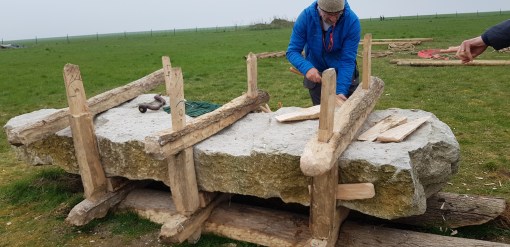
Get hands on with history at Stonehenge and help to move a 4-ton stone, similar to those used to build the stone circle.  Using a hand-built sledge, and under expert supervision, visitors can experience for themselves just what it might have felt like to be involved in building Stonehenge.

20190408_112819

Using a hand-built sledge, and under expert supervision, visitors can experience for themselves just what it might have felt like to be involved in building Stonehenge

The experiment will run twice a day and lasts for approximately 45 minutes. It involves pulling the 4-ton stone on a hand-built sledge across a range of surfaces and around some obstacles to understand whether rollers, halved timbers or grass provides the most efficient surface and whether a sledge allows greater control of the stone.

On the final day of the experiment, Tuesday 16th April, English Heritage will attempt to move and then raise the stone into an upright position using an a-frame (and a lot of muscle power)!

All visitors are welcome to join in however, it is not recommended for people with back, arm, shoulder or knee injuries or pregnant women. Children must be supervised at all times by an adult.

English Heritage is hosting a full programme of events over the Easter holidays, giving visitors the opportunity to explore an element of prehistory that most interests them. The events are designed for all ages and reveal that our prehistoric ancestors were organised and skilled craftsman, using sophisticated techniques to craft natural materials and fibres into tools and essential everyday items, as well as luxury objects such as jewellery and grave goods.

Visit the English Heritage website for details on this and other events happening over the Easter holidays

The Stonehenge News Blog
Follow us on Twitter and Facebook for all the latest Stonehenge News
http://www.Stonehenge.News


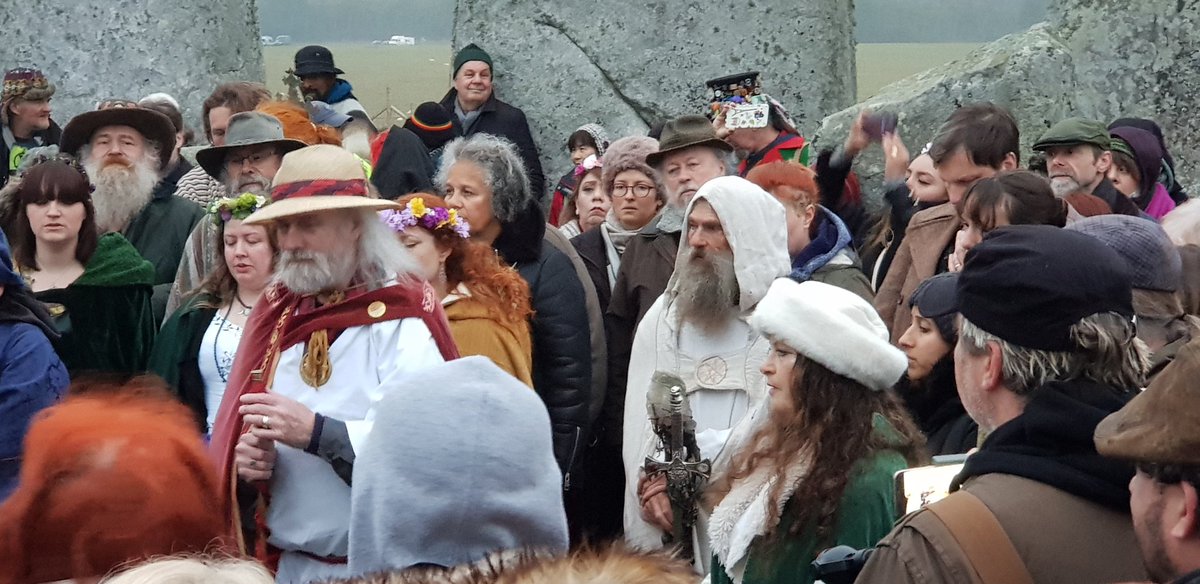
Hundreds of pagans and druids descend on Stonehenge to celebrate the 2019 Spring (Vernal) Equinox.

21 03 2019

Visitors headed to the famous 5,000-year-old stone circle in Wiltshire in the dark to ensure they got to see the sun rise. And they made the most of one of only four public annual events that allows people to get so close to the stones.


Big event: The equinox happens twice a year around March 20th and September 22nd, between the summer and winter solstices. On the equinox, day and night are nearly equal because the sun appears to rise before its centre is at the horizon

WHY CAN PAGANS AND DRUIDS GET SO CLOSE TO THE STONES FOR THE EQUINOX?

The famous Stonehenge circle is normally roped off to the public, but special access is granted four times a year.

This is only on the mornings of the summer solstice, winter solstice, spring equinox and autumn equinox.

English Heritage has ‘managed open access’, meaning the public can stand among the stones on these days.

Anyone can turn up on the day to get close to the stones, but people are asked not to touch or climb on them.

Organisers also have a ban on bringing glass bottles or pets onto the site and on playing amplified music.

Today Stonehenge was opened at 5.45am when it was deemed light enough to safely allow people into the field.

Visitors began to leave at 8.30am and then the area was opened to the paying public as normal at 9.30am

Follow us on Twitter and Facebook for all the latest Stonehenge news

The Stonehenge News Blog


Stonehenge feasters came from far and wide. New study unearths clues to Neolithic celebrations

15 03 2019

Archaeologists have unearthed evidence of the earliest large-scale celebrations in Britain – with people and animals travelling hundreds of miles for prehistoric feasting rituals.

20170923_065342

Autumn Equinox Celebrations

Four sites close to Stonehenge and Avebury, including Durrington Walls, Marden, Mount Pleasant and West Kennet Palisade Enclosures hosted feasts which drew people and animals from all over the country.

A study examining the bones of 131 pigs from four Late Neolithic complexes show that the animals came from as far away as Scotland, the North East of England and West Wales, as well as other sites in Britain.

Archaeologists have found people travelled from Scotland, Wales and North England to take part in feasts at Stonehenge.

Researchers believe that those attending the feasts may have wanted to contribute animals raised locally at their homes.

Before this study, the origins of the people who took part in the rituals and the extent of the journeys people would take, have been a mystery.

Stonehenge was ‘hub for Britain’s earliest mass parties’

Study lead Dr Richard Madgwick from the University of Cardiff said: “These gatherings could be seen as the first united cultural events of our island, with people from all corners of Britain descending on the areas around Stonehenge to feast on food that had been specially reared and transported from their homes.”

Dr Madgwick said finding pigs in the vicinity of the feasting sites would have been “relatively easy” making the fact they brought the animals long distances “arguably the most startling finding” as this would have required “a monumental effort”.

“This suggests that prescribed contributions were required and that rules dictated that offered pigs must be raised by the feasting participants, accompanying them on their journey, rather than being acquired locally,” he said.

Related Stonehenge Links:

Study of pig bones shows Stonehenge feasters came from far and wide – SKY NEWS
Stonehenge was ‘hub for Britain’s earliest mass parties’- BBC NEWS
Prehistoric feasts at Stonehenge drew people from across Britain to gather – SALISBURY JOURNAL
Stonehenge mystery UNRAVELLED: DAILY EXPRESS
Neolithic Britons travelled across country for regular mass national feasts 4,500 years ago, new research claims – THE INDEPENDENT
Stonehenge-era pig roasts united ancient Britain, scientists say – NATIONAL GEOGRAPHIC
Ancient Brits ‘travelled to Stonehenge for raves’ – THE EVENING STANDARD

The Stonehenge News Blog
Follow us on Twitter and Facebook for all the latest Stonehenge News
http://www.Stonehenge.News


Stonehenge Winter Solstice Open Access Arrangements 2018

1 12 2018

English Heritage will once again welcome people to Stonehenge to celebrate the Winter Solstice. Sunrise is just after 8am on Friday 22nd December and visitors will be able to access the monument as soon as it is light enough to do so safely. Please read the information below before planning your visit and visit the English Heritage website.  There will be a rare Full Moon on the Winter Solstice this year, the next occurrence will be in 2094

pendragon

Senior druid King Arthur Pendragon at Stonehenge. The winter solstice is considered more important than its summer counterpart as it marks the ‘re-birth’ of the sun

Access to Stonehenge for Winter Solstice is free and is subject to the Conditions of Entry. Please read these before deciding whether to attend.  Stonehenge is in a field on Salisbury Plain and the weather in December will be cold and wet.  Even if it isn’t raining, the ground will be wet from the dew and there may also be frost. Sensible footwear and warm, waterproof clothing is essential. Please note, parking charges apply.

DATE AND TIMES

Saturday 22nd December 2018

6am: Limited car parking opens

7.45am (approximately depending on light levels): Monument field opens

8.09am: Sunrise

10am: Monument field closes

CONDITIONS OF ENTRY

Stonehenge is an ancient prehistoric site which has been a place of worship and celebration at the time of Winter Solstice for thousands of years and is seen by many as a sacred site.

English Heritage is pleased to provide free Managed Open Access to Stonehenge for Winter Solstice and ask that if you are planning to join us for this peaceful and special occasion that you read these Conditions of Entry and the information provided on the following pages before deciding whether to come.

Admission to the Winter Solstice at Stonehenge is free of charge.

Please help us to create a peaceful occasion by taking personal responsibility and following the Conditions of Entry and guidelines.  We have a duty of care to ensure public safety and are responsible for the protection of Stonehenge and its surrounding Monuments.  If we are to ensure that future access is sustainable, it is essential that everyone observes and abides by these Conditions of Entry.

These Conditions of Entry are written to ensure enjoyment and public safety for everyone.  Contravention of any of these conditions may result in entry being refused or your removal from Stonehenge.  English Heritage reserves the right to refuse entry.

  • Stonehenge is a world renowned historic Monument and part of a World Heritage Site. It is seen by many who attend as a sacred place.  Please respect it and please respect each other.
  • Amplified Music is inappropriate and will not be permitted.
  • Drunken, disorderly, and anti-social behaviour will not be tolerated; ejection, by security staff and/or Police, without return, will be the outcome.
  • Children under the age of 16 must be accompanied by an adult.
  • Illegal drugs are still illegal at Stonehenge as they are anywhere else.  The police will be on site during the access period and will take immediate action against anyone breaking the law.
  • Glass is not allowed at the Monument as many people walk barefoot and, in addition, livestock and wildlife also graze in the area.  If you bring any glass items with you, they will be confiscated.
  • Do not climb or stand on any of the stones – this includes the stones that have fallen.  This is in the interest of personal safety, the protection of this special site and respect for those attending.  As well as putting the stones themselves at risk, climbing on them can damage the delicate lichens.
  • To help us reduce the amount of litter on site, leafleting or flyering is not allowed.
  • Camping, fires, Chinese lanterns, Fireworks, Candles, Tea-Lights or BBQs are NOT permitted at Stonehenge, in the parking areas, or anywhere in the surrounding National Trust land.
  • Do not bring drones or any type of remote-controlled aircraft to Stonehenge.  There is a No Fly Zone in place over Stonehenge during Winter Solstice which makes it a criminal offense to attempt to fly anything over the stones below a certain height. The No Fly Zone includes drones. If you attempt to fly a drone from anywhere on site, including the Solstice Car Park, you will be stopped and asked to leave.

For further information about Managed Open Access for Winter Solstice at Stonehenge, please call English Heritage Customer Services Solstice Hotline on 0370 333 1181.

PLANNING YOUR JOURNEY

Parking for Winter Solstice is very limited and we cannot guarantee that there will be space in the two Winter Solstice car parks. We strongly recommend car sharing or using public transport.

  • Travel by Bus – Salisbury Reds buses will be running from 6am from Salisbury via Amesbury.

    Organised Tours – If you are considering visiting Stonehenge for the Solstice celebrations you can join an organised tour.  Use a reputable tour operator who respect the conditions.  Stonehenge Guided Tours are the longest established company and offer guided tours and transport from London. Solstice Events offer small group Winter  Solstice Tours from Bath using local expert guides.

PARKING AND PARKING CHARGES

Limited parking is available in the Winter Solstice car parks, which will open at 6am on the 22 December.

Signs will direct you to the Solstice car parks – please ensure that you follow these.  If directed to parking away from the Stonehenge Visitor Centre, motorists will have access to Park & Ride transport to the Visitor Centre included in their parking charge.

We cannot guarantee entry to the car parks and recommend car sharing or coming by public transport as cars will be turned away when the car parks are full. Last year this happened at around 7am.  Please do not arrive early as there is no waiting on the roads in the area and you will be moved on.

  • £5 – General parking for cars, vans and live in vehicles
  • £2 – Motorbikes
  • £50 – Commercial minibuses (up to and including 16 seats)
  • £250 – Commercial coaches (17 seats and over). Commercial vehicles must pre-book via BookStonehenge@english-heritage.org.uk and terms and conditions apply.

Please note, car parking charges apply to all users of the Winter Solstice car parks, including Blue Badge holders, and members of English Heritage and National Trust.

The parking charge helps the charity cover the costs of providing additional staffing and lighting in the car parks and is designed to encourage people to car share or travel by bus.

Blue Badge parking

Parking for Blue Badge holders is available at the Stonehenge Visitor Centre Car Park. No pre-booking is required.  Visitors are asked to highlight their Blue Badge to stewards on arrival so that they can be directed to an appropriate parking space.

A shuttle will run from the Visitor Centre to the Monument and visitors with accessibility requirements will have priority.

COME PREPARED

  • Stonehenge is in a field on Salisbury Plain and the weather in December will be cold and wet. Even if it isn’t raining, the ground will be wet from the dew. There may also be frost. Sensible footwear and warm, waterproof clothing is essential.
  • There is at least a 30 minute walk in low light or darkness, from the Visitor Centre to Stonehenge itself.  You are strongly advised to wear strong, waterproof footwear, and to bring a torch with you.  A shuttle will run from the Visitor Centre to the Monument and visitors with accessibility requirements will hve priority.  All other visitors should be prepared to walk.
  • There are no catering facilities in the monument field; however the café at the visitor centre will be open for hot drinks and breakfast rolls from 6am.

Please visit the official English Heritage website for full details.

Relevant links:

Respecting the Stones.  Managed Open Access

Solstice at Stonehenge. From Past to Present.

English Heritage Conditions of Entry

The Salisbury Reds special solstice shuttle service

For traffic, weather and other updates on the morning of the winter solstice, Follow @St0nehenge @EH_Stonehenge @VisitStonehenge @HighwaysEngland @VisitWiltshire @DruidKingArthur @Wiltshirepolice for #WinterSolstice2018

If you are unable to visit Stonehenge on the Solstice you can watch our LIVE PERISCOPE STONEHENGE BROADCAST

The Stonehenge News Blog
Follow us on Twitter and Facebook for all the latest Stonehenge news and Winter Solstice updates.