Julian Richards has been researching the Stonehenge landscape for over 40 years – starting up on Coneybury Hill in the 1980s where he excavated the “Coneybury Anomaly”, a pit containing the remains of one event where early neolithic societies in the area met together to feast (see “A Meeting in the Forest”)
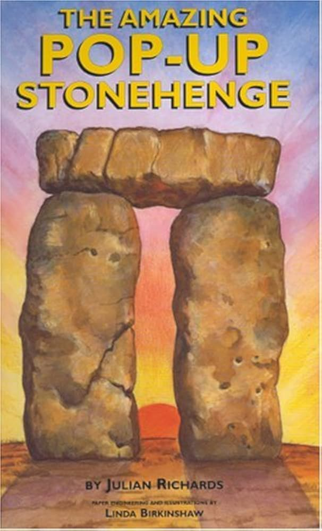
Julian’s epic Stonehenge Environs Project of the 1980s shifted the attention away from the big pile of rocks out to the wider landscape and was a landmark study that laid the ground for future research projects. He went on to author many books on Stonehenge (just Google them – but don’t miss “The Amazing Pop-up Book of Stonehenge”), including several editions of the official Stonehenge guidebook.
In common with many self-confessed Stonehenge geeks (myself included), the obsession of TV documentary producers making programmes about the monument to give them titles involving the words “Secrets of”, “Mysteries of” and “Revealed!” (with one or more exclamation points) is a source of frustration and annoyance.
No-one ever seemed to ever tell the actual story of Stonehenge – as far as it is known – without trying to push some new theory or other.
6 years ago, he decided to do something about that, and co-opted me, Luke Winter (experimental archaeologist, www.historicconcepts.co.uk), Tim Daw (long barrow builder, www.thelongbarrow.com) and Steve Shearn (videographer, www.instagram.com/stevieshearn) to help him.
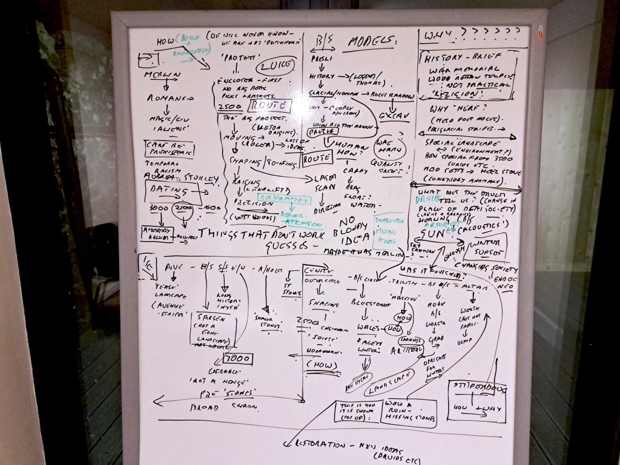
What started then as a mad whiteboard diagram of how you’d approach making the definitive Stonehenge documentary for people with an actual attention span (which notably included the words “No Bloody Idea!”), has turned into an Odyssey that has taken us from Wiltshire to the far west of Wales and the far north of Scotland.
After the pandemic, Stonehenge remained closed to visitors and this afforded a unique opportunity to undertake uninterrupted filming inside the circle itself without the usual time constraints of only having an hour before or after hours to grab the shots. Julian and Steve spent three days there creating the material that would form the basis of Episode One of “Stonehenge – Access All Areas”
Originally we anticipating making perhaps 3, hour-long, films which we’d try to get taken up by some TV channel or other. Turned out, no-one wanted a Stonehenge documentary that didn’t include the words “Secrets of”… plus some manufactured jeopardy and endless summarisation of what you’d just watched before the advert break.
Since we didn’t have the inclination to create atmospheric pull-shots of a windswept presenter wandering away along the clifftops, we changed tack. Let’s just put it out on YouTube.
Three films became five, then seven.
As we delved deeper and deeper into the story of what we know about Stonehenge, what we can’t know, how we know what we think we know and why we can’t ever know much of what we don’t the project kept growing and growing.
Seven films became eight, then ten.
Interviews with people like Mike Parker Pearson, Mike Allen, Piers and Vince Gaffney, as well as Ronald Hutton, King Arthur and others added to the ever-increasing mass of content.
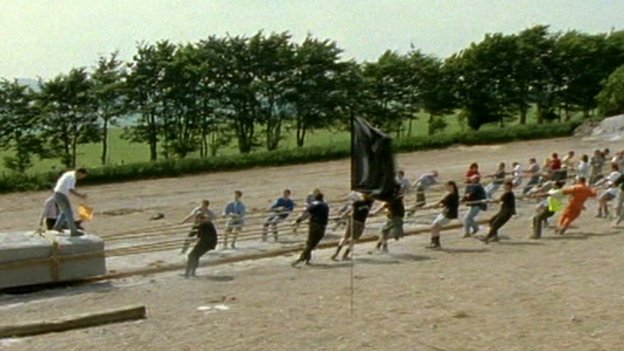
Crazy ideas like “Why don’t we actually try to dig a hole with an antler pick and carry out the chalk in a basket”, on reflection, probably could have done with a more stringent Risk Assessment.
Episode One went up on Julian’s YouTube Archaemedia channel (www.youtube.com/@julianrichards1483) on May 3rd 2026 and we held our breath – was there, in truth, an audience for long-form video that didn’t try to sensationalise this topic?
Belinda’s comment below it gave us hope – she wrote “I have learned more from this one video than I have gleaned from 75 years of watching other programs.”
Nearly 5000 subscribers have now signed up and the eleventh film (yes, because once we got to ten films it just HAD to go up to 11) went live on 20th Sept 2026.
It doesn’t end here – we have far more material “in the can” than is shown in these 7 hours of programmes, but the over-arching series is now complete and Julian’s dream of making the definitive Stonehenge documentary is a reality.
If you’ve not given it a look, please do.
And stay tuned, because along with Shed Talks (us geeks getting right into the weeds of some of the knottier areas for discussion) and putting out the interviews we simply didn’t have the space to include, there’s other stuff to come once Julian and Steve have recovered from their Herculean editing marathon.
Article by guest blogger and local Stonehenge historian Simon Banton
Want to visit Stonehenge with an expert tour guide and hear all about the latest discoveries? THE STONEHENGE TOUR COMPANY
Ticking Stonehenge off your bucket list. Stonehenge News Blog
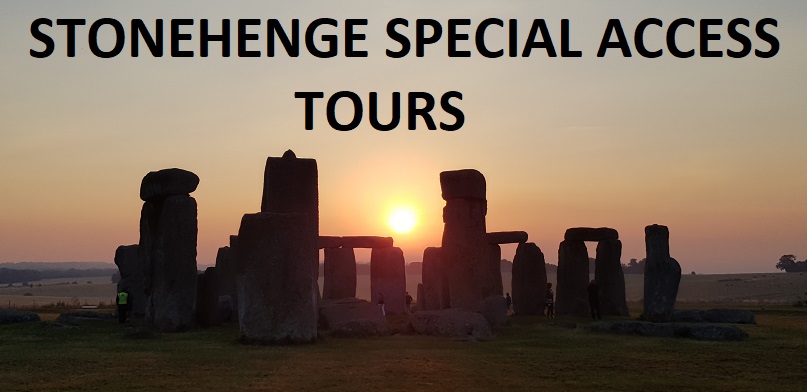
Stonehenge Special Access Experience. Stonehenge News Blog
The Stonehenge Travel Company can meet you in Salisbury or the railway station and conduct small group private guided tours at very reasonable prices. They also include Durrington Walls and Woodhenge.
Stonehenge Guided Tours offer small group and private guided tours, including the Stonehenge VIP access experience with departures from London, Bath, Salisbury and Southampton.
The Stonehenge News Blog
Follow us on Twitter and Facebook for all the latest Stonehenge news and stories





 StonehengeNews
 travelstonehenge