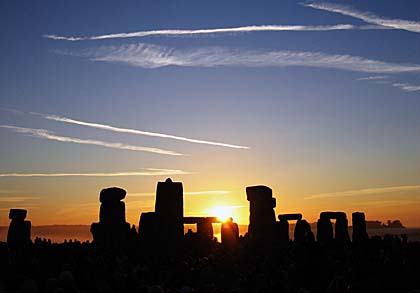
Stonehenge Autumn Equinox (Mabon) Managed Open Access Arrangements: 23rd September 2023

20 09 2023

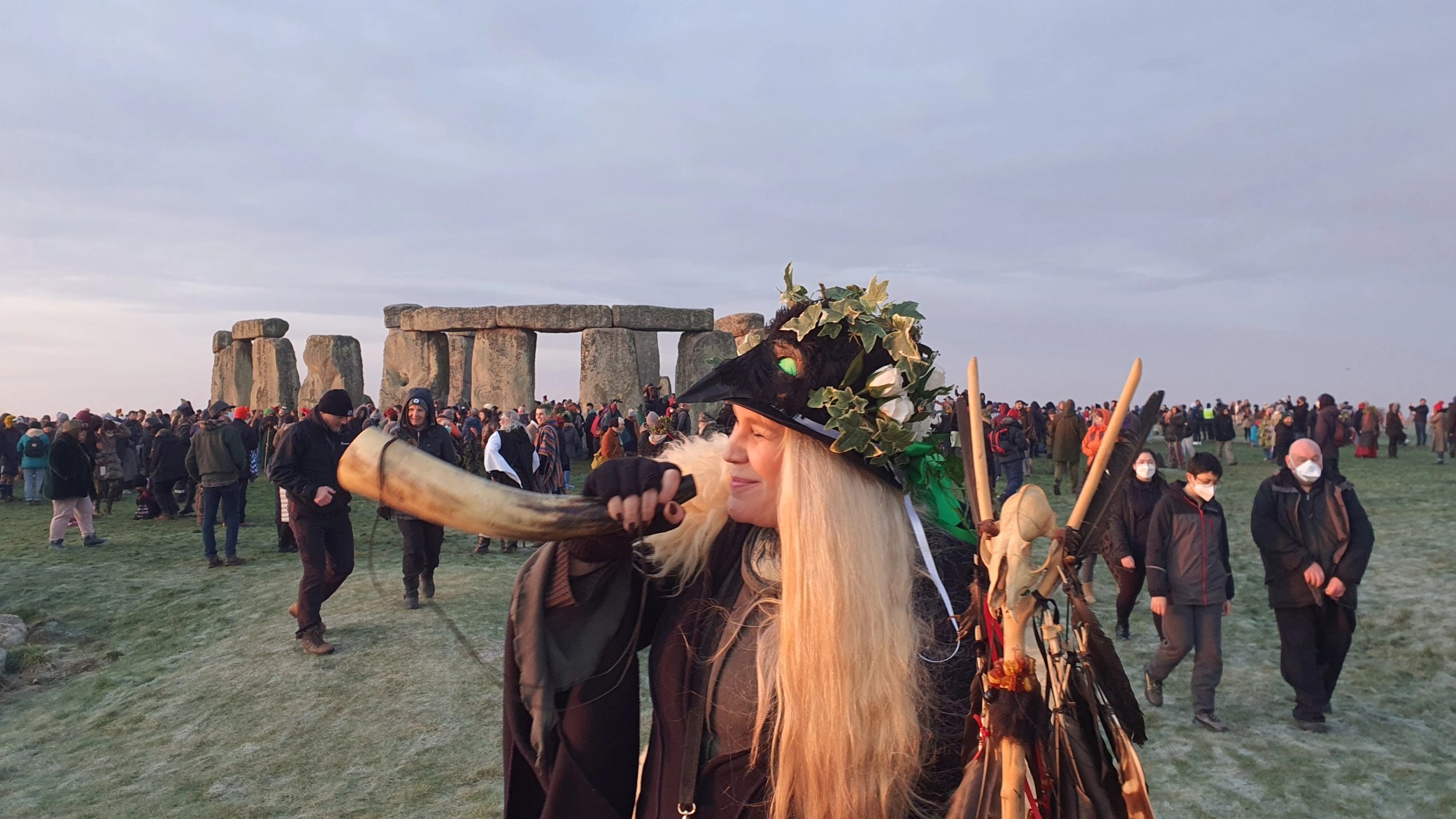
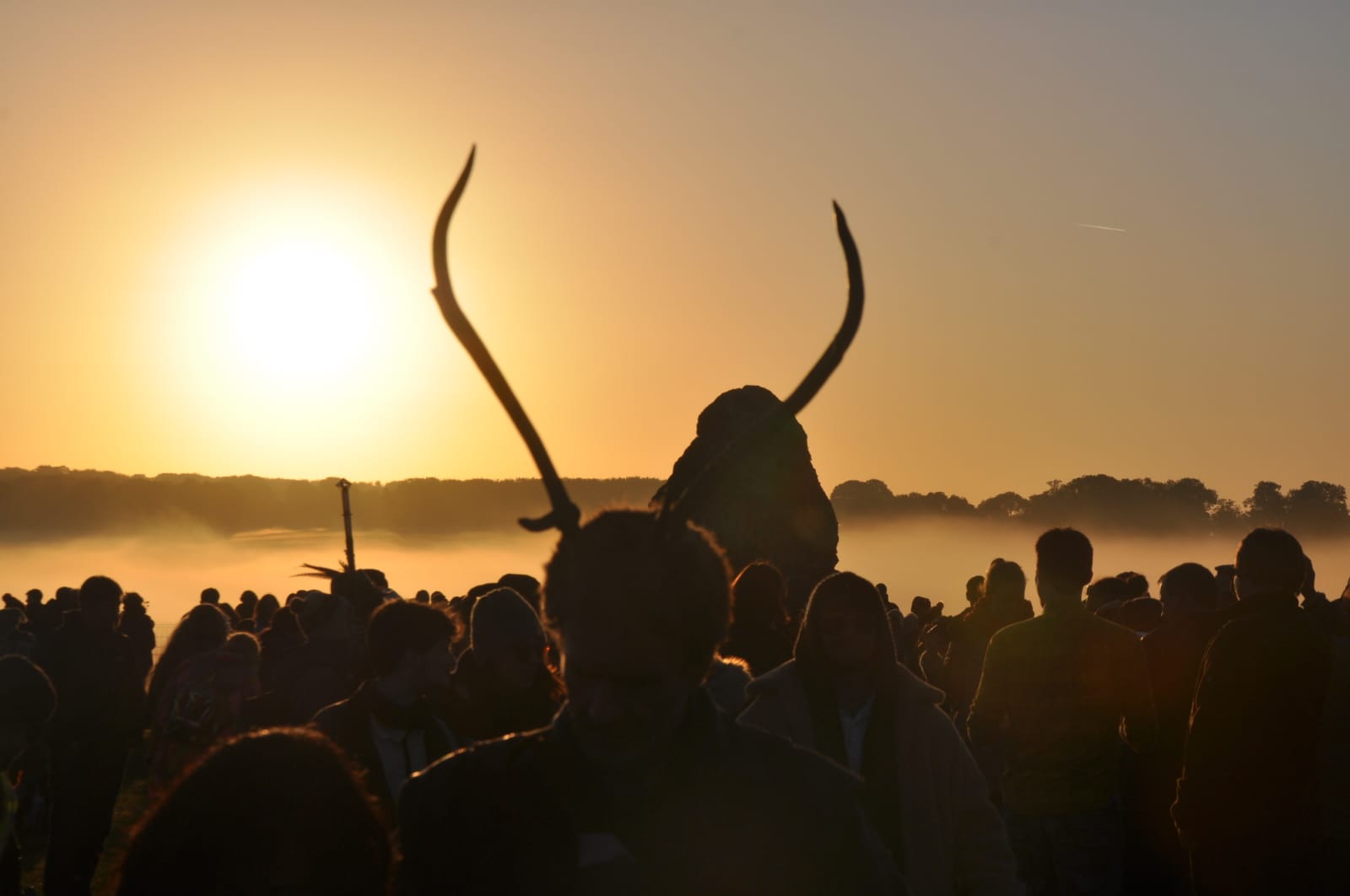
The Autumn Equinox (Mabon) is rapidly approaching as the last days of summer slowly come to an end. English Heritage are expected to offer a short period of access, from first light or safe enough to enter the monument field (approximately 06.15am until 08:30am) on the 23rd September.
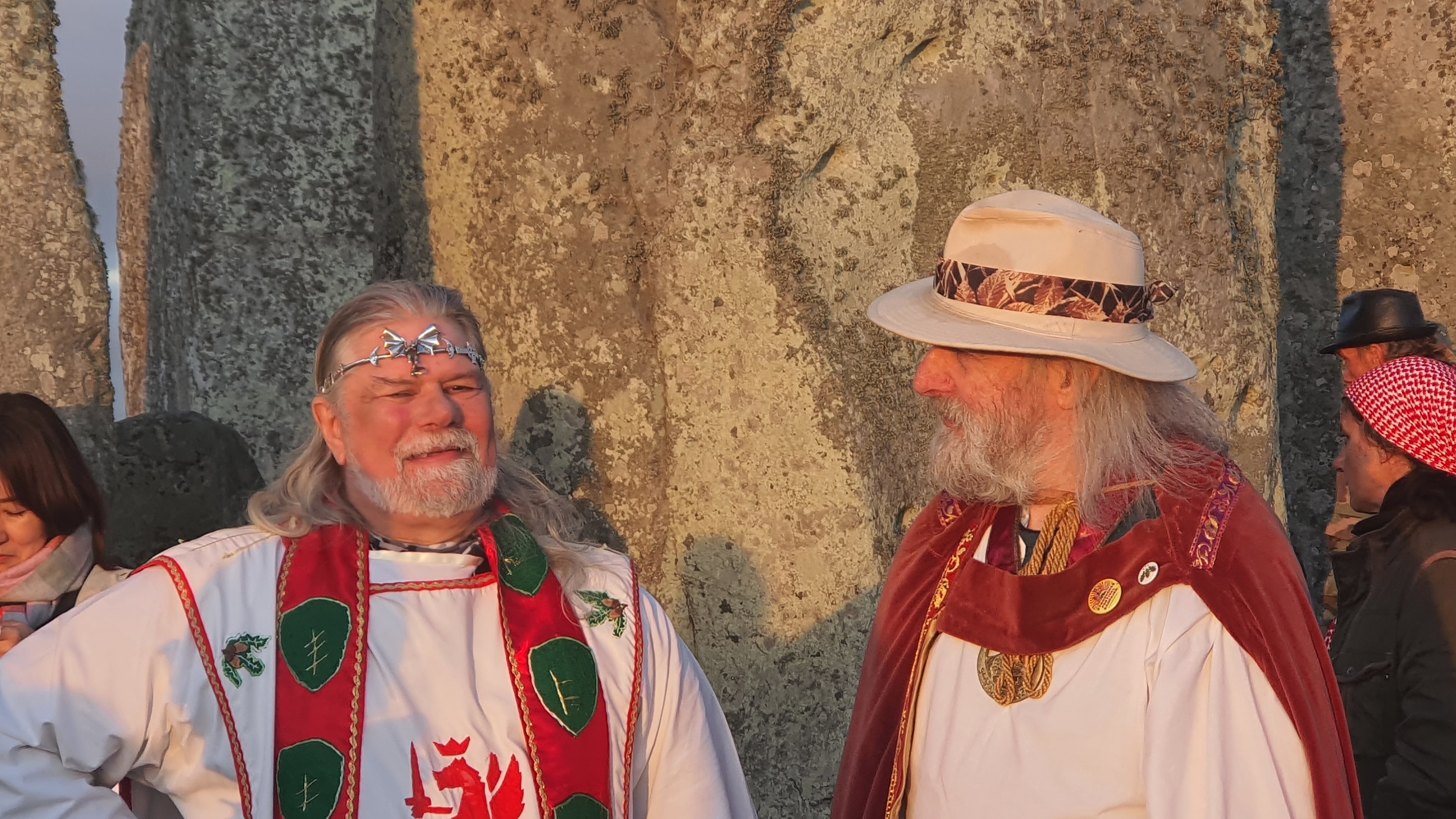
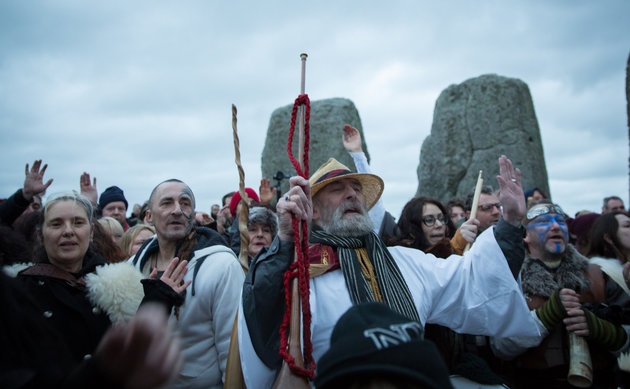
The Autumn Equinox is one of the rare occasions that English Heritage opens up the stones for public access. Equinox open access attracts fewer people than the Solstices – in the several hundreds rather than tens of thousands – and there are modern Druid ceremonies which are held in the circle around dawn, so if you prefer a quieter experience then attending the Autumn Equinox is a good choice.

English Heritage has facilitated Managed Open Access (MOA) to Stonehenge for the celebration of the summer solstice, winter solstice, spring and autumn equinox (spring and autumn equinox fall outside of this contract). English Heritage provides access to the stone circle and the monument field, free of charge to anyone who wishes to attend, but asks all those attending to comply with conditions of entry to ensure the safety of all visitors and to protect the monument. To safely provide MOA across the year, English Heritage works in partnership with Wiltshire Police and Wiltshire Council and engages experienced event managers and health and safety experts.

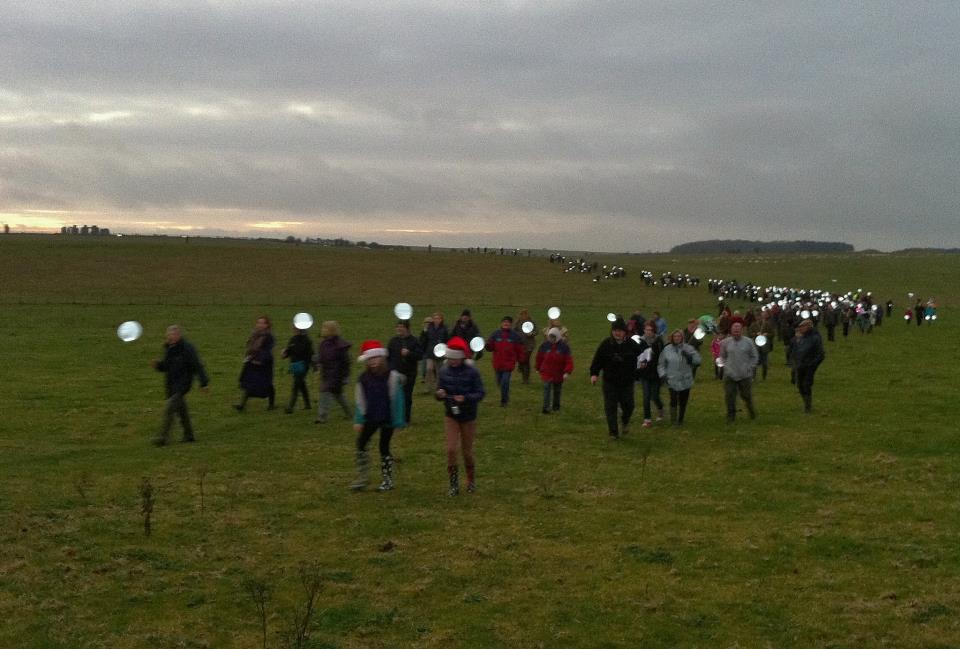
Please note: there is a 25-30 minute walk (approximately 1½ miles or 2km) from the Stonehenge Visitor Centre to Stonehenge. This walk is across National Trust downland which is uneven: sensible footwear and a torch are advisable.

Mabon is a harvest festival, the second of three, that encourages pagans to “reap what they sow,” both literally and figuratively. It is the time when night and day stand equal in duration; thus is it a time to express gratitude, complete projects and honor a moment of balance.

What is the Equinox?
The equinox is when day and night are actually the same length. It happens several days before the spring equinox, and a few days after the autumn one.

The reason day and night are only almost equal on the equinox is because the sun looks like a disk in the sky, so the top half rises above the horizon before the centre

The Earth’s atmosphere also refracts the sunlight, so it seems to rise before its centre reaches the horizon. This causes the sun to provide more daylight than many people might expect, offering 12 hours and 10 minutes on the equinox.

The word ‘equinox’ itself actually mean ‘equal’ (equi) and ‘night’ (nox).

Respecting the Stones
Stonehenge is protected under the Ancient Monuments and Archaeological Areas Act and you must adhere to the regulations outlined in the act or face criminal prosecution. No person may touch, lean against, stand on or climb the stones, or disturb the ground in any wayView the conditions of entry and respect the Stones

Equinox Links:
Stonehenge Autumn Equinox 2023: When is the ceremony? Salisbury Journal
Stonehenge Autumn Equinox Conditions – English Heritage
What is the autumnal equinox? Royal Museums Greenwich
What is the Autumn equinox? Here’s what you need to know. National Geographic
Stonehenge and the Druids – Who are the Druids? Stonehenge News Blog
Stonehenge Autumn Equinox Tours – Stonehenge Guided Tours
The Stonehenge Pilgrims – Stonehenge News Blog
Stonehenge Guided Tours – The Local Tour Experts

Follow us on Twitter and Facebook for Equinox updates and Stonehenge news
The Stonehenge News Blog


Stonehenge Winter Solstice Managed Open Access Arrangements 2022

24 11 2022

Winter Solstice at Stonehenge will take place on Thursday 22nd December 2022. English Heritage are expected to offer a short period of access, from first light or safe enough to enter the monument field (approximately 07.45am until 10.00am)

At Winter Solstice, access to the stones themselves is free and without restriction, and visitors can get up close with the marvel that is Stonehenge. After it passes, the days will begin to get longer and longer until June when the Summer Solstice takes place.

The Winter Solstice, marking the shortest day and longest night of the year approaches, drawing neo-druid and neo-pagan pilgrims to Stonehenge to watch the sunrise through the sacred site.

This is a twice-yearly pilgrimage for many visitors, including Druids and Pagans, with the Summer Solstice in June being the largest of the two events. The festivals which have celebrated the passing of the seasons and new beginnings throughout human history, offer a unique opportunity to visit Stonehenge with no barriers and draws crowds every year.

Whatever the weather, it could be cold and wet. So please dress accordingly.  Shuttle buses will be running to take you from the car parks to the stones. However, you may choose to walk from the Visitor Centre up to the stones. This takes 30 minutes on average and will be in low-light. So a torch would be essential.

Why is open access on the 22nd December?
Many people believe the Winter Solstice always falls on December 21, but because of a mismatch between the calendar and solar year, the December solstice is not fixed to a specific date.

This year, English Heritage says based on advice from the druid and pagan communities, the Solstice will be marked at Stonehenge on the morning of Thursday December 22 December – the first sunrise following the astronomical solstice which occurs after sunset the previous day.

Access to Stonehenge for Winter Solstice is is subject to the Conditions of Entry. Please read these before deciding whether to attend.  Stonehenge is in a field on Salisbury Plain and the weather in December will be cold and wet.  Even if it isn’t raining, the ground will be wet from the dew and there may also be frost. Sensible footwear and warm, waterproof clothing is essential. Please note, parking charges apply.

Can I watch the sunrise on a live stream?
English Heritage will be live streaming the sunrise on the morning of 22 December for free on their digital channels. Visit the official Stonehenge or English Heritage Facebook page, or the English Heritage YouTube channel. Please beware of fake/scam Facebook pages, events and groups that might have been set up.

Getting there:

Extremely limited parking available and strongly recommend using public transport to avoid disappointment. Salisbury Reds are operating a dedicated Solstice service from Salisbury train station via Amesbury. Please check their website for details. We also have a dedicated car sharing website which is available here.

Limited parking is available in the Winter Solstice car parks, which will open at 6am on the 22nd December 2022. Please follow the brown tourist route signage to Stonehenge. There will be signs to direct you to the car parks.  Please do not arrive early as there is no waiting on roads in the area and you will be moved on.

There will be a parking charge for all vehicles in the official car parks for Winter Solstice 2022 – £5 for cars and minibuses up to 16 seats and £2 for motorbikes. This can be paid by cash or card.

If you are considering visiting Stonehenge for the Winter Solstice celebrations and do not have tour own transport, you may want to consider joining an organised tour with transport from London, Bath or Salisbury and save all the hassle and expense. Stonehenge Guided Tours offer such tours and are the longest established company. Solstice Events offer small group tours from Bath and The Stonehenge Tour Company use only local expert guides and have a great reputation.

Stonehenge Winter Solstice Links:
Winter Solstice at Stonehenge 2022: Everything you need to know – WILTSHIRE LIVE
Stonehenge Winter Solstice Tours from London – STONEHENGE GUIDED TOURS
English Heritage Conditions of Entry – ENGLISH HERITAGE
When is the shortest day of the year — date of winter solstice and what it means – DAILY MIRROR
The Rebirth of the Sun: the Winter Solstice at Stonehenge – STONEHENGE NEWS BLOG
Winter Solstice: Wild tales of slaughtered bulls, human sacrifice and much merriment – THE SCOTSMAN
The Rebirth of the Sun: the Winter Solstice at Stonehenge – STONEHENGE NEWS BLOG
Winter solstice: Why do pagans celebrate the shortest day of the year? THE TELEGRAPH
The Sun Stones: The Story of the Winter Solstice at Stonehenge – STONEHENGE NEWS BLOG
Solstice at Stonehenge. From Past to Present. – STONEHENGE NEWS BLOG
What has Stonehenge got to do with the winter solstice? – METRO NEWS
Stonehenge Winter Solstice Tours from Bath – SOLSTICE TOURS U.K
Celebrate Winter Solstice at Stonehenge – HOLIDAY EXTRAS
Solstice and Equinox Experience Tours – SOLSTICE EVENTS UK
The Stonehenge Solstice Pilgrims – STONEHENGE NEWS BLOG
Stonehenge, the Winter Solstice, and the Druids – INTERESTRING ENGINEERING
Respecting the Stones.  Managed Open Access –STONEHENGE NEWS BLOG

The Stonehenge News Blog
Follow us on Twitter and Facebook for all the latest Stonehenge News and Winter Solstice updates.


Thousands of people gathered to greet the sun as it rose over Stonehenge for the summer solstice.

23 06 2019

About 10,000 people gathered at the Stonehenge to greet the start of the longest day of the year, according to Wiltshire Police. The celebrations at Stonehenge came as people descended on sites across the UK to celebrate the first day of summer.

This slideshow requires JavaScript.

Kate Logan, from English Heritage, said: “There was a lovely, friendly atmosphere, the sun shone and the dawn was greeted with loud cheers.”  For the first time, people from around the world were also able to join in from the comfort of their homes as English Heritage launched a live feed from a camera set up close to the stones.

The crowds encountered a chilly morning accompanied by clear skies as the sun rose at 4.52am. 

On the summer solstice, the sun rises behind the Heel Stone, the ancient entrance to the Stone Circle, and rays of sunlight are channelled into the centre of the monument.

Summer solstice takes place as one of the Earth’s poles has its maximum tilt toward the sun and the sun reaches its highest position in the sky, ensuring the longest period of daylight in the year.

It is believed that solstices have been celebrated at Stonehenge for thousands of years.

Follow us on Twitter and Facebook for all the latest Stonehenge news and stories.
The Stonehenge News Blog
http://www.Stonehenge.News


RELEVANT LINKS:
Evening Standard
BBC
TIME MAGAZINE
MSN


Why Thousands Of Pagans Gather At Stonehenge For The Winter Solstice

17 12 2016

The prehistoric site holds spiritual significance for many Pagans and Druids.

While some are buying presents and trimming their tree for Christmas, a very different kind of spiritual celebration gets underway every year at Stonehenge. It’s the winter solstice, also known as Yule in some Pagan circles, and the occasion draws thousands of Pagans, Druids, spiritual seekers and tourists to the prehistoric site for a reverent and ecstatic ceremony.

solstice-inner

The sun peeks through clouds during a winter solstice ceremony at the ancient neolithic monument of Stonehenge near on December, 2015. MATT CARDY VIA GETTY IMAGES

The December solstice marks the longest night and shortest day of the year in the Northern Hemisphere, and this year it falls on Wednesday, December 21 at 5:44 EST.

In ancient Pagan traditions, the winter solstice was a time to honor the cycles of life and death and celebrate the sun’s rebirth as the days would slowly begin to lengthen in the months leading into spring. Many modern practitioners of Pagan and earth-centered spiritual traditions observe the holiday, and at Stonehenge, the celebration is particularly special.

Stonehenge, which celebrates its 30th year as a World Heritage site this year, is believed to be roughly 4,500 years old. Its significance as a link to British prehistory has drawn countless visitors over the years who come to gaze upon what’s considered to be the most architecturally advanced, prehistoric stone circle on the globe.

Apart from its architectural significance, Stonehenge holds a place of sacred importance to many. Much of its history is still shrouded in mystery, though one thing that’s sure is that it was built upon a landscape that had long been used for religious purposes. The stones that make up the massive circle are thought to have been collected from distant places, some as far as 150 miles away, and brought to this particular location. They were then erected using sophisticated, interlocking joints ― but how exactly the builders accomplished these feats is unclear.

It’s also unclear what exact purpose the site served to those who built it. English Heritage, a UK-based charity, notes that speculations on Stonehenge’s original function include “a coronation place for Danish kings, a Druid temple, an astronomical computer for predicting eclipses and solar events, a place where ancestors were worshipped or a cult centre for healing.”

rolo-solstice

Rollo Maughfling, Archdruid of Stonehenge & Britain, conducts a winter solstice ceremony at Stonehenge on December 22, 2015 in Wiltshire, England. MATT CARDY VIA GETTY IMAGES

Whatever its intended purpose, Stonehenge remains a place of wonder for thousands who visit the awe-inspiring structure every year. And its significance is especially potent at the winter solstice.

“One of the most important and well-known features of Stonehenge is its alignment on the midwinter sunset-midsummer sunrise solstitial axis,” a spokesman for England Heritage told BBC. “The midwinter sun sets between the two upright stones of the great trilithon.”

In other words, on the two annual solstices ― summer and winter ― the sun respectively rises and sets in perfect alignment with the site’s massive stones.

To witness the astronomical event, visitors typically arrive early in the morning on the day of the solstice to watch the sunrise and stay through to the sunset. Local Druids host a ceremony during the day, as revelers and tourists alike bask in Stonehenge’s ancient atmosphere.

“What we’re really here for is to celebrate the fact that the cycle of the world turns, and from now on the days get longer and it’s the return of the sun,” Druid leader and activist King Arthur Pendragon told BBC at the Stonehenge winter solstice celebration in 2014. “It’s a time of change and hope is renewed ― the same message really from a pagan perspective as from a Christian perspective. That’s what this season is all about ― a message of hope.”

Article source: Antonia Blumberg  Associate Religion Editor, The Huffington Post

Stonehenge Winter Solstice Open Access Arrangements

Please visit the official English Heritage website for full details.

Solstice Events are offering their usual  Stonehenge Winter Solstice guided tour from London and Bath.


The Stonehenge News Blog
Follow us on Twitter and Facebook for all the latest Stonehenge news and Winter Solstice updates.  Watch the live Winter Solstice broadcast on Periscope


Amesbury to Stonehenge Solstice Lantern Parade 2016

30 11 2016

The annual lantern parade is back again this year on the 20th December 2016 starting at the Amesbury History Centre 4:45pm.

As usual the route will take the procession through the beautiful grounds of the Amesbury Abbey where we will stop for mince pies and mulled wine before making our way to the ancient spring where the solstice lantern will be waiting for us and our resident druid Frank Somners will perform a service.

amesburylantern-1

Amesbury Lantern Procession along the original “Avenue”

The fading solstice light at Stonehenge is taken and put into the solstice lantern which is kept alight all night to light the darkest night and then taken back to the stones the next morning to extinguish. This is a tradition that started a few years ago and has grown in popularity year on year.

Come and join us and our ancestors in celebrating the solstice. Lanterns are available from the History Centre for £3.50 each and there will be an afternoon of lantern decorating in the centre on the 20th until 3:30pm

Visit their website for more details

The Stonehenge News Blog

Follow us on Twitter and Facebook  and for all the latest Stonehenge news and Winter Solstice updates.


Stonehenge Summer Solstice 2016 Open Access

24 04 2016

English Heritage is pleased to welcome people to Stonehenge to celebrate this year’s Summer Solstice. This is the 17th year that English Heritage has provided access to the stones and are looking forward to a peaceful celebration.

MONDAY 20th JUNE
Access to monument field – 7pm
Sunset – 9:26pm
TUESDAY 21st JUNE
Sunrise – 4:52am
Monument field closes – 8am
solstice-astronomy
The Solstice Car Park opens at 7pm on 20th June with last admissions at 6am (or when full, if earlier) on 21st June. The car park will close at 12 noon on 21st June.Alcohol is not permitted in the monument field during Summer Solstice.Admission to the Summer Solstice at Stonehenge is free of charge, however please note that parking fees in the official car park apply – cars: £15, commercial coaches and minibuses: £50, motorcycles: £5.

Conditions of Entry
 Amplified music is not permitted in or around the monument field.
 No alcohol is allowed within the monument or the monument field. Alcohol will be
confiscated or individuals in possession of alcohol will be asked to leave.
 Drunken, disorderly and anti-social behaviour will not be tolerated and anybody
considered to be behaving in this way will be asked to leave by security staff and/or
the police and will not be allowed back in.
 Illegal drugs are illegal at Stonehenge as they are anywhere else. The police will be
on site and will take action against anyone breaking the law.
 Please don’t bring any glass in to the monument field. Many people walk barefoot
and livestock and wildlife also graze in the area. Any glass items will be confiscated.
 Please do not climb or stand on any of the stones – this includes the stones that
have fallen. This is for your own safety and also to protect this special site and
respect those around you.
 Please be aware that in order to keep everybody safe, random searching may be
undertaken. Any items found that might be used in an illegal or offensive manner will
be confiscated.
 Camping equipment, fires, Chinese lanterns, fireworks, candles, tea-lights or BBQs
are not permitted at Stonehenge, in the Solstice Car Park, or anywhere in the
surrounding National Trust land.
 In the interests of safety, sleeping bags or duvets are not allowed on site. Sleeping
on the ground creates a trip hazard and can interfere with the work of emergency
services and hinder their ability to help people. Small ground sheets and blankets are
permitted for people to sit on but please do not bring chairs etc (unless used as a
recognised disability aid). Shooting-sticks are not permitted.
 To help us reduce the amount of litter on site, leafleting or flyering is not allowed.
 Drones or any type of remote-controlled flying devices are not permitted at
Stonehenge or in any of the Solstice Car Parks.

Admission to Stonehenge

• Admission to the Summer Solstice at Stonehenge is free of charge.
• There is a charge for parking – cars: £15, commercial coaches and minibuses: £50,
motorcycles: £5.
• Public transport is available from Salisbury.
• Access to the car park will start at 7pm
• Children under 16 must be accompanied by a responsible adult.
Please remember that you will not be allowed access to the Monument with the following
items:
– Alcohol
– Drugs
– Large bags or rucksacks (or similar items)
– Sleeping bags or duvets
– Flaming torches, Chinese lanterns, fireworks or candles etc.
– Dogs (with the exception of registered assistance dogs), pets or other creatures
– Camping equipment, including foldaway chairs, garden furniture, shooting-sticks
– BBQs or gas cylinders
– Glass bottles or other glass objects
– Trolleys, wheel barrows or any other form of porterage
– Pushchairs or buggies that are not exclusively used for a child
– Large “golf-style” umbrellas, gazebos
– Drones or any kind of remote control aircraft

From :http://www.english-heritage.org.uk/visit/places/stonehenge/plan-your-visit/summer-solstice/

“We strongly advise anyone planning to come to Stonehenge for solstice to leave their cars at home and travel by public transport. Salisbury is easily accessible by train and the local Salisbury Reds bus company will be running a special service from Salisbury to Stonehenge through Saturday night and into the next day. Solstice Events are offering their usual transport from Bath and Stonehenge guided tours are offering their small group tour from London.

Follow  @St0nehenge @EH_Stonehenge @HighwaysEngland and @Wiltshirepolice for #summersolstice updates on the night.

If you are unable to visit Stonehenge on the Solstice you can watch our LIVE PERISCOPE BROADCAST


The Stonehenge News Blog