Megalithic Poems – The stones are great

22 09 2010

The stones are great
And magic power they have
Men that are sick
Fare to that stone
And they wash that stone
And with that water bathe away their sickness


Indeed the stones are great, and certainly have had the power to capture the imagination of poets and artists through the centuries.

On the 21 September 2005, the heritage journal  started the anthology of Megalithic Poems, a colleague warned that we’d be hard pressed to find even half a dozen on the theme of the megalithic structures and prehistoric sites of Britain, Ireland and the European continent. Five years on and there are now some 300 poems on the blog, and an equal number of drawings, paintings, prints or photographs to accompany them.

The poems stretch over a period of some eight hundred years; from Laymon’s poem, Brut (above), of 1215 describing Stonehenge, to poems written only a few months ago. What does this tell us? Well, perhaps that not only have these structures inspired poets like Blake and Wordsworth (as well as artists such as Constable and Turner) down through the ages but also that this marvellous, mysterious megalithic heritage of ours continues to inspire us even today.

At a time when so much of our heritage is at risk through development and mismanagement (Tara in Ireland for example, even Stonehenge and Avebury) perhaps these poems, and the images that accompany them, will continue to inspire those who would take time out from busy lives to visit and ponder upon this often overlooked aspect of our heritage. Not only that, hopefully this anthology will also act as a warning that these places, built by our forefathers millennia ago, are in constant need of our care and attention lest, after thousands of years having, “…brav’d the continual assaults of weather…” (William Stukeley) they are finally lost for all time through the greed, ignorance and insensitivity of the 21st century.

Since September 2005 we’ve added many more poems and images on the megalithic theme in the hope that they’ll become a useful resource for those interested in the poetry, art and the history of our megalithic past – none of which would appear on the blog without the remarkable efforts and creativity of those who have written about megaliths or portrayed them in their work – not forgetting of course those who originally conceived and built these amazing structures!  To everyone, a very big thank you. We hope you will find as much pleasure browsing through the anthology as we have taken in compiling it.

Merlin @ Stonehenge
The Stonehenge Stone Circle Website


Stonehenge Ale – A Taste for Crop Circles

16 09 2010

A subject very close to my heart, Beer!

THE Stonehenge Ales brewery at Netheravon has come up with a new beer in honour of the many crop patterns that appear in Wiltshire fields each summer.

Stig and Anna Marie Andersen, who took over the independent brewery from its founder Tony Bunce in 1993, are fascinated by the weird and wonderful shapes that show up each year.

Mrs Andersen is studying fine art at Winchester College and said that, regardless of whether the crop patterns were man-made or not, they had become an art form in their own right, attracting tourists from all over the world.

The new beer reaches local pubs this week and is called Glyph, a name chosen by Mrs Andersen as it represents the hieroglyphs the crop patterns might or might not be although their messages so far remain undeciphered.

The logo on the Glyph beermats shows the pictogram dubbed Led Zeppelin that appeared in fields at Alton Barnes 20 years ago.

“Now, 20 years on, the new beer Glyph, manifests itself at Stonehenge Ales in celebration of that formation,” said Mrs Andersen.

The new light amber beer, which has an ABV of 4.5 per cent, also has one mystical ingredient – aromatic Chinook hops grown on the tribal lands in America of the Chinook tribe.

From each batch of Glyph produced the brewery will be making a donation to the Crop Circle Connector web site, which Mrs Andersen said was an independent site respected worldwide.

You guessed it, not alot of Stonehenge news this month,  Watch this space………………

There are still a number of crop circles in maize in the vicinty of Stonehenge and Avebury.  I met up with a local guide working for HisTOURies  UK yesterday who showed me some incredible images.  Yes we did have a pint of ‘Croppies’ together in the Alton Barnes Barge Inn.  (Crop Circle central)

Merlin @ Stonehenge
The Stonehenge Stone Circle Website


Clonehenge – Bonsai style.

5 09 2010

Bonsai Stonehenge–Yes, It’s Salisbury But It Isn’t Plain!

Photo courtesy of Salisbury Newspapers www.journalphotos.co.uk

No one does a Stonehenge like the locals! Above we see bonsai hengers (wouldn’t Bonsai Hengers be a great name for a rock band?!) and gardener/artists Tony Oswin & Wilf Colston with their prize-winning creation at the Salisbury Community Show recently–a charming Stonehenge model landscaped with bonsai trees and a bit of whimsy.

We have to say this is one of the finest and prettiest Stonehenge models we have seen! True, the landscape around it is not true-to-life, but we see no reason English Heritage shouldn’t run out and make it so. It would cost a great deal less than not putting in the tunnel and not putting in the new visitor centre has cost them so far!

The photo above, used courtesy of the Salisbury Bonsai Society, to which the gentlemen belong, shows the thought that must have been put into the Stonehenge section of the display. The stones themselves were cast in molds to make blocks all the same size and then hand carved with a knife and painted. No buying a little Stonehenge kit and quickly standing the plastic pieces in a circle for these fellows!* Care has been taken to make the assemblage resemble the original. We’re impressed!

Score: 8 druids! (New readers–no we do not believe druids built Stonehenge. Our scoring is a bit of a joke.) That’s very good for a small model. Mr. Oswin and Mr. Colson now have Clonehenge score bragging rights. That and £3 will get you a cup of coffee at Starbucks. Unless prices have gone up!

We want to thank Matt Penny, aka @salisbury_matt , friend of the blog, Salisbury and Stonehenge enthusiast, and perpetrator of the Salisbury and Stonehenge website for spotting this Stonehenge replica and sending us a link. We count on you, alert readers! Here’s a deal: you keep sending us Stonehenge replicas and we’ll keep wasting your time with our drivel! We promise.

Merlin @ Stonehenge
Stonehenge Stone Circle News Website and Blog


Secret Sounds of Stonehenge

30 08 2010

Trevor Cox reveals how the acoustic footprint of the world’s most famous prehistoric monument was measured 

 Echoes of the past: The sites and sounds of prehistory Just after sunrise on a misty spring morning last year, my fellow acoustician at the University of Salford, Bruno Fazenda, and Rupert Till of the University of Huddersfield, UK, could be found wandering around Stonehenge popping balloons. This was not some bizarre pagan ritual. It was a serious attempt to capture the “impulse response” of the ancient southern English stone circle, and with it perhaps start to determine how Stonehenge might have sounded to our ancestors. An impulse response characterises all the paths taken by the sound between its source – in this case a popping balloon – and a microphone positioned a few metres away. It is simply a plot of the sound pressure at the microphone in the seconds after the pop. The first, strongest peak on the plot represents the sound that travelled directly from the source to the microphone. Later, smaller peaks indicate the arrival of reflections off the stones. The recording and plot shows the impulse response Bruno and Rupert measured with a microphone positioned at the centre of Stonehenge and a popping balloon at the edge of the circle. This impulse response represents an acoustic fingerprint of the stones. Back in the lab, it can be used to create a virtual rendition of any piece of music or speech as it would sound within the stone circle. All that is needed is an “anechoic” recording of the raw music or speech – a recording made in a reflection-free environment such as the open air or, better, a specialist anechoic chamber such as we have at Salford. The anechoic recording and the impulse response can then be combined using a mathematical operation called convolution. We’ve done with with a recording of drumming: here is the anechoic original, and here it is convolved with the measured impulse response of Stonehenge. The difference is easily appreciable: there is more reverberation or ringing to the drumming sound thanks to the reflections off the stones. What’s more, the tonal balance of the sound is entirely different: it has become much deeper, as if the treble has been turned down.

Replica henge The popping of a balloon is not the standard or best way to measure an impulse response, but more sophisticated equipment was not allowed at Stonehenge. At a full-size replica of the monument at Maryhill, Washington state, however, Bruno and Rupert were able to use powerful loudspeakers and special test signals to get more accurate results. Maryhill also has the advantage that it is complete, whereas some of the stones of Stonehenge have fallen or disappeared over the years. That makes a noticeable difference to the drum sounds convolved with Maryhill’s impulse response: the more complete stone circle makes the sound echo for longer, with the extended reverberation being most noticeable after the last drum. Over many decades, a sophisticated understanding of how to interpret impulse responses has been built up. For example, we now know how features within the impulse response, such as the time it takes for reverberations to die away, relate to peoples’ perceptions of the nature of the sound. The hope is that by applying that expertise to ancient monuments such as Stonehenge, we can better appreciate their acoustical effects on our ancestors –and perhaps begin to answer the question whether these effects were the product of accident or design.

Sounding stones

We also know that our ancestors appreciated their ability to exploit their environment to make sound early on. The discovery of three flutes in 2009 in a cave in south-west Germany, the best preserved of them made from a vulture’s wing bone and containing five finger holes, pushes the origins of music back to the middle Palaeolithic era, 40,000 years ago.

Lithophones or rock gongs- stones that create a tone when hit- are found around the world. A cave at Fieux à Miers in the Midi-Pyrénées region of the south of France contains a 2-metre-tall feature which resonates like a gong when struck. Recalcified fractures on the lithophone indicating where it was struck can be dated back to the upper Palaeolithic, around 20,000 years ago (Oxford Journal of Archaeology, vol 4, p 31). Outdoor examples include Kupgal Hill in Karnataka state, southern India, where an outcrop of dolerite boulders emits loud ringing tones when hit with granite stones. Nicole Boivin of the University of Oxford suggests that shamans might have used the rock gongs during formal rituals. Dating the wear marks in boulders is impossible, but the presence of Neolithic rock art indicates that the site was used for many thousands of years (Antiquity, vol 78, p 38).

Imagery such as cave paintings, markings or etchings also provides tantalising clues to how prehistoric humans might have exploited their surroundings to make sound. Iegor Reznikoff of Nanterre University, Paris, has examined the caves of Rouffignac in the south of France and showed that paintings are located where the most interesting sound effects are heard. Devereux, in his book Stone Age Soundtracks, cites numerous other examples around the globe of seemingly premeditated placing of petroglyphs or pictographs, including sites where art is painted on concave rock walls that give distinct echoes.

Merlin @ Stonehenge
The Stonehenge Stone Circle Website


Stonehenge Tourism update

19 08 2010

“So what are we going to do about it?” Here’s one answer, David
Delighted to see that David Cameron is such a strong supporter of tourism. We have a long way to go to break the cultural snobbery that separates the staples of the UK industry – catering, accommodation, tour guides, campsites, postcards, guidebooks, souvenirs and so on – from middle class respectability. It’s better than it was, but sometimes it seems that the shame of engagement can only be tempered by calling it art, and littering the countryside with half-baked works whose cost might have been more creatively and productively deployed by addressing the needs of tourists instead of interfering with their experiences.

Anyway, as Cameron said in his speech yesterday, “Tourism is a fiercely competitive market, requiring skills, talent, enterprise and a government that backs Britain”. This was set in the context of the 2012 Olympics – as was the new visitor centre for Stonehenge when proposed by the last government.

What with Snowdonia, Devon and Cornwall, the Lake District, Norfolk, the Inner Hebrides, the Highlands of Scotland, the canals of Staffordshire, Oban, Llandudno, Torquay, Deal, “our historic monuments, our castles, country houses, churches, theatres and festivals… beautiful beaches… national parks, our hundreds of historic gardens and national network of waterways… our museums [including the British Museum, the National Gallery and the [sic] Tate Modern]… Glyndebourne and Glastonbury… the Bristol Old Vic and the Edinburgh Fringe. The Bodleian Library and the Hay literary festival. Ascot and the Millennium Stadium; Nelson’s column and the Olympic Park’s Orbit” – phew! – Cameron had no time to mention Stonehenge.

But I’m sure he had Stonehenge in mind, not least when he praised John Penrose, minister for tourism and heritage for the skills he brings to the job. After the Treasury took such pleasure in June in claiming to cancel the Stonehenge project – an action in fact not within its powers – it was sensitive of Cameron to avoid mentioning the stones. So let’s say it for him.

• Stonehenge is one of the world’s most recognisable icons of cultural history (“When I asked what England meant to them, the answers went: Stonehenge, Harry Potter, fish and chips…”: Blake Morrison talking to Japanese schoolgirls in 2002).

• Stonehenge is one of the UK’s most popular and must-see tourist destinations, attracting around a million visitors a year, of whom 50–60% are international.

• Stonehenge’s present state has long been agreed by parliament and international commentators to be a disgrace.

• An imaginative, creative plan to transform visitors’ experiences – from access and parking to a new museum, toilets and cafe – and Stonehenge itself, by removing roads nearby, has planning consent and is ready to start.

• This plan was designed to be cheap and cost-effective by the previous government, after it dropped a more ambitious scheme, and ready in time for the 2012 Olympics. But now that the Treasury has withdrawn its promise of £10m, it needs new sources of funding to happen.

• Stonehenge is Stonehenge. Picture Post put it on its cover in 1947 to lead an issue devoted to the post-war crisis. Stonehenge could now be a symbol for us and the world, of reflection, regeneration and creativity in the face of  the modern crisis.

“Can we seize the opportunity”, said Cameron, “of this great decade of sport – and especially the Olympics – to deliver a lasting tourism legacy for the whole country and not just here in London?”

Stonehenge awaits.  Mike Pitts

Merlin @ Stonehenge
The Stonehenge Stone Circle Website


Tonight at Stonehenge will be best night in five years to view spectacular Perseids meteor shower

12 08 2010

Stonehenge Landscape in Wiltshire – Step back in time and discover the ancient skies of Salisbury Plain’s chalk downlands, home to the impressive prehistoric stone monument
It is also one of the most awe-inspiring sights in the heavens that you can view from your own back garden.

And now scientists say that star-gazers are in for a treat this week with clear skies expected to give fantastic views of the spectacular Perseids meteor shower.

Experts say that with the moon in its ‘new’ phase and clear skies this week could mean that it’s the best year since 2007 to catch the spectacular show.

The annual Perseids meteor shower ) at Friars Crag, Derwentwater, Keswick, Cumbria in 2008. Astronomers predict this year will be the best display yetThe annual Perseids meteor shower ) at Friars Crag, Derwentwater, Keswick, Cumbria in 2008. Astronomers predict this year will be the best display yet
The phenomenon, which happens each summer as the Earth’s orbit takes it through debris scattered by the tail of Comet Swift-Tuttle is expected to peak on Thursday night.

Amateur astronomers were left disappointed last year after clouds ruined the expected view.

The Taurids are named after the constellation Taurus, because their paths can be traced from that area of sky.

On the night of the 12 August the new moon’s thin crescent will have set in the early evening, leaving a dark sky for the meteor shower, promising a stunning show of shooting stars.

For the best views, star gazers are advised to escape the city lights and head out to the big open and dark skies of the countryside where the stars and meteors will be at their brightest.

SEVEN BEST PLACES IN UK FOR SEEING THE PERSEIDS

Black Down in Sussex – Get closer to the stars on the highest point in the South Downs, just over a mile from the town of Haslemere

Teign Valley in Devon – Discover the stars at this Trust property within Dartmoor National Park and close to Castle Drogo

Penbryn Beach in Wales – Beautiful, unspoilt mile-long beach on the Ceredigion coast in west Wales, great for a bit of star gazing and a late night paddle

Stonehenge Landscape in Wiltshire – Step back in time and discover the ancient skies of Salisbury Plain’s chalk downlands, home to the impressive prehistoric stone monument

Wicken Fen National Nature Reserve in Cambridgeshire – Close to historic Ely, the wild landscape of the National Trust’s oldest nature reserve offers dark skies and a wealth of nocturnal wildlife to listen out for

Mam Tor in Derbyshire – Escape the bright city lights of Sheffield and experience the peace and tranquillity of Mam Tor’s dark skies in the Peak District

Friar’s Crag in Cumbria – Surrounded by the breathtakingly beautiful scenery of the Lake District, Friar’s Crag in Keswick juts out into the spectacular lake of Derwentwater

The Met Office is predicting that the clearest skies on Thursday night are likely to be in southern and western parts of England and Wales.

Nasa scientists also claim that this ‘promises to be one of the best displays of the year.’

‘If forecasters are correct, the shower should produce a peak display of at least 80 meteors per hour,’ they say.

Jo Burgon, Head of Access and Recreation at the National Trust, said: ‘Seeing the stars in  their full splendour, shining bright in the sky above you, is one of the unofficial wonders of the natural world. 

‘The intrusive glow of street lighting or a bright moon can be detrimental to a good meteor experience.

‘But with a good weather forecast, this year’s Perseids display could be a cracker, and not one to be missed.’

Some of the locations highlighted in the National Trust guide include the dramatic landscape around the world famous Stonehenge in Wiltshire and Mam Tor in the Peak District, high above Sheffield and only a short distance from the city of steel.

Jo Burgon, added: ‘Its worth spending the time to find the perfect spot to gaze up at the stars; as once you’re there looking into the night sky it will take your breath away.

‘And the best thing is that it won’t cost you a penny and this star time will always stay with you as one of those experiences that money can’t buy.

Emily Winterburn, author of The Stargazer’s Guide, said: ‘The Perseids are a great meteor shower to watch. 

‘The nights aren’t too cold and for once, thanks to the moon, the summer nights are dark enough to make even the dimmer meteors visible to the naked eye.’ 
As usualy Histouries UK Tours will be operating guided tours of Stonehenge and Avebury tonight, I joined them last year and it was awesome!

Merlin @ Stonehenge
The Stonehenge Stone Circle Website


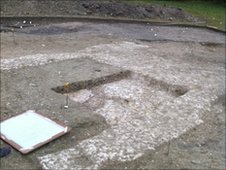
‘Fantastic’ dig ends at Marden Henge in Wiltshire

9 08 2010

A 4,500 year-old dwelling was uncovered at the dig
Excavation work has finally come to an end at prehistoric site, Marden Henge near Devizes.

It was the first investigation of the site since 1969.

Marden Henge no longer has any standing stones and is said to be one of Britain’s least understood ancient sites.

The dig, which began six weeks ago, uncovered all manner of neolithic treasures including a 4,500-year-old dwelling as well as pottery, flint and bones.

Archaeologist Jim Leary from English Heritage said the findings were very significant.

“The level of preservation is just phenomenal,” he said.

“We don’t have a comparison in England. We could never have imagined we would come across this.”

The level of preservation is just phenomenal. We don’t have a comparison in England. We could never have imagined we would come across this

Jim Leary, English Heritage
The world’s media has descended on the site throughout the duration of the excavation work.

Jim said: “It’s fantastic and I think it really shows how people are engaged with their heritage and their land. It’s really important at this time that archaeology can engage people and give something back.

“As archaeologists, we have to let people know what we’ve found. We’re doing this for the public, we’re telling them all about it, and that’s why archaeology is so important.”

Fellow English Heritage archaeologist, Paddy O’Hara said of the building they uncovered: “It’s just unparalleled. I’ve never seen anything like it at all apart from Skara Brae in the Orkneys. The preservation of this building is just superb.

“I was here about a fortnight ago and I was, quite frankly, sort of sceptical. People were saying ‘oh, maybe there’s a building here’, but I really wasn’t convinced.

“Just walking up here now, the thought that I could have missed this would have been heartbreaking, as it’s just a fantastic bit of archaeology.

“It’s really, utterly fabulous.”  HisTOURies UK – Tour Guide

Merlin @ Stonehnege
The Stonehenge Stone Circle Website


Stonehenge Comedy

27 07 2010

I did promise a few laughs along the way…..
Hope you like this classic Eddie Izzard comedy sketch of Stonehenge (18+)

Merlin @ Stonehenge
The Stonehenge Stone Circle Website


Stonehenge twin – ‘Timberhenge’ – discovered with radar imaging

27 07 2010

Stonehenge wasn’t the only mammoth circle in southern England 5,000 years ago. Using new radar imaging equipment, scientists have identified what was once a nearby circle of huge timbers.

Stonehenge, the mysterious circle of mammoth stone pillars in the middle of the English countryside, now has a slightly smaller twin.

//

Chart: Wooden ‘sister’ of Stonehenge discovered

Graphic News


//

Scientist have discovered a second henge formation that once existed nearby made from huge timbers.

And there could be many more henge-type circles yet to be found in the vicinity, says archeologist Vince Gaffney of the University of Birmingham, which is leading an expedition of the site along with the Ludwig Boltzmann Institute of Austria.

“We didn’t expect to find another henge. There’s always been some presumption that the stones existed in splendid isolation,” Professor Gaffney says.

On July 16, just two weeks into their four-year project, Gaffney’s team discovered ‘Timberhenge,’ a 25-meter (82-foot) diameter, circular series of holes that were once filled with 24 huge wooden poles. It sits about 900 meters away from Stonehenge in southern England.

“Stonehenge isn’t the only henge monument in the area. There are several in the immediate vicinity,” says Dr. Gaffney, reached by phone today from Stonehenge.

‘Henge’ refers to a circular ditch with an external bank from the Neolithic period.

Archaeology without a shovel

Notably, not a bit of earth was dug up to make the discovery.

Gaffney’s ground-mapping project uses radar-imaging equipment, which is placed a wheels and pulled over the fields surrounding Stonehenge. His team plans to scan a 14-square-kilometer (nearly 9 mile) area at a cost of $500,000 to $1 million.

“We will not dig anything. The technologies we use will allow us to look at volumes of soil,” he says.

The new Timberhenge appears built on the same orientation as Stonehenge, with entrances to the northeast and southwest. Archaeologists say it was a worshipping site and burial ground, but Gaffney says the precise role of the structures remains unclear: Was it for commoners or tribal leaders, worshippers or religious leaders?

The radar-imaging project will provide a map of the area’s structures and a clearer idea of its size and functions.

Scientists have repeatedly unearthed new finds at Stonehenge.

In October 2009, the Stonehenge Riverside Project uncovered a 10-meter (33-foot) diameter stone circle of bluestones, brought from the Preseli mountains of Wales, 150 miles away, and dubbed ‘Bluestonehenge.’ The stones, now missing, once marked the end of an avenue that leads from the River Avon to Stonehenge, a nearly 2-mile-long processional route constructed at the end of the Stone Age.

Another Woodhenge

Nor is this the first wooden henge found in the area. Two miles northeast of Stonehenge sits the so-called ‘Woodhenge,’ a six-ringed circle of 168 timber holes identified in 1925. Another timber circle nearby was identified in 1966.

But Mike Parker Pearson of the University of Sheffield, director of The Stonehenge Riverside Project, says it’s premature to describe this latest find as another “Woodhenge.”

“No one has any idea if these were circles of posts, stones or just pits. Nor do we know what date they are other than broadly 3000-1500 BC. They are both great finds but we know too little about them as yet (without excavation) to say how they will change our understanding,” he says via email. “As we found last year with Bluestonehenge, there is still much to be found around Stonehenge.”

Gaffney agrees that much remains unknown.

“Despite the fact that this is probably the most studied landscapes in the world…we know nothing about it,” says Gaffney. “Having said that, we felt we needed to know much more about what was happening between the monuments to know how it’s organized.”

On Thursday, however, southern England’s summer rains had delayed further scans of the area, and sent Gaffney running for shelter in a car.

“It’s raining heavily, so we’re not doing anything at the moment,” he told the Monitor. “It’s a British summer: what do you expect?”

Merlin @ Stonehenge
The Stonehenge Stone Circle Website


How significant is the ‘new henge’?

27 07 2010

Stonehenge (Image: AFP) What does the new finding reveal about the famous world heritage site?

A major survey of the Stonehenge landscape started last week, and today we learn that archaeologists have found another henge.

This is a three-year project, so by 2013 there could be quite a list of new discoveries.

 Mike Pitts, editor of British Archaeology magazine

I am quite sure something else of at least equal interest will emerge before the three years are up”

Is this real? Do we know as little about the famous world heritage site as this seems to imply? Or is it another hyped science story that will vanish with the dawn?

 Let’s start with the new henge. Yes, it is a significant find, and my archaeological colleagues are already e-mailing each other with tempered excitement.

 The first thing to ask is, is it a henge? It might well be, but without excavation we cannot know – and it all depends what you mean by “henge”.

 Technically, a henge is a roughly circular space enclosed by an earthwork, distinguished by a ditch lying within a bank (rather than the other way around, which would make it a fort).

 However, that definition actually excludes Stonehenge from the class, and the word has come to be used loosely to describe any circular ritual site in Britain dating from the late Neolithic or copper age (3,000-2,000BC).

 A few of these had standing stones, but more common were rings of oak posts, sometimes several inside each other on a very large scale. It is this type of site that Vince Gaffney is claiming to have found.

 He might well be right. The geophysics plot seems to show a circle of some 24 postholes within two arcs of 10 or so large pits.

 These pits might have themselves held large posts. They might indeed have held megaliths (nearby “Bluehenge”, a 10m-diameter circle of 25 stone pits, was unexpectedly discovered by excavation only last year).

 But they might just be very big pits: there is a henge in Dorchester, Dorset, known as Maumbury Rings, that fits that description.

Artist's impression of a structure discovered by archaeologists studying the land surrounding Stonehenge (Image: University of Birmingham) Only detailed excavation will reveal the true importance of the discovery

On the other hand, the site could be something quite different. It was previously known as a ploughed-out burial mound or barrow of probable bronze age date (2,000-1,200BC).

 It may still be that, but with an unusual ditch or pit arrangement around it (in which case, the large pits would be quarries for a mound in the centre rather than a bank on the outside).

 This is after all close to Stonehenge, and the landscape is famous for the large number and unusual qualities of these barrows.

 So perhaps a henge, perhaps not, but an important discovery whose significance will be fully realised only with excavation.

 As to why archaeologists did not know about such a monument so close to Stonehenge, there are two main reasons.

 The landscape is extensive and fieldwork is slow and expensive. Most archaeologists are working with very small budgets – in the past, many were not paid at all.

 So archaeologists focused their attention where they knew there was something to be found. Until recently, there was endless excavation at Stonehenge itself, and almost none beyond. Inevitably, this had the effect of convincing some people that there was nothing else to find elsewhere.

 On the other hand, the science of archaeological fieldwork is advancing fast. Professor Gaffney and his colleagues from the University of Birmingham, and the Ludwig Boltzmann Institute for Archaeological Prospection and Virtual Archaeology in Vienna, are pioneering highly sophisticated survey equipment and software.

It is the extremely high resolution of the survey data that has allowed this “henge” to have been found.

So it is an important discovery that comes about because archaeology is learning new tricks. I am quite sure something else of at least equal interest will emerge before the three years are up. Who knows? As I am typing these words, the team is out there.

Merlin @ Stonehenge
The Stonehenge Stone Circle Website