Put those bones back! Future of archaeology threatened by law forcing scientists to rebury ancient remains

12 02 2011

A controversial law that requires all human remains unearthed at ancient settlements to be reburied within two years threatens the future of archaeology, it is claimed today.

Under legislation introduced in 2008, bones and skulls found at sites in England and Wales, such as Stonehenge, have to be put back where they were found after 24 months.

A group of leading archaeologists has writt

en to Justice Secretary Ken Clarke to protest that this will vastly diminish their ability to research the history of humans in Britain.

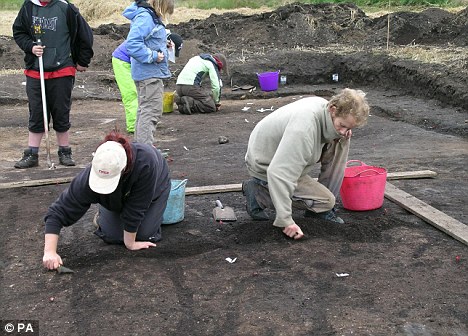
Scientists search an area at Starr Carr, North Yorkshire, last year after locating Britain's earliest house. Leading archaeologists today protested a law that requires all human remains unearthed at ancient settlements to be reburied

Scientists search an area at Starr Carr, North Yorkshire, last year after locating Britain's earliest house. Leading archaeologists today protested a law that requires all human remains unearthed at ancient settlements to be reburied

Forty archaeology professors wrote to express their ‘deep and widespread concern’ in a letter published in today’s Guardian newspaper.

‘The current licence conditions are impeding scientific research, preventing new discoveries from entering museums, and are not in the public interest,’ their letter states

‘Your current requirement that all archaeologically excavated human remains should be reburied, whether after a standard period of two years or a further special extension, is contrary to fundamental principles of archaeological and scientific research and of museum practice.’

The 2008 legislation applies to any piece of bone of historical interest found at around 400 archaeological sites across England and Wales; the 1857 Burial Act applies to more recent remains.

‘The current licence conditions are impeding scientific research, preventing new discoveries from entering museums, and are not in the public interest’

Scientists working at Stonehenge who discovered 60 bodies in 2008 have been granted an extension before they have to return the remains to the ground.

Their colleagues at the Happisburgh site in Norfolk are currently digging after finding the oldest stone age tools that date back 950,000 years.

Mike Pitts, editor of British Archaeology who signed the letter, said: ‘If human remains were found at Happisburgh they would be the oldest human fossils in northern Europe and the first indication of what this species was.

‘Under the current practice of the law those remains would have to be reburied and effectively destroyed.

‘This applies to everything. If we were to find a Neanderthal fossil or a Roman skeleton, it would all have to be reburied.’

Among the high-profile signatories are Barry Cunliffe, from University of Oxford; Chris Stringer, from the Natural History Museum; Graeme Barker, from University of Cambridge; and Stephen Shennan, director

Merlin @ Stonehenge
The Stonehenge Stone Circle Website


Barrows of the Bronze Age – Stonehenge Landscape Tour

11 02 2011

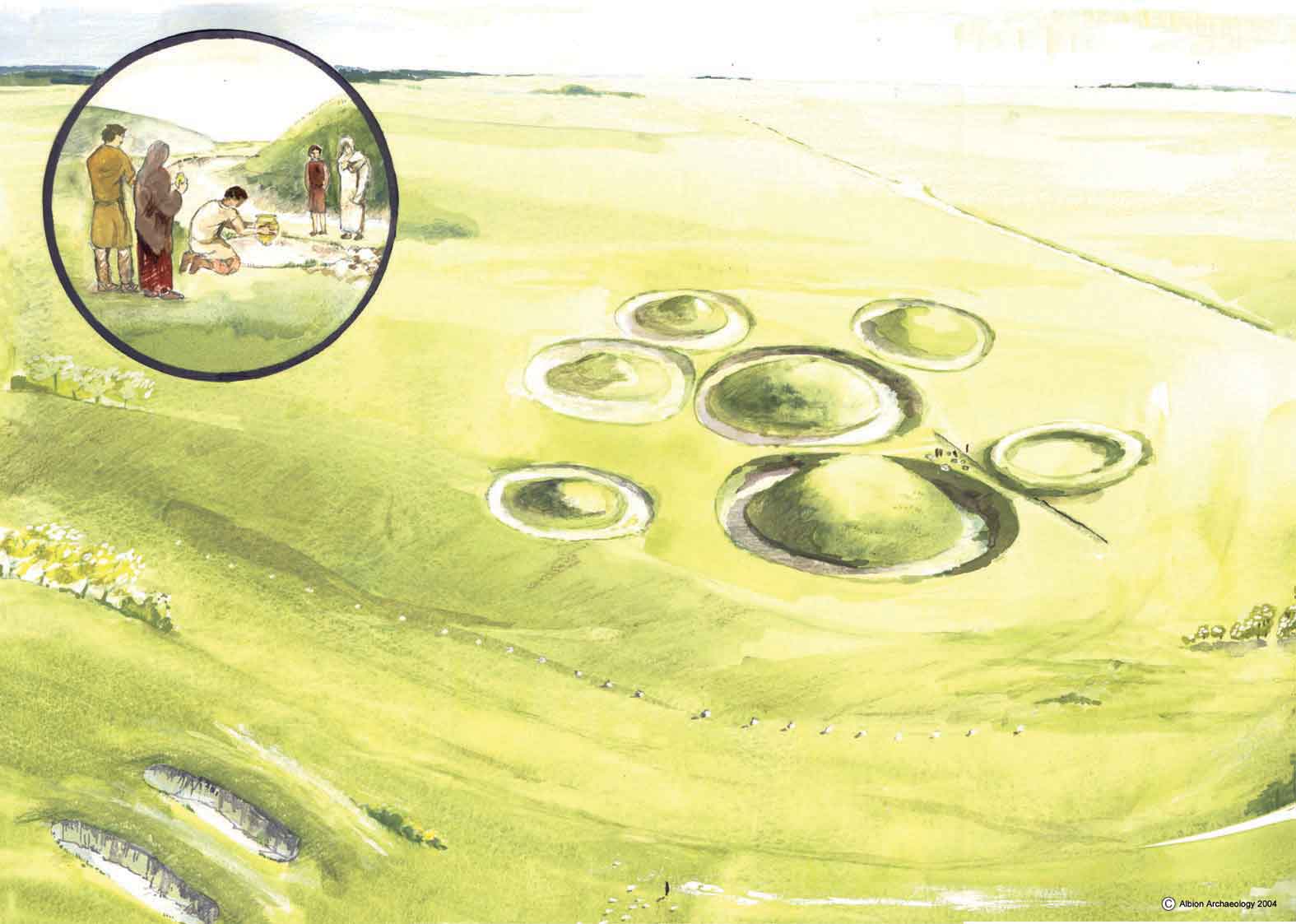
Explore the Bronze Age monuments of the Stonehenge landscape with Sonia Heywood ‘ you’ll soon discover that they’re much more than simple burial mounds. Investigated by curious antiquarians in the last 300 years, they have a 4,000 year history that tells us much about our past. On our four mile walk we’ll be visiting the Cursus Barrows, Winterbourne Stoke Barrows and the Monarch of the Plain. We’ll also have fine views of the King Barrows and Normanton Down Barrows.

26th February 2011

  • Please wrap up warm and bring stout footwear. The open landscape of the downs can be very exposed. You may like to bring a hot drink and a snack.
  • Meeting at the Stonehenge car park (not NT) by the bright green National Trust information panel.More Information: Lucy Evershed, 01980 664780, stonehenge@nationaltrust.org.uk
    http://www.Nationaltrust.org.ukHighly recommended!
    Merli @ Stonehenge Stone Circle


  • STONEHENGE MODEL IS TOURING THE UK!

    7 02 2011

    To celebrate the new BBC Two series on the Ancient Britons, a Stonehenge model is touring the UK. 

    English Heritage policy researchers, archaeological investigators, surveyors and historians have all been keen to join forces and investigate a variety of archived information, including 3D data from a previous survey of the monument in 1993, old plans and photos of the 1958 re-erection, in order to supply correct dimensions.

    Others have also helped to supply images, information and check details for a series of popular, jointly branded learning resources as part of an ongoing partnership between BBC Learning and English Heritage Education.

    Resources on the Normans went down well at English Heritage properties last year and prehistory timelines and group activity guides are currently being handed out free of charge to families and learning groups visiting Stonehenge.

    All these can also be downloaded from the BBC Hands on History website where teachers, parents and students can also find events, a map of sites to visit, animations featuring the Hands on History mini-time traveller, Eric and more.

    The Stonehenge road show will challenge families to help solve the mystery of how the stones were moved and also feature interpretation boards and an interactive mini drama led by historical interpreters. It is scheduled to visit shopping centres in five locations from 11.00am – 15.30pm:

    • Monday 21 February: Queen’s Arcade, Cardiff
    • Tuesday 22 February: thecentre:mk, Middleton Hall, Milton Keynes 
    • Wednesday 23 February: Swindon Designer Outlet
    • Thursday 24 February: Westfield Derby
    • Friday 25h February: MetroCentre, Gateshead

    Stonehenge model is touring the UK. 

    English Heritage experts are helping BBC Hands on History make the most of a new BBC Two TV series, ‘A History of Ancient Britain’, scheduled to start on 9 February. They are pulling out all the stops to get an inflatable scale model of one Stonehenge trilithon (two uprights and a lintel) as accurate as possible before it goes on a whistle-stop tour of five city centre shopping centres from 21-25 February

    English Heritage policy researchers, archaeological investigators, surveyors and historians have all been keen to join forces and investigate a variety of archived information, including 3D data from a previous survey of the monument in 1993, old plans and photos of the 1958 re-erection, in order to supply correct dimensions.

    Others have also helped to supply images, information and check details for a series of popular, jointly branded learning resources as part of an ongoing partnership between BBC Learning and English Heritage Education.

    Resources on the Normans went down well at English Heritage properties last year and prehistory timelines and group activity guides are currently being handed out free of charge to families and learning groups visiting Stonehenge.

    All these can also be downloaded from the BBC Hands on History website where teachers, parents and students can also find events, a map of sites to visit, animations featuring the Hands on History mini-time traveller, Eric and more.

    The Stonehenge road show will challenge families to help solve the mystery of how the stones were moved and also feature interpretation boards and an interactive mini drama led by historical interpreters. It is scheduled to visit shopping centres in five locations from 11.00am – 15.30pm:

    • Monday 21 February: Queen’s Arcade, Cardiff
    • Tuesday 22 February: thecentre:mk, Middleton Hall, Milton Keynes 
    • Wednesday 23 February: Swindon Designer Outlet
    • Thursday 24 February: Westfield Derby
    • Friday 25h February: MetroCentre, Gateshead

    English Heritage – http://www.english-heritage.org.uk/

    Has anyone got a photo of the model they can send me ?
    Merlin @ Stonehenge
    The Stonehenge Stone Circle Website


    Stonehenge Druids – The mysterious guardians of the ancient Celtic knowledge.

    7 02 2011
    Druids_celebrating_at_Stonehenge

    Druids_celebrating_at_Stonehenge

    The Druids were the priests of the Celtic religion during the Iron Age

    The Druids were the priests of the Celtic religion during the Iron Age which was before the Romans invaded Britain.

    The Druids has been popularly associated with Stonehenge ever since an earlier researcher John Aubrey said in 1666 that stone circles were built and used by Druids as places where they conducted their rituals.

    Today we know that this ancient Druid connection to Stonehenge is not true.

    Druids and most of what we know of them today have been written about by Julius Ceasar and Pliny during the Gaelic wars.

    According to Ceasar Druids chose to conduct their rituals in densely wooded areas and did not built special places to perform their ceremonies. Druid comes from the Celtic word for “knowing the oak tree”

    Pliny writes mostly about the Druids practicing medicine and sorcery.

    According to him the Druids held the mistletoe plant in the highest veneration. Groves of oak were their chosen retreat. Mistletoe grows on the oak trees and a priest dressed in a white robe would cut it with a golden knife. It was the custom that two white bulls were to be sacrificed on the spot.

    Druidic lore consisted of a large number of verses to be learned by heart and a novice would apparently train for up to 20 years to prepare for his duties as a guardian of the sacred knowledge.

    It is interesting that many Druids were women. Celtic woman enjoyed more freedom and rights than women in any other contemporary society. They had the right to enter a battle and even divorce their husbands.

    The modern version of the Druids is known as The Ancient Order of Druids and was formed in 1781. Neo Druidism is apparently based on Freemasonry.

    The Ancient Order of Druids was not able to hold a ceremony at Stonehenge until 1905 and at this occasion 650 of them arrived for a mass initiation.

    They erected their own marquee and were well stocked with food and drink.

    Druids Autumb Equinox

    Druids Autumb Equinox

    Apparently they used a secret password to keep outsiders outside. Sir Edmund Antrobus the then owner of Stonehenge was also one of the 258 novices present to be initiated.

    After the feasting the initiates were blindfolded and led into the stone circle while an anthem which was especially composed for the event was played.

    The ceremony was lead by GA Lardner, Most Noble Grand Arch Brother of the Order who waved his battleaxe over a so called sacred fire. After he recited the sacred oath the blindfolds were removed and everyone apparently had a hearty singsong of the anthem.

    Over the years a number of famous names have had involvement with the Druids.

    Here are some of their members;

    Winston Churchill – Prime Minister

    Ludwig van Beethoven – Composer.

    Benjamin Franklin – Politician and American President.

    Salvador Dali –Artist.

    More recently Rowan Williams, the Archbishop of Canterbury who is the head of the Anglican Church was initiated as a member.

    Today Druids mostly gather at Stonehenge during the summer and winter solstice days.

    which was before the Romans invaded Britain. The Druids has been popularly associated with Stonehenge ever since an earlier researcher John Aubrey said in 1666 that stone circles were built and used by Druids as places where they conducted their rituals. Today we know that this ancient Druid connection to Stonehenge is not true. Druids and most of what we know of them today have been written about by Julius Ceasar and Pliny during the Gaelic wars. According to Ceasar Druids chose to conduct their rituals in densely wooded areas and did not built special places to perform their ceremonies. Druid comes from the Celtic word for “knowing the oak tree” Pliny writes mostly about the Druids practicing medicine and sorcery. According to him the Druids held the mistletoe plant in the highest veneration. Groves of oak were their chosen retreat. Mistletoe grows on the oak trees and a priest dressed in a white robe would cut it with a golden knife. It was the custom that two white bulls were to be sacrificed on the spot. Druidic lore consisted of a large number of verses to be learned by heart and a novice would apparently train for up to 20 years to prepare for his duties as a guardian of the sacred knowledge. It is interesting that many Druids were women. Celtic woman enjoyed more freedom and rights than women in any other contemporary society. They had the right to enter a battle and even divorce their husbands. The modern version of the Druids is known as The Ancient Order of Druids and was formed in 1781. Neo Druidism is apparently based on Freemasonry. The Ancient Order of Druids was not able to hold a ceremony at Stonehenge until 1905 and at this occasion 650 of them arrived for a mass initiation. They erected their own marquee and were well stocked with food and drink. Apparently they used a secret password to keep outsiders outside. Sir Edmund Antrobus the then owner of Stonehenge was also one of the 258 novices present to be initiated. Image Credit After the feasting the initiates were blindfolded and led into the stone circle while an anthem which was especially composed for the event was played. The ceremony was lead by GA Lardner, Most Noble Grand Arch Brother of the Order who waved his battleaxe over a so called sacred fire. After he recited the sacred oath the blindfolds were removed and everyone apparently had a hearty singsong of the anthem. Over the years a number of famous names have had involvement with the Druids. Here are some of their members; Winston Churchill – Prime Minister Ludwig van Beethoven – Composer. Benjamin Franklin – Politician and American President. Salvador Dali –Artist. More recently Rowan Williams, the Archbishop of Canterbury who is the head of the Anglican Church was initiated as a member. Today Druids mostly gather at Stonehenge during the summer and winter solstice days.

    External links:
    The British Druid Order – http://www.druidry.co.uk/
    The Council of Druid Orders – http://www.cobdo.org.uk/
    The Druid Network – druidnetwork.org
    Stonehenge Guide – stonehengeguide.com
    Stonehenge Tours – StonehengeTours.com

    Merlin @ Stonehenge
    The Stonehenge Stone circle Website


    Sarsen stones – Shaped like wood 42 centuries ago

    5 02 2011

    Sarsen stones are the very large stones that forms the outer circle at Stonehenge.

    These stones are a very hard type of sandstone. Now to give one a clear idea as to how hard this particular stone is we will take a look at the Mohs scale.

    The Mohs scale is simply a measurement used to measure the surface resistance to abrasion of any hard substance.

    That just means that if we take a hammer and bash the stone how much will it resist before we can knock a chunk off it.

    Sarsen stone measures a seven (7) on the Mohs scale.

    Now, if we compare the surface resistance of sarsen stone to that of steel we find that steel measures 6,7 on the same scale.

    So, we now know that sarsen stone is a very hard stone and we can appreciate how difficult it must have been to shape the stone with ancient tools.

    Sarsen stones were worked and dressed with other sarsen stone which were round balls of stone known as mauls. The mauls were of various sizes and can today be viewed at the Salisbury museum.

    From exploration at Stonehenge it would appear that there were 30 stones that were used as “uprights”.

    Of these “uprights” 29 of them were shaped to the same basic size.

    When the sarsen “uprights” were placed into position they were then capped with a line of sarsen stone lintels.

    The lintels weighs up to seven tons ( 7,000kg.) each.

    To fix the lintels securely in position thirteen feet or 4m. above the ground these lintels were locked together like pieces in a jigsaw.

    The lintels were held in place on the upright sarsen stones by mortice-and-tenon joints which was carved out of the solid stone.

    The lintels in the circle were then locked end-to-end by a method known as vertical tongue and groove joints.

    The vertical tongue and groove jointing techniqueThe jointing techniques used on the sarsen stones are all from the wood joiners craft.

    Another amazing feature is that the lintel circle of sarsen stones were shaped to follow the curve of the circle which is both a design and engineering feature.

    Merlin @ Stonehenge
    The Stonehenge Stone Circle Website


    A new henge discovered at Stonehenge

    5 02 2011

    An archaeology team led by the University of Birmingham and the Ludwig Boltzmann Institute for Archaeological Prospection and Virtual Archaeology in Austria discovered a major ceremonial monument less than one kilometre away from the iconic Stonehenge.

    History is set to be rewritten after an archaeology team led by the University of Birmingham and the Ludwig Boltzmann Institute for Archaeological Prospection and Virtual Archaeology in Austria discovered a major ceremonial monument less than one kilometer away from the iconic .

    The incredible find has been hailed by Professor Vince Gaffney, from the University’s IBM Visual and Spatial Technology Centre, as one of the most significant yet for those researching the UK’s most important prehistoric structure.

    Professor Gaffney says: “This finding is remarkable. It will completely change the way we think about the landscape around Stonehenge. “People have tended to think that as Stonehenge reached its peak it was the paramount monument, existing in splendid isolation. This discovery is completely new and extremely important in how we understand Stonehenge and its landscape.”

    The new “henge-like” Late Neolithic monument is believed to be contemporaneous to Stonehenge and appears to be on the same orientation as the World Heritage Site monument. It comprises a segmented ditch with opposed north-east/south-west entrances that are associated with internal pits that are up to one metre in diameter and could have held a free-standing, timber structure.

    The project, which is supported by the landowner, the National Trust, and facilitated by English Heritage, has brought together the most sophisticated geophysics team ever to be engaged in a single archaeological project in Britain.

    Provided by University of Birmingham.  Find out more about the latest discoveries, join a guided tour of Stonehenge – book through ”The Stonehenge Tour Company‘

    Merlin @ Stonehenge
    THe Stonehenge Stone Circle Website


    Stonehenge, mystery shopping and an over-excited lemur

    31 01 2011

    There’s an old gag that goes like this….

    An American tourist arrives with his family at Stonehenge and asks one of the junior staff how old the monument is. “That’s easy” replies the young man, “Five thousand years, four months and three weeks.” “That’s amazing” says the American, “How the heck can you be so precise?” “Well” he proudly declares, “next week I’ll have been working here for five months, and I remember them telling me on my first day that it was 5,000 years old, so….”

    Now, before the estimable Simon Thurley gets on the phone to assure me that such a thing could never have happened, what with English Heritage’s superb staff training programmes for new staff, I must stress that it’s a joke about the uncertainty of prehistoric dating, not a critique of EH’s induction procedures. I am also, of course, not in any way disparaging American tourists. Perhaps I should have simply said ‘A tourist arrives etc’ with nationality unspecified. Hard to say, to be honest. Levity’s a tricky thing, as I discovered when The Daily Telegraph’s Mandrake column cast its rheumy eye over one of my earlier efforts.

    And some fell on stony ground, as they say…

    Ancient standing stones of Stonehenge, near Salisbury in Wilthsire, England UK. © Britainonview / Martin Brent

    ‘Toy town with dinky electric vehicles’?


    Anyway, the good news about Stonehenge is that the Heritage Lottery Fund have agreed to put forward £10 million, and the prospects of getting to some kind of resolution for the issue of how to present the stones to the public becomes significantly brighter. For some, though, the glass remains very much half empty. Indeed for Marcus Binney (writing in The Times at the weekend), the glass should have been left in the kitchen cabinet and the liquid used for something else altogether. I’d pop a link in at this point but, as you probably know, that paper operates what’s called a ‘pay-wall’ so you’ll have to make your own arrangements if you want to call up the article.

    The gist of his argument, however, runs like this. The proposed visitor centre, he believes, will ‘turn Stonehenge into a toy-town with visitors approaching in dinky electric vehicles’. And in any event, he continues, they’ve chosen the wrong site for it. They should, in fact, focus all their resources on repairs and restoration rather than interpretation (by which he means visitor centres, and so on) or, better still, be stripped of their grant-giving powers and pass all the Lottery money to the National Heritage Memorial Fund, and other bodies that will spend it on ‘front-line rescue of natural and man-made heritage, and not on frills and embellishments.’

    Ouch.

    The point here surely is that, yes, there will always be a long line of hard cases, where buildings and monuments – each with their own wonderful story, and each with a really strong case for support – are overlooked; while other things – less deserving in the eyes of the chap making the case – get the nod. That’s the nature of democracy and professional judgement. For my part, I believe that our heritage buck must go on more than simply renovation, important though that is, because history is a narrative (to use, without apology, a word that has become almost meaningless through over-use in public life recently) as well as a selection of beautifully preserved artefacts and buildings. English Heritage understands this, and they put it into practice with enormous skill and imagination. Audio tours, computer visualisations, historic re-enactments and all the other things they do are, largely thanks to the calibre of the people they employ, so much more than ‘frills and embellishments’.

    Personally I’m absolutely delighted that the HLF have stepped in and I believe that grants like this are exactly what Lottery players would want the good cause money to go towards. And, if Marcus Binney slips a quid across the counter of his local news agent every Wednesday and Saturday for a crafty Lucky Dip, then I can only remind him that, as I said last week, rather more of his good cause contribution will very shortly be going towards heritage projects, and that can’t be bad, can it?

    John Penrose blog:
    http://blogs.culture.gov.uk/main/2010/11/stonehenge_mystery_shopping_an_1.html

    Merlin @ Stonehenge
    The Stonehenge Stone Circle Website


    Avebury to Stonehenge – The Hero Walk 2011

    27 01 2011

    The Hero Walk – In support of our wounded – 26th June 2011
    The Hero Walk is a very tough challenge over the high chalk downs and ridge ways of Wiltshire and Salisbury Plain. At 26 miles it forms a marathon for runners and a great challenge for walkers. This challenge is a diverse trek over marathon distance, going back through 6,000 years of British history; the magnificent prehistoric stone circles of Avebury and Stonehenge need little introduction. The challenge will start in Avebury, where we will be able to get up close to the ancient stones before heading off via the mysterious ancient landmark of Silbury Hill. Silbury is the tallest man-made mound in Europe, however its purpose is still unknown.

    We will then cross the spectacular chalk downs dotted with ancient earth-works, burial mounds and get up close to the enigmatic white horses carved into the chalk. In clear weather we will be able to see more here, as views of other valleys open up to us. The route takes in the highest point in Wiltshire (295m) and travels through the most active crop circle area in the world – keep your eyes open!

    Crossing into MOD land you will either walk (or run!) through stunning areas little used by the general public, that have become a haven for wildlife and plants. Our route continues to undulate but the main hills are behind us and we start to anticipate the finish line at the World Heritage Site of Stonehenge. A short section of quiet road is a sign that we are nearing civilisation, and before long the world-renowned ancient circle of stones looms on the horizon before us. There is then time to celebrate with fellow walkers and runners before returning home. We look forward to seeing you there!

    Avebury to Stonehenge Hero Walk 2011 Itinerary . . .

    The 26-mile walk will take approximately 8-9 hours for fit and strong walkers. Our day starts at Avebury, which lies at the centre of one of the greatest surviving concentrations of Neolithic and Bronze Age monuments in Western Europe. We’ll enjoy Avebury’s magic in the quiet of the early morning before heading via the Silbury Hill.

    Help for Heroes

    Help for Heroes


    Dropping down into the village of Alton Barnes, we follow the Kennet and Avon canal east. From there we head south and join the White Horse trail to the Pewsey White Horse from where we have fabulous views of the surrounding chalk landscape. We descend the hill and continue along the trail to the Kennet and Avon Canal; this is a fabulous example of industrial revolution engineering. Crossing into MOD land we will either walk (or run!) through stunning areas little used by the general public and a haven for wildlife and plants. After this long day of great views and leg-stretching hills we will reach the final destination: Stonehenge, the most famous stone circle in the world.

    DONATE NOW – CLICK HERE
    REGISTER ONLINE
    http://www.helpforheroes.org.uk/challenges-2011-avebury-stonehenge.html

    Do your bit and get involved!
    Sponsers: ‘Stonehenge Tour Company’

    The Merlin @ Stonehenge
    The Stonehenge Stone Circle Website


    Stonehenge.cc – Camelot Castle

    25 01 2011

    A hotel has purchased the internet domain Stonehenge.cc and hopes to

    Stonehenge light box

    Stonehenge light box

    exploit the famous Neolithic site’s reputation to build an online following. Camelot Castle – the birthplace of the legendary King Arthur – in Tentagel has acquired the site as the basis for a new internet news network that is aimed at providing positive stories that help inspire “man’s spiritual rise and search for truth”.
    According to the Cornwall hotel, Stonehenge is the perfect vehicle for spreading this message and said it was “delighted” to have acquired what it feels to be one of the most important internet portals available. “It is a tremendous honour, duty and responsibility. Stonehenge is an eternal testimony to man’s search for truth and his spiritual legacy,” said spokesman John Mappin.
    The actual site of Stonehenge is popular with luxury coach tours and is situated in Wiltshire. However, its online presence will allow it to play another role in advancing British culture, the hotel claimed.

    Can anyone explain the ‘Light Box’ that is promoted on this Stonehenge.cc website. I’m confused ?
    http://www.stonehenge.cc/stonehenge-lightbox.htm
    http://www.Stonehenge.cc

    Is it worth the trek to Cornwall ?
    Merlin at Stonehenge (Wiltshire not Cornwall)
    The Stonehenge Stone Circle Website


    Stonehenge access – A303 roadworks ???

    25 01 2011

    How frustrating ?  The road has been closed for a week and the work has still not started? Coach tour operators are being inconvenienced, English Heritage say visitor numbers are down and cars are cutting onto the A303 via the byway – a serious accident waiting to happen!

    Stonehenge roadworks

    Stonehenge roadworks


    Details: A344 Wiltshire – A344 Stonehenge Bottom in Stonehenge closed in both directions between Stonehenge Fork and Airmans Cross, because of roadwork – What roadworks and wht is the road closed in both directions ?

    External links:
    http://www.bbc.co.uk/travelnews/wiltshire/roads/planned/
    http://www.english-heritage.org.uk/about/news/stonehenge-a303-roadworks/
    http://www.motortrades.co.uk/traffic-news.asp?cid=46

    Angry Merlin!
    The Stonehenge Stone Circle Website