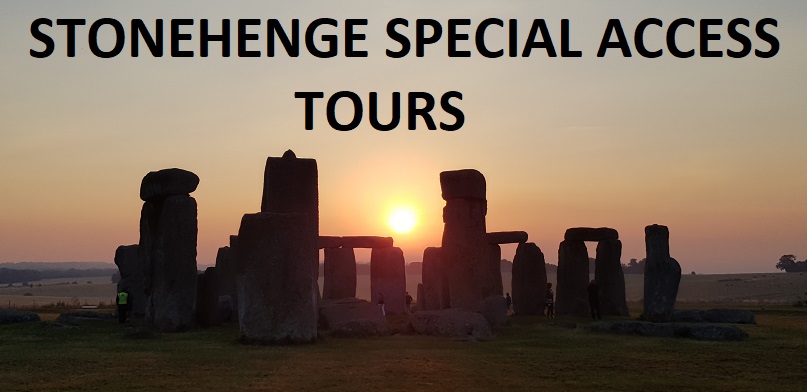
Explore the archaeology of Stonehenge

1 02 2013

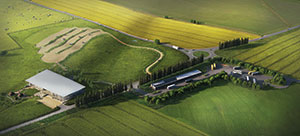
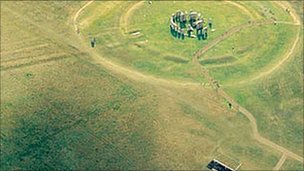
Enjoy a winter afternoon walk on Sunday, learning about the ancient archaeology of the Stonehenge World Heritage Site and the area’s varied wildlife.On this three-mile walk with views of the stone circle, the ancient earthworks that have revealed much about the people who once lived and celebrated there will be visited.An aerial view of Stonehenge without the A344 road

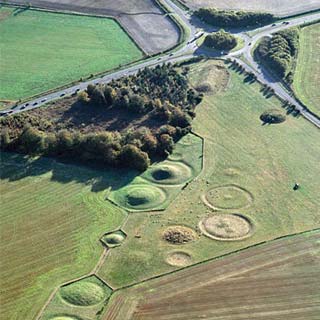
Talking points include the Cursus, the many and varied barrows, and an ancient avenue connecting ceremonial centres.

Booking is essential, and the walk begins at 2pm. For details and to book, when the start point will be given, call 0844 249 1895.

http://www.nationaltrust.org.uk/
http://www.wiltshiretimes.co.uk/

Merlin @ Stonehenge


Stonehenge Lecture by Mike Pearson. Wiltshire Heritage Museum

28 01 2013

Prof Mike Parker Pearson, who will be presenting the latest scientific results from laboratory analysis following a decade of fieldwork in the Stonehenge World Heritage Site. 2(:30 pm, Saturday, 23 February, 2013)

A striking and original interpretation of the awesome Stone Age site from one of the world's foremost archaeologists on death and burial"

A striking and original interpretation of the awesome Stone Age site from one of the world’s foremost archaeologists on death and burial”

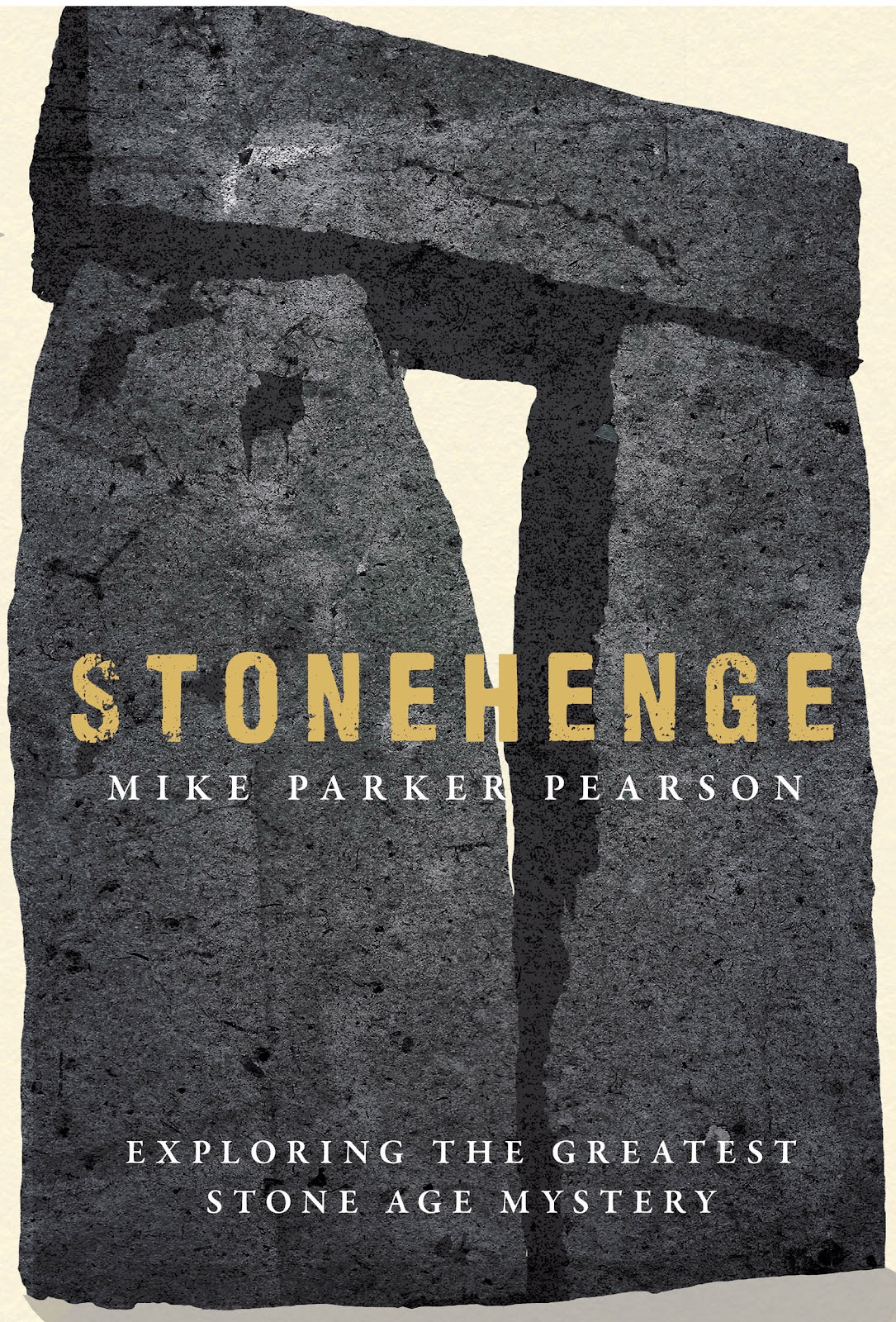
New research over the last year has provided fascinating insights into the lives of the people of Stonehenge and why they built this enigmatic and mysterious monument. Mike Parker Pearson will talk about his new book Stonehenge: exploring the greatest Stone Age mystery, and will present the latest scientific results coming out of laboratory analysis following a decade of fieldwork in the Stonehenge World Heritage Site. This includes new light on the people buried at Stonehenge, and on the settlement of the builders at the nearby henge of Durrington Walls. He will also reveal the results of new research into the provisioning of Stonehenge, including the search for its quarries in Wiltshire and west Wales, to show how the act of building Stonehenge involved people from all over prehistoric Britain.

Mike has spent many years researching Stonehenge and its environment, particularly during the Stonehenge Riverside project. He is Professor of British Later Prehistory at UCL Institute of Archaeology.
http://www.wiltshireheritage.org.uk

Booking:

* Tel: 01380 727369 (office hours Tuesday to Friday 10am to 5pm)

Saturday afternoon lectures start at 2.30pm and last approx. one hour.
This lecture is being held at Devizes Town Hall, just a short walk from the Museum.

 Cost:   £6 (£3.50 WANHS members)

‘See you there’
Merlin @ Stonehenge


Lost Stones. Preseli Bluestone

25 01 2013

Preseli Bluestones are the stones that were used in the building of Stonehenge 5,000 years ago and are only found in the Preseli Hills in Pembrokeshire, West Wales.

Preseli Bluestone was used to construct the inner rings of Stonehenge. The surface has a ‘crust’ formed as a result of several thousand years of weathering. When broken the inside has a characteristic spotting of white ‘stars’ – it is thought by some that the ancients may have been drawn to these stones partly because of the resemblance to the cosmos or maybe a belief in the healing powers of the stone.

In ancient times, stones were considered to be holy and magical objects, homes to spirits and the Gods. In local Welsh legends and folklore it is said that the Preseli Bluestones possess healing and magical powers. It is no surprise then that this rare stone should be used for this Island’s greatest megalithic structure – the very root of all our architecture.


Preseli Bluestone Geology

Preseli Dolerite (Bluestone) is a Metamorphic Igneous rock made up of Plagioclase Feldspar and Augite and is a Pyroxene mineral (calcium magnesium aluminosilicate. Ca, Mg, FE, AI, (Al,Si,206). It is medium grained dark and heavy rock, harder than granite. Preseli Bluestone tools, such as axes, used by our ancestors to carve granite, have been discovered.

In ancient times, stones were considered to be holy and magical objects, homes to spirits and the Gods. In local Welsh legends and folklore it is said that the Preseli Bluestones possess healing and magical powers. It is no surprise then that this rare stone should be used for this Island’s greatest megalithic structure – the very root of all our architecture.

Preseli Bluestone tools, such as axes, used by our ancestors to carve granite, have been discovered.

Now you can own a piece of genuine Stonehenge stone taken from its original source in the Preseli Hills.Lost Stones Pendant
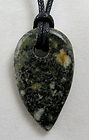
This is the first time for Millennia that these unique and magical stones have been seen in their polished form.

Lost Stones are based in the Preseli Hills in West Wales – all their stone comes from their own land which has glacial deposits of Preseli Bluestone.
Visit their website: http://www.loststones.co.uk

The Bluestones of Stonehenge

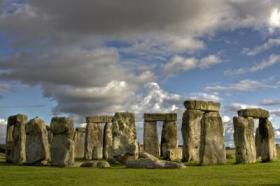
Prescili bluestonesThe stone circles of Stonehenge are built from two main types of rock. The massive sarsens that are a sandstone, and a variety of smaller igneous rocks known as the bluestones. It has been known since the 16th century that the sarsen stones came from near to Marlborough, 30 km north of Stonehenge.

It was only 350 years later that the source of the bluestones was pinpointed. The three main types of bluestone come from the Preseli Hills in north Pembrokeshire. On Carn Menyn some of the stones could simply have been collected from the surface.

It has been argued that the stones were transported from Wales by glaciers. However, comprehensive geological studies have shown that there is no evidence for a glaciation in Wessex that could have transported these rocks and left no other trace.

When the stones were transported to Stonehenge and added to the temple that already stood there is less easy to establish. The stones helped to transform the layout of the monument so that it was aligned on the sunrise on the longest day of the year; and sunset on the shortest day.

The bluestone settings at Stonehenge are thought to have been re-arranged at least four times within a period about 400 years between 2,400 and 2,000 BC. There may have been plans for a fifth arrangement that was not completed.

The date at which the bluestones first arrived at Stonehenge is not known. It can only be said that the first bluestone setting (Phase 3i: the Q and R holes) is earlier than the completion of the setting of great sarsen stones, which is radiocarbon dated to 2,440-2,100. Pieces of beaker pottery found in the backfill of one of the stoneholes of this first bluestone setting show that Beaker pottery was in use when that stone was removed.

It is not known whether all the bluestones arrived at the same time. Richard Atkinson, who with Stuart Piggott, was the most recent excavator at Stonehenge, favoured this option. But Ros Cleal, Karen Walker and Becky Montague who published those excavations, preferred to see the bluestones as having arrived in two major episodes. The second episode being after the sarsen settings had been erected and when the Bluestone Circle and Bluestone Oval were built. The Bluestone Circle is radiocarbon dated 2,280-2,030.

Links:
http://www.wessexarch.co.uk/projects/wiltshire/boscombe/bowmen/stonehenge_bluestones.html

http://www.loststones.co.uk

http://brian-mountainman.blogspot.co.uk

http://www.walesonline.co.uk/news/wales-news/tm_objectid=15661198&method=full&siteid=50082&headline=archaeologists-figure-out-mystery-of–stonehenge–bluestones-name_page.html

http://www.wired.co.uk/news/archive/2011-12/19/stonehenge-rocks

Merlin @ Stonehenge


Row over Stonehenge visitor centre continues

15 01 2013

A TOUR operator has waded into the row over the £27million improvement project at Stonehenge, saying that while some operators may bypass the stones the “vast majority” are welcoming the transformation.
Stonehenge-Private -Viewing-Access-Tours-2012 (25)

The new development – involving a ten-minute shuttle from the new visitor centre being built 2km from the stones – will require a significantly extended visit time for tour operators.

Some guides fear the plans have been ill-thought out and that the two-hour stop recommended by English Heritage will put tourists off as many have limited time and want to “see as much as possible” in their packed daily itineraries.

But Ralph Bennett, director of Tours International, who has brought visitors to the iconic site for the last 25 years, said they only spend a short while at the site because the current facilities are inadequate.

He said: “Parking is problematic, our clients have to queue and there is nowhere to sit and eat under cover. Yes, we currently fit two or three destinations into a one-day tour, but Stonehenge is most definitely the star attraction.

“The transformation being made by English Heritage will address these problems and enable us to offer Stonehenge either as a day out in its own right or as part of a two-stop tour; and a two-hour visit will be about right.

“The vast majority of us are embracing the future, which will at long last mean we can properly showcase one of our most iconic and fascinating visitor attractions to tourists from around the world.”

Article by our local experts: http://www.salisburyjournal.co.uk

Merlin @ Stonehenge


Stonehenge project under fire

10 01 2013

TOUR guides who bring thousands of visitors to Stonehenge every year have blasted the £27million improvement project currently under way. (Salisbury Journal)

Stonehenge They predict it will mean some tours will bypass the stones in favour of visiting elsewhere.

The new development will see tourists arriving at the visitor centre, 2km away, and either taking a ten-minute shuttle to the stones or walking there.

English Heritage says visitors will enjoy a “much quieter and greener experience”

and are recommending tour operators plan a “dwell time” of at least two hours for groups to “fully appreciate and enjoy the enhanced experience”.

But tour guides say they only allow for an hour at the site, and extending this would prevent them from offering tours that take in visits to three or four places, such as Windsor, Bath and Salisbury, on the same day.

Don Cross, managing director of Wessexplore, said: “Tourists from all over the world often have limited time on their expensive programmes and wish to see as much as possible in their visit.

“This system with ‘landtrains’ will physically not be able to deliver this kind of service.”

Other concerns include the lack of shelter by the stones and the “escape back to the coach” option no longer being available if the weather is bad.

Chief executive of VisitWiltshire, David Andrews, said that while visitor numbers may drop in the short term, there was a “fantastic opportunity” for Wiltshire and Salisbury to encourage people to stay in the county for longer.

He said: “At present, coach tours stay for as little as a couple of minutes at Stonehenge but with the much bigger and richer experience being offered by English Heritage, there’s a much greater chance that people will visit Wiltshire and Salisbury and stay. Stonehenge is iconic enough that coach operators have to include it and they will have to change their programme.”

Full article in the Salisbury Journal:  http://www.salisburyjournal.co.uk/

Merlin says ” I have many tour guides across the country making the same comments”

Merlin @ Stonehenge


New facilities revealed for Stonehenge 2013

9 01 2013

The first images have been released by English Heritage of the new facilities which will welcome groups arriving at Stonehenge when its new visitor centre opens later this year.
v
A dedicated coach park will have spaces for 30 vehicles and there is an optional drop-off bay in front of the coach reception building where pre-printed tickets will be available for collection.

Groups will walk the short distance from the coach park to the new visitor centre which includes exhibition galleries, a 114-cover café with outdoor seating for 60 under a canopy and room to expand by a further 70 seats during the summer peak and expanded retail space that is over four times larger than the existing shop.

Outside, groups can hop on to the transit service for the 2km journey from the visitor centre, to the Stone Circle.  Able to accommodate 900 passengers every hour, the transit stops once during the 10 minute drive to the Stones, so that passengers can walk a part of the way if they wish. 

On arrival at the Stone Circle, English Heritage says they will enjoy a much quieter and greener experience. The works includes the closure of the A344 – which currently runs right past the monument, almost touching the Heel Stone – the removal of ugly high fencing and the existing outdated visitor buildings and car park nearby and the reinstatement of a grassy landscape. Restoration of the landscape will be well underway by summer 2014.

English Heritage is recommending that tour operators plan a dwell time of around two hours for groups to fully appreciate and enjoy the enhanced experience Stonehenge will offer from late 2013.  A pre-booked timed ticketing system will ensure that queues are kept to a minimum.

Ongoing construction work on the new visitor centre is out of sight from the stones and while the new facilities are being built, it is business as usual at Stonehenge with group visits unaffected. Popular Stone Circle Access visits – outside normal opening hours – are also unaffected and may be pre-booked by calling             01722 343834       during weekday office hours.

From late spring 2013, coaches approaching Stonehenge will be re-routed to the existing parking and visitor facilities, when the A303/A344 junction closes at Stonehenge Bottom so that work can start on de-commissioning the road.  Coach drivers should look out for the diversion signs and a little extra time should be planned in to itineraries to take account of the slightly longer arrival and departure routes.    

Travel trade clients booking visits to Stonehenge in the future will enjoy group discounts of 10 per cent for 11 or more people, with a free place for a driver and group leader, as well as a dedicated phone line for bookings/information and dedicated website pages.

www.english-heritage.org.uk
www.busandcoach.com
www.StonehengeTours.com

Merlin @ Stonehenge Stone Circle


Neolithic New Year Walk – Stonehenge Landscape

28 12 2012

Welcome in 2013 with a walk around the ancient monuments of the Stonehenge Landscape. Booking essential.

Stonehenge Landscape ToursAncient ceremonial landscape of great archaeological and wildlife interest

Within the Stonehenge World Heritage Site, the National Trust manages 827 hectares (2,100 acres) of downland surrounding the famous stone circle.

Walking across the grassland, visitors can discover other prehistoric monuments, including the Avenue and King Barrow Ridge with its Bronze Age burial mounds.

Nearby, Winterbourne Stoke Barrows is another fascinating example of a prehistoric cemetery. While Durrington Walls hides the remains of a Neolithic village.

The best approach to the famous stone circle is across Normanton Down, a round barrow cemetery dates from around 2600 to 1600BC.


Crowds see in winter solstice at Stonehenge

22 12 2012

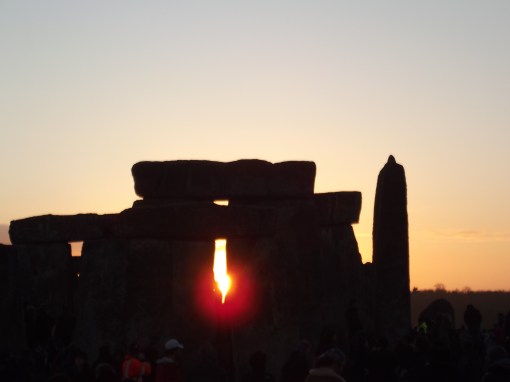
Thousands of people have gathered at Stonehenge to watch the sun rise over the ancient monument for the winter solstice

Stonehenge-Winter-Solstice-2012 (35)

Around 5,000 people are thought to have converged on Stonehenge in Wiltshire, to celebrate the 2012 winter solstice, which is around five times the number at last year’s festivities.

This year’s winter solstice coincided with the Mayan Apocalypse, so an “End of the World Party” was held at the monument.

During the winter solstice, the sun is closer to the horizon than at any other time in the year, meaning shorter days and longer nights.

The day after the winter solstice marks the beginning of lengthening days, leading up to the summer solstice in June.

Watch a video here: http://www.telegraph.co.uk/telegraphtv/9760577/Crowds-see-in-winter-solstice-at-Stonehenge.html

A good time had by all…………

Merlin at Stonehenge

mpu-bottom advertisement


OU students’ Stonehenge dig put to the vote for award

19 12 2012

Excavations by Open University students that could point to the origins of Stonehenge, have been nominated for Research Project of the Year by Current Archaeology magazine.

http://www.open.ac.uk/platform/news-and-features/ou-students-stonehenge-dig-put-to-the-vote-for-awardYou can vote for the project, which is called Vespasian’s Camp: Cradle of Stonehenge? on the Current Archaeology website here.

The project is led by OU tutor David Jacques who has recruited more than 100 OU students to work on the site, alongside volunteers from the nearby town of Amesbury, since the dig began in 2005.

The ongoing dig, at a previously unexplored site 1.5 km east of Stonehenge, is uncovering evidence which suggests the area was an important centre for Stone Age hunters several thousand years before the famous stone circle was built.

“Many experts are now wondering if Stonehenge is where it is because of this new site, because radiocarbon dates obtained from it show a continued use of the site from the 8th millennium BC through to the 5th millennium BC,” says David Jacques.

“This is the longest continually used place yet found in the Stonehenge landscape, and it connects the hunter-gatherer Mesolithic period to close to the Neolithic period, when Stonehenge starts to be constructed.

“It must have been a very special place to be used for 3000 years, a point confirmed by Professor Tim Darvill of Bournemouth University, who also described it as ‘the most important discovery at Stonehenge in many years’.”

The excavation team have uncovered the largest cache of Mesolithic tools ever found in the area, together with evidence of gargantuan Stone Age feasts.

They’ve also found weapons and other objects left as offerings to a god or goddess during the much later Bronze or early Iron Age, suggesting the site had a sacred tradition stretching over thousands of years.

The dig has also inspired the local community to create a museum at Amesbury to house the finds.

To find out more see the story here where you can watch a video and follow links to press reports.

Stonehenge News Blog sponsored by ‘Stonehenge Guided Tours’

Merlin @ Stonehenge


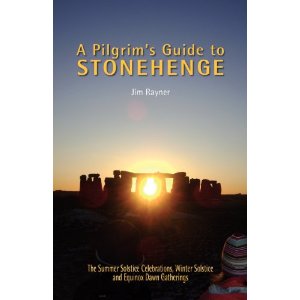
A Pilgrim’s Guide to Stonehenge. The Winter Solstice Celebrations, Summer Solstice and Equinox Dawn Gatherings

13 12 2012

The Winter Solstice Celebrations, Summer Solstice and Equinox Dawn Gatherings

‘The Pilgrims Guide to Stonehenge‘ has been developed as a guide for anyone wanting to visit Stonehenge during the four annual times of Managed Open Access, the summer solstice celebrations, winter solstice and equinox dawn gatherings. Its aim is to provide information for anyone wanting to know more about what goes on and how the quality of the experience can be enhanced through ritual and understanding. As a result, this book focuses on ideas, suggestions and information about what to expect. This pilgrim’s guide has been clearly designed to help the modern visitor to become more of a proactive participant. Apart from wandering freely amongst the stones, much of the information can also be applied to the normal visiting times throughout the rest of the year. Also included is an overview of the historical context, a proposal to reveal the Altar Stone and an examination of how the summer solstice could potentially be developed in the future. Contains over seventy photographs and illustrations.

pilgrims-guide-stonehenge“The notion of people gathering together under their own terms is in some ways a lost art in Britain outside the confines of major sporting occasions, concerts, weekend shopping trips and nights out on the town. Major royal and civic events could also be added to this list. The festival scene however, has given more alternative gathering a real boost. The nature of celebration is to have a joyous time and it is interesting to note that the United Kingdom has amongst the least number of public holidays in Europe. We work increasingly long hours and stresses of modern living can take a toll on the body, as well as the mind. There is certainly a market for a successful summer solstice celebration at Stonehenge for people intending to free their spirits in a communal gathering at an age-old and identifiable site.”

A Pilgrims Guide to Stonehenge (book review)

 Its aim is to provide information for anyone wanting to know more about what goes on during Managed Open Access (Summer Solstice Celebrations, Winter Solstice and Equinox Dawn Gatherings) and how the quality of the experience can be enhanced through ritual and understanding. Much of the information can also be applied throughout the rest of the year. Includes photographs, illustrations, visitor information, ritual guide, historical context, solstice chart and discussion on the future.

This has come from Jim Raynor’s experience of having attended MOA. He felt there was a need for a pilgrim’s guide that enabled the modern visitor to become more of a proactive participant. As a result, this book focuses on ideas, suggestions and information about what to expect. Apart from wandering freely amongst the stones, much of the information can also be applied to normal visiting times throughout the rest of the year. Also included is an overview of the historical context, a proposal to reveal the Altar Stone and an examination of how the summer solstice could potentially be developed in the future.

Search Amazon “Pilgrims-Guide-Stonehenge-Celebrations” to find and buy a copy.
Historical link: https://blog.stonehenge-stone-circle.co.uk/category/pilgrims-guide-to-stonehenge/

Merlin says” This book has been developed as a guide for the modern day Stonehenge pilgrim.”

Winter Solstice updates: Follow Stonhenge on Twitter – https://twitter.com/ST0NEHENGE

Merlin @ Stonhenge