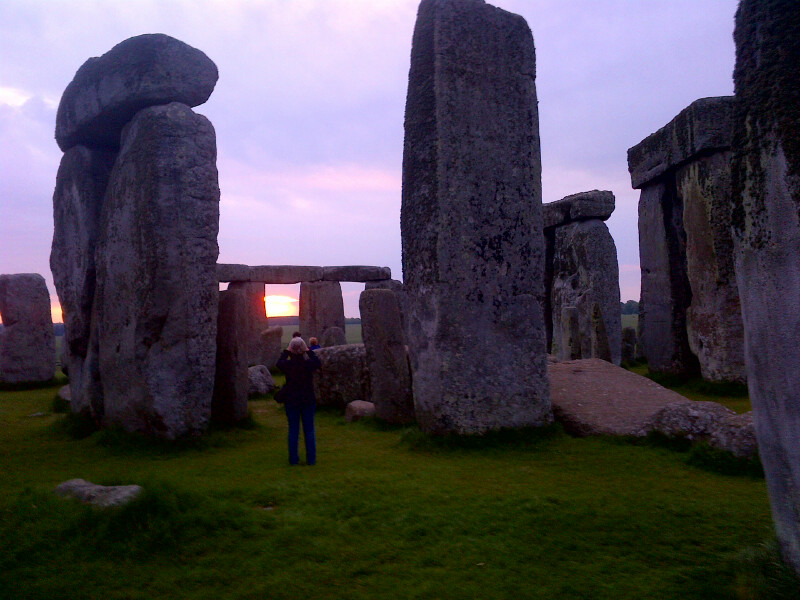
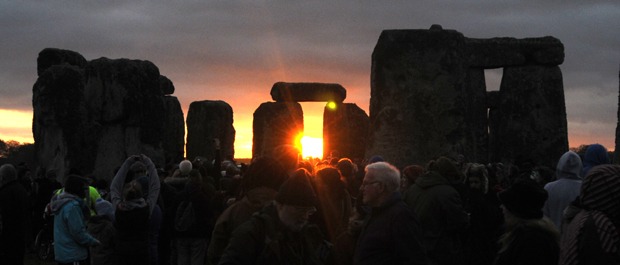
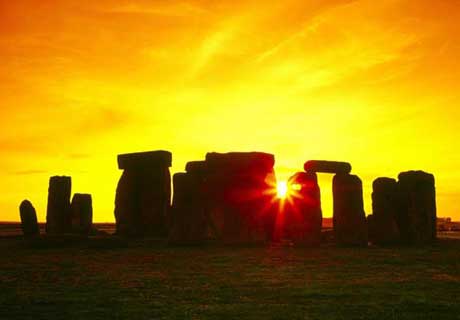
Stonehenge Solstice Ancient Celebration. June 21st 2013

16 06 2013

With the Summer Solstice fast approaching we start to see our visitor numbers increase in Wiltshire. It is a bumper time for our tourist industry as people from all over the world descend upon our county and join in with this ancient celebration.

The Summer Solstice is known to Pagans as ‘Alban Hefin’ which means ‘Light of the Shore’. It occurs on the 21st June when the sun is at its highest point in the sky and the days are at their longest. The nights begin to draw in after this date, which is a scary thought as summer has only just got going. The Druids celebrate this event with special ceremonies and rituals that are believed to date back several millennia. Although the 4000 year old monument of Stonehenge has been the centre stage for these ceremonies; Avebury, Woodhenge and the Kennet long barrow have also attracted worshippers at this special time of year.

Looking into our local studies archives I have discovered that the Solstice festivities have not always been peaceful as the Druids would wish.

In 1901, Salisbury Police invoiced the landowner of Stonehenge, Colonel Sir Edmund Antrobus ‘for police services rendered’ for the night of 20th June. He was charged for one Superintendent, one Inspector, two Sergeants and seven Constables a total of £3. 4s.2d. presumably this would have been for crowd control or public order duties.

During the 1950s the Druid procession was accompanied by the Military Police and members of the Army. The security operation was overseen by the Ministry of Works (a government department responsible for building projects). Public gatherings at Stonehenge increased not only by the number of people but also in disorder. There were reported to be many barrels and crates on site, presumably of beer. The ‘high jinks’ was quashed in 1956 when young officers threw ‘thunderflashes’ in to the unruly crowd.

By the early 1970s a small music festival was conceived, which took place in woods near Amesbury during the days leading up to the 21st June. This was the beginning of the Free Festival which continued to grow in popularity and controversy throughout the ‘70s until 1984 when it ended abruptly.

During the early 80s a new wave of ‘new age travellers’ replaced the ‘hippy’ label of the ‘60s. Large numbers of travellers would congregate on private land and were reported to have committed trespass, criminal damage and public order offences.

On June 1st 1985, events came to a head culminating in the infamous ‘Battle of the Beanfield’. It wasn’t until June 2000 that a truce was finally made between the authorities and members of the public; 5000 people were given the privilege of entering the sacred circle.

On Thursday 5th September, one of our archaeologists, Rachel Foster, will be giving a talk on ‘Stonehenge & Avebury World Heritage Sites’ at the History Centre, contact the centre for further details. Alternatively, records are available to view by members of the public. We have copies of newspapers on microfilm, newspaper articles in our ephemera collection and also scrapbooks on ‘The Battle of Stonehenge’. We also hold the book ‘The Battle of the Beanfield’, edited by Andy Worthington, published by Enabler Publications in 2005 and utilised for this article.

Article by: Anna Ervine Local Studies Assistant
Source: http://www.wshc.eu/blog/item/the-summer-solstice.html

Link: https://blog.stonehenge-stone-circle.co.uk/2013/06/01/stonehenge-summer-solstice-celebrations-2013/
Link: https://blog.stonehenge-stone-circle.co.uk/2013/06/10/summer-solstice-2013-stonehenge-managed-access/

Follow Stonehenge on Twitter for all the Solstice News: https://twitter.com/ST0NEHENGE

Merlin @ Stonehenge
The Stonehenge News Blog
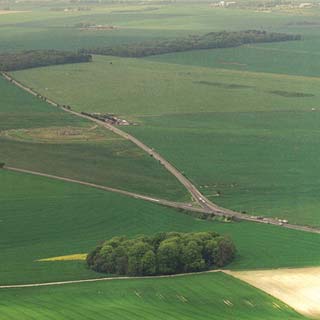


Inside Stonehenge – From Rubble to Riches

15 06 2013

When dealing with prehistory (before the written word) arguments will abound as to ‘who, when and why’, and no more so than the famous monument on Salisbury Plain, the circle of stones known the world over as Stonehenge. 5,000 years ago, give or take a decade, work began here with an initial earth bank and ditch with some form of wooden structure within. Debate continues as to what exactly was placed within the earth circle and further debates are put forward about the various phases of constructing the stone circle, where the stones came from and the importance of the Moon and Sun in the process of worship at the site. For a lot of day trippers it’s Stonehenge’s iconical status that brings them here in their thousands whether they are familiar with the documentaries churned out by travel channels, read Tess of the D’Urbervilles or have watched National Lampoon’s European Vacation.

Stonehenge inner circle tourMost visitors will arrive by private car, organised tour bus or public transport. In the latter case the local Wilts and Dorset bus service provides an easy link with Salisbury railway station and connections from London and other parts of Britain. Most people feel they’ve ‘done’ Stonehenge in an hour. For some, there is surprisingly little else around and the visitor centre itself seems inadequate for the amount of tourists that travel here. There is a good explanation for that – it’s a sensitive site. It isn’t always possible, nor often allowed, to create large permanent structures such as a restaurant and museum in an area where evidence of Neolithic and Bronze age cultures lay buried within every square foot of ground. Discussions have been under way for over a decade as to improving the site, building a visitor centre a mile east near the main road and burying that very road under a two mile tunnel. These discussions continue. [April 2010 update – a new Visitor Centre is planned, and should be open by summer 2012.] You can find out more about Stonehenge, and see important collections from the World Heritage Site, at Wiltshire Heritage Museum in Devizes and Salisbury and South Wiltshire Museum.]

For the time being visitors will have to make do with very little shelter if the weather proves inclement. Restrooms (including disabled) are available at the foot of the car park and there are others at top of the car park to the right of the entrance, before one walks down the ramp to purchase tickets. These are accessible by going down steps. Before heading down to the ticket booth, two stones are standing to the left. The smaller one is a Bluestone (Dolerite) used in first phase of stone circle building at Stonehenge and possibly from the Preselli Mountains in South Wales. The larger one is a Sarsen (Quartzite Sandstone) used in the later phase of construction. These sample stones are not taken from the circle and you are able to stand next to, touch or drape yourself across them for photographic purposes. Down at the foot of the ramp is the ticket kiosk and a small cafe. Only a somewhat limited collection of outdoor seating is provided, complete with flocks of starlings ready to swoop down on any crumb or morsel dropped by a hungry day tripper. Cheese and bacon scones, rock cakes, ice cream and hot and cold drinks are available. As the site has a captive audience sandwiches are priced higher than the average shop, ditto the plastic cups of grapes or strawberries.

The gift shop is only available to those that have paid the entrance fee and entered the site. Here you can purchase calendars, books, paperweights, fridge magnets, T-shirts and all things of a Neolithic nature.

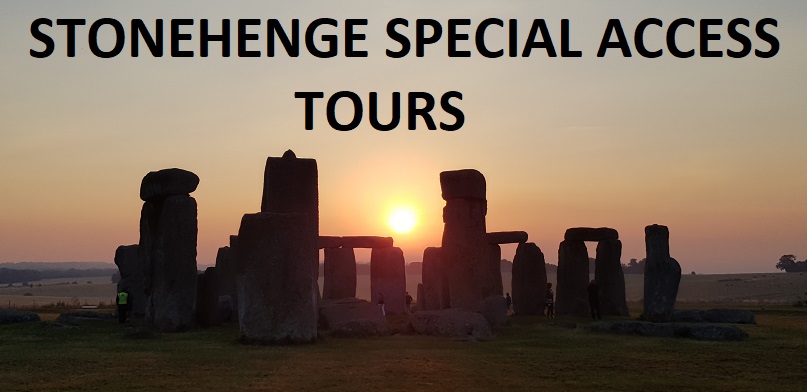
A free audio tour for paying visitors is available but during summer weekends they can be hard to get hold of, especially if you find yourself arriving just after a couple of coach loads of day visitors from London sandwiching Stonehenge between a morning at Windsor Castle and an afternoon in Bath. Access to the inner circle is available prior to the main site opening or just after closure. Arrangements for a ‘Special Access’ visit can be made through English Heritage or one of London’s day trip tour companies that pre-book inner circle visits on a daily basis. Other than that regular visitors are kept behind a small rope fence, which helps keep other tourists from walking in front of that all important shot.

While circumnavigating the site and listening to the audio tour one may be left wondering how many people visit this site and pay their £6 to get in. 800,000 people, rising to possibly one million by the end of the decade, make the journey to Stonehenge every year boosting the turnover of English Heritage and helping the conservation of other historically important places. One may also be left wondering, what if someone wrote down “today I’m going to build one of the best stone circles in the country” would we still be debating the purpose and timeline of this impressive site?

Full article: http://www.tripadvisor.co.uk/Travel-g528762-d188527/Amesbury:United-Kingdom:Stonehenge.html

Stonehenge


Summer Solstice 2013 – Stonehenge managed access

10 06 2013

English Heritage is once again welcoming people to Stonehenge to celebrate the 2013 Summer Solstice. Sunrise will occur at 4.52am on Friday 21 June, on what is the longest day of the year.
Summer Solstice

Peter Carson, Head of Stonehenge at English Heritage, said: “This is the 14th year that English Heritage has provided free access to the stones and we are looking forward to a peaceful celebration enjoyed by thousands of people. This ongoing success is due to English Heritage working closely with the key partners and communities and together delivering an enjoyable and safe solstice. And, as with every year, we will balance the needs of those attending the solstice with our duty to protect the Stone Circle and its surrounding monuments.”

“The opening of the new Stonehenge visitor centre in December this year with its museum-quality exhibitions, a spacious café, and dedicated education space, will herald an exciting new era for Stonehenge. The way in which people visit Stonehenge in the future will change: we will be uplifting the whole experience to a level that befits this extraordinary and important monument.”

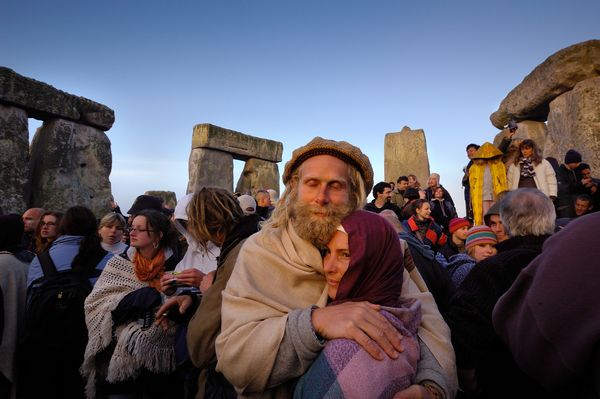
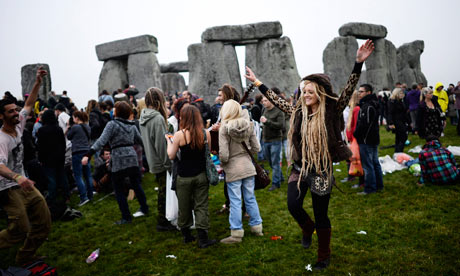
Over the night, people have the opportunity to celebrate the Solstice and this includes spontaneous drumming within the stone circle, playing of acoustic instruments and dancing in the performance area.  There will be a number of druid, pagan and other spiritual ceremonies throughout the night and especially at sunset and sunrise at various places around the monument, in particular the Heel Stone.

 For an idea of what to expect, view the Stonehenge Summer Solstice 2012 photo gallery.

Stonehenge will be open from 7pm on Thursday 20 June to 8am on Friday 21 June. The solstice car park, just off the A344 near Airman’s Corner, will open from 7pm on Thursday 20 June, with last admission at 6am on Friday 21 June.

Access to the stones and the car park is free of charge and subject to ‘Conditions of Entry’ which are published on the English Heritage website http://www.english-heritage.org.uk/summersolstice

Posted on June 5th, 2013 by in Stonehenge
InsideWiltshire: http://www.insidewiltshire.co.uk/2013-summer-solstice-stonehenge-managed-access/

The Stonehenge News Blog


Stonehenge Summer Solstice Celebrations 2013

1 06 2013

English Heritage is pleased to be providing Managed Open Access to Stonehenge for the Summer Solstice on 20-21 June 2013. Please help us to create a peaceful occasion by taking personal responsibility and following the Conditions of Entry and guidelines set out on these pages. The full Conditions of Entry can also be downloaded from the link at the bottom of this page

Stoneheng Summer Solstice Tour 2013

We have a duty of care to ensure public safety and are responsible for protecting  Stonehenge and its surrounding Monuments. If we are to ensure that future access is sustainable, it is essential that everyone observes and abides by these Conditions of Entry.

Celebrating the Summer Solstice at Stonehenge 

Stonehenge is an ancient prehistoric site and has been a place of worship and celebration at the time of Summer Solstice since time immemorial.

During Managed Open Access for Summer Solstice at Stonehenge, we support all individuals and groups conducting their own forms of ceremony and celebration providing that they are mutually respectful and tolerant of one another. It is a place seen by many as a sacred site – therefore please respect it and those attending.

English Heritage continues to work closely with the many agencies and people from all sectors of the community and we would like to thank them for their help and support.

Parking and entry to the Monument will be free, subject to the Conditions of Entry.  Please do not arrive at the Solstice Car Park or Stonehenge in advance of the opening times listed below:

    Timings for Summer Solstice at Stonehenge 

  • SOLSTICE CAR PARK OPENS  1900 hours (7pm) Thursday 20th June
  • ACCESS TO STONEHENGE 1900 hours (7pm) Thursday 20th June
  • LAST ADMISSION TO SOLSTICE CAR PARK   0600 hours (6am) Friday 21st June
  • STONEHENGE CLOSES  0800 hours (8am) Friday 21st June
  • SOLSTICE CAR PARK TO BE VACATED  1200 hours (12 Noon) Friday 21st June – see Travel and Parking for further information on travel and parking arrangements.

We hope the weather will be kind and wish you a peaceful and celebratory solstice.

    Stonehenge Sunset and Sunrise

Sunset and sunrise occur at the following times:

  • Sunset on Thursday 20th June 2013 is at 2126 hrs (9.26pm)
  • Sunrise on Friday 21st June 2013 is at 0452 hrs (4.52am)

STONEHENGE LINKS::

Conditions of entry: http://www.english-heritage.org.uk/content/imported-docs/p-t/summer-solstice-coe13.pdf
More info: http://www.english-heritage.org.uk/daysout/properties/stonehenge/summer-solstice/

Follow Stonehenge on Twitter for Solstice News, traffic updates, photos on the day: https://twitter.com/ST0NEHENGE

Merlin says “Please respect the Stones!”

The Stonehenge News Blog


Archaeologists uncover Pagan skeletons at housing development near Stonehenge

21 05 2013

Archaeologists have discovered six Pagan Saxon skeletons dating back over 1,000 years on a housing development site just a few miles from Stonehenge.

Wessex Archaeology

Wessex Archaeology

The discoveries, which also include round barrows dating back to the Bronze Age 4,000 years ago, were unearthed at a redundant brownfield development site in Amesbury, Wiltshire, which is also famous for the Amesbury Archer – an early Bronze Age man found buried among arrowheads.

The remains are thought to be those of adolescent to mature males and females. Five skeletons were arrayed around a small circular ditch, with the grave of a sixth skeleton in the centre. Two lots of beads, a shale bracelet and other grave goods were also found, which suggest the findings are Pagan.

The site is now being excavated for other artefacts by Wessex Archaeology, led by Phil Harding, known for his work on Channel 4’s Time Team, while colleagues back at the unit’s laboratory examine the remains and jewellery, which have already been removed.

Phil said: “Given that the Stonehenge area is a well-known prehistoric burial site, it was always very likely some interesting discoveries would be made here. The fact that these round barrows were previously unknown makes this particularly exciting.

“Finding the skeletons also helps us to get a clearer picture of the history of this area. To my knowledge these are the first Pagan Saxon burials to be excavated scientifically in Amesbury. “

Landowner Aster Group is building 14 affordable homes at the redundant brownfield site, which will be available to rent from 2014.

Anna Kear, Aster’s regional development director for Hampshire and Wiltshire, said: “Wiltshire is a treasure trove of archaeology, drawing people from across the world.

“Discovering a burial site in this beautiful county is always a possibility when building affordable homes. We’re working with everyone involved to ensure Phil and his team can investigate this exciting find while the build continues.”

Contractor Mansell, a Balfour Beatty brand, was preparing the site for the build when it made the discovery.

Site manager Brian Whitchurch-Bennett, of Mansell, said: “When we’re working in an area of historical importance we always undertake archaeological investigations to make sure that our construction works don’t damage hidden remains or artefacts. The findings within this particular site really are a one off, we’ve been amazed by the number of discoveries and the level of preservation. It’s certainly a project to remember.”

The archaeologists are expected to be on site for six weeks in total. Footage from the site may also be included in an archaeological production for ITV’s History Channel, due to be aired in January 2014.

Source: Published by Jon Land for 24dash.com: http://www.24dash.com/news/housing/2013-05-17-Archaeologists-uncover-Pagan-skeletons-at-housing-development-near-Stonehenge

Merlin @ Stonehenege
The Stonehenge News Blog


A visit to Stonehenge is bound to make you ask: who built it?

16 05 2013

Who built Stonehenge?
A visit to Stonehenge is bound to make you ask: who built it?  It is a question nearly as old as the stones themselves.  And what do we know about the people who achieved this prehistoric marvel? Words Susan Greaney

Wizard Ideas 

In the early medieval period, writers thought they knew who had built Stonehenge—Merlin. But by the early 17th century, scholars were looking for a more plausible answer. In 1620, architect Inigo Jones thought it was based on classical geometry and constructed by the Romans. Antiquary John Aubrey thought that the native Britons, in particular the Druids, were the builders of Stonehenge. Antiquary William Stukeley’s 1740 book firmly established the idea that it was a Druid temple.

Towards the end of the 19th century, archaeologists began to realise that Stonehenge could be much older, linking finds to the Bronze Age. William Gowland’s excavations in 1901 showed that Stonehenge was built in Neolithic or early Bronze Age. Today, we think the stones were raised about 2,500 BC by the native inhabitants of late Neolithic Britain.

The Early Theories…

stonehenge_1

stonehenge-port-JOHN_AUBREYJohn Aubrey Proposed that Stonehenge was a temple built by the Druids, the priests of the pagan Celts, who came to England in the centuries immediately prior to the Christian era.


stonehenge-port-WILLIAM_STUKELEYWilliam Stukeley The first person to recognise the alignment of Stonehenge on the solstices. Like John Aubrey, however, he mistakenly attributed their construction to the Druids.


stonehenge-port-INIGO_JONESInigo Jones Believed the stones were a Roman temple of the Tuscan order built to the sky god Coelus. Later disproved by evidence establishing the period in which the stones were first laid.

Past Lives

Stonehenge was built before metal began to be used in Britain. The most common finds from this period are flint tools required for everyday activities such as hunting, making leather and preparing food. We know from animal bones that the people who constructed Stonehenge had livestock and probably also grew small quantities of crops, but still gathered wild plants and hunted wild animals.

stonehenge_3

Whether visiting in 1958 or today, children have always been fascinated by Stonehenge.
At the time that Stonehenge was built, people across Britain were using a type of flat-based decorated pottery called Grooved Ware, often found at late Neolithic monuments across Britain. Many of these prehistoric finds can be seen at Wiltshire Museum, Devizes, at Salisbury and South Wiltshire Museum and at the new Stonehenge visitor centre later this year.

Neolithic Puzzles

Until a few years ago, experts thought late Neolithic people were largely mobile, moving between seasonal temporary camps. But in 2006, a team led by Professor Mike Parker Pearson, part of the Stonehenge Riverside Project, discovered several small buildings at Durrington, just over two miles north-east of Stonehenge. These houses appear to have been inhabited on a temporary, seasonal basis about 2,500 BC, the time that Stonehenge was built. Was this where its builders lived?

Among the excavated houses were mounds of rubbish, including cow and pig bones and broken Grooved Ware pottery, showing that large midwinter feasts were held here. Nearby were complex timber monuments, buildings set within special enclosures and other strange wooden structures. This was a place of ritual, probably connected to the ceremonies at Stonehenge.

stonehenge_4

Stone arrowheads and grooved pottery have helped our understanding of the Neolithic period
After the settlement was abandoned, an enormous henge called Durrington Walls was built, which is still visible today. Part of Durrington Walls and nearby Woodhenge are English Heritage properties you can explore. You can walk from Stonehenge across the fields to Durrington Walls, perhaps the route that its builders took. You’ll see other fragments from the past—the enormous Cursus monument, which pre-dates Stonehenge, and many of the early Bronze Age round barrows that scatter this area.

People Power

There are further clues in the monument itself. Transporting the stones, shaping them and fitting them together took great organisation and hundreds of people in what was a sophisticated and organised society. You can find out more at Stonehenge’s new visitor centre later this year.

Neolithic Life: Round the Houses

stonehenge_2Outside the new Stonehenge visitor centre will be an external gallery, where we’ll be recreating three of the late Neolithic houses excavated at Durrington Walls. Here you’ll be able to see what life was like at the time Stonehenge was built. And at Old Sarum, Wiltshire, volunteers are building some prototype houses to test different ideas about the methods and materials used.

You can follow the progress of our project on our blog at www.neolithichouses.wordpress.com and our Twitter account @NeolithicHouses. If you’d like to get involved with building the houses at the visitor centre next year, or working in the external gallery, keep an eye on our website for volunteering opportunities.

We’ll be holding tours and open days at the Old Sarum houses so you can come and learn more about prehistoric life and experimental archaeology:

All details and booking information can be found on our What’s On page

English Heritage website: http://www.english-heritage.org.uk/

Merlin @ Stonehenge
The Stonehenge News Blog


Dorset history experts turn Stone Age home-makers.

14 05 2013

A team of Dorset archaeologists have been brought in to help with the £27 million project to transform the visitor experience at Stonehenge.

Stone age homes construction smallStaff from Dorset County Council’s Ancient Technology Centre (ATC), at Cranborne, have been commissioned by English Heritage to test build three Neolithic houses and help discover how Stone Age man fashioned his homes.

Working at the historic site of Old Sarum, near Salisbury, the ATC team (with the help of English Heritage volunteers) is constructing the houses using the same tools and locally sourced materials as their Stone Age counterparts.

The final constructions will go on permanent display at the new Stonehenge visitor centre early next year.

Susan Greaney, senior properties historian at English Heritage, said:

“The reconstructed houses will be an immediate and sensory link to the distant past and will bring visitors as close as they can to appreciate what life was like for the extraordinary individuals who built Stonehenge.”

An excavation at Durrington Walls near Stonehenge revealed evidence of the houses believed to be seasonal homes of the people who built the ancient monument 4500 years ago, uncovering floors and stakeholes where the walls once stood. But above ground, the appearance of the structures is unknown. One of the aims of the project is to test different materials and structures to see which ones work best.

The Ancient Technology Centre (part of Dorset County Council’s Outdoor Education Service)  is an educational facility which provides a unique blend of hands-on ancient skills and crafts activities, long-term construction projects and an opportunity for children of all ages to experience the realities of past life.

The staff’s extensive expertise and experience made them ideal candidates for the Stonehenge project. The team have gathered materials for the huts from Garston Woods in Sixpenny Handley and the Cranborne Estate, and are using traditional Stone Age flint axes and tools to carry out the work.

ATC manager Luke Winter, who is leading the project and guiding the volunteers said:

“The evidence from Durrington Walls brought to light the remains of several types of building. We’re trying to reconstruct what they looked like above ground. We’re testing lots of different thatching and walling methods, and new questions about how the Neolithic people lived are appearing every day.”

The experimental Neolithic houses at Old Sarum are open to the public, with a chance to ask questions and view demonstrations, from Saturday, 25 May to Monday 27 May, between 11am and 5pm. For more information please call English Heritage Customer Service on 0800 333 1183.

You can keep up to date with this project via the Ancient Technology Centre  webpage.

For more information, please contact: Dorset County Council

Merlin @ Stonehenge
The Stonehenge News Blog


Stonehenge Visitor Centre and Galleries Preview Tour.

11 05 2013

What happened on the visit ? We met English Heritage; Loranie Knowles (Stonehenge Project Director), Richard Williams (Stonehenge Project Manager) and Lisa Holmes (Stonehenge Community Projects Manager) together with staff from Vinci Construction.

Stonehenge Visitor Centre

Collectively they shared their experience behind the scenes of how the fantastic new facility is being made possible.  We got a tour around the site and also a chance to ask questions.

We also had an opportunity to make comments after the tour and shared our thoughts about the build, along with ideas and ways we would like to see the centre used by local community in the future

The open day has been organised and hosted by English Heritage with thanks to Vinci Construction and to Heritage Lottery funding which supports local community involvement in the Stonehenge Environmental Improvement programme.

Stonehenge Visitor Centre

Panoramic view of Stonehenge Visitor Centre Roof

Stonehenge Visitor Centre

Panoramic view of Stonehenge Visitor Centre from the new coach park

Stonehenge Visitor Centre

Panoramic view from the Stonehenge Visitor Centre Souvenir Shop

Stonehenge Visitor Centre

Panoramic view of the Stonehenge Visitor Centre from the West

More images of the exterior and interior:

The Stonehenge 360 Cinema

The Stonehenge 360 Cinema

Stonehenge Visitor Centre.  Roof top view

Stonehenge Visitor Centre. Roof top view

Stonehenge Visitor Centre.  Main entrance.

Stonehenge Visitor Centre. Main entrance.

Loraine Knowles, Stonehenge director for English Heritage, said: “It is fantastic to see the building taking shape and to see how well it sits in the landscape. “Progress with the creation of the interior spaces for the museum galleries, education area, shop and cafe is equally exciting because it is now possible to see on the ground how these great new facilities will be experienced by our visitors.

English Heritage’s £27million project to transform the visitor facilities at Stonehenge will see the new centre open in December, with the existing facilities to be demolished and grassed over by next June.

Merlin @ Stonehenge
The Stonehenge News Blog


Topping out ceremony at Stonehenge visitor centre

11 05 2013

A TOPPING out ceremony was held at the new Stonehenge visitor centre on Wednesday as the last piece of steel to support the canopy roof was welded into place.

The zinc and timber roof has been designed to blend into the landscape and to let in more sunlight in the winter while creating shade in the summer.

Stonehenge Visitor centre

Sitting beneath the canopy roof are two pods, with a glass building housing the café, shop and education space and a sweet chestnut-clad pod containing the exhibition galleries, membership area and toilets

Loraine Knowles, Stonehenge director for English Heritage, said: “It is fantastic to see the building taking shape and to see how well it sits in the landscape. “Progress with the creation of the interior spaces for the museum galleries, education area, shop and cafe is equally exciting because it is now possible to see on the ground how these great new facilities will be experienced by our visitors.

Steve Quinlan, partner at Denton Corker Marshall, who designed the visitor centre, said: “We are really enjoying this stage of the project with the various pieces of the puzzle coming together and our vision finally starting to come to life. This project has been a great challenge, but a very rewarding one.”

English Heritage’s £27million project to transform the visitor facilities at Stonehenge will see the new centre open in December, with the existing facilities to be demolished and grassed over by next June.

Article Source: Salisbury Journal: http://www.salisburyjournal.co.uk/news/10411788.Topping_out_ceremony_at_Stonehenge_visitor_centre/

Merlin  at Stonehenge
The Stonehenge News Blog


Stonehenge: a not-so-subtle hint of change?

11 05 2013

heritageaction's avatarThe Heritage Journal

It’s inevitable that major changes to the physical environment of Stonehenge will also involve a radical re-think of how it’s managed. Not that you’d realise that from the recent headlines – those seem to suggest managing the place involves only one thing …

.

headlines

.

Those headlines must be irksome for EH. The new Stonehenge General Manager will have massive responsibilities. (Although if the world thinks a small minority of people are the dominant stakeholders in Britain’s national icon EH have no-one to blame but themselves!). We should stress we’re not anti-Druid though – if they wish to celebrate solstice at Stonehenge good luck to them. But the trouble is the Druids say there are often only a dozen or two actual Druids there together with tens of thousands of others comprising pagans, pagans-of-convenience and party-goers in proportions unknown (but suspected). Again, we’re not anti-solstice-celebrations, but we’re anti-overcrowding, clambering on…

View original post 78 more words