How the Magpie Musicians came to stand for free Stonehenge

6 04 2016

Mike Pitts's avatarMike Pitts Digging Deeper

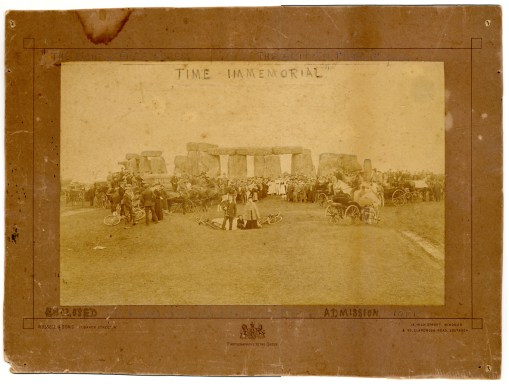
Magpie Minstrels JFuller.jpgFour years ago (time, even immemorial, flies) I was working on an exhibition about Stonehenge for English Heritage, and I wrote a blog about a frequently reproduced photo of the stones. The image shows a crowd of people, bicycles and carts and horses, and had been commonly said to show a protest in 1901 against an admission charge. In fact the photo was taken in 1896 (along with at least one similar shot), on the occasion of a visit from a travelling musical troupe called the Magpie Musicians.

To my delight Jim Fuller recently got in touch with me through this blog, and supplied information and photos that tie up the story of these remarkable images. He sent me several photos, which he has kindly allowed me to publish here. One of the two prints I described, at the Wiltshire & Swindon History Centre (WSHC), is stamped “T.L. Fuller, Press…

View original post 1,122 more words


Jewellery from the mysterious ‘queen’ of Stonehenge goes on display: Stunning pieces were found in the grave of a high-status woman 200 years ago

24 03 2016
  • Woman’s remains were found in 1808 in a grave overlooking Stonehenge
  • Collection includes amber earrings, buttons from a cloak and pendants that indicate the woman had social status
  • Her identity is unknown it is unclear why she was given such a lavish burial
  • Objects are going on display for first time at Stonehenge Visitors Centre

In the early 19th century, William Cunnington discovered a burial site near Stonehenge.

In one of the barrows he excavated at Normanton Down, the remains of a woman were found alongside some of the most well-preserved jewellery historians have ever seen.

Now, more than 200 years later, these artefacts are going on display for the first time.
visitor-treasure

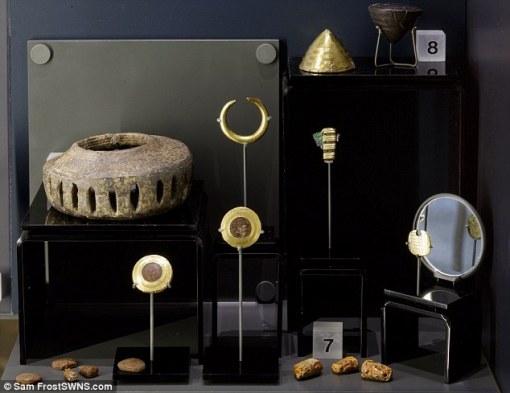
Mysterious jewellery and belongings (pictured) of a woman so important she was buried at a prime spot overlooking Stonehenge are going on display for the first time. Archaeologists are still baffled by some of the items found alongside the body of a female interred in a burial chamber on a ridge

In the early 19th century, William Cunnington discovered a burial site near Stonehenge.

In one of the barrows he excavated at Normanton Down, the remains of a woman were found alongside some of the most well-preserved jewellery historians have ever seen.

Now, more than 200 years later, these artefacts are going on display for the first time.

The treasures that will go on display include amber earrings which are the earliest items found in Britain to show signs of being worked with a lathe.

Buttons from a cloak and pendants also indicate the woman had social status, although her identity has never been established and it is not known why she was given such a lavish burial.

The objects were discovered in the early 19th century by William Cunnington.

‘No barrow that we have yet opened has ever produced such a variety of singular and elegant articles,’ archaeologist Sir Richard ‘Colt’ Hoare wrote at the time.

This Easter the objects are going on display at the Stonehenge Visitors Centre.

By ABIGAIL BEALL FOR MAILONLINE
Read the full story and see the gallery on the Daily Mail website

The Stonehenge News Blog


Stonehenge: a prehistoric tourist trap

22 03 2016


Why are there jackdaws at Stonehenge?

15 03 2016

Prof. Howard M. R. Williams's avatarArchaeo𝔡𝔢𝔞𝔱𝔥

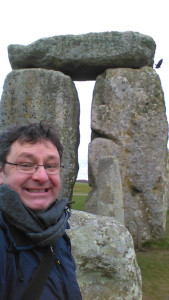
IMG_20160306_084437 Me, trilithon and jackdaw

Intro

My life is so successful, I’ve got everything a Prof could ever need,

I’ve got REF outputs and milk chocolate, and I’ve even got a WordPress blog indeed.

And I know I should be happy, but instead,

there’s a question I can’t get out of my head:

Why are there jackdaws at Stonehenge?

Visiting Stonehenge

For the first time in my life, I combined a brief foray down to Wiltshire with an advance early morning pre-opening booking to go inside the stones of Stonehenge.

For the record, I drove an Astra (a car you can trust). Never mind the car, let’s talk about the henge.

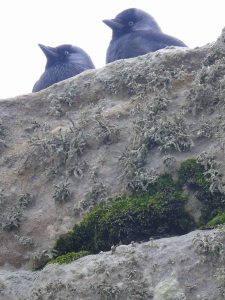
PANO_20160306_082008 Panorama of Stonehenge, with jackdaw perched in plain view

DSC00656It was a cold, early March Sunday morning. I parked and waited at the visitor centre, showed my ticked and then experienced an empty bus as I was driven to the stones. As I alighted, the…

View original post 432 more words


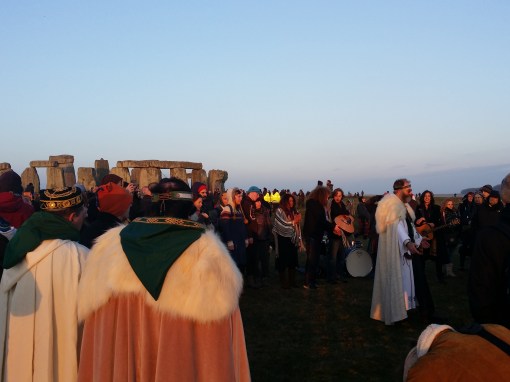
Stonehenge Spring (Vernal) Equinox Open Access: 20th March 2016

8 03 2016

The ‘Managed Open Access’ at Stonehenge for the Vernal (Spring) Equinox, will be from approximately 05.45 am until 08.30 on 20th March 2016

• Access to Stonehenge for the Spring Equinox will take place on the morning of 20th March 2016 (source: http://www.sarsen.org/)

The Vernal Equinox is at 04:30GMT
Sunrise will be 6.07am

Stonehenge-Spring-Equinox-2015 (60)

• Entrance to the monument will commence as soon as ‘light-levels’ are deemed safe enough to permit. For the past couple of years this has occurred around 0545h however EH would ask that people are patient should the morning prove ‘overcast’ and a slight delay occurs.

• Access to Stonehenge will cease at 0830h and the cooperation of all of visitors in ensuring the monument is vacated at this time would be most appreciated.

• Temporary toilets (Porta-Loos) will be available at the monument once the site is open for public access. This includes a provision for those with disabilities.

•The Cafe and Shop at the new Visitor Centre at Airmans Cross should be opening for visitors from approximately 0800h on the morning of 20 March. Please note that the toilets at this location will also become available for use at this time. Although the Cafe will be opening only hot and cold drinks will be available for the first hour. Pasties etc will become available after 0900h.

Final confirmation from English Heritage as to these arrangements has not been forthcoming so please check before relying on this notice.

Follow us on Twitter for the lastest news and Equinox Sunrise pics

The Stonehenge News Blog


Brilliant winner of British Life Photography award

7 03 2016

Mike Pitts's avatarMike Pitts Digging Deeper

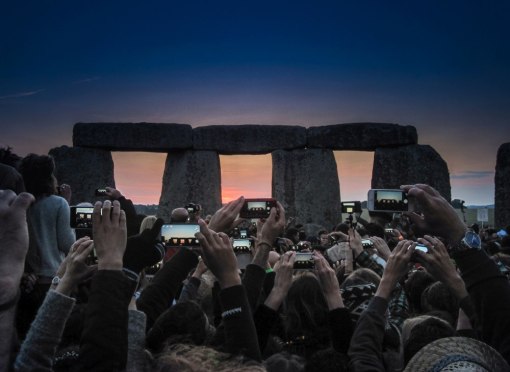
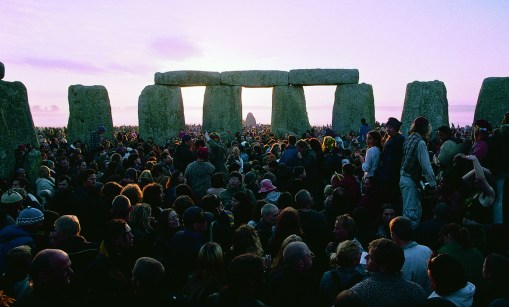
2015-winner-51920.jpgVisiting Stonehenge at midsummer over the years has been an experience of time passing, marked by portable camera technology. The worst year was when video cameras with side viewers were in fashion, you looked over a forest of hands raising up the blank gadgets which no one could see into. What works so well here is that the large electronic viewing screens show the view, with most of the photographers trying to get the stones without the crowd: taking all that trouble and ending up by not recording what’s in front of them (and doubtless having fun while doing it). A great shot by Elena Marimon Munoz

British Life Photography can be seen at the Mall Galleries, London March 7– 13 March, and Banbury Museum March 25–July 9

Below: The Kodachrome days

Stonehenge Mike PItts.jpg

View original post


Sights to visit around Stonehenge.

4 03 2016

While Stonehenge is by far and away the superstar of southern England, and no visit to Wiltshire is complete without touring it, Stonehenge is in fact just one of many ancient sites in the area. Indeed, the surrounds of Stonehenge contain the most densely-grouped collection of neolithic sites and monuments within England – and more are being discovered all the time. It’s thought that the nearby settlement of Amesbury (believed to be the oldest in Britain) was a major cultural centre during the island’s ancient days. If you’ve got some time to spare during your Stonehenge trip, and want to take in some of the area’s other sights, here are a few suggestions:

20150626_104439_resized

Within Walking/Cycling Distance Of Stonehenge – Woodhenge, Durrington Walls, The Cuckoo Stone

In all fairness, you can strike out in pretty much any direction from Stonehenge and hit archeological gold – although you may not always recognise it as such. Just be careful not to wander into the path of the military (who train on Salisbury Plain). If you’re cycling, be sure that you’re properly prepared for historically significant (but nonetheless unexpected) bumps and tumbles! Woodhenge, less than four miles from Stonehenge, is an odd sight at first glance. However, once you understand what you’re looking at, it becomes much more impressive. It’s thought that this was once a large burial mound with a complex system of banks and ditches (now eradicated through ploughing). Thousands of years ago, six concentric rings of wooden posts may have supported an enormous building. Today, the position of these posts are marked with stumps. It’s an atmospheric and very interesting place! A short walk away from Woodhenge is Durrington Walls – a recently discovered monument which in its heyday would have dwarfed Stonehenge. The ‘Walls’ were formed by lines of enormous stones, which could possibly have formed a processional way leading to Stonehenge itself. There’s not masses to see there now, but it’s still a lovely area! West of Woodhenge is the Cuckoo Stone – a sarsen boulder lying on its side. It was once a standing stone, the origins of which remain a matter of debate. It’s an enigmatic piece of history in a very atmospheric location.

Salisbury – Old Sarum, Salisbury Museum

Old Sarum is a wonderful visit for anyone with an interest in history. It’s the site of Salisbury’s oldest settlement – a hilltop fort commanding absolutely incredible views over Wiltshire. There’s an iron age hillfort to walk around, the remains of a castle to admire, and an absolutely breathtaking panorama which will give the camera-happy everything they could ever dream of. There are also plenty of events put on by English Heritage throughout the year, giving people the opportunity to really step back in time! Down in Salisbury itself, the Salisbury Museum is packed full of fascinating finds from all over the county. It’s a well laid-out and beautifully explained museum, with some truly intriguing exhibits. You can find it just opposite Salisbury Cathedral – which it itself a beautiful and interesting building.

A Short Drive Away – Avebury, West Kennet Long Barrow, Silbury Hill

A 40 minute or so drive from Stonehenge is Avebury. Managed by the National Trust, this ancient stone circle sits in a Neolithic landscape incorporating avenues of standing stones, a henge, and an enormous stone circle in which a village was once situated. The stone circle itself is the largest in the world, and contains two smaller circles. A short walk away is West Kennet long barrow, which can be entered by those who are neither claustrophobic nor fearful of our long-dead ancestors! Then, of course, there are the round barrows with which the landscape is littered, and the curious structure of Silbury Hill. Silbury Hill is the largest prehistoric mound in Europe, and would have taken similar effort to construct as its contemporary pyramids in Egypt. It was clearly important to those who built it – although, unlike most barrows of its kind, it contains no burial. Its purposes remain perplexing, but its presence is both beautiful and fascinating! Anyone with an interest in Stonehenge and its ilk, particularly those who enjoy the mystery of the structure, will find much to whet their appetites at Avebury and Silbury!

There are Stonehenge tour companies who operate guided tours of the area and the Visit Wiltshire webiste lists the best ones.  If you want to explore the Stonehenge landscape with a local expert then we recommend ‘The Stonehenge Travel Company

The Stonehenge News Website


Experience Sunrise at Stonehenge 2nd March. #Periscope Drone Live Stream

28 02 2016

LIVE! Catch the sunrise at Stonehenge. With Dan Snow #Dronehenge #Periscope.

Stonehenge is a magical place to be, steeped in mystery and History. We’re delighted that English Heritage have given us special access to film from this ancient stone circle, a UNESCO World Heritage site. Live on March 2nd from 6 am. The sunrise is at 6:50 am GMT.

dronehenge

How do we let people, a lot of people, know about a very special live event that is only happening online without a massive marketing budget? How can live streaming compete with the mass of distractions out there? There’s no TV schedule. No billboards. No iPlayer for this sort of thing.
Live streaming is special; Periscope is special because the audience is there with you. People ask Dan Snow, “Why do you Periscope? The audience isn’t massive…it doesn’t pay anything. What’s the point?”
If you haven’t watched one of Dan’s ‘scopes’ you haven’t experienced the tangible excitement ‘live’ brings to the show. It’s more than a show. From under the bow of the Mary Rose – where they installed wifi especially, to the extraordinary views at Gallipoli, scrambling through the underbrush in Harfleur in the search of Henry V’s battlements, to the cacophony on an airborne Lancaster bomber -one use in infamous Dam Buster raid.Dan Snow takes you to places other broadcasts cannot reach. 
Armed with just his iPhone and a respectable 4G signal, Dan is liberated from the traditional film crew and all that goes with that. Periscope is the app that’s made this possible – in just under a year Dan Snow has filmed almost 100 ‘scopes’ from all over the world, to a global audience.
Dan Snow is the resident ‘history guy’ for the BBC’s ‘The One Show’.
When we heard Periscope had teamed up with action camera company:GoPro we got excited. We could now ‘hand-off’ to an external camera wirelessly – our synapses began to fire.
What could Dan do with an external camera that would enhance the form? We’d seen GoPros – these matchbox-sized cameras with a high fidelity camera – strapped to skiers helmets, screwed to BMX bikes, and stuck on surfboards. What could Dan do to create stunning visuals, to enhance the story, and where should he take it?
“It’s got to be a drone, and it’s got to be Stonehenge,” said Dan, without missing a beat.
After a month of phone calls, planning, testing, tinfoil, and tech-wizardry, we’re ready. And with help from Periscope – we’re delighted that Dan will be able to do something during the live stream that would have been impossible to do otherwise! You’ll have to wait and see!
Tinfoil? Yep! The limitations of wifi range between the iPhone and the GoPro, signal frequencies of the drone (don’t cross the streams!), we’ve learned some expensive lessons. Falling down 7 times and getting up 8. After all the planning and testing we’re ready.
Stonehenge is a magical place to be, steeped in mystery and History. We’re delighted that English Heritage have given us special access to film from this ancient stone circle, a UNESCO World Heritage site. Live on March 2nd from 6 am. The sunrise is at 6:50 am GMT.
CLICK HERE FOR DETAILS
We hope you will join us on the ‘scope’. We would love it if you’d help us spread the word by joining this Thunderclap! Thank you!
Follow Dan Snow on Twitter
Follow Dan Snow on Persicope
Follow Stonehenge News on Twitter
Follow Stonehenge on Periscope (includes live broadcast of 2016 Summer Solstice Celebrations)
Follow Visit Stonehenge on Persiscope. 
The Stonehenge News Blog
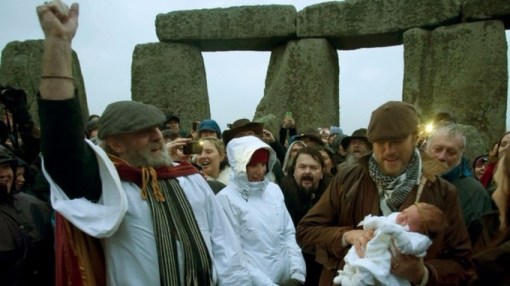


Walking the Dead: Exploring the Stonehenge Ceremonial Landscape

20 02 2016

A guided tour of the amazing collections of the Wiltshire Museum, followed by a guided walk from Durrington Walls to Stonehenge. This full day tour will be led by Museum Director, David Dawson.

10:30 am, Saturday, 21st May, 2016

walking-deadThe morning visit to the Museum starts at 10.30am and the walk begins at 2pm. We should reach the Stonehenge Visitor Centre at about 5.30pm.

The day begins with coffee and a guided tour of the Wiltshire Museum. The early story of Wiltshire is told in new galleries featuring high quality graphics and leading-edge reconstructions. On display are dozens of spectacular treasures dating to the time of Stonehenge and worn by people who worshiped inside the stone circle.

The tour is followed by a light lunch,

The walk will take approximately 3.5 hours, and starts at Durrington Walls and Woodhenge, close to the River Avon. The route passes the Cuckoo Stone, a megalithic standing stone, before following the Apple Track – a WW1 light railway. The route then passes the prehistoric Cursus, before passing the Bronze Age barrows of Kings Barrow ridge.

The route then follows the Avenue – the Neolithic ceremonial route that leads to Stonehenge following the line of the solstice.

At Stonehenge, you have three options:

1. Visit Stonehenge. This is free for English Heritage and National Trust members, but is not included in the cost. If you are not a member, then you should book your visit online from the English Heritage and you should choose a timed ticket for about 4.30 pm. You can then take the English Heritage shuttle bus to the Stonehenge Visitor Centre.
2. Continue to the Cursus barrows and the Western end of the cursus, before continuing to the Stonehenge Visitor Centre.
3. Take the English Heritage shuttle bus to the Stonehenge Visitor Centre and purchase a well-earned snack and cup of tea.

At about 5.30pm, at the end of the walk, there will be car-share transport back to your car at the start of the walk, or back to the Wiltshire Museum in Devizes.

Cost: £35 (WANHS member), £40 (non-member)

Booking: Visit Wiltshire Museum Website

The Stonehenge News Blog

Essential.
Please note that the cost does not include entrance to Stonehenge.


NEW INFORMATION LEAFLET ON THE STONEHENGE AND AVEBURY WHS

19 02 2016

A new information leaflet has been produced by the World Heritage Site Coordination Unit to help to explain what a World Heritage Site is, why Stonehenge and Avebury is designated as a World Heritage Site and how it is managed. The leaflet also outlines the priorities of the World Heritage Site Management Plan.

Many people know about the important role that English Heritage Trust at Stonehenge and Front-cover-pic-154x300the National Trust at Avebury and in the Stonehenge Landscape play in managing the key monuments within the WHS but how the UK Government carries out the obligations of the World Heritage Convention 1972 are less well known.  This leaflet is a brief explanation of how the two landscapes of the WHS are managed.

The leaflet will be distributed at key community sites and available when the Coordination Unit attends meetings and events.

If you require copies of the leaflet please contact the World Heritage Site Coordination Unit.  A web version of the leaflet can be found here.  Stonehenge & Avebury WHS web version

The leaflet has been produce with support from Historic England.

More information on the Stonehenge and Avebury WHS website.

excerpt-of-leaflet-300x262

Extract from the Stonehenge, Avebury and Associated Sites
WHS Management Plan 2015

The Stonehenge and Avebury World Heritage Site is
universally important for its unique and dense concentration of
outstanding prehistoric monuments and sites which together
form a landscape without parallel. We will work together to
care for and safeguard this special area and its archaeology and
will provide a more tranquil, rural and ecologically diverse
setting for it and its archaeology. This will allow present and
future generations to explore and enjoy the monuments and
their landscape setting more fully. We will also ensure that the
special qualities of the World Heritage Site are presented,
interpreted and enhanced where appropriate, so that visitors,
the local community and the whole world can better
understand and value the extraordinary achievements of the
prehistoric people who left us this rich legacy. We will realise
the cultural, scientific and educational potential of the World
Heritage Site as well as its social and economic benefits for
the community.

The Stonehenge News Blog