STONEHENGE MODEL IS TOURING THE UK!

7 02 2011

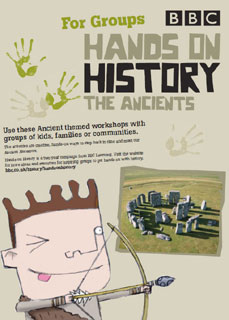
To celebrate the new BBC Two series on the Ancient Britons, a Stonehenge model is touring the UK. 

English Heritage policy researchers, archaeological investigators, surveyors and historians have all been keen to join forces and investigate a variety of archived information, including 3D data from a previous survey of the monument in 1993, old plans and photos of the 1958 re-erection, in order to supply correct dimensions.

Others have also helped to supply images, information and check details for a series of popular, jointly branded learning resources as part of an ongoing partnership between BBC Learning and English Heritage Education.

Resources on the Normans went down well at English Heritage properties last year and prehistory timelines and group activity guides are currently being handed out free of charge to families and learning groups visiting Stonehenge.

All these can also be downloaded from the BBC Hands on History website where teachers, parents and students can also find events, a map of sites to visit, animations featuring the Hands on History mini-time traveller, Eric and more.

The Stonehenge road show will challenge families to help solve the mystery of how the stones were moved and also feature interpretation boards and an interactive mini drama led by historical interpreters. It is scheduled to visit shopping centres in five locations from 11.00am – 15.30pm:

  • Monday 21 February: Queen’s Arcade, Cardiff
  • Tuesday 22 February: thecentre:mk, Middleton Hall, Milton Keynes 
  • Wednesday 23 February: Swindon Designer Outlet
  • Thursday 24 February: Westfield Derby
  • Friday 25h February: MetroCentre, Gateshead

Stonehenge model is touring the UK. 

English Heritage experts are helping BBC Hands on History make the most of a new BBC Two TV series, ‘A History of Ancient Britain’, scheduled to start on 9 February. They are pulling out all the stops to get an inflatable scale model of one Stonehenge trilithon (two uprights and a lintel) as accurate as possible before it goes on a whistle-stop tour of five city centre shopping centres from 21-25 February

English Heritage policy researchers, archaeological investigators, surveyors and historians have all been keen to join forces and investigate a variety of archived information, including 3D data from a previous survey of the monument in 1993, old plans and photos of the 1958 re-erection, in order to supply correct dimensions.

Others have also helped to supply images, information and check details for a series of popular, jointly branded learning resources as part of an ongoing partnership between BBC Learning and English Heritage Education.

Resources on the Normans went down well at English Heritage properties last year and prehistory timelines and group activity guides are currently being handed out free of charge to families and learning groups visiting Stonehenge.

All these can also be downloaded from the BBC Hands on History website where teachers, parents and students can also find events, a map of sites to visit, animations featuring the Hands on History mini-time traveller, Eric and more.

The Stonehenge road show will challenge families to help solve the mystery of how the stones were moved and also feature interpretation boards and an interactive mini drama led by historical interpreters. It is scheduled to visit shopping centres in five locations from 11.00am – 15.30pm:

  • Monday 21 February: Queen’s Arcade, Cardiff
  • Tuesday 22 February: thecentre:mk, Middleton Hall, Milton Keynes 
  • Wednesday 23 February: Swindon Designer Outlet
  • Thursday 24 February: Westfield Derby
  • Friday 25h February: MetroCentre, Gateshead

English Heritage – http://www.english-heritage.org.uk/

Has anyone got a photo of the model they can send me ?
Merlin @ Stonehenge
The Stonehenge Stone Circle Website


Stonehenge Druids – The mysterious guardians of the ancient Celtic knowledge.

7 02 2011
Druids_celebrating_at_Stonehenge

Druids_celebrating_at_Stonehenge

The Druids were the priests of the Celtic religion during the Iron Age

The Druids were the priests of the Celtic religion during the Iron Age which was before the Romans invaded Britain.

The Druids has been popularly associated with Stonehenge ever since an earlier researcher John Aubrey said in 1666 that stone circles were built and used by Druids as places where they conducted their rituals.

Today we know that this ancient Druid connection to Stonehenge is not true.

Druids and most of what we know of them today have been written about by Julius Ceasar and Pliny during the Gaelic wars.

According to Ceasar Druids chose to conduct their rituals in densely wooded areas and did not built special places to perform their ceremonies. Druid comes from the Celtic word for “knowing the oak tree

Pliny writes mostly about the Druids practicing medicine and sorcery.

According to him the Druids held the mistletoe plant in the highest veneration. Groves of oak were their chosen retreat. Mistletoe grows on the oak trees and a priest dressed in a white robe would cut it with a golden knife. It was the custom that two white bulls were to be sacrificed on the spot.

Druidic lore consisted of a large number of verses to be learned by heart and a novice would apparently train for up to 20 years to prepare for his duties as a guardian of the sacred knowledge.

It is interesting that many Druids were women. Celtic woman enjoyed more freedom and rights than women in any other contemporary society. They had the right to enter a battle and even divorce their husbands.

The modern version of the Druids is known as The Ancient Order of Druids and was formed in 1781. Neo Druidism is apparently based on Freemasonry.

The Ancient Order of Druids was not able to hold a ceremony at Stonehenge until 1905 and at this occasion 650 of them arrived for a mass initiation.

They erected their own marquee and were well stocked with food and drink.

Druids Autumb Equinox

Druids Autumb Equinox

Apparently they used a secret password to keep outsiders outside. Sir Edmund Antrobus the then owner of Stonehenge was also one of the 258 novices present to be initiated.

After the feasting the initiates were blindfolded and led into the stone circle while an anthem which was especially composed for the event was played.

The ceremony was lead by GA Lardner, Most Noble Grand Arch Brother of the Order who waved his battleaxe over a so called sacred fire. After he recited the sacred oath the blindfolds were removed and everyone apparently had a hearty singsong of the anthem.

Over the years a number of famous names have had involvement with the Druids.

Here are some of their members;

Winston Churchill – Prime Minister

Ludwig van Beethoven – Composer.

Benjamin Franklin – Politician and American President.

Salvador Dali –Artist.

More recently Rowan Williams, the Archbishop of Canterbury who is the head of the Anglican Church was initiated as a member.

Today Druids mostly gather at Stonehenge during the summer and winter solstice days.

which was before the Romans invaded Britain. The Druids has been popularly associated with Stonehenge ever since an earlier researcher John Aubrey said in 1666 that stone circles were built and used by Druids as places where they conducted their rituals. Today we know that this ancient Druid connection to Stonehenge is not true. Druids and most of what we know of them today have been written about by Julius Ceasar and Pliny during the Gaelic wars. According to Ceasar Druids chose to conduct their rituals in densely wooded areas and did not built special places to perform their ceremonies. Druid comes from the Celtic word for “knowing the oak tree” Pliny writes mostly about the Druids practicing medicine and sorcery. According to him the Druids held the mistletoe plant in the highest veneration. Groves of oak were their chosen retreat. Mistletoe grows on the oak trees and a priest dressed in a white robe would cut it with a golden knife. It was the custom that two white bulls were to be sacrificed on the spot. Druidic lore consisted of a large number of verses to be learned by heart and a novice would apparently train for up to 20 years to prepare for his duties as a guardian of the sacred knowledge. It is interesting that many Druids were women. Celtic woman enjoyed more freedom and rights than women in any other contemporary society. They had the right to enter a battle and even divorce their husbands. The modern version of the Druids is known as The Ancient Order of Druids and was formed in 1781. Neo Druidism is apparently based on Freemasonry. The Ancient Order of Druids was not able to hold a ceremony at Stonehenge until 1905 and at this occasion 650 of them arrived for a mass initiation. They erected their own marquee and were well stocked with food and drink. Apparently they used a secret password to keep outsiders outside. Sir Edmund Antrobus the then owner of Stonehenge was also one of the 258 novices present to be initiated. Image Credit After the feasting the initiates were blindfolded and led into the stone circle while an anthem which was especially composed for the event was played. The ceremony was lead by GA Lardner, Most Noble Grand Arch Brother of the Order who waved his battleaxe over a so called sacred fire. After he recited the sacred oath the blindfolds were removed and everyone apparently had a hearty singsong of the anthem. Over the years a number of famous names have had involvement with the Druids. Here are some of their members; Winston Churchill – Prime Minister Ludwig van Beethoven – Composer. Benjamin Franklin – Politician and American President. Salvador Dali –Artist. More recently Rowan Williams, the Archbishop of Canterbury who is the head of the Anglican Church was initiated as a member. Today Druids mostly gather at Stonehenge during the summer and winter solstice days.

External links:
The British Druid Order – http://www.druidry.co.uk/
The Council of Druid Orders – http://www.cobdo.org.uk/
The Druid Network – druidnetwork.org
Stonehenge Guide – stonehengeguide.com
Stonehenge Tours – StonehengeTours.com

Merlin @ Stonehenge
The Stonehenge Stone circle Website


A new henge discovered at Stonehenge

5 02 2011

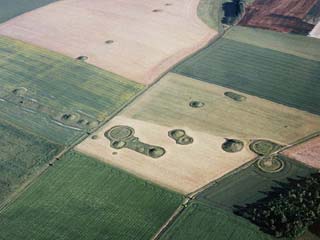
An archaeology team led by the University of Birmingham and the Ludwig Boltzmann Institute for Archaeological Prospection and Virtual Archaeology in Austria discovered a major ceremonial monument less than one kilometre away from the iconic Stonehenge.

History is set to be rewritten after an archaeology team led by the University of Birmingham and the Ludwig Boltzmann Institute for Archaeological Prospection and Virtual Archaeology in Austria discovered a major ceremonial monument less than one kilometer away from the iconic .

The incredible find has been hailed by Professor Vince Gaffney, from the University’s IBM Visual and Spatial Technology Centre, as one of the most significant yet for those researching the UK’s most important prehistoric structure.

Professor Gaffney says: “This finding is remarkable. It will completely change the way we think about the landscape around Stonehenge. “People have tended to think that as Stonehenge reached its peak it was the paramount monument, existing in splendid isolation. This discovery is completely new and extremely important in how we understand Stonehenge and its landscape.”

The new “henge-like” Late Neolithic monument is believed to be contemporaneous to Stonehenge and appears to be on the same orientation as the World Heritage Site monument. It comprises a segmented ditch with opposed north-east/south-west entrances that are associated with internal pits that are up to one metre in diameter and could have held a free-standing, timber structure.

The project, which is supported by the landowner, the National Trust, and facilitated by English Heritage, has brought together the most sophisticated geophysics team ever to be engaged in a single archaeological project in Britain.

Provided by University of Birmingham.  Find out more about the latest discoveries, join a guided tour of Stonehenge – book through ”The Stonehenge Tour Company

Merlin @ Stonehenge
THe Stonehenge Stone Circle Website


Stonehenge, mystery shopping and an over-excited lemur

31 01 2011

There’s an old gag that goes like this….

An American tourist arrives with his family at Stonehenge and asks one of the junior staff how old the monument is. “That’s easy” replies the young man, “Five thousand years, four months and three weeks.” “That’s amazing” says the American, “How the heck can you be so precise?” “Well” he proudly declares, “next week I’ll have been working here for five months, and I remember them telling me on my first day that it was 5,000 years old, so….”

Now, before the estimable Simon Thurley gets on the phone to assure me that such a thing could never have happened, what with English Heritage’s superb staff training programmes for new staff, I must stress that it’s a joke about the uncertainty of prehistoric dating, not a critique of EH’s induction procedures. I am also, of course, not in any way disparaging American tourists. Perhaps I should have simply said ‘A tourist arrives etc’ with nationality unspecified. Hard to say, to be honest. Levity’s a tricky thing, as I discovered when The Daily Telegraph’s Mandrake column cast its rheumy eye over one of my earlier efforts.

And some fell on stony ground, as they say…

Ancient standing stones of Stonehenge, near Salisbury in Wilthsire, England UK. © Britainonview / Martin Brent

‘Toy town with dinky electric vehicles’?


Anyway, the good news about Stonehenge is that the Heritage Lottery Fund have agreed to put forward £10 million, and the prospects of getting to some kind of resolution for the issue of how to present the stones to the public becomes significantly brighter. For some, though, the glass remains very much half empty. Indeed for Marcus Binney (writing in The Times at the weekend), the glass should have been left in the kitchen cabinet and the liquid used for something else altogether. I’d pop a link in at this point but, as you probably know, that paper operates what’s called a ‘pay-wall’ so you’ll have to make your own arrangements if you want to call up the article.

The gist of his argument, however, runs like this. The proposed visitor centre, he believes, will ‘turn Stonehenge into a toy-town with visitors approaching in dinky electric vehicles’. And in any event, he continues, they’ve chosen the wrong site for it. They should, in fact, focus all their resources on repairs and restoration rather than interpretation (by which he means visitor centres, and so on) or, better still, be stripped of their grant-giving powers and pass all the Lottery money to the National Heritage Memorial Fund, and other bodies that will spend it on ‘front-line rescue of natural and man-made heritage, and not on frills and embellishments.’

Ouch.

The point here surely is that, yes, there will always be a long line of hard cases, where buildings and monuments – each with their own wonderful story, and each with a really strong case for support – are overlooked; while other things – less deserving in the eyes of the chap making the case – get the nod. That’s the nature of democracy and professional judgement. For my part, I believe that our heritage buck must go on more than simply renovation, important though that is, because history is a narrative (to use, without apology, a word that has become almost meaningless through over-use in public life recently) as well as a selection of beautifully preserved artefacts and buildings. English Heritage understands this, and they put it into practice with enormous skill and imagination. Audio tours, computer visualisations, historic re-enactments and all the other things they do are, largely thanks to the calibre of the people they employ, so much more than ‘frills and embellishments’.

Personally I’m absolutely delighted that the HLF have stepped in and I believe that grants like this are exactly what Lottery players would want the good cause money to go towards. And, if Marcus Binney slips a quid across the counter of his local news agent every Wednesday and Saturday for a crafty Lucky Dip, then I can only remind him that, as I said last week, rather more of his good cause contribution will very shortly be going towards heritage projects, and that can’t be bad, can it?

John Penrose blog:
http://blogs.culture.gov.uk/main/2010/11/stonehenge_mystery_shopping_an_1.html

Merlin @ Stonehenge
The Stonehenge Stone Circle Website


Avebury to Stonehenge – The Hero Walk 2011

27 01 2011

The Hero Walk – In support of our wounded – 26th June 2011
The Hero Walk is a very tough challenge over the high chalk downs and ridge ways of Wiltshire and Salisbury Plain. At 26 miles it forms a marathon for runners and a great challenge for walkers. This challenge is a diverse trek over marathon distance, going back through 6,000 years of British history; the magnificent prehistoric stone circles of Avebury and Stonehenge need little introduction. The challenge will start in Avebury, where we will be able to get up close to the ancient stones before heading off via the mysterious ancient landmark of Silbury Hill. Silbury is the tallest man-made mound in Europe, however its purpose is still unknown.

We will then cross the spectacular chalk downs dotted with ancient earth-works, burial mounds and get up close to the enigmatic white horses carved into the chalk. In clear weather we will be able to see more here, as views of other valleys open up to us. The route takes in the highest point in Wiltshire (295m) and travels through the most active crop circle area in the world – keep your eyes open!

Crossing into MOD land you will either walk (or run!) through stunning areas little used by the general public, that have become a haven for wildlife and plants. Our route continues to undulate but the main hills are behind us and we start to anticipate the finish line at the World Heritage Site of Stonehenge. A short section of quiet road is a sign that we are nearing civilisation, and before long the world-renowned ancient circle of stones looms on the horizon before us. There is then time to celebrate with fellow walkers and runners before returning home. We look forward to seeing you there!

Avebury to Stonehenge Hero Walk 2011 Itinerary . . .

The 26-mile walk will take approximately 8-9 hours for fit and strong walkers. Our day starts at Avebury, which lies at the centre of one of the greatest surviving concentrations of Neolithic and Bronze Age monuments in Western Europe. We’ll enjoy Avebury’s magic in the quiet of the early morning before heading via the Silbury Hill.

Help for Heroes

Help for Heroes


Dropping down into the village of Alton Barnes, we follow the Kennet and Avon canal east. From there we head south and join the White Horse trail to the Pewsey White Horse from where we have fabulous views of the surrounding chalk landscape. We descend the hill and continue along the trail to the Kennet and Avon Canal; this is a fabulous example of industrial revolution engineering. Crossing into MOD land we will either walk (or run!) through stunning areas little used by the general public and a haven for wildlife and plants. After this long day of great views and leg-stretching hills we will reach the final destination: Stonehenge, the most famous stone circle in the world.

DONATE NOW – CLICK HERE
REGISTER ONLINE
http://www.helpforheroes.org.uk/challenges-2011-avebury-stonehenge.html

Do your bit and get involved!
Sponsers: ‘Stonehenge Tour Company’

The Merlin @ Stonehenge
The Stonehenge Stone Circle Website


Stonehenge.cc – Camelot Castle

25 01 2011

A hotel has purchased the internet domain Stonehenge.cc and hopes to

Stonehenge light box

Stonehenge light box

exploit the famous Neolithic site’s reputation to build an online following. Camelot Castle – the birthplace of the legendary King Arthur – in Tentagel has acquired the site as the basis for a new internet news network that is aimed at providing positive stories that help inspire “man’s spiritual rise and search for truth”.
According to the Cornwall hotel, Stonehenge is the perfect vehicle for spreading this message and said it was “delighted” to have acquired what it feels to be one of the most important internet portals available. “It is a tremendous honour, duty and responsibility. Stonehenge is an eternal testimony to man’s search for truth and his spiritual legacy,” said spokesman John Mappin.
The actual site of Stonehenge is popular with luxury coach tours and is situated in Wiltshire. However, its online presence will allow it to play another role in advancing British culture, the hotel claimed.

Can anyone explain the ‘Light Box’ that is promoted on this Stonehenge.cc website. I’m confused ?
http://www.stonehenge.cc/stonehenge-lightbox.htm
http://www.Stonehenge.cc

Is it worth the trek to Cornwall ?
Merlin at Stonehenge (Wiltshire not Cornwall)
The Stonehenge Stone Circle Website


Stonehenge roadworks – A303? – Jan 17th for 14 weeks

17 01 2011

Major roadworks will be taking place on the A303 at Countess Roundabout – starting on Monday 17th January – lasting for 14 weeks, which will result in diversions when visiting Stonehenge. As a result of these roadworks in the immediate area around Stonehenge there will be closures, diversions and some contra flow systems that will affect both carriageways.

Dates: From Monday 17th January the A344 will be closed from its junction of the A303 at Stonehenge bottom to the entrance/exit to Stonehenge. This closure is likely to be in place for up to 14 weeks.
We have been assured that all works are to be completed and that the A344 road closure will be lifted before the Easter weekend.

Click here for ‘zoomable’ OS map showing ‘airmens corner’ etc

Access to Stonehenge:
Arriving:
 Visitors coming to Stonehenge will need to access the site from Airman’s Cross; then driving down the A344 to Stonehenge.

Leaving: When leaving Stonehenge vehicles will have to turn right out of the car park and proceed back down to Airman’s Cross, before rejoining the A303 at Long Barrow. Countess Roundabout;

Details of work to be undertaken

 * Traffic signal installation on all four approaches to the roundabout.
* Widening and resurfacing the A303 approaches to, and around, the roundabout.
* Permanent 40 mph speed limit applied on A303 approaches.
* Safety barrier, road signs and road markings replaced.
* Extension of subway under A303 westbound approach, to accommodate carriageway widening works.
* Renewal of lighting columns, lanterns and installation of associated cables.
View Larger Map

http://www.highways.gov.uk/news/pressrelease.aspx?pressreleaseid=417317
http://heritageaction.wordpress.com/2011/01/16/stonehenge-countess-roundabout-closure/

Merlin @ Stonehenge (stuck in traffic?)
The Stonehenge Website


Archaeological Walk on Salisbury Plain 2011

15 01 2011

A walk to Lidbury Camp, led by former County Archaeologist Roy Canham.

Lidbury Camp, on the downs above the River Avon between Enford and Upavon, is an Iron Age hillfort first excavated by William Cunnington in the early 19th century and again by Maud and Ben Cunnington in 1914 (see article in WANHM Vol 40 (1917), pp12-36). William Cunnington discovered eleven Iron Age storage pits in close proximity and recorded the presence of two ‘British’ villages close by, while Maud Cunnington found Romano-British pottery overlying the Iron Age remains. An undated linear ditch and bank run nearby. Finds from Maud Cunnington’s excavation are in the Wiltshire Heritage Museum.

Roy has an unrivalled knowledge of the archaeology of the county, and was largely responsible for persuading the MOD to introduce measures to protect the archaeology on their land against damage from military training.

Weather conditions on the Salisbury Plain downland are unpredictable and can change quickly at this time of year. Please come prepared with waterproof clothing and suitable footwear. The walk will be about 3 miles.

Please indicate pick-up point when booking.
Depart: : Pewsey (Bouverie Hall car park) – 1.15pm; Devizes (Station Road car park) – 2.00pm;
Upavon (Antelope Inn) – 2.25pm.
Return:
Enford at about 4.45pm

* Tel: 01380 727369 (10am to 5pm Monday to Saturday)

Need an Ordanance Survey map of Salisbury plain – click here

 Merlin @ Stonehenge
The Stonehenge Stone Circle Website


The Stonehenge Legacy – New book 2011

10 01 2011
Stonehenge Legacy

Stonehenge Legacy

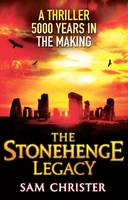
Eight days before the summer solstice, a man is butchered in a blood-freezing sacrifice on the ancient site of Stonehenge before a congregation of robed worhsippers. Within hours, one of the world’s foremost treasure hunters has shot himself in his country mansion. And to his estranged son, young archaeologist Gideon Chase, he leaves a cryptic letter …Teaming up with an intrepid Wiltshire policewoman, Gideon soon exposes a secret society – an ancient international legion devoted for thousands of years to Stonehenge. With a charismatic and ruthless new leader at the helm, the cult is now performing ritual human sacrifices in a terrifying bid to unlock the secret of the stones. Packed with codes, symbology, relentless suspense, and fascinating detail about the history of one of the world’s most mysterious places, The Stonehenge Legacy is a blockbuster thriller to rival the very best of Dan Brown.

The author will be in Waterstones, Salibury at the end of the month signing copies……….
Or buy a copy here: The Stonehenge Legacy. by Sam Christer
Merlin @ Stonehenge
The Stonehenge Website

 [tweetmeme]


Background to the Stonehenge Solstice Celebrations…

8 01 2011

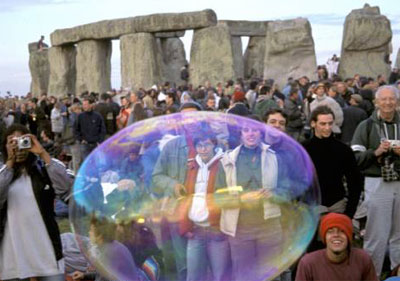
Crowds of people gathering to celebrate the modern day summer solstice at Stonehenge has developed from a grass-roots level and this is something we are not used to in our fast-paced consumer driven society. The notion of people gathering together under their own terms is in some ways a lost art in Britain outside the confines of major sporting occasions, concerts, weekend shopping trips and nights out on the town. Major royal and civic events could also be added to this list. The festival scene however, has given more alternative gathering a real boost. The nature of celebration is to have a joyous time and it is interesting to note that the United Kingdom has amongst the least number of public holidays in Europe. We work increasingly long hours and stresses of modern living can take a toll on the body, as well as the mind. There is certainly a market for a successful summer solstice celebration at Stonehenge for people intending to free their spirits in a communal gathering at an age-old and identifiable site.
So, who actually attends the modern celebrations?

The answer is many different groups of people – Druids, pagans, wiccans, witches, tourists, locals, revellers, hippies, night-clubbers, bikers, students, curious on-lookers, spiritualists, historians, political activists, anarchists, eccentrics, environmentalists, travellers and astronomers. Some adherents to eastern religions such as Hare Krishna devotees and some practitioners of Buddhist meditation may also attend, as well as many people from abroad.

The fact is, that this is now an occasion open to anyone who wants to come; gone are the days of exclusion.

The first sizeable groups to visit the stones in modern times, other than passing travellers and nearby townsfolk were 19th century day trippers; often using the railway to Salisbury as a connecting point. At the turn of the 20th century ownership was transferred from private hands to the nation. Modern day Druids started to hold ceremonies with groups of onlookers. This soon developed into a larger gathering or open fair by the 1920’s, with music and crowds ranging from a few hundred to a few thousand. Later by the 1960’s the site became a focus for counter-culture and a large annual ‘free festival’ started to emerge from 1974 onwards. Several leading figures including Phil Russell, alias ‘Wally Hope’ dedicated the stones as a people’s temple open to all and the developing free festival became the embodiment of these ideals.

In 1985 the growing festival and its associated peace convoy of travellers was brutally ambushed by the police in the infamous ‘Battle of the Beanfield’. In this year the festival was smashed before it even began. An antagonistic exclusion zone was then set up around the stones for what eventually amounted to the next fourteen years. People however, still yearned to gather at this special place and after several years of negotiation, arrangements were finally granted for a few hours of access at midsummer 2000.

The issue of the festival is still a contentious issue. There are those who argue for the right to gather at the stones for a few days and party. The National Trust, who are the major landowners around the site, the police, local residents and English Heritage all continue to express the concern that the original free festival was unsustainable. It had grown out of all proportion to the site and threatened the surrounding landscape.  They believe the same would happen again if another free festival emerged and that the best way forward is through the structure of Managed Open Access (MOA).

However, there continues to be an open debate about what the nature of the occasion is all about.

In my mind some people still attend the summer solstice celebrations hoping to find a ‘rock’ festival with bands, DJ’s, dance tents and headline acts taking centre stage. When, in fact today they actually get a ‘rock’ festival with ‘rocks’ of the stone variety. This can result in a number of people wandering around not being exactly sure what to do with themselves in the absence of ‘amplified’ music. It is possible that a supporting festival could be provided at an alternative location to cater for those with music on their minds. This happened in part with the 2006 Somerset based ‘Sunrise Festival’ and subsequently attendance at the celebrations was lower than usual. Andy Worthington notes this distinction as follows;

‘Even during the festival years, the number of people actually visiting the stones on the solstice was rarely more than a few thousand, a situation that concerned Bev Richardson, who noted that, as the festival grew, the spiritual significance of the temple dwindled, so that two thirds of those attending the festival in 1977 visited the stones at the solstice, but only a thousand out of 40,000 did so in 1984’. (1)

Crowd numbers are another major factor concerning the modern celebrations. This happened in 2003 when the MOA fell on a weekend for the first time and 30,000 people turned up. The management of such large numbers is a real concern for English Heritage. It is possible that attendance might increase again, but since the high point of 2003 numbers have generally levelled out at about 21,000. This proves that the appeal of the gathering does indeed have its limitations, especially when other factors such as the weather, a midweek solstice and even *England international football matches are taken into consideration.

Entering the solstice space of MOA the central horseshoe of the main circle is filled to capacity with revellers cheering to an undulating beat of drums. The majority of the crowd, however, sit and stand outside waiting for the sun to arrive under the ambient glow of mobile flood light units. A simple sheet of rules known as the ‘Terms and Conditions of Entry’ is provided to all attendees. Apart from the time of sunrise and the preceding sunset, there is a distinct lack of information about the main torch-lit parade and Druid ceremony. Yet, even with this lack of knowledge about things to do, the celebrations are a major draw. The lack of any structure is there to allow the occasion to develop from the ground up rather than be imposed from the top down. Revelry and drunkenness is a common feature of the solstice and many do go there to get high. However, if the event is to move forward the provision of more information with the emphasis on the positive would be a good idea. For most, having a drink at the solstice is no more than a social lubricant, but unfortunately for a small minority the drunkenness can take on a slightly anti-social element with sometimes misplaced exuberance around others, especially those with young children.

Whilst drunkenness will always be a feature of the summer solstice celebrations, the anti-social aspect to the revelry can often be quite shocking for those expecting a more sedate occasion and whilst Stonehenge can enthral an audience, it can also greatly disappoint. The lack of respect for the site created by the debris of the all-night party scene has led some people to ask themselves the question – would they really want to go again?

The very nature of Stonehenge is that it is all things to all people and thankfully, there are many who do treat the site with respect, and take a positive view of the place. A small band of volunteer ‘Peace Stewards’ help with general advice and aim to defuse tensions with the unruly few.

Personally, I am attracted to the solstice because it represents a free-space where ideas can germinate. It is a place where a connection can be made with a primeval urge to follow in the footsteps of the ancestors and mark out a sustainable path for the future. Without the vision of the original festival organisers and the campaign for access after the Beanfield none of this would have happened. This included those who kept turning up at the stones attempting to celebrate the solstice during the years of exclusion.

Many archaeologists and historians also agree that psychedelics were used at ancient solstice celebrations through the use of naturally available fungi, plant extracts and dried herbs. This would have been a way of communing with nature and contacting the spirit world in shamanic type rituals. In the book ‘Hengeworld’ Mike Pitts notes that;

‘It’s not a joke: some of them it seems really were stoned.’

‘An early idea in recent discussions of altered states by archaeologists concerned Beaker pots. You will remember that these pots were once equated with invading peoples, but that this interpretation gave way to less sweeping links with peculiar social sects or fashions, or perhaps beer drinking cults. ….Maybe there was a cult, involving not beer but plant hallucinogens.’ (2)

Perhaps the emphasis on excessive hedonism is a continuing part of an ancient tradition and a ritual for some in its own right? The recent discovery and excavation of the temple’s original associated village at the nearby Durrington Walls confirmed that the place also had associations of being where people ‘went to party’ (3) in the distant past, albeit with reference to the winter solstice, rather than the summer one. In reality drunkenness at the stones today only mirrors issues of ‘binge-drinking’ in wider British society. What you see at the summer solstice celebrations is no different to what goes on during most weekends in any major UK town or city centre.

Public safety however, is paramount in the minds of the authorities and memories of the football disasters of the 1980’s combined with the current climate for ‘compensation culture’ has lead to a cautious approach. Local authorities and governmental agencies tend to like events which they conceive and manage themselves, rather than ones which grow out of the public imagination, which they then have to manage afterwards. The current MOA arrangement at Stonehenge is just this type of situation and is a good example of one big compromise between a whole-range of interested parties.

Anyone who has followed the story of solstice access over the last few years will have no doubt realised that excluding people just does not work. Stonehenge is a temple open to everyone. Everyone, really meaning everyone and the saying, ‘bring what you expect to find’ could not be truer.

Aricle with thanks to Jim Rayner (Re: The forthcoming book ‘A Pilgrim’s Guide to Stonehenge’)

(1) WORTHINGTON, Andy. 2004 ‘Stonehenge Celebration and Subversion’ Alternative Albion, page 240
(2) PITTS, Mike 2000 ‘Hengeworld’ Century Press, page 232
(3) PARKER PEARSON, Mike. 2007 online at; http://news.bbc.co.uk/1/hi/sci/tech/6311939.stm
http://www.stonehengecelebrations.co.uk/
http://www.stonehengetours.com/html/summer-solstice-tour.htm
http://www.efestivals.co.uk/festivals/stonehenge/

The Stonehenge News Blog
Follow us on Twitter and Facebook for all the latest Stonehenge Summer Solstice News
http://www.Stonehenge.News

[tweetmeme]