The Welsh blue chip ‘healing secrets’ of Stonehenge

28 03 2010

WHY transport more than 80 two- tonne megaliths over 156 miles of mountain, river and sea to build a stone circle at Stonehenge? It hasremained one of Britain’s most enduring mysteries. Some have claimed the iconic site on Salisbury Plain was an ancient observatory for lunar and solar events. Others claimed it was a burial site for the high-born while Arthurian legend has it Merlin transported the stones. But now a Welshman from Pembrokeshire, the place where many believe the stones originate, claims he has the answer. Professor Geoffrey Wainwright, an honorary fellow of Lampeter and Cardiff Universities, released findings yesterday to support a theory that Stonehenge was a “prehistoric Lourdes”. The findings suggesting its significance as a healing centre for pilgrims were made in a historic dig at the World Heritage Site earlier this year. The first excavation of Stonehenge for more than 40 years uncovered fragments of stone which experts believe could have been used as lucky charms. Professor Wainwright believes that Stonehenge was a centre of healing to which the sick and injured travelled from far and wide, to be healed “by the powers of the bluestones”. He noted during the dig that “an abnormal number” of the bodies found in tombs near Stonehenge displayed signs of serious physical injury and disease. And analysis of teeth recovered from graves show that around half of the corpses were from people who were not native to the Stonehenge area. Archaeology expert Professor Wainwright, chairman of the Society of Antiquaries of London, and Professor Tim Darvill of Bournemouth University, have been working together for years to find out why Stonehenge was built. English Heritage agreed to the dig on Salisbury Plain, the first since 1964, following consent by the Secretary of State for Culture, Media and Sport. The academics said they could now pinpoint the date at which the blue stones – which the archaeologists believe hold the key to Stonehenge – were brought to the site in Wiltshire from West Wales, as 2300BC, 300 years later than previously thought. The stones were once believed to have come from a crag in the Preseli Hills called Carn Menyn. But a newer theory is that they were brought from glacial deposits much nearer the site, which had been carried down from the northern side of the Preselis to southern England by the Irish Sea Glacier. The professors also told a press conference at the Society of Antiquaries in London that people remained interested in the magical, healing qualities of the stones for many hundreds of years after Stonehenge was built. Prof Darvill said: “It could have been a temple at the same time as it was a healing centre, just as Lourdes is a religious centre.” Prof Darvill suggested the blue stones, which have tiny white spots, could have acted in a similar way to the bones of saints. They argued that as thousands of pilgrims flocked to see them at Stonehenge the resulting wealth enabled an “elaborate shell” of more stone pillars to be built. Prof Wainwright said he was inspired to investigate the area in his native Pembrokeshire while watching a television programme about why Stonehenge was built. He said: “I thought the answer really had to be found in the place where the stones came from. That is in north Pembrokeshire, so Tim and I went and did a survey around the crag. “We found various reasons which led us to believe the stones were used as part of a belief in a healing process.” But he said they needed to study the Stonehenge site to find out when the bluestones arrived there and how long they were used. The radiocarbon dating of the original double bluestone circle held significance for the start of Stonehenge being used as a healing centre. The date – 2300BC – links the introduction of the bluestones with a time of great activity at the site, including the death of the Amesbury archer. His remains were discovered about five miles from Stonehenge and the professors believe he was a pilgrim hoping to benefit from the healing powers of the monument. Prof Wainwright said: “We now know, much to our surprise and delight, that Stonehenge was not just a prehistoric monument, it was a Roman and medi- aeval monument.” Were the huge stones transported all the way from West Wales? The stone pillars of Stonehenge are natural columns of white spotted dolerite and occur only in the Preseli Hills’ Carn Menyn area. They were first identified as of Welsh origin by Dr John HH Thomas in 1923. Archaeologists have uncovered the remains of a “band of brothers” found near Stonehenge and scientists have proved they were Welsh, suggesting it was people from Pembrokeshire who actually transported them. The skeletons, three adults, a teenager and three children, were found by workmen laying a pipe on Boscombe Down and chemical analysis of their teeth revealed they were brought up in the South West Wales area. Experts believed the family accompanied the stones on their epic journey from the Preseli Hills to Salisbury Plain. As an extension of the theory that Stonehenge was a healing centre, on digs around the country, archaeologists will now look for any evidence of bluestone being transported from Wales to other monuments. Professors Wainwright and Darvill also said they hope to return to the Preseli Hills next year to excavate part of a burial mound near the main bluestone outcrops. Prof Darvill said of the bluestones: “Their meaning and importance to prehistoric people was sufficiently powerful to warrant the investment of time, effort and resources to move the bluestones from the Preseli Hills of Wales to the Wessex downs.”#

Merlin @ Stonehenge
Stonehenge Stone Circle
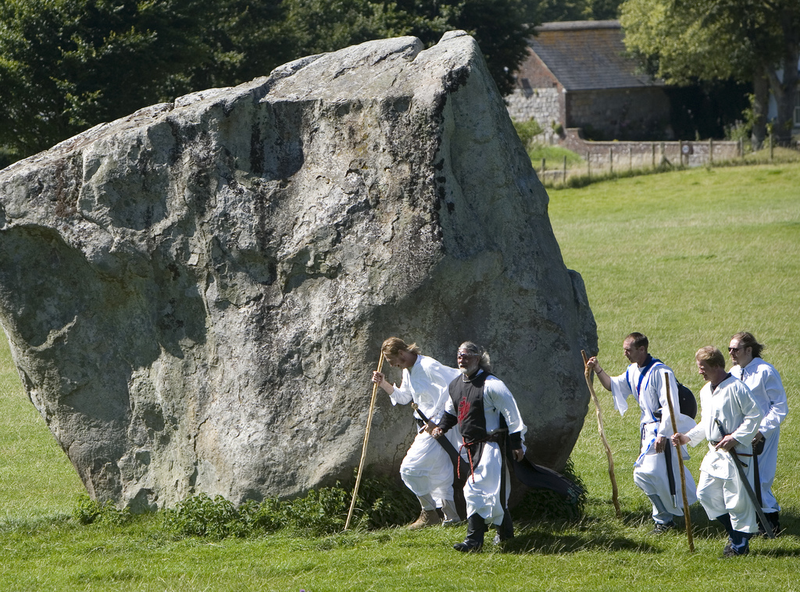


Spring Equinox at Avebury, one of Britain’s stone circles

27 03 2010

Druids and King Arthur at Avebury Stone CircleThe sun is slowly sinking in a golden glow behind the stones of Avebury, the largest stone circle in Europe. The massive Swindon stone becomes a silhouette, its 60-tonne bulk solid and unmoved against the sky just as it has been since it was first placed here by Ancient Britons more than 4,000 years ago.

 Mention stone circles, and most people think of Stonehenge and Druids. In fact, there are more than 1,000 stone circles in Britain, and none was built by Druids (the stones are far older than Druidism). Avebury Ring is the largest, some 14 times the size of Stonehenge, and a particular joy to visit. There are no tickets, no fences, no restrictions and no crowds. You – and the sheep – move freely around the prehistoric sites, taking your time, choosing your viewpoint and touching the stones at will.

We climb to the top of the ancient bank that surrounds the stones and look out over the landscape. We can see the mysterious Silbury Hill, Europe’s largest prehistoric, man-made mound that sits 40m high like a vast upturned pudding, visible for miles around. Then there’s the avenue of paired stones leading away into the distance. The route once linked Avebury to The Sanctuary, another Neolithic sacred site. Further away, towards an even earlier monument, we can spot the 5,500-year-old ancestral stone grave of West Kennet Long Barrow.

Prehistory and contemporary life intermingle. A road cuts through the site, but manages not to intrude too much even though the village of Avebury sits partly within the largest stone circle. The material for some of the 18th-century houses has been hacked from the circle’s sarsen stones.

The National Trust museum, which is housed in two barns, displays artefacts found on the site, as well as providing plenty of background information. The older of the two galleries, the Stables Museum, pays particular attention to how we know about the society that built and used Avebury – and just how little is certain. There are some intriguing objects, too, including one for the children: a chunk of Neolithic dog poo.

The newer Barn Gallery is much higher tech and generally more child-friendly, with interactive displays and activities, and an excellent world time-line showing that Avebury and Silbury Hill were built about the same time as the earliest Egyptian pyramid and long before King Tutankhamun.

From the museum, a few steps take you straight up into the circle. It is 1.3km round the largest ring, with 27 of the original 100 or so stones still standing. There are two smaller circles and a row of stones in the interior. None has been dressed (cut), as some have at Stonehenge. At Avebury the stones were simply selected, dragged to the site and positioned. Go for a stroll on Fyfield Down above Avebury and you’ll still find vast sarsen stones “in the wild”, just lying around in the grass.

What exactly Avebury, or any other stone circle, was built for remains uncertain. Some rings do have sight lines to astronomical phenomena, but as Aubrey Burl, an expert on stone circles remarks in his excellent introduction to the subject, Prehistoric Stone Circles: “The possibility of a ring being an observatory is a matter of conjecture, the presence of human cremations is not.”

The chances are the circles had a ritual use, perhaps some kind of ancestral cult. Certainly, walking up The Avenue towards the Avebury Circle it is easy to imagine a ritual procession. The Avenue is clearly designed to bring you glimpses of the circle before a triumphal arrival at its entrance. The circles may also have been meeting places, or were even used for trading purposes, and probably had different uses at different times.

Some modern visitors insist they feel special energies and spirituality at Avebury. I don’t know about that, but I do feel a tremendous sense of history – and it is a very beautiful place.

‘Prehistoric Stone Circles’ is published by Shire at £5.99. Avebury, near Marlborough, Wiltshire (01672 539250 begin_of_the_skype_highlighting              01672 539250      end_of_the_skype_highlighting; nationaltrust. org.uk; english-heritage.org. uk/avebury; stone pages.com /england/avebury. html). The museum is open November-March 10am-4pm, April-October 10am-6pm. Adults £4.20, children £2.10, English Heritage and National Trust members free. There is a car park on the A4361 south of Avebury, a café, and a shop selling ‘The Prehistoric Monuments of Avebury’, price £1.75

So solid crew

STONEHENGE

A World Heritage site, Stonehenge, in Wiltshire, is the most spectacular stone circle in Britain, with carefully crafted standing stones and unique horizontal lintels held in place by carved joints. The atmosphere is adversely affected by two main roads and the approach through a tunnel. Visitors are routed around the monument for a comprehensive view. Stone Circle Access visits (01722 343834 begin_of_the_skype_highlighting              01722 343834      end_of_the_skype_highlighting) can be arranged outside opening hours. (0870 3331181 begin_of_the_skype_highlighting              0870 3331181      end_of_the_skype_highlighting; english-heritage.org.uk/ stonehenge). The new ‘Stonehenge Guidebook’ by Julian Richards costs £4.99.

CASTLERIGG

This is a large and highly atmospheric site on the top of a Cumbrian fell, near Keswick, with stunning views of surrounding hills. An early circle – probably built in 3,200-3,000BC – it has significant astronomical alignments in its 30m-diameter ring of 38 stones and its unique 10-stone rectangle. (english-heritage. org.uk; visitcumbria.com/kes/ casstone.htm).

STANTON DREW

There are two main circles at this site near Bristol, one 113m across, the other 30m. There are also single stones that were perhaps once part of an avenue. (english-heritage. org. uk/ stantondrew; easyweb. easy net. co.uk/ ~aburnham/eng/ stant1.htm).

RING OF BRODGAR

Part of the Heart of Neolithic Orkney World Heritage Site, the largest stone circle in Scotland, near Stromness (pictured), is set in a ritual landscape of other standing stones and Bronze Age round barrows. They stand, unusually, in a true circle. Historic Scotland World Heritage Site Ranger Service (01856 841732 begin_of_the_skype_highlighting              01856 841732      end_of_the_skype_highlighting; orkneyrangers@scotland.gov.uk; easyweb.easy net.co.uk/ ~aburnham/scot/brog.htm)

OTHER STONE CIRCLES

There are hundreds of other circles that can be visited, from the Rollright Stones in Oxfordshire to Callanish on the Isle of Lewis, as well as many lesser-known ones. Standing stones may be found almost anywhere in Britain, other than in the east.

FURTHER INFORMATION

Go to megalithic.co.uk for maps and information. ‘A Guide to the Stone Circles of Britain, Ireland and Brittany’ by Aubrey Burl includes map references and directions. It is published by Yale University Press and costs £8.95.

 Merlin @ Avebury Stone Circle
Stonehenge Stone Circle



Stonehenge opens to Druids for Vernal Equinox

26 03 2010
 

English Heritage site welcomes worshippers to mark the start of spring

Druids celebrate the sping equinox at Stonehenge(Panasonic)

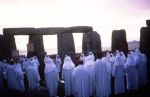
A handful of lucky Druids took advantage of a rare opportunity to walk amongst Stonehenge this Saturday, 20 March in celebration of the Spring Equinox. Less than a hundred visitors, including Druids and pagan worshippers met at around 5.30am to watch the sunrise and welcome in the spring.

Despite the wet, windy weather, traditional customs such as blessings, chants and drum choruses went ahead in the middle of the ordinarily protected English Heritage site.

With characters dressed in outfits of white robes, floral headdresses, witches brooms and even stag’s antlers, attendees worshipped as the sun rose directly above the equator.

Despite heavy cloud cover, the gathered crowd enjoyed a brief glimpse of the sun before taking advantage of their rare chance to touch and interact with the stones.

Formal proceedings were overseen by renowned Arch Druid of Stonehenge Rollo MaughFling, leading both traditional chants and calling for more contemporary solutions, too. When talking about the upcoming General Election, the Arch Druid strayed away from a political bias and instead asked that, “Whoever is best fitted to lead us out of recession and back into prosperity be the party that wins as many people are suffering.”

One fellow Druid not afraid of showing his political stance was notorious eco-campaigner, Arthur Uther Pendragon, announcing his decision to run as an independent candidate in the forthcoming election.

“I have stood three times previously,” he told MSN UK, “The first time, I embarrassed the British National Party into last place, the second time, the new leader of the Monster Raving Looney Party into last place, and the third time I embarrassed myself into last place, but still polling 1% of the Vote.”

The day was also saw a posthumous appearance by Wally Hope, the founder of the Stonehenge festival. Since his death in 1975, the ashes of Wally Hope have been carried to the stones by their official keepers.


Spring Equinox at Stonehenge

19 03 2010
This is the second of the four ‘sky points’ in our Wheel of the Year and it is when the sun does a perfect balancing act in the heavens.


At the Spring (or Vernal) Equinox the sun rises exactly in the east, travels through the sky for 12 hours and then sets exactly in the west. So all over the world, at this special moment, day and night are of equal length hence the word equinox which means ‘equal night’.

Of course, for those of us here in the northern hemisphere it is this equinox that brings us out of our winter.

For those in the southern hemisphere, this time is the autumnal equinox that is taking you in to your winter. And this is very much how I think of the equinoxes – as the ‘edges’ of winter. This is why they can be quite hard on our bodies as it is a major climatic shift, so it is a good time to give a boost to your immune system with natural remedies and cleansing foods.

Here in Wiltshire (as with the rest of rural Britain), it was traditional to drink dandelion and burdock cordials at this time as these herbs help to cleanse the blood and are a good tonic for the body after its winter hardships.

As the Vernal Equinox heralds the arrival of spring, it is a time of renewal in both nature and the home, so time for some spring-cleaning!

This is more than just a physical activity, it also helps to remove any old or negative energies accumulated over the dark, heavy winter months preparing the way for the positive growing energy of spring and summer.

As with all the other key festivals of the year, there are both Pagan and Christian associations with the Spring Equinox.

To Pagans, this is the time of the ancient Saxon goddess, Eostre, who stands for new beginnings and fertility.

This is why she is symbolized by eggs (new life) and rabbits/hares (fertility).

Her name is also the root of the term we give to the female hormone, oestrogen.By now, you may be beginning to see the Christian celebration derived from this festival – Easter.

And this is the reason why the ‘Easter Bunny’ brings us coloured eggs (and if you’re lucky chocolate ones!) at this time of year.

So, as nature starts to sprout the seeds that have been gestating in her belly throughout the winter, maybe you can start to think about what you want to ‘sprout’ in your life now and start to take action. 

Celti Wheel

Celtic Wheel

In between these ‘sky points’ are the Cross-quarter days which mark ‘gear shifts’ in the energy of the earth. These times are also important agriculturally.

Imbolc (Beginning of February) is when the first lambs are born and ewe’s milk is available again after the long winter. The year is beginning to stir and wake-up.

Beltane (Beginning of May) is the transition from spring to summer when Nature is pumping with life-force and fertility.

Lammas (Beginning of August) is the time of ripeness and when the earth starts to give up her harvest.

Samhain (Beginning of November) is the end/beginning of the Celtic year. It is a time when the veil between the worlds is thinnest and it is possible to commune with the ancestors.

There is great joy in being aware of the seasons in this way and celebrating them in simple ways.

As the year unfolds, we will look in detail at the eight energy-points of the year and the ways in which they affect us.

We will also look at how these festivals have been celebrated in Wiltshire, both past and present.

Merlin – Stonehenge Tour Guide
Stonehenge Stone Circle


New Stonehenge Tour

4 03 2010

Evan Evan Tours have just launched a new tour that includes Stonehenge Private access. In my opinion its a little ambitious (see below) but thats my opinion. There is a link below if you want to book
Their itinerary is as follows:

A PRIVATE VIEWING OF THE INNER CIRCLE AT STONEHENGE – an early start gives the opportunity to visit the inner circle of Stonehenge at sunrise, a walking tour of Oxford and visit to the state apartments at Windsor Castle.
Included Highlights
•Private Viewing at Sunrise of the Inner Circle at Stonehenge
•Walking tour of Oxford
•Visit Christ Church college (where Harry Potter was filmed)
•Entrance to Windsor Castle and a tour of the State Apartments and St George’s Chapel
•First-class luxury Motor-coach and the services of a Professional Guide

Private Viewing of Stonehenge
Most visitors to Stonehenge are not allowed direct access to the stones. On this special day trip from London, you’ll be invited to enter the stone circle itself, and stand beside the mysterious rocks towering above you. Your guide will unlock the secrets of this ancient World Heritage site. Enjoy the peace, away from the crowds, as you experience Stonehenge at its atmospheric best at sunrise.

Oxford
The colleges in Oxford date back to the 13th century and among its famous students were Bill Clinton, C.S. Lewis, J.R.R. Tolkien and Lewis Carroll. We take you on a fascinating walking tour, which includes visiting the Great Hall in Christ Church, where many scenes from Harry Potter were filmed. We’ll also see the Bodleian Library and the picture perfect college courtyards for which Oxford is famous.

Windsor Castle
Our day continues with a visit to Windsor Castle, the largest and oldest occupied Castle in the world, and home of the Royal Family for 900 years. Its proud, strong walls dominate the delightful town that has grown around the castle over the years. You’ll see the lavishly decorated State Apartments containing priceless furniture in glorious colours and St George’s Chapel, home to the 14th Century Order of the Royal Garter, our senior chivalric order.

Evan Evans Coach Tours – Click Here

The Stonehenge Tour Company

Histouries UK


Avebury Stone Circle – Wiltshire

2 03 2010


Avebury is the largest stone circle in the world and often overlooked. Its only 30 minutes north of Stonehenge and well worth exploring:

Situated in southern England in the county of Wiltshire the village of Avebury is close to two small streams….the Winterbourne and the Sambourne which unite to form the source of the River Kennet. After being re-inforced by a number of springs this beautiful English river rapidly gains in stature as it passes through the North Wessex Downs on its way to Reading where it eventually flows into the River Thames of which it has become the main tributary. The waters of the Kennet therefore pass through London before reaching their ultimate destination in the North Sea.

Around 4,500 years ago, when the site of England’s capital was a thinly inhabited marshland, the area around Avebury almost certainly formed the Neolithic equivalent of a city. By coincidence this waterway has become a link between the two largest cultural centres of their day to have ever existed in the British Isles. As London now contains most of England’s largest buildings Avebury is the location of the mightiest megalithic complex to have ever been constructed in Britain. This henge with its enormous ditch, bank, stones and avenues survives in a much depleted state but the nearby Silbury Hill which is the largest man-made mound in pre-industrial Europe still dominates the surrounding landscape. The two largest surviving British long barrows of West Kennet and East Kennet are also prominent a short distance away and in recent years the remains of two massive palisaded enclosures have also been found. The quote that antiquarian John Aubrey made of Avebury……”it does as much exceed in greatness the so renowned Stonehenge as a Cathedral doeth a parish church” recognises the true importance of what has now been largely absorbed into the modern landscape of Wiltshire. If we could return to the time when the Romans occupied the British Isles it is a sobering thought that we would have to go back as far again to find an Avebury that was already several centuries old.

The history of the modern village is inevitably linked to the prehistoric monuments that surround it. Abandoned for several thousand years the land around the stones became occupied oncemore when people of the Saxon period began to settle in the area. Their arrival and subsequent development of the present village was to have a dramatic effect on the history of the stones. The relationship between the local inhabitants and the monuments has now added an unfortunate dimension to the Avebury story that helps make it one of the most fascinating historical sites to be found in the British Isles if not the world.

It remains a magical place as so many who have been there will agree. A visit to Avebury is a very personal event. It still seems to retain, somehow, the spirits of all those who laboured in its creation or whatever it was that led them to create it. If you have never been there a visit will not be an empty experience. You will come away with a head full of questions and probably a realisation that somewhere over the years modern society has lost something important.

If you cant make your own way there try this company:
HISTOURIES UK
They are based in Salisbury and opearate quality private tours of Stonehenge and Avebury


Stonehenge Tour to expand

23 02 2010


VISITORS to Stonehenge will now be able to take advantage of an expansion to the always popular Stonehenge Tour.

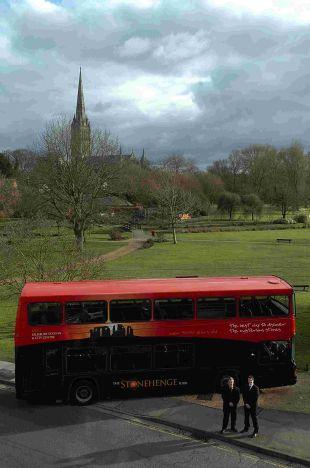
The new package for 2010/11, beginning on March 16, will feature Salisbury Cathedral and the Magna Carta and enable visitors to explore Stonehenge, the hillfort of Old Sarum, and the cathedral using a single ticket.

The tour allows visitors to step off trains at Salisbury station and straight onto the dedicated bus service.

Stuart Maughan, English Heritage head of visitor operations for Stonehenge and Old Sarum, said “Neatly wrapping up three of the area’s top heritage attractions into one easy package like this will have real appeal for tourists and most especially for overseas visitors.

“I feel sure it will encourage them to visit all three attractions – and inspire them to explore the city of Salisbury and surrounding countryside – so that everyone benefits from this new partnership.”

Customers join The Stonehenge Tour buses at Salisbury rail station, the bus station or any of the stops in Salisbury city centre or at the historic sites themselves.

Buses run every 30 minutes during the summer and once an hour for the remainder of the year. Tickets are bought from the driver. Adult ticket prices range from £11 (tour only) to £22 (including admission to Stonehenge, Old Sarum and a donation to Salisbury Cathedral).

Stonehenge Tours


Doctor Who filming at Stonehenge

5 02 2010


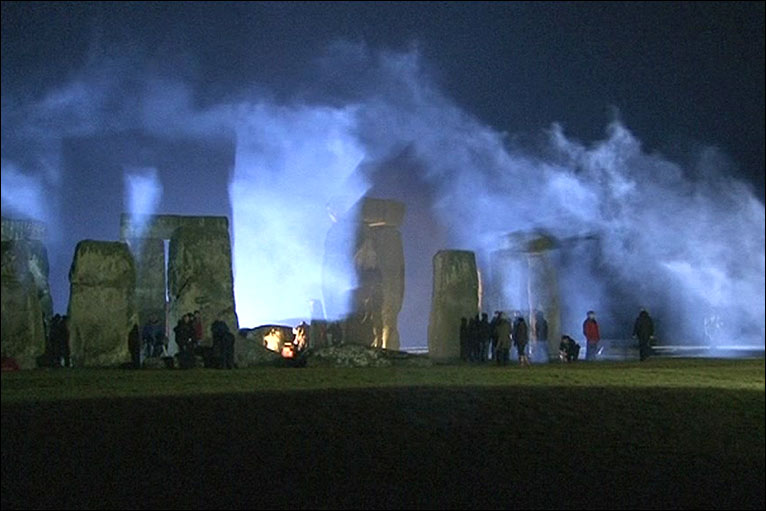
On Tuesday night, February 2, Wiltshire’s ancient stone monument was taken over by a film crew…..filming season five of BBC 1’s Doctor Who.

Exclusive leak….
Turns out that when the moon lies above the stone circle and the sun is on the opposite side of the earth, the stone circle acts as a gateway to a parallel time and place. Standing in the centre of the circle can allow one to be at one with the entire universe but unfortunately induces runaway ageing and exposure to other more evil personalities bent upon conquest. Dr Who finds himself imprisoned within the stone circle of an advanced extra-galactic civilisation and is held as a hostage until dastardly demands are met. The clock is running and the Doctor is rapidly ageing towards infancy. A twist in the tale is the entity that is allowed into the modern Human world when the stone circle is activated. Sadly, the choices are harsh…..either allow the proposed McDonalds drive-through planned for the Avenue, the bowling alley, the souvenir shop and the vast visitor facilities or, the Doctor will be wearing nappies for the remainder of this series and the evil personality (a hybrid mutation of David Icke and Schliemann) will win executive control of English Heritage.

Doctor Who at Stonehenge
Despite it being a closed set…
Local fans, braved the rain hoping to catch a glimpse of the action: “I’ve been a fan of Doctor Who since I was five, that’s 35 years now, and this has been the first chance I’ve had to see it being filmed.”

…plus returning professor River Song (Alex Kingston) have all been spotted on set – along with a brazier or two – the rumour is that the latest episodes including The Eleventh Hour, The Beast Below and Victory of the Daleks will all be set ‘some time in the past’.

With early filming reports claiming that the Doctor aka Matt Smith along with his sexy assistant Amy Pond played by Karen Gillan…


Guided Tours of Stonehenge

18 01 2010


I am a professional tour guide who can provide ‘private’ guided sightseeing tours of Stonehenge for small groups.
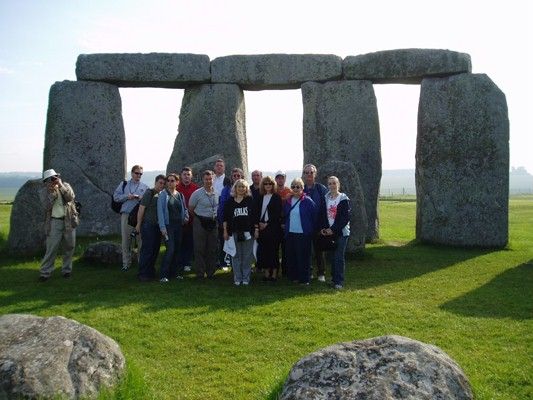
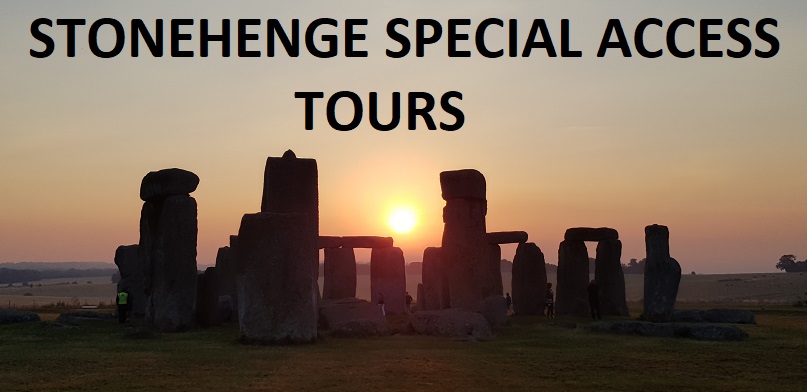
I specialise in Stonehenge and ancient Britain and can often get permission from the English Heritage to take you beyond the fences and touch the Stones after the site is closed to the public. (special access or inner circle tours)

Private tours can depart from London, Salisbury, Bath or Bristol

Some of my popular ‘favourite’ day tour itineraries include:
King Arthur Day Tour
Stonehenge
Glastonbury and King Arthurs Avalon
Challice Well Gardens (reputed buriel site of the Holy Grail
Avebury Stone Circle
Silbury Hill

Great Heritage Trail Day Tour
Stonehenge
Roman City of Bath
Lacock Village
Castle Coombe

Wessex Explorer Day Tour
Salisbury Cathedral
Old Sarum Hillfort
Stonehenge
Avebury Stone Circle
Chalk Hill figures
Buriel Mounds
Crop Circles (April to Septemeber)

However, private bespoke tours can be tailored to suit your requirements and can offer the ultimate flexibility throughout your day (s) visiting almost any location you wish to visit.

I promise a well balanced day with continuous information about not only the places we visit but England in general. My style of touring guarantees an informative, entertaining day, certainly never boring.
I frequently see so called ‘professional’ guides giving an uninspired hasty tour of tourist attractions and then demand huge tips for their ‘sloppy’ services at the end of the day.
MY MISSION STATEMENT: In the unlikely event of you not being entirely satisfied with my services I will NOT charge you!

I truly appreciate that many of you will only visit Stonehenge or England once and deserve a great experience.
I can supply 100’s of testimonials from satisfied customers (individuals/ families/groups) and have a 1st class reputation with many of the UK tour operators. (my heads getting bigger and bigger the more I write) Seriously folks, give me the opportunity to quote for your private group tour (1 – 16 passangers) and I wont disappoint.
By contacting me direct you can also ‘cut out the middle man’ i.e travel agents who add a big fat commission for doing little
Direct Email: tour.guide@rocketmail.com