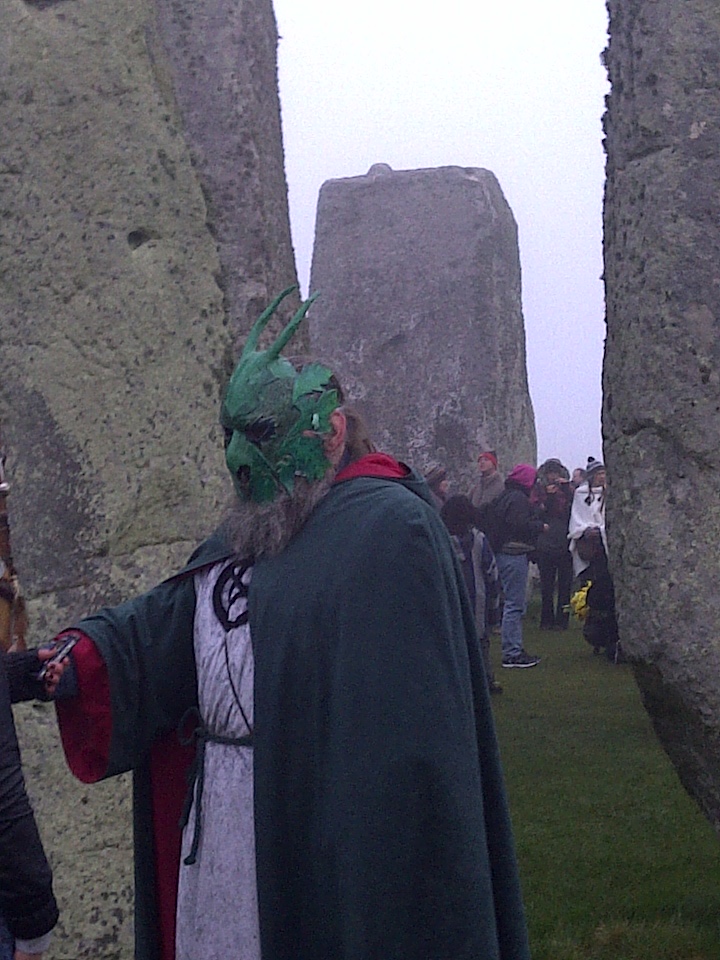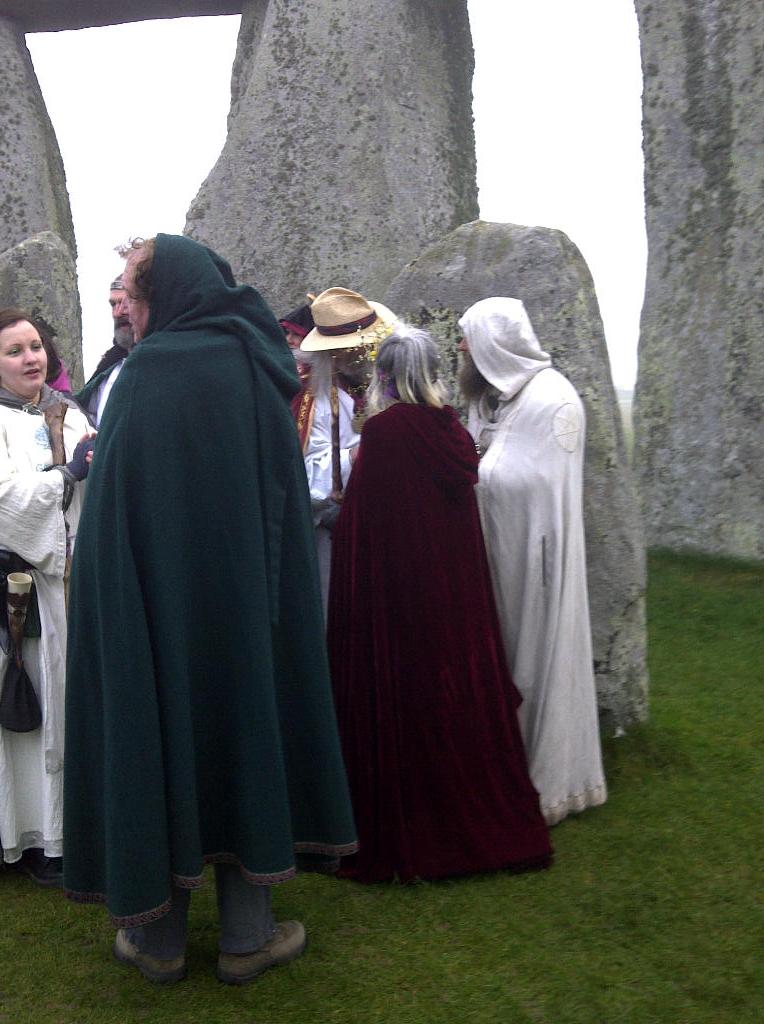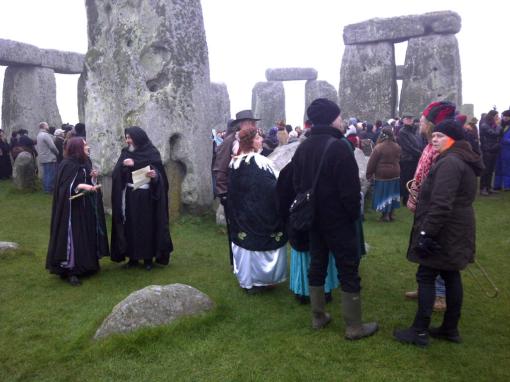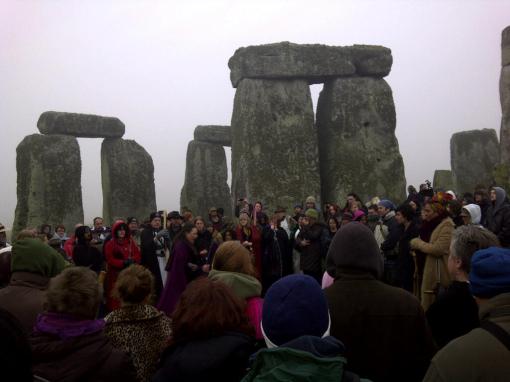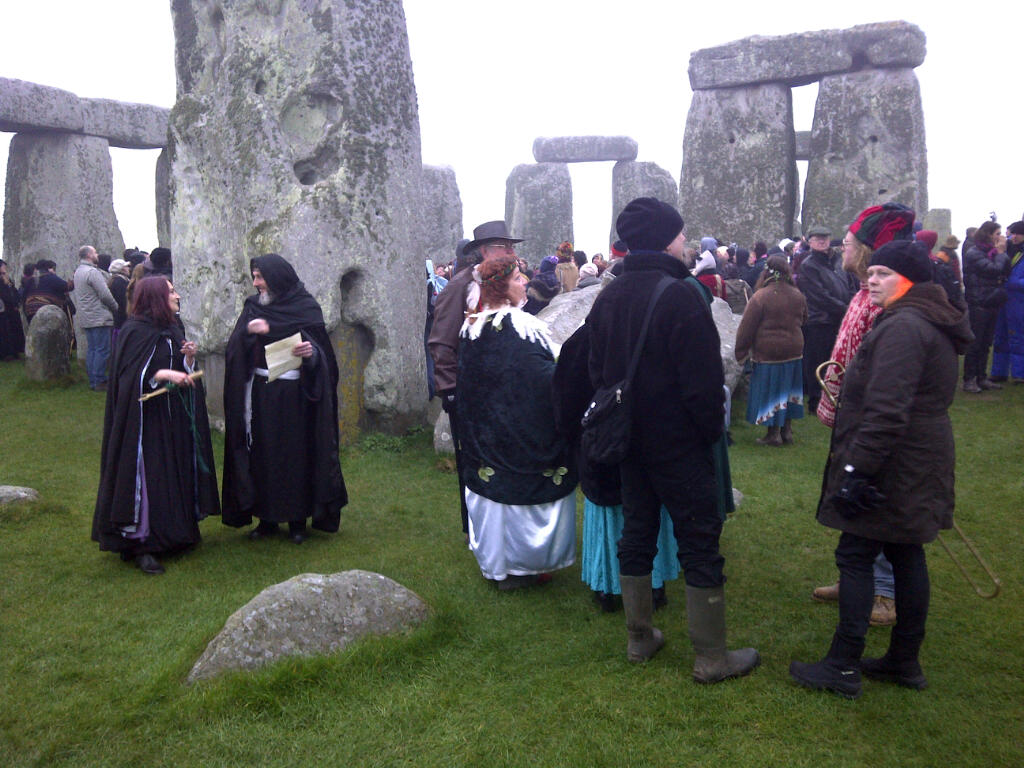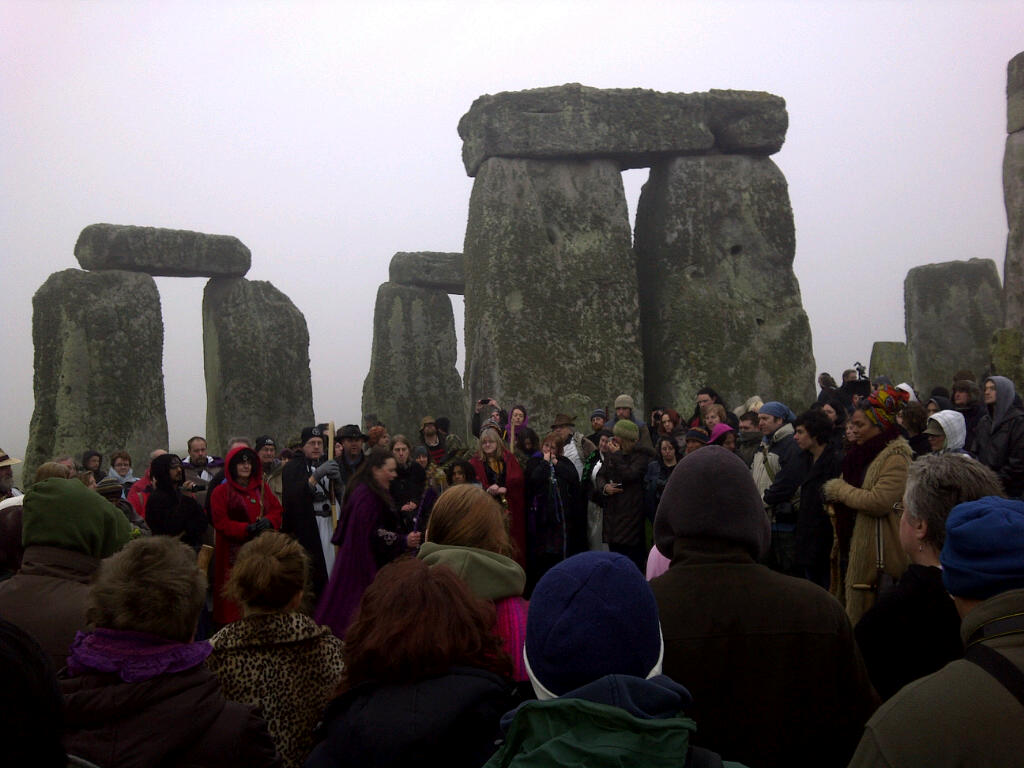
Stonehenge Spring Equinox 2011

22 03 2011
Stonehenge Spring Equinox 2011

Stonehenge Spring Equinox 2011

Stonehenge Spring Equinox 2011

Stonehenge Spring Equinox 2011

Stonehenge Spring Equinox 2011

Stonehenge Spring Equinox 2011

Stonehenge Spring Equinox 2011

Stonehenge Spring Equinox 2011

Stonehenge Spring Equinox 2011

Stonehenge Spring Equinox 2011

I will upload more Equinox pictures and video shortly

sponsored by ‘The Stonehenge Tour Company’

Merlin @ Stonehenge
The Stonehenge Stone Circle Website


Stonehenge Folklore

16 03 2011

The stones have inspired many legends and folklore over the centuries. Much of the folklore seems to try and explain the origin of the circle structure as the work of giants, gods or wizards. It was probably easier to accept this than to believe that a past culture could have better technology.  

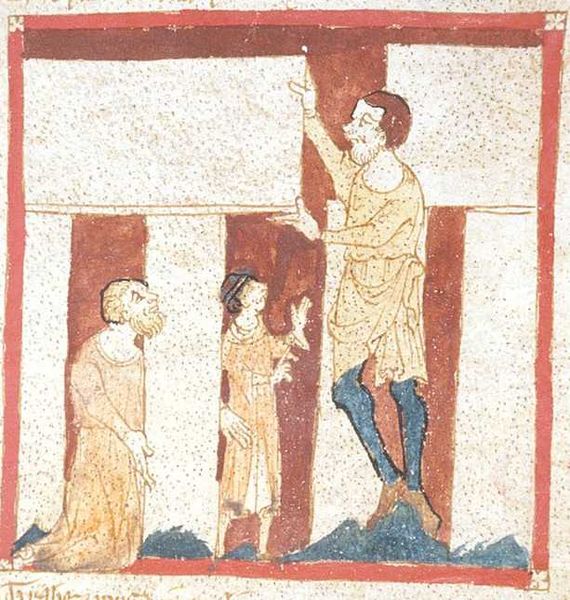
During the Middle Ages Geoffrey of Monmouth, whose colourful writing have had great influence on British mythology, wrote that the stones were originally brought from Africa to Ireland by a race of giants. They were then transported across the sea by the magic of Merlin during the beginning of the Dark Ages on the request of Ambrosius Aurelianus, who was king of the Britons at the time. They were needed as a monument to the treachery of Hengist, a Saxon leader who killed Prince Vortigern 

The heel stone is said to have been thrown by the Devil at a monk who was spying on him between the stones. The stone pinned the unfortunate clergyman to the ground by his heel.

 Other folklore suggests that the stones are uncountable, a baker tried to count them by placing a loaf of bread on each stone. He came up with a number but then made the mistake of going through the whole process again, and could never get the sets of numbers to tally.

 According to folklore African giants came and settled in Ireland many thousands of years ago, they brought with them a temple of stone from their country and re-erected it in County Kildare.
The stones were renown for their healing properties especially when infused with water, known as the Giant’s Dance they still existed in Ireland long after the giants had died out as a race.  

In the 5th Century Merlin brought the stones over from Ireland in ships and with the aid of magic, and erected them on Salisbury Plain. They were to mark the graves of some British nobles who were slaughtered by the invading Saxons under the command of Hengist.

In times gone by it was said that the Devil had made Stonehenge, transporting all of the great stones from the heathen shores of Ireland using his magical powers. He was so proud of this work that he was want to boast about the number of stones to the local populace. In one particularly fine display of pride he bet the residents of nearby Amesbury that  no one would be able to count the numerous stones. Many tried but as the Devil belived none was able to count them all accurately. A dozen different totals were arrived at. Then finally a local Friar who had come late to the game sidled up to the Devil and claimed to know the answer. Not unaturally the Devil, sure that he had won asked the Friar to give his answer. The Friar said “More than be counted”. The Devil was so cross at being caught out in the way that he picked up one of the stones and threw it at the Friar. It bounced of the Friars heel which was so hard that it dented the stone and landed upright a short distance away from the circle and so became the “Heel Stone”.

Some say that the stones were a circle of dancing wizards who were turned to stone by the enchantment of another wizard.

Sponsors:  The Stonehenge Tour Company

Merlin @ Stonehenge
The Stonehenge Stone Circle News Website


Laser scan for Stonehenge secrets

10 03 2011

Stonehenge is being scanned using modern laser technology to search for hidden clues about how and why it was built.

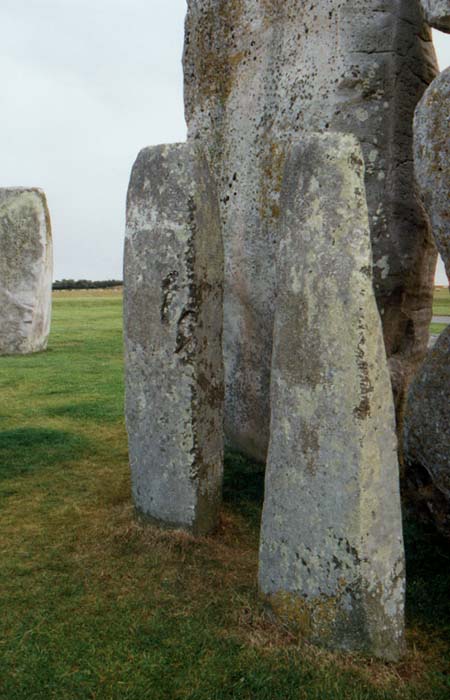
All visible faces of the standing and fallen stones, many of which are obscured by lichen, will be surveyed.  Some ancient carvings have previously been found on the stones, including a famous Neolithic “dagger”.  The survey is already in progress and is expected to finish by the end of March.

“The surfaces of the stones of Stonehenge hold fascinating clues to the past,” said English Heritage archaeologist Dave Batchelor.  The team will be looking for ancient “rock art”, but also for more modern graffiti, in a comprehensive survey of the site.
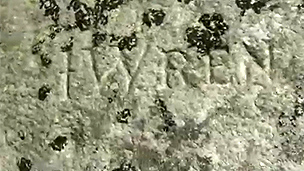
Among those who have left their mark in the stones is “Wren” – thought to be Sir Christopher Wren, the architect who designed London’s St Paul’s Cathedral.

Wren’s family had a home nearby, where he is known to have spent time, adding credibility to the claim.

The new survey will be the most accurate digital model ever for the world famous prehistoric monument, measuring details and irregularities on the stone surfaces to a resolution of 0.5mm.

Graffiti on one of the stones is thought to have been made by Sir Christopher Wren

Graffiti on one of the stones is thought to have been made by Sir Christopher Wren

The previous survey in 1993 was photographic, and only measured to an accuracy of about 2cm.

“This new survey will capture a lot more information on the subtleties of the monument and its surrounding landscape,” said Paul Bryan, head of geospatial surveys at English Heritage.

Laser scanning is also being used to map the earthworks immediately around the stone circle, and the surrounding landscape, as part of a wider project.

English Heritage has proposed a new £25m visitor centre at Stonehenge and closing parts of the A344, which runs just yards away from the landmark.

Government funding was withdrawn last year, but the Heritage Lottery Fund has promised £10m. English Heritage is seeking additional funds and is confident of raising the money it needs

Links:  http://www.bbc.co.uk/news/science-environment-12688085
Sponsors:  The Stonehenge Tour Company

This new survey will no doubt capture a lot more information on the subtleties of the monument – wath this space………..

Merlin @ Stonehenge
The Stonehenge Website


Threatening sky over Stonehenge

10 03 2011

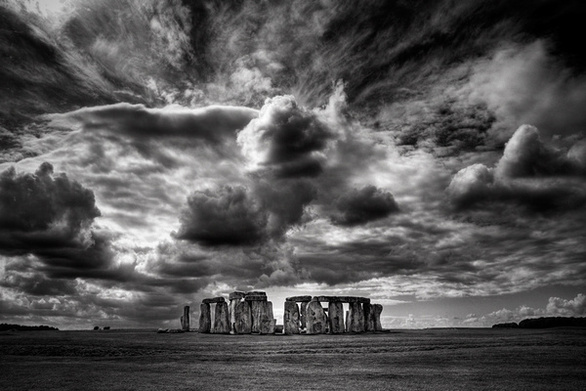
How do you make prehistoric megaliths look even more ominous?

Storm looming over Stonehenge

Storm looming over Stonehenge

Wait for menacing clouds to loom over and capture the scene in black and white. It worked for Times reader “photomarc,” who shot this moody photo of England’s Stonehenge.
“[On] our last trip to England, my wife and I were caught in some nasty weather,” says the photographer. “I did take this shot before hurrying back to the car!”

Credit: LATimes
Sponsores: Join a ‘special access’ tour at Stonehenge – a unique photograph opportunity – The Stonehenge Tour Company

Merlin @ Stonehenge
The Stonehenge Stone Circle Website


Wessex Audio Tour – Ancient Britain

3 03 2011

Start: Avebury |Finish: Old Sarum
Distance: Approximately 42 miles

Wiltshire is a county of history and mystery set in a dramatic landscape. The combination of heritage and scenery provides a truly memorable day out. So come with us on a journey through the countryside and across the ages as we go back to the time of our prehistoric ancestors. Hundreds of thousands of years may have passed but all over the county there’s evidence of human activity from the end of the Ice Age through the Stone, Bronze and Iron Ages right up to the invasion of the Romans in AD43.

Click here for audio / visual tour

This driving tour will take you through the heart of Wiltshire. En route you’ll discover more about how our enigmatic and mysterious ancestors lived, worked, fought and died.

This tour can be undertaken in a variety of ways; as a day-long journey, in short sections or you can use the information as a guide to individual visits.

You might also consider embarking on the tour using public transport but keeping up to date with bus service and timetable changes will require plenty of preparation.

Before you set off make sure that you’re properly equipped. Nothing beats a really good Ordnance Survey map, marked with contours and ancient monuments. A compass and a torch would also be useful. Some of these historical gems are in fields and away from roads or footpaths, so good walking boots are a must. Some sites have few or no facilities and it’s also worth noting that mobile phone coverage can’t be guaranteed in parts of rural Wiltshire. For news of road works or route closures, check BBC Local Radio and bbc.co.uk/travelnews

This guide has been produced with the generous assistance of Phil Harding, Wessex Archaeology, English Heritage, Wiltshire Council Archaeology Service, Bob Clarke, Martin Kellett, David Dawson and the Wiltshire Heritage Museum in Devizes.
Sponsors:  The Stonehenge Tour Company

Merlin @ Stonehenge
The Stonehenge Stone Circle Website


Scientists ‘step closer’ to solving Stonehenge mystery

23 02 2011

IT is a mystery that has baffled geologists and historians for centuries… how were the Stonehenge rocks transported from Wales’ Preseli mountains to their resting place 120 miles away.

Scientists are today one step closer to solving the 4,000-year- old mystery after making their most significant discovery in 15 years.

Of the six to eight different bluestone types found in the inner circle of rocks on Salisbury Plain, only one, the so- called “spotted dolerite”, was convincingly traced to the Mynydd Preseli area in north Pembrokeshire in the early 1920s.

But modern technology has now assisted geologists at Amgueddfa Cymru – National Museum Wales – in creating a “fingerprint” for one of the other rock types found in Wiltshire.

And that “fingerprint” has been identically matched to stones found in an area north of the Mynydd Preseli range, in the vicinity of Pont Saeson.

The discovery means archaeologists are now a step closer to retracing the footsteps of Neolithic engineers who moved the stones in the first place.

Dr Richard Bevins, Keeper of Geology at Amgueddfa Cymru, said: “The outer circle of Stonehenge is made up from stones sourced locally in Salisbury Plain but it is the mismatch of rocks found in the inner circle that have caused so much mystery.

“We have known for some time that spotted dolerite came from Preseli but of those remaining stones we think that six to eight more may have come from Pembrokeshire, until now though we haven’t been able to be sure because the stones are very fragile and we didn’t previously have the technology to extract their DNA.”

Dr Bevins added: “Theoretically if we could trace the source of the other rhyolites (rock types) we could create a map with six or more locations pinpointing where each stone was sourced.

“Archeologists could then essentially see the route that was taken by these people, they could re-trace those steps, set up archaeological digs and make who knows how many new discoveries.

“In terms of looking at where the stones came from this is the most important discovery we’ve made regarding Stonehenge in 10 or 15 years.”

Dr Bevins, in partnership with Dr Rob Ixer at the University of Leicester and Dr Nick Pearce of Aberystwyth University, made the discovery by analysing microscopic crystals found in the rock, vaporising them and analysing the gases found as a result.

The composite of gases makes up the rock’s DNA which can then be matched to other rock forms.

Sourcing the rhyolites also provides the opportunity for new thoughts on how the stones might have been transported to the Stonehenge area.

Much of the archaeology in recent years has been based on the assumption that Neolithic Age man had a reason to transport bluestones all the way from West Wales to Stonehenge and the technical capacity to do it.

Dr Bevins said: “It has been argued that humans transported the spotted dolerites from the high ground of Mynydd Preseli down to the coast at Milford Haven and then rafted them up the Bristol Channel and River Avon to the Stonehenge area.

“However, the outcome of our research questions that route, as it is unlikely that they would have transported the Pont Saeson stones up slopes and over Mynydd Preseli to Milford Haven, we would assume that they would not carry the rocks up and over a steep mountain range.

“If humans were responsible then an alternative route might need to be considered.”

Some believe that the stones were transported by the actions of glacier sheets during the last glaciation and so the Pont Season discovery will need appraising in the context of this hypothesis.

Mike Parker Pearson, Professor of Archaeology at Sheffield University, added: “This is a hugely significant discovery which will fascinate everyone interested in Stonehenge.

“It forces us to re-think the route taken by the bluestones to Stonehenge and opens up the possibility of finding many of the quarries from which they came.

“It’s a further step towards revealing why these mysterious stones were so special to the people of the Neolithic.”

Read More http://www.walesonline.co.uk/news/wales-news/2011/02/23/scientists-step-closer-to-solving-stonehenge-mystery-91466-28216698/#ixzz1ElvHUPjT

Merlin @ Stonehenge


Stonehenge rocks definitely came from Wales, but how?

23 02 2011

New research has cast fresh doubt on the journey which the Stonehenge Bluestones took from Pembrokeshire to the site of the pagan monument.

Since the 1920s, geologists have strongly suspected that the ‘spotted dolerite’ Bluestones, which form Stonehenge’s inner ring, originated from Mynydd Preseli in the north of the county.

However, whilst the new findings have also linked a second type of stone – rhyolites – to the area, they call into question how the stones arrived in Wiltshire.

Matching up the rock from Stonehenge with a rock outcrop in Pembrokeshire has been a bit like looking for a needle in a haystack”
Dr Richard Bevins National Museum Wales

Perceived wisdom had it that Stone Age man transported the giant slabs via raft, up the Bristol Channel and River Avon.

But as Pont Saeson, the location of the new match, is to the north of the Preselis, some believe its unlikely that they would have been able to navigate the terrain in order to get the enormous rocks to the coast.

An alternative theory was that nature drove the stone to Stonehenge, in the path of an Ice Age glacier, although the absence of any other Welsh rock in the region seemed to have ruled out the possibility.

Yet Dr Richard Bevins, a geology expert from the museum which collaborated in the research by Aberystwyth and Sheffield Universities, believes it may now be time to revisit the idea.

“If humans were responsible then an alternative route might need to be considered. However, if, as some believe, the stones were transported by the actions of glacier sheets during the last glaciation, the Pont Season discovery will need appraising in the context of this hypothesis.”

“It’s a further step towards revealing why these mysterious stones were so special to the people of the Neolithic”
 Prof Mike Parker Pearson Sheffield University

“Matching up the rock from Stonehenge with a rock outcrop in Pembrokeshire has been a bit like looking for a needle in a haystack, but I’ve looked at many if not most outcrops in the Mynydd Preseli area.

“We are however, confident that we have found the source of one of the rhyolites from Stonehenge because we’ve been able to make the match on a range of features not just a single characteristic. Now we are looking for the sources of the other Stonehenge volcanic and sandstone rocks”.

Dr Bevins’ team are able to say so categorically that they’ve discovered the source of the rhyolites, thanks to a range of laser mass spectrometry techniques, which analyse both the chemical composition of the rock and the micro-biology present when it was formed.

The combination of the two provides an almost unique signature for rocks only found in the Pont Saeson area.

But the new match does explain the absence of any other Welsh Bluestone in the Stonehenge area, if indeed glaciation was responsible for carrying them there.

Prof Mike Parker Pearson, from Sheffield University, called it a “a hugely significant discovery which will fascinate everyone interested in Stonehenge”.

“It forces us to re-think the route taken by the Bluestones to Stonehenge and opens up the possibility of finding many of the quarries from which they came.

“It’s a further step towards revealing why these mysterious stones were so special to the people of the Neolithic.”

Merlin @ Stonehenge
THe Stonehenge Stone Circle Website


The Amesbury Archer. The King of Stonehenge

14 02 2011
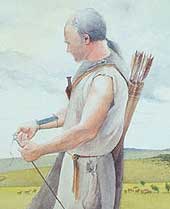
The Amesbury Archer

I ofter talk about the ‘Amesury Archer’ on my Stonehenge tours and wanted to put some facts into my blog for those visitors who keep asking for more information.  
An excavation in Wiltshire some years ago revealed the grave of a Bronze Age archer, buried with a rich array of precious metal goods and a quiver of arrows. Was this the King of Stonehenge?

An Early Bronze Age grave

In the spring of 2002 what started as a routine excavation was undertaken in advance of the building of a new school at Amesbury in Wiltshire. By the end of the excavation the richest Bronze Age burial yet found in Britain had been discovered. The Bronze Age man discovered there had been buried not far from the great temple of Stonehenge. He was a man who owned and could work the new and magical metals of gold and copper. And he had come from what is now central Europe, perhaps around the Alps. Was he a king of Stonehenge?

Early Bronze Age pottery showed that they were over 2,500 years older than the Roman graves.

On the site of the proposed new school there was a small Roman cemetery but, it seemed, little else. In the far corner of the site, though, there were two features that looked different. Had they been caused by trees being blown over? Or were they something else? They certainly did not look like Roman graves.

Excavation work started on a Friday morning, and the reason for the difference between the Roman graves and the two other features rapidly became clear. The features were indeed graves, but the Early Bronze Age pottery in one of them showed that they were over 2,500 years older than the Roman graves. And the grave with the pottery was unusually large.

The Amesbury Archer

Golden artefacts - either earrings or hair tresses These golden artefacts may have been earrings or hair tresses . One of the next finds revealed something unusual – a gold ‘earring’. This type of jewellery may be the oldest type of gold object made in Britain. These objects are very rare, and they usually occur in pairs, and as it was the Friday of the May Bank Holiday weekend it was decided that the excavation of the grave should be completed that day. This might involve staying on a little bit late on a Friday afternoon, but not, it was thought, very late.

What no one knew then was that the grave, the burial of the Amesbury Archer as he has come to be known, was to be the most well-furnished Early Bronze Age burial ever seen in Britain. The graves could not be left unprotected, so a ‘little bit’ late turned into ‘very, very’ late, as it became clear that this was a very important find.

The excavation showed that there was probably a timber mortuary building in the larger grave. Because of this not all the earth had been put back into the grave at the time of the burial, so it seems likely that a small burial mound or barrow surmounted the grave.

What no one knew then was that the grave, the burial of the Amesbury Archer as he has come to be known, was to be the most well-furnished Early Bronze Age burial ever seen in Britain. The graves could not be left unprotected, so a ‘little bit’ late turned into ‘very, very’ late, as it became clear that this was a very important find.

The excavation showed that there was probably a timber mortuary building in the larger grave. Because of this not all the earth had been put back into the grave at the time of the burial, so it seems likely that a small burial mound or barrow surmounted the grave.

King of Stonehenge?

The stones of Stonehenge seen at sunrise

The stones of Stonehenge seen at sunrise

The site of Stonehenge at sunrise. The radiocarbon dates show that the Archer lived between 2,400 and 2,200 years BC. The burial lies about 5km (2 miles) south-east of Stonehenge and it was at about this time that the massive stone circles, and the avenue leading to the River Avon from the site, were built. The great temples of Woodhenge and Durrington Walls, both a similar distance away, continued to be used and modified throughout this time.In the past, burials of this date were considered rich if they contained more than a handful of objects, especially if one of the objects was of copper or bronze, or even gold. Although the finds buried with the Archer are all of well known types (within the Beaker cultural package that is found across much of central and western Europe at this time), the number of objects found with him, almost 100, is without compare.

Had these two men been part of a ruling élite?

The burial is also one of the earliest of its type in Britain, some of the finds are of the highest quality, and the gold is the earliest yet found in Britain. Furthermore the copper knives came from Spain and western France – an indication of the wide contacts of their owner. Above all, though, the associations between these finds are of particular importance.

Can it be a coincidence that the richest Early Bronze Age burial in Britain, and its companion, should be so close to the great temples of Durrington Walls? Had these two men been part of a ruling elite? Had one of them been a king?

A European élite

Copper knives from the Amesbury Archer's grave

Copper knives from the Amesbury Archer's grave

The Archer’s copper knives  As the archaeologists discussed these questions, further surprising facts became clear. Some archaeologists have argued that, for the period in question, there is no certain evidence for the sort of social differences that might suggest a ranked society. The discovery of the burial of the Amesbury Archer and his companion, however, showed for the first time that at this date there were individuals – and perhaps even families – of greater wealth and status than others. That this elite had ties across Europe is shown by the sensational discovery that the Archer comes from central Europe.The enamel on our teeth stores a chemical record of the environment where we have grown up. It is possible by using Oxygen Isotope Analysis to measure this record. The Archer’s teeth show that as a child he lived in a colder climate than that of Britain today, in central Europe, and perhaps close to the Alps.

He was raised in central Europe but he died near to one of the greatest temples in Europe.

Much work remains to be done. At the moment we do not know why the Amesbury Archer came to live, and perhaps raise a family, near Stonehenge. Was he brought up in the family of distant allies? Did he arrive in order to seal an alliance by taking a partner? Was he a settler or a pilgrim? Or was he an outsider with the magical skills of alchemy?

We will never know all the answers, but we can say this. He was a strong man, who overcame pain and handicap. He could work new and exotic metals. His mourners gave him the richest burial of his time. He was raised in central Europe but he died near to one of the greatest temples in Europe. We may not know if he was a king, but it is still an astonishing story. It is a Bronze Age biography.

If you are visiting Stonehenge or on a Stonehenge tour take the time to visit the Salisbury and South Wiltshire Museum –
http://www.salisburymuseum.org.uk/collections/stonehenge-prehistory/amesbury-archer.html

Books

Bronze Age Britain Mike Parker Pearson (Batsford/English Heritage 1993)

Hengeworld by Mike Pitts (Century, 2000)

The Stonehenge People: Life and Death at the World’s Greatest Stone Circle by Aubrey Burl (Barrie Jenkins, 1989)

Stonehenge by Julian Richards (Batsford/English Heritage, 1991)

Merlin @ Stonhenge
The Stonehenge Stone Circle Website
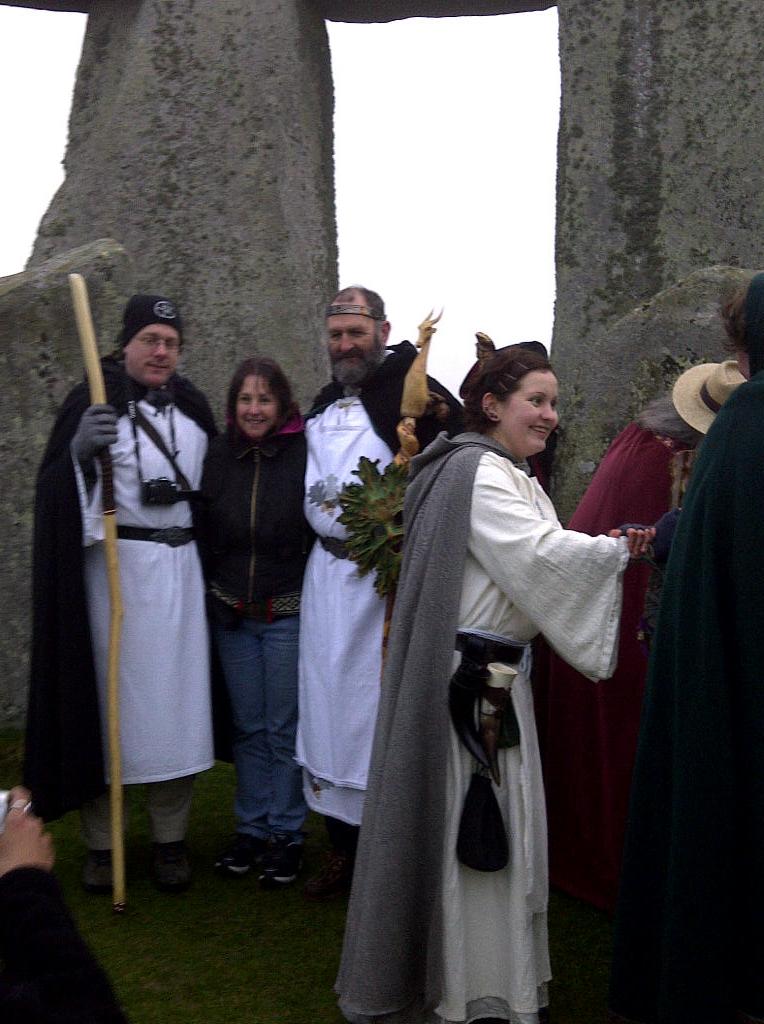


Stonehenge Druids – The mysterious guardians of the ancient Celtic knowledge.

7 02 2011
Druids_celebrating_at_Stonehenge

Druids_celebrating_at_Stonehenge

The Druids were the priests of the Celtic religion during the Iron Age

The Druids were the priests of the Celtic religion during the Iron Age which was before the Romans invaded Britain.

The Druids has been popularly associated with Stonehenge ever since an earlier researcher John Aubrey said in 1666 that stone circles were built and used by Druids as places where they conducted their rituals.

Today we know that this ancient Druid connection to Stonehenge is not true.

Druids and most of what we know of them today have been written about by Julius Ceasar and Pliny during the Gaelic wars.

According to Ceasar Druids chose to conduct their rituals in densely wooded areas and did not built special places to perform their ceremonies. Druid comes from the Celtic word for “knowing the oak tree

Pliny writes mostly about the Druids practicing medicine and sorcery.

According to him the Druids held the mistletoe plant in the highest veneration. Groves of oak were their chosen retreat. Mistletoe grows on the oak trees and a priest dressed in a white robe would cut it with a golden knife. It was the custom that two white bulls were to be sacrificed on the spot.

Druidic lore consisted of a large number of verses to be learned by heart and a novice would apparently train for up to 20 years to prepare for his duties as a guardian of the sacred knowledge.

It is interesting that many Druids were women. Celtic woman enjoyed more freedom and rights than women in any other contemporary society. They had the right to enter a battle and even divorce their husbands.

The modern version of the Druids is known as The Ancient Order of Druids and was formed in 1781. Neo Druidism is apparently based on Freemasonry.

The Ancient Order of Druids was not able to hold a ceremony at Stonehenge until 1905 and at this occasion 650 of them arrived for a mass initiation.

They erected their own marquee and were well stocked with food and drink.

Druids Autumb Equinox

Druids Autumb Equinox

Apparently they used a secret password to keep outsiders outside. Sir Edmund Antrobus the then owner of Stonehenge was also one of the 258 novices present to be initiated.

After the feasting the initiates were blindfolded and led into the stone circle while an anthem which was especially composed for the event was played.

The ceremony was lead by GA Lardner, Most Noble Grand Arch Brother of the Order who waved his battleaxe over a so called sacred fire. After he recited the sacred oath the blindfolds were removed and everyone apparently had a hearty singsong of the anthem.

Over the years a number of famous names have had involvement with the Druids.

Here are some of their members;

Winston Churchill – Prime Minister

Ludwig van Beethoven – Composer.

Benjamin Franklin – Politician and American President.

Salvador Dali –Artist.

More recently Rowan Williams, the Archbishop of Canterbury who is the head of the Anglican Church was initiated as a member.

Today Druids mostly gather at Stonehenge during the summer and winter solstice days.

which was before the Romans invaded Britain. The Druids has been popularly associated with Stonehenge ever since an earlier researcher John Aubrey said in 1666 that stone circles were built and used by Druids as places where they conducted their rituals. Today we know that this ancient Druid connection to Stonehenge is not true. Druids and most of what we know of them today have been written about by Julius Ceasar and Pliny during the Gaelic wars. According to Ceasar Druids chose to conduct their rituals in densely wooded areas and did not built special places to perform their ceremonies. Druid comes from the Celtic word for “knowing the oak tree” Pliny writes mostly about the Druids practicing medicine and sorcery. According to him the Druids held the mistletoe plant in the highest veneration. Groves of oak were their chosen retreat. Mistletoe grows on the oak trees and a priest dressed in a white robe would cut it with a golden knife. It was the custom that two white bulls were to be sacrificed on the spot. Druidic lore consisted of a large number of verses to be learned by heart and a novice would apparently train for up to 20 years to prepare for his duties as a guardian of the sacred knowledge. It is interesting that many Druids were women. Celtic woman enjoyed more freedom and rights than women in any other contemporary society. They had the right to enter a battle and even divorce their husbands. The modern version of the Druids is known as The Ancient Order of Druids and was formed in 1781. Neo Druidism is apparently based on Freemasonry. The Ancient Order of Druids was not able to hold a ceremony at Stonehenge until 1905 and at this occasion 650 of them arrived for a mass initiation. They erected their own marquee and were well stocked with food and drink. Apparently they used a secret password to keep outsiders outside. Sir Edmund Antrobus the then owner of Stonehenge was also one of the 258 novices present to be initiated. Image Credit After the feasting the initiates were blindfolded and led into the stone circle while an anthem which was especially composed for the event was played. The ceremony was lead by GA Lardner, Most Noble Grand Arch Brother of the Order who waved his battleaxe over a so called sacred fire. After he recited the sacred oath the blindfolds were removed and everyone apparently had a hearty singsong of the anthem. Over the years a number of famous names have had involvement with the Druids. Here are some of their members; Winston Churchill – Prime Minister Ludwig van Beethoven – Composer. Benjamin Franklin – Politician and American President. Salvador Dali –Artist. More recently Rowan Williams, the Archbishop of Canterbury who is the head of the Anglican Church was initiated as a member. Today Druids mostly gather at Stonehenge during the summer and winter solstice days.

External links:
The British Druid Order – http://www.druidry.co.uk/
The Council of Druid Orders – http://www.cobdo.org.uk/
The Druid Network – druidnetwork.org
Stonehenge Guide – stonehengeguide.com
Stonehenge Tours – StonehengeTours.com

Merlin @ Stonehenge
The Stonehenge Stone circle Website


Sarsen stones – Shaped like wood 42 centuries ago

5 02 2011

Sarsen stones are the very large stones that forms the outer circle at Stonehenge.

These stones are a very hard type of sandstone. Now to give one a clear idea as to how hard this particular stone is we will take a look at the Mohs scale.

The Mohs scale is simply a measurement used to measure the surface resistance to abrasion of any hard substance.

That just means that if we take a hammer and bash the stone how much will it resist before we can knock a chunk off it.

Sarsen stone measures a seven (7) on the Mohs scale.

Now, if we compare the surface resistance of sarsen stone to that of steel we find that steel measures 6,7 on the same scale.

So, we now know that sarsen stone is a very hard stone and we can appreciate how difficult it must have been to shape the stone with ancient tools.

Sarsen stones were worked and dressed with other sarsen stone which were round balls of stone known as mauls. The mauls were of various sizes and can today be viewed at the Salisbury museum.

From exploration at Stonehenge it would appear that there were 30 stones that were used as “uprights”.

Of these “uprights” 29 of them were shaped to the same basic size.

When the sarsen “uprights” were placed into position they were then capped with a line of sarsen stone lintels.

The lintels weighs up to seven tons ( 7,000kg.) each.

To fix the lintels securely in position thirteen feet or 4m. above the ground these lintels were locked together like pieces in a jigsaw.

The lintels were held in place on the upright sarsen stones by mortice-and-tenon joints which was carved out of the solid stone.

The lintels in the circle were then locked end-to-end by a method known as vertical tongue and groove joints.

The vertical tongue and groove jointing techniqueThe jointing techniques used on the sarsen stones are all from the wood joiners craft.

Another amazing feature is that the lintel circle of sarsen stones were shaped to follow the curve of the circle which is both a design and engineering feature.

Merlin @ Stonehenge
The Stonehenge Stone Circle Website