Stonehenge is a landing strip.

5 04 2011

Aircraft at Stonhenge for first time in 90 years

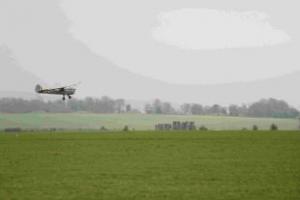
AIRCRAFT landed at the former Stonehenge airfield on Friday for the first time in 90 years.

Stonehenge landing strip

Stonehenge landing

The event was arranged by the National Trust to commemorate the centenary of the formation of the first British military aeroplane unit.

Although overcast weather and strong winds hampered the occasion, three Auster planes, the oldest dating back to 1942, did manage to land.

A number of other planes including some replica First World War aircraft were due to take part but were unable to take off because of the conditions.

The airfield, RFC Stonehenge, was part of the Royal Flying Corps, although part of the site was also used by the Royal Naval Air Service as RNAS Stonehenge.

It became part of the Royal Air Force when it was formed in 1918 and the airfield remained open until March 1921.

The fly-in commemorated the formation of No 2 (Aeroplane) Company, Air Battalion, Royal Engineers which was formed at Larkhill on April 1, 1911.

“We are delighted to bring this aspect of the history of Stonehenge to life again, with the fly-in by this wonderful collection of aircraft,” said Stonehenge project officer Lucy Evershed.

National Trust volunteer guide Ted Mustart added: “Although No 2 Company was based at Larkhill, much of their flying in 1911 and 1912 was over the Stonehenge landscape.

“The Austers which have visited were used in the same roles as those of the first military aeroplanes – scouting, artillery co-operation and liaison in the period immediately after World War II.”

The National Trust has also organised a series of walks revealing the aviation history of the Stonehenge landscape.

The Wings over Stonehenge walks have taken visitors to the former airfield and more walks are planned for the summer, including one commemorating the first fatal military aircraft accident.

More information is available at www.nationaltrust.org.uk/stonehengelandscape
http://www.salisburyjournal.co.uk
http://www.StonehengeTours.com

Merlin @ Stonehenge
The Stonehenge Stone Circle Website


£5.5million announced for Stonehenge project

5 04 2011

AN extra £5.5million to help transform the Stonehenge landscape was announced this morning.  Should be enough to install a new coffee machine.

On a visit to the monument, Roads Minister Mike Penning said the government has agreed to give £3.5million to close the A344 junction with the A303 and improve the Long Barrow roundabout to cope with extra traffic.

The work will include resurfacing a mile-long stretch of the A303 with a ‘low noise’ road surface so visitors to the stones should not be able to hear the passing traffic.

Tourism and Heritage Minister John Penrose said English Heritage will be allowed to take £2million from its reserves to put towards the £27.5million it needs to move the visitor centre to Airman’s Corner and install a road train system to take visitors to the stones.

Chief executive Simon Thurley said the organisation is now just £3million short of its target and hopes to raise this from private sources such as trusts and charitable funds.

A public inquiry will be needed to authorise the permanent road closure.

But Dr Thurley said: “I am confident that we will be able to start work next year.”

If all goes well, English Heritage says the entire project could be completed by spring 2014.

Link: http://www.salisburyjournal.co.uk

Is it enough ?

Merlin @ Stonehenge
The Stonehenge Stone Circle Website


The Henge Hopper

3 04 2011

The Wiltshire Heritage Museum is planning to launch a bus service to link Stonehenge and Avebury. At the moment, it is extremely difficult to travel between the two, and the Museum hopes to be able to boost tourism in the Vale of Pewsey and the Avon Valley. They hope to launch a service in due course.

Stonehenge

Stonehenge

The Community Bus Service will be operated by minibuses, and the route would take in a range of archaeological sites and monuments in the Stonehenge and Avebury World Heritage Site, including Silbury Hill, West Kennet Long Barrow and Woodhenge.

The ‘hop on, hop off’ service would include free entry to the Wiltshire Heritage Museum in Devizes, encouraging people to discover the collections excavated from the World Heritage Site.

The Henge Hopper enables you to visit:

Avebury
Britain’s largest stone circle, at the centre of a remarkable complex of monuments, including stone circles, burial mounds, two stone-lined avenues and Silbury Hill.

Alexander Keiler Museum, Avebury Manor
Explore the world famous stone circle. The bus starts from just outside the Museum, which features fascinating finds from Alexander Keiler’s excavations at Avebury, and, in the barn, interactive displays bring the Avebury landscape to life. Explore also Avebury Manor and its wonderful garden. Cafe, toilets and shop.

Silbury Hill
The largest man-made mound in Europe, mysterious Silbury Hill compares in height and volume to the roughly contemporary Egyptian pyramids.

West Kennet Long Barrow
One of the largest, most impressive and most accessible Neolithic chambered tombs in Britain. Built in around 3650 BC, it was used for a short time as a burial chamber, nearly 50 people being buried here before the chambers were blocked.

Wansdyke / White Horse Trail
Massive Saxon defensive ditch and bank running along the top of the North Wessex Downs. Walk along the Wansdyke, following the White Horse Trail, with stunning views over the Vale of Pewsey.

Marden Henge
Britain’s largest henge, Excavations in 2010 have revealed much about its fascinating story.

Alton Barnes White Horse
Dominates the landscape of the Vale of Pewsey.

Adam’s Grave / Wansdyke
Neolithic chambered tomb on the summit of the Downs. Walk along the Wansdyke, following the White Horse Trail.

Stonehenge

The most sophisticated stone circle in the world, at the centre of a remarkable sacred landscape. Includes the cursus, a 3km long earthwork and the Avenue, leading from the River Avon.

Winterbourne Stoke

The most impressive barrow cemetery – a Neolithic long barrow and a line of Bronze Age burial mounds.

Normanton Down
Cemetery of over 50 round barrows, including the famous Bush Barrow.

Amesbury

Amesbury is an attractive small town embraced by a loop of the River Avon as it cuts through the high plateau of Salisbury Plain. The town has served the needs of travellers for centuries. Highlights include the Amesbury is the closest settlement to Stonehenge.

Durrington Walls / Woodhenge
Durrington Walls is a massive henge, the site of the recent discovery of Neolithic houses, where the people who used Stonehenge may have lived. Nearby is Woodhenge, where excavations showed a series of concentric circles of wooden posts, enclosed by a bank and ditch.

Where to Stay
Local accomodation listed by VisitWiltshire.

Alternatvley you could join a guided sightseeing coach tour with ‘The Stonehenge Tour Company’ or a privat tour with ‘Histouries UK’ or ‘SalisburyGuidedTours‘ based is Salisbury

The Henge Hopper – http://www.stonehenge-avebury-bus.org.uk/
Stonehehenge Tour Companies – http://www.stonehenge-stone-circle.co.uk/stonehenge-tours.htm

However you get there, get there…………………….

Merlin @ Stonehenge
The Stonehenge Stone Circle Website


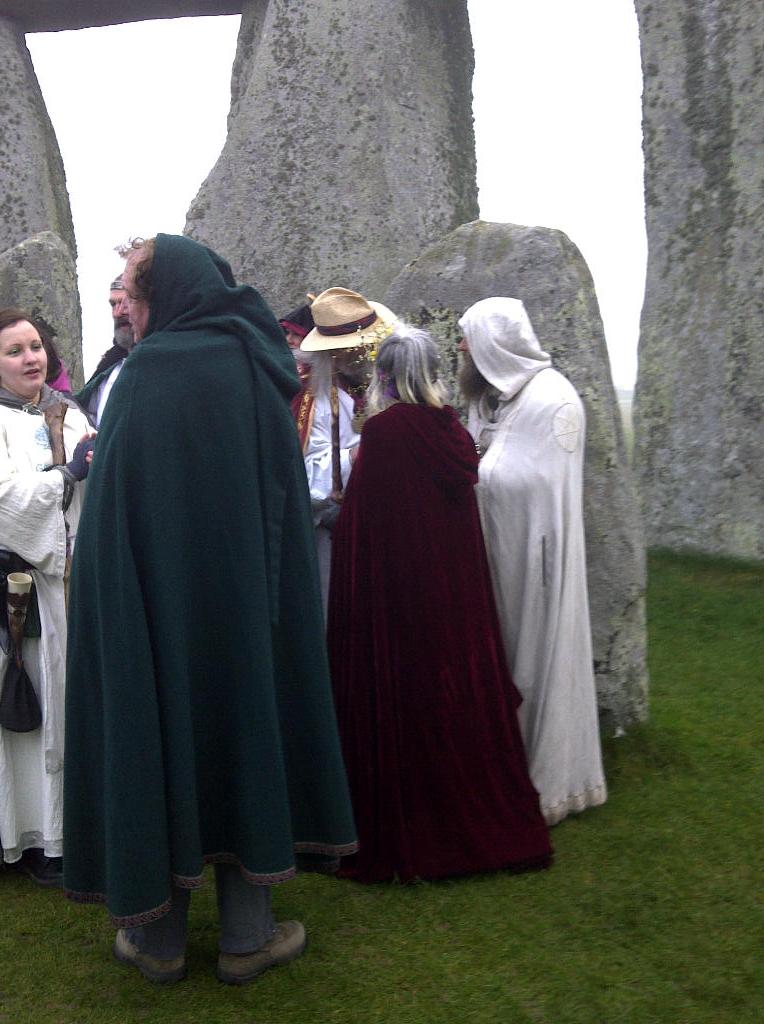
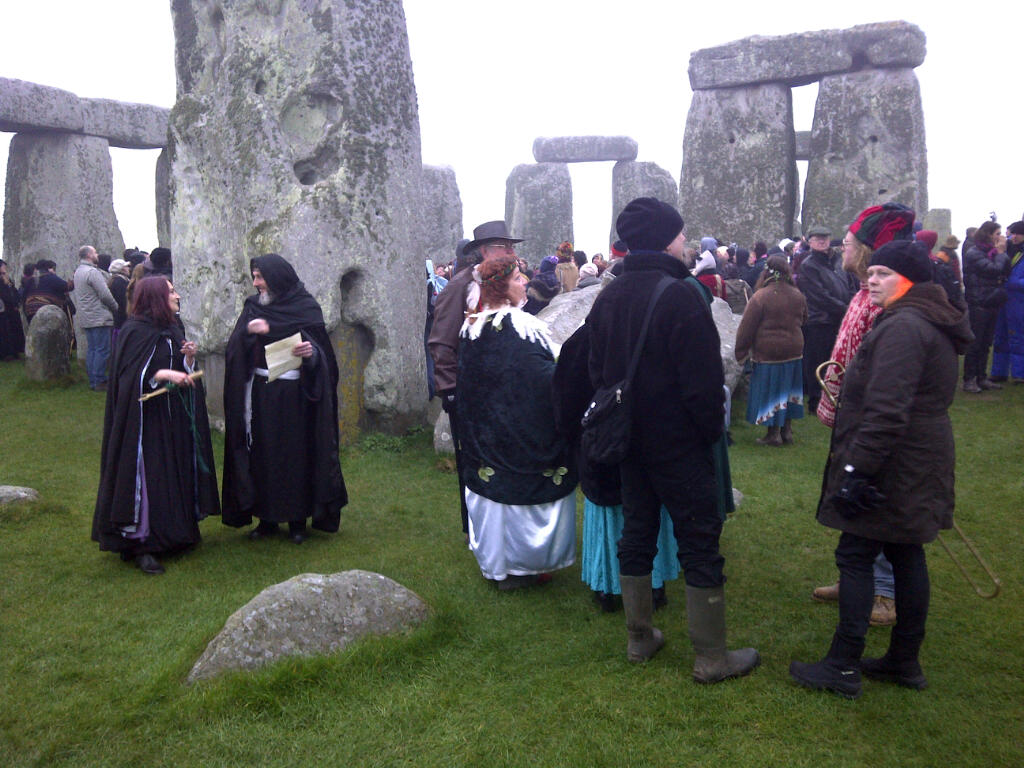
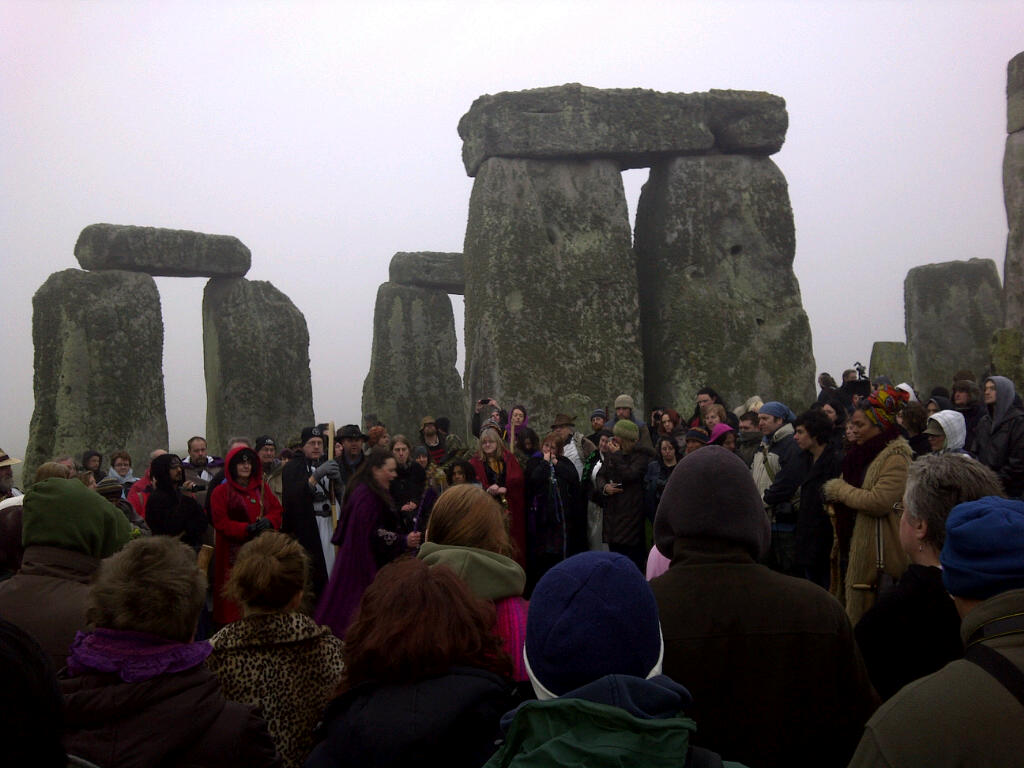
Stonehenge Spring Equinox 2011

22 03 2011
Stonehenge Spring Equinox 2011

Stonehenge Spring Equinox 2011

Stonehenge Spring Equinox 2011

Stonehenge Spring Equinox 2011

Stonehenge Spring Equinox 2011

Stonehenge Spring Equinox 2011

Stonehenge Spring Equinox 2011

Stonehenge Spring Equinox 2011

Stonehenge Spring Equinox 2011

Stonehenge Spring Equinox 2011

I will upload more Equinox pictures and video shortly

sponsored by ‘The Stonehenge Tour Company’

Merlin @ Stonehenge
The Stonehenge Stone Circle Website


Super moon spectacle will light up skies tonight at Stonehenge (but there’s no need to worry about a rise in lunacy)

19 03 2011

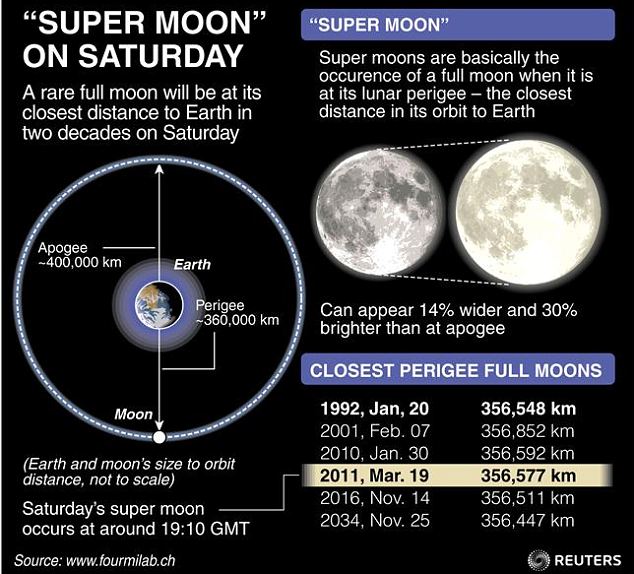
Tonight’s event will be the closest full moon in almost 20 years

Keep your fingers crossed for clear skies tonight – a full moon of rare size and beauty will rise in the east at sunset.

The natural phenomenon happens when the full Moon coincides with when it travels closest to Earth on its orbit.

‘The last full Moon so big and close to Earth occurred in March of 1993,’ said Geoff Chester of the US Naval Observatory in Washington DC.

Full Moons vary in size because of the elliptical (or oval) shape of the Moon’s orbit. At its furthest point (the apogee) it is around 252,731miles away from us, but it is only around 226,426miles at its closest point (the perigee).

So nearby perigee moons, like the one we will see tonight, is around 14 per cent bigger and 30 per cent brighter than lesser moons that occur on the apogee side of the moon’s orbit.

However, it will be difficult to detect the change once the moon is high in the sky as the human eye is unble to put it in context without any nearby objects to compare it to.

Therefore the most impressive view of the moon will be seen when it is close to the horizon due to the ‘moon illusion’. It appears larger as you will automatically compare it to the hills and houses nearby.

‘I’d say it’s worth a look and so close to the Spring Equinox

Lnks: http://www.dailymail.co.uk/sciencetech/article-1367474/Super-moon-spectacle-light-skies-tomorrow-night-theres-need-worry-lunacy.html#ixzz1H1i0CPkD
Sponsors:  The Stonehenge Tour Company

Merlin @ Stonehenge (Happy Equinox)

The Stonehenge Stone Circle Website


Stonehenge Folklore

16 03 2011

The stones have inspired many legends and folklore over the centuries. Much of the folklore seems to try and explain the origin of the circle structure as the work of giants, gods or wizards. It was probably easier to accept this than to believe that a past culture could have better technology.  

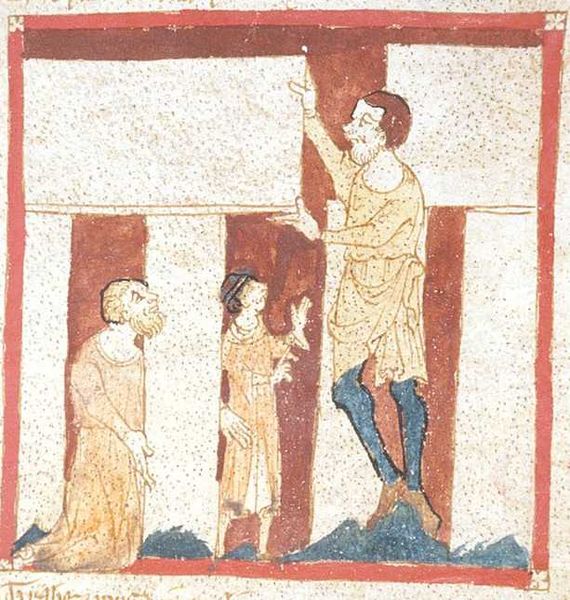
During the Middle Ages Geoffrey of Monmouth, whose colourful writing have had great influence on British mythology, wrote that the stones were originally brought from Africa to Ireland by a race of giants. They were then transported across the sea by the magic of Merlin during the beginning of the Dark Ages on the request of Ambrosius Aurelianus, who was king of the Britons at the time. They were needed as a monument to the treachery of Hengist, a Saxon leader who killed Prince Vortigern 

The heel stone is said to have been thrown by the Devil at a monk who was spying on him between the stones. The stone pinned the unfortunate clergyman to the ground by his heel.

 Other folklore suggests that the stones are uncountable, a baker tried to count them by placing a loaf of bread on each stone. He came up with a number but then made the mistake of going through the whole process again, and could never get the sets of numbers to tally.

 According to folklore African giants came and settled in Ireland many thousands of years ago, they brought with them a temple of stone from their country and re-erected it in County Kildare.
The stones were renown for their healing properties especially when infused with water, known as the Giant’s Dance they still existed in Ireland long after the giants had died out as a race.  

In the 5th Century Merlin brought the stones over from Ireland in ships and with the aid of magic, and erected them on Salisbury Plain. They were to mark the graves of some British nobles who were slaughtered by the invading Saxons under the command of Hengist.

In times gone by it was said that the Devil had made Stonehenge, transporting all of the great stones from the heathen shores of Ireland using his magical powers. He was so proud of this work that he was want to boast about the number of stones to the local populace. In one particularly fine display of pride he bet the residents of nearby Amesbury that  no one would be able to count the numerous stones. Many tried but as the Devil belived none was able to count them all accurately. A dozen different totals were arrived at. Then finally a local Friar who had come late to the game sidled up to the Devil and claimed to know the answer. Not unaturally the Devil, sure that he had won asked the Friar to give his answer. The Friar said “More than be counted”. The Devil was so cross at being caught out in the way that he picked up one of the stones and threw it at the Friar. It bounced of the Friars heel which was so hard that it dented the stone and landed upright a short distance away from the circle and so became the “Heel Stone”.

Some say that the stones were a circle of dancing wizards who were turned to stone by the enchantment of another wizard.

Sponsors:  The Stonehenge Tour Company

Merlin @ Stonehenge
The Stonehenge Stone Circle News Website


Laser scan for Stonehenge secrets

10 03 2011

Stonehenge is being scanned using modern laser technology to search for hidden clues about how and why it was built.

All visible faces of the standing and fallen stones, many of which are obscured by lichen, will be surveyed.  Some ancient carvings have previously been found on the stones, including a famous Neolithic “dagger”.  The survey is already in progress and is expected to finish by the end of March.

“The surfaces of the stones of Stonehenge hold fascinating clues to the past,” said English Heritage archaeologist Dave Batchelor.  The team will be looking for ancient “rock art”, but also for more modern graffiti, in a comprehensive survey of the site.
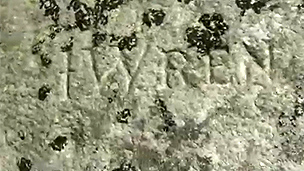
Among those who have left their mark in the stones is “Wren” – thought to be Sir Christopher Wren, the architect who designed London’s St Paul’s Cathedral.

Wren’s family had a home nearby, where he is known to have spent time, adding credibility to the claim.

The new survey will be the most accurate digital model ever for the world famous prehistoric monument, measuring details and irregularities on the stone surfaces to a resolution of 0.5mm.

Graffiti on one of the stones is thought to have been made by Sir Christopher Wren

Graffiti on one of the stones is thought to have been made by Sir Christopher Wren

The previous survey in 1993 was photographic, and only measured to an accuracy of about 2cm.

“This new survey will capture a lot more information on the subtleties of the monument and its surrounding landscape,” said Paul Bryan, head of geospatial surveys at English Heritage.

Laser scanning is also being used to map the earthworks immediately around the stone circle, and the surrounding landscape, as part of a wider project.

English Heritage has proposed a new £25m visitor centre at Stonehenge and closing parts of the A344, which runs just yards away from the landmark.

Government funding was withdrawn last year, but the Heritage Lottery Fund has promised £10m. English Heritage is seeking additional funds and is confident of raising the money it needs

Links:  http://www.bbc.co.uk/news/science-environment-12688085
Sponsors:  The Stonehenge Tour Company

This new survey will no doubt capture a lot more information on the subtleties of the monument – wath this space………..

Merlin @ Stonehenge
The Stonehenge Website


Britain may pull out of UNESCO

1 03 2011

Britain is threatening to withdraw its support for the United Nations agency

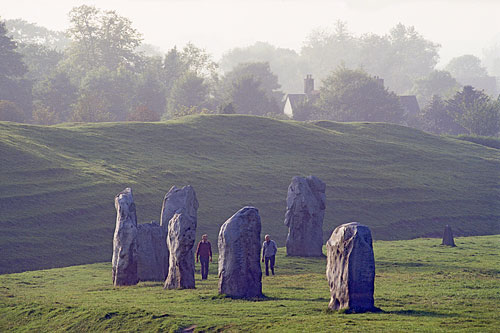
Avebury Stone Circle

Avebury Stone Circle

Unesco has designated more than 900 cultural and natural world heritage sites and 28 are in the UK including the City of Bath, Stonehenge, Avebury and Dorset and east Devon’s coastline.

Andrew Mitchell, the international development secretary, is expected to reveal tomorrow that aid to about 16 countries will end and that more than half a dozen UN agencies will either lose British help completely, or be warned they face losing it unless they reform.

UNESCO – United Nations Educational Scientific and Cultural Organization: an agency of the United Nations that promotes education and communication and the arts

http://whc.unesco.org/
http://www.thisissomerset.co.uk/news/UK-pull-funding-heritage-sites/article-3274100-detail/article.html
Sponsors: The Stonehenge Tour Company

Merlin @ Stonehenge  and Avebury
The Stonehenge Website


How Stone Age man kept his pores clean… in the SAUNA

28 02 2011

The remains of a 4,500-year-old sauna have been discovered by archaeologists excavating a Stone Age temple.
They unearthed the foundations of the building at Marden Henge, near Devizes in Wiltshire. Located close to the River Avon, the neolithic ‘sauna’ was in a key position overlooking a ceremonial area at the site.

English Heritage’s Jim Leary said: ‘The building brings to mind the sweat lodges of the native North Americans and the reason for that sauna or sweat lodge interpretation is that the floor plan was utterly dominated by a large hearth – so large in fact there does not appear to be any space for living, cooking or doing anything much at all.

‘It is also located very close to the River Avon and would have had a ready source of water, which is a necessary criteria for a sweat lodge. ‘If it was a sweat lodge then perhaps one could envisage it being used for purification ceremonies within the henge.

‘Unfortunately we’ll never know exactly what it was for – that’s the nature of archaeology.’

Marden Henge, which has no standing stones, is located on a line which connects stone circles at Stonehenge and Avebury but remains a mystery for archaeologists. Some believe the huge Stonehenge megaliths were stored there after being dragged from Avebury.

Mr Leary said: ‘The relationship between the three monuments is interesting. They are broadly contemporary and one wonders what the interaction between them must have been – were they competing with one another or were they used by the same communities but for different occasions and ceremonies? ‘We don’t know the answer yet

Merlin @ Stonehenge


Scientists ‘step closer’ to solving Stonehenge mystery

23 02 2011

IT is a mystery that has baffled geologists and historians for centuries… how were the Stonehenge rocks transported from Wales’ Preseli mountains to their resting place 120 miles away.
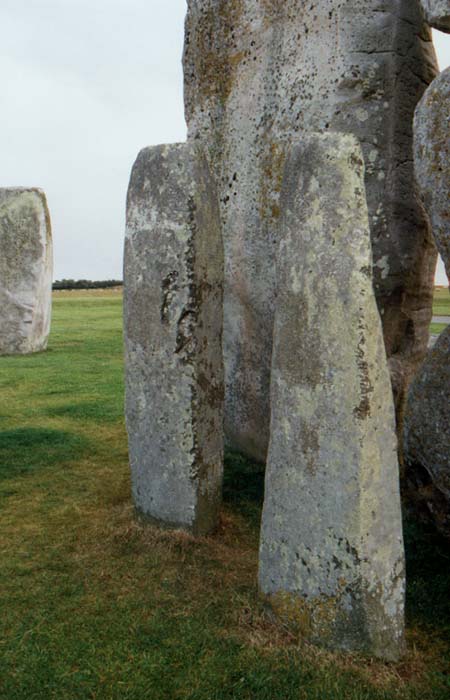
Scientists are today one step closer to solving the 4,000-year- old mystery after making their most significant discovery in 15 years.

Of the six to eight different bluestone types found in the inner circle of rocks on Salisbury Plain, only one, the so- called “spotted dolerite”, was convincingly traced to the Mynydd Preseli area in north Pembrokeshire in the early 1920s.

But modern technology has now assisted geologists at Amgueddfa Cymru – National Museum Wales – in creating a “fingerprint” for one of the other rock types found in Wiltshire.

And that “fingerprint” has been identically matched to stones found in an area north of the Mynydd Preseli range, in the vicinity of Pont Saeson.

The discovery means archaeologists are now a step closer to retracing the footsteps of Neolithic engineers who moved the stones in the first place.

Dr Richard Bevins, Keeper of Geology at Amgueddfa Cymru, said: “The outer circle of Stonehenge is made up from stones sourced locally in Salisbury Plain but it is the mismatch of rocks found in the inner circle that have caused so much mystery.

“We have known for some time that spotted dolerite came from Preseli but of those remaining stones we think that six to eight more may have come from Pembrokeshire, until now though we haven’t been able to be sure because the stones are very fragile and we didn’t previously have the technology to extract their DNA.”

Dr Bevins added: “Theoretically if we could trace the source of the other rhyolites (rock types) we could create a map with six or more locations pinpointing where each stone was sourced.

“Archeologists could then essentially see the route that was taken by these people, they could re-trace those steps, set up archaeological digs and make who knows how many new discoveries.

“In terms of looking at where the stones came from this is the most important discovery we’ve made regarding Stonehenge in 10 or 15 years.”

Dr Bevins, in partnership with Dr Rob Ixer at the University of Leicester and Dr Nick Pearce of Aberystwyth University, made the discovery by analysing microscopic crystals found in the rock, vaporising them and analysing the gases found as a result.

The composite of gases makes up the rock’s DNA which can then be matched to other rock forms.

Sourcing the rhyolites also provides the opportunity for new thoughts on how the stones might have been transported to the Stonehenge area.

Much of the archaeology in recent years has been based on the assumption that Neolithic Age man had a reason to transport bluestones all the way from West Wales to Stonehenge and the technical capacity to do it.

Dr Bevins said: “It has been argued that humans transported the spotted dolerites from the high ground of Mynydd Preseli down to the coast at Milford Haven and then rafted them up the Bristol Channel and River Avon to the Stonehenge area.

“However, the outcome of our research questions that route, as it is unlikely that they would have transported the Pont Saeson stones up slopes and over Mynydd Preseli to Milford Haven, we would assume that they would not carry the rocks up and over a steep mountain range.

“If humans were responsible then an alternative route might need to be considered.”

Some believe that the stones were transported by the actions of glacier sheets during the last glaciation and so the Pont Season discovery will need appraising in the context of this hypothesis.

Mike Parker Pearson, Professor of Archaeology at Sheffield University, added: “This is a hugely significant discovery which will fascinate everyone interested in Stonehenge.

“It forces us to re-think the route taken by the bluestones to Stonehenge and opens up the possibility of finding many of the quarries from which they came.

“It’s a further step towards revealing why these mysterious stones were so special to the people of the Neolithic.”

Read More http://www.walesonline.co.uk/news/wales-news/2011/02/23/scientists-step-closer-to-solving-stonehenge-mystery-91466-28216698/#ixzz1ElvHUPjT

Merlin @ Stonehenge