The Stonehenge Landscape Project. Lecture: 10th December 2011

19 11 2011


Recent Analytical survey and investigation in the World Heritage Site, by David Field.

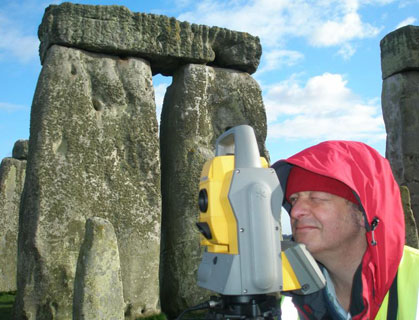
Saturday LectureMonuments within the Stonehenge Landscape have rarely been subject to survey techniques in modern times and in many cases reliance has been placed on Ordnance Survey depictions of the early 20th century. In advance of the establishment of a new visitor centre and to complement and support the recent university programmes of excavation in the area, English Heritage has been conducting the Stonehenge WHS Landscape Project to determine what non-destructive survey techniques can tell us about the area. Using ground survey, aerial photography, lidar and laser scanning a number of fresh and sometimes surprising conclusions emerge. This talk will outline the results so far.

David Field is a senior landscape archaeologist at English Heritage. He has undertaken extensive research into the prehistory of Salisbury Plain and the Vale of Pewsey, including the Stonehenge World Heritage Site. Publications include ‘Earthen Long Barrows’ 2006),‘The story of Silbury Hill’ (co author with Jim Leary, 2010), ‘The Field Archaeology of the Salisbury Plain Training Area’ (2002) and ‘Ancient water management on Salisbury Plain’ in Patterns of the Past: Essays in Landscape Archaeology (1999). He has also contributed a number of articles to WANHM, most recently as one of the joint authors of the reports on the Breamore jadeite axehead and the Late Bronze Age and Early Iron Age Midden at East Chisenbury, in Volume 103 (2010).

Saturday afternoon lectures start at 2.30pm and last approx. one hour.

Booking:

Contact the Bookings Secretary if you would like to be added to a reserve list:
* Tel: 01380 727369 (10am to 5pm Monday to Saturday)
* Send an e-mail.
Cost:   £5 (£3 for WANHS members)

Visiting Stonehenge ?  Visit the Wiltshire Heritage Museum in Devizes:  http://www.wiltshireheritage.org.uk

Sponsored by The Stonehenge Tour Company – www.StonehengeTours.com

Merlin @ Stonehenge
The Stonehenge Stone Circle Website


Stonehenge A344 road closure approved

1 11 2011

Plans to close a main road running past Stonehenge have been backed by the government following a public inquiry.

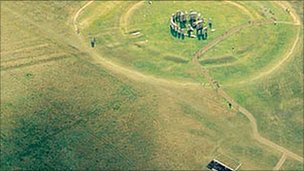
An aerial view of Stonehenge without the A344 road

An aerial view of Stonehenge without the A344 road

English Heritage wanted to stop traffic from travelling close to the stones and “restore the dignity” of the World Heritage Site by closing the A344.

Following a public inquiry, an independent inspector recommended part of the road could be closed off.

Roads minister Mike Penning has approved the plans and £3.5m will be used to improve nearby roads.

In June 2010 Wiltshire Council granted planning permission for a new visitors centre at Airman’s Corner, 1.5 miles (2km) west of Stonehenge.

At the public inquiry, opponents claimed the plans would give English Heritage a monopoly on access to the site.

The scheme will see an 879 metre section of the A344 from its junction with the A303 closed.

Part of the B3086 from its junction with the A344 will also be closed and “increased capacity” added at Longbarrow Crossroads.

A decision over the remainder of the A344 and other byways will be decided by Wiltshire Council.

“This is an important contribution to improve the setting of the monument and ensure its preservation as an iconic World Heritage Site,” said Mr Penning.

LINK: http://www.bbc.co.uk/news/uk-england-wiltshire-15540031

Sponsored by the ;Stonehenge Tour Company’ www.StonehengeTours.com

Merlin @Stonehenge


Stonehenge and Avebury Small Group Guided Tour.

28 10 2011

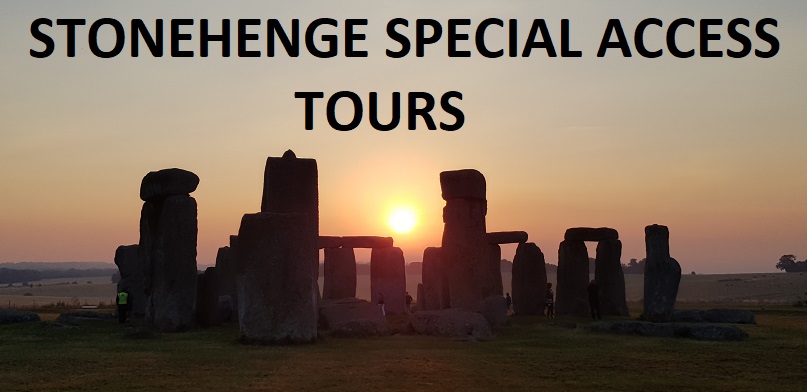
A new tour operating from London gives the  unique opportunity to explore the awe inspiring world famous Stonehenge and Avebury Prehistoric Landscapes with an expert service, guided by a qualified archaeologist.
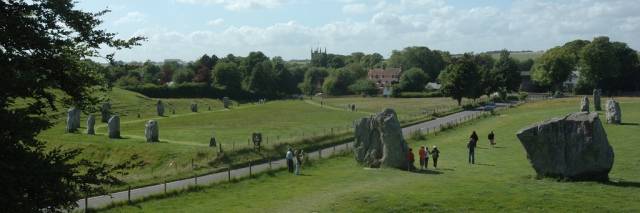
avebury-guided-tour
The tour includes –

  • Return travel from London in a luxury coach 
  • Entrance in to Stonehenge
  • Visit Stonehenge Cursus, Stonehenge Avenue and several Bronze Age Round Barrows (burial mounds)
  • A visit to one of the world’s most beautiful cities, Bath. Nourished by natural hot springs, stunning architecture, great shopping and iconic attractions
  • Guided coach tour around some of the most beautiful and stunning architectural works in Bath
  • Visit Woodhenge and Durrington Walls
  • Visit West Kennet Long Barrow and Silbury Hill
  • Visit Avebury Stone Circle and Henge 

 You will enjoy the passion and enthusiasm expressed by our professional,  archaeologist tour leaders.
The Avebury Landscape

West Kennet Long Barrow
– One of the largest Neolithic burial tombs in Britain. The West Kennet Long Barrow was constructed about 3700 BC, and was in continual use for well over 1000 years.

Silbury Hill – The largest man-made mound in ancient Europe, Silbury Hill was constructed c2800 BC. Even after centuries of research, archaeologists have still not discovered the original purpose of the Hill – ideas include it use as a territorial marker, burial mound and as a cenotaph.

Avebury Henge, Stone Circle and West Kennet Avenue – The largest stone circle in Europe, Avebury formed the centre of one of the most impressive Neolithic ceremonial landscapes in Britain. The great circles, 200 standing stones arranged in an outer and 2 inner circles, surrounded by a massive bank and ditch, were the focal point of the area. They were connected by the West Kennet Avenue of standing stones to other locales in the region, including the Sanctuary on Overton Hill – the site of a postulated temple. Hundreds of great sarsen stones from the downland around, often weighing over 20 tonnes, were used in the construction of the site, some 2500-2200 BC.


Visit Bath for Lunch, Guided coach tour and ‘Free Time’


The Stonehenge Landscape


Durrington Walls is the site of a large Neolithic settlement and later henge enclosure. It is 2 miles north-east of Stonehenge. Recent excavation at Durrington Walls, support an estimate of a community of several thousand, thought to be the largest one of its age in north-west Europe. At 500m in diameter, the henge is the largest in Britain and recent evidence suggests that it was a complementary monument to Stonehenge


Woodhenge – Neolithic monument, dating from about 2300 BC, six concentric rings, once possibly supported a ring-shaped building.


Stonehenge Cursus –  (sometimes known as the Greater Cursus) is a large Neolithic cursus monument next to Stonehenge. It is roughly 3km long and between 100 and 150m wide. Excavations by the Stonehenge Riverside Project in 2007 dated the construction of the earthwork to between 3630 and 3375 BC. This makes the monument several hundred years older than the earliest phase of Stonehenge in 3000 BC.


Bronze Age round barrows The Stonehenge UNESCO world heritage site is said to contain the most concentrated collection of prehistoric sites and monuments in the world. One monument type missed by the casual observer is that of the Bronze Age round barrow (burial mounds). As we walk through this landscape, you will come into contact with these intriguing ancient burial sites and through the expertise of our tour leaders, you will come face to face with the customs and people of Bronze Age society buried in close proximity to the unique stone circle of Stonehenge.Stonehenge Avenue – Walk along the Stonehenge Avenue and approach this unique stone circle as was the intended route experienced by the Stonehenge’s contempories.


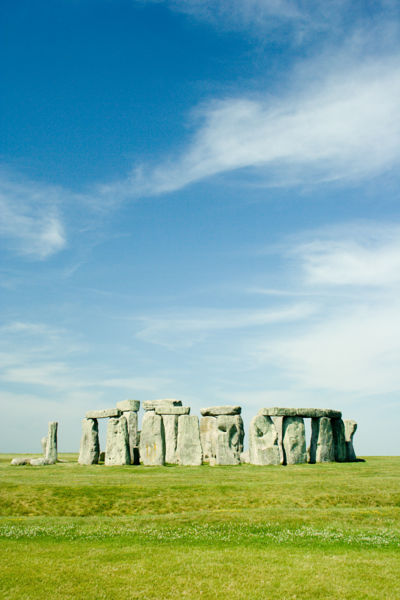
Admission to Stonehenge – The great and ancient stone circle of Stonehenge is an exceptional survival from a prehistoric culture now lost to us. The monument evolved between 3000 BC – 1600 BC and is aligned with the rising and setting of the sun at the solstices.


Evening: Return 19.00 (winter schedule 18.00)


 These are Archaeology Tours, and as a result we believe we offer an excellent up-to-date specialist service; giving you the opportunity to learn in great detail about these amazing prehistoric sites, but also leaving you time to explore your surroundings by yourself.

This exclusive tour operates all year and can be booked through:
‘The Stonehenge Tour company’ – www.StonehengeTours.com

Merlin @ The Stonehenge Stone Circle Website


How students found evidence to change the way we think about Stonehenge

4 10 2011

Stonehengeholds many mysteries, but although there are plenty of competing
The Stonehenge area was important to people before the stones were erected

The Stonehenge area was important to people before the stones were erected

theories about its purpose, experts agree that the site chosen for such a monumental construction project must have held a very special significance for our ancestors. Now evidence is emerging that the Stonehenge area could have been an important centre for prehistoric people several thousand years before the giant stone circle was actually built.

The revelation emerged from a small-scale excavation undertaken by Open University archaeology students, which has uncovered a huge cache of artefacts belonging to hunter-gatherers from the middle of the Stone Age, including the remains of a gargantuan Mesolithic-era feast, which took place close to Stonehenge.

The site has also yielded what are believed to be the oldest carved figurines yet found in the UK, indicating a continuity of human presence in what seems to have been a sacred spot for thousands of years.

The shoestring project has been led by David Jacques, a tutor at the Open University, since 2005. After getting permission from the landowners, Sir Edward and Lady Antrobus, to survey a site just north-east of a previously unexcavated Iron Age hill fort known as Vespasian’s Camp, he was awarded a research fellowship by the university’s classical studies department with a small three-year grant. Jacques chose to dig in a number of areas along the bed of a spring and recruited students from his Open University course on culture, identity and power in the Roman Empire, to do the excavation work.

“Last year, we dug a trench in the south-east area of the spring, and as we went down the trench we found a late Roman layer, then Iron Age, then early Bronze Age – then we found all these flint tools packed together in a 12cm layer,” says Jacques. “We thought it was probably a mixed cache of early prehistoric tools, and assumed some were contemporary with Stonehenge. When we took them back to Cambridge and a number of experts suggested they were all Mesolithic, we started to get very excited.”

With the tools were animal remains, including what Jacques and his team thought was a cow’s tooth, which they sent away for radiocarbon dating. The result was an astonishingly early date of around 6250BC, firmly in the Mesolithic period and more than 3,000 years before construction on Stonehenge began. Further excavations ensued and, by the end of September 2011, the team had uncovered a rare Mesolithic hoard of more than 5,500 worked flints and tools from just two small trenches 35m away from each other. As well as the tools and tool production debris, large quantities of burnt flint were found, indicating a fire, and more than 200 cooked animal bones, which came not from a cow, but from at least one aurochs – a gigantic creature resembling a buffalo that is now extinct. “An aurochs was something like a large minivan in size, to catch an animal this big would have been a major feat. It would have fed a lot of people. It’s likely there was a large gathering, possibly as many as 100 people, who cooked and feasted on the aurochs,” says Jacques.

“Mesolithic people were nomadic hunter-gatherers who would have had temporary settlements. Salisbury Plain would have been something like the Serengeti with herds of animals roaming across it, and people could have used the hills that sort of create a basin around it as vantage points from which to see the movement of animals.”

The discovery was especially significant since only a few small scatterings of Mesolithic material have ever been found in the Stonehenge area. Tom Lyons, one of two field archaeologists from Oxford Archaeology East supervising the project, says: “It’s really exciting to get such a cache of material. This certainly makes this find nationally important, if not internationally important.”

He and the team are linking the finds to the mysterious Stonehenge “totem poles”, three colossal Mesolithic post holes found during the excavation of the Stonehenge car park some years ago, which indicate the area was important to people in the Mesolithic era. He said what has been lacking until now is evidence of the people who used them.

The flint hoard is being analysed by Barry Bishop, an independent lithic specialist, who will publish his findings in a 2012 report co-authored with Jacques. He believes the size and nature of the assemblage of tools suggest that Mesolithic people kept returning to this one site over a long period of time, probably attracted by the spring water.

“Springs are very rare in this chalk landscape, and the spring would have probably seemed unique and quite mysterious,” explains Bishop. “People in Mesolithic communities saw the world as a very spiritual place, and even saw the landscape as being alive in itself, and they would have been very attuned to any differences and sensed great significance in this. “These might have been the very conditions which gave rise to Stonehenge – people seeing certain places in the landscape as being more spiritual in some way could have led to the creation of monuments thousands of years later.”

Evidence that the spring was considered sacred in the Bronze Age comes from other objects found by Jacques’ team that the archaeologists believe were deposited there as offerings to a particular god or goddess. They include a ceremonial dagger, dated to 1400BC, and two stone carvings in the shape of ducks, dated to around 700BC. This makes them the oldest figurines yet found in the UK, says Dr David Barrowclough, director of studies in archaeology at Wolfson College Cambridge, who is writing a research paper with Jacques about these objects. “In Europe in the Bronze Age and the start of the Iron Age, there was a cult, associated with the Celtic people, of making models of waterfowl and throwing them into ponds and springs. These are the first ones ever found in Britain, and the oldest figurines ever to come out of the UK,” he explains.

Jacques’ team’s findings could be a major boost for the local town, Amesbury, which is currently developing a historic tourist trail as part of a regeneration programme. In the best Open University tradition, Jacques has made a point of engaging the public on the dig and by giving talks to local people, who have traditionally had little involvement with the archaeology taking place on their doorstep.

The town mayor, Andy Rhind-Tutt, who is spearheading the regeneration campaign, says: “I hope we can secure funding to create our own museum/exhibition centre to showcase Amesbury’s heritage and this remarkable find.”

The local unitary and town council, English Heritage and the cash prize Jacques received as part of his 2010 Open University teaching award, have provided financial support for the work, but Jacques says more funding is now a priority. “We have done all of this on a shoestring budget of a few thousand pounds. We urgently need to get funds that reflect the stature of the finds.”

For Open University courses information, call 0845 300 6090; or see www.open.ac.uk/courses

 By Yvonne Cook http://www.independent.co.uk/student/news/open-eye-you-never-know-what-you-might-unearth-2365369.html

Sponsored by ‘The Stonehenge Tour Company – www.StonehengeTours.com

Merlin @ Stonehenge
The Stonehenge Stone Circle Website


Digging up a new look of a famous old site

24 09 2011

Startling new evidence of one of the most famous ancient sites in the world has been uncovered by a mid-Somerset archaeologist – without setting foot on site.

Wells-based digital archaeologist Henry Rothwell has been working on a reconstruction of the entire site of Stonehenge, to show visitors what it would have looked like at various intervals in its long history.

It was when he turned his attention to recently discovered Bluehenge, sited between Stonehenge and the river Avon, that he made the startling discovery – it would not have been a circle at all but an oval.

If correct, Bluehenge would echo the oval circle already known to be at the centre of the famous Stonehenge.

And it raises an intriguing possibility: did the neolithic builders uproot Bluehenge, drag it a mile up the avenue and reconstruct it within Stonehenge itself?

It is certainly a possibility, according to Henry, who is a very modern-day archaeologist.

Any fan of TV archaeology programmes such as Time Team know that archaeologists are usually found in ditches, using trowels to peel back the layers of time to uncover the secrets of the past.

But not Henry Rothwell.

He might have a degree in archaeology but it is a computer mouse that is his chosen tool of trade as he sets about bringing back to life some of the most famous sites in the world from the comfort of his office chair at his base in Wells.

Thanks to his popular website Digital Digging, his reconstructions of wood and stone henges have helped archaeologists and the general public to visualise how such monuments would have once looked.

Using his extensive knowledge of prehistory, pouring over excavation reports and using CAD technology, he tracks where each stone or wooden post would have been and constructs diagrams showing how each monument would have looked set into the ancient landscape.

The latest breakthrough at Bluehenge came as he worked on a new initiative, to make a digital application for people to view Stonehenge via their mobile telephones.

Henry has joined forces with world-renowned photographer Adam Stanford, who uses a camera attached to a 70ft telescopic mast on the top of a 4×4 to take unique perspectives of famous sites, and well-known archaeologist, writer and broadcaster Julian Richards, from TV’s Meet The Ancestors to produce the app.

It was as they were working on The Journey To Stonehenge app – which it is hoped to be ready for iPhones and other smartphones by the mid-winter solstice – that Henry and Adam made the discovery.

“We were using a low-level aerial image taken by Adam that showed the full extent of the Stonehenge Riverside Project excavation of 2009, including the socket holes of Bluehenge, into which the Stonehenge Riverside Project team had placed upturned black buckets,” explained Henry.

“We started constructing the model, but then realised we had missed another bucket on the far right. Initially we tried expanding the circumference to make it fit but it would have been put Bluehenge into the river.

“By going back and tracing each of the socket sites again, it made the overall design of Bluehenge an oval – exactly as the one inside Stonehenge would have looked.”

The new monument was 10m (33ft) in diameter and surrounded by a henge – a ditch with an external bank.

When the Bluehenge’s stones were removed by Neolithic people, it is possible that they were dragged along the route of the Avenue to Stonehenge, to be incorporated within its major rebuilding around 2500 BC.

After posting his findings on archaeological websites last week, Henry’s views soon received the backing of influential archaeologists.

One of the first was renowned Stonehenge expert Mike Pitts, who explained that it matters if it is oval because it strengthens links between Bluehenge, Stonehenge and Woodhenge which also has an oval henge.

“The point is, if Bluehenge was an oval, it matters to how we think about it,” he wrote.

“Which makes finding out what really does happen to the rest of it under the ground important.”

To see the Bluehenge reconstruction and read more see Henry’s http://digitaldigging.co.uk/blog/2011/09/13/bluestone-henge-twin website.
Article: http://www.thisissomerset.co.uk

Sponsored by the Stonehenge Tour Company – www.StonehenegTours.com

Merlin at Stonehenge
The Stonehenge Stone Circle Website


3D Stonehenge Model Unveiled

16 09 2011

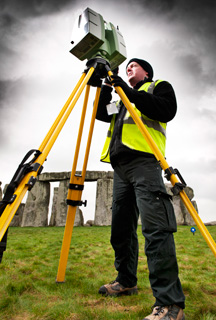
3d-stonehenge-scanEnglish Heritage have announced that the survey and initial data processing of the recent laser scan of Stonehenge is now complete, and present an update with a short video fly-though of the data.
A detailed survey of every stone that makes up Stonehenge using the latest technology, including a new scanner on loan from Z+F UK that has never before been used on a heritage project in this country, has resulted in the most accurate digital model ever produced of the world famous monument.

 With resolution level as high as 0.5mm in many areas, every nook and cranny of the stones’ surfaces is revealed with utmost clarity, including the lichens, Bronze Age carvings, erosion patterns and Victorian graffiti.

Most surprisingly, initial assessment of the survey has suggested that the ‘grooves’ resulting from stone dressing on some sarsen stones (the standing stones) appear to be divided into sections, perhaps with different teams of Neolithic builders working on separate areas.

A first glimpse of the model can now be viewed here
http://www.english-heritage.org.uk/about/news/3d-stonehenge-model-unveiled/

The model will be a powerful tool for tracking changes in the physical condition of Stonehenge, and for deepening our understanding of its construction and the thinking and working habits of its creators, plus changes to the monument in later history.

In March 2011 English Heritage commissioned 3D laser scanning specialists the Greenhatch Group, together with Atkins Mapping and Archaeo-Environment Ltd, to capture the stones and the landscape surrounding them at a level of precision and definition never before attempted. The survey includes all the visible faces of the standing and fallen stones of Stonehenge, including Station, Heel and Slaughter stones, as well as the top of the horizontal lintels.

 The resultant high resolution archival data and 3D meshed models is currently being synthesised and will be officially published and shared with the wider archaeological community in due course. Experts will also further analyse and study the archaeological significance of the data.

A variety of 3D models and datasets which can be manipulated and customised to simulate fly-over views of the monument from different perspectives will be used by  English Heritage’s interpretation team who is working on the new galleries of the proposed visitor centre.

http://www.stonehengelaserscan.org/

Sponsored by ‘The Stonehenge Tour Company’ – www.StonehengeTours.com

Merlin @ Stonehenge
The Stonehenge Stone Circle Website


Stonehenge Architect Linked With Welsh Burial Cairn?

8 09 2011

An impressive tomb discovered in Wales is believed to belong to an important figure involved with the construction of Stonehenge.

The burial chamber is located in the Preseli Hills in Pembrokeshire, Wales, and sits on top of a ceremonial monument.

Nearby, a pair of standing stones embedded in a bank bear a strong resemblance to the pair-arrangement of the stones at Stonehenge, the famous prehistoric monument in Wiltshire, southern England.

Stonehenge features earthworks encompassing a circular arrangement of large standing stones. These are mainly two types of rock—the large sarsen stones (a type of sandstone), and a variety of smaller igneous rocks called bluestones (natural columns of while-spotted dolerite).

The excavation of the tomb in the Carn Menyn region of west Wales was led by Tim Darvill from Bournemouth University, and Geoffrey Wainwright from the Society of Antiquaries.

The archeologists believe the 80 bluestones at Stonehenge originated from the same area as the tomb and were transported around 160 miles (nearly 260 kilometers) to the Wiltshire plains about 4,500 years ago (around 2,300BC).

Uncovering the reason for this epic journey will unlock the mystery behind Stonehenge’s existence

Darvill and Wainwright first suggested in 2008 that Stonehenge may have been built as a major healing center, rather like a prehistoric version of Lourdes or Santiago de Compostela. They think the bluestones, not the sarsen, were believed to convey healing powers.

The Preseli area has many springs linked with ritual healing in prehistory, and this could explain why the bluestones were quarried for Stonehenge, despite being so far away.

“We went back to the Preselis and started doing excavations up there,” says Wainright, according to The Guardian. “The first site we explored was a big burial cairn in the shadow of Carn Menyn, where the Stonehenge bluestones come from.”

The excavation team discovered a stone circle underneath the cairn, built of bluestone, and organic material is being carbon dated.

“Then this stone circle was covered with the huge burial cairn with a chamber in the middle,” Wainright added. “The space turned from a public ceremonial space defined by the stone circle into the burial spot of a very important person.”

“We have obviously got a very important person who may have been responsible for the impetus for these stones to be transported,” Wainwright BBC News.

“It can be compared directly with the first Stonehenge, so for the first time we have a direct link between Carn Menyn—where the bluestones came from—and Stonehenge, in the form of this ceremonial monument.”

Sponsored by the Stonehenge Tour Company – www.StonehengeTours.com

Merlin @ Stonehenge
The Stonehenge Stone Circle Website


The Stonehenge Landscape

8 09 2011

Stonehenge is the best known of all the prehistoric monuments in the British Isles and probably also in Europe. Along with the Neolithic monuments around Avebury situated 28km to the north, it forms a UNESCO recognised World Heritage Site (WHS), the parts of which are separated by the southern edge of the Marlborough Downs, Pewsey Vale and the Salisbury Plain military training area.

Much of the Avebury portion of the WHS, along with the military ranges, has been investigated from an archaeological landscape perspective during recent decades, as has the area to the south and west of the WHS, but ironically the Stonehenge area has not been treated in this way and it lacks the solid base of landscape surveys on which to build interpretations and understanding. The fresh Government-led imperative to ensure that new visitor facilities are in place by 2012 demands the provision of modern archaeological site plans, interpretations and other data which can feed into educational and presentational programmes as well as serving academic, management and conservation needs. 
Stonehenge Landscape

English Heritage are therefore undertaking an analytical landscape investigation of the Stonehenge World Heritage Site. This draws upon the considerable existing work provided by excavation, aerial, metric and geophysical survey but it fills a gap in this suite because there has been no modern detailed survey of the earthworks and other upstanding historicphysical remains within the Site – the barrow cemeteries, field systems and linear ditches, but also the tracks, ponds and military remains of more recent date.

Consequently there are no adequate plans of most of the upstanding archaeological remains within the WHS and no synthesis of the landscape history, especially in regard to its medieval and post-medieval phases. Analytical earthwork survey and analysis,supported by aerial survey and lidar data, is the key to understanding landscape change and will provide the framework in which individual small-scale site specific interventions can rest. Recommendations for other work, eg geophysical survey or coring to explore the extent of buried land surfaces, may arise from this.

The knowledge gained from this project is needed to inform displays in the new Visitor Centre, but also to inform various ongoing management issues, such as visitor pressure, and animal burrowing. The requirements of the new Visitor Centre include the best possible visualisation of the stones and their environs; digital terrain modelling of the surrounding land surface will provide the latter while it is hoped that laser scanning of the former will complete the package
For further detaisl visit: http://www.english-heritage.org.uk/

Sponsored by the Stonehenge Tour Companywww.StonehengeTours.com

Merlin @ Stonehenge
The Stonehenge News Website


Stonehenge news. Seven Wonders of the Ancient World ?

16 08 2011

Stonehenge may not be one of the seven wonders of the ancient world, but that’s probably only because Heroditus never came to Britain. If he came here now, he’d be appalled by the site of the stones – sandwiched as they are between two busy main roads, a car park complete with portaloos, and a visitor centre that makes you wish you were visiting something else.

A “national disgrace” is what a committee of MP’s called it more than a decade ago, and nothing much has changed since then. Until now that is. After years of wrangling over a series of schemes involving tunnels, by-passes and road closures, the Government believes it may finally have a plan that does Stonehenge justice. Others, including several prominent archaeologists, are not so sure and have set up The Stonehenge Alliance to fight the proposals.

When Sir Jocelyn Stevens took the reigns at English Heritage in 1992. He vowed to make Stonehenge his top priority, to “sort out” the mess of roads criss-crossing the site, and the inappropriate and inadequate visitor facilities that had been branded a national disgrace by the Public Accounts Committee:
From the top of the King Barrows Ridge heading south on the A303 it’s easy to see what the problem is. The road itself, and the smaller A344 that forks off to the right, dominate the landscape as the raised bowl in which Stonehenge sits opens out in front of you. The view of the stones is a good one – and is much appreciated by motorists – but it’s hardly an appropriate setting for such an historic monument.

Buried in the down right beside the stones themselves the bunker-like concrete visitor centre, with it’s shop, ticket office, take-away cafe, and portaloos, is little better. Everyone agrees something must be done. The question is what?

Earlier plans, for a 4 kilometre tunnel bored under the entire site were rejected by the then Conservative government in 1996 on the grounds of cost. The current proposal, the “master plan” as it’s called, is backed by both English Heritage and the National Trust which owns much of the land. The idea is to bury the A303 in a 2 kilometre cut-and-cover tunnel, to close and green-over the A344, and to re-locate and improve the visitor facilities at a site outside the boundary of the World Heritage Site:

Kate Fielden, is a founding member of the Stonehenge Alliance. The problem with the master plan is that a shorter tunnel, although missing the stones, would both start and finish well within the boundaries of the wider World Heritage Site. Opting for cut and cover construction rather than a bored tunnel would more than halve the cost, but means digging up the ground along its entire length. An act of archaeological vandalism the alliance says beggars belief:

And the Stonehenge Alliance is not alone. In July ICOMOS, the International Council on Monuments and Sites, urged the Government to “pay due regard to the World Heritage Site as a whole, and not just that part closest to the stones”. And now even the National Trust’s support for the scheme is under attack from within. A motion before this month’s AGM calls on the charity to abandon its position. The Trust’s Mark Harold accepts the master plan is far from perfect, but he believes, its a good compromise:

Sponsored by ‘The Stonehehenge Tour Company’ – www.StonehengeTours.com

Merlin @ Stonehenge
The Stonehenge Stone Circle Website


New battle erupts over ‘Sweden’s Stonehenge’

1 08 2011

A new archaeological examination of Ales stenar, a massive stone relic perched atop a cliff in southern Sweden, has sparked a heated crossfire between scientists about the origins of the famed stone ship.

Speculative argument over the astronomical, geometrical, geographical and mythological significance of the 67-metre long stone ship has a long history.

Now, in direct contrast to previous studies, a group currently digging at the site in Kåseberga on Sweden’s southern coast, has reported finding no evidence linking the 59 large sandstone boulders to the Iron Age and Viking era, putting previous theories about the site into question.

“No wonder,” Swedish archaeologist Martin Rundkvist told newspaper Svenska Dagbladet (SvD).

“They aren’t even digging in the right place.”

Ales stenar, sometimes referred to as “Sweden’s Stonehenge” is located about 10 kilometres southeast of Ystad in Skåne overlooking the sea.

The 1.8-tonne boulders are set in the shape of a large ship and, according to Scanian folklore, a legendary king named King Ale lies buried there.

Most stone ship settings are believed to be burial monuments, and many found in Scandinavia do indeed contain one or more graves.

Yet no grave has ever been positively identified at Ales stenar, a limited geographical area given its position atop a cliff.

Archaeoastronomer Bob Lind, together with Polish archaeology professor Wladislaw Duczko, believe that their ongoing excavations reveal that Ales stenar most likely originated in the Bronze Age.

“We have not found anything from the time that the established research claims, in which the ancient monument is from 600AD,” Lind told SvD.

But according to Rundkvist, the eroded area where the team is digging has moved around a lot over the centuries.

“So what they come up with has no relevance to the discussion of Ales stenar,” Rundkvist added.

“In fact, there is no discussion of Ales Stenar in the scientific community. The discussion is just between Bob Lind and the rest of the world.”

The carbon-14 dating system for organic remains has provided seven results at the site.

One indicates that the material is around 5,500 years old, whereas the remaining six results indicate a date of about 1,400 years ago.

The latter is currently considered to be the most likely time for the creation of Ales stenar, which would date its creation toward the end of the Nordic Iron Age.

Going against the grain yet again, Lind’s team also believes the stones to be a type of calendar rather than the commonly accepted theory that it serves as a burial site.

”It is an astronomical calendar. Stone hollows are perfectly aligned after sunrise and sunset. It is statistically impossible that this was a coincidence,” Associate Professor of Geology Nils-Axel Morner told SvD.

One other alternative theory is that it may have been constructed to honour the crew of a ship who perished at sea.

Sponsored by ‘The Stonehenge Tour Company@ www.StonehengeTours.com

Merlin @ Stonehenge
The Stonehenge Stone Circle Website