The Stonehenge Landscape

8 09 2011

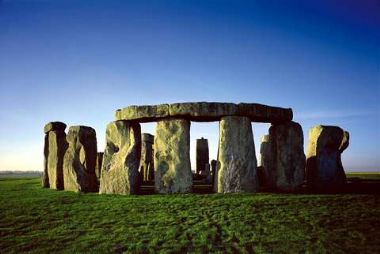
Stonehenge is the best known of all the prehistoric monuments in the British Isles and probably also in Europe. Along with the Neolithic monuments around Avebury situated 28km to the north, it forms a UNESCO recognised World Heritage Site (WHS), the parts of which are separated by the southern edge of the Marlborough Downs, Pewsey Vale and the Salisbury Plain military training area.

Much of the Avebury portion of the WHS, along with the military ranges, has been investigated from an archaeological landscape perspective during recent decades, as has the area to the south and west of the WHS, but ironically the Stonehenge area has not been treated in this way and it lacks the solid base of landscape surveys on which to build interpretations and understanding. The fresh Government-led imperative to ensure that new visitor facilities are in place by 2012 demands the provision of modern archaeological site plans, interpretations and other data which can feed into educational and presentational programmes as well as serving academic, management and conservation needs. 
Stonehenge Landscape

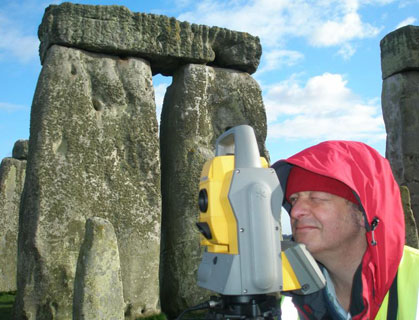
English Heritage are therefore undertaking an analytical landscape investigation of the Stonehenge World Heritage Site. This draws upon the considerable existing work provided by excavation, aerial, metric and geophysical survey but it fills a gap in this suite because there has been no modern detailed survey of the earthworks and other upstanding historicphysical remains within the Site – the barrow cemeteries, field systems and linear ditches, but also the tracks, ponds and military remains of more recent date.

Consequently there are no adequate plans of most of the upstanding archaeological remains within the WHS and no synthesis of the landscape history, especially in regard to its medieval and post-medieval phases. Analytical earthwork survey and analysis,supported by aerial survey and lidar data, is the key to understanding landscape change and will provide the framework in which individual small-scale site specific interventions can rest. Recommendations for other work, eg geophysical survey or coring to explore the extent of buried land surfaces, may arise from this.

The knowledge gained from this project is needed to inform displays in the new Visitor Centre, but also to inform various ongoing management issues, such as visitor pressure, and animal burrowing. The requirements of the new Visitor Centre include the best possible visualisation of the stones and their environs; digital terrain modelling of the surrounding land surface will provide the latter while it is hoped that laser scanning of the former will complete the package
For further detaisl visit: http://www.english-heritage.org.uk/

Sponsored by the Stonehenge Tour Companywww.StonehengeTours.com

Merlin @ Stonehenge
The Stonehenge News Website


Exploding star to be visible in skies above Stonehenge tonight

7 09 2011

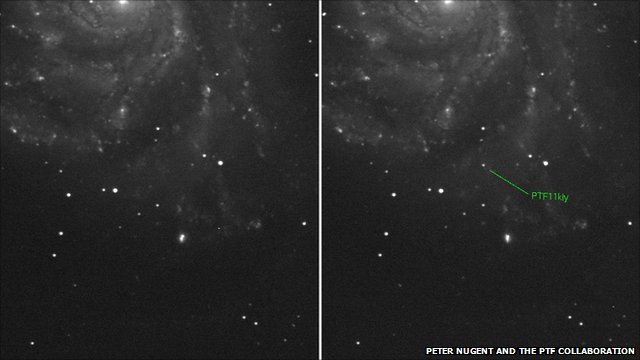
The most visible exploding star in a generation will be visible in skies above Stonehenge tonight.  Dubbed PTF11kly the supernova is still getting brighter and should be visible with a good pair of binoculars today.

Blink and you might miss it, but the canopy of the night sky looks ever so slightly different today. A single bright spark has been added to the millions of brilliant white dots illuminating the inky blackness.

Supernovae occur when giant stars reach the end of their life collapsing in on themselves and triggering an explosion that can briefly outshine an entire galaxy before fading away over a period of weeks or months.

The team, lead by Dr Mark Sullivan, made the discovery using a robotic telescope at the Palomar Observatory.

Sunspot 1283 produced a major M5.3-class solar flare during the early morning hours of September 6th. The coronal mass ejection (CME) associated with this flare was airmed directly at Earth so impact with our magnetosphere is likely within 2-3 days time. The expected time frame of impact will be between September 7th or 8th when geomagnetic storms are likely at high latitudes including the potential for even modest aurora activity at mid northern latitudes also so be on full alert!. Aurora forecast and alert charts below…

The geomagnetic field is expected to be quiet on September 6 and most of September 7. Late on September 7 or early on September 8/9th the CME from the major flare early on September could reach Earth and cause active to major storm conditions.

“The most exciting thing,” Dr Sullivan says, “is that this is what’s known as a type 1a supernova – the kind we use to measure the expansion of the Universe. Seeing one explode so close by allows us to study these events in unprecedented detail.”

The last time a supernova of this type occurred so close was 1972. Before that you have to go back to 1937, 1898 and 1572.

“Observing PTF11kly unfold should be a wild ride,” says Professor Peter Nugent from the Lawrence Berkeley National laboratory. “It is an instant cosmic classic.”

Sponsored by the Stonehenge Tour Company – www.StonehengeTours.com

Merlin @ Stonehenge
The Stonehenge Stone Circl Website


Tomb found at Stonehenge quarry site

1 09 2011

The tomb for the original builders of Stonehenge could have been unearthed by an excavation at a site in Wales.

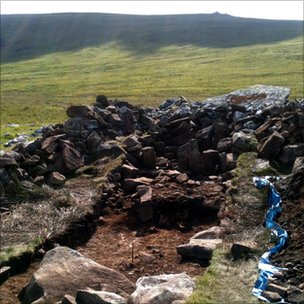
The Carn Menyn site in the Preseli Hills is where the bluestones used to

The central site had already been disturbed so archaeologists chose to excavate around the edges

The central site had already been disturbed so archaeologists chose to excavate around the edges

construct the first stone phase of the henge were quarried in 2300BC.

Organic material from the site will be radiocarbon dated, but it is thought any remains have already been taken.

Archaeologists believe this could prove a conclusive link between the site and Stonehenge.

The remains of a ceremonial monument were found with a bank that appears to have a pair of standing stones embedded in it.

The bluestones at the earliest phase of Stonehenge – also set in pairs – give a direct architectural link from the iconic site to this newly discovered henge-like monument in Wales.

The tomb, which is a passage cairn – a style typical of Neolithic burial monument – was placed over this henge.

The link between the Welsh site and Stonehenge was first suggested by the geologist Herbert Thomas in 1923.

This was confirmed in 2008 when permission was granted to excavate inside the stone circle for the first time in about 50 years.

The bluestones had been transported from the hills over 150 miles to the plain in Wiltshire to create Stonehenge, the best known of all Britain’s prehistoric monuments.

Two of the leading experts on Stonehenge, Prof Geoff Wainwright and Prof Timothy Darvill, have been leading the project.

They are now excavating at the site of a robbed out Neolithic tomb, built right next to the original quarry.

They knew that the tomb had been disturbed previously, so rather than excavate inside, they placed their small trench along its outer edge.

Prof Darvill said: “It’s a little piece of keyhole surgery into an important monument, but it has actually lived up to our expectations perfectly.”

There are many springs in the area, which may be have been associated with ritual healing in prehistoric times, and also the reason why these particular stones were quarried for another monument so far away.

Prof Wainwright said: “The important thing is that we have a ceremonial monument here that is earlier than the passage grave.

“We have obviously got a very important person who may have been responsible for the impetus for these stones to be transported.

“It can be compared directly with the first Stonehenge, so for the first time we have a direct link between Carn Menyn – where the bluestones came from – and Stonehenge, in the form of this ceremonial monument.”

Sponsored by ‘The Stonehenge Tour Company’ www.StonehengeTours.com

Merlin @ Stonehenge
The Stonehenge Stone Circle Website


The Stonehenge Enigma – An inconvenient truth

30 08 2011

Robert Langdon’s new book, sheds new light on the evidence found in Stonehenge’s Visitors Car Park, which has subsequently been buried for over 40 years, that proves Stonehenge is really 5000 years older than we believe!

The Stonehenge Enigma, has unearthed evidence that has been kept from public scrutiny for over 40 years. Current theories on the discovery of the four post holes in a line found during excavation work on the visitors car park in 1966 are simple and dismissive – they are ‘totem poles’ claim English Heritage in their book ‘Stonehenge in its landscape’ by Cleal et al. 1995.

However, analysis of the claim simply does not stand up to scrutiny. “They are likely to be individual uprights, perhaps reminiscent of those of the American Indian (totem poles).” The problem is that ‘totem poles’ survive less than 100 years, if they are made of hard wood – pine is softwood and rots much quicker. So when you start to look at the carbon dating evidence on when each post whole was cut a whole new story emerges.

For the first post hole would have been constructed around 8275BC the second one (next to the first) was erected about 7035BC some 1240 years later! By then the first post would have rotted away and the first post hole completely lost. The third post hole we cannot date as the charcoal that was found was lost or not processed, which is no surprise as all three samples were stored away for 10 years before some eagle eyed researcher realised that pine wood did not exist in the late Neolithic (2500BC), which the original date archaeologists claimed these poles were erected (to match the building date of Stonehenge) before packing the samples away into oblivion, without getting them tested. Yet, another post hole on the same alignment was found in 1989 some 75m away from the three original post holes. This was accurately dated to about 7890BC, 385 years after the first post but 855 years before the second.

So English Heritage asks us to accept that a group of hunter-gatherers went to the Stonehenge site in 8275BC and placed a ‘totem pole’ in a valley away from the high ground (where Stonehenge sits today) which was at this time in history surrounded by a tall pine forest. These people then disappeared for about 400 years, returning to place a second ‘totem pole’ 75 yards away from the first, finally to return 855 years later and place a third pole next to the first with the fourth (of unknown date) in an alignment. Moreover, these people left no trace of their 1200 year occupation of this site until they returned 5,000 years later in 3000BC to build Stonehenge phase 1.

Why has this absurd theory not have the scrutiny that it desires? Why was the evidence buried in a vault for 10 years? And why do they still insist that these post holes are ‘totem poles’? In his book, Langdon shows that these structures played a more significant role than has previously been believed. Not only does he reveal what these post holes were for, but he also gives a more plausible explanation on what really happened at Stonehenge including, WHO built the Monument, WHEN they built the monument and WHY they built the monument.

For the full article on ‘The Stonehenge Enigma – An inconvenient truth’ including photo’s and academic references visit this web site at www.the-stonehenge-enigma.info – all rights to duplicate and extract information or photographs with reference to source and author is granted.

A video promo is available on: http://youtu.be/PVRIBpg-fIE

Details and extracts from the book – The Stonehenge Enigma at: www.prehistoric-britain.co.uk

Sponsored by ‘The Stonehenge Tour Company’ www.StonehengeTours.com

Merlin @ Stonehenge
The Stonehenge Stone Circle Website


Druid leader King Arthur loses legal fight over Stonehenge remains

24 08 2011

High court refuses judicial review of decision to remove 5,000-year-old ‘royal’ remains from Stonehenge for analysis

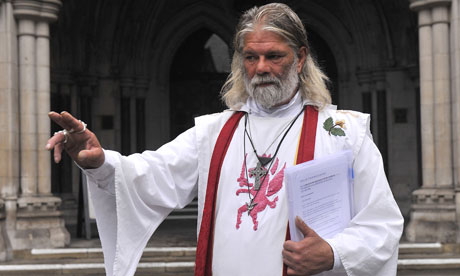
King Arthur Pendragon after losing the latest leg of his battle to have ancient human remains returned to Stonehenge

King Arthur Pendragon after losing the latest leg of his battle to have ancient human remains returned to Stonehenge

A druid leader who claims to be the incarnation of a legendary British king has suffered defeat in the latest legal skirmish of his long-running battle over the removal of ancient remains from Stonehenge.

King Arthur Pendragon appeared at the high court in London to argue that the “royal” remains should be returned to their age-old resting place in Wiltshire.

Pendragon, a 57-year-old former soldier and biker who changed his name by deed poll, wanted the high court to give permission for a judicial review of the government’s decision to allow the remains to be taken away for analysis.

But Mr Justice Wyn Williams refused King Arthur, ruling there was insufficient evidence to show the Ministry of Justice (MoJ) had acted unreasonably.

Outside court Pendragon, who styles himself as battle chieftain of the Council of British Druid Orders and “titular head and chosen chief” of the Loyal Arthurian Warband druid order, remained defiant.

Wearing white flowing robes, he called for a day of action on Monday to draw attention to the cause.

He said: “Even though on this occasion my appeal has been dismissed I am still very much hopeful that I can win in the future. “I wasn’t asking for the bones to be put back straight away, I simply wanted confirmation that they will be returned to the site as soon as possible.” He said druids felt the remains were “guardians” of the site.

The judge heard that the cremated remains of more than 40 bodies – thought to be at least 5,000 years old – were removed from a burial site at Stonehenge in 2008 , with ministers giving researchers from Sheffield University permission to keep the bones until 2015.

Pendragon, who represented himself, said the bones were remains of members of the “royal line” or “priest caste” who could have been the “founding fathers of this great nation”.

He told the judge he feared the remains would never be returned, but moved to a museum, adding that the MoJ had “unreasonably” failed to take account of his views. The MoJ denied the allegation.

Researchers say their work on the remains is yielding “fascinating insights” into the history of the site.

After the decision English Heritage, which manages the site, said the scientists wanted to keep the remains until 2015 so full analysis could be carried out. “Otherwise we will lose an opportunity to learn more about this important site,” a spokesman added.

A spokesperson for the University of Sheffield said: “Research on the cremated bones is beginning to yield fascinating insights about the people of Stonehenge.

“Due to the large number of remains and the fact many of them were mixed together by archaeologists in the 1920s, study of them has been difficult and time consuming. However, we will now be able to apply new scientific techniques, developed only in the last few years, to find out more about who these people were.

“Human remains are an important part of our shared past and they should be treated with respect. The benefit of the research is balanced with any ethical concerns that may be caused by excavations.”

Link: http://www.guardian.co.uk/travel/stonehenge

Sponsored by ‘The Stonehenge Tour Company’ www.StonehengeTours.com

Merlin @ Stonehenge
The Stonehenge Stone Circle Website


Stonehenge most visited tourist spot in South West

17 08 2011

Stonehenge has become the most visited paid-for tourist attraction in the South West.
Stonehenge

Figures from tourist board Visit England show that last year the iconic Wiltshire attraction had more visitors than the Eden Project in Cornwall.

Over 1m people visited the stone circle in 2010, up 1.9% on the previous year.

It is the first time it has surpassed the Eden Project for visitor numbers since the Cornwall tourist attraction opened in 2001.

David Andrews, chief executive for Visit Wiltshire, said: “Stonehenge is a fabulous site and we’re extremely lucky to have it in the county.”
Links: http://www.bbc.co.uk/news/uk-england-wiltshire-14554689

Sponsored by ‘The Stonehenge Tour Company’ – www.StonehengeTours.com

Merlin @ Stonehenge
The Stonehenge Stone Circle Website


Stonehenge news. Seven Wonders of the Ancient World ?

16 08 2011

Stonehenge may not be one of the seven wonders of the ancient world, but that’s probably only because Heroditus never came to Britain. If he came here now, he’d be appalled by the site of the stones – sandwiched as they are between two busy main roads, a car park complete with portaloos, and a visitor centre that makes you wish you were visiting something else.

A “national disgrace” is what a committee of MP’s called it more than a decade ago, and nothing much has changed since then. Until now that is. After years of wrangling over a series of schemes involving tunnels, by-passes and road closures, the Government believes it may finally have a plan that does Stonehenge justice. Others, including several prominent archaeologists, are not so sure and have set up The Stonehenge Alliance to fight the proposals.

When Sir Jocelyn Stevens took the reigns at English Heritage in 1992. He vowed to make Stonehenge his top priority, to “sort out” the mess of roads criss-crossing the site, and the inappropriate and inadequate visitor facilities that had been branded a national disgrace by the Public Accounts Committee:
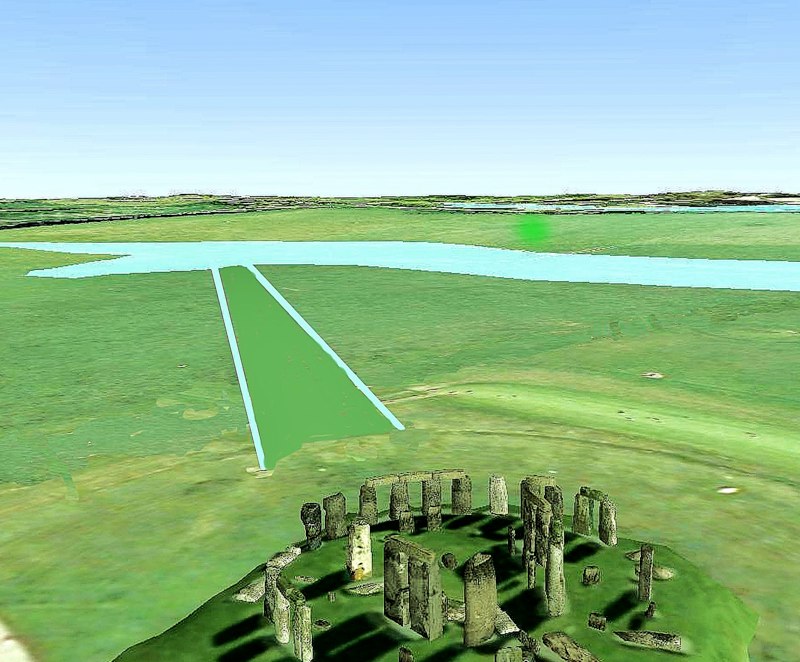
From the top of the King Barrows Ridge heading south on the A303 it’s easy to see what the problem is. The road itself, and the smaller A344 that forks off to the right, dominate the landscape as the raised bowl in which Stonehenge sits opens out in front of you. The view of the stones is a good one – and is much appreciated by motorists – but it’s hardly an appropriate setting for such an historic monument.

Buried in the down right beside the stones themselves the bunker-like concrete visitor centre, with it’s shop, ticket office, take-away cafe, and portaloos, is little better. Everyone agrees something must be done. The question is what?

Earlier plans, for a 4 kilometre tunnel bored under the entire site were rejected by the then Conservative government in 1996 on the grounds of cost. The current proposal, the “master plan” as it’s called, is backed by both English Heritage and the National Trust which owns much of the land. The idea is to bury the A303 in a 2 kilometre cut-and-cover tunnel, to close and green-over the A344, and to re-locate and improve the visitor facilities at a site outside the boundary of the World Heritage Site:

Kate Fielden, is a founding member of the Stonehenge Alliance. The problem with the master plan is that a shorter tunnel, although missing the stones, would both start and finish well within the boundaries of the wider World Heritage Site. Opting for cut and cover construction rather than a bored tunnel would more than halve the cost, but means digging up the ground along its entire length. An act of archaeological vandalism the alliance says beggars belief:

And the Stonehenge Alliance is not alone. In July ICOMOS, the International Council on Monuments and Sites, urged the Government to “pay due regard to the World Heritage Site as a whole, and not just that part closest to the stones”. And now even the National Trust’s support for the scheme is under attack from within. A motion before this month’s AGM calls on the charity to abandon its position. The Trust’s Mark Harold accepts the master plan is far from perfect, but he believes, its a good compromise:

Sponsored by ‘The Stonehehenge Tour Company’ – www.StonehengeTours.com

Merlin @ Stonehenge
The Stonehenge Stone Circle Website


Perseid Meteor Shower at Stonehenge

12 08 2011

Star gazers prepare for Perseid meteor shower

Stonehenge in Wiltshire is one of the best places in Britain to witness this spectacular event.  As always I will be up all night overlooking Stonehenge as our ancestors have for 1000’s of years.
 

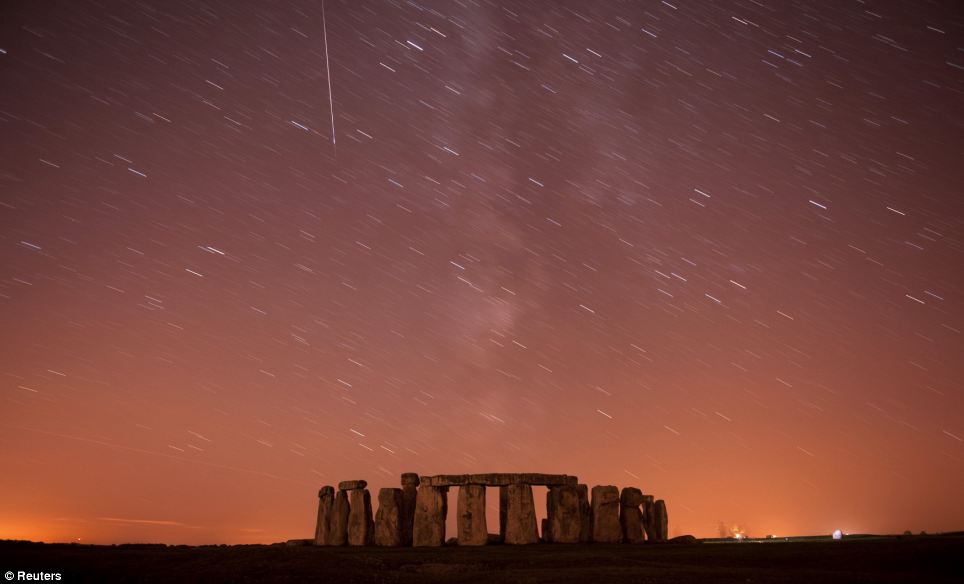
Perseid Meteor shower over Stonehenge.  Streaking down towards Stonehenge across the path of all the other stars in the sky, this shooting star is hurtling to Earth at 135,000 miles per hour – 100 times the speed of Concorde.

Perseid Meteor shower over Stonehenge. Streaking down towards Stonehenge across the path of all the other stars in the sky, this shooting star is hurtling to Earth at 135,000 miles per hour – 100 times the speed of Concorde.

Skywatchers were today given advice on how to enjoy this year’s display of Perseid meteors despite a full moon.

 The Perseids, which come every August, are normally one of the highlights of the celestial year for amateur astronomers.

Under ideal conditions up to 100 of the shooting stars an hour should be visible when the shower peaks tomorrow.
But the glare of the full moon will make it difficult to see the fainter meteors.

The moon generates natural light pollution that can be equal to that from an illuminated city centre.To help anyone hoping to spot the Perseids the National Trust has produced an online stargazing guide and listed some of its best “dark skies” locations.

Dr Marek Kukula, public astronomer at the Greenwich Royal Observatory in London, said: “The Perseids are always an exciting meteor shower to watch out for. Even in large cities it’s often possible to catch site of some of the brighter Perseid meteors streaking across the sky, but from a really dark site you can sometimes see dozens per hour.

 “Despite this year’s Perseid shower coinciding with the full moon it’s still well worth going out for a look. The meteors can appear anywhere in the sky so try looking away from the bright moon to maximise your chances of seeing one.”

 The Perseids are grains of dust shed from the tail of Comet Swift-Tuttle burning up in the atmosphere.

Every year in August the Earth ploughs through a cloud of the dust as it orbits the sun.

Among the locations highlighted by the National Trust are the area around Stonehenge in Wiltshire and Mam Tor in the Peak District, high above Sheffield.

Philip Broadbent, National Trust outdoors programme manager, said: “It’s worth spending the time to find the perfect spot to gaze up at the stars as once you’re there looking into the night sky it will take your breath away. And the best thing is that it won’t cost you a penny and this star time will always stay with you as one of those experiences that money can’t buy.”

 Alastair McBeath, director of the Society for Popular Astronomy’s meteor section, said: “As Perseid meteors near the peak are usually bright to occasionally very bright, this should mean observing will be quite rewarding despite the loss of fainter meteors to the moonlight.”

Sponsored by the ‘Stonehenge Tour Company’ www.StonehengeTours.com

Merlin at Stonehenge
The Stonehenge Stone Circle Wbsite


New battle erupts over ‘Sweden’s Stonehenge’

1 08 2011

A new archaeological examination of Ales stenar, a massive stone relic perched atop a cliff in southern Sweden, has sparked a heated crossfire between scientists about the origins of the famed stone ship.

Speculative argument over the astronomical, geometrical, geographical and mythological significance of the 67-metre long stone ship has a long history.

Now, in direct contrast to previous studies, a group currently digging at the site in Kåseberga on Sweden’s southern coast, has reported finding no evidence linking the 59 large sandstone boulders to the Iron Age and Viking era, putting previous theories about the site into question.

“No wonder,” Swedish archaeologist Martin Rundkvist told newspaper Svenska Dagbladet (SvD).

“They aren’t even digging in the right place.”

Ales stenar, sometimes referred to as “Sweden’s Stonehenge” is located about 10 kilometres southeast of Ystad in Skåne overlooking the sea.

The 1.8-tonne boulders are set in the shape of a large ship and, according to Scanian folklore, a legendary king named King Ale lies buried there.

Most stone ship settings are believed to be burial monuments, and many found in Scandinavia do indeed contain one or more graves.

Yet no grave has ever been positively identified at Ales stenar, a limited geographical area given its position atop a cliff.

Archaeoastronomer Bob Lind, together with Polish archaeology professor Wladislaw Duczko, believe that their ongoing excavations reveal that Ales stenar most likely originated in the Bronze Age.

“We have not found anything from the time that the established research claims, in which the ancient monument is from 600AD,” Lind told SvD.

But according to Rundkvist, the eroded area where the team is digging has moved around a lot over the centuries.

“So what they come up with has no relevance to the discussion of Ales stenar,” Rundkvist added.

“In fact, there is no discussion of Ales Stenar in the scientific community. The discussion is just between Bob Lind and the rest of the world.”

The carbon-14 dating system for organic remains has provided seven results at the site.

One indicates that the material is around 5,500 years old, whereas the remaining six results indicate a date of about 1,400 years ago.

The latter is currently considered to be the most likely time for the creation of Ales stenar, which would date its creation toward the end of the Nordic Iron Age.

Going against the grain yet again, Lind’s team also believes the stones to be a type of calendar rather than the commonly accepted theory that it serves as a burial site.

”It is an astronomical calendar. Stone hollows are perfectly aligned after sunrise and sunset. It is statistically impossible that this was a coincidence,” Associate Professor of Geology Nils-Axel Morner told SvD.

One other alternative theory is that it may have been constructed to honour the crew of a ship who perished at sea.

Sponsored by ‘The Stonehenge Tour Company@ www.StonehengeTours.com

Merlin @ Stonehenge
The Stonehenge Stone Circle Website


Visit Stonehenge on a Razorcat trike

29 07 2011

Visit Britain’s most iconic site on a Razorcat trike… 

Leave your daily routine behind and take a thrilling ride on board an exciting three-wheeler. Feel the exhilaration of the wind in your face and enjoy the freedom that only a Razorcat trike ride can give you.

 
Not only will you have a fantastic ride on our Razorcat trike but you will also experience the famous World Heritage site that has just got to be seen, Stonehenge.   On a spiritual level, it attracts people from all over the world. From an engineering point of view, it will astound you when you realise it was built over 3500 years ago and some of the stones weigh more than 40 tons – and came from Wales.

Time: 3½ hours
Distance: 75 miles
Cost: £260 – 2 people, including entrance fee

In brief:
Bath – Box – Melksham – Seend – Worton – Salisbury Plain – Stonehenge – Wyley Valley – Limpley Stoke – Bath

In detail:
From Bath we make our way over the toll bridge and on to Box. We pass Melksham and travel along the beautiful roads to Seend and Worton. We then hook up with the A360 that takes us over the Salisbury Plain. This is a fabulous road with fantastic views, taking us through some pretty little villages on the way.

As we top a rise in the road, Stonehenge is revealed in the distance for the first time – an awe-inspiring sight. We stop here for you to look around and take the tour and some photos.
Heading back, we ride a short distance on the Exeter road before cutting away to Warminster along the lovely Wyley Valley. By-passing Warminster, we make our way to Limpley Stoke and then back to Bath.

A fantastic ride to an iconic location – perfect.

When you take a ride on a Razorcat trike, YOU become the centre of attention.

Link: http://www.razorcattours.com/en/pages/tours-stonehenge.aspx

Sponsored by ‘The Stonehenge Tour Company’ www.StonehengeTours.com

Merlin @ Stonehenge
The Stonehenge Stone Circle Website