Writer gives his view on how and why Stonehenge was built

30 11 2012

Former building engineer Simon Mallon, of Frome, enjoyed a 40-year career before turning his hand to writing.

His latest novel On the Edge of the Blue gives a fascinating explanation of how and why Stonehenge was built.

stonehenge-bluestonesMr Mallon said: “The sheer effort expended by the constructors of the first Stonehenge suggests Europe’s most iconic ancient structure was created for a magnificent purpose. But what purpose?

“Astrological, mathematical, medical, all laudable ideas based on nothing more than guesswork and hunches and so very wrong.

“Stonehenge is older than it looks, it was built to defeat the greatest threat mankind ever faced, the Ice Age and it succeeded.”

Mr Mallon believes that the henge stood on the side of a massive lake, and that the Preseli stone that was used to build it was brought across the frozen sea from the Pembrokeshire mountains to Bristol and then on across the lake.

Link source: http://www.thisissomerset.co.uk
Relative link: http://brian-mountainman.blogspot.co.uk/ (The Bluetone Enigma)

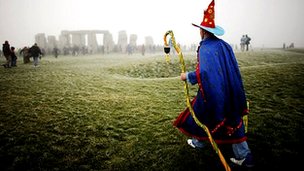
Merlin says “There are many varying theories that have and are proposed for “why Stonehenge was built” and we are all entitled to our views. No one will have the complete answer”

Sponsored by ‘Stonehenge Guided tours’ www.StonehengeTours.com

Merlin @ Stonhenge


2nd Historic Stonehenge – Amesbury Lantern Procession along the original Avenue

22 11 2012

AMESBURY will be holding its second lantern parade on Friday, December 21st

Following the success of last year’s event, the parade has been organised to bring the community together before Christmas.

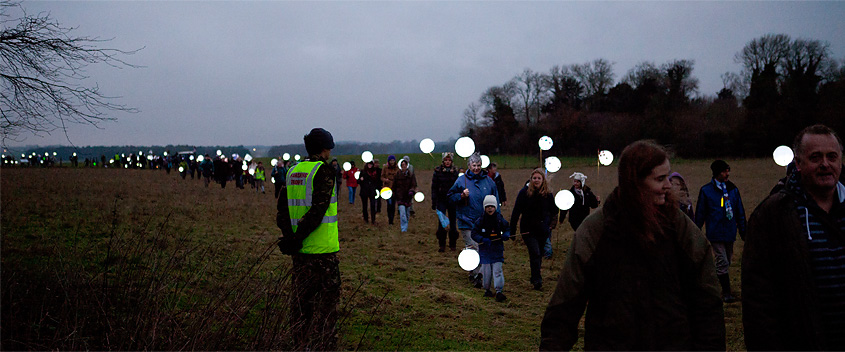
More than 500 people are to hold a procession from Stonehenge to Amesbury

More than 500 people are to hold a procession from Stonehenge to Amesbury

The 2nd Lantern Parade from Stonehenge to Amesbury will take place on Friday 21st December 2012 (not the 20th as we suggested earlier). This year’s route will be different to the one taken last year too. From the heel stone it will follow the original Avenue route to Kings Barrow Ridge, turning left on to the byways to join Countess Road (North) at the junction with Byway 9a & 37 and then following the footpath in to Amesbury to the Methodist Church.

Tickets cost £5 including bus travel from Amesbury to Stonehenge and a lantern, which can be decorated, with a prize for the best one.

If people already have a lantern they can take it along and buy a bus ticket for £2

There will be no parking at Stonehenge for the event and refreshments will be available after the procession, which starts at 4pm.

More information and tickets are available from the Bowman Centre or the Amesbury Community and Visitor Centre, call Alice Membery on             01980 622999       or emaildeputyclerk@amesburytc.org.uk.

More about the Lantern Parade

The parade, along the original processional route of the avenue, is believed to have been started centuries ago when the ancient monument was first built.

“We’ve just discovered that life began in Amesbury as early as 8,250 years ago with a settlement by the River Avon,” said Mr Rhind-Tutt.

Sun sets
“And the processional route would have been the route that led people from Amesbury to Stonehenge.”

During the winter solstice the sun is closer to the horizon than at any other time in the year, meaning shorter days and longer nights.

And the recreation of the procession has been timed to leave Stonehenge as the sun sets on the eve of the longest night of the year.

“It’s about a mile-and-a-half but it isn’t like walking down a road,” said Mr Rhind-Tutt.

“In daylight you can do it an hour – in the dark it may take up to two hours but it’s proving extremely popular and we’ve even got a stilt walker signed up.”

Link Source:
 http://www.salisburyjournal.co.uk/
http://www.bbc.co.uk/news/uk-england-wiltshire-16284687

Stonehenge: This year’s lantern procession details

Stonehenge news blog sponsored by ‘Stonehenge Guided Tours’  www.StonehenegTours.com

Merlin says “It was a fantastic experience last year and I look forward to the procession this Solstice”

Merlin @ Stonehenge


Bluestone mystery is topic of Archaeology Day

17 11 2012

The origins of the Stonehenge bluestones will headline an Archaeology Day today (Saturday).

The day, organised by Pembrokeshire Coast National Park Authority, will be held at the Merlin Theatre, in Pembrokeshire College, and will include five talks and question and answer sessions.

Guest lecturer Professor Mike Parker-Pearson of University College London will lead a talk about his research into how bluestones from the Preseli Hills became construction material for Stonehenge 5,000 years ago.

In addition Louise Barker and Toby Driver, of the Royal Commission on the Ancient and Historical Monuments of Wales, will share their discoveries on Skomer Island, while Roger Thomas will delve into the 19th century fortification of Pembrokeshire.

Tickets are £12, and include a light lunch and morning and afternoon coffee.
Visit www.orielyparc.co.uk or call             01437 720392      . To hold a display call             01834 862105      .

Link: http://www.westerntelegraph.co.uk

Blog sponsored by ‘Stonehenge Guided Tours’ – www.StonehengeTours.com

Merlin @ Stonehenge


New light on Stonehenge. Latest theories about when and why Stonehenge was built

8 11 2012

Tuesday 13 November 2012. A talk by Professor Mike Parker-Pearson, University of Sheffield. This lecture will present new findings by the ‘Feeding Stonehenge’ project about the people who built Stonehenge, and about the sources of its stones in Wales and north Wiltshire. It will examine the latest theories about when and why Stonehenge was built, and will present new discoveries from Wales as well as the Stonehenge area.

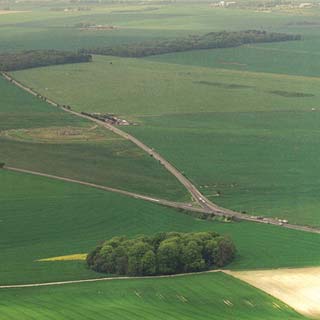
image credit : Adam Stanford of Aerial-Cam

image credit : Adam Stanford of Aerial-Cam

Prof. Mike Parker-Pearson is leader of the Stonehenge Riverside Project and author of Stonehenge: exploring the greatest Stone Age mystery, published by Simon & Schuster in June 2012. (see below)

7.00 pm refreshments, 7.30 pm lecture.


Please note this lecture is at the Guildhall (Market Square)not the Museum. A lecture in the Salisbury Museum Archaeology Lectures (SMAL) series. SMAL lectures are held on the second Tuesday of each month from September to April. Please note earlier start time for this particular lecture. This particular lecture requires booking. This is a fundraising event.

http://www.salisburymuseum.org.uk


Booking:  Booking required. Please contact the Museum to book.

Cost:  In Advance: £8.00; On the Night : £10.00.

Stonehenge: Exploring the Greatest Stone Age Mystery

Our knowledge about Stonehenge has changed dramatically as a result of the Stonehenge Riverside Project (2003-2009), led by Mike Parker Pearson, and included not only Stonehenge itself but also the nearby great henge enclosure of Durrington Walls. This book is about the people who built Stonehenge and its relationship to the surrounding landscape. The book explores the theory that the people of Durrington Walls built both Stonehenge and Durrington Walls, and that the choice of stone for constructing Stonehenge has a significance so far undiscovered, namely, that stone was used for monuments to the dead. Through years of thorough and extensive work at the site, Parker Pearson and his team unearthed evidence of the Neolithic inhabitants and builders which connected the settlement at Durrington Walls with the henge, and contextualised Stonehenge within the larger site complex, linked by the River Avon, as well as in terms of its relationship with the rest of the British Isles. Parker Pearson’s book changes the way that we think about Stonehenge; correcting previously erroneous chronology and dating; filling in gaps in our knowledge about its people and how they lived; identifying a previously unknown type of Neolithic building; discovering Bluestonehenge, a circle of 25 blue stones from western Wales; and confirming what started as a hypothesis – that Stonehenge was a place of the dead – through more than 64 cremation burials unearthed there, which span the monument’s use during the third millennium BC. In lively and engaging prose, Parker Pearson brings to life the imposing ancient monument that continues to hold a fascination for everyone

Sponsored by ‘Stonehenge Guided Tours’ – www.StonehengeTours.com

Merlin @ Stonehenge
The Stonehenge News Blog


Improvements to A303 Stonehenge World Heritage Site

1 11 2012

Work which will allow visitors to enjoy an improved experience when visiting the Stonehenge World Heritage Site will start on the A303 in Wiltshire on Monday, 5 November.

Stonehenge road improvementsThe six month scheme will involve improvements to the Longbarrow roundabout at the junction of the A360 and A303. This will allow the closure of the A344, which runs next to the Stonehenge monument.

Highways Agency project sponsor, Mark Arberry, said: “This is an important contribution to the long term management plan for Stonehenge to improve the setting of the monument and ensure its preservation as an iconic World Heritage Site. “The proposed improvements to the northern and eastern approaches to the roundabout will accommodate changes in traffic flows following the A344 closure and the centre of the roundabout itself will be moved.”

New lanes will be added to the roundabout to take the extra traffic caused by the closure of the A344 and the centre of the roundabout itself will be realigned.

English Heritage has been fully consulted during planning for the scheme and an archaeologist will be on site during the excavation work.

Traffic signals will be used for minor advanced works on the A360 north of the roundabout for one week between 9am and 3pm from the 29 October. The main work will require lane closures on the approaches to Longbarrow Roundabout for the duration of the work with a temporary 40mph speed limit in place.. The A360 south of Longbarrow will be closed for up to eight days and nights on dates to be confirmed during either February or March. Clearly signed diversion routes will be in operation using the A345 or the A36 dependant on journey destinations.

The scheme has been planned to cause the least possible disruption but road users are advised to allow extra time for their journeys.

Traffic updates: http://www.fleetdirectory.co.uk/

Stonehenge news blog sponsored by ‘Stonehenge Guided Tours’ www.StonehengeTours.com
F
ollow us on Twitter for updates: https://twitter.com/ST0NEHENGE

Merlin at Stonehenge


Visit Wiltshire. New look website aims to boost tourism in Wiltshire

19 10 2012

Discover a county rich in heritage

VisitWiltshire has launched a brand new tourism website, http://www.visitwiltshire.co.uk  The redesign of the site has focused on building a portal which showcases the best of Wiltshire tourism to give visitors a user-experience that is inspirational, informative, engaging and welcoming.

VisitWiltshire is forecasting that the new website will increase the number of visitors to http://www.visitwiltshire.co.uk by 30 per cent.

The new website will be promoted extensively to VisitWiltshire’s target UK and international markets through a number of digital marketing initiatives launching in October – including, for the first time ever, video advertising on the London Underground.

Fiona Errington, marketing manager for VisitWiltshire, said: “Our aim in developing this site has been to raise awareness of Wiltshire’s fantastic tourism offer, inspiring new visitors, and encouraging repeat visitors to stay longer and explore the whole of the county.

Visit Wiltshire Website Extract
Take some time out and escape to Wiltshire this year. Find out more about this mysterious and beautiful part of the UK, let us be your guide for all the information you will need.

Stonehenge & Avebury

Wiltshire is proud to be the home of Stonehenge and Avebury which form part of a UNESCO World Heritage Site and our mystical landscape.

Take a tour of Stonehenge and discover more about the neolithic man and the landscape they shaped. At Avebury, walk amongst the stones, visit the Alexander Keiller Museum to find out about the arcaeological excavations Keiller did in the 1930s and visit the Avebury Manor and Garden, nearby West Kennet Long Barrow.

Link: http://www.visitwiltshire.co.uk/explore/stonehenge-and-avebury
Link: http://www.thisiswiltshire.co.uk/news/9993296.New_look_website_aims_to_boost_tourism_in_Wiltshire/

Merlin says “Great to see Visit Wiltshire have launched a new web site, which will  help tourism in the West”

News blog sponsored by “Stonehenge Guided Tours” – www.StonehengeTours.com

Stonehenge News Blog


Lasers at Stonehenge. British Archaelogy

12 10 2012

At last, after all these years, we’ve got the very first comprehensive study of the actual stones at Stonehenge. As part of its research into Stonehenge and its landscape that will feed into displays at the new visitor centre, English Heritage commissioned Greenhatch Group surveyors to produce the first complete, high resolution 3D digital model of Stonehenge and its immediate landscape, using lasers and a bit of photogrammetry. (http://mikepitts.wordpress.com/)

At last, after all these years, we’ve got the very first comprehensive study of the actual stones at Stonehenge

Then Marcus Abbott (ArcHeritage) and Hugo Anderson-Whymark (freelance lithics specialist) analysed the data, created new digital images and news ways of seeing them, added some of their own photos and spent time amongst the real stones.

In one sense the results are not surprising: it was obvious to anyone with eyes that that we could learn a lot about Stonehenge with a proper study of the stones. And yes, we have learnt a lot. But just about all the details are revelatory.

There are four different areas where new things are really going to change the way we think about the monument:

  • how the stones were dressed and what the original monument looked like
  • prehistoric carvings – difficult to see and unknown to visitors: the new discoveries have doubled the number of such carvings known in the whole of Britain
  • damage by tourists: the scale of damage done by souvenir collectors in the 18th and 19th centuries had not been recognised before
  • graffiti: dates range between 1721 and 1866, though most were carved 1800–1850 – and they’re almost everywhere.

And this must be just the beginning. There are more details yet to see (there is still scope for new and higher resolution survey), and new things to think about in the vast data set.

http://mikepitts.wordpress.com/

If you know Stonehenge, from this alone you can see at once how much new information has been revealed. Amongst other things, it seems fair to draw from this (and other new data) that the sarsen circle probably WAS complete; and that the whole thing was designed to be seen from the north-east, approaching up the Avenue – so the implication follows that the setting midwinter sun you’d be facing to the south-west was the key alignment.

British Archaeology also published the pioneering Stonehenge laser study done in 2002.

Please follow Mike Pitts excellent archaelogy Blog: http://mikepitts.wordpress.com/
L
ink: http://www.archaeologyuk.org/ba/ba73/index.shtml
L
ink: http://www.wessexarch.co.uk/


British Archaeology magazine


The Council for British Archaeology’s award-winning bi-monthly magazine is the authoritative, in-depth source of information and comment on what’s new, interesting and important in UK archaeology.
Link: http://new.archaeologyuk.org/british-archaeology-magazine

Blog sponsored by ‘Stonehenge Guided Tours’ www.StonehengeTours.com

The Stonehenge News Blog


Arthur Pendragon, Stonehenge and the Solstice

12 10 2012

THE RAVING OUTLAW BIKER-DRUIDS AND THEIR 1575-YEAR-OLD KING

Visit Stonehenge on the summer solstice of any year and you’ll see 20,000 people partying in and around the ancient rock formation. The crowd is usually made up of around one third tourists, one third pilled-up teenagers in sportswear, and one third neo-druids. It’s a genuinely bizarre sight. Don’t get me wrong—I enjoy chewing my own face off at archaeologically significant sites as much as the next guy, but in a time when British disobedients seem to spend more time in police kettles than they do in squats, you have to wonder how all of this is, y’know, allowed.

Turns out, it has to do with the guy pictured above, who used to be the leader of an outlaw biker gang, but now claims to be the legendary monarch, King Arthur. Arthur, formerly known as John Rothwell, rose to fame in the 90s when he won his case at the European Court of Human Rights to allow open access to Stonehenge for religious festivals like the summer solstice.

Today, as the elected “Battle Chieftain” of the Council of British Druid Orders, King Arthur and his Loyal Arthurian Warband represent the political wing of Britain’s neo-druid community. I headed down to Stonehenge to visit the only living 1575-year-old king.

Please take the time to read the full article by By Matt Shea, Photos by Andrea Herrada
http://www.vice.com/read/all-hail-king-arthur-uther-pendragon

Stonehenge News Blog sponsored by ‘Stonehenge Guided Tours’ www.StonehengeTours.

Merlin says “Always great see Arthur up at the stones doing his bit”

Stonehenge News Blog


Stonehenge News. Read all about it!

10 10 2012
Once again Stonehenge and Wiltshire is in the spotlight.  The recent revealing 3D laser resilts have uncovered some fascinating facts.  Stonehenge is being talked about across the world which can only be good for South West toursim.  Here is a small selection of Stonehenge Newslinks:

Stonehenge secrets revealed by laser scan
BBC News
Researchers using laser technology at Stonehenge have uncovered evidence which they say shows the importance of the midwinter sunset to its creators. The scan by English Heritage showed significant differences in how various stones were shaped and
 

BBC News
Stonehenge dressed to impress
Stuff.co.nz
A cutting-edge laser scan of Stonehenge has shown how Britain’s enigmatic neolithic monument was built to enhance the dramatic passage of sunlight through the circle of stones at midsummer and midwinter. The slabs were intended to appear at their best 
 
Stonehenge was an ‘art gallery’ suggests new study
TNT Magazine
Laser scans have revealed prehistoric carvings of axe heads, which are invisible to the naked eye. The surface of the 83 remaining stones was scanned using state-of-the-art 3D scanners. These recorded using billions of points of microtopographically. 

TNT Magazine
New Stonehenge secrets revealed
Evening Standard
Professor Clive Ruggles, emeritus professor of achaeo-astronomy at University of Leicester, said: “This extraordinary new evidence not only confirms the importance of the solstitial alignment at Stonehenge, but also show unequivocally that the formal  
Revealed: Early Bronze Age carvings suggest Stonehenge was a huge prehistoric art gallery
Stonehenge News Blog
A detailed laser-scan survey of the entire monument has discovered 72 previously unknown Early Bronze Age carvings chipped into five of the giant stones.

Evening Standard
Lasers find secrets of Stonehenge
This is Bath
They’ve dug under it, mapped it, photographed it and dated it, but a new laser scan of Stonehengehas told scientists even more things they didn’t already know about the ancient Wiltshire monument – including which way the monument ‘faced’. The scan  
The story of British art
The Guardian
From the earliest evocative stone structures at Skara Brae and Stonehenge to the disturbing 20th-century portraits by Francis Bacon and Lucian Freud, the art inspired by the British isles tells a truly spectacular story. Through painting, sculpture  
Midwinter Sun Link to Stonehenge – ITV News
Read Midwinter Sun Link to Stonehenge latest on ITV News. All the Tuesday 9th October 2012 news.#
Midwinter sun linked to Stonehenge – Stonehnege Tours. The latest 3D laser technology has revealed new evidence of the importance of the midwinter sunset to the ancient creators of Stonehenge. 
Laser uncovers new Stonehenge evidence (From Salisbury Journal)
NEW evidence to suggest the importance of the solstices at Stonehenge to its creators has been discovered by English Heritage. A 3D laser scan was used to 
Blog Sponsored by ‘Stonehenge Guided Tours’ www.Stonehengetours.comFor all the latest news on Stonehenge follow us on Twitter:
https://twitter.com/ST0NEHENGE

The Stonehenge News Blog


Stonehenge – New Evidence for its Solstitial Function and Approach

9 10 2012

Using the latest 3D laser scanning technology, an English Heritage analysis of Stonehenge has found new evidence of the importance of the two solstices to its creators, including that of the midwinter sunset.

Approach and View from North East Important
The laser scan has revealed significant differences in the way the stones were shaped and worked. These differences show that Stonehenge was not only aligned with the solstices, but that the view of the monument from the Avenue, its ancient processional way to the north east, was particularly important. To approach and view the stone circle from this direction means that the midwinter sunset had special meaning to prehistoric people, and that they made deliberate efforts to create a dramatic spectacle for those approaching the monument from the north east.

The view of Stonehenge as seen from the north east, a view now found to be most important to the creators.

The view of Stonehenge as seen from the north east, a view now found to be most important to the creators.

Stones in the North East Segment Larger and More Uniform

A detailed analysis of the first comprehensive laser survey of Stonehenge reveals that those stones on the outer sarsen circle visible when approaching from the north east have been completely pick dressed – that is, the brown and grey crust on the surface has been removed exposing a fine, bright grey-white surface. By contrast, the outer faces of surviving uprights in the south-western segment of the circle were not pick dressed.

These stones facing north-east are also the largest and most uniform in shape, unlike the south-western segment of the monument where there are several smaller and more irregular stones. The lintels are also exceedingly well worked and finished, compared to those that survive elsewhere in the monument.

Stones on Solstitial Axis most Carefully Shaped and Dressed

The study also shows that the techniques and amounts of labour used vary from stone to stone. These variations provide almost definitive proof that it was the intent of Stonehenge’s builders to align the monument with the two solstices along a north-east/south-west axis.

The sides of the stones that flanked the solstice axis were found to have been most carefully worked to form very straight and narrow rectangular slots. These stones include two of the north-east facing sarsens in the outer circle, the Great Trilithon in the inner sarsen horseshoe, and a now isolated upright stone in the south-west segment of the outer circle.

Since all other stones have visibly more natural, less neat outlines, this strongly suggests that special effort was made to dress those that flank the NE/SW axis to allow a more dramatic and obvious passage of sunlight through the stone circle on midsummer and midwinter solstices.

Laser scan of the Great Trilithon reveals its extremely straight, neat outline and smooth surface, compared with all the other trilithons. It suggests that Stonehenge creators made deliberate efforts to shape and dress it more carefully due to its special position on the solstice axis, just as they did for other stones that flank this axis.

Laser scan of the Great Trilithon reveals its extremely straight, neat outline and smooth surface, compared with all the other trilithons. It suggests that Stonehenge creators made deliberate efforts to shape and dress it more carefully due to its special position on the solstice axis, just as they did for other stones that flank this axis.

Solstitial Alignment Currently Severed by Road to be Restored

Loraine Knowles, Stonehenge Director at English Heritage, said: “The new presentation of Stonehenge will enable visitors to appreciate the importance of the solstitial alignment far better. It’s why we are closing the A344 – which severs the alignment – to enable the stone circle to be reunited with the Avenue.”

The new Stonehenge visitor centre at Airman’s Corner, 1.5 miles west and out of sight of Stonehenge, is scheduled to open in late 2013.

Findings Exceed Expectations

Analysis of the laser scan has also led to the discovery of many more prehistoric carvings, including 71 new Bronze Age axeheads, which bring the number of this type of carvings known at Stonehenge to 115.

Susan Greaney, Senior Properties Historian at English Heritage, said: “We didn’t expect the results to be so revealing about the architecture of Stonehenge. It has given further scientific basis to the theory of the solstitial alignment and the importance of the approach to the monument from the Avenue in mid winter.

“Analysis of the different techniques used to dress the stones may even help to refine the chronology of the construction. Disappointing to some, the scan has also ruled out many poorly defined lines and hollows previously thought to be possible prehistoric carvings.”

English Heritage commissioned the first comprehensive laser survey on Stonehenge in 2011. Archaeological analysis was then carried out to examine the high-resolution data that was produced for all the stone surfaces.

Link: http://www.english-heritage.org.uk/about/news/stonehenge-solstitial-function/

Blog sponsored bt ‘Stonehenge Guided Tours’ www.StonehengeTour.com

Merlin @ Stonehenge
The Stonehenge News Blog