Telling the story of prehistoric Wiltshire.

18 08 2013

The Wiltshire Museum in Devizes is opening new prehistory galleries in the autumn.

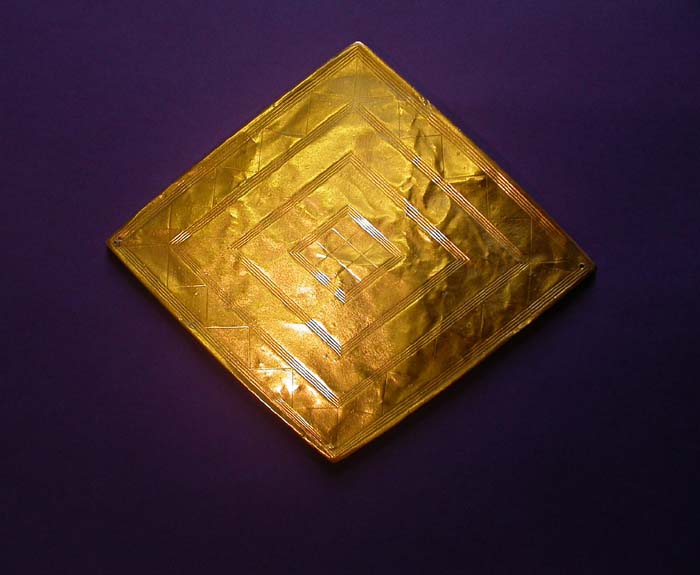
The centrepiece of the stunning new displays are the objects buried with the Bush Barrow Chieftain almost 4,000 years ago. He was buried close to Stonehenge with the objects that showed his power and authority– a gold lozenge, a ceremonial mace and a gold-decorated dagger.These are just some of the rich Bronze Age objects that are on display for the first time in new high security showcases. Gold ornaments, amber necklaces, ritual costume, polished stone axes and bronze daggers tell the story of the people who lived at the time when Stonehenge, Avebury and Marden henges were great ceremonial centres.

Bronze Age artefacts on show at the Wiltshire Museum

Bronze Age artefacts on show at the Wiltshire Museum


The displays feature models and full-size reconstructions that bring archaeology to life. There is lots for children to do, with trails and quizzes, a chance to build Stonehenge and Bronze Age clothes to try on.

Some of the important Bronze Age gold finds from the museum will be on loan for display at the new Stonehenge visitor centre. This is part of an integrated strategy to encourage visitors to Stonehenge to explore Wiltshire and to visit the museums in Devizes and Salisbury. These new displays have been developed with support from the Heritage Lottery Fund, English Heritage and the North Wessex Downs AONB

More details here: http://www.english-heritage.org.uk/content/imported-docs/k-o/megalith-jul2013.pdf

Museum link: http://www.wiltshireheritage.org.uk/

Merlin @ Stonehenge
The Stonehenge News Blog


Peek behind the scenes of Stonehenge’s new visitors centre

17 08 2013

RESIDENTS of Wiltshire can peek behind the scenes of Stonehenge’s new visitors centre next month.The main contractor for the development, VINCI Construction UK, will host an Open Doors Weekend on September 27 and 28, for people to learn about the project.

event-stonehenge

The centre is a £27million project led by English Heritage, which aims to achieve the vision set out in the Stonehenge World Heritage Management Plan to restore the dignity of Stonehenge.

The new building is at Airman’s Corner, 11/2 miles from the stone circle, and will include exhibition, education and cafe space.

Low-impact vehicles, carrying up to 900 visitors an hour, will operate a 10-minute shuttle service from the visitor building to the stones.

The centre is due to open in late 2013, when the current facilities will be dismantled and the landscape around the stone circle restored.

The Open Weekend is a nationwide initiative, which invites members of the public to go around a construction site in their area.

It aims to demonstrate the range of career opportunities construction has to offer and the wide variety of skills that come together to make buildings and infrastructure.

Stephen Ratcliffe, director of UK Construction Group, one of the partners in the Open Doors project, said: “It is a unique opportunity for the industry to display the complexity, excitement and scope of modern construction projects.”

Article Source: http://www.swindonadvertiser.co.uk/news/10612283.Stonehenge_insight_promotes_modern_building/

Follow Stonehenge News on Twitter here: https://twitter.com/ST0NEHENGE

Merlin at Stonehenge
The Stonehenge News Blog


A petition calls for an annual public picnic at Stonehenge!

4 08 2013

heritageaction's avatarThe Heritage Journal

An interesting e-petition has just appeared on the Government website: Open Access to Stonehenge – Annual Midsummer Day Picnic.

Some bits of it are problematic from our viewpoint. For instance, what it says by way of justification is unlikely to be accepted nor is the principle of extending the access time ever going to find favour – see here. This bit is also a problem: “we now ask that there be a freely accessible, without charge, Annual Midsummer Day Picnic between the hours of Dawn to Dusk”. That implies people arriving in the dark so all the same cost, safety and conservation difficulties would remain and no way are the authorities going to agree to carrying on paying £200,000 a year to make it happen and  forego another £50,000 in lost visitor income and let the people who want them to do all that come in for…

View original post 197 more words


The Avebury Dig 2013

29 07 2013

heritageaction's avatarThe Heritage Journal

avedig

Do visit the dig if in Avebury this week or next!

The first excavation on West Kennet Avenue for more than three quarters of a century! The ‘Between the Monuments’ project is a collaboration between the University of Southampton under Dr Joshua Pollard, the University of Leicester under Dr Mark Gillings, and the archaeology and curatorial National Trust staff at Avebury Dr Nick Snashall and Dr Ros Cleal. The excavation on the line of the West Kennet Avenue involves two, possibly three trenches at two Neolithic sites at the foot of Avebury Down where Alexander Keiller’s excavations in 1934 unearthed remains of some form of settlement.

See here for more details
http://ntarchaeostonehengeaveburywhs.wordpress.com/
and Phone 01672 539250 after 10a.m. for tour times.

View original post


Stonehenge and the Stars: Perseid Meteor Shower 12th August 2013

27 07 2013

Facilitated by English Heritage and led by an expert local volunteer, the group will enjoy sole access to Stonehenge for two hours. The first hour will be dedicated to a guided tour and Q&A focussing on the astronomical theories surrounding Stonehenge. During the second hour visitors are invited to set up their own telescopes and cameras to star gaze and moon gaze, to share stories and experiences and, weather permitting, to enjoy the Perseid Meteor Shower at its fullest.

Meteor showers have always captured peoples interests. In astronomy, there’s nothing quite like a bright meteor streaking across the glittering canopy of a moonless night sky. The unexpected flash of light adds a dash of magic to an ordinary walk under the stars.Visitors are invited to bring their own telescopes, cameras and binoculars. (Please note: Tripods may not be pressed into the earth and must have rubber/protective feet. We are unable to provide any equipment ourselves). We recommend that visitors also bring red-filter torches. Visitors should wear appropriate clothing and footwear

Meteor showers have always captured peoples interests. In astronomy, there’s nothing quite like a bright meteor streaking across the glittering canopy of a moonless night sky. The unexpected flash of light adds a dash of magic to an ordinary walk under the stars.

How to Book

Purchase your tickets today by calling our dedicated Ticket Sales Team on 0870 333 1183 (Mon – Fri 8.30am – 5.30 Sat 9am – 5pm).

Prices

Ticket price includes entrance to Stonehenge stone circle, star gaze and guide

Link: http://www.english-heritage.org.uk/daysout/events/stonehenge-and-the-stars-sh-12-aug/
Link: http://www.clarksvilleonline.com/2013/07/27/nasa-research-shows-perseid-meteor-shower-to-peak-august-12th-and-13th/
Link: http://www.meteorwatch.org/

Merlin says “In total, the Perseid meteor rate from dark-sky sites could top 100 per hour. That’s a lot of magic. Enjoy the show.”

Merlin @ Stonehenge
The Stonehenge News Blog


‘World’s oldest calendar’ discovered in Scottish field

18 07 2013

Archaeologists believe they have discovered the world’s oldest lunar “calendar” in an Aberdeenshire field.

Excavations of a field at Crathes Castle found a series of 12 pits which appear to mimic the phases of the moon and track lunar months.

A team led by the University of Birmingham suggests the ancient monument was created by hunter-gatherers about 10,000 years ago.

The pit alignment, at Warren Field, was first excavated in 2004.
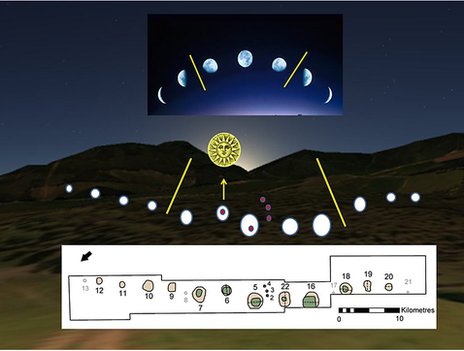
An illustration of how the pits would have worked An illustration of how the pits would have worked

An illustration of how the pits would have worked

The experts who analysed the pits said they may have contained a wooden post.

The Mesolithic “calendar” is thousands of years older than previous known formal time-measuring monuments created in Mesopotamia.

“It is remarkable to think that our aerial survey may have helped to find the place where time itself was invented” Dave CowleyRCAHMS

The analysis has been published in the journal, Internet Archaeology.

The pit alignment also aligns on the Midwinter sunrise to provided the hunter-gatherers with an annual “astronomic correction” in order to better follow the passage of time and changing seasons.

Vince Gaffney, Professor of Landscape Archaeology at Birmingham, led the analysis project.

He said: “The evidence suggests that hunter-gatherer societies in Scotland had both the need and sophistication to track time across the years, to correct for seasonal drift of the lunar year and that this occurred nearly 5,000 years before the first formal calendars known in the Near East.

“In doing so, this illustrates one important step towards the formal construction of time and therefore history itself.”

The universities of St Andrews, Leicester and Bradford were also involved.

Dr Richard Bates, of the University of St Andrews, said the discovery provided “exciting new evidence” of the early Mesolithic Scotland.

He added: “This is the earliest example of such a structure and there is no known comparable site in Britain or Europe for several thousands of years after the monument at Warren Field was constructed.”

The Warren Field site was first discovered as unusual crop marks spotted from the air by the Royal Commission on the Ancient and Historical Monuments of Scotland (RCAHMS).

Dave Cowley, aerial survey projects manager at RCAHMS, said: “We have been taking photographs of the Scottish landscape for nearly 40 years, recording thousands of archaeological sites that would never have been detected from the ground.

“Warren Field stands out as something special, however. It is remarkable to think that our aerial survey may have helped to find the place where time itself was invented.”

Prof Vince Gaffney
Prof Vince Gaffney led the project to analyse the pits at Warren FieldCrathes Castle and its estate is in the care of the National Trust for Scotland (NTS).

From 2004 to 2006, trust staff and Murray Archaeological Services excavated the site.

NTS archaeologist Dr Shannon Fraser said: “This is a remarkable monument, which is so far unique in Britain.

“Our excavations revealed a fascinating glimpse into the cultural lives of people some 10,000 years ago – and now this latest discovery further enriches our understanding of their relationship with time and the heavens.”

Full article: http://www.bbc.co.uk/news/uk-scotland-north-east-orkney-shetland-23286928

Merlin @ Stonehenge
The Stonehenge News Blog


Old Sarum/Stonehenge: Did you see the Neolithic houses?

16 07 2013

Alan S's avatarThe Heritage Journal

A couple of months ago, we drove down to Salisbury to take a look at the experimental Neolithic houses being built by English Heritage in preparation for the new Stonehenge visitor’s centre.

Neolithic Houses

Sadly, the buildings at Old Sarum were only ever designed as a temporary exhibit, to try out various ideas and techniques, and have now been demolished.  The volunteers who worked so hard on the houses had kept a blog of the process,  including covering the demolition and future possibilities, which is well worth reading.

Visitors to the experimental houses exhibit were encouraged to leave an email address where they could be contacted for a ‘later survey and feedback’, and it appears that time has now arrived. If you visited the houses at Old Sarum, but didn’t leave an email address, no matter. You can still take part in the survey, and as a thank you for your…

View original post 54 more words


Should we take back the Solstice?

6 07 2013

heritageaction's avatarThe Heritage Journal

The Heritage Journal is about raising awareness of ancient sites and this article by sociologist Tom Shakespeare suggested a way. He says when he looks at other cultures he hasa strong sense of festival envy” – for instance Solstice is often widely celebrated abroad but far less so here and he thinks we’re the poorer for it.

Maybe it’s because solstice is portrayed in the British media (and the EH website!) as about Druids, pagans and other enthusiasts gathered at Stonehenge. They’re entitled to do their own thing but it may cause others to see it as someone else’s festival, not theirs. That’s quite wrong though, it’s everyone’s – it didn’t start with Stonehenge but far earlier, with Mankind!

So is there a case for promoting it as something for people…

View original post 104 more words


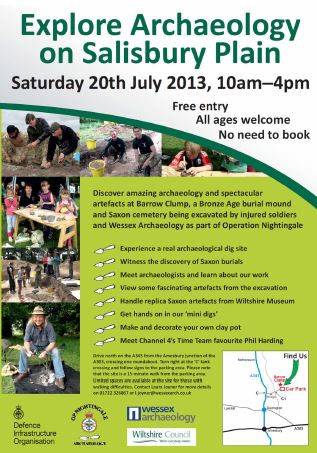
Wessex Archeology are running a free open day at Barrow Clump with Phil Harding

4 07 2013

Explore Archaeology on Salisbury Plain – 20th July 2013

explore-archaeology-20th-july-2013

Merlin @ Stonehenge
The Stonehenge News Blog


The New Stonehenge Project in Wiltshire, Your Legacy Sailing into the Future!

3 07 2013

nancy wisser's avatarCLONEHENGE

It has been announced with great fanfare. Even a BBC article has announced the unveiling of the plans for this grand Stonehenge for the new millenium, its site only four miles from the original. The plans are unexpectedly elaborate, including a flooring of white quartz granite, a moat, gardens, and yurts for visitors who wish to spend the night.

Consider all of that, along with uprights that are to be of various colored stone types from around the world, eight gates, a white wall, and a visitor center and exhibition domes that will be built to look like Newgrange: and of all this the project leader, Colin Shearing said, “It’s going to look like Stonehenge as we believe it looked as it was new.” and “You can’t really experience how [Stonehenge] was when it was new because it’s old, so a new one would give you an opportunity…

View original post 522 more words