Stonehenge and the Druids – who are the Druids?

23 02 2020

Stonehenge’s mysterious beauty affects us all in different ways, but for many it is a sight of genuine religious importance.

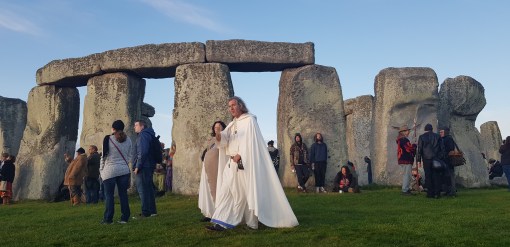
Stonehenge Solstice Celebrations

Stonehenge Solstice Celebrations

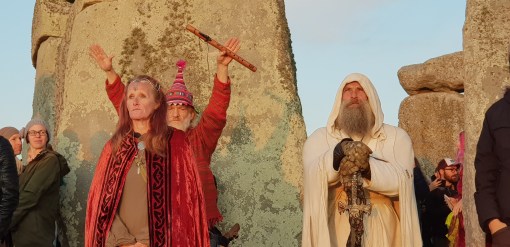
‘Druids’ is the general term used to refer to this multitudinous group who see Wiltshire’s world heritage site as a place of worship. In reality, Druidic beliefs vary, with different groups including neo-pagans and wiccans. Nonetheless, a whole host of Druidic worshippers converge on Stonehenge for the solstices, equinoxes and beyond. Today, there are over 7,000 members of the British druid order and I wanted to take a look at the history of druidism and its ties with Stonehenge’s arcane monoliths.

History of Druidism

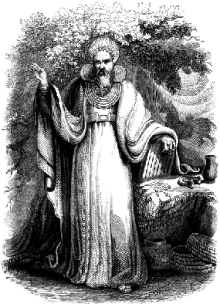
DruidDruids pre-dated the Roman invasion of Britain and in ancient Celtic cultures they were members of highly respected shamanic class. They were typically religious leaders, but also law keepers, chroniclers, doctors, and even political advisors. They were first mentioned in the 2nd century BC in roman sources and were even reported by Julius Caesar in 59 B.C. Druid’s were the arbiters of spirituality in pre-roman Britain and had a deep connection with the lore of the isles.

With first the Roman invasion (Roman religion tended towards assimilation, absorbing deities of other faiths in the hope of conversion) and then the rise of Christianity, Druidism faded into near non-existence. However, something of Druidic traditions remained and was eventually revived.

Two figures of huge importance to the Druidic revival were John Aubrey (1626-1692) and William Stukely (1687-1765). Aubrey was the first to suggest that Stonehenge had been built by Celtic Druids, the most prominent theory on the formation of Stonehenge until the 20th Century. Stukely (also famous for discovering the Cursus and Avenue at Stonehenge), proliferated the theory that Druid’s built Stonehenge and also worked hard to revive the culture, eventually proclaiming himself a Druid. Stukley worked hard to popularise Druidism, reviving pagan lore and dress whilst throwing parties in accordance with ancient beliefs. For Stukley, Stonehenge was a temple of worship – eventually publishing Stonehenge: A Temple Restor’d to the British Druids.

The origin of the word ‘Druid’’ is unclear, but the most popular view is that it comes from ‘doire’, an Irish-Gaelic word for oak tree (often a symbol of knowledge), also meaning ‘wisdom’. Druids were concerned with the natural world and its powers, and considered trees sacred, particularly the oak.

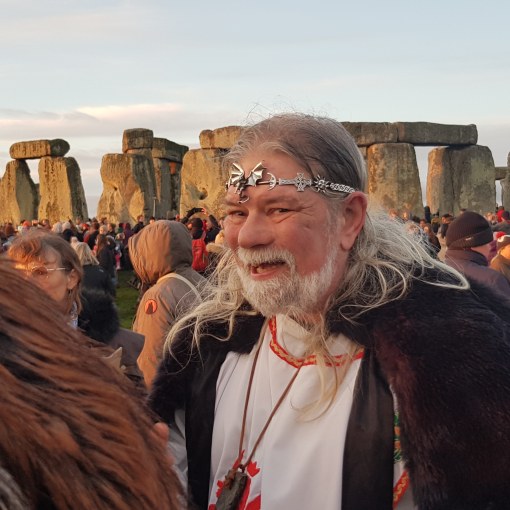
Today, the most prominent druid could be said to be a Salisbury Druid by the name of Arthur Uthur Pendragon – who has spent 33 years a Druid. A religious enthusiast, he can be found at every Stonehenge celebration and he also leads campaigns to reduce parking fees and has even run for MP.

IMG_20200111_201224_277

Arthur Pendragon

Druidic Beliefs

From the time of the Celtic Druids, Druidism has had a strong bond with the natural world as well as the cosmos. Although Stukley determinedly linked his version of Druidism with Christianity – dubbing it ‘Patriarchal Christianity’ – Druidism since ancient times has been polytheistic, with different deities existing in the elements around us. The community largely believes that Stonehenge was built by ancient Druids as a place of worship – it being aligned with the midsummer sunrise so perfectly. Stonehenge thus represents the spiritual connection of man and the elements which is intrinsic to the beliefs of the Druid community.

Druids at Stonehenge

Although the 21st century has seen a decline in Druidism, (In the 2001 census 30,569 people described themselves as Druids), the numbers are once again on the rise. Perhaps in a digital age, more and more people are seeking a deeper connection with the elements. A connection that Druidism certainly offers. Who knows? Maybe you too will feel this spiritual connection on your visit to the stones.

Stonehenge and the Druids links:

The Quarter Festivals and the Druidsm – The Stonehenge News Blog
Who were the Druids? History UK
Who Were the Druids? Live Science
A Brief History of Druidry | Order of Bards, Ovates and Druids – The Druid Way
Stonehenge and the Druids – Stonehnege News Blog
Druid Leader King Arthur Uther Pendragon, Head of the Loyal Arthurian Warband. The Stonehenge News Blog

Here are links to some of the Druid Orders:

The Ancient Order of Druids – http://www.aod-uk.org.uk
The Druid Order – http://thedruidorder.org
Order of Bards, Ovates and Druids – http://druidry.org/
The Dolmen Grove – http://www.dolmengrove.co.uk/
The Dorset Grove – http://www.dorsetgrove.co.uk/
The Cotswold Order – http://www.twistedtree.org.uk/
The Loyal Arthurian Warband – http://www.warband.org.uk/
The Stonehenge and Amesbury Druids – http://www.stonehenge-druids.org/
The Gorsedd of Cor Gawr – http://bards.org.uk/
The Glastonbury Order of Druids – http://www.glastonburyorderofdruids.com/

Our sponsors at Stonehenge Guided Tours offer an exclusive opportunity to join the Druids at Stonehenge for the Equinox and Solstice celebrations

The Stonehenge News Blog
Follow us on Twitter and Facebook for all the latest Stonehenge news and stories
www.Stonehenge.News


English Heritage and Stonehenge Ownership.

22 02 2020

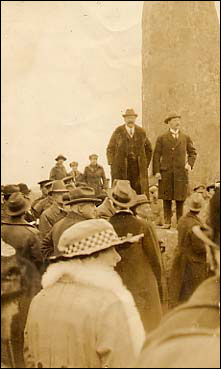
In 1915, Sir Cecil Herbert Edward Chubb, resident of Shrewton, went to an auction at the Palace theatre in Salisbury with the intention, as legend would have it, of buying his wife some dining room chairs.

Cecil Chubb

Instead, ‘on a whim’ he paid £6,600 for lot number 15 or for Stonehenge (and 30 acres surrounding it) as most people would know it. In today’s money Chubb would have paid £683,580, which still would have been a steal considering Stonehenge was valued at £51,000,000 in 2010. Thus, Chubb became the last private owner of Stonehenge. As a lover of the area, it has been reported that the ‘whim’ upon which Chubb acted was in fact a benevolent act to keep Stonehenge out of the hands of foreign investors. It seems that this benevolent intention was carried a step further when in 1918, Cecil Chubb handed Stonehenge over to the government and to the people of Britain.  However, perhaps his benevolence was provoked – some reports have it that he first gifted the ancient stones to his wife; she was not best pleased (Perhaps she was expecting her dining room chairs!). Nevertheless, Chubb handed the stones over to government with a number of altruistic conditions, which were:

  1. Local residence must always have free access.

Although today, in the stewardship of the English Heritage, an adult ticket can cost over £20, English Heritage and National trust members enter for free – so a local resident could still enter the site free of charge and help with the upkeep of the precious monument.chubb-stonehenge

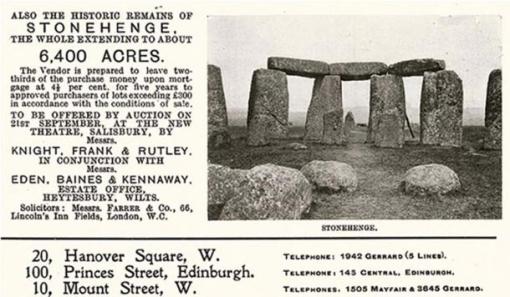
If Cecil Chubb was the last private owner of Stonehenge, who came before him? The estate of Amesbury which included Stonehenge and its surroundings, was in the possession of the royalty from around 899 A.D, during the reign of Alfred the Great. In royal possession it remained until the 12th century when it became a token of royal gratitude and was granted to favoured royal subjects, such as the Earls of Salisbury and later the Earls of Warwick. The omnipresent Henry VIII gifted the 200,000 acre estate to Sir Edward Seymour and it remained in his family and the families of his descendants  until  the land passed in 1778 with the attached dukedom to Archibald Douglas, (at this point hardy related to Seymour), who sold it to Sir Edmund Atrobus. Through inheritance the land eventually made it way into the ownership his namesake Sir Edmund Antrobus, the penultimate private owner of the stones and the first to charge admission – his right to do so confirmed by the High Court in 1905. Tragically, Edmund’s son and heir was killed in the great war and when Edmund died his estate was inherited by his brother who immediately decided to unload it.  Crucially, the sale was handled by Knight, Frank and Rutley who in 1915 put it on lot 15 at that auspicious auction in Salisbury.

On the 26th October 1918, Cecil Chubb handed the stones to the government of the United Kingdom. Ever since, English Heritage have looked after the stones, with the surrounding land being owned by The National Trust for Places of Historic Interest or Natural Beauty, a.k.a the National Trust. The benevolent act of Cecil Chubb may have handed the stones to the people of Britain, but it is the hard work of English Heritage that maintains the iconic monument today and will preserve its wonder for generations to come.

Relevant links:

The Stonehenge News Blog
Follow us on Twitter and Facebook for all the latest Stonehenge News
http://www.Stonehenge.News


Faces of the past at Stonehenge over half term holiday. Make a day of it in Wiltshire.

15 02 2020

Visit Stonehenge this half term and come face-to-face with prehistoric people.

faces

Explore forensic archaeology this Half-Term at Stonehenge!

English Heritage experts how will show visitors how to use archaeological evidence and modelling clay to find out what their ancestors looked like thousands of years ago.

Visitors can have a go themselves and then take a look around the exhibition.

There is lots more to discover about the pre-historic site and what everyday life was like for the people of Stonehenge, in the galleries and Neolithic houses which are filled with replica stone age axes and tools, pottery, clothes and other objects.

Put yourself in the picture with Stonehenge’s new selfie wall in the exhibition everyone is talking about Your Stonehenge – 150 Years of personal photos.

People have been visiting Stonehenge for millennia and this special exhibition records day trips and memories from just the last 150 years.

The facial reconstruction workshops are for everyone to enjoy and are included in the price of admission.

The events run from today until Sunday, February 23, 10am to 4pm.
Vist the English Heritage webiste for full details

Special Offer: Buy a ticket for Salisbury Museum and/or Wiltshire Museum when you purchase your Stonehenge ticket from our website and you’ll get 25% off their ticket price! Make a day of it in Wiltshire!

Whats on in Wiltshire this half term – Vist Wiltshire

Source: Salisbury Journal

The Stonehenge News Blog
Follow us on Twitter and Facebook for all the latest Stonehenge News
http://www.Stonehenge.News


Remembering the Stonehenge Free Festival – 1972-1985

8 02 2020

The Stonehenge Free Festival, held at the ancient stones every June between 1974 and 1984 culminating with the summer solstice, was a cultural phenomenon.

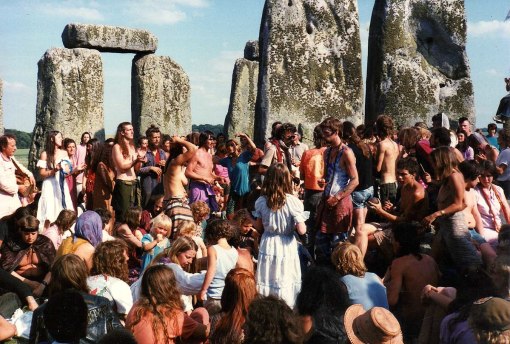
Stonehenge free Festival

The Stonehenge Free Festival was a British free festival from 1974 to 1984 held at Stonehenge during the month of June, and culminating on the summer solstice on June 21st. The festival attendees were viewed as hippies by the wider British public. Photo credit

By 1984 it had become the UKs premier free festival after many others were violently supressed. Founded on utopian ideals of unity and comradery the festival grew from a few people in 1974, to thousands in 1984. However, the festival’s reputation soon became marred by reports of violence, tribalism and drug use and the government decided to crack down on it. Stonehenge Free festival was eventually violently supressed by hundreds of policemen in a brutal clamp down that became known as the ‘The Battle of the Beanfield’. No free festival has been held at Stonehenge since – although people have been allowed to congregate at the stones for the solstice since 1999. 35 years on, I wanted to look back at the origins of the free festival, its brutal suppression, and its lasting impact on the site.

Stonehenge Free Festival. Summer Solstice

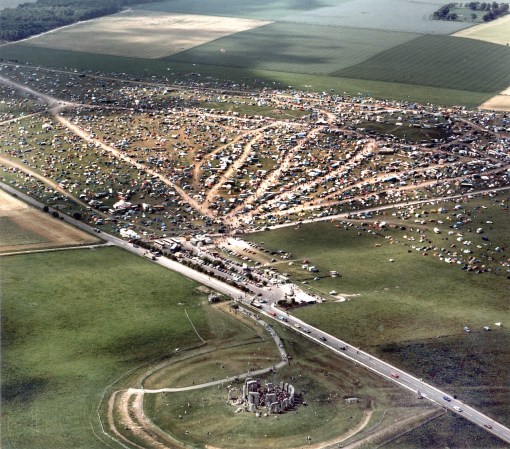
By the 1980s, the festival had grown to be a major event, attracting up to 30,000 people in 1984. Photo credit

The free festival movement started in the UK in the 1970s. Ostensibly, the festivals were a combination of music, arts and cultural activities, for which no admission was charged. With Britain facing high unemployment, the free festivals became a focal point for disenfranchised youth and the working class as well as melting pots of the British counterculture. This perhaps intensified during Thatcher’s tenure, when the counterculture, as well as the working classes were being squeezed even tighter. Having started as a small event in 1974, by the 1980s, the Stonehenge free festival had transformed into a major event, attracting up to 30,000 people in 1984 (although some estimates have it at 100,000). The festival had become a cultural magnet, attracting such artists as: The Damned, Dexys Midnight Runners, Hawkwind the Thompson Twins and Benjamin Zephaniah who all played for free amongst many others. Perhaps the most renowned counter-culture attendees were a group called the ‘peace convoy’ who have been described as ‘Post punk urban squatters’, although perhaps unsurprisingly, the general public viewed the festival attendees as hippies.

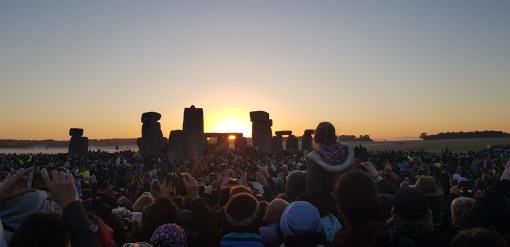
Stonehenge summer solstice celebrations

Stonehenge summer solstice 2019: Thousands gather to cheer sunrise Photo credit

As the festival grew however, fences were introduced around the stones, perhaps due to the open drug use and sale, and reports of far rowdier and violent attendees. The very same year, 1977, police even reintroduced a law against driving over grassland in order to levy fines against festival goers. These laws were the beginning of a total breakdown in relations between festival goers and the authorities. Although police restrictions were relaxed in 1984, the final year of the festival, the writing was on the wall. One festival goer described the festival that year as ‘like being in some kind of medieval nightmare’. Although this was probably not everyone’s experience and the truly bad attendees were probably in the minority, the authorities were not prepared for the festival to continue.

On the 1st June 1985, 1,300 police officers were deployed to stop any person from setting up camp on or around the site of Stonehenge, enforcing a High Court injunction obtained by the authorities which prohibited the festival from occurring that year. Taking place over several hours on 1 June 1985, the police prevented The Peace Convoy, who numbered around 600, from setting up.  Videos of ‘The Battle of Beanfield’, show one of the most harrowing examples of police brutality ever witnessed. Even if the festival had got out of hand, the carnage of that day are still hard to justify. Although the police at the time claimed the travellers rammed police vehicles, footage shows the police marching with truncheons and riot shields onto the field and laying waste to all vehicles and travellers in their path – smashing windows and crawling into buses to arrest the inhabitants. The Police claimed they were subject to an attack of stones and petrol bombs, but there is little evidence to back this up. 537 travellers were eventually arrested.

Of course, the festival was doomed to end, but this brutal and ruthless method still seems to leave a bitter taste. However, the spirit of the festival was perhaps reignited in 1999 when the summer solstice was once again celebrated. Revelry returned to the stones once a year – and maybe even the same old controversies, with an alcohol ban coming in in 2016 to curb ‘drunken and disrespectful behaviour’ and ‘better look after’ the stones and the attendees. Regardless, it seems that the magic of the summer solstice will always attract a crowd and hopefully we will always be able to maintain this joviality alongside the sanctity of the stones.

  • Stonehenge Free Festival and Summer Solstice links:

    History of the Stonehenge Free Festival :1972-1985. UK Rock Festivals
    30 Years On from the Last Stonehenge Free Festival, Where is the Spirit of Dissent? Andy Worthington
    Summer Solstice at Stonehenge. From Past to Present. Stonehenge News Blog
    ‘Sex n Drugs n Rock n Roll’ – The Last Stonehenge Free Festival in Photos (1984)
    Stonehenge Free Festival 1984 – 2020 – Pinterest
    Druid Leader King Arthur Uther Pendragon – Stonehenge News
    Stonehenge Free Festival Campaign on Facebook
    Stonehenge Stone Circle Solstice Photos – Flickr

Our sponsors ‘Stonehenge Guided Tours’ operate Summer Solstice tours with transport from London or Bath

The Stonehenge News Blog
Follow us on Twitter and Facebook for all the latest Stonehenge News
http://www.Stonehenge.News


Stonehenge Ley Lines and Earth Energies – Why Does it Attract ‘New Agers’?

6 02 2020

Perhaps you thought you were drawn to Stonehenge because of its innate beauty and mystery, its petrous monoliths standing proud despite their antiquity,  their stark grey beauty upon the 5,000 year old barrow in sharp contrast to the green vibrancy of Wiltshire; an area of unparalleled Neolithic history? Or perhaps you were drawn by something even more ancient and mysterious – earth energies we no longer understand and the power of ley lines. Although little understood by modern science, many new age enthusiasts have found Stonehenge to be an epicentre of earth-energy. With as many as 14 ley lines converging on Stonehenge, I wanted to take a look at the history of ley lines, their potential significance and why they attract people to the world heritage site.

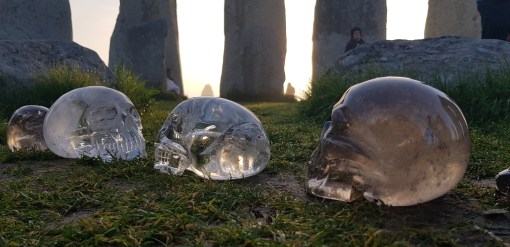
Stonehenge crystal skull gathering

Harnessing the Power of Stonehenge Ley Lines. It is believed Stonehenge like many other power places emits energy and the ancients knew the power of the circle to focus and harness this energy. Photo taken at a crystal skull gathering.

What are ley lines?
Many believe that areas of especial and arcane significance, namely standing stones, stone circles, barrows & mounds, hillforts and earthworks, pre-reformation churches, fords and prominent hill tops, not only possess an essential energy, but are connected by narrow channels of this energy  in straight lines or ley lines. The term was thought up by Alfred Watkins in his book The Old Straight Track in 1925 and has been adopted by ‘new agers’ to describe the paths of energy they sense between monuments. Some have even detected ley lines that stretch between continents, connecting ancient monuments across the globe like the Great pyramid at Giza and Stonehenge.

How are they Detected?
Many claim to sense or feel the earth energies, especially at site like Stonehenge. Ley Lines are traced by a process called ‘drowsing’, using a ‘drowsing  rod’ (or ‘divining rod’, ‘vining rod’ ‘witching rod’) – ‘A Y-shaped twig or rod, or two L-shaped ones’. If the rods cross or uncross naturally it means that you have traversed over a ley line, the rods reacting to its primordial energy.

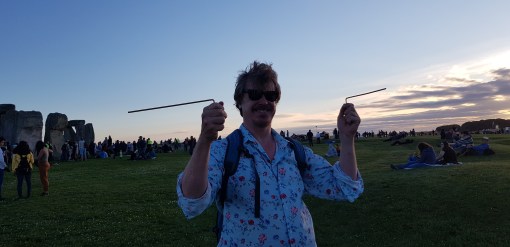
Dowsing the Stones at the Summer Solstice Celebrations. There is evidence that these straight tracks were used by the ancient peoples for spiritual purposes, and also for purposes such as trading and commerce. Photo of a tour guide demonstrating the ancient art divining.

Dowsing the Stones at the Summer Solstice Celebrations. There is evidence that these straight tracks were used by the ancient peoples for spiritual purposes, and also for purposes such as trading and commerce. Photo of a tour guide demonstrating the ancient art of divining.

Stonehenge – A Ley Line Hub?
As mentioned, for many Stonehenge is a cornucopia of earth energy and has a whole network of ley lines running through which connect it to the plethora of ancient wonders that surround it in Wiltshire and beyond. For example, one such ley line connects Stonehenge, Old Sarum, Salisbury Cathedral and Clearbury Ring. Although the churches were not built at the same time, the ley lines suggest, some would say, that intense earth energies were always present in these positions – causing later societies to build their monuments there. 

For many ‘new agers’, the ley line thoroughfare at Stonehenge marks it as vastly important centrepiece for ancient religions; ley lines perhaps helped worshippers on pilgrimages between sites of significance and even helped commerce and trade.

Why do the Ley Lines Attract New Agers?
Although the existence of ley lines isn’t easy to empirically prove, there is no doubt that some people, ‘new agers’,  feel a deep and elemental energy from the site of Stonehenge. The existence of the ley lines that link the ancient stones so directly to other monuments, seems to confirm what they know intrinsically that the site has always had an inborn significance and will continue to do so ad infinitum.

Our sponsors at Stonehenge Guided Tours offer private guided tours of Stonehenge.  Their guides will demonstrate dowsing and talk about Ley Lines and earth energies. Many of their tours allow inner circle access at sunrise or sunset.

Stonehenge and ley line relevant links:

The Stonehenge News Blog
Follow us on Twitter and Facebook for all the latest Stonehenge News


What are the issues surrounding the proposed Stonehenge Tunnel?

28 01 2020

The Stonehenge tunnel is a proposed tunnel or sunken dual carriageway drawn up by Highways England to upgrade the A303 road, which currently passes within 165 meters of Stonehenge. Beginning with the closure of the A344 road, the Stonehenge tunnel would complete the removal of traffic from around the site by redirecting the A303 under Stonehenge. The project aims on one hand to improve the landscape around the monument, freeing tourists from traffic that detracts from the ancient wonder of the site and on the other improving the safety on the A303, resulting in smoother travel for anyone travelling to and from the south-west of England.

Stonehenge Tunnel

When it comes to the initiation and completion of this project there doesn’t seem to be much light at the end of the tunnel.

The proposed tunnel already has a long history of both bureaucratic and archaeological issues. Way back in 1995 was the first time it was proposed to build a tunnel for the A303 underneath the World Heritage Site. However, it did not take long for plans to be criticised for seemingly disregarding the archaeological significance of the Wessex landscape. It was suggested that the tunnel approach would cut in to a prehistoric track way between Stonehenge and a nearby river, resulting in the loss of archaeological remains which would harmfully affect the authenticity of the site and more than cancel out the benefits of the proposed tunnel. After years of bureaucratic wrangling the proposal was finally accepted by the Government on 12 January 2017. Today, the tunnel remains mired in controversy and the arguments against it haven’t changed much since the idea’s inception in 1995. The main issues with the proposal seem to be its staunch opposition from several parties, the complexity of the job and its price.

Opposition

The staunchest opposition to the tunnel is represented by the Stonehenge Alliance campaign group ‘a group of non-governmental organisations and individuals that seeks enhancements to the Stonehenge World Heritage Site’. This group includes environmentalists, archaeologists, residents and have recently repeated their belief that the proposed tunnel “would cause irreparable damage to the landscape”. They believe that the world heritage site of Stonehenge should be considered far wider than the barrow on which the stones stand:

The whole site, extending to beyond the horizons around the famous stones themselves, is c. 5.4 km across. All of it makes up a “huge ancient complex” that holds many secrets yet to be discovered. Yet the proposal is for a 2.9km (1.8 mile) tunnel… would result in at least 1.6 km of above-ground 21st-century road engineering…

All archaeology in the construction zones would be destroyed and the A303 would become the largest ever human intervention in an area fashioned and revered by over a hundred generations of our ancestors.

Cost

In 2018 Highways England proposed a cost of £1.6 billion and a planned start date in 2021 was indicated with the tunnel’s planned opening being in 2026. Unsurprisingly, this cost has created yet more opposition in both the commons and amongst the general public especially since the project was due to be privately funded, but now will be funded publicly since the government dismissed a ‘PFI financing model’ in the 2018 Budget.

Complexity

To protect the landscape, the plans are ambitiously complex. Not only is the job of sinking a dual carriageway a complex starting point but the project also proposes:

  • Four “green bridges” for wildlife to cross the dual carriageway.
  • Restoring areas of chalk grassland at Yarnbury Castle on Berwick Down through to the south of Parsonage Down national nature reserve.
  • 100ha of new chalk grassland to promote biodiversity in the area.
  • A viaduct at the River Till
  • Moving the junction between the A303 and A360 600m west

Adding a bureaucratic layer to the complexity is the fact that  all UK tier 1 contractors have refused to bid the job believing the current approach to be too complex with its shallow tunnel, complex geology, rabid opposition,  and huge public scrutiny because of both the cost and the environmental concerns.

Of course, all these issues are interlinked. The complexity of the job is a demanded by the opposition to protect the natural beauty of the area, but the complexity pushes up the price and then the price creates yet more opposition. It seems to be a vicious cycle. When it comes to the initiation and completion of this project there doesn’t seem to be much light at the end of the tunnel.

Stonehenge Tunnel Relevant Links:

The Knotty Problem of the A303 and Stonehenge. Stonehenge News Blog

Stonehenge Alliance calls for A303 tunnel to be scrapped in open letter to government. Salisbury Journal

Ministers do battle over £2billion Stonehenge tunnel. Daily Mail

Treasury pushes for £2bn Stonehenge tunnel to be axed. Financial Times

Reuniting the Stonehenge landscape and improving your journey. English Highways

Stonehenge and the A303 Joint Response. English Heritage

Stonehenge A303 Road Improvement Scheme. Historic England

A group of non-governmental organisations and individuals that seeks enhancements to the Stonehenge World Heritage Site. The Stonehenge Alliance

Stonehenge tunnel ‘at risk’ due to funding uncertainty. Construction News

The Stonehenge News Blog
Follow us on Twitter and Facebook for all the latest Stonehenge News



2021 Stonehenge Full Moon Dates

9 01 2020

Was it a Neolithic calendar? A solar temple? A lunar observatory? A calculating device for predicting eclipses?
Or perhaps a combination of more than one of these? In recent years Stonehenge has become the very icon of ancient astronomy, featuring in nearly every discussion on the subject. And yet there are those who persist in believing that it actually had little or no connection with astronomy at all.

Stonehenge is situated on the edge of Salisbury Plain, the Landscape occupies a large, sparsely populated area ideal for stargazing.   These dark skies provide the perfect environment to see the stars in all their detail, so why not organise a night-time trip to see what you can discover?

Stonehenge Full Moon

Full Moon setting over Stonehenge. Photo credit to Stonehenge Dronescapes

FULL MOON 2021
December 30th  2021:  Full Cold Moon
January 28th  2021:  Full Wolf Moon
February 27th 2021: Full Snow Moon
March 28th 2021: Full Worm Moon
April 26th 2021: Full Pink Moon
May 26th 2021: Full Flower Moon
June 24th 2021: Full Strawberry Moon
July 23rd 2021: Full Black Moon
August 22nd 2021: Full Sturgeon Moon
September 20th 2021: Full Corn Moon
October 20th 2021: Full Blue Moon
November 18th 2021: Full Beaver Moon
December 18th 2021: Full Cold Moon

Stonehenge is one of the most impressive and best known prehistoric stone monuments
in the world. Ever since antiquarians’ accounts began to bring the site to wider attention
in the 17th century, there has been endless speculation about its likely purpose and meaning, and a recurring theme has been its possible connections with astronomy and the skies.

Stonehenge sky visible around the world.
Enjoy a personal Stonehenge sky all year round, thanks to a new live feed of the sky above the ancient monument.
The live feed gives us a chance to see the sky above Stonehenge from within the monument, whenever you like. On the website, we can gaze at the sky above the stone circle and track the path of other planets in our solar system.
You can visit the website at any time of the day or night to see what it’s like inside the stone circle, with 360 degree views.
Experience it for yourself at www.stonehengeskyscape.co.uk

Related links:
2021- Lunar Phases
2021 Astro Moon Calendar shows phases of the Moon each day, astronomical events and astrological forecast for the year.
Stonehenge and other stone monuments were probably used for special moonlit ceremonies.
Stonehenge and Ancient Astronomy. Stonehenge and Avebury World Heritage Site
Stonehenge Full Moon Guided Walking Tours.  Explore the landscape with a local historian and astronomer.
Stonehenge Dronescapes. Amazing photos of Stonehenge. Visit the Facebookpage
Stonehenge Dronescapes YouTube channel

The Stonehenge News Blog
Follow us on Twitter and Facebook for all the latest Stonehenge News
http://www.Stonehenge.News


2020 Stonehenge Opening Hours, Entry Prices and Tickets.

4 01 2020

Stonehenge Opening Times and Entrance Prices.
English Heritage advise to expect a visit to last around two hours. Please see the table below for opening times for 2020, with some seasonal variability, and entrance prices for adults, children, families, seniors and groups.

The Stonehenge Visitor Centre

The Stonehenge Visitor Centre

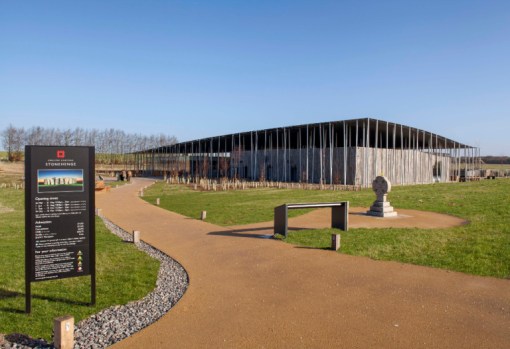
The English Heritage Visitor Centre at Stonehenge is located 2 kilometers from the monument. This is your entry point to Stonehenge and the place where you pick up your tickets, souvenir guides and optional audio guides. The new Visitor Centre also offers a modern exhibition with prehistoric objects on display, and a spacious café and gift shop. A Stonehenge shuttle transports you between the Visitor Centre and Stonehenge (included in your ticket price).

If you come by car you will park in the car park outside the visitor centre. It is free for people purchasing tickets to enter Stonehenge, there is a charge if you are not. Tour buses have their own separate coach park.

All Members of English Heritage or National Trust must show a valid membership card on arrival to be granted free parking and site access.

To enter the Stonehenge Exhibition at the Visitor Centre you need a full ticket to Stonehenge, anyone can access the café, gift shop and toilets though, for free.

Very Important!  Book Your Stonehenge Tickets in Advance 
To be assured of entering Stonehenge the best way is to reserve timed tickets in advance on the English Heritage web site or if you need more flexibility and without the time constraint you can purchase discount advance Stonehenge tickets here

Tickets to Stonehenge are booked by half hour time slot, the website showing you how many tickets are still available for your chosen date and time.

Note: you cannot reserve tickets on-line on the day of your visit, you must reserve before midnight latest on the day before. Only a very small number of tickets are held back each day for walk-up visitors.

Note: the last admission time is two hours before closing time of Stonehenge. Closing times are variable according to month of the year (see below)

Stonehenge Admission & Opening From 1st January 2020 – October 2020

1st JANUARY 2020 – 31st MARCH 2020

Monday 9:30 – 17:00
Tuesday 9:30 – 17:00
Wednesday 9:30 – 17:00
Thursday 9:30 – 17:00
Friday 9:30 – 17:00
Saturday 9:30 – 17:00
Sunday 9:30 – 17:00

1st APRIL 2020 – 31st MAY 2020

Monday 9:30 – 19:00
Tuesday 9:30 – 19:00
Wednesday 9:30 – 19:00
Thursday 9:30 – 19:00
Friday 9:30 – 19:00
Saturday 9:30 – 19:00
Sunday 9:30 – 19:00

1st JUNE 2020 – 31st AUGUST 2020

Monday 9:00 – 20:00
Tuesday 9:00 – 20:00
Wednesday 9:00 – 20:00
Thursday 9:00 – 20:00
Friday 9:00 – 20:00
Saturday 9:00 – 20:00
Sunday 9:00 – 20:00

1st SEPTEMBER 2020 – 15th OCTOBER 2020

Monday 9:30 – 19:00
Tuesday 9:30 – 19:00
Wednesday 9:30 – 19:00
Thursday 9:30 – 19:00
Friday 9:30 – 19:00
Saturday 9:30 – 19:00
Sunday 9:30 – 19:00

16th OCTOBER 2020 ONWARDS
Opening times will be available nearer the time

Stonehenge Admission & Opening From 1st January 2020 – October 2020

Admission

Opening Times

Adult

£20.90

16 Mar – 31 May

09.30 – 19:00

Child (5-15)

£12.60

1 Jun – 31 Aug

09.00 – 20:00

Students/Seniors *

£18.90

1 Sep – 15 Oct

09.30 – 19:00

Family Ticket †

£54.40

16 Oct – 15 Mar

09.30 – 17:00

For more information please visit the official English Heritage website.  If you are looking to book a tour of Stonehenge, we recommend using Stonehenge Guided Tours

The Stonehenge News Blog
Follow us on Twitter and Facebook for all the latest Stonehenge News


Thousands gathered at Stonehenge to mark the winter solstice and witness the sunrise after the longest night of the year.

23 12 2019

English Heritage opened the site for those celebrating the end of the longest night of the year. The sun rose over Stonehenge at 08:11 GMT.

Stonehenge Winter Solstice

Crowds brave the Wiltshire cold to watch the sun rise after the longest night of the year

  • Around 5,000 people gathered at Stonehenge in Wiltshire to mark the winter solstice on Sunday morning
    English Heritage opened the ancient Neolithic site to those celebrating end of the longest night of the year
    The winter solstice occurs around December 21, when the North Pole is tilted farthest away from the Sun

Stonehenge Winter Solstice

Jenny Davies, from English Heritage, said about 5,000 people had come, ranging from pagans and Druid groups, families and tourists.

The solstice marks the symbolic death and rebirth of the sun, and begins the gradual lengthening of days and shortening of nights.

Stonehenge Winter Solstice 2019 News Links:
Winter solstice: Thousands gather at Stonehenge at dawn – BBC NEWS
Druids and dancers gather at Stonehenge to mark winter solstice – THE GUARDIAN
Winter solstice 2019: Why do pagans celebrate the shortest day of the year? – THE TELEGRAPH
WINTER WONDER Thousands celebrate Winter Solstice at Stonehenge as crowds hug the stones on shortest day of the year – THE SUN
Heathens’ greetings! Drum-banging druids join thousands marking Winter Solstice at Stonehenge – THE DAILY MAIL

The Stonehenge News Blog
Follow us on Twitter and Facebook for all the latest Stonehenge news and Winter Solstice updates.


Stonehenge Winter Solstice Open Access Arrangements 2019

7 12 2019

Winter Solstice Open Access: Everything you need to know

On December 22nd 2019, to celebrate the winter solstice, Stonehenge’s inner circle is open to the public for one of only four times a year! The Stones were originally constructed in conjunction with the solar calendar – there could hardly be a more important time to be at the ancient landmark. Today, visitors from all over the world congregate to enjoy the event and English heritages policy of open access allows everyone, for this very special occasion, into the inner circle of Stonehenge, to enjoy the sunrise and interact with the monument. To ensure you have the best experience possible, we have collated all the vital information about this year’s event:

20180320_054839

English Heritage is looking forward to welcoming people to Stonehenge to celebrate Winter Solstice on Sunday 22nd December.  Visitors will be able to access the monument as soon as it is light enough to do so safely.  Please read the information below before planning your visit. Please visit the English Heritage website for further details

  • DATE AND TIMES

Sunday 22nd December 2019

Stonehenge Respect

RESPECT THE STONES AND EACH OTHER! Click here

The following timings are subject to change. Please do check back nearer the time for the confirmed schedule.

6am: Limited car parking opens
7.45am (approximately depending on light levels): Monument field opens
8.11am: Sunrise
10am: Monument field closes 

Please Note: Due to a ‘Temporary Traffic Restriction Order’ (TTRO) By-ways 11 and 12 will be closed over the Solstice period (18th -23rd December) 

What is the solstice?

Throughout the winter solstice, the earth’s axis is tilted at its furthest point from the sun. In the UK, the sun is at its lowest point in the sky. It is both the shortest day of the year and the longest night. Visitors gather to see the sunrise above the stones – an event celebrated at this time of year for thousands of years, there could hardly be a more ideal time to be amidst the sacred monoliths. Entry is completely free!

When Exactly is the Solstice?

The exact time of the Solstice on the 22nd December is 4.19 am. Open access begins at 7:45am and ends at 10:00am. This should give you plenty of time to enjoy the sunrise, appreciate the stones and meet some interesting new people, speaking of which…

Who celebrates the Solstice?

Anyone is welcome to celebrate the winter solstice and as a result it always draws a diverse and friendly crowd. It is an important spiritual occasion for some groups – so you can join a congregation of today’s druid community, including neo-druids, neo-pagans and wiccans – as well as sightseers from all over the globe.

How do you get to the Solstice?

It is possible to drive yourself to the Stones, parking costs £5 or £2 for motorbikes (Stonehenge’s postcode is SP4 7DE for your sat-nav). However, there is no guarantee – once the car park is full there is very little you will be able to do. Luckily, Salisbury Reds is running shuttle bus service, which could relieve you of a potential parking nightmare. The 333 service will run between 6.00am and 6.50am from Salisbury New Canal– with buses returning from Stonehenge between 9.15am and 10.15 am.

The service will also stop at Salisbury Railway Station and Salisbury Street in Amesbury.

Special buses planned for Stonehenge during Winter Solstice – CLICK HERE

PLANNING YOUR JOURNEY

Parking for Winter Solstice is very limited and we cannot guarantee that there will be space in the two Winter Solstice car parks. We strongly recommend car sharing or using public transport.

  • Travel by Bus – Salisbury Reds buses will be running from 6am from Salisbury via Amesbury.

    Organised Tours – If you are considering visiting Stonehenge for the Solstice celebrations you can join an organised tour.  Use a reputable tour operator who respect the conditions.  Stonehenge Guided Tours are the longest established company and offer guided tours and transport from London. Solstice Events offer small group Winter  Solstice Tours from Bath using local expert guides.

What should you bring to the Solstice?

The most important thing to remember is that it will likely be very cold and potentially wet! Warm clothing and sensible footwear, a pair of wellies for instance, are essential, last years solstice reached lows of 5 degrees C. Glass, drones, tents and pets (with the exception of guide dogs) are all strictly prohibited.

Ultimately, there really isn’t much you need to bring to enjoy this special occasion – a sense of adventure, a smile and a warm jacket will ensure that you have a wonderful experience. And so for all those venturing to Wiltshire’s finest historical site for this magical, midwinter day, I wish you all the very best!

Access to Stonehenge for Winter Solstice is free and is subject to the Conditions of Entry. Please read these before deciding whether to attend.  Stonehenge is in a field on Salisbury Plain and the weather in December will be cold and wet.  Even if it isn’t raining, the ground will be wet from the dew and there may also be frost. Sensible footwear and warm, waterproof clothing is essential. Please note, parking charges apply

Stonehenge Winter Solstice Links:
What has Stonehenge got to do with the winter solstice? click here
Celebrate Winter Solstice at Stonehenge – Click here
Stonehenge, the Winter Solstice, and the Druids – Click here
Winter solstice 2020: Why do pagans celebrate the shortest day of the year? click here
Special buses planned for Stonehenge during Winter Solstice – CLICK HERE
Respecting the Stones.  Managed Open Access – Click here
Solstice at Stonehenge. From Past to Present. – click here
English Heritage Conditions of Entry – click here

Please help us to create a peaceful occasion by taking personal responsibility and following the Conditions of Entry and guidelines

For traffic, weather and other updates on the morning of the winter solstice, Follow @St0nehenge @EH_Stonehenge @VisitStonehenge @HighwaysEngland @VisitWiltshire @DruidKingArthur @Wiltshirepolice for #WinterSolstice2019

If you are unable to visit Stonehenge on the Solstice you can watch our LIVE PERISCOPE STONEHENGE BROADCAST

The Stonehenge News Blog
Follow us on Twitter and Facebook for all the latest Stonehenge news and Winter Solstice updates.