Stonehenge Winter Solstice Celebrations 2023. Managed Open Access Arrangements

24 11 2023

Winter Solstice at Stonehenge will take place at sunrise on Friday 22nd December 2023. English Heritage are expected to offer a short period of access, from first light or safe enough to enter the monument field (approximately 07.45am until 10.00am)

Winter Solstice, access to the stones themselves is free and without restriction, and visitors can get up close with the marvel that is Stonehenge. After it passes, the days will begin to get longer and longer until June when the Summer Solstice takes place.

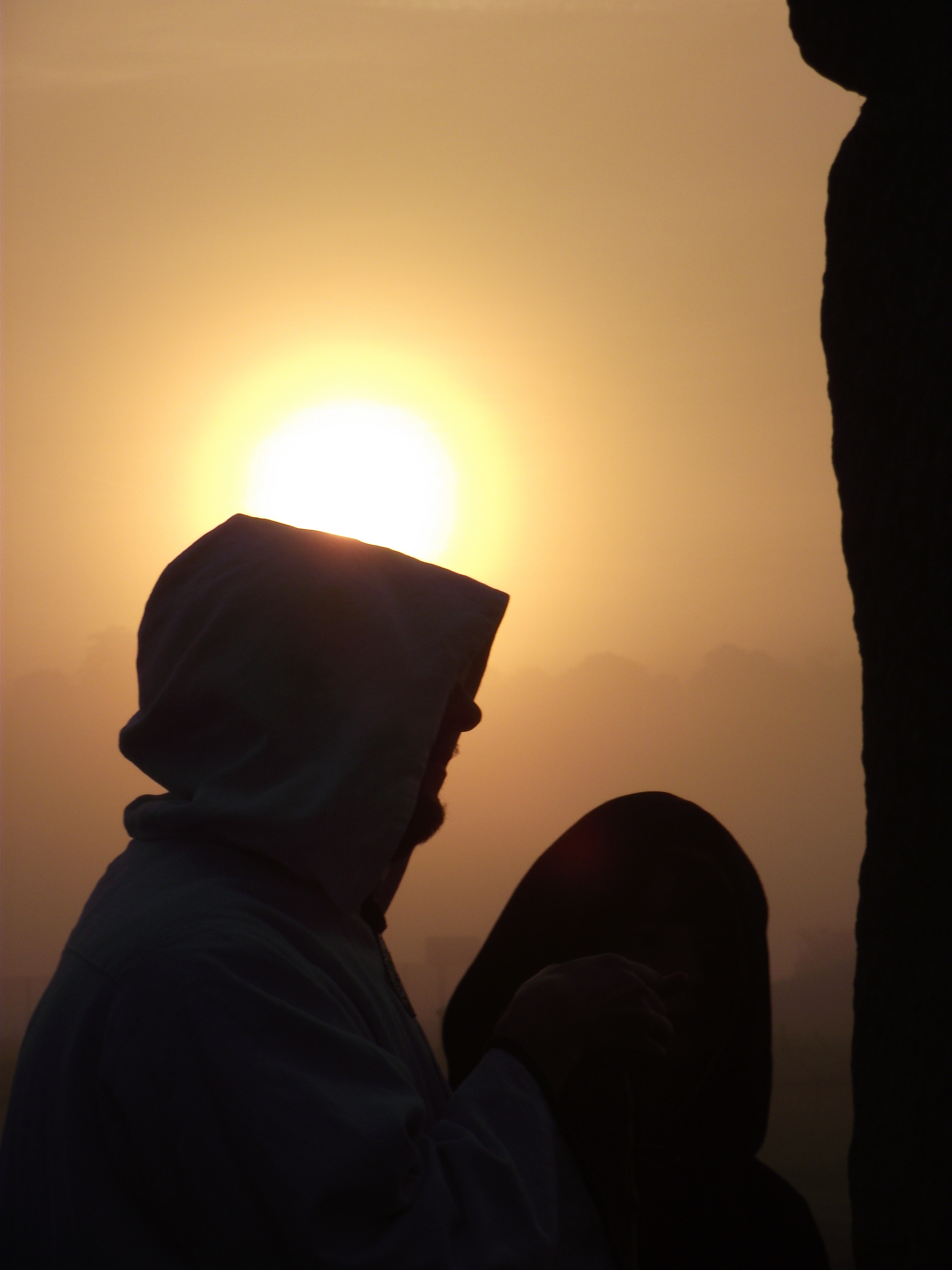
The Winter Solstice, marking the shortest day and longest night of the year approaches, drawing neo-druid and neo-pagan pilgrims to Stonehenge to watch the sunrise through the sacred site.

This is a twice-yearly pilgrimage for many visitors, including Druids and Pagans, with the Summer Solstice in June being the largest of the two events. The festivals which have celebrated the passing of the seasons and new beginnings throughout human history, offer a unique opportunity to visit Stonehenge with no barriers and draws crowds every year.

Whatever the weather, it could be cold and wet. So please dress accordingly.  Shuttle buses will be running to take you from the car parks to the stones. However, you may choose to walk from the Visitor Centre up to the stones. This takes 30 minutes on average and will be in low-light. So a torch would be essential.

Why is open access on the 22nd December?
Many people believe the Winter Solstice always falls on December 21, but because of a mismatch between the calendar and solar year, the December solstice is not fixed to a specific date.

This year, English Heritage says based on advice from the druid and pagan communities, the Solstice will be marked at Stonehenge on the morning of Friday December 22nd December – the first sunrise following the astronomical solstice which occurs after sunset the previous day.

Access to Stonehenge for Winter Solstice is is subject to the Conditions of Entry. Please read these before deciding whether to attend.  Stonehenge is in a field on Salisbury Plain and the weather in December will be cold and wet.  Even if it isn’t raining, the ground will be wet from the dew and there may also be frost. Sensible footwear and warm, waterproof clothing is essential. Please note, parking charges apply.

Can I watch the sunrise on a live stream?
English Heritage will be live streaming the sunrise on the morning of 22nd December for free on their digital channels. Visit the official Stonehenge or English Heritage Facebook page, or the English Heritage YouTube channel. Please beware of fake/scam Facebook pages, events and groups that might have been set up.

Getting there:

Extremely limited parking available and strongly recommend using public transport to avoid disappointment. Salisbury Reds are operating a dedicated Solstice service from Salisbury train station via Amesbury. Please check their website for details. We also have a dedicated car sharing website which is available here.

Limited parking is available in the Winter Solstice car parks, which will open at 6am on the 22nd December 2023. Please follow the brown tourist route signage to Stonehenge. There will be signs to direct you to the car parks.  Please do not arrive early as there is no waiting on roads in the area and you will be moved on.

There will be a parking charge for all vehicles in the official car parks for Winter Solstice 2023 – £5 for cars and minibuses up to 16 seats and £2 for motorbikes. This can be paid by cash or card.

As you approach Stonehenge, please follow signs to the car park. This is located close to Airman’s Corner Roundabout just off the A303. We ask that you park sensibly and only where directed by a steward or police officer.  This will help us make full use of the car park.

Stonehenge Winter Solstice Links:
Stonehenge Winter Solstice 2023 – ENGLISH HERITAGE
When is the shortest day of the year — date of winter solstice and what it means – DAILY MIRROR
The Rebirth of the Sun: the Winter Solstice at Stonehenge – STONEHENGE NEWS BLOG
Winter Solstice: Wild tales of slaughtered bulls, human sacrifice and much merriment – THE SCOTSMAN
The Rebirth of the Sun: the Winter Solstice at Stonehenge – STONEHENGE NEWS BLOG
Solstice Transport service rom London or Bath with expert guides – STONEHENGE GUIDED TOURS
Winter solstice: Why do pagans celebrate the shortest day of the year? THE TELEGRAPH
The Sun Stones: The Story of the Winter Solstice at Stonehenge – STONEHENGE NEWS BLOG
Solstice at Stonehenge. From Past to Present. – STONEHENGE NEWS BLOG
What has Stonehenge got to do with the winter solstice? – METRO NEWS
Stonehenge Winter Solstice Tours from Bath – SOLSTICE TOURS U.K
Celebrate Winter Solstice at Stonehenge – HOLIDAY EXTRAS
Solstice and Equinox Experience Tours – SOLSTICE EVENTS UK
The Stonehenge Solstice Pilgrims – STONEHENGE NEWS BLOG
Stonehenge, the Winter Solstice, and the Druids – INTERESTRING ENGINEERING
Respecting the Stones.  Managed Open Access –STONEHENGE NEWS BLOG

The Stonehenge News Blog
Follow us on Twitter and Facebook for all the latest Stonehenge News and Winter Solstice updates.


Stonehenge Summer Solstice 2023

11 06 2023

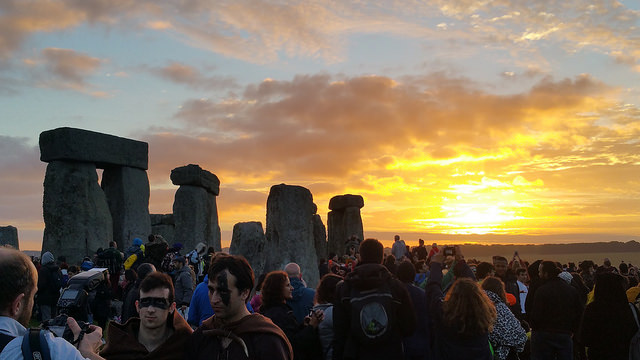
This year Summer Solstice will be celebrated from 7pm on Tue 20th June to 8am on Wed 21st June. The sunrise will be live streamed on the official English Heritage YouTube channel. If you are planning to travel to Stonehenge for the Summer Solstice, please read the following pages carefully. 

The summer solstice will be on 21st June 2022: Stonehenge is an ancient prehistoric world heritage site which has been a place of worship and celebration at the time of Summer Solstice for thousands of years. Stonehenge is a world renowned historic Monument and part of a World Heritage Site. It is seen by many who attend as a sacred place. The Stonehenge summer solstice is a popular annual event that sees thousands of people descend on Wiltshire to celebrate the changing seasons. Summer solstice falls on the longest day of the year.

Please note that last normal admissions to Stonehenge is on Thursday 20th June at 13:00 and the site will close at 15:00 in preparation for Summer Solstice Managed Open Access. Stonehenge will re-open for normal admissions on the afternoon of Friday 21st June. Please check our social media channels for the exact time.

English Heritage is pleased to provide free Managed Open Access to Stonehenge for Summer Solstice. We ask that if you are planning to join us for this peaceful and special occasion that you read the Conditions of Entry and the information provided on the following page before deciding whether to come.

Conditions of Entry

Safety, facilities and welfare

What (and what not) to bring

Travelling to Stonehenge

Accommodation

Disabled access

Respect the stones

Map of monument field

What is the summer solstice?

At the summer solstice, the sun travels the longest path through the sky, and therefore that day has the most daylight. The exact moment of the solstice is the time of year that the Earth is closest to the sun.

According to the astronomical definition of the seasons, the summer solstice also marks the beginning of summer, which lasts until the autumnal equinox (22 or 23 September in the Northern Hemisphere, and 20 or 21 March in the Southern Hemisphere). Under the meteorological definition, which splits the year into four seasons of three full months each based on the Gregorian calendar, winter starts on 1 December every year, and summer starts on 1 June.

When is summer solstice in 2023?

The summer solstice will be on 21 June 2023. It most commonly falls on this date, but can be anywhere between 20-22 June. The exact time of the solstice will be 10.13am in the UK.

Stonehenge is a significant World Heritage Site and to many it is sacred – please respect the stones and all those who are attending.

Admission to the Summer Solstice at Stonehenge is free of charge.  We hope the weather will be kind and wish you a peaceful and celebratory solstice.

THURSDAY 20th JUNE 2023 
SOLSTICE CAR PARK OPENS19.00 hours
ACCESS TO STONEHENGE MONUMENT FIELD19.00 hours
SUNSET21.26 hours
FRIDAY 21st JUNE 2023 
SUNRISE04.52 hours
LAST ADMISSION TO SOLSTICE CAR PARK06.00 hours (or when full)
STONEHENGE MONUMENT FIELD CLOSESSOLSTICE CAR PARK TO BE VACATED08.00 hours12.00 hours (Noon)

How much are tickets to Stonehenge?

Entry is free of charge and you won’t need tickets to attend. Usually, tickets to the site cost over £20.00. You will however have to pay for parking.

English Heritage says on its website: “We are pleased to provide free Managed Open Access to Stonehenge for Summer Solstice. We ask that if you are planning to join us for this peaceful and special occasion that you read the Conditions of Entry and the information provided before deciding whether to come.”

How to watch the summer solstice online

ENGLISH Heritage plan to make use of technology once more to enable enthusiasts to enjoy the summer solstice from the comfort of their own homes If you’re not able to get there in person, you can watch the summer solstice from Stonehenge online by using the Stonehenge Skyscape website. It has been set up by English Heritage to enable anyone from around the world the experience it. The event will also be livestreamed on the Stonehenge Facebook group and the English Heritage YouTube channel.

The charity is asking people to be mindful of the environmental issues if travelling to the stones and to car share or use public transport wherever possible. This would help to reduce CO2 emissions at the World Heritage Site.

English Heritage advise those who wish to celebrate the solstice at Stonehenge to bring only essential items with them and to check the website.

USEFUL SOLSTICE INFORMATION

For further information about Managed Open Access for Summer Solstice at Stonehenge, please call English Heritage Customer Services Solstice Information Hotline on 0370 333 1181.

Stonehenge Summer Solstice Links:

The summer solstice: When is it and what causes it? SPACE.COM
When is the summer solstice 2023? The first day of summer and meaning behind it – Evening Standard
Druid Leader King Arthur Uther Pendragon, Head of the Loyal Arthurian Warband. STONEHENGE NEWS BLOG
Respecting the Stones.  Managed Open Access –STONEHENGE NEWS BLOG
Solstice at Stonehenge. From Past to Present. – STONEHENGE NEWS BLOG
The Stonehenge Solstice Pilgrims – STONEHENGE NEWS BLOG
Respecting the Stones.  Managed Open Access –STONEHENGE NEWS BLOG
Summer Solstice at Stonehenge. From Past to Present. Stonehenge New Blog
Why Thousands Of Pagans Gather At Stonehenge For The Solstice Stonehenge News Blog

The Stonehenge News Blog
Follow us on Twitter and Facebook for all the latest Stonehenge News and 2023 Summer Solstice updates
http://www.Stonehenge.News


The Stonehenge Pilgrims

1 05 2020

Since our Neolithic ancestors erected Stonehenge thousands of years ago and exulted in its majesty, people have continued to gather at the hallowed stones. Centuries worth of pilgrimage and spiritual congregation have continued to endow the monument with meaning. All visitors, pilgrims and revellers connect with our ancestors and with the enigmatic and arcane origins of the stones, and ultimately give Stonehenge its primal energy and continuity that any visitor enjoys today.  In this piece, I wanted to examine the history of the pilgrimage associated with the monoliths and how the people who visit and celebrate in the presence of the stones are so important to its continued vitality.

A pilgrimage is ‘a journey, often into an unknown or foreign place, where a person goes in search of new or expanded meaning about the self, others, nature, or a higher good, through the experience.’  The aim of pilgrimage is spiritual growth, enlightenment or even epiphany (the ancient Greek term for encountering and learning from a god) – the aim is to be overawed by something greater than yourself. For over a millennium, the monoliths of Stonehenge have held enough power to be a continued inspirer of pilgrimage.

Many believe that Stonehenge had religious significance for our ancestors who built it, and many would have made the journey to the stones from far and wide, to witness the grandest monument in existence at the time. It could even be said that the stones themselves and the people who carried them made the greatest pilgrimage of all – the blue stones travelling an astonishing 160 miles from south Wales. The point being, that through its dedicated construction, Stonehenge became a spiritual hub, drawing together people and connecting them with one another. Archaeological digs have uncovered evidence of ritualistic slaughter and feasting in and around the landscape of Stonehenge, dating back to the time of construction. Research at the University of Sheffield has even suggested that the specific dates for the feasting, pinpointing Midwinter celebrations. This proves that celebration and community have always been at the heart of Stonehenge.

Today, in our heady modern lives, which are so absorbed by technology, which purports to bring us together but leaves us more isolated than ever, we are more in need of pilgrimage than ever, for renewal, vitality and peace. To this day, Stonehenge plays hosts to gatherings of thousands of pilgrims and recreates the spiritual gathering of the past; gathering to celebrate the modern-day summer and winter solstices.  For centuries the stones fell out of public ownership and the arcane rituals of the past seemed lost for good. However, the Stones were given to the nation in 1918 and the festival scene has returned to Stonehenge over the last century, giving a home to the most spiritual gatherings and modern-day pilgrims. The summer Solstice is especially popular, the nature of which is joyous and brings together people from all walks of life, including: Druids, wiccans, witches, pagans, tourists, astronomers, locals and revellers of all descriptions. In a country with comparatively few national holidays, a celebration with such deep-rooted history as well as joy, is as cleansing as it is necessary, one of the greatest modern festivals.

The true power of the modern celebrations at Stonehenge lay in their connectivity. Not only do todays pilgrims disengage from modern life and connect with their fellow man – but they connect to our ancestors, across the centuries, preserving their memory and continuing to bestow the monument we all cherish with renewed energy for generations to come.

RELEVANT LINKS:

A Pilgrim’s Guide to Stonehenge. The Winter Solstice Celebrations, Summer Solstice and Equinox Dawn Gatherings – STONEHENGE NEWS BLOG
Stonehenge may have been pilgrimage site for sick – REUTERS
The Great Stones Way. This pilgrimage links the North Wessex Downs to Salisbury Plain, across the Vale of Pewsey – connecting us with our deep, prehistoric past. – THE BRITISH PILGRIMAGE TRUST
Go on a Pilgrimage. Feed mind, body and spirit with a pilgrimage along these 10 historic trails – ENGLISH HERITAGE
Background to the Stonehenge Solstice Celebrations – THE STONEHENGE NEWS BLOG
Stonehenge Solstice and Equinox Tours. Join the megalithic experts for a magical sunrise tour at the annual access gatherings. – STONEHENGE GUIDED TOURS
A Huge ‘Highway’ of Roads and Rivers Brought Stones and Pilgrims to Build Stonehenge – MYSTERIOUS UNIVERSE

The Stonehenge News Blog
Follow us on Twitter and Facebook for all the latest Stonehenge News
http://www.Stonehenge.News