Stonehenge: Up close. English Heritage Members Event. February 2017

26 11 2016

Gain a rare and fascinating insight into the famous World Heritage Site with an exclusive tour around the site led by one of English Heritage’s experts.

K050085

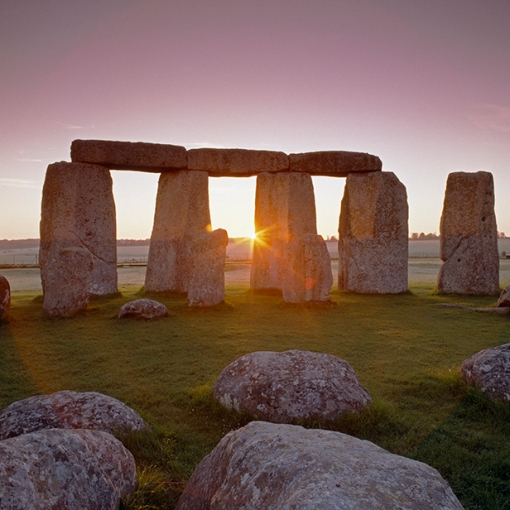
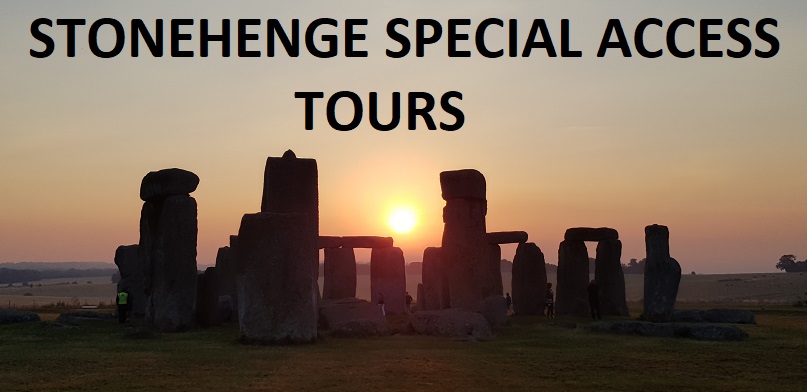
Start the tour with exclusive early morning access to the stone circle at Stonehenge accompanied by our expert. Followed by a light breakfast we will then visit key archaeology sites including Durrington Walls, Woodhenge and The Cursus and learn more about the archaeological landscape and investigative work that has taken place in recent years.

A light breakfast is included. This event has been graded as moderate as there will be plenty of walking over uneven ground. Please dress for the weather as there is no shelter on site. Sturdy footwear is a must, as is a torch.

15th February 2017 (7.30am – 12.30pm) £45 per person

This is an English Heritage ‘Members only’ event.  Please visit their website for more details

HOW TO BOOK
Tickets are available now by calling English Heritage direct on 0370 333 1183.

The Stonehenge News Blog


Ever wondered where the builders of Stonehenge lived? Discover Durrington Walls with a landscape guide.

25 10 2016

Discover Durrington Walls.  Join the National Trust landscape guides to explore the secrets of Durrington Walls – once home to the builders of Stonehenge – and discover 6,000 years of hidden history (2.5 – 3 mile walk).

16th November 2016 at 1pm

Event ticket prices
Adult £8.00
Child £0.00

Booking details
Call National Trust Direct: 0844 249 1895
More details on the National Trust website

Why did the builders of Stonehenge choose Salisbury Plain?

The Stonehenge News Blog


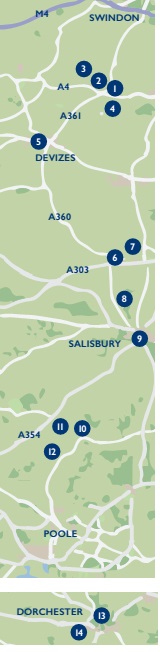
Exploring Prehistoric Wessex

1 10 2016

Visit atmospheric and inspirational sites and museums and follow a trail from Avebury and Stonehenge to Dorchester and Maiden Castle.

1. SILBURY HILL prehwsxmap
The largest man-made mound in Europe, mysterious Silbury Hill compares in height and volume to the roughly contemporary Egyptian pyramids.
Satnav SN8 1QH
Details on English Heritage website

2. AVEBURY
With its huge circular bank and ditch and circles of standing stones, Avebury is at the centre of a remarkable ritual landscape. Visit the Alexander Keiller Museum and Avebury Manor.
Satnav SN8 1RF
Details on National Trust website

3. WINDMILL HILL
Causewayed camp, set on a commanding hilltop above Avebury. Used for rituals, feasting and trading.
Details on English Heritage website

4. WEST KENNET LONG BARROW
The most impressive and accessible Neolithic
chambered tomb in Britain.
Satnav SN8 1QH
Details on English Heritage website

5. WILTSHIRE MUSEUM
See Gold from the Time of Stonehenge in our award-winning new Prehistoric Wiltshire displays. See the spectacular treasures of the people who held their ceremonies at Stonehenge.
Open 7 days a week. Satnav: SN10 1NS
www.wiltshiremuseum.org.uk

6. STONEHENGE
The most sophisticated stone circle in the world, at the centre of a remarkable sacred landscape. Includes the cursus, a 3km long earthwork and the Avenue – a processional way lined with the Winter solstice.
Satnav SP4 7DE
Details on English Heritage website

7. DURRINGTON WALLS
A massive henge, the site of the recent discovery of Neolithic houses, where the people who gathered from across Britain to build Stonehenge may have lived.
Satnav SP4 8LY
Details on National Trust website

8. OLD SARUM
The original site of Salisbury – a Norman castle and cathedral, set within the impressive ramparts of an Iron Age hillfort.
Satnav SP1 3SD
Details on English Heritage website

9. SALISBURY MUSEUM
Stunning new Wessex Gallery of Archaeology
featuring the famous ‘Amesbury Archer’
and unique finds from Stonehenge,
Old Sarum and Durrington Walls.
Open Mon – Sat & Sun (in summer). Satnav: SN1 2EN
www.salisburymuseum.org.uk

10. ANCIENT TECHNOLOGY CENTRE
Visit for special Open Weekends and Ancient Days. Experience the realities of daily life in the past and learn ancient skills and crafts in an authentic landscape
Satnav Dorset BH21 5RP
Ancient Technology Centre website

11. DORSET CURSUS
The banks and ditches of a Neolithic cursus runs for six miles, surrounded by barrow cemeteries. Contact in advance to arrange a tour and to visit the private museum at Down Farm.
Satnav SP5 5NU
Dorset Cursus

12. KNOWLTON HENGE
An impressive Neolithic henge, with a Norman church built inside the bank and ditch.
Satnav BH21 5AE
Details on English Heritage website

13. DORSET COUNTY MUSEUM
Discover the story of Dorset’s rich landscape
unfolding in a range of fascinating displays.
Find out about Maiden Castle and the stunning
Bronze Age finds from nearby Clandon barrow.
Open Mon – Sat & Sun (in summer). Satnav: DT1 1XA
www.dorsetcountymuseum.org

14. MAIDEN CASTLE
The largest and most complex Iron Age hillfort
in Europe. Multiple ramparts once protected
an important settlement, but the site has 4,000
years of history, from a Neolithic causewayed
enclosure to a small Roman temple.
Satnav DT2 9EY
Details on English Heritage website

HOW TO GET HERE BY PUBLIC TRANSPORT
You can use coaches, trains & buses to visit many of these sites & museums.
Swindon – train connections & the
No.49 bus to Avebury & Devizes
Devizes – coach from London &
the No.2 bus to Salisbury
Salisbury – train connections, the Stonehenge Tour
bus service & the No.183 to Blandford Forum
Dorchester – train connections & the
No.184 from Blandford Forum

WHERE TO STAY
Details of quality assured accommodation:
http://www.visitwiltshire.co.uk
http://www.visitdorset.com

SPECIALIST TOUR OPERATORS
Stonehenge Guided Tours (London)
Stonehenge and Salisbury Guided Tours (Salisbury)
Wessex Guided Tours (Bath)

The Stonehenge News Blog


Fundraising Event: A talk by Mike Parker Pearson ‘Stonehenge and Durrington Walls: new research’

18 09 2016

Archaeological excavations are being carried out in 2016 at Durrington Walls and in Preseli, to shed yet more light on the mystery of Stonehenge and its stones. Was there a ‘superhenge‘ of standing sarsen stones at Durrington Walls that dwarfed Stonehenge?

mppWas Stonehenge itself actually a ‘secondhand monument’, built from bluestones brought from an earlier monument in west Wales? New advances in scientific methods, both in the field and in the laboratory, are also helping archaeologists find out more about the people who built Stonehenge, how they lived and why they went to such effort to build this remarkable structure.
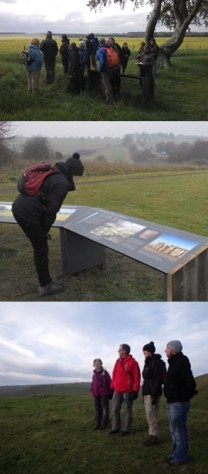
Join Mike Parker Pearson for an evening lecture to hear about the latest exciting developments in Stonehenge’s story.

Salisbury Museum: Thursday, October 13th, 2016 – 18:30 to 20:00
Booking required. Please contact the museum.~

The Stonehenge News Blog


Sights to visit around Stonehenge.

4 03 2016

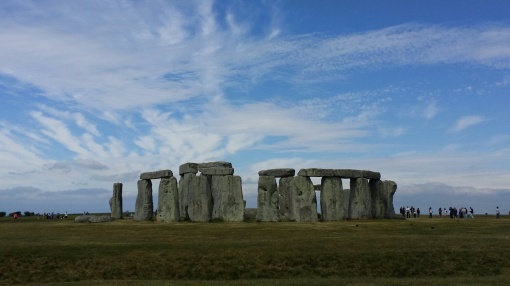
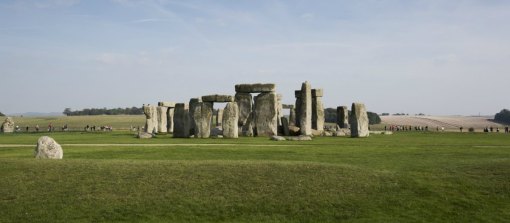
While Stonehenge is by far and away the superstar of southern England, and no visit to Wiltshire is complete without touring it, Stonehenge is in fact just one of many ancient sites in the area. Indeed, the surrounds of Stonehenge contain the most densely-grouped collection of neolithic sites and monuments within England – and more are being discovered all the time. It’s thought that the nearby settlement of Amesbury (believed to be the oldest in Britain) was a major cultural centre during the island’s ancient days. If you’ve got some time to spare during your Stonehenge trip, and want to take in some of the area’s other sights, here are a few suggestions:

20150626_104439_resized

Within Walking/Cycling Distance Of Stonehenge – Woodhenge, Durrington Walls, The Cuckoo Stone

In all fairness, you can strike out in pretty much any direction from Stonehenge and hit archeological gold – although you may not always recognise it as such. Just be careful not to wander into the path of the military (who train on Salisbury Plain). If you’re cycling, be sure that you’re properly prepared for historically significant (but nonetheless unexpected) bumps and tumbles! Woodhenge, less than four miles from Stonehenge, is an odd sight at first glance. However, once you understand what you’re looking at, it becomes much more impressive. It’s thought that this was once a large burial mound with a complex system of banks and ditches (now eradicated through ploughing). Thousands of years ago, six concentric rings of wooden posts may have supported an enormous building. Today, the position of these posts are marked with stumps. It’s an atmospheric and very interesting place! A short walk away from Woodhenge is Durrington Walls – a recently discovered monument which in its heyday would have dwarfed Stonehenge. The ‘Walls’ were formed by lines of enormous stones, which could possibly have formed a processional way leading to Stonehenge itself. There’s not masses to see there now, but it’s still a lovely area! West of Woodhenge is the Cuckoo Stone – a sarsen boulder lying on its side. It was once a standing stone, the origins of which remain a matter of debate. It’s an enigmatic piece of history in a very atmospheric location.

Salisbury – Old Sarum, Salisbury Museum

Old Sarum is a wonderful visit for anyone with an interest in history. It’s the site of Salisbury’s oldest settlement – a hilltop fort commanding absolutely incredible views over Wiltshire. There’s an iron age hillfort to walk around, the remains of a castle to admire, and an absolutely breathtaking panorama which will give the camera-happy everything they could ever dream of. There are also plenty of events put on by English Heritage throughout the year, giving people the opportunity to really step back in time! Down in Salisbury itself, the Salisbury Museum is packed full of fascinating finds from all over the county. It’s a well laid-out and beautifully explained museum, with some truly intriguing exhibits. You can find it just opposite Salisbury Cathedral – which it itself a beautiful and interesting building.

A Short Drive Away – Avebury, West Kennet Long Barrow, Silbury Hill

A 40 minute or so drive from Stonehenge is Avebury. Managed by the National Trust, this ancient stone circle sits in a Neolithic landscape incorporating avenues of standing stones, a henge, and an enormous stone circle in which a village was once situated. The stone circle itself is the largest in the world, and contains two smaller circles. A short walk away is West Kennet long barrow, which can be entered by those who are neither claustrophobic nor fearful of our long-dead ancestors! Then, of course, there are the round barrows with which the landscape is littered, and the curious structure of Silbury Hill. Silbury Hill is the largest prehistoric mound in Europe, and would have taken similar effort to construct as its contemporary pyramids in Egypt. It was clearly important to those who built it – although, unlike most barrows of its kind, it contains no burial. Its purposes remain perplexing, but its presence is both beautiful and fascinating! Anyone with an interest in Stonehenge and its ilk, particularly those who enjoy the mystery of the structure, will find much to whet their appetites at Avebury and Silbury!

There are Stonehenge tour companies who operate guided tours of the area and the Visit Wiltshire webiste lists the best ones.  If you want to explore the Stonehenge landscape with a local expert then we recommend ‘The Stonehenge Travel Company

The Stonehenge News Website


Walking the Dead: Exploring the Stonehenge Ceremonial Landscape

20 02 2016

A guided tour of the amazing collections of the Wiltshire Museum, followed by a guided walk from Durrington Walls to Stonehenge. This full day tour will be led by Museum Director, David Dawson.

10:30 am, Saturday, 21st May, 2016

walking-deadThe morning visit to the Museum starts at 10.30am and the walk begins at 2pm. We should reach the Stonehenge Visitor Centre at about 5.30pm.
The day begins with coffee and a guided tour of the Wiltshire Museum. The early story of Wiltshire is told in new galleries featuring high quality graphics and leading-edge reconstructions. On display are dozens of spectacular treasures dating to the time of Stonehenge and worn by people who worshiped inside the stone circle.

The tour is followed by a light lunch,

The walk will take approximately 3.5 hours, and starts at Durrington Walls and Woodhenge, close to the River Avon. The route passes the Cuckoo Stone, a megalithic standing stone, before following the Apple Track – a WW1 light railway. The route then passes the prehistoric Cursus, before passing the Bronze Age barrows of Kings Barrow ridge.

The route then follows the Avenue – the Neolithic ceremonial route that leads to Stonehenge following the line of the solstice.

At Stonehenge, you have three options:

1. Visit Stonehenge. This is free for English Heritage and National Trust members, but is not included in the cost. If you are not a member, then you should book your visit online from the English Heritage and you should choose a timed ticket for about 4.30 pm. You can then take the English Heritage shuttle bus to the Stonehenge Visitor Centre.
2. Continue to the Cursus barrows and the Western end of the cursus, before continuing to the Stonehenge Visitor Centre.
3. Take the English Heritage shuttle bus to the Stonehenge Visitor Centre and purchase a well-earned snack and cup of tea.

At about 5.30pm, at the end of the walk, there will be car-share transport back to your car at the start of the walk, or back to the Wiltshire Museum in Devizes.

Cost: £35 (WANHS member), £40 (non-member)

Booking: Visit Wiltshire Museum Website

The Stonehenge News Blog

Essential.
Please note that the cost does not include entrance to Stonehenge.


Stonehenge Archaeology Landscape Walk 2016

26 01 2016

Explore the wider Stonehenge World Heritage landscape with a National Trust guide discovering hidden histories and ancient mysteries.

An afternoon walk up on the downs learning about the ancient archaeology of the Stonehenge World Heritage Site. On this 4 mile walk with views of the stone circle, we’ll visit ancient earthworks that have revealed much about the people who once lived and celebrated here. Talking points include the Cursus, the many and varied barrows, and an ancient avenue connecting ceremonial centres.

stonehengelandscape

Booking details:
Call 0844 249 1895A 5% booking fee applies. Phone lines are open Mon to Fri 9am-5.30pm, plus Sat and Sun 9am-4pm. National Trust website

Suitability:
Accompanied children welcome, free. Dogs on leads are welcome.

Meeting point:
Meeting in a car park off Tombs Road (Larkhill) at OS grid reference SU 14382 43626 (nearest postcode SP4 8NB). A map of the meeting point on can be found on the event’s webpage.

What to bring and wear:
Dress for the weather – wrap up warm as it gets chilly up on the downs – and wear stout footwear. You may like to bring a drink and a snack.

Accessibility:
Access is by pedestrian and farm gates; the terrain is mostly grassland and trackways, often uneven underfoot. Cattle and sheep graze the gently sloping downs.

Other:
Please note, traffic on the A303 is often congested around holidays and weekends. Although your guide will tell you about it, this walk doesn’t visit the Stone Circle. You might like to visit it before the walk; NT members are admitted free.

Times

Event opening times and availability
Day Times Availability
5 March 2016 14:00 – 16:30
7 May 2016 14:00 – 16:30


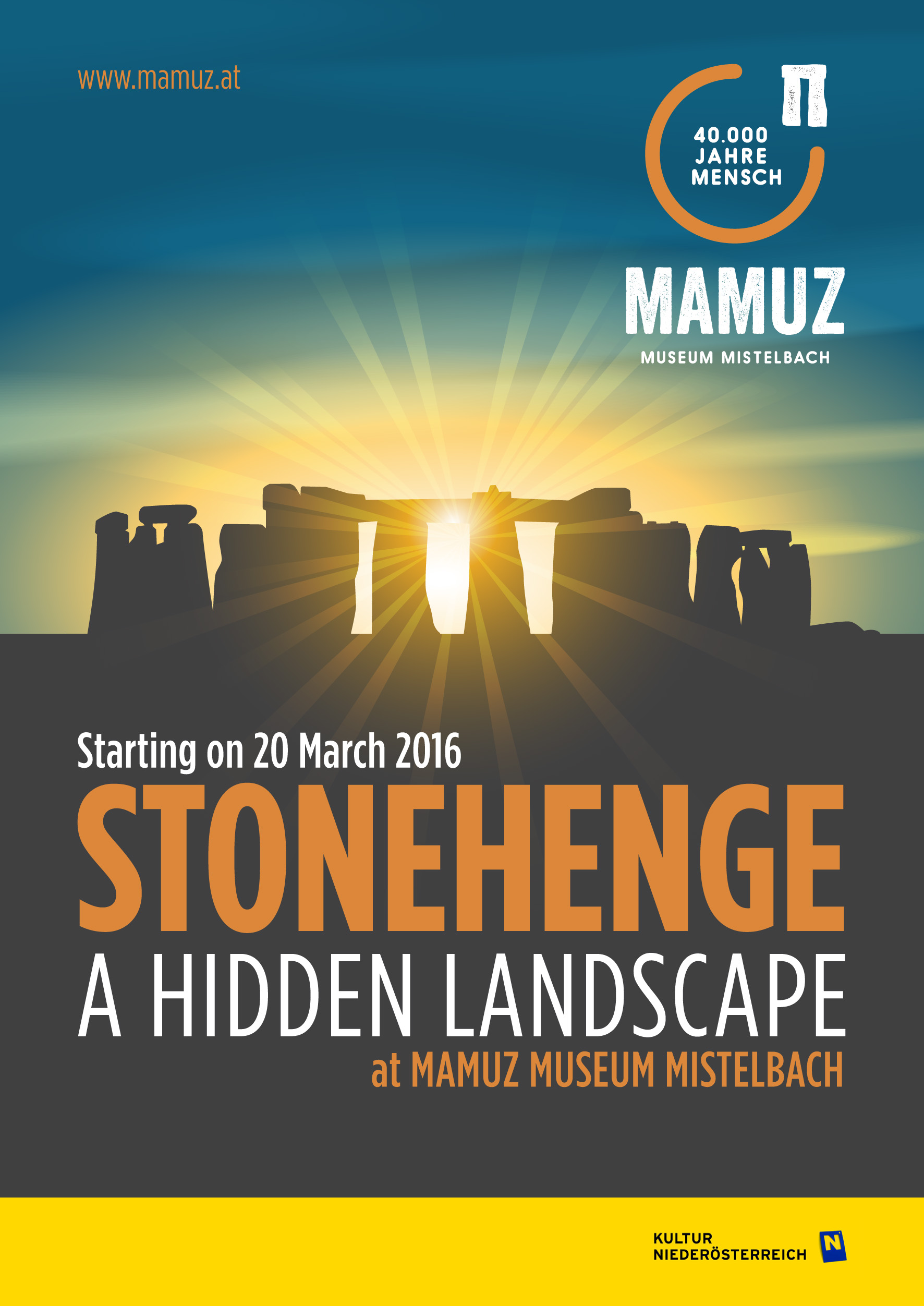
Coming 2016: “Stonehenge – A Hidden Landscape” exhibition at MAMUZ Museum Mistelbach

16 11 2015

Coming 2016: “Stonehenge – A Hidden Landscape” exhibition at MAMUZ Museum Mistelbach | Ludwig Boltzmann Institute for Archaeological Prospection and Virtual Archaeologmamuz-stonehenge-mamuz_vorderseite

New discoveries and insights into Stonehenge landscape made possible by the LBI ArchPro’s intensive research over the last five years will be – for the first time – presented in a comprehensive exhibition in Austria.

Starting on 20th March 2016, the “Stonehenge – A Hidden Landscape” exhibition at the MAMUZ Museum Mistelbach will take the visitor on a journey of more than 8.000 years through Stonehenge and its surrounding landscape including the newly discovered stone monument at Durrington Walls and original finds from the Salisbury, Wiltshire and Dorchester Museum.

MAMUZ “Stonehenge – A Hidden Landscape” website:
Article source

The Stonehenge News Blog


Stonehenge Midwinter Solstice Walk

13 11 2015

On the midwinter solstice, explore the ancient monuments of the Stonehenge landscape with National Trust. This walk is around three and a half miles. (December 20th 2015)

Stonehenge does not stand in isolation, but forms part of a remarkable ancient landscape of early Neolithic, late Neolithic and snow-hengeearly Bronze Age monuments. The best way to appreciate Stonehenge is on foot. You can enjoy the impressive Wiltshire countryside while exploring the ancient history that has shaped it. Follow in the footsteps of our ancient ancestors and discover the prehistoric monuments that fill the vast ancient landscape surrounding Stonehenge.

Stonehenge has far more than the stone circle. It encompass unrivalled Neolithic landscapes that contain many other fascinating and unique monuments. You could easily spend a whole day in either part of the World Heritage Site.

Containing more than 350 burial mounds and major prehistoric monuments such as the Stonehenge Avenue, the Cursus, Woodhenge and Durrington Walls, this landscape is a vast source of information about the ceremonial and funerary practices of Neolithic and Bronze Age people.

It can also help our understanding of regional and international contacts from the 4th to 2nd millennia BC, and shed light on how prehistoric society was organised.

National Trust Stonehenge Midwinter Walk: 20th December (1pm – 5pm)
Immerse yourself in the ancient landscape of Stonehenge, there’s so much to explore and many mysteries to unravel.
Booking essential (click here to book direct)

Stonehenge Guided Tours are offering their usual Midwinter Solstice Tours from London and Bath
Booking essential (click here to book direct)

The Stonehenge News Blog
Follow us on Twitter


Barbeque-style roasting. The culinary habits of the Stonehenge builders

15 10 2015

A team of archaeologists at the University of York have revealed new insights into cuisine choices and eating habits at Durrington Walls — a Late Neolithic monument and settlement site thought to be the residence for the builders of nearby Stonehenge during the 25th century BC.

A reconstruction drawing of how the prehistoric village of Durrington Walls  might have looked in 2500BC [Credit: English Heritage]

A reconstruction drawing of how the prehistoric village of Durrington Walls might have looked in 2500BC [Credit: English Heritage]

Together with researchers at the University of Sheffield, detailed analysis of pottery and animal bones has uncovered evidence of organised feasts featuring barbeque-style roasting, and an unexpected pattern in how foods were distributed and shared across the site.

Chemically analysing food residues remaining on several hundred fragments of pottery, the York team found differences in the way pots were used. Pots deposited in residential areas were found to be used for cooking animal products including pork, beef and dairy, whereas pottery from the ceremonial spaces was used predominantly for dairy.

Such spatial patterning could mean that milk, yoghurts and cheeses were perceived as fairly exclusive foods only consumed by a select few, or that milk products — today often regarded as a symbol of purity — were used in public ceremonies.

Unusually, there was very little evidence of plant food preparation at any part of the site. The main evidence points to mass animal consumption, particularly of pigs. Further analysis of animal bones, conducted at the University of Sheffield, found that many pigs were killed before reaching their maximum weight. This is strong evidence of planned autumn and winter slaughtering and feasting-like consumption.

The main methods of cooking meat are thought to be boiling and roasting in pots probably around indoor hearths, and larger barbeque-style roasting outdoors — the latter evidenced by distinctive burn patterns on animal bones.

Bones from all parts of the animal skeleton were found, indicating that livestock was walked to the site rather than introduced as joints of meat. Isotopic analysis indicates that cattle originated from many different locations, some far away from the site. This is significant as it would require orchestration of a large number of volunteers likely drawn from far and wide. The observed patterns of feasting do not fit with a slave-based society where labour was forced and coerced, as some have suggested.

Dr Oliver Craig, Reader in Archaeological Science at the University of York and lead author on the paper, said: “Evidence of food-sharing and activity-zoning at Durrington Walls shows a greater degree of culinary organisation than was expected for this period of British prehistory. The inhabitants and many visitors to this site possessed a shared understanding of how foods should be prepared, consumed and disposed. This, together with evidence of feasting, suggests Durrington Walls was a well-organised working community.”

Professor Mike Parker Pearson, Professor at University College London and Director of the Feeding Stonehenge project who also led the excavations at Durrington Walls, said: “This new research has given us a fantastic insight into the organisation of large-scale feasting among the people who built Stonehenge. Animals were brought from all over Britain to be barbecued and cooked in open-air mass gatherings and also to be eaten in more privately organized meals within the many houses at Durrington Walls.

“The special placing of milk pots at the larger ceremonial buildings reveals that certain products had a ritual significance beyond that of nutrition alone. The sharing of food had religious as well as social connotations for promoting unity among Britain’s scattered farming communities in prehistory. ”

Dr Lisa-Marie Shillito, who analysed the pottery samples and recently joined Newcastle University, added: “The combination of pottery analysis with the study of animal bones is really effective, and shows how these different types of evidence can be brought together to provide a detailed picture of food and cuisine in the past.”

The study has been published in the Antiquity Journal.
Source: University of York [October 12, 2015]

The Stonehenge News Blog