Given it was on the market 16 years earlier for £125,000, lawyer Cecil Chubb bagged a bargain when he picked up Stonehenge at a 1915 auction for £6600, two years after Druids cursed the relic’s owner.
First angering Druid worshippers by building a fence and charging admission, in 1913 Edmund Antrobus, whose family bought 525ha on Salisbury Plain around Stonehenge in 1824, banned Druid solstice celebrations in 1913.
Druid leader Macgregor Reid called down a “kara” on Antrobus, chanting “in grief and sorrow I call down the curse of Almighty God”.
Antrobus died at 67 in February 1915, four months after his only son, Edmund Jr, 28, perished on Belgian battlefields. A Grenadier Guards lieutenant, he died fighting Germans on October 24, 1914, and was buried in an orchard in a village outside Ypres.
Estate agents Knight, Franck and Rutley put the historic site under the hammer at Salibury’s Palace Theatre on September 21, 1915. Chubb placed the winning bid for “Lot 15: Stonehenge with 30 acres of adjoining land”.

Chubb reportedly placed the bid on a whim, either to purchase the site as a gift for his wife or because be believed a “Salisbury man ought to buy it”.
Chubb was born in 1876 at Shrewton, 6km west of Stonehenge, to saddler Alfred and his wife Mary. He attended Bishop Wordsworth’s School in Salisbury, working as a student teacher from age 14, when he met his future wife Mary Finch at a school cricket game.
Chubb earned a double first in science and law at Christ’s College, Cambridge and in 1902 married Mary, whose uncle Corbin Finch owned Fisherton House mental asylum.
After Finch’s death in 1905, the business and buildings were transferred to Mary. A limited company ran the hospital in 1924, with Chubb, then Sir Cecil, as chairman.
Under his management it became Europe’s largest private mental hospital. He also served on Salisbury City Council, became a successful racehorse owner and cattle breeder.

Stonehenge ownership records date to at least 1620, when a “Mr Newdick”, probably Robert Newdyk who bought land at Amesbury, Wiltshire, in 1614, refused “any offer from George, Duke of Buckingham”. Amesbury, 3km east of Stonehenge, is the oldest continuously occupied site in Britain, dating to 8820BC.
By 1639 Stonehenge had passed to knight Laurence Washington. His friend, architect Inigo Jones visited to write in 1665 of “the most notable Antiquity of Great Britain, vulgarly called Stonehenge”.
When antiquarian William Stuckley described walking “hard and dry, chalky soil” in 1740 in “Stonehenge, A Temple Restor’d to the British Druids”, it stood “in the lordship of … Armesbury, the possession of Rev Mr Thomas Hayward … the Arch-Druid of the Island”.
It belonged to William, Duke of Queensberry, in 1778, passing on his death in 1810 to Archibald, Lord Douglas, who in 1824 sold the Amesbury estates to Cheshire baronet Edmund Antrobus. His great-nephew Edmund, 4th Baronet and former Grenadier Guards colonel, put Stonehenge on the market in September, 1899.

“The most splendid relic of man’s work in Britain … is under offer to the British Government by owner Sir Edmund Antrobus, who asks no less than £125,000,” the Spectator reported. “This includes 1300 acres of land surrounding the great stone circles. The proposal … will, no doubt, receive serious consideration. It cannot be disputed that if so priceless a relic of antiquity is to pass from a private owner, who has never interfered with the public’s enjoyment of it, the State should be the purchaser.”

But the Spectator suggested a value of £25,000, allowing “£10 an acre for the land, which from an agricultural point of view is probably the worst in England and … the remoteness of Stonehenge from the beaten tracks of tourists and sightseers”, encouraging few visitors. The government refused, so in 1901 Antrobus enclosed Stonehenge and charged 1 shilling, or about £5, admission. Some 700 brothers joined an Ancient Order of Druids ceremony at Stonehenge in August, 1905, when Antrobus was inducted into the society.
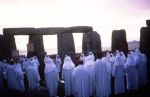
In June, 1912, Reid led his Universal Bond of Zoroastrian-inspired Druids in “Sun-worship at Stonehenge”. Antrobus banned the gathering in 1913, when police attempted to stop Reid entering the site. He clashed with police again at the 1914 solstice. Chubb, who died in 1934, permitted Druid celebrations before donating Stonehenge to the British nation in October, 1918.
Originally published as Stonehenge changed hands for bargain price of just £6600
The Stonehenge News Blog







 Stonehenge Stone Circle News and Information